Key Takeaways
- Trouble falling asleep affects many and often leads to reliance on medications that may worsen the problem.
- Acupressure offers a natural way to address sleep issues by targeting specific patterns that keep you awake.
- The article suggests eight key acupressure points, each addressing different aspects of sleep onset difficulties.
- For use, press these points strategically either as part of a nightly routine or when struggling to sleep.
- Seek medical evaluation for persistent sleep issues, especially if accompanied by other symptoms like snoring or excessive daytime sleepiness.

If you have trouble falling asleep, you already know how frustrating it becomes to daily life. Lying in bed with your mind spinning through everything that happened during the day and everything you need to do tomorrow. The tossing and turning as you try different positions hoping one will bring sleep. The wired-but-exhausted feeling where your body wants to sleep but your nervous system will not settle. Watching the clock and doing the mental math about how few hours of sleep you will get before the alarm goes off. Trouble falling asleep affects millions of adults, and standard Western care with sleep medications often creates dependency, side effects, or morning grogginess that makes the treatment feel worse than the problem.
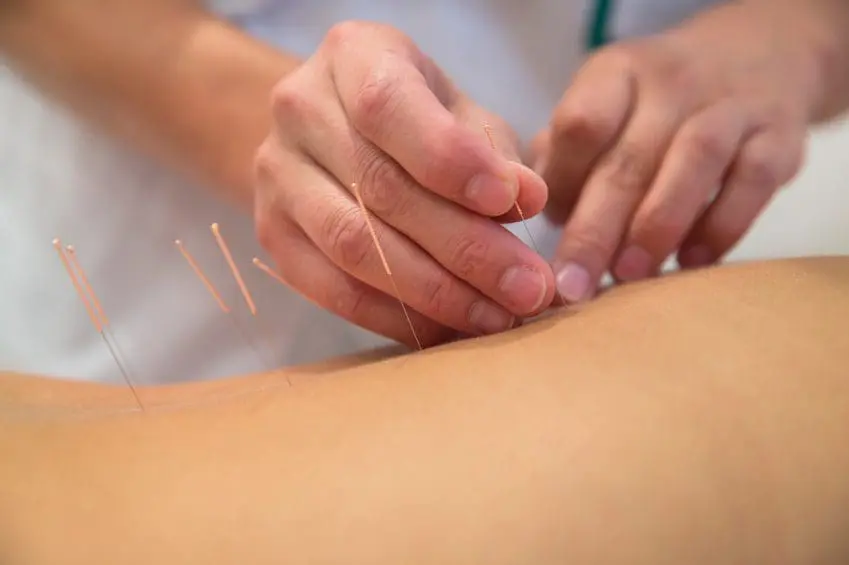
Acupressure offers a natural approach that addresses the actual patterns keeping you awake. The nervous system activation, the Shen disturbance in Chinese medicine terms, the Liver Qi Stagnation from unresolved emotional patterns, the cortisol dysregulation that keeps the body in daytime mode when it should be shifting to nighttime mode. Specific acupressure points address each of these patterns and support the natural transition to sleep.
An important note before starting. Chronic sleep issues that persist despite lifestyle interventions warrant medical evaluation to rule out sleep apnea, thyroid conditions, or other underlying conditions that require specific treatment. Acupressure supports the nervous system and Chinese medicine patterns that contribute to sleep issues but does not treat structural or hormonal conditions that require different care.
For patients who wake in the middle of the night rather than struggling to fall asleep initially, the patterns are different and different points work best. That pairing will be covered in a companion piece on trouble staying asleep.
Here are eight acupressure points that help.
What Acupressure Points to Press and Why
Each point addresses a different aspect of the sleep onset pattern. You can use them individually as part of a wind-down routine or work through the full protocol as bedtime preparation.
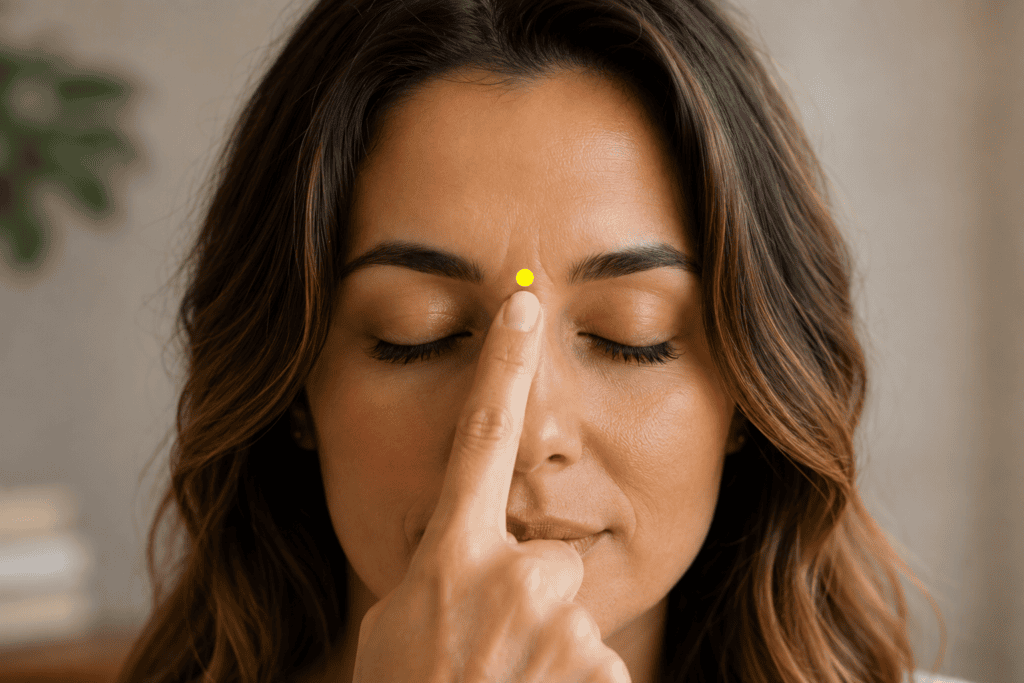
1. Press on Yintang between your eyebrows for calming the mind. Yintang sits in the small hollow directly between the eyebrows, above the bridge of the nose. Press gently with your fingertip for two to three minutes while lying in bed. Yintang is often called the “third eye” point and is one of the fastest ways to activate the parasympathetic nervous system.
The point directly addresses the mental restlessness and racing thoughts that keep people awake. Yintang works particularly well as the first point in a bedtime protocol because it shifts the nervous system into the state where sleep becomes possible. Even a few minutes of pressure on Yintang can produce noticeable calming.
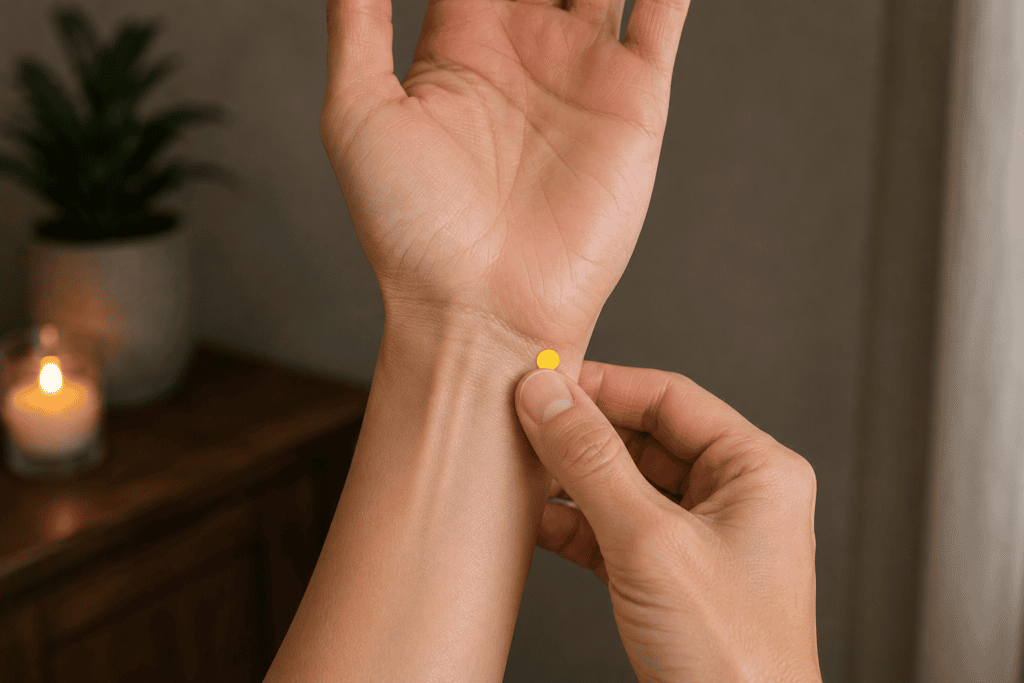
2. Press on HT7 at the pinky-side wrist crease for the Spirit Gate. HT7 sits at the wrist crease on the pinky side, in the small depression just above the wrist bone. Press gently with your thumb for two to three minutes on each wrist. HT7 is called “Shenmen” or “Spirit Gate” in Chinese medicine and directly calms the Shen.
The point is one of the most important for sleep issues in the entire acupressure tradition. The Heart in Chinese medicine houses the Shen, which refers to the mind and spirit. When the Shen is disturbed, sleep is disturbed. HT7 restores the calm to the Shen that allows sleep to arrive.
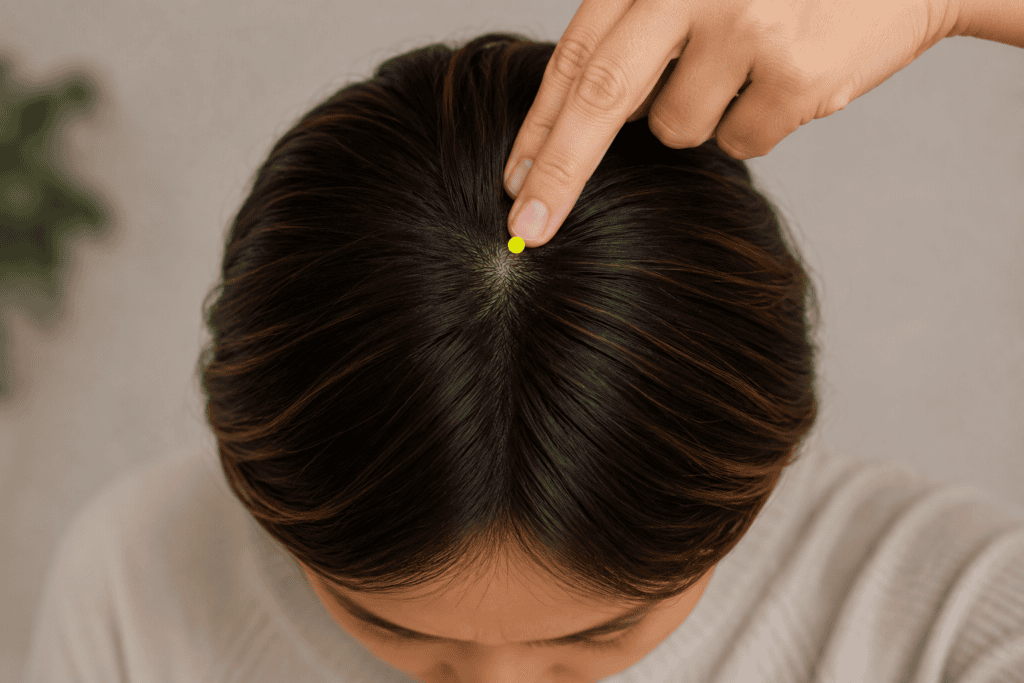
3. Press on GV20 at the crown of your head for grounding the nervous system. GV20 sits at the crown of the head, in the small hollow at the top of the head roughly midway between the ears. Press gently with your fingertips for two to three minutes. GV20 is called “Baihui” or “Hundred Meetings” and grounds the nervous system.
The point works well for the “wired but tired” pattern where the body is exhausted but the mind will not settle. GV20 pulls the scattered mental energy back into balance and supports the downward movement that sleep requires.
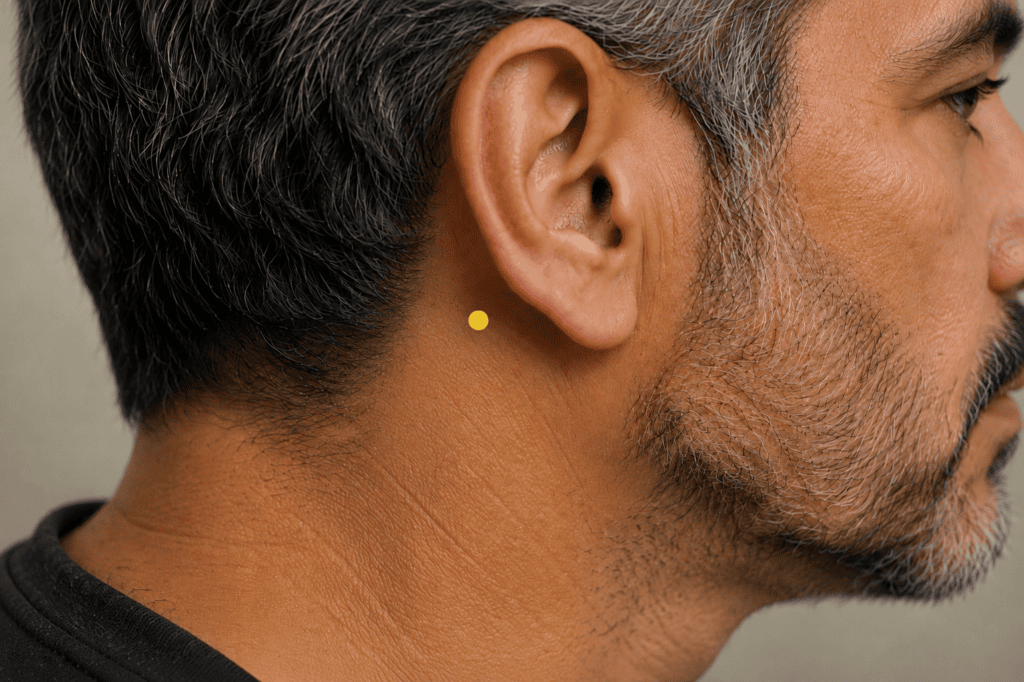
4. Press on Anmian behind your ear for the sleep point. Anmian sits behind the ear, in the depression behind and below the earlobe, roughly at the junction where the skull meets the neck. Press gently with your fingertip for two to three minutes on each side. Anmian is an extra point (not part of the twelve regular meridians) whose name translates literally to “Peaceful Sleep.”
This is the classical point specifically for sleep issues in Chinese medicine. The name reflects centuries of clinical use for exactly the problem it addresses. Anmian works particularly well combined with HT7 for comprehensive Shen calming and sleep support.
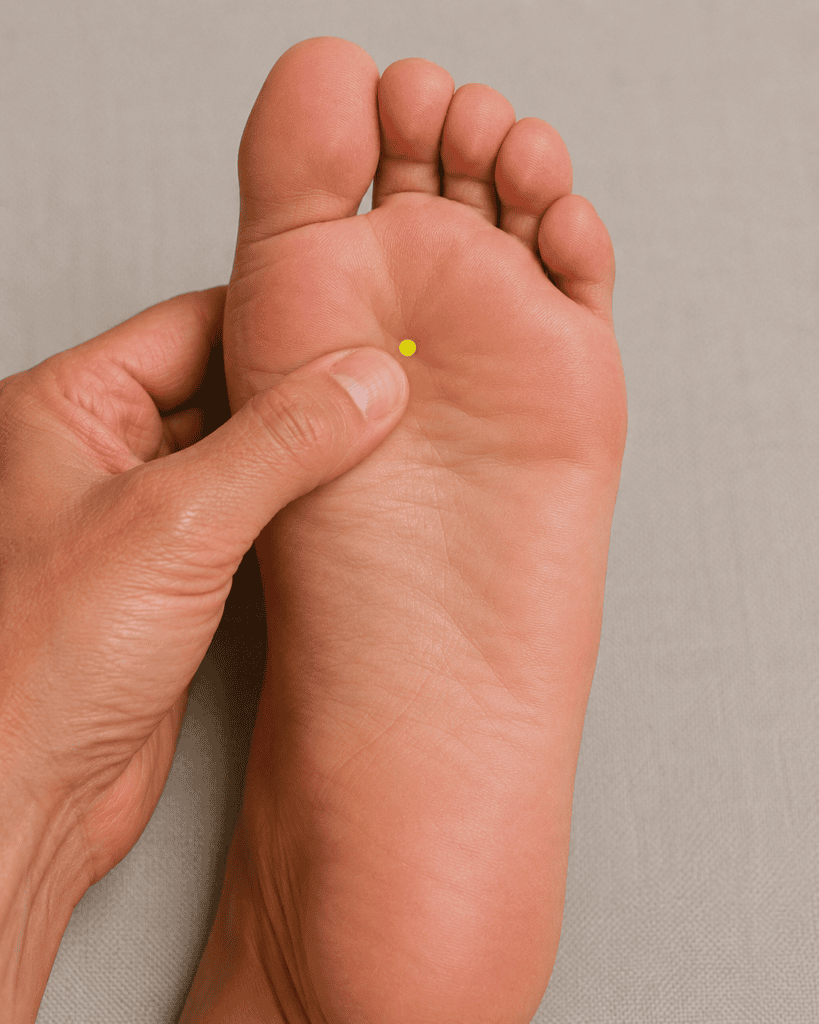
5. Press on KI1 on the sole of your foot for grounding the Spirit. KI1 sits on the sole of the foot in the depression that appears when you curl your toes downward, about one-third of the way from the base of the toes to the heel. Press firmly with your thumb for two to three minutes on each foot. KI1 is called “Yongquan” or “Bubbling Spring” and is the first point on the Kidney meridian.
The point directly grounds the nervous system and pulls energy downward from the head where thinking lives. The mental spiral patterns that keep people awake respond directly to the grounding effect of KI1. This point is particularly useful for patients whose sleep issues come from overthinking and mental activation.
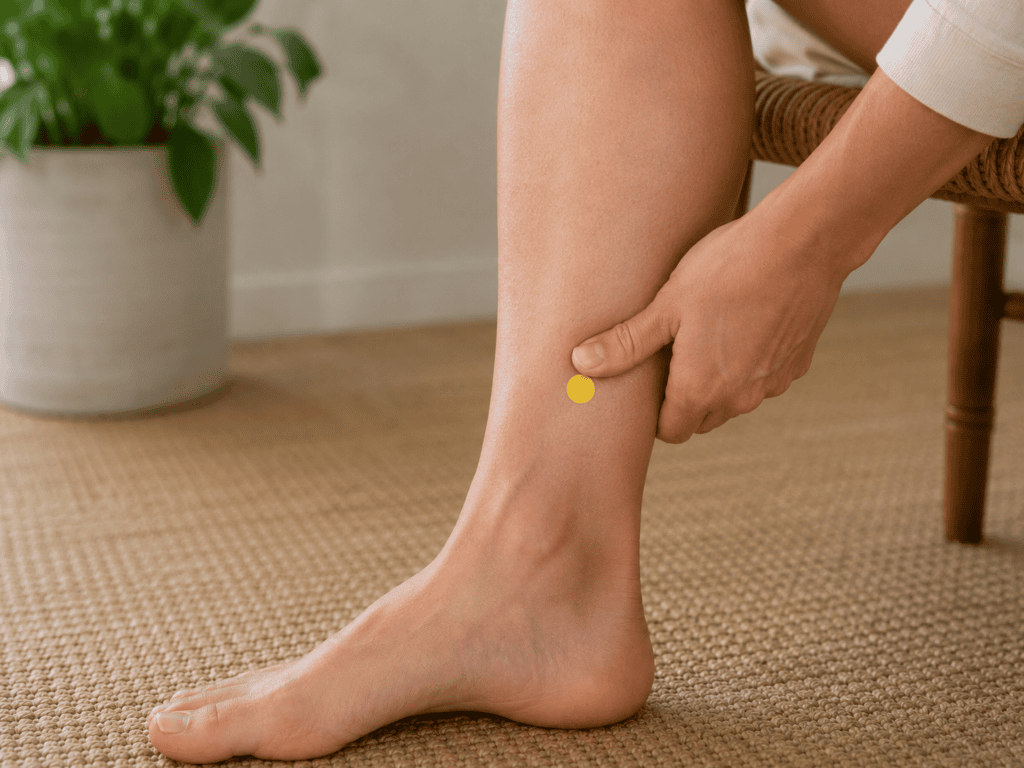
6. Press on SP6 above your inner ankle for the three Yin meeting point. SP6 sits about four finger-widths above the inner ankle bone, just behind the shinbone. Press firmly with your thumb for two to three minutes on each leg. SP6 is called “Sanyinjiao” or “Three Yin Intersection” and is where the Spleen, Liver, and Kidney meridians meet.
The point supports the Yin patterns that produce sleep. In Chinese medicine, sleep is a Yin function that requires adequate Yin resources. SP6 tonifies the Yin across three meridians simultaneously, which supports the deep patterns underlying chronic sleep issues. SP6 is contraindicated during pregnancy.
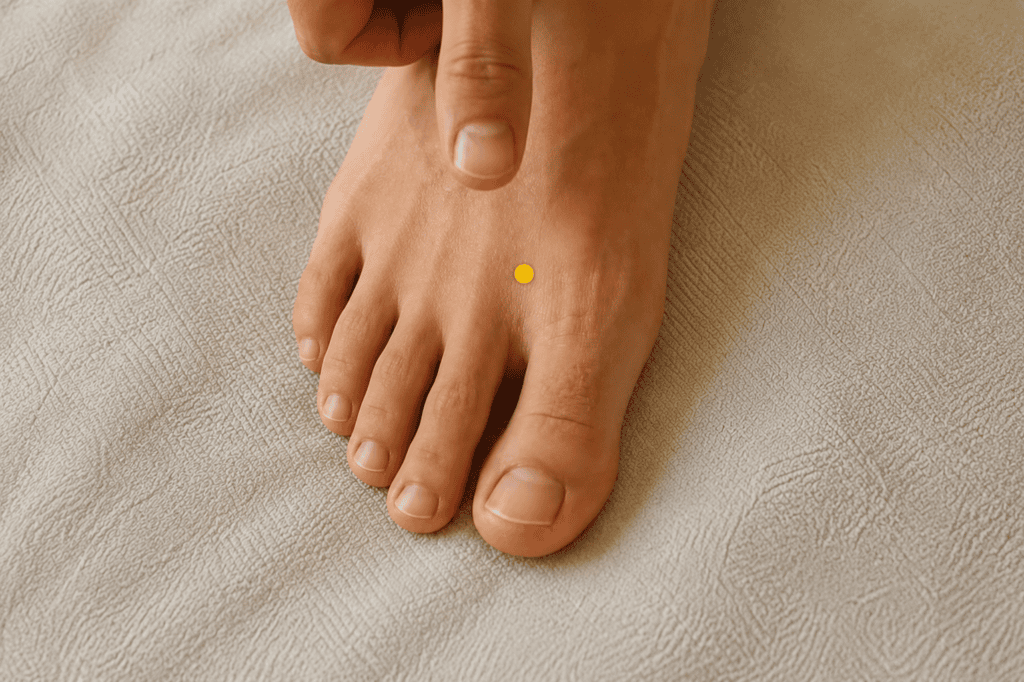
7. Press on LR3 on top of your foot for Liver Qi movement. LR3 sits on the top of the foot in the webbing between the first and second toes, about two finger-widths back from the web. Press firmly with your thumb for two to three minutes on each foot. LR3 is called “Great Rushing” and moves Liver Qi.
The Liver in Chinese medicine governs the smooth flow of Qi and Blood. When Liver Qi becomes stagnant from unresolved emotional patterns of the day, sleep is often disturbed. LR3 moves the stagnation and clears the way for the peaceful transition to sleep.
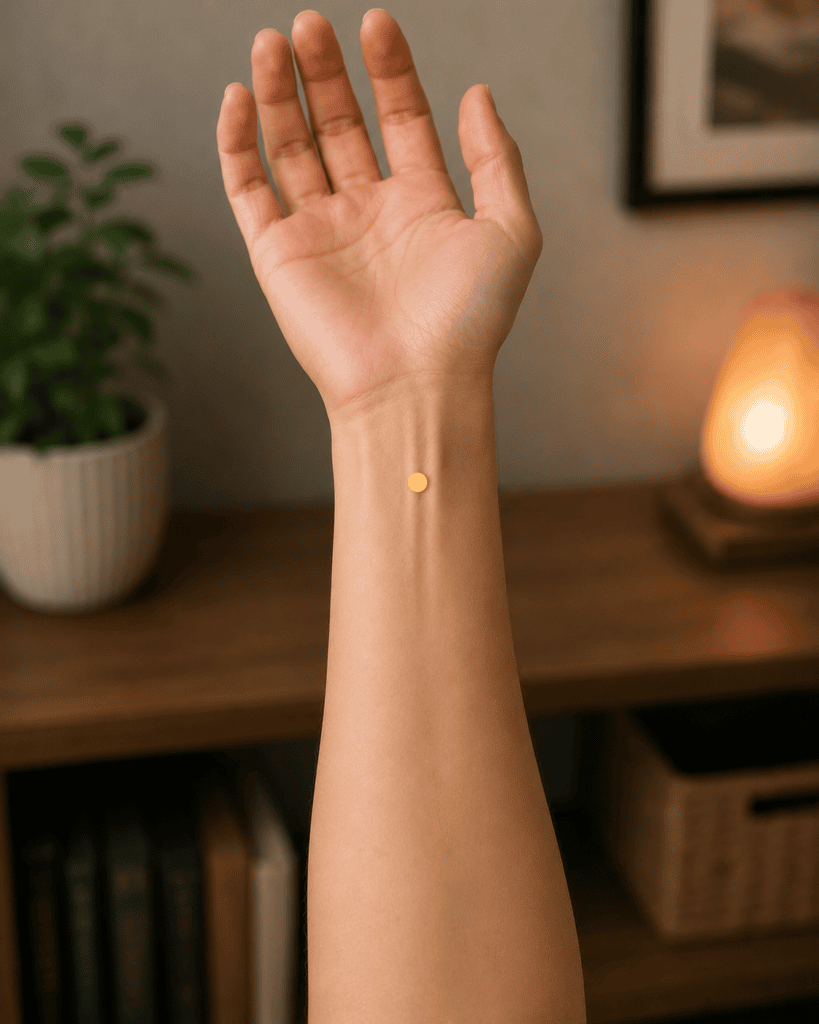
8. Press on PC6 on your inner forearm for Heart region calming. PC6 sits about three finger-widths above the inner wrist crease, between the two tendons in the center of the forearm. Press gently with your thumb for two to three minutes on each arm. PC6 is called “Neiguan” or “Inner Pass” and calms the Heart region.
The point addresses the chest tightness, palpitations, and physical anxiety patterns that sometimes accompany sleep onset difficulty. PC6 works well combined with HT7 for comprehensive Heart-Shen calming.
Why These Acupressure Points Work
Trouble falling asleep involves several overlapping components. The nervous system remains in sympathetic activation (fight-or-flight) when it should shift to parasympathetic activation (rest-and-relax). The Shen (spirit) becomes disturbed by the day’s mental and emotional patterns. Liver Qi stagnates from unresolved situations. The mind spirals through unsettled thoughts. Cortisol dysregulation keeps the body in daytime mode. The Yin resources needed for sleep may be depleted by chronic stress.
Acupressure works on several of these patterns at once.
- The calming points (Yintang, GV20) activate the parasympathetic nervous system directly and clear the mental patterns of racing thoughts.
- The Spirit and Heart points (HT7, PC6, Anmian) address the Shen disturbance and Heart region patterns that are central to sleep issues in Chinese medicine.
- The grounding point (KI1) pulls scattered mental energy downward from the head.
- The Yin tonification point (SP6) supports the deep Yin resources that sleep requires.
- The Liver Qi moving point (LR3) addresses the emotional stagnation that disturbs sleep.
The chronic cortisol elevation from ongoing stress contributes directly to the sleep onset difficulties that acupressure addresses.
For patients whose sleep issues include waking in the middle of the night, particularly around 3am, Why Am I Waking Up at 3am Every Night? covers the specific imbalance behind that condition.
How to Use These Acupressure Points
To prepare for bedtime, practicing the complete eight-point protocol as part of your wind-down routine can facilitate falling asleep. Begin the protocol 30 to 45 minutes before your planned sleep time, allowing your nervous system to transition into the sleep-ready state.
- For immediate use when already in bed and unable to sleep, Yintang, HT7, and Anmian pressed together produce the fastest response. These three points can be worked through while lying down without requiring you to sit up or leave the bed.
- For sleep onset difficulty from mental spiraling, Yintang and GV20 pressed together specifically address the racing thoughts pattern.
- For sleep onset difficulty with physical tension in the chest or anxiety, PC6 and HT7 pressed together address the Heart region patterns.
- For sleep onset difficulty from unresolved emotional patterns of the day, LR3 pressed while breathing slowly moves the stagnation that keeps the day’s frustrations from settling.
- For sleep onset difficulty from feeling “wired but tired,” KI1 pressed firmly grounds the scattered energy.
- Gentle sustained pressure works best for the head and face points (Yintang, GV20, Anmian). Firm sustained pressure works well for the wrist, forearm, leg, and foot points.
Combining acupressure with good sleep habits enhances results. Maintain a consistent bedtime and wake-up schedule, even on weekends. Keep the room dark and minimize light exposure in the hour before bed. Keep the temperature cool, around 65 to 68 degrees, which works well for most. Limit screen time in the last hour before sleeping. Avoid caffeine after 2pm. and minimize alcohol intake, as it can fragment sleep. Engage in regular daytime movement. Avoid large meals two to three hours before bedtime. Establish a wind-down routine to signal to the body that it’s time to sleep.
When to Get Professional Help
The acupressure points mentioned above can help with everyday difficulty falling asleep, but they are not a solution for serious sleep disorders.
Seek medical assistance for chronic insomnia that persists for more than three months, loud snoring or gasping during sleep that may indicate sleep apnea, excessive daytime sleepiness despite adequate sleep opportunity, sleep issues accompanied by depression or anxiety that is not managed, sleep issues with unexplained weight changes or other symptoms suggesting thyroid or hormonal conditions, and any sleep pattern that significantly affects daily functioning.
Sleep apnea requires medical diagnosis and treatment. If your partner reports that you snore loudly, gasp for air, or stop breathing during sleep, or if you wake feeling unrefreshed despite adequate sleep time, request evaluation for sleep apnea from your physician.
Many patients dealing with chronic sleep issues also experience anxiety, stress, and depression that overlap with the patterns underlying sleep difficulties.
Above and Beyond Acupuncture offers acupuncture, cupping, and lifestyle coaching at the North Frank Lloyd Wright Boulevard location in Scottsdale.
Schedule an appointment online or call us today to start your healing journey.
The points above are only as effective as the technique used to apply them. Where to press, how firmly, and for how long all affect the result. For a full breakdown of how to perform acupressure properly at home, read Performing Acupressure in 3 Easy Steps.

About the Publisher
Paul Kerzner, L.Ac., is a licensed acupuncturist and board-certified herbalist, as well as the founder of Above and Beyond Acupuncture in Scottsdale. His own journey from chronic patient to practicing acupuncturist shapes his commitment to providing honest, clinically grounded information about acupuncture and Traditional Chinese Medicine. Learn more about Paul and his clinical approach on the About Us page.