
Key Takeaways
- Acupressure can support labor progression by stimulating contractions and cervical readiness, especially at term.
- LI4 and SP6 are key acupressure points to activate uterine contractions and support pelvic function during labor.
- BL60 and BL67 aid in the descending energy needed for labor progression, while GB21 helps activate Qi movement.
- ST36 supports overall energy and stamina, crucial for enduring labor.
- Always consult your obstetric care provider before using acupressure points during pregnancy.

If you’re approaching or past your due date, each day can feel longer than the last. By 39, 40, or 41 weeks, it’s common to feel physically uncomfortable while wondering whether labor will start on its own or whether you’ll need a medical induction. Many women seek safe, natural ways to support their body’s normal labor process. Acupressure has been used for centuries to induce labor, and several specific points have been studied for their effects on uterine contractions and for helping prepare the cervix for labor.
Modern research supports much of what midwives and Traditional Chinese Medicine practitioners have observed for generations. Studies suggest that certain acupressure points may help stimulate uterine contractions, support cervical dilation, and promote the natural progression toward labor.
While acupressure cannot guarantee that labor will begin, it may offer a helpful, non-pharmacological option for women with uncomplicated pregnancies who have reached full term and have been cleared by their healthcare provider.
An important note before starting. The points below are for use only during full-term pregnancy (37 weeks or later) and with the knowledge and approval of your obstetric care provider. These points are contraindicated during earlier pregnancy because they can stimulate uterine contractions. Using them before 37 weeks could cause preterm labor. Coordinate with your midwife or obstetrician before beginning practice.
For patients looking for a clear explanation of how acupuncture can help during pregnancy, ‘Benefits of Acupuncture While Pregnant‘ explains the different ways it can be beneficial.
Here are six acupressure points that support labor:
What Acupressure Points to Press and Why
Each point addresses a different aspect of labor preparation and progression. You can use them individually as symptoms of early labor begin or work through the full protocol as preparation.
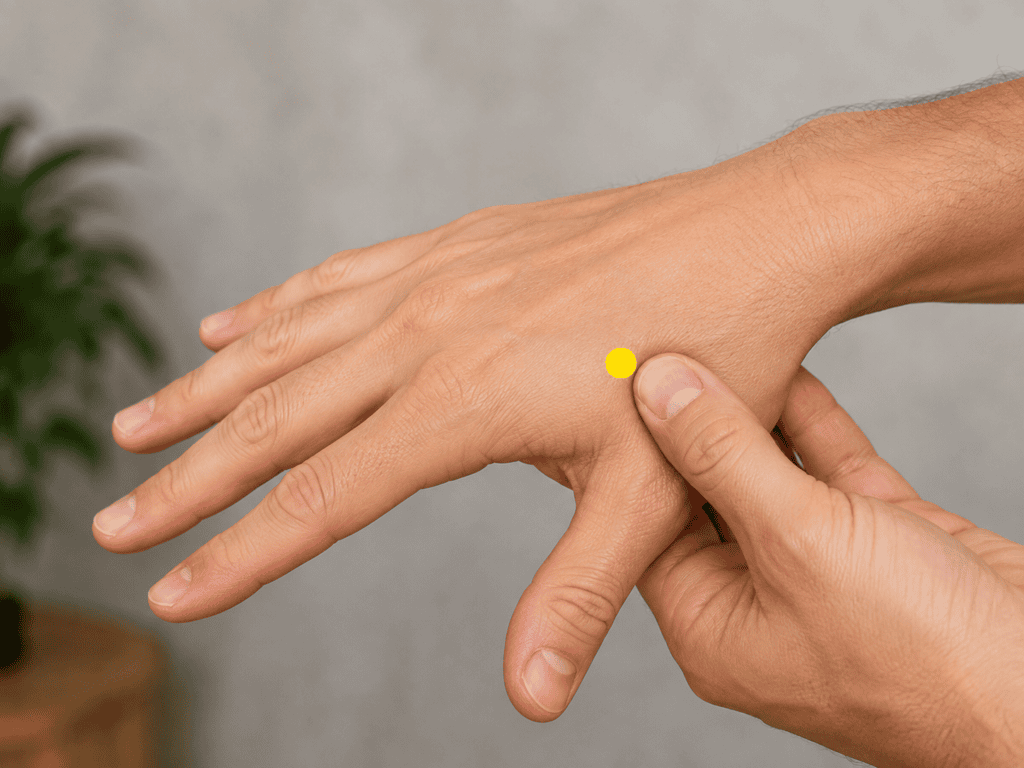
1. Press on LI4 in the webbing between your thumb and index finger for the primary labor point. LI4 sits in the soft tissue webbing between the thumb and index finger, in the muscle that bulges when the thumb is pressed against the side of the index finger. Press firmly with the thumb of the opposite hand for one to two minutes on each hand. Alternate between hands and repeat the cycle several times.
LI4 is called “Hegu” and is the most researched acupressure point for labor induction. The point stimulates uterine contractions and supports cervical ripening. LI4 combined with SP6 is one of the classical combinations used across midwifery traditions for labor progression. This is why LI4 is contraindicated throughout earlier pregnancy and specifically indicated at term.
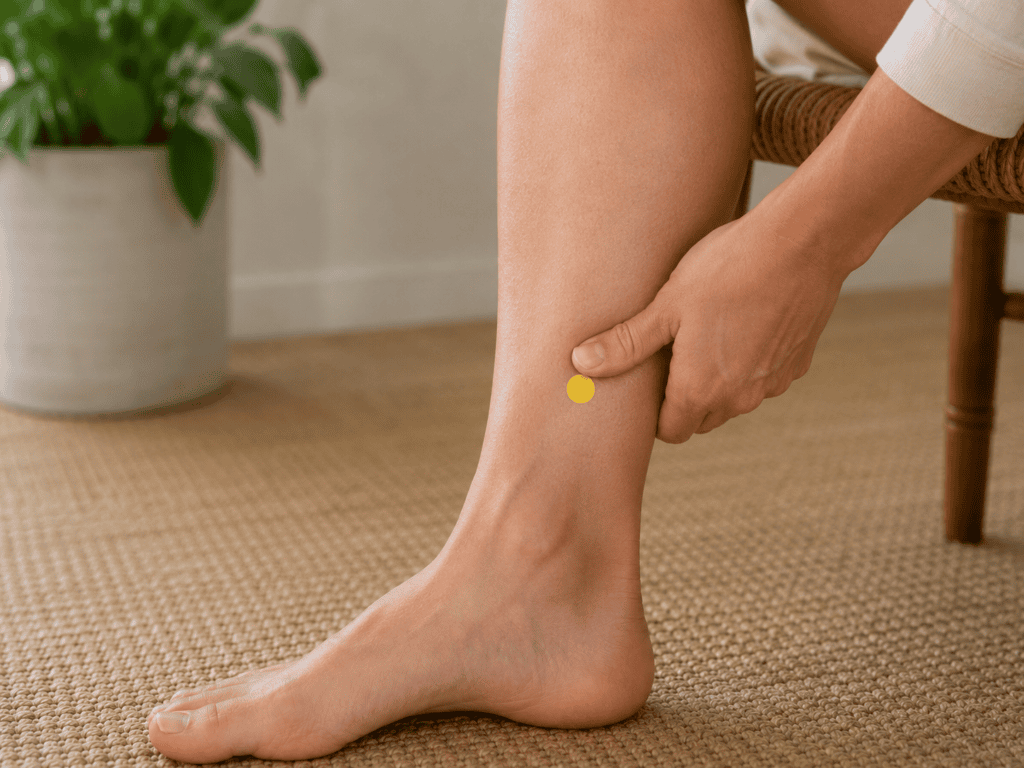
2. Press on SP6 above your inner ankle for the three Yin meeting point. SP6 sits about four finger-widths above the inner ankle bone, just behind the shinbone. Press firmly with your thumb for one to two minutes on each leg. Alternate between legs and repeat the cycle several times.
SP6 is called “Sanyinjiao” or “Three Yin Intersection” and is where the Spleen, Liver, and Kidney meridians meet. The point directly supports the pelvic region and uterine function. Research has documented SP6 stimulation shortening active labor and supporting effective contractions. SP6 combined with LI4 is the classical labor induction combination.
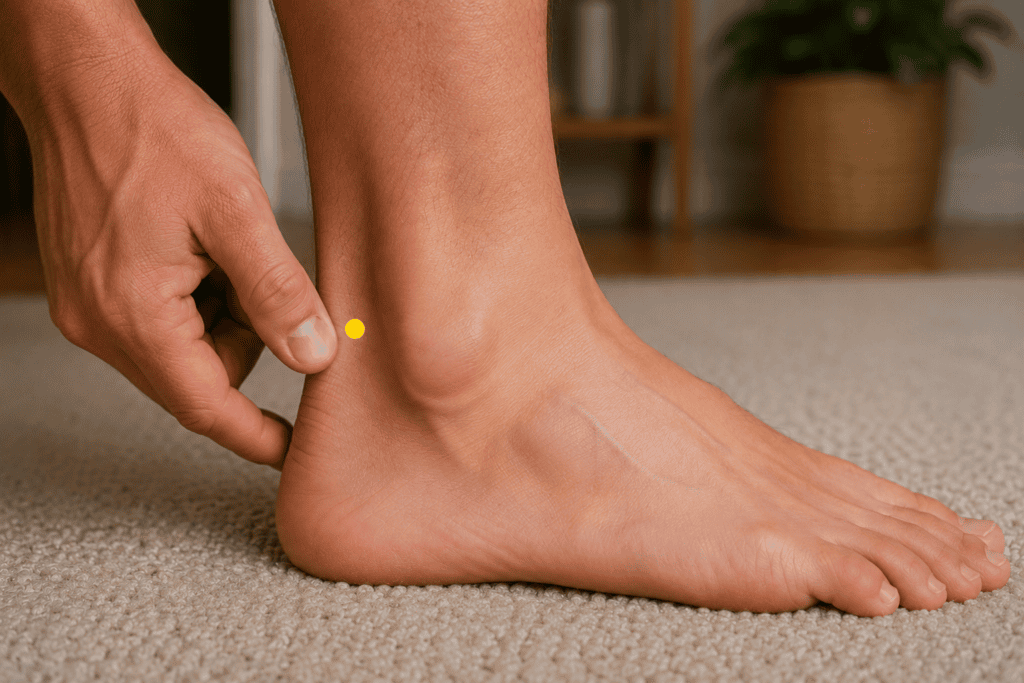
3. Press on BL60 behind your outer ankle for the labor support point. BL60 sits in the depression between the outer ankle bone and the Achilles tendon, at the level of the tip of the outer ankle bone. Press firmly with your thumb for one to two minutes on each ankle.
BL60 is called “Kunlun” and is one of the classical labor support points. The point moves Blood in the pelvic region and supports the descending movement that labor requires. BL60 works particularly well combined with BL67 for comprehensive labor preparation.
4. Press on BL67 on the outer edge of your pinky toe for the classical labor and turning point. BL67 sits on the outer edge of the pinky toe, at the base of the toenail on the side away from the other toes. Press firmly with your thumb and index finger for one to two minutes on each foot.
BL67 is called “Zhiyin” or “Reaching Yin” and is the classical point used both for turning breech babies earlier in pregnancy and for supporting labor at term. The point activates the descending energy that labor requires. BL67 is one of the most traditional labor points across Chinese medicine and midwifery traditions.

5. Press on GB21 on the top of your shoulder for the labor support point. GB21 sits at the highest point of the shoulder, midway between the base of the neck and the outer edge of the shoulder. Have a partner press firmly with their thumbs for one to two minutes on each shoulder. GB21 is difficult to reach effectively on yourself and works best with a partner.
GB21 is called “Jianjing” or “Shoulder Well” and is another classical labor point. The point activates the descending movement of Qi that labor requires. GB21 is strongly contraindicated during earlier pregnancy specifically because of its labor-inducing effect, and appropriate at term.

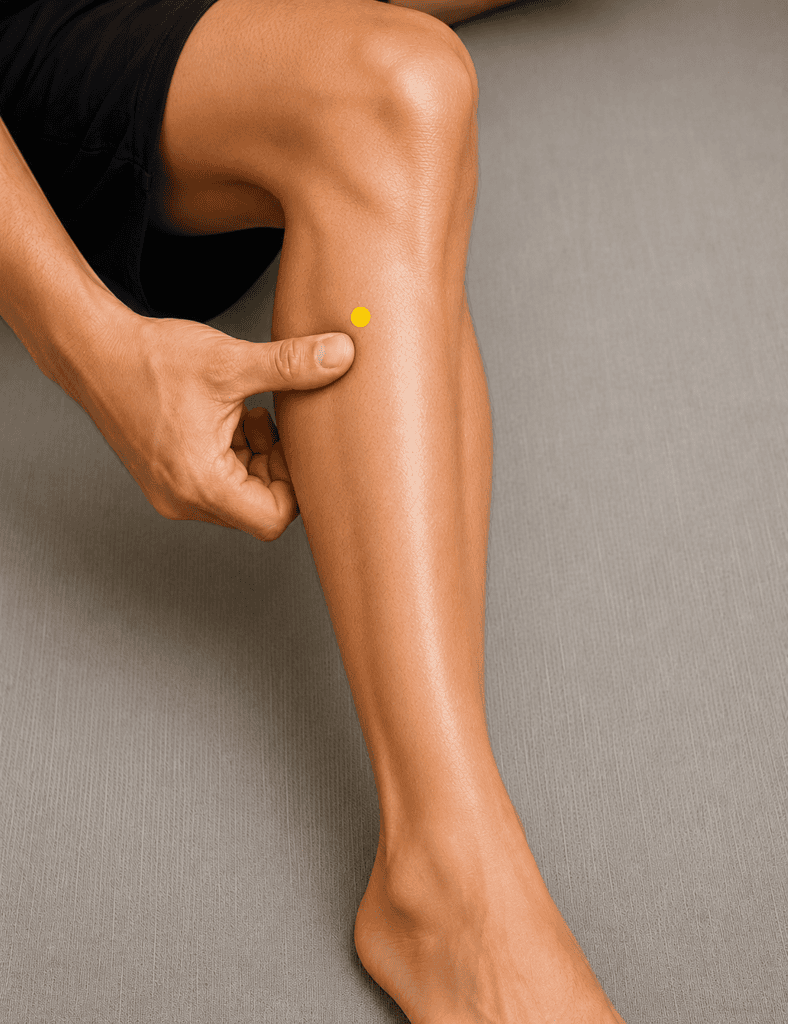
6. Press on ST36 below your knee for Qi and Blood support. ST36 sits about four finger-widths below the kneecap, one finger-width to the outside of the shinbone in the muscular depression there. Press firmly with your thumb for one to two minutes on each leg.
ST36 tonifies Qi and Blood and supports the energy and stamina needed for labor. While not primarily a labor induction point, ST36 supports the overall constitutional strength that labor requires. The point is safe throughout pregnancy and particularly useful at term for building the energy reserves needed for active labor.
Why These Acupressure Points Work
Labor induction involves several overlapping components. The uterus needs to develop effective contractions. The cervix needs to soften, thin, and dilate. The baby needs to descend into the pelvis. The pelvic region requires adequate blood flow and energy circulation. The nervous system must shift into a state that supports labor.
Acupressure works on several of these patterns simultaneously:
- The primary labor point (LI4) stimulates uterine contractions and supports cervical ripening through documented mechanisms in modern research.
- The three Yin meeting point (SP6) supports the pelvic region directly and has been shown to shorten active labor when stimulated.
- The classical Bladder meridian labor points (BL60, BL67) support the descending energy required for labor progression.
- The shoulder point (GB21) activates the descending movement of Qi throughout the body.
- The constitutional support point (ST36) builds the Qi and Blood reserves needed for active labor.
The chronic cortisol elevation from stress can slow labor progression in some patients. The nervous system regulation of acupressure supports the parasympathetic state that facilitates labor.
How to Use These Acupressure Points
In the days before your due date, practicing the full six-point protocol once or twice daily helps enhance the points’ responsiveness. Preparing two to three days ahead of active use may further increase effectiveness.
- For active labor support once early labor has begun, LI4 and SP6 pressed together produce the strongest response. These two points combined address both the uterine and pelvic patterns. Press each point for two to three minutes and alternate between them.
- For labor stalling in active phase, adding BL60 and BL67 to the LI4 and SP6 combination supports the descending movement that helps labor progress.
- For back labor specifically, GB21 pressed by a partner provides substantial support for the descending energy patterns.
- For energy support during long labor, ST36 pressed periodically helps maintain the constitutional reserves needed for endurance.
- Firm sustained pressure works well for all these points. Labor points typically require firmer pressure than general acupressure points to produce their effect.
Combining acupressure with basic late-term pregnancy support can improve outcomes. Include daily walking to help the baby descend, squatting exercises to open the pelvis, staying well-hydrated, resting when possible, limiting stimulants, and practicing breathing techniques to calm the nervous system and promote labor.
When to Seek Immediate Medical Attention
The tools listed above aid in normal labor progression at term. However, some patterns require urgent medical attention:
- Vaginal bleeding beyond typical bloody show.
- Water breaking with meconium (green or brown coloring).
- Decreased fetal movement or concerns about the baby’s activity.
- Severe abdominal pain unrelated to contractions.
- Contractions before 37 weeks.
- Signs of preeclampsia including severe headache, visual changes, or upper abdominal pain.
- Any concerning symptoms that your instincts tell you need immediate attention.
Your obstetric care provider should always be involved in decisions about labor induction and management. Acupressure supports natural labor progression as part of coordinated care, not as a replacement for it.
Many patients preparing for labor also experience anxiety, stress, and depression that overlap with the emotional intensity of late pregnancy.
Above and Beyond Acupuncture offers acupuncture, cupping, and lifestyle coaching at the North Frank Lloyd Wright Boulevard location in Scottsdale.
Schedule an appointment online or call us today to start your healing journey.
The points above are only as effective as the technique used to apply them. Where to press, how firmly, and for how long all affect the result. For a full breakdown of how to perform acupressure properly at home, read Performing Acupressure in 3 Easy Steps.

About the Publisher
Paul Kerzner, L.Ac., is a licensed acupuncturist and board-certified herbalist, as well as the founder of Above and Beyond Acupuncture in Scottsdale. His own journey from chronic patient to practicing acupuncturist shapes his commitment to providing honest, clinically grounded information about acupuncture and Traditional Chinese Medicine. Learn more about Paul and his clinical approach on the About Us page.