
Key Takeaways
- Many cultures, unlike Americans, favor drinking water at room temperature because ice can impede digestion and negatively affect overall health.
- Traditional Chinese Medicine highlights the importance of warmth for digestive organs, noting that cold beverages can deplete Spleen Qi and hinder nutrient uptake.
- Cold functions as a vasoconstrictor, reducing blood flow and delaying healing, which is vital after injuries.
- Protecting the back of the neck from the cold is essential because it acts as a route for external factors that can disrupt internal balance.
- Making small changes, such as steering clear of ice water and opting for warmth, can greatly enhance digestive health and circulation.
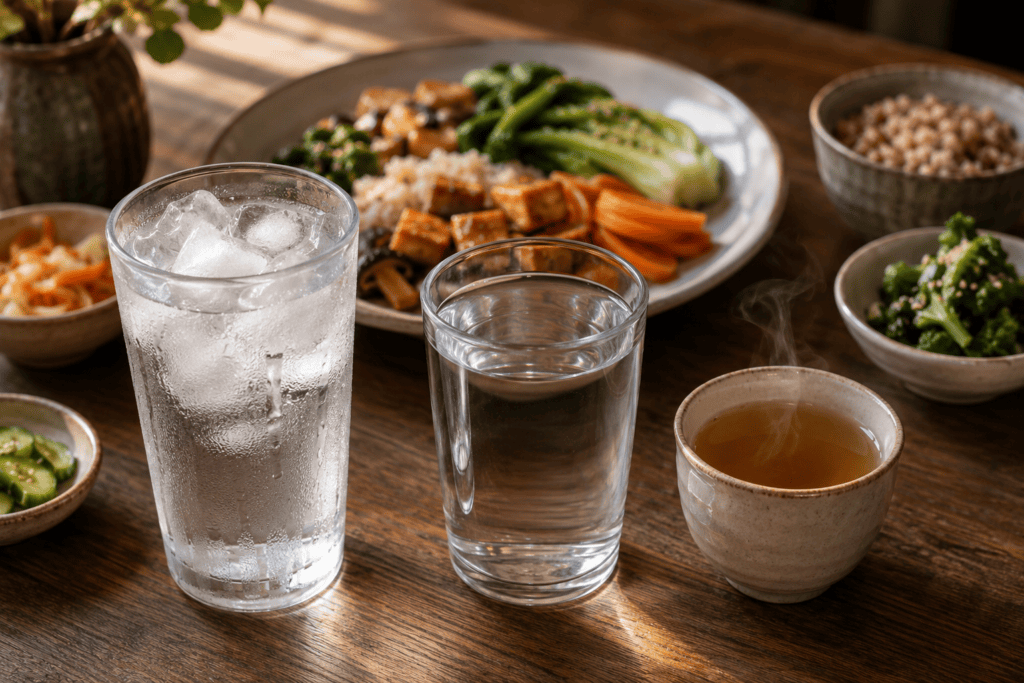
Most Americans grow up believing that having ice water with meals is normal. However, in many parts of the world, especially in Asia, this is not the case. Usually, people prefer to drink water at room temperature, and ice in drinks is rare enough that international visitors often notice it.
The American relationship with cold is so deeply normalized that the idea of avoiding ice is often met with surprise or skepticism.
Traditional Chinese Medicine has maintained a consistent stance on cold for thousands of years, forming a core principle in acupuncture education. It emphasizes that the body depends on warmth, and when cold enters the system, especially in the digestive tract and certain external areas, it should be handled with caution rather than ignored.
At Above and Beyond Acupuncture in Scottsdale, this topic often arises. Many patients have never received a clear explanation of why ice might be problematic. Knowing the reasoning behind this shifts how many people view small daily habits that gradually accumulate over the years.
The Problem with Ice Water and Cold Drinks at Meals

In Traditional Chinese Medicine, the Spleen and Stomach form the core of digestive health. They convert food into the energy and substances the body needs. These organs depend on warmth to function properly. The metabolic processes- breaking down food, extracting nutrients, and circulating them – perform best at the body’s normal temperature.
When cold drinks or ice water enter the stomach during a meal, the body must use energy to warm them to body temperature before it can digest the food efficiently.
Over time, this increased demand drains Spleen Qi, a term in Traditional Chinese Medicine that describes the digestive system’s capacity. Patients with weakened Spleen Qi often experience bloating, fatigue after eating, irregular bowel movements, and a general sense of sluggishness.
A Western explanation for this is that cold acts as a vasoconstrictor, causing blood vessel walls to tighten. When cold liquids enter the digestive system, the blood vessels in the stomach and intestines constrict, decreasing blood flow to these areas. This reduced flow limits the delivery of digestive enzymes and slows nutrient absorption.
The digestive system relies on good circulation. Cold reduces circulation. It’s a simple connection to understand.
This is why Traditional Chinese Medicine typically recommends drinking room temperature water with meals. Warm tea or broth is considered even more beneficial. Cold drinks consumed between meals, when digestion isn’t active, are less problematic.
Ice for Injuries: The Conventional Wisdom Has Shifted

For years, the common recommendation for soft tissue injuries was the RICE protocol: rest, ice, compression, and elevation. Among these, ice was considered the most important, leading to the routine use of ice packs as the first response to sprains, strains, or bruises. The scientific basis behind that recommendation has been significantly reexamined. The doctor who first introduced the RICE acronym later publicly changed his stance on ice, citing growing evidence that it may hinder healing rather than promote it.
Sports medicine has gradually aligned with this perspective over the years, and systematic reviews stored by the National Institutes of Health indicate that the evidence supporting ice use for acute soft tissue injuries is, at best, limited.
The core explanation returns to vasoconstriction. When soft tissue is injured, the body directs highly oxygenated blood to the site. This blood provides oxygen, immune cells, and inflammatory mediators essential for clearing cellular debris and starting repair. Though inflammation can be uncomfortable, it is not a flaw; rather, it is a necessary part of the healing process.
Applying ice causes blood vessels at the injury site to constrict, significantly limiting the flow of oxygen-rich blood to the affected tissue. This counteracts the body’s natural healing response. As a result, cellular repair slows, the inflammatory cleanup delays, and the healing process takes longer than it would without intervention.
The position of Traditional Chinese Medicine has remained consistent over time.
Ice in the first few hours after an acute injury can help manage severe swelling, but once that initial window closes, the body needs warmth, blood flow, and movement to support recovery. Heat applications, gentle movement, and treatments that increase circulation produce notably better long-term outcomes than prolonged icing for most soft tissue injuries.
The Base of the Neck: A Specific Vulnerability

Traditional Chinese Medicine strongly advises against exposing the back of the neck and the base of the skull to cold.
According to traditional Chinese medicine, this area serves as the entry point for external Wind and Cold. Key points at the base of the skull, such as Feng Chi, meaning Wind Pool, are seen as the gateway through which external influences enter the body and interfere with internal balance.
Patients who sleep with a fan blowing directly on their neck, go outside in cool weather with wet hair, or use ice packs on the back of the neck for tension headaches often experience the typical pattern predicted by Traditional Chinese Medicine: an acute stiff neck, occipital headache, sudden cold or flu symptoms, and rigid upper back tension that doesn’t respond well to regular stretching.
This is a highly clinically reliable observation in traditional lifestyle theory: the base of the neck should remain warm. Scarves in cold weather serve more than an aesthetic purpose. They protect an area where key vascular and neurological pathways meet, and where the body has specific reasons to maintain insulation.
The Underlying Principle of Circulation
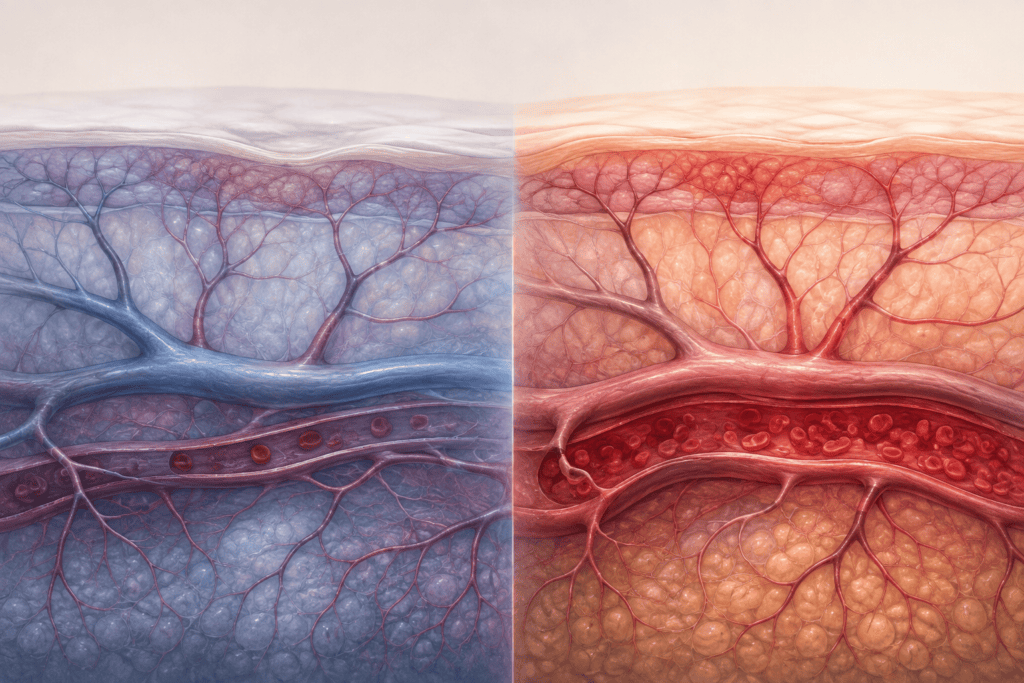
The common thread running through all of these patterns is vascular delivery. Cold acts as a vasoconstrictor, narrowing blood vessels. When this happens, blood flow slows, so less oxygen reaches tissues, fewer immune cells arrive where they are needed, waste products clear more slowly, and cellular repair takes longer. Understanding this shows how cold affects our body’s healing and protection mechanisms.
This holds true within the digestive tract during a meal, in soft tissue following an injury, and in the upper neck where key channels come together.
Warmth helps improve circulation, which in turn supplies highly oxygenated blood essential for the body’s functions, repair, and healing. The idea that cold negatively impacts health is not mere superstition; it is based on a centuries-old understanding of a physical principle that contemporary research continues to validate.
Practical Adjustments
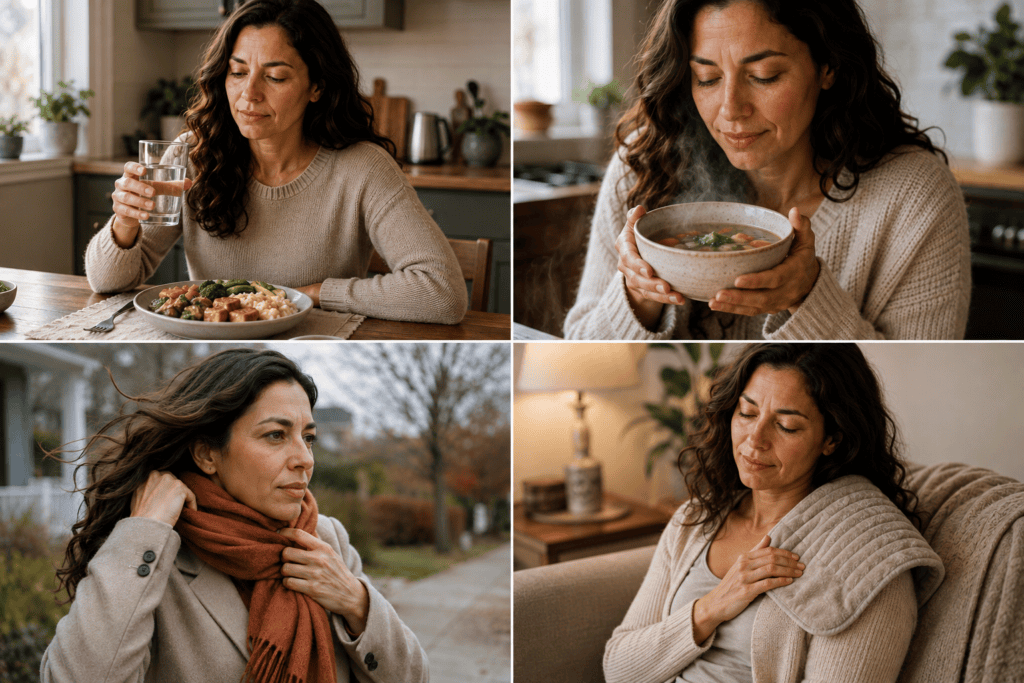
Patients interested in making these changes can see meaningful results over time with a few simple adjustments:
- Drink water at room temperature during meals instead of ice water.
- Apply heat instead of ice for ongoing pain, recurring tension, and injuries beyond the initial hours.
- Keep the back of the neck covered in cold weather and avoid sleeping with fans blowing directly on it.
- Eat warm foods, especially in the morning, instead of relying on cold smoothies and raw salads.
None of these changes require you to overhaul your entire lifestyle. They are small changes to routine habits that many people haven’t considered. Over time, these small adjustments can significantly impact digestive health, overall circulation, and immunity.
A Conversation Worth Having

If you’re experiencing chronic digestive problems, persistent neck and shoulder tension, slow-healing injuries, or frequently catching seasonal illnesses, it may be worth investigating how cold exposure fits into your daily routine. From a Traditional Chinese Medicine viewpoint, this is an area where minor adjustments can lead to significant improvements.
Reach out to Above and Beyond Acupuncture on North Frank Lloyd Wright Boulevard in Scottsdale to schedule a consultation and explore what other patterns may be contributing to your symptom picture.
Schedule an appointment online or call us today to start your journey to relief.

About the Publisher
Paul Kerzner, L.Ac., is a licensed acupuncturist and board-certified herbalist, as well as the founder of Above and Beyond Acupuncture in Scottsdale. His own journey from chronic patient to practicing acupuncturist shapes his commitment to providing honest, clinically grounded information about acupuncture and Traditional Chinese Medicine. Learn more about Paul and his clinical approach on the About Us page.