
Key Takeaways
- Procrastination arises from feelings of overwhelm, low energy, and self-criticism, not just laziness.
- Acupressure can shift your mindset by addressing these feelings, with specific points to restore motivation and clarity.
- Key acupressure points like KI3, LR3, and HT7 support willpower, release stagnation, and calm self-criticism.
- Combine acupressure with practical habits, such as breaking tasks into small steps, to enhance effectiveness.
- Seek professional help for chronic procrastination linked to deeper issues like anxiety or ADHD, as acupressure complements but doesn’t replace therapy.

Everyone knows that feeling. There’s something you need to get started on, but instead of jumping right in, you might find yourself doing everything else first, dreading it, feeling guilty, watching the deadline creep closer while scrolling through your phone, tidying up, or just feeling frozen in place. Procrastination isn’t necessarily about laziness. It comes from real feelings: overwhelm that makes starting seem impossible, foggy low energy, feeling stuck, and a drained sense of motivation. Although acupressure isn’t a quick fix, it can help shift your inner state. It can subtly reduce feeling overwhelmed, clear mental fog, break through persistent blocks, and boost your motivation.
Traditional Chinese Medicine interprets procrastination through several interconnected systems that lead to stagnation and an inability to act. An obstruction of Liver Qi results in a feeling of being stuck and blocked, preventing forward movement and progress. A deficient or congested Spleen manifests as mental fog, sluggishness, and heaviness, since the Spleen oversees both energy and cognitive clarity. The Kidneys, which in this tradition store Zhi, the essence of willpower, are fundamental to motivation and perseverance; when depleted, drive to begin and sustain diminishes. Overwhelm and self-criticism destabilize the Heart and Shen, leading toward avoidance.
Acupressure addresses the underlying feelings behind procrastination, but the effort to act still rests with you. It works best when combined with the practical habits outlined in this article.
Here are nine acupressure points that can help: These points aim to facilitate the free flow of Qi, dispel mental fog, bolster willpower, and reduce overwhelm:
What Acupressure Points to Press and Why
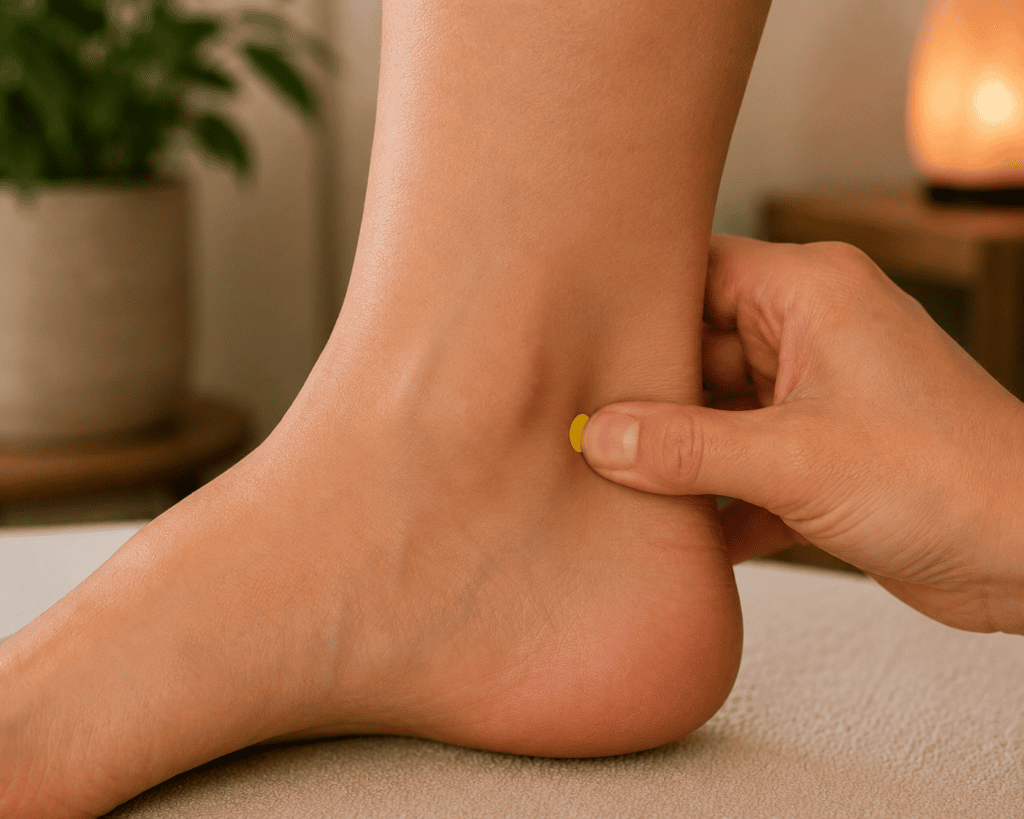
1. Press on KI3 above the inner ankle to strengthen the will to start. KI3 sits in the hollow between the inner ankle bone and the Achilles tendon, level with the tip of the ankle bone. Press firmly with your thumb for one to two minutes on each ankle. KI3 is called “Taixi,” the source point of the Kidney, the organ that stores the will.
In Traditional Chinese Medicine, the Kidney is believed to house Zhi, which represents will and willpower. The motivation to start a task and the determination to complete it both depend on the Kidney, and KI3, its source point, enhances this core willpower. It helps replenish depleted energy reserves that cause feelings of drained motivation and stabilizes the resolve that procrastination can weaken. For individuals whose procrastination stems from a genuine lack of drive rather than just distraction, this point targets the root of the issue. Therefore, it is the most appropriate starting point for treatment.
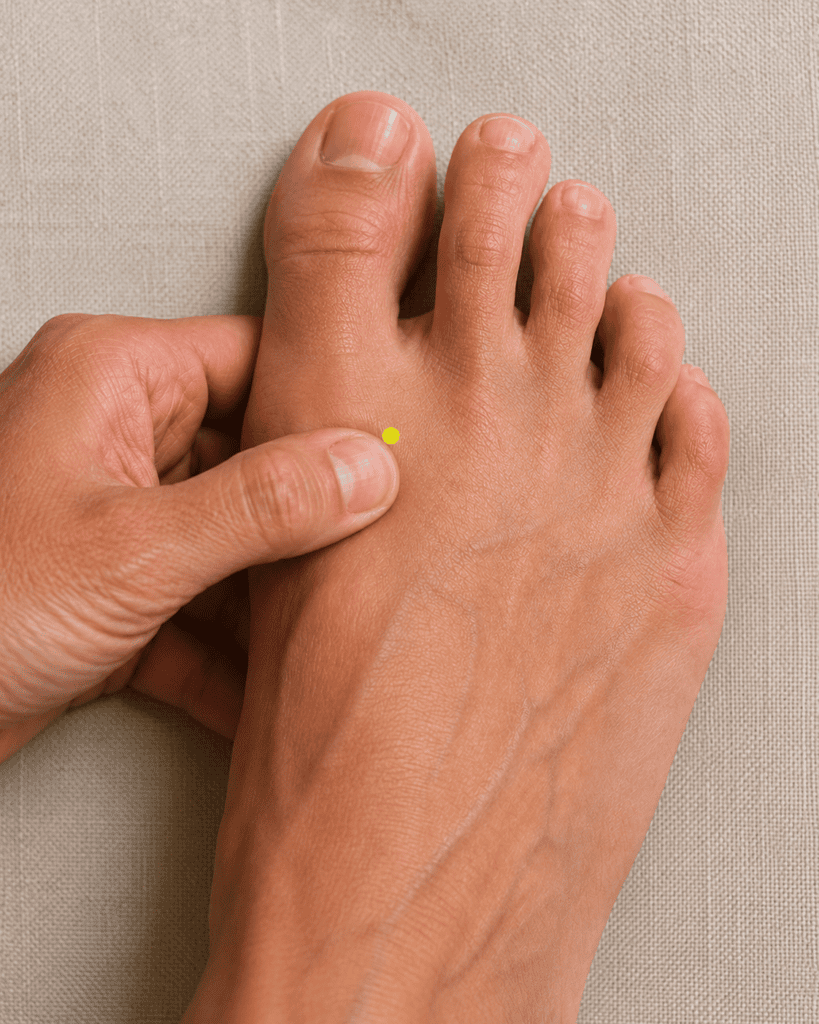
2. Press on LR3 on the top of the foot to free the stalled feeling. LR3 sits on the top of the foot, in the webbing between the big toe and second toe, about two finger-widths back where the bones meet in a small hollow. Press firmly with the thumb for one to two minutes on each foot. LR3 is called “Taichong,” the primary point for moving stuck Liver Qi.
Procrastination often feels like being stuck or unable to move, which Chinese medicine attributes to blocked Liver Qi, the flow of energy that’s halted. LR3 helps release this stagnation, promoting movement and relieving the sensation of being stuck or blocked, along with the frustration of inaction. For someone who feels frozen and unable to progress on a task, this point helps unblock them and ground restless, avoidant energy by drawing it down toward the feet.
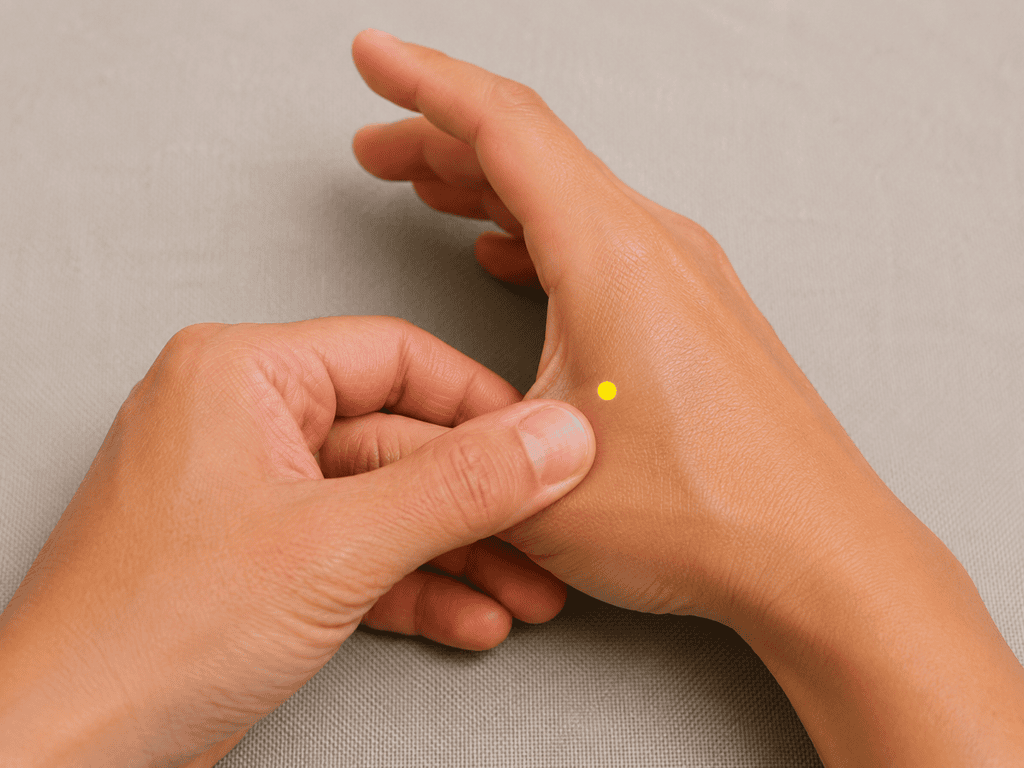
3. Press on LI4 in the hand to move the stuck energy along. LI4 sits in the webbing between the thumb and index finger, at the highest point of the muscle when you bring the thumb and finger together. Press firmly with the thumb of your other hand for one to two minutes on each hand. LI4 is called “Hegu,” a major point for moving Qi. LI4 is avoided during pregnancy.
LI4 helps move stuck Qi throughout the body and clears the head. When pressed together with LR3 on the foot, it creates the classic Four Gates combination, renowned as one of the most effective acupressure pairings for releasing stagnation and stimulating the system. This combo is especially helpful for overcoming procrastination by encouraging energy flow, making beginning tasks feel less like pushing against a wall. Additionally, it clears mental fog, reducing the heaviness associated with difficult tasks.
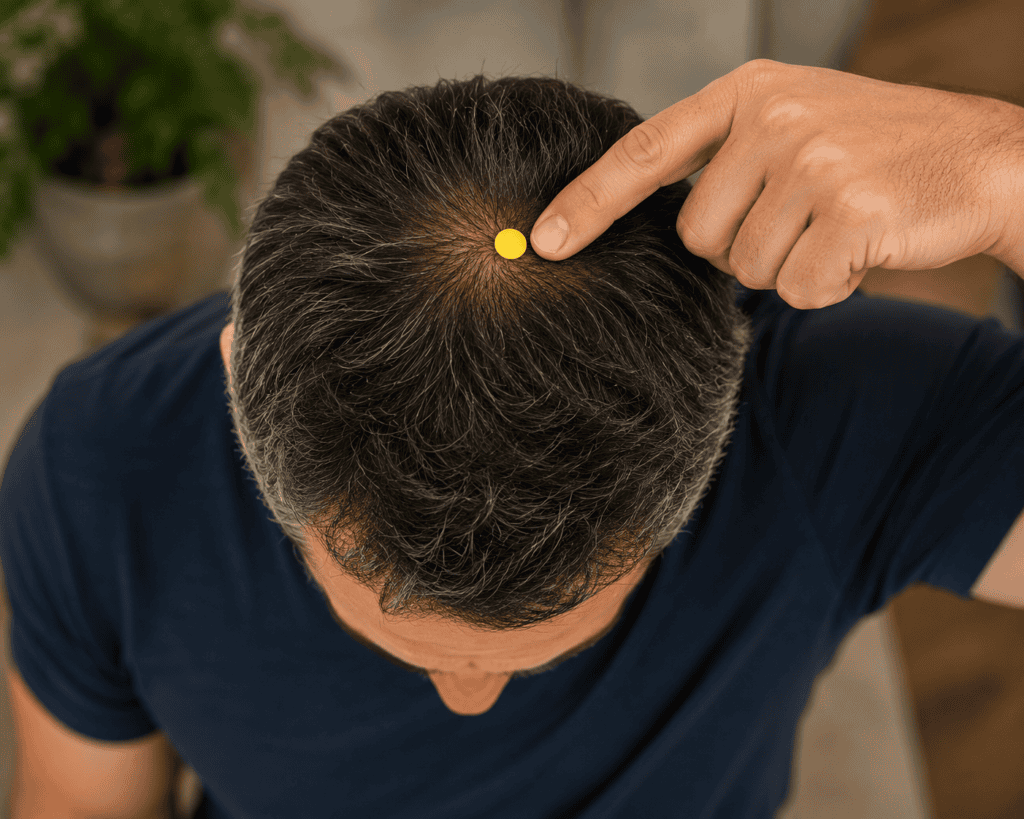
4. Press on GV20 at the top of the head to lift motivation and clear the fog. GV20 sits at the very top of the head, on the midline, on a line drawn up from the tops of both ears. Press straight down, or make small circles, with your fingertip for one to two minutes. GV20 is called “Baihui,” the “Hundred Meetings,” where many channels converge at the crown.
GV20 lifts the Qi and the spirit, clears the head, and counters the heavy, sunken, unmotivated feeling behind procrastination, raising mental energy to engage. While the low, flat, foggy state pulls you down and away from the task, this point lifts you back up and brightens the mind, making it easier to feel ready to start. For the person weighed down and dulled by avoidance, this point raises the spirit and the drive and sharpens a foggy head into something clearer.
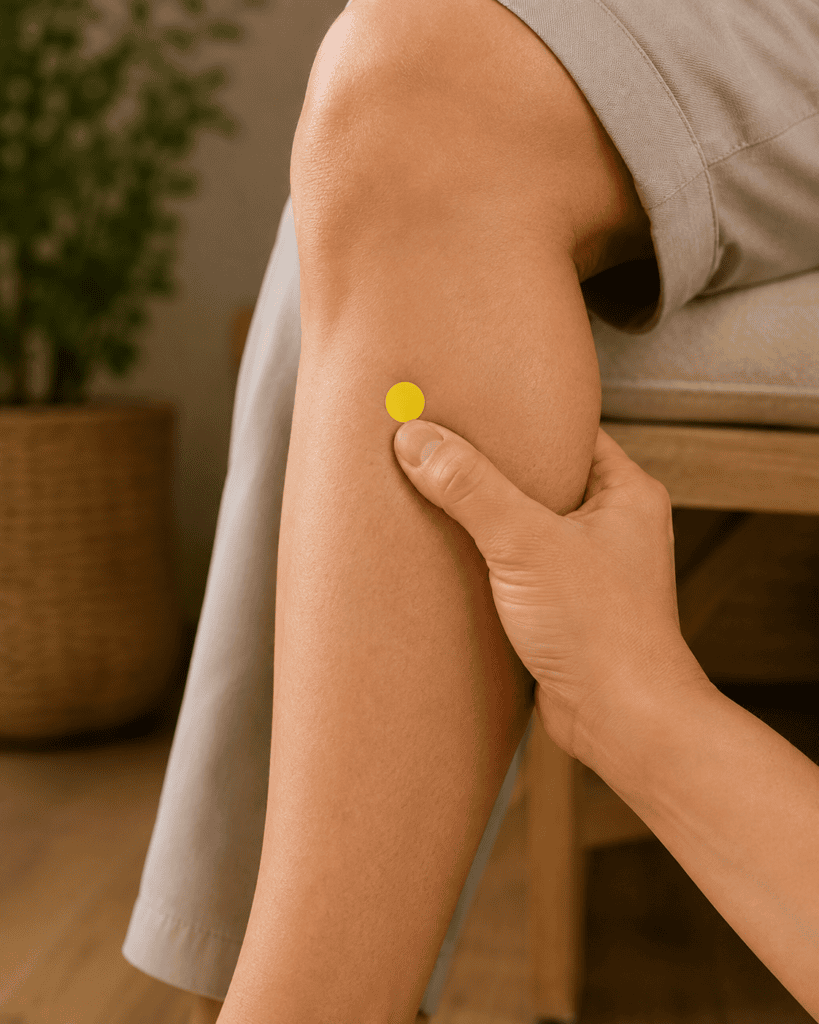
5. Press on ST36 below the knee to fight the heavy, sluggish feeling. ST36 sits four finger-widths below the lower edge of the kneecap and one finger-width to the outside of the shinbone, on the muscle that rises when you flex your foot. Press firmly with your thumb for one to two minutes on each leg. ST36 is called “Zusanli,” the “Leg Three Miles,” and it is the master point for energy in the whole body.
Procrastination often stems from low energy disguised as heaviness and fatigue, making tasks seem impossible. ST36 helps rebuild Qi and strengthens the Spleen, which produces energy. When the Spleen is weak, it causes feelings of heaviness, fogginess, and difficulty getting started. This point alleviates that heaviness, restoring energy and mental clarity. For those whose procrastination feels like a wall of exhaustion, ST36 renews motivation and, with regular use, enhances the energy needed to begin tasks.
6. Press on CV6 below the navel to rebuild your drive. CV6 sits on the midline of the lower abdomen, about two finger-widths below the navel. Rest your fingertips or palm there and press gently and warmly for one to two minutes. CV6 is called “Qihai,” the “Sea of Qi,” the gathering point for the body’s Qi in the lower abdomen.
CV6 is a warming, energizing point that revitalizes the body’s core Qi and vitality, the deep energy source for motivation and action. Its name, the Sea of Qi, highlights its function as a reservoir of vital energy, which a drained, unmotivated person may be lacking. Applying gentle heat to this point replenishes energy and promotes forward movement. For those whose procrastination stems from exhaustion and low motivation, CV6 helps rebuild the willpower to act. It works effectively with KI3 and ST36 to restore inner drive from the core.

7. Press on Yintang between the eyebrows to ease the overwhelm. Yintang sits in the small hollow directly between the two eyebrows. Press steadily and hold, or make small, slow circles with your fingertip for one to two minutes. Yintang is an extra point and one of the most calming points in the body.
Procrastination often stems from feeling overwhelmed when a task seems too big or intimidating. The mind tends to avoid it, but Yintang helps by calming the Shen and soothing an anxious, busy mind. This creates a centered calm, making large tasks seem less intimidating and easier to handle step by step. For those who delay because starting causes anxiety, this point reduces that pressure, clearing emotional clutter that blocks progress.

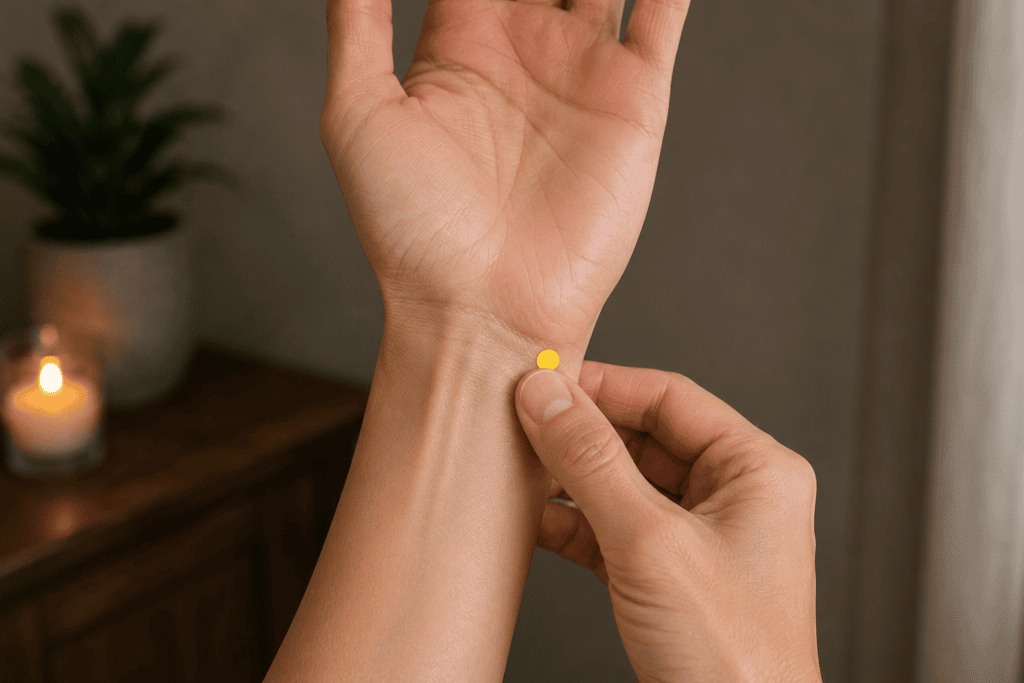
8. Press on HT7 at the wrist to quiet the self-criticism. HT7 sits on the inner wrist crease, on the pinky side, in the small hollow just inside the tendon. Press firmly with your thumb for one to two minutes on each wrist. HT7 is called “Shenmen,” the “Spirit Gate,” and it is the source point of the Heart and the most important point for calming the Shen.
Procrastination perpetuates a cycle of anxiety and self-criticism, in which guilt over delay makes starting even harder. HT7 helps by calming the Heart and settling the Shen that this cycle disturbs. It soothes anxious, self-critical thoughts and alleviates the emotional burden of avoidance, making it easier to begin tasks without the weight of dread. For someone trapped in this guilt-and-avoidance loop, this point stabilizes the mind and can be pressed quietly whenever pressure intensifies.
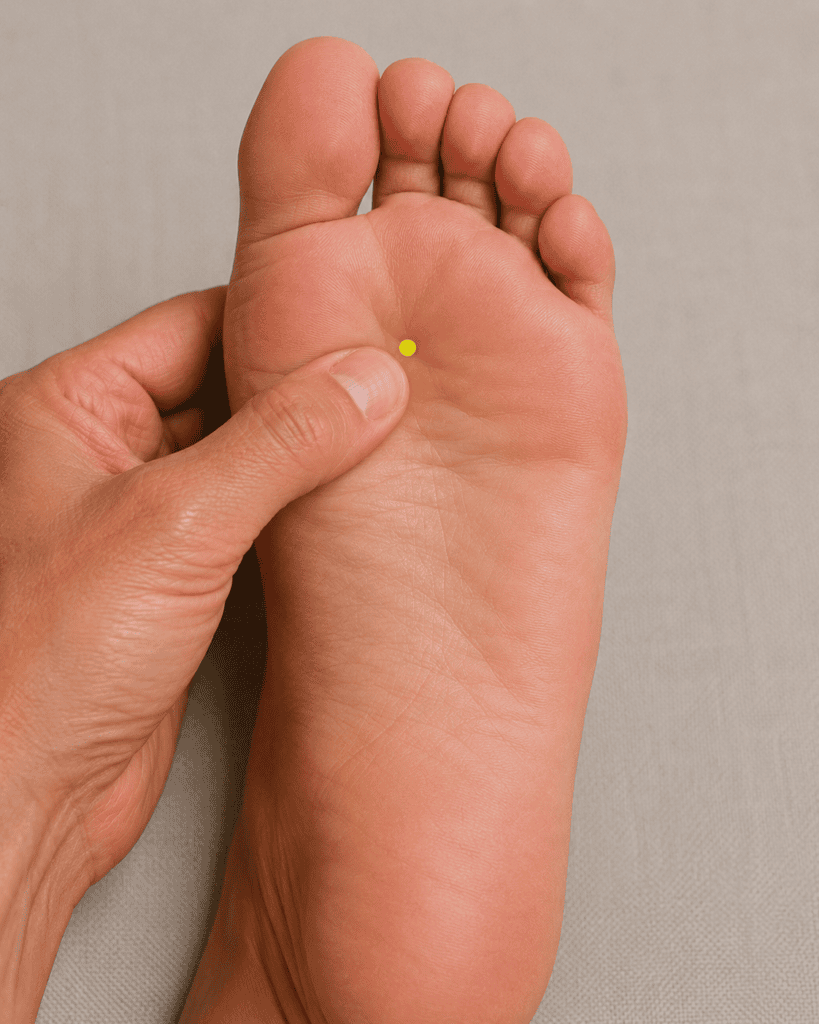
9. Press on KI1 on the sole of the foot to ground and return to the task. KI1 sits on the sole of the foot, in the hollow that forms in the center of the ball of the foot when you curl the toes, about a third of the way down from the toes to the heel. Press firmly with your thumb for one to two minutes on each foot. KI1 is called “Yongquan,” the “Bubbling Spring,” and it is the lowest point on the body.
KI1 grounds a scattered, distracted, restless mind and draws the avoidant energy back down and in, which is exactly the reset needed when procrastination has you flitting between everything except the task. Being the lowest point on the body, it is deeply settling, pulling you out of the anxious, up-in-the-head avoidance and back to a grounded, present state from which you can begin. As a point on the Kidney channel, it also connects to the will the Kidney stores, so it grounds and gathers you toward action. It makes a fitting close, settling you back to the task at hand.
Why These Acupressure Points Work
In Traditional Chinese Medicine, procrastination results from a combination of stagnated Liver Qi blocking progress, a heavy or weakened Spleen causing fog and sluggishness, a depleted Kidney with low stored Will and drive, and an unsettled Heart and Shen overwhelmed by self-criticism. The nine points address the entire pattern.
- The will-and-drive points (KI3, CV6, KI1) strengthen the Kidney will, rebuild the core energy behind motivation, and gather you toward action.
- The stagnation points (LR3, LI4) free the stuck, stalled Qi that jams forward movement, working together as the Four Gates.
- The energy-and-clarity points (GV20, ST36) lift the heavy fog and rebuild the energy that makes starting feel possible.
- The calming points (Yintang, HT7) ease the overwhelm and self-criticism that drive avoidance.
How to Properly Use These Acupressure Points
Use these points to adjust your mindset before you begin and to maintain motivation throughout.
- When a task feels too big to begin, work Yintang and HT7 to ease the overwhelm, then LR3 with LI4 as the Four Gates to free the stuck feeling, and slow your breathing while you press.
- When you feel heavy, foggy, and low on energy, work GV20, ST36, and CV6 to lift the fog and rebuild the drive.
- To strengthen the underlying will over time, press KI3, CV6, and ST36 regularly, not only in the moment.
- Hold each point for one to two minutes with firm, steady pressure, then use that shifted state to start immediately, since the point of the reset is to begin while the window is open.
Acupressure can help you prepare, but holistic habits will help you overcome procrastination.
- Break your task into the smallest initial step, as starting is usually the hardest part, and a tiny action is easier than a large one.
- Allow yourself just a few minutes to begin, which can often break the paralysis and lead you into work.
- Eliminate obvious distractions ahead of time, such as placing your phone elsewhere, and be kind to yourself; self-criticism only continues the cycle.
- Establish a routine trigger to signal that you’re about to start, then go ahead.
When to Get Professional Help
Procrastination is normal human behavior, and these tools suit everyday situations. When procrastination becomes chronic and significantly impacts your work, studies, finances, or health, it’s important to explore the underlying causes. Often, persistent procrastination is linked to issues like anxiety, depression, perfectionism, or attention difficulties such as ADHD—all of which are common, real, and treatable. Consulting a doctor, therapist, or counselor can help identify and address these root causes. Techniques like cognitive behavioral therapy can help change the patterns that sustain procrastination.
Acupressure can help shift the emotional states behind procrastination, but it’s not a substitute for professional support when the issues run deeper and require additional attention.
Above and Beyond Acupuncture offers acupuncture, cupping, and lifestyle coaching at the North Frank Lloyd Wright Boulevard location in Scottsdale.
Schedule an appointment online or call us today to start your healing journey.
The points above are only as effective as the technique used to apply them. Where to press, how firmly, and for how long all affect the result. For a full breakdown of how to perform acupressure properly at home, read Performing Acupressure in 3 Easy Steps.

About the Publisher
Paul Kerzner, L.Ac., is a licensed acupuncturist and board-certified herbalist, as well as the founder of Above and Beyond Acupuncture in Scottsdale. His own journey from chronic patient to practicing acupuncturist shapes his commitment to providing honest, clinically grounded information about acupuncture and Traditional Chinese Medicine. Learn more about Paul and his clinical approach on the About Us page.