
Key Takeaways
- Ménière’s disease causes episodes of vertigo, ringing, ear fullness, and muffled hearing in one ear, often causing unpredictability and fatigue.
- Acupressure for Ménière’s disease can help alleviate symptoms and reduce nausea by stimulating specific pressure points.
- Key acupressure points include SI19, SJ17, GB20, and PC6, which aid in relieving fullness, calming nausea, and managing stress.
- Lifestyle modifications, such as reducing salt intake and controlling stress, can greatly influence how often and how severe attacks are.
- Professional medical consultation is essential for the accurate diagnosis of Ménière’s disease and the exclusion of alternative conditions.

Do you experience sudden episodes of spinning vertigo accompanied by ringing, fullness, and muffled hearing in one ear?
Ménière’s disease is characterized by a distinctive combination of inner ear symptoms. Attacks can occur unexpectedly, last for hours, and often leave individuals feeling fatigued and unsteady afterward. These episodes are unpredictable, which is particularly challenging, leading many people to organize their lives around the possibility of future attacks.
Acupressure provides a gentle approach that can ease symptoms both during and between attacks, lessen nausea, and address the patterns recognized by Traditional Chinese Medicine as the root cause.
The following article explains what Ménière’s is, how it differs from other causes of vertigo, how Traditional Chinese Medicine perceives it, which points are effective and why, and how to use them safely.
What Is Ménière’s Disease?
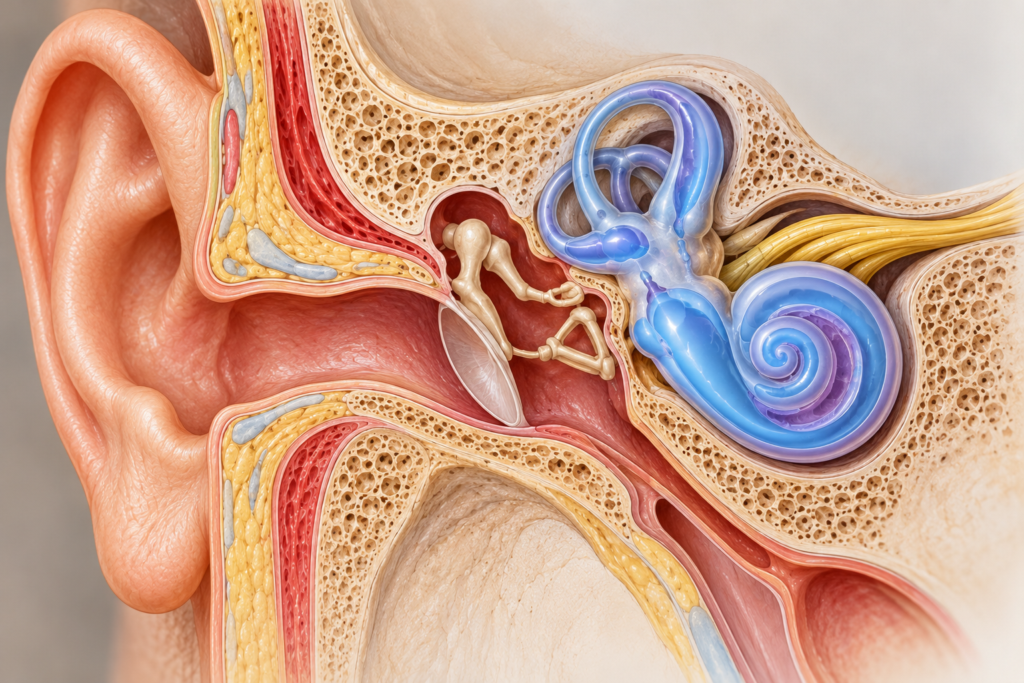
Ménière’s disease is associated with a buildup of fluid in the inner ear, which governs hearing and balance, typically affecting one ear. The inner ear contains a delicate labyrinth filled with fluid that detects sound and movement. Fluctuations in the pressure and volume of this fluid disrupt the signals sent to the brain about balance and hearing, leading to the sudden, intense spinning sensation associated with an attack.
A typical attack includes:
- Intense, spinning vertigo lasting from twenty minutes to several hours
- Nausea and often vomiting
- A roaring, buzzing, or ringing sound in the affected ear
- A feeling of pressure or fullness in the ear, often building before the vertigo
- Hearing that fluctuates, especially in the low tones
Most individuals feel fairly normal between attacks, though some might experience fatigue and imbalance for a day or two. Over time, hearing in the affected ear can progressively decline, and the ringing may persist longer. Many notice warning signs beforehand, like increasing fullness, changes in ringing, or muffled hearing, giving them some time to seek safety.
Who Gets Ménière’s and What Triggers Attacks

Ménière’s disease typically begins between ages forty and sixty, though it can start earlier or later. Its exact cause remains unclear, but several factors may contribute, including how the inner ear drains fluid, genetic factors, allergies, past viral infections, and sometimes a link to migraine. Once the condition develops, common attack triggers include stress, poor sleep, high-salt meals or significant changes in salt intake, caffeine, alcohol, dehydration, and weather or air pressure shifts. Because triggers vary between individuals, maintaining a diary is essential.
How Ménière’s Differs From Other Vertigo

Not all spinning spells are caused by Ménière’s disease, and distinguishing between different types is crucial for treatment.
Benign positional vertigo leads to brief spins lasting a few seconds to a minute, triggered by turning in bed or looking up, without affecting hearing. Vestibular migraine can cause dizziness with or without a headache, light sensitivity, and a migraine history, generally without permanent hearing loss. Vestibular neuritis involves a single, prolonged episode of severe dizziness following a viral illness, usually lasting several days. Ménière’s disease differs because it involves recurrent episodes of dizziness accompanied by ringing, a sense of fullness, and fluctuating hearing in one ear.
How Traditional Chinese Medicine Views Ménière’s Disease

Chinese medicine views Ménière’s disease as resulting from multiple interconnected patterns centered around the ear. Since many individuals exhibit a combination of these patterns, determining the most prominent one guides where to focus treatment.
- Phlegm and dampness clouding the ear. A weak Spleen allows fluids to collect and thicken into phlegm and dampness, which can rise and cloud the head and ears, bringing fullness, heaviness, and the fluid buildup that matches the inner ear picture closely. Nausea, a foggy head, and attacks after rich or salty meals often point here. ST40 and SP9 are the main points for this pattern.
- Wind rising to the head. When stress stirs the Liver, it can generate internal wind that rises to the head, bringing sudden, spinning vertigo. Attacks that follow stress, frustration, or poor sleep, with neck tension and irritability, point here. GB20, SJ17, LR3, and GV20 address this pattern.
- A weakened Kidney. The Kidney opens into the ears, so a weakened Kidney leaves hearing vulnerable and the ear prone to ringing. Gradual hearing loss, constant ringing, fatigue, and a sore lower back point here, especially in long-standing cases. KI3 is the main point for this pattern.
- Spleen too weak to manage fluids. Underneath the phlegm, many people show signs of a tired digestion: low energy, heaviness after meals, loose stools, and a pale, puffy tongue. Strengthening this root helps keep dampness from rebuilding between attacks.
What the Research Shows
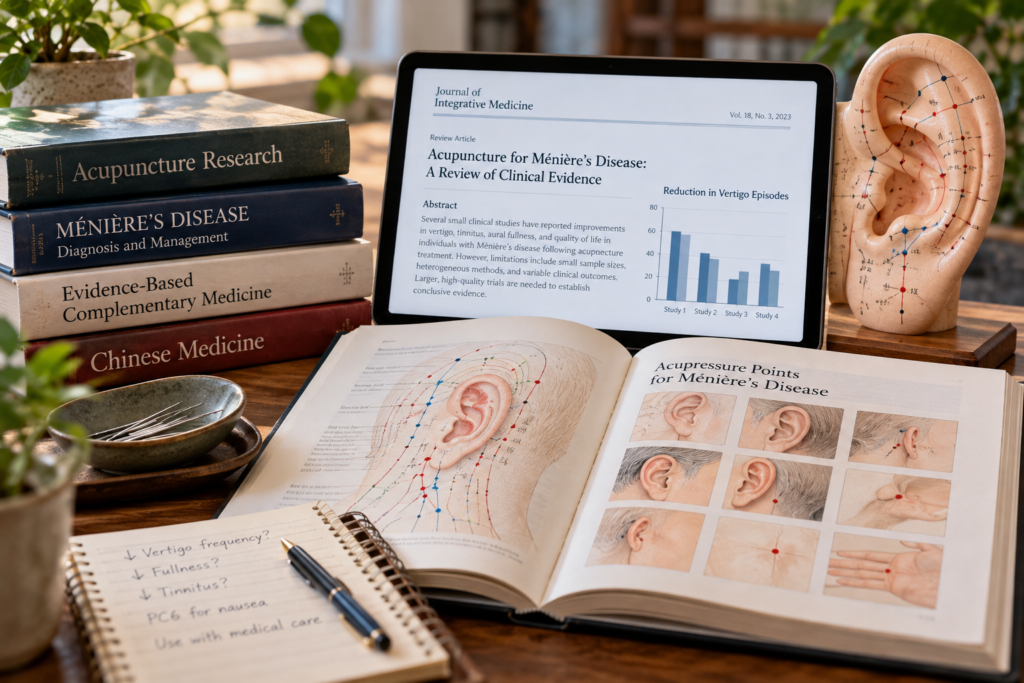
Some small studies suggest that acupuncture might help reduce vertigo and alleviate symptoms in certain individuals with Ménière’s disease, such as decreasing attack frequency, fullness, and ringing. However, due to limited research, small trial numbers, and varied methods, it is not yet conclusive enough to treat acupuncture as a proven option. The PC6 point is well-known for its effectiveness against nausea, making it particularly helpful during an attack. Acupressure should complement medical treatment and be used as part of a daily routine supporting your doctor’s advice.
Here are nine acupressure points that help open the ear, ease fullness, clear phlegm and dampness, calm rising wind, settle nausea, and strengthen the Kidney.
What Acupressure Points to Press and Why
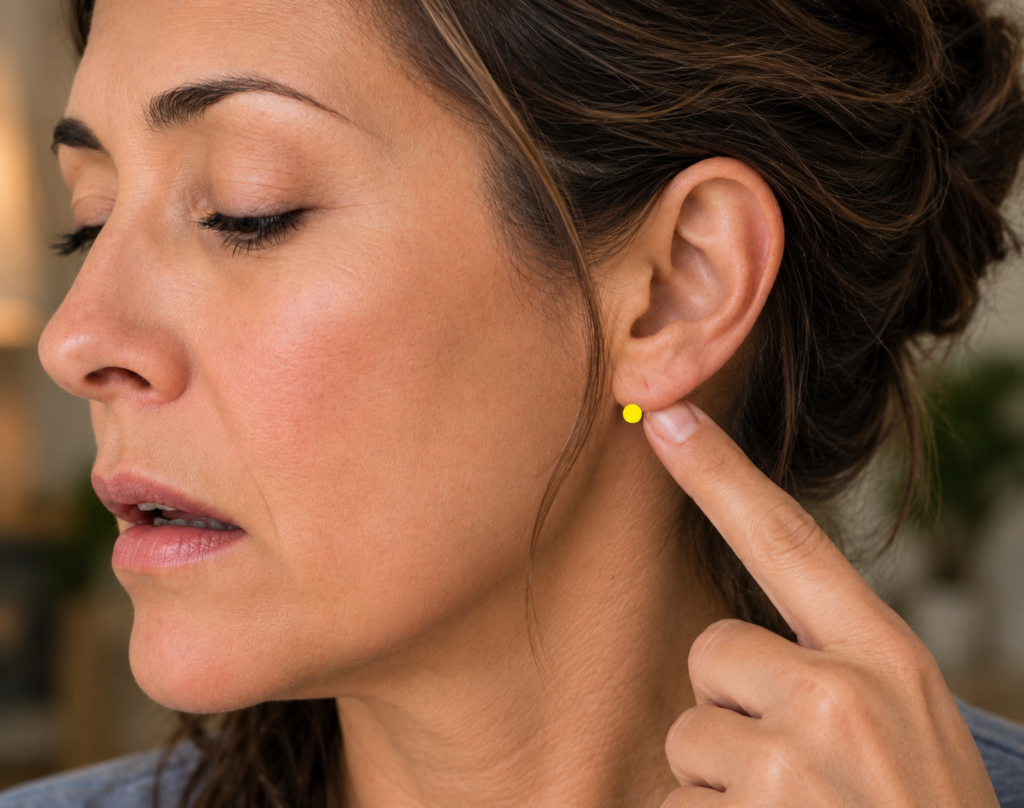
1. Press on SI19 in front of the ear to open the ear. SI19 sits just in front of the ear, in the hollow that forms when you open your mouth, next to the small flap of cartilage at the front of the ear canal. Open your mouth slightly and press gently with your fingertip for one to two minutes on the affected side. SI19 is called “Tinggong,” the “Palace of Hearing.”
SI19 is a key acupressure point on the ear, historically used to treat ringing, fullness, and hearing loss. It improves blood flow to the ear and helps relieve pressure. The acupressure point should be stimulated between episodes instead of during one, since jaw and head movements might worsen spinning. Many find that applying steady, gentle pressure for a minute or two helps the fullness resolve.
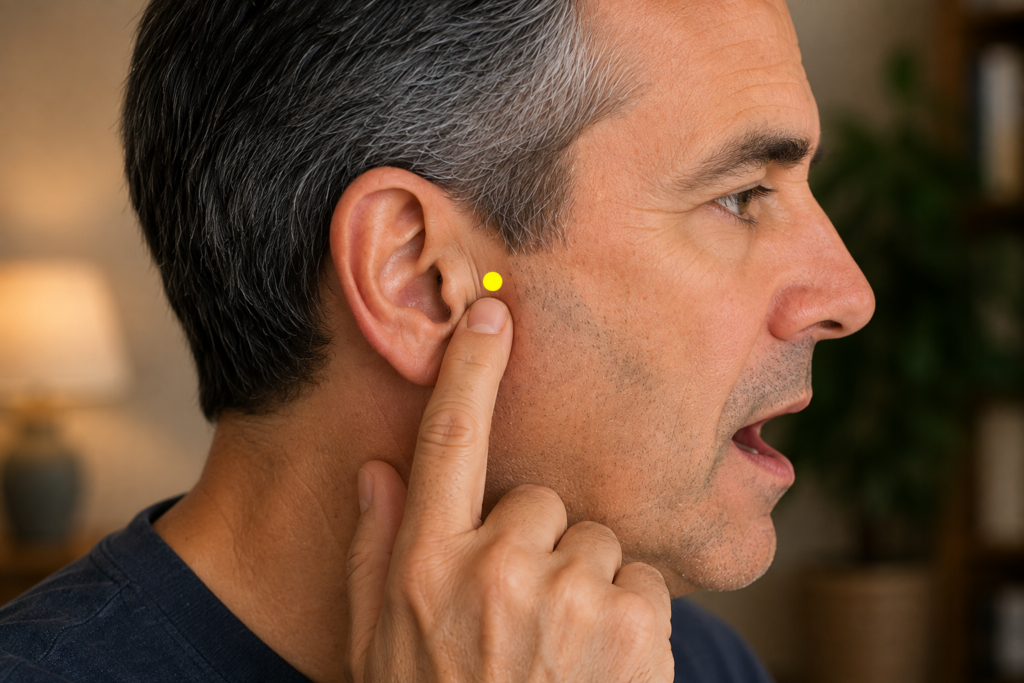
2. Press on SJ17 behind the earlobe to ease fullness and ringing. SJ17 sits just behind the earlobe, in the hollow between the bone behind the ear and the angle of the jaw. Press gently with your fingertip for one to two minutes on the affected side. SJ17 is called “Yifeng,” the “Wind Screen.”
SJ17 stimulates the ear from behind, reducing ringing, fullness, and pressure sensations. As the name suggests, it also helps calm wind in the head, a Chinese medicine condition associated with sudden vertigo. When combined with SI19, it applies pressure to both ears. This point is often tender in people with Ménière’s disease, so pressure should be gentle and attentive to tenderness.
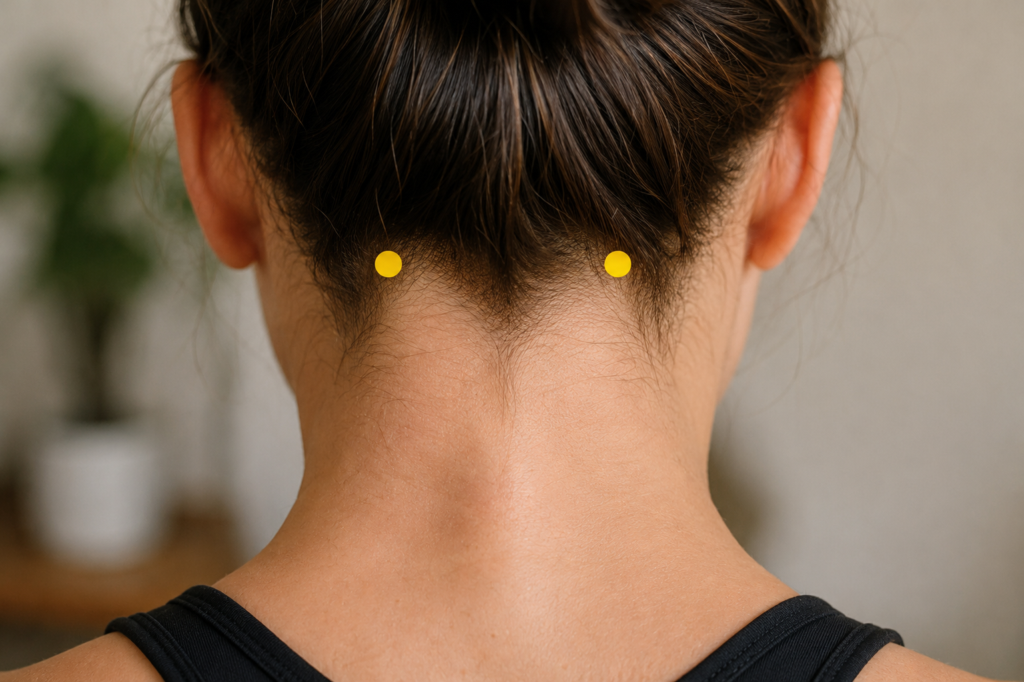
3. Press on GB20 at the base of the skull to calm rising wind. GB20 sits in the two hollows at the base of the skull, between the two large vertical neck muscles and the outer edge, roughly level with the tops of the ears. Press gently up and inward with your thumbs for one to two minutes. GB20 is called “Fengchi,” the “Wind Pool.”
GB20 is a crucial acupressure point for vertigo and dizziness because it calms the internal wind responsible for sudden spinning and helps clear the mind. It also relieves neck tension that often builds up during and after an attack, as the body tends to stiffen against the spinning. When pressing it, keep your head still and supported.
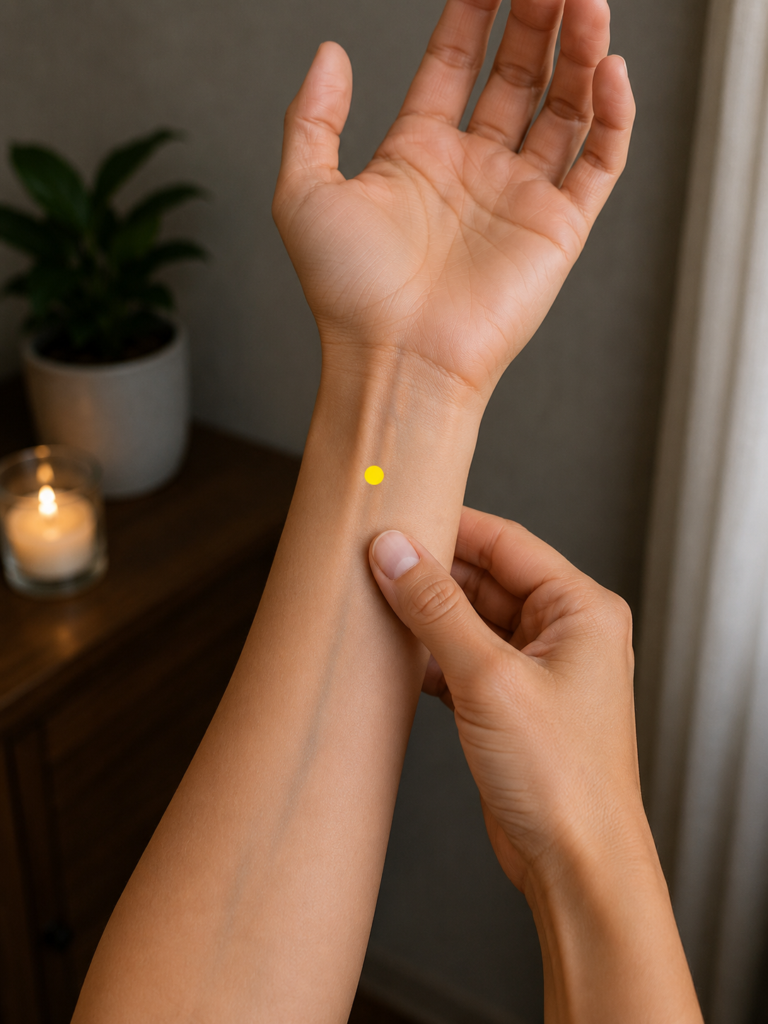
4. Press on PC6 on the inner forearm to settle nausea. PC6 sits three finger-widths above the inner wrist crease, in the center of the forearm between the two tendons. Press firmly with your thumb for one to three minutes on each arm. PC6 is called “Neiguan,” the “Inner Pass.”
PC6 is the most well-researched point for nausea and vomiting, common symptoms during Ménière’s attacks. Located on the forearm, it can be stimulated simply by pressing it while lying still with your eyes closed, making it the first point to try during an attack. Nausea-relief wristbands consistently apply pressure to this point and should be kept nearby, such as by the bed or in the car.
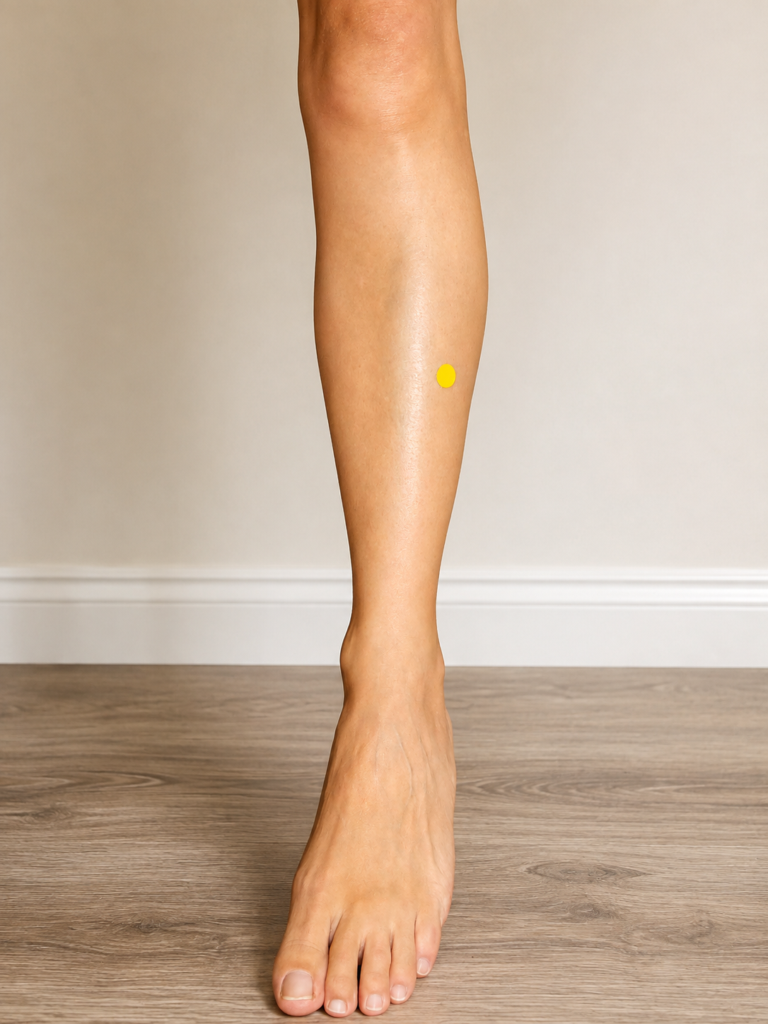
5. Press on ST40 on the lower leg to clear phlegm. ST40 sits on the outer lower leg, midway between the knee and the outer ankle bone, about two finger-widths to the outside of the shinbone. Press firmly with your thumb for one to two minutes on each leg. ST40 is called “Fenglong.”
ST40 is a crucial acupressure point for clearing phlegm, which Chinese medicine links to head and ear clouding in many Ménière’s disease cases. It effectively relieves the heavy, foggy, full sensation in the head and ear, making it beneficial to use daily between episodes. The benefits of stimulating this point build gradually and are not immediate, so consistent daily practice matters more than any single session.
6. Press on SP9 below the inner knee to drain excess fluid. SP9 sits on the inner lower leg, in the hollow just below the bulge at the top of the shinbone, on the inner side of the knee. Press firmly with your thumb for one to two minutes on each leg. SP9 is called “Yinlingquan.”
SP9 is an important point for removing dampness and for regulating the body’s fluids. Since Ménière’s disease is characterized by an accumulation of fluid in the inner ear, this point addresses the fluid aspect of the condition from the perspective of Chinese medicine and therefore complements ST40. Working both points, one on the outer leg and one on the inner leg, is one of the simplest daily habits in this routine.

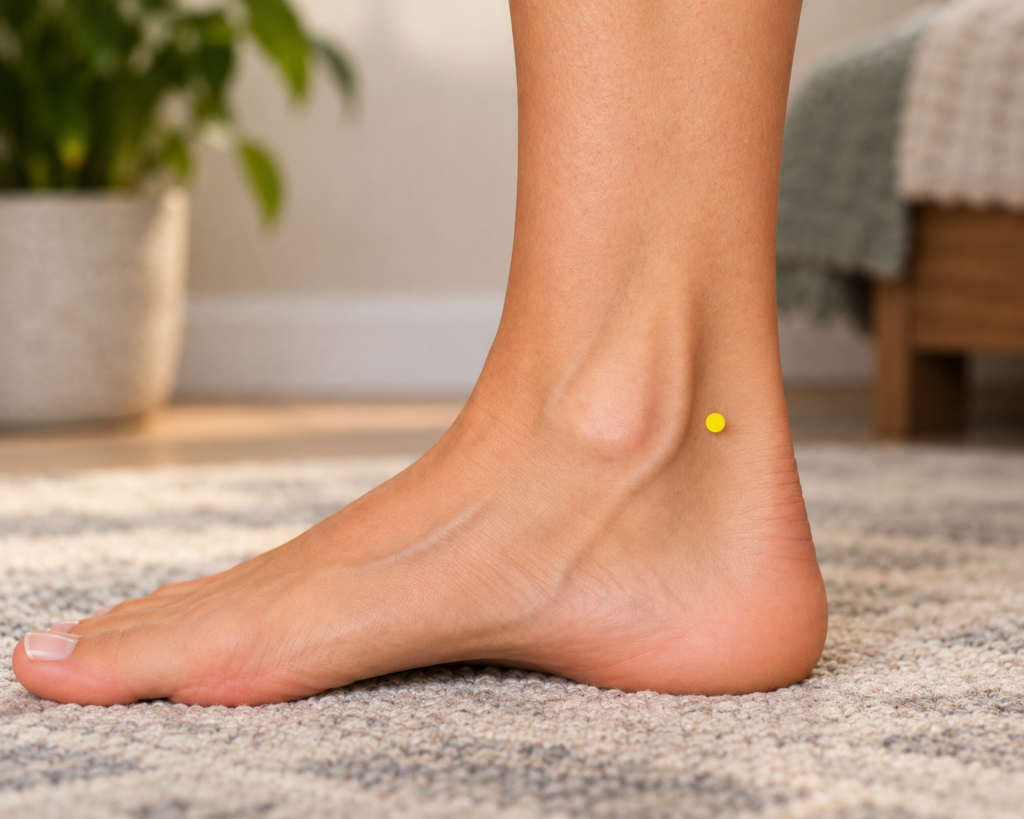
7. Press on KI3 behind the inner ankle to support the ears. KI3 sits in the hollow between the inner ankle bone and the Achilles tendon, level with the tip of the ankle bone. Press firmly with your thumb for one to two minutes on each ankle. KI3, called “Taixi,” is the Kidney’s source point.
Since the Kidney is linked to the ears, KI3 is vital for managing chronic ear issues like ringing and declining hearing. It supports core aspects of ear health and offers benefits when taken regularly between flare-ups. This point is especially significant for those with long-term Ménière’s disease who have seen gradual hearing loss.
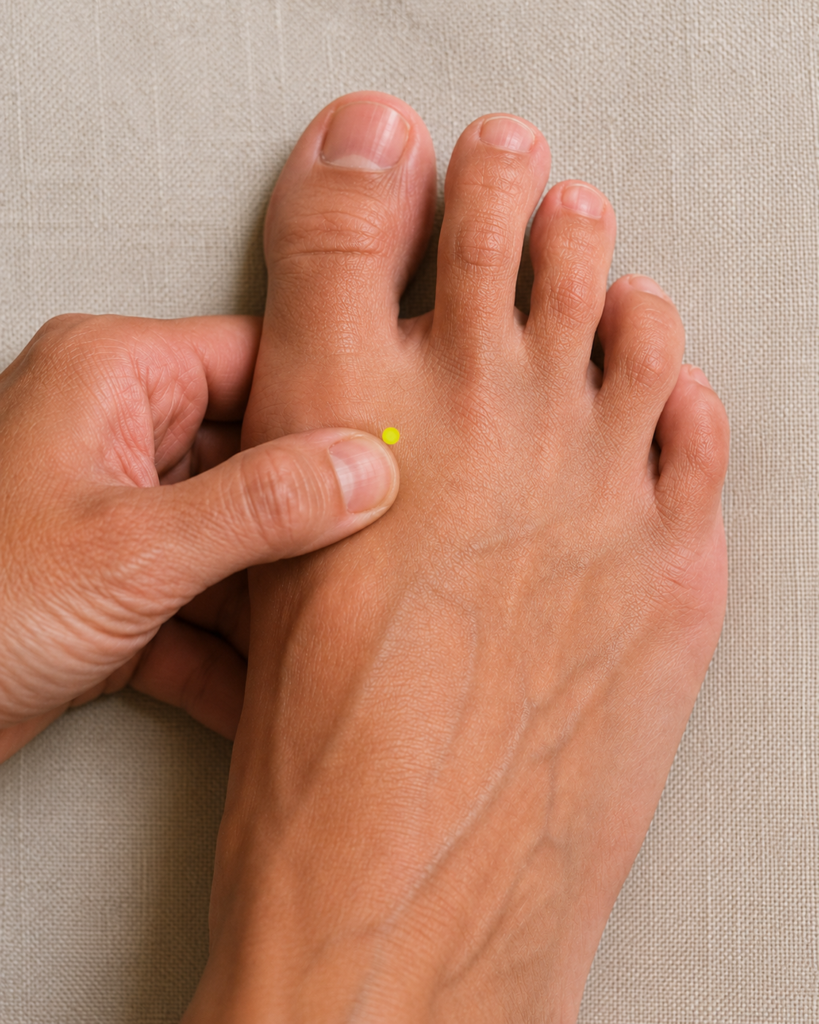
8. Press on LR3 on the top of the foot to calm stress and rising wind. LR3 sits on the top of the foot, in the webbing between the big toe and second toe, about two finger-widths back from the webbing, in the hollow just before the two bones meet. Press firmly with your thumb for one to two minutes on each foot. LR3 is called “Taichong.”
Stress is a common trigger for Ménière’s disease attacks. LR3 helps soothe the Liver, alleviates stress and tension, and calms the rising wind linked to vertigo. It also provides a sense of stability, which can be comforting after an attack, by encouraging the mind and energy to focus downward toward the feet.
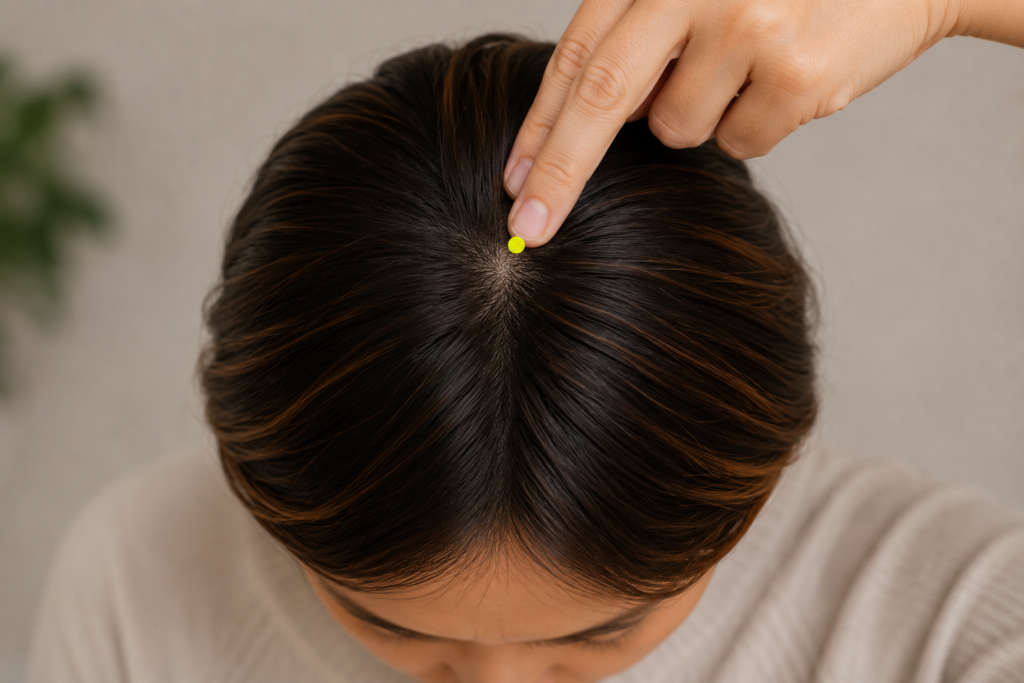
9. Press gently on GV20 at the top of the head to steady the head. GV20 sits at the very top of the head, on the midline, on a line drawn up from the tops of both ears. Rest your fingertip there and press gently for one to two minutes. GV20 is called “Baihui,” the “Hundred Meetings.”
Hold GV20 gently to stabilize the head and clear away fog and imbalance often felt during an attack. Apply gentle pressure without tapping or rubbing vigorously. As a quiet point, it’s best used to conclude the routine by calming the head after ear movements.
Why These Acupressure Points Work
In Traditional Chinese Medicine, Ménière’s disease is attributed to phlegm and fluid obstructing the ears and head, wind rising causing vertigo, and a weak Kidney failing to support the ears; these nine points address all these factors.
- The ear points (SI19, SJ17) open the ear and ease fullness and ringing.
- The vertigo and nausea points (GB20, PC6, GV20) calm the rising wind, steady the head, and settle the stomach.
- The fluid and phlegm points (ST40, SP9) clear the dampness that Traditional Chinese Medicine links to inner ear fluid buildup.
- The root points (KI3, LR3) strengthen the ears and calm the stress that triggers attacks.
How to Properly Use These Acupressure Points
During an attack:
- Lie down in a safe place with your head still and supported, and keep your eyes closed or fixed on one point.
- Press PC6 on both forearms for nausea, and if you can do so without moving your head, press GB20 gently.
- Breathe slowly and wait for the attack to pass. Do not try to stand, walk, or drive until it has fully settled.
At the first warning signs:
If you begin to feel ear fullness, notice changes in ringing or muffled hearing, go to a safe place first. Then, press PC6, LR3, and SJ17 for a minute each, sip water, and rest with your head supported. Some people find this brief routine helps soften or shorten what follows.
Between attacks:
- Perform the full routine once a day: SI19 and SJ17 around the affected ear, GB20 and GV20, PC6, then ST40, SP9, KI3, and LR3.
- Apply gentle pressure around the ear and head, and firm pressure on the arms and legs, holding each point for one to two minutes.
- Use the routine regularly over several weeks, as the goal is to have fewer and less severe episodes between attacks.
Sample routines
- Morning (five minutes): ST40, SP9, and KI3 to clear dampness and support the root before the day begins.
- Evening (ten to fifteen minutes): The full routine, finishing with LR3 and GV20 to settle the stress of the day.
- After an attack, once settled: GB20, GV20, and LR3 to ease the lingering fog, neck tension, and unsteadiness.
Living With Ménière’s
Daily habits can make a meaningful difference with Ménière’s. Many doctors recommend limiting salt and spreading it evenly through the day since large swings in salt intake can affect inner ear fluid. Ask your doctor what is right for you. Limit caffeine and alcohol, avoid smoking, and stay well hydrated, which matters even more in the Arizona heat when dehydration can quietly add to the strain on the inner ear. Keep a diary of attacks to identify your personal triggers such as stress, poor sleep, certain foods, or weather changes. Manage stress and protect your sleep.
Safety is also important. If you sense an attack approaching, move to a safe location immediately. Do not drive, climb ladders, or use machinery if your attacks occur unexpectedly. Keep anti-nausea wristbands, water, and any rescue medications prescribed by your doctor nearby for easy access.
Traditional Chinese Medicine emphasizes certain principles: eat regular, warm, cooked meals and limit greasy, fried, excessively sweet, and cold or raw foods, as they are believed to weaken the Spleen and promote dampness, contributing to feelings of fullness and heaviness. Avoid heavy, late dinners. Manage stress daily through activities like walking, tai chi, or slow breathing, since rising Liver wind often triggers attacks that seem to come out of nowhere.
How Acupuncture Can Help
If you experience frequent or persistent attacks, visiting a clinic for acupuncture might be more effective than home acupressure. We customize treatments based on your pattern, targeting points around the ear and additional points that help eliminate dampness, calm ascending wind, and reinforce the Kidney. Classical Chinese herbal formulas for phlegm and rising wind are often incorporated, selected to match your specific needs and reviewed alongside any medications you are taking. For further information, see the article on whether acupuncture can be used to treat vertigo.
When to Get Professional Help
A doctor, preferably an ear, nose, and throat specialist, should diagnose Ménière’s because other conditions may also cause vertigo and hearing issues. Seek emergency care if vertigo is accompanied by slurred speech, weakness, numbness on one side, double vision, difficulty walking, facial drooping, or a sudden severe headache, as these could signal a stroke. Urgent care is necessary if you suddenly lose hearing in one ear, since early treatment within a few days can be effective. Contact a healthcare provider immediately if you experience ear pain, fever, discharge, persistent vomiting that hampers fluid intake, frequent falls, or if your attacks become more frequent or intense. Acupressure is a gentle, supportive technique that can complement medical treatment for this condition.
For vertigo from other causes, acupressure for vertigo and acupressure for dizziness are companion pieces. If your attacks come with migraine, acupressure for vestibular migraine goes deeper, and if constant unsteadiness lingers long after attacks, acupressure for PPPD may fit. If ringing is a constant problem between attacks, acupressure for tinnitus goes deeper. For the plugged, pressured feeling in the ear, acupressure for ear pressure and clogged ears can also help.
Above and Beyond Acupuncture offers acupuncture, cupping, and lifestyle coaching at the North Frank Lloyd Wright Boulevard location in Scottsdale.
Schedule an appointment online to start your healing journey.

The points above are only as effective as the technique used to apply them. Where to press, how firmly, and for how long all affect the result. For a full breakdown of how to perform acupressure properly at home, read Performing Acupressure in 3 Easy Steps.
About the Publisher
Paul Kerzner, L.Ac., is a licensed acupuncturist and board-certified herbalist, as well as the founder of Above and Beyond Acupuncture in Scottsdale. His own journey from chronic patient to practicing acupuncturist shapes his commitment to providing honest, clinically grounded information about acupuncture and Traditional Chinese Medicine. Learn more about Paul and his clinical approach on the About Us page.