
Key Takeaways
- Arthritis affects 60 million American adults, causing chronic pain and disability.
- Standard care often falls short, prompting patients to seek additional options such as acupuncture.
- Acupuncture offers pain relief, reduces inflammation, and supports circulation, making it effective for various arthritis forms.
- Research shows acupuncture significantly improves pain and function, especially for knee osteoarthritis.
- A holistic approach combining acupuncture with medical care, movement, and nutrition optimizes arthritis management.

Arthritis affects roughly 60 million American adults and rises substantially with age. The condition is one of the leading causes of chronic pain, disability, and reduced quality of life. Standard care with medications, injections, physical therapy, and in some cases joint replacement helps many patients but leaves others still struggling with pain and limitation despite comprehensive care.
Acupuncture and Traditional Chinese Medicine offer meaningful support for arthritis across many of the specific forms. The treatment is backed by substantial research, particularly for knee osteoarthritis where multiple Cochrane systematic reviews have documented meaningful pain reduction and functional improvement. For patients dealing with chronic arthritis pain that has not fully responded to standard care, acupuncture is one of the strongest non-medication interventions available.
Here is what arthritis actually involves, why standard care sometimes falls short, and how acupuncture treats the condition.
What Is Arthritis?

Arthritis is not a single condition. The term covers over 100 different conditions that produce joint pain, inflammation, and dysfunction. The main forms differ substantially in cause and appropriate treatment.
- Osteoarthritis is by far the most common form, affecting roughly 32 million American adults. The condition involves cartilage breakdown, joint space narrowing, and eventually bone-on-bone friction. Osteoarthritis most commonly affects the knees, hips, hands, and spine. Symptoms include morning stiffness that improves with movement, pain that worsens with activity and improves with rest, and gradual progression over years.
- Rheumatoid arthritis is an autoimmune inflammatory arthritis affecting roughly 1.5 million American adults. The condition involves the immune system attacking the joints, producing significant inflammation, joint destruction, and systemic symptoms. Rheumatoid arthritis typically affects multiple joints symmetrically and requires specialized medical care with a rheumatologist.
- Psoriatic arthritis is an autoimmune inflammatory arthritis associated with psoriasis. It affects joints and other tissues and requires specialized care.
- Gout is an inflammatory arthritis from uric acid crystal deposition in joints. Acute gout attacks produce severe pain and swelling most commonly in the big toe. Chronic gout can affect multiple joints.
- Ankylosing spondylitis is an inflammatory arthritis primarily affecting the spine and sacroiliac joints. Symptoms typically start in young adulthood.
- Other forms include juvenile arthritis, lupus arthritis, reactive arthritis, and infectious arthritis.
Symptoms across forms include joint pain, stiffness, swelling, reduced range of motion, and progressive functional limitation. The specific pattern helps identify the form.
The Mayo Clinic overview of arthritis and the Arthritis Foundation resources provide comprehensive information on the different forms.
What Are Common Causes and Risk Factors?

The causes of arthritis differ by type.
- For osteoarthritis, contributing factors include aging, previous joint injuries, repetitive stress on joints, obesity (particularly for weight-bearing joints), genetics, and joint alignment issues.
- For rheumatoid arthritis and other autoimmune forms, the causes involve immune system dysfunction with genetic predisposition and environmental triggers. Smoking is a significant risk factor for rheumatoid arthritis.
- For gout, elevated uric acid levels drive the condition. Dietary factors, alcohol, medications, and genetic factors all contribute.
Across all forms, chronic inflammation contributes to progression. The chronic inflammation patterns underlying joint disease affect not only the arthritis itself but overall health.
Why Does Standard Care Sometimes Fall Short?

Standard care for arthritis differs by type but shares common limitations.
For osteoarthritis, standard care includes anti-inflammatory medications, corticosteroid injections, hyaluronic acid injections, physical therapy, and in severe cases joint replacement surgery. NSAIDs provide symptom relief but have significant side effects with long-term use. Injections provide temporary relief but repeated corticosteroid injections may accelerate cartilage breakdown. Joint replacement is effective for appropriate patients but involves surgical recovery.
For rheumatoid arthritis and other autoimmune forms, disease-modifying antirheumatic drugs (DMARDs) and biologics have transformed treatment over the past two decades. These medications are essential for controlling inflammation and preventing joint destruction but produce side effects and require ongoing monitoring.
For gout, medications lower uric acid levels and treat acute attacks. Dietary changes support the medical management.
Chronic arthritis patients often experience partial relief from standard care but continue to have significant pain and functional limitation. Many patients want additional tools that address the underlying patterns.
How Does Traditional Chinese Medicine View Arthritis?
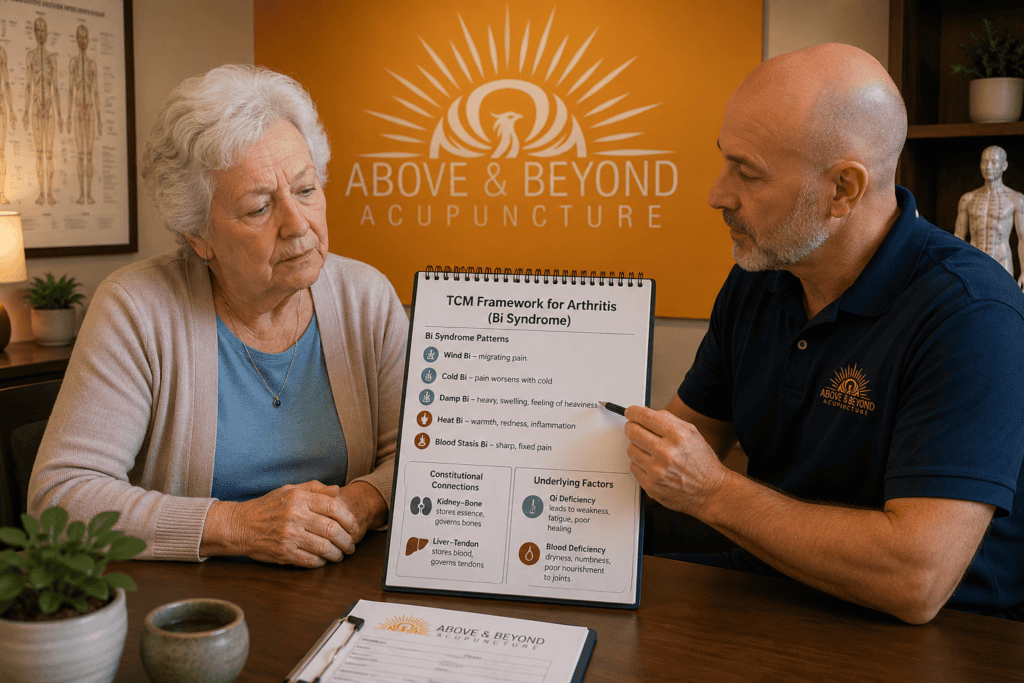
Traditional Chinese Medicine has a rich framework for understanding joint conditions that has been developed over thousands of years.
- Bi syndrome is the classical Chinese medicine framework for joint conditions. Bi syndrome refers to painful obstruction and includes several patterns.
- Wind Bi produces migrating joint pain that moves from one location to another. This pattern is often involved in early inflammatory arthritis.
- Cold Bi produces severe joint pain that worsens with cold and improves with warmth. The joints feel stiff and difficult to move. Often involved in osteoarthritis particularly in cold weather.
- Damp Bi produces heavy joint pain with swelling. The pattern often accompanies obesity-related osteoarthritis and inflammatory arthritis with significant swelling.
- Heat Bi produces joint pain with warmth, redness, and swelling. Often involved in acute inflammatory presentations including gout attacks and rheumatoid flares.
- Blood Stasis Bi produces sharp fixed joint pain worse at night, often following chronic patterns and injuries.
- The Kidney-Bone connection. The Kidneys in Chinese medicine govern the bones and joints. Chronic arthritis often reflects Kidney depletion from aging and constitutional factors.
- The Liver-Tendon connection. The Liver governs the tendons and ligaments around the joints. Chronic arthritis often involves Liver system patterns.
- Qi and Blood deficiency. Long-standing arthritis depletes Qi and Blood, which reduces the body’s ability to nourish and heal the affected joints.
A licensed acupuncturist identifies which patterns are dominant and treats accordingly. The individualized approach is what distinguishes Traditional Chinese Medicine from protocol-only care.
How Does Acupuncture Treat Arthritis?
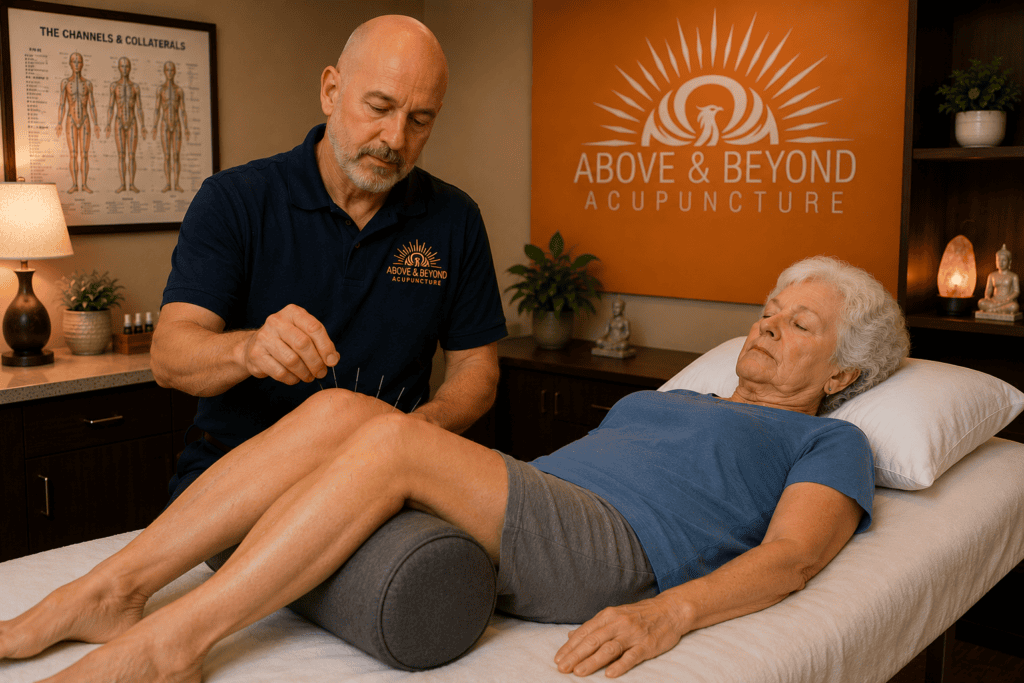
Acupuncture addresses arthritis through several mechanisms that map directly onto the underlying pathophysiology.
- Endogenous pain relief. Acupuncture stimulates the release of endorphins, enkephalins, and other natural pain-relieving chemicals. This produces both immediate pain relief and reduces the overall pain sensitivity that chronic arthritis patients develop.
- Anti-inflammatory effects. Inflammation is central to arthritis regardless of type. Acupuncture has documented anti-inflammatory effects through several mechanisms including vagal stimulation and modulation of inflammatory cytokines.
- Improved circulation. Local blood flow to the affected joints supports healing and reduces pain. Acupuncture improves circulation both locally and systemically.
- Muscular release. Chronic muscular tension around arthritic joints contributes to pain and dysfunction. Acupuncture releases this tension directly.
- Nervous system regulation. Chronic pain involves changes in the central nervous system that make pain more difficult to resolve. Acupuncture affects the descending pain modulation system, which reduces central sensitization.
- Stress and cortisol regulation. Chronic stress worsens arthritis through effects on inflammation and pain sensitivity. The chronic cortisol elevation from ongoing stress contributes to inflammatory patterns.
- Sleep support. Poor sleep worsens pain sensitivity and inflammation. Acupuncture supports the sleep patterns that healing requires.
- Pattern differentiation. The individualized Chinese medicine approach treats the specific Bi syndrome pattern and constitutional patterns present in each patient rather than applying a uniform protocol. Wind expelling for migrating patterns. Warming for Cold patterns. Damp-draining for swollen patterns. Heat-clearing for inflammatory flares. Blood-moving for stagnation.
The Research Base

Acupuncture for knee osteoarthritis is one of the most researched applications of the treatment. Multiple large systematic reviews and Cochrane analyses have found acupuncture effective for reducing pain and improving function in patients with knee osteoarthritis compared to no treatment and compared to sham acupuncture.
Research on acupuncture for other forms of arthritis is more variable. Positive research exists for hip osteoarthritis, hand osteoarthritis, rheumatoid arthritis (as complementary care alongside DMARDs), and gout. The overall pattern supports acupuncture as a valuable component of arthritis care across the different forms.
The NCCIH summary on acupuncture covers the broader research base for pain conditions including arthritis.
The Holistic Integrated Approach

Arthritis responds best to a coordinated approach that addresses all the contributing factors.
- Coordinated medical care. For inflammatory forms of arthritis including rheumatoid, psoriatic, and ankylosing spondylitis, working with a rheumatologist is essential. Acupuncture works alongside rheumatological care rather than as a replacement.
- Regular acupuncture treatment. Weekly or biweekly acupuncture during the initial course produces the best results. Most patients need six to twelve sessions to see meaningful sustained improvement.
- Appropriate movement. Movement is essential for joint health. Complete rest often worsens arthritis. Walking, swimming, cycling, gentle yoga, and tai chi are often well-tolerated. High-impact activities may need modification.
- Strength work. Muscular strength around arthritic joints supports the joints and reduces pain. Working with a physical therapist or qualified trainer to develop appropriate strengthening supports outcomes.
- Weight management when relevant. For weight-bearing joints, reduced load produces significant symptom improvement.
- Anti-inflammatory nutrition. Dietary patterns affect systemic inflammation. Working toward whole foods with adequate omega-3 fats, reducing processed foods and added sugars, and identifying individual food sensitivities supports arthritis management. The IgG food sensitivity approach can identify individual dietary triggers.
- Sleep support. Poor sleep worsens pain and inflammation. Improving sleep quality supports arthritis management.
- Stress management. Chronic stress worsens inflammation and pain. Direct nervous system practices support the healing process.
- Home practices. Daily practices including gentle joint mobility, appropriate heat or cold application, and stress management support the ongoing patterns.
When Should I See a Rheumatologist?

Certain patterns warrant evaluation with a rheumatologist rather than complementary care alone.
Joint pain with significant swelling, warmth, and redness. Symmetric joint involvement (both wrists, both knees) suggesting inflammatory arthritis. Morning stiffness lasting more than an hour. Systemic symptoms including fatigue, fever, or weight loss. Family history of autoimmune arthritis. Joint pain in young adults. Any signs of joint destruction or rapid progression.
For patients with confirmed inflammatory arthritis under rheumatological care, acupuncture works alongside standard treatment. For osteoarthritis without inflammatory features, acupuncture can be a primary complementary intervention.
The nervous system patterns underlying chronic pain often connect to the broader anxiety, stress, and depression patterns that many arthritis patients experience.
Above and Beyond Acupuncture offers acupuncture, cupping, and lifestyle coaching at the North Frank Lloyd Wright Boulevard location in Scottsdale.
Schedule an appointment online or call us today to start your healing journey.

About the Publisher
Paul Kerzner, L.Ac., is a licensed acupuncturist and board-certified herbalist, as well as the founder of Above and Beyond Acupuncture in Scottsdale. His own journey from chronic patient to practicing acupuncturist shapes his commitment to providing honest, clinically grounded information about acupuncture and Traditional Chinese Medicine. Learn more about Paul and his clinical approach on the About Us page.