
Key Takeaways
- Acupuncture plays a supportive role in fertility care, complementing conventional treatments like IVF.
- Key acupuncture points, such as CV4 and Zigong, target reproductive health by enhancing blood flow and reducing stress.
- Treatment should be consistent because acupuncture’s effects develop gradually and aid the body’s natural fertility processes.
- Consult a reproductive specialist if trying to conceive for over a year, especially for certain medical conditions.
- Acupuncture reduces stress and anxiety, which can also interfere with fertility.
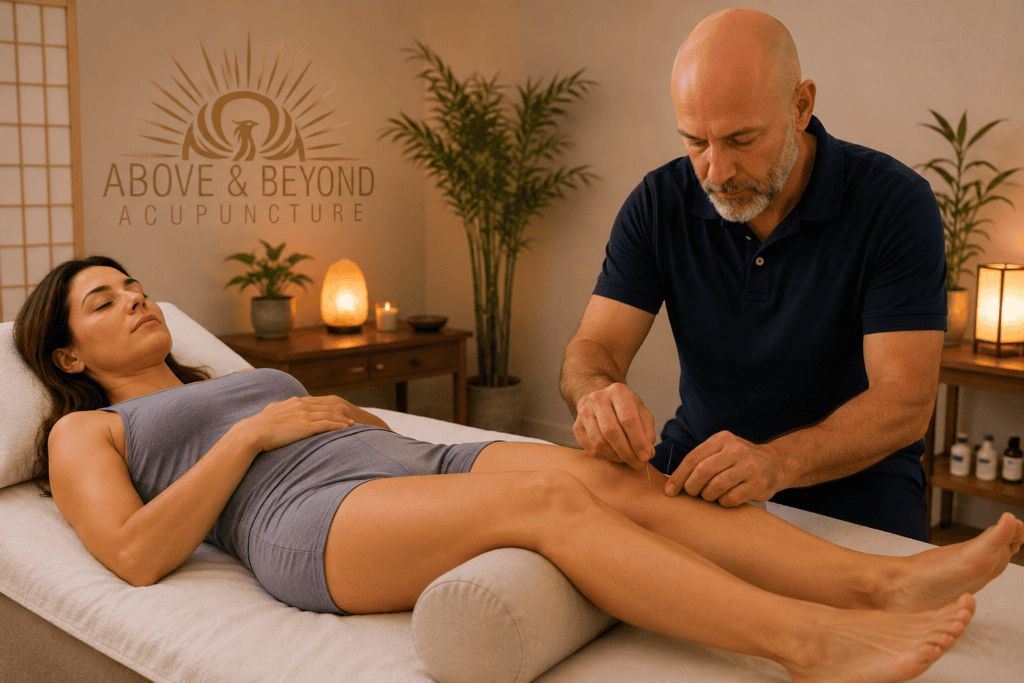
Acupuncture plays an important role in fertility care primarily as an adjunct therapy used alongside standard treatments, rather than as a standalone option.
Documented benefits include: regulating the menstrual cycle, improving blood flow to reproductive organs, reducing stress that can impede conception, and supporting overall reproductive health. People use it both on its own during the trying-to-conceive phase and alongside treatments such as in vitro fertilization (IVF). Acupuncture does not replace medical interventions for specific causes of infertility; conditions such as blocked fallopian tubes, male-factor issues, or certain hormonal disorders require the expertise of a reproductive specialist. When integrated with appropriate medical care, acupuncture can enhance the body’s reproductive capabilities.
This article explores the acupuncture points a licensed acupuncturist often uses to support fertility, along with what each one does. Fertility is a shared journey between partners, and many of these points can support reproductive health in both men and women.
How Does Acupuncture Support Fertility?
In Chinese medicine, the Kidneys primarily govern reproduction and hold the essential Essence that underpins fertility. The Liver helps maintain the smooth flow of Qi and Blood, which are crucial for the menstrual cycle, and stagnation in this organ is linked to stress and hormonal issues that can hinder conception. The Spleen produces Blood that forms the uterine lining. Acupuncture points are selected based on which organ system is most involved, explaining why fertility treatments are customized rather than following a standard universal prescription.
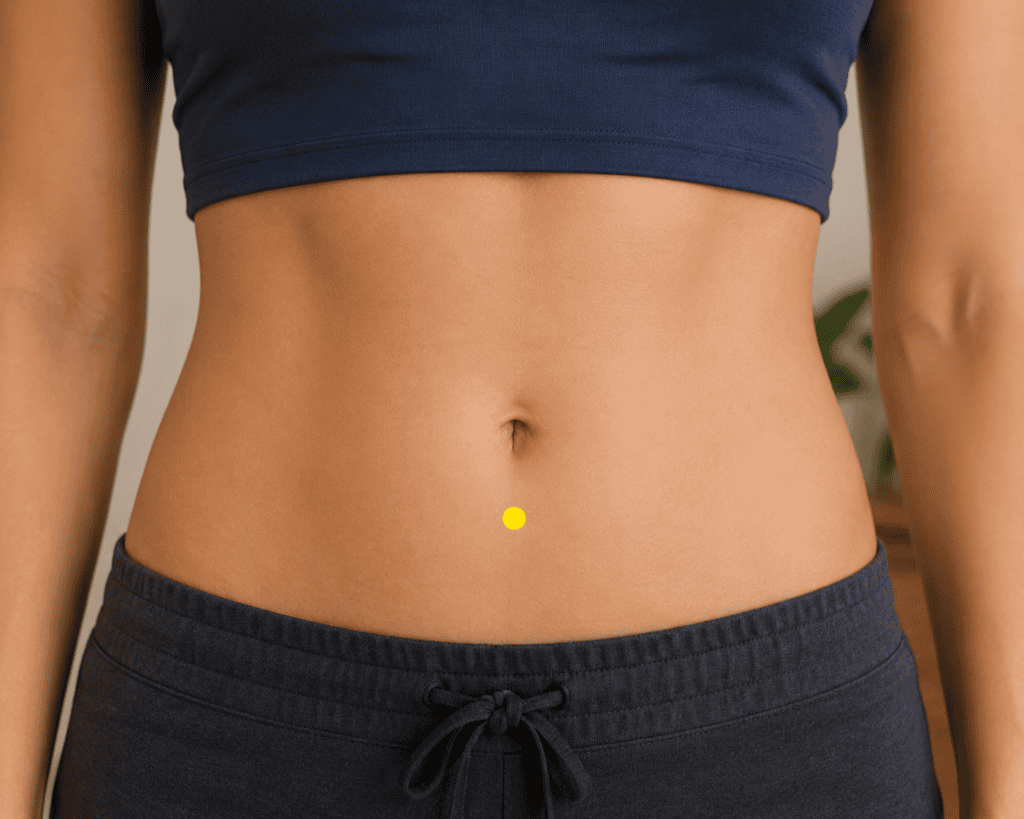
1. CV4 (Guanyuan)
Located on the midline of the lower abdomen, about four finger-widths below the navel, CV4 is a key point for supporting the uterus and enhancing reproductive vitality. Its name, “Gate of Origin,” signifies its function as a storehouse of the body’s fundamental energy. It boosts Kidney function and the reproductive core, warms the uterus, and reinforces what Chinese medicine refers to as the Essence – the deep inherited energy vital for fertility. Situated directly over the reproductive organs, CV4 is commonly used to address irregular cycles, a thin uterine lining, and the profound fatigue or low reproductive reserves associated with conception difficulties. It serves as a central focus in fertility-related treatments.

2. Zigong (the Uterus Point)
Zigong, simply meaning “uterus,” is located about three finger-widths on either side of CV4 on the lower abdomen. It is a key fertility point in traditional practice, used to regulate the uterus and ovaries, encourage healthy ovulation, and create an optimal uterine environment for implantation. Practitioners frequently use it for managing cycle irregularities, supporting follicular development, and aligning with protocols around ovulation and IVF transfer. Its precision is what makes it particularly valuable: unlike many points that broadly support fertility, Zigong directly targets the reproductive organs.

3. CV6 (Qihai)
Just below the navel along the midline, CV6 is known as the “Sea of Qi,” highlighting its role as a reservoir of vital energy. It supports the foundational Qi used in numerous processes, including reproduction, and helps combat fatigue, low vitality, and overall depletion that can affect fertility. Located near CV4 in the lower abdomen, it enhances CV4’s effects, and the two points are often stimulated together to strengthen both energy and reproductive health. While CV4 primarily addresses reproductive Essence, CV6 focuses on nourishing the broader energy that powers the entire system.
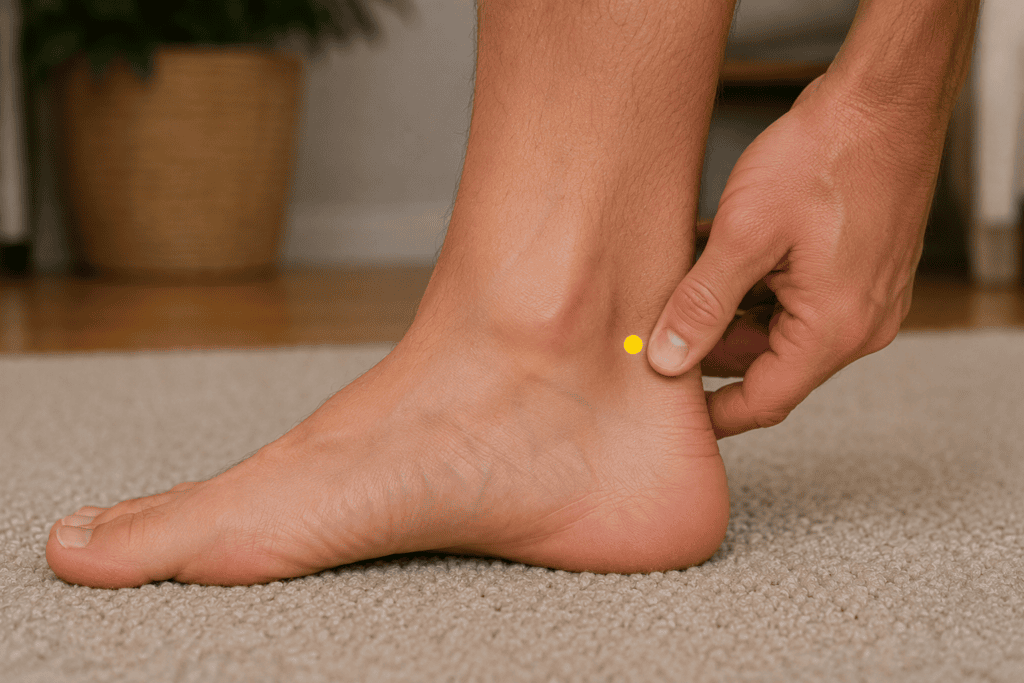
4. KI3 (Taixi)
Located in the hollow between the inner ankle bone and the Achilles tendon, KI3 serves as the Kidney channel’s primary source point. In Chinese medicine, the Kidneys oversee reproduction, growth, and the Essence crucial for fertility. Therefore, KI3 is fundamental, nurturing the constitutional root from which reproductive health arises. It supports both the Yin and Yang functions of the Kidney, which together regulate the menstrual cycle, promote ovulation, and sustain reproductive vitality – often diminished with age, prolonged stress, or overwork. For those experiencing fatigue, low reserves, or a history of depletion related to fertility issues, KI3 is a vital point.
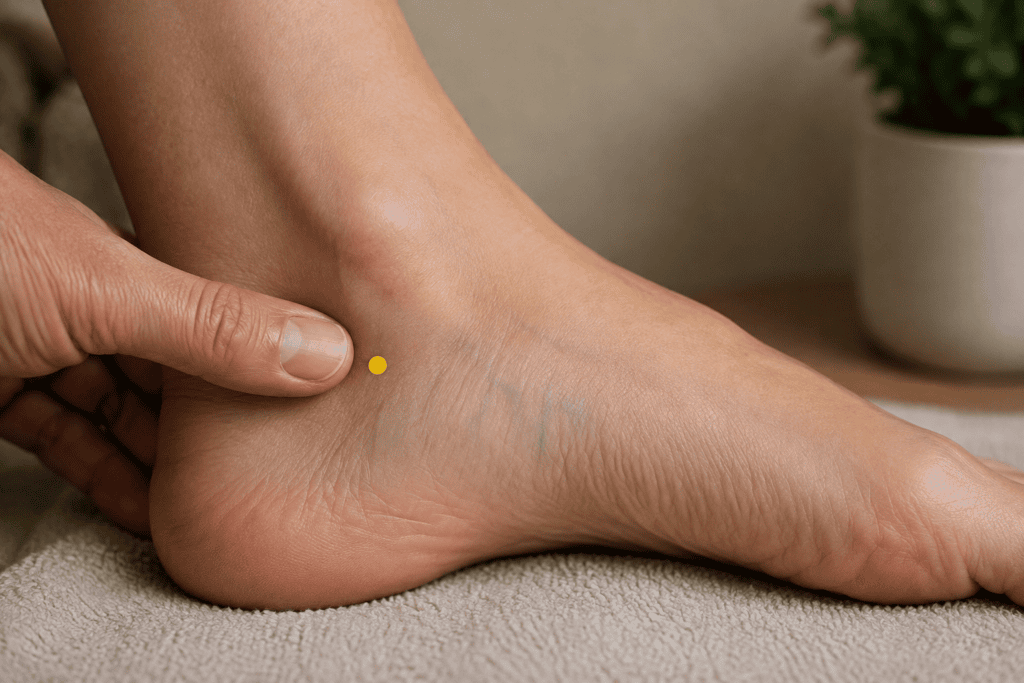
5. KI6 (Zhaohai)
Just below the inner ankle bone, KI6 enhances Kidney Yin, which is the cooling, moistening, and substantive aspect of Kidney function that produces the fluids and blood essential for the reproductive system. It aids the follicular phase and encourages the development of fertile cervical mucus and a receptive uterine lining. This point is particularly beneficial when Yin depletion signs appear, such as night sweats, restlessness, scant cervical fluid, or a short follicular phase. KI6 naturally complements KI3 by supporting the Kidney’s foundation, with KI3 addressing the overall source and KI6 focusing on nourishing Yin specifically.
6. SP6 (Sanyinjiao)
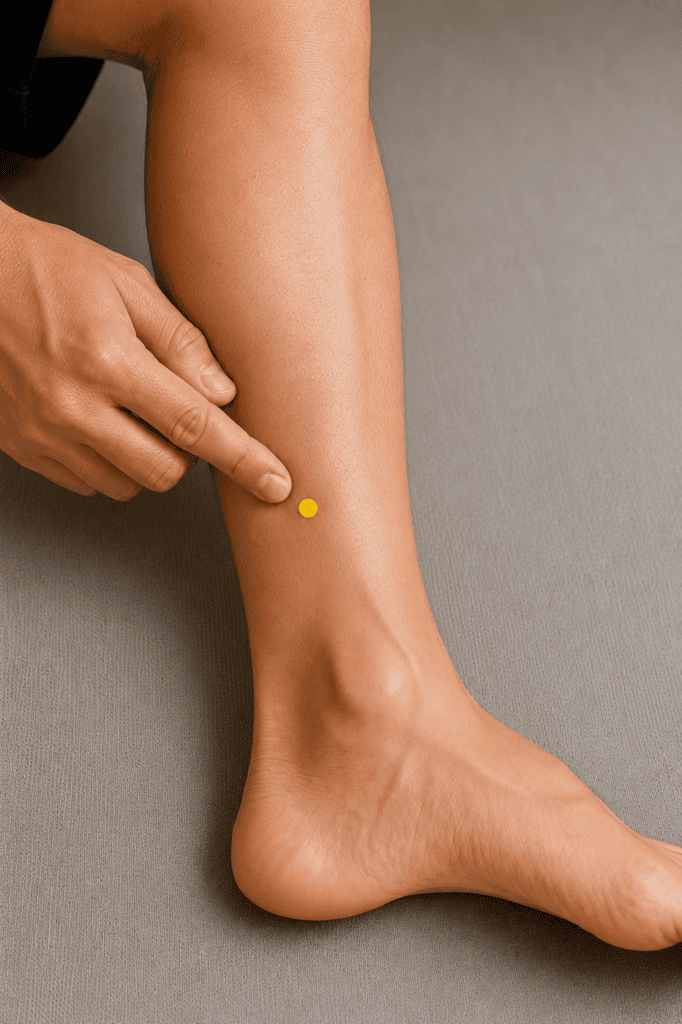
Located four finger-widths above the inner ankle bone, SP6 is a crucial point for gynecological health, connecting the Spleen, Liver, and Kidney channels. This means one point can influence all three systems vital for fertility. It helps regulate the menstrual cycle, balances blood, promotes ovulation, and soothes the nervous system, which explains its frequent use in reproductive protocols. It is effective for cycle irregularities, painful or missing periods, and stress-induced issues. Note: SP6 is used during the trying-to-conceive phase but should be avoided after pregnancy is confirmed, as it significantly moves blood in the pelvis.
7. SP10 (Xuehai)
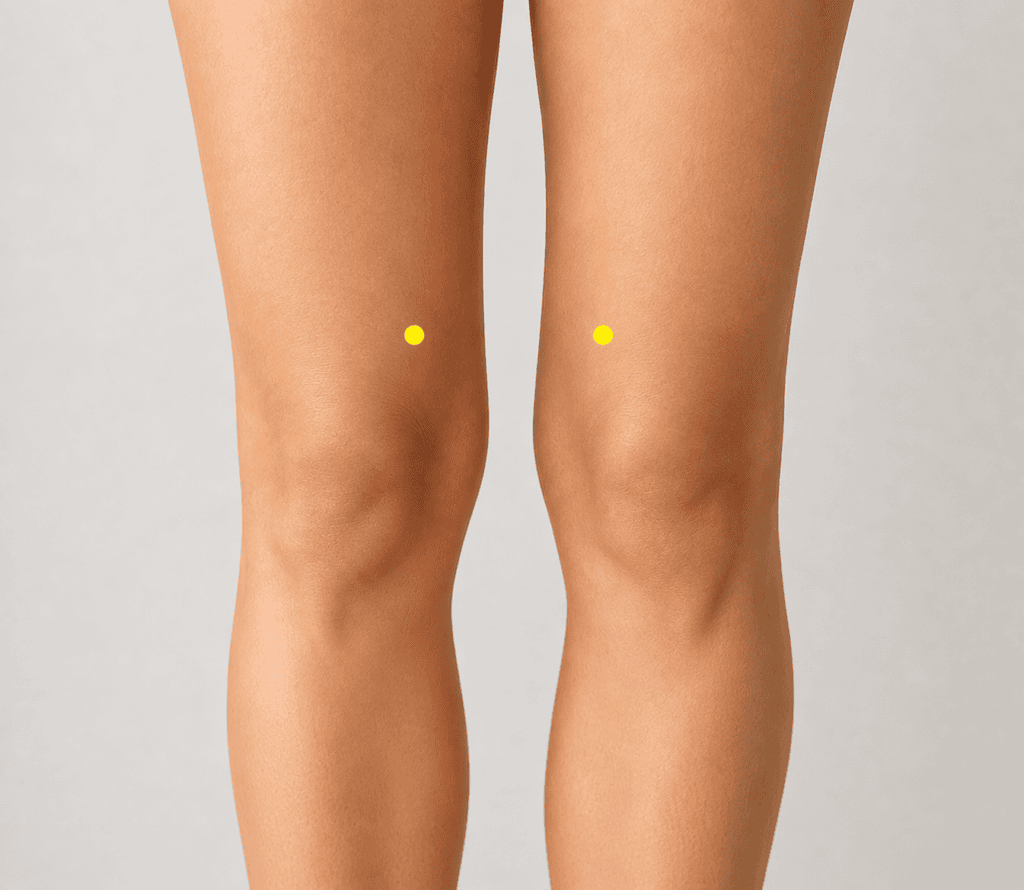
Located on the inner thigh just above the knee, SP10 is called the “Sea of Blood,” reflecting its role in invigorating and nourishing the blood vital to the reproductive system. A healthy cycle and receptive uterine lining depend on ample, well-moving blood, and SP10 supports both volume and circulation. Practitioners often use it when the uterine lining is thin, periods are scant or pale, or when blood stagnation manifests as clots and cramps. It works well alongside SP6: where SP6 regulates and harmonizes, SP10 sharpens the focus on building and moving the blood itself.
8. ST36 (Zusanli)
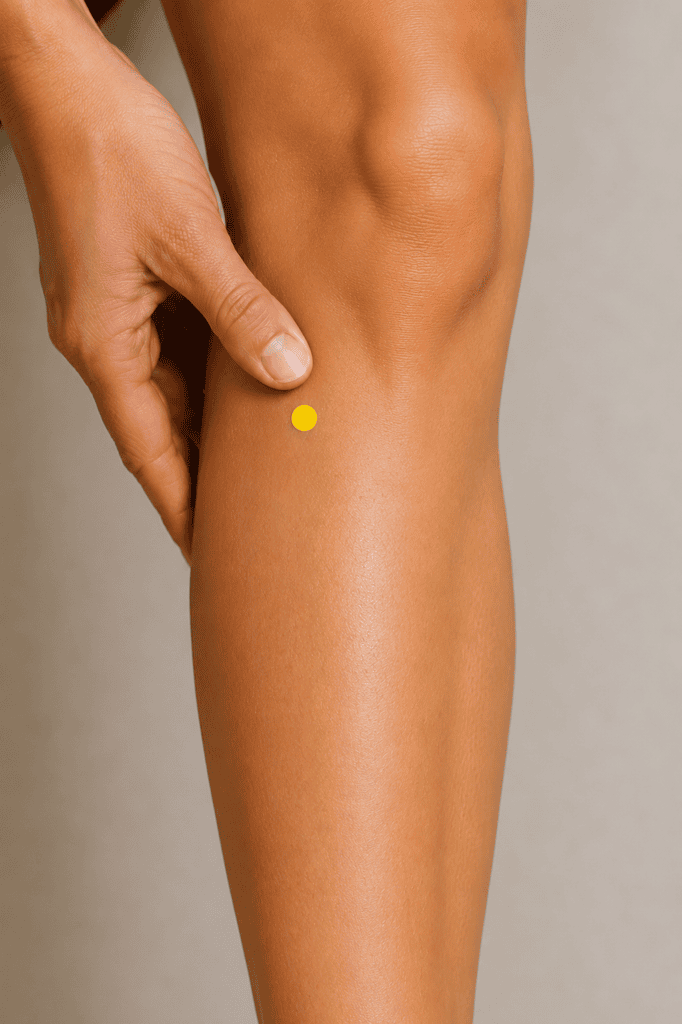
Located four finger-widths below the kneecap and one finger-width outside the shinbone, ST36 is a highly potent point for enhancing Qi and Blood. Since the Stomach and Spleen are the primary sources of blood that the reproductive system relies on, stimulating ST36 boosts digestion, thereby supporting fertility from the ground up. This improves the body’s capacity to produce and maintain the resources needed for reproduction. Additionally, it enhances overall vitality and resilience, helping to counteract fatigue and depletion often associated with a lengthy conception process. It acts as a key point providing strong foundational support for the reproductive-related points.
9. LR3 (Taichong)
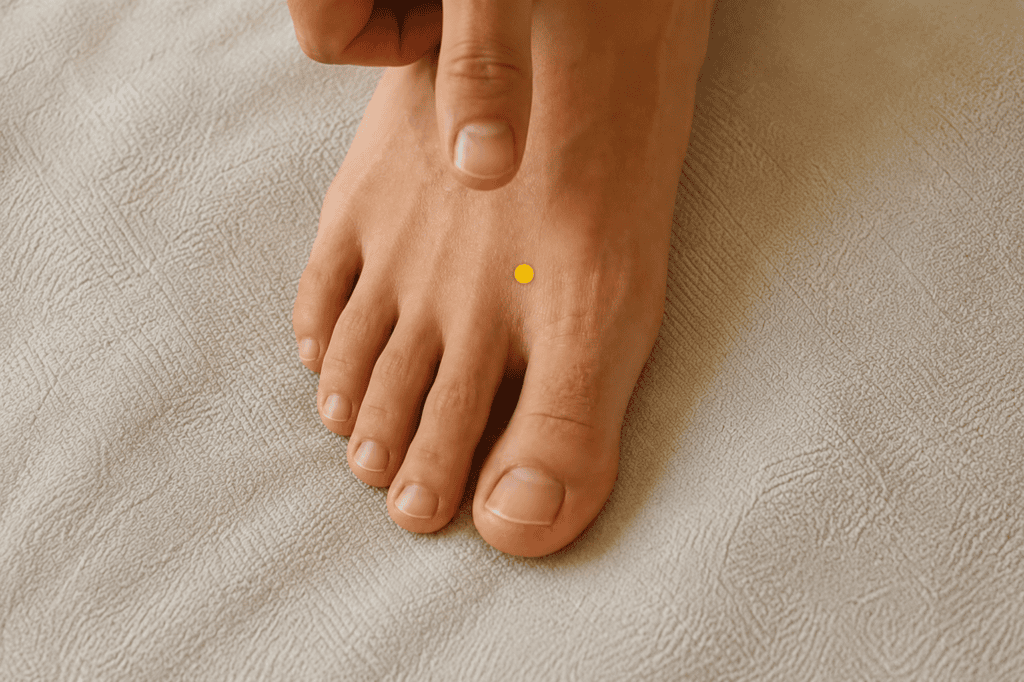
LR3, located between the first and second toes, is the primary point of the Liver channel. The Liver ensures the smooth flow of Qi and Blood throughout the body, including supporting a regular menstrual cycle. This point targets stress-related issues and stagnation that can affect fertility. When Liver Qi stagnates – a common result of modern stress and the challenges of conception – it can lead to tension, irritability, premenstrual discomfort, and hormonal imbalance. Stimulating LR3 helps release this stagnation, alleviating emotional pressure and promoting free flow of Qi and Blood during each cycle phase. Often combined with LI4 to promote overall Qi movement, LR3 uniquely addresses stress-related issues more directly than most other points.
Why the Acupuncture Points Are Part of a Larger Picture
These points support fertility, but they work best when integrated into a coordinated strategy. Receiving treatment regularly matters more than occasional sessions because cycle regulation and improved blood flow develop incrementally. Chronic stress-induced cortisol spikes disrupt reproductive hormones, which explains why acupuncture’s stress-relieving benefits are as significant as its reproductive points.
For those working with a reproductive endocrinologist or undergoing IVF, acupuncture serves as a complementary support to the treatment, not a substitute. Combining both approaches produces the best results.
When to See a Medical Fertility Specialist
Acupuncture supports fertility, but it does not diagnose the medical causes of infertility nor provide insight into those matters.
Couples who have been attempting to conceive for one year without success, or six months if the woman is over 35 years of age, should consult a reproductive specialist for a comprehensive evaluation. Conditions such as blocked fallopian tubes, significant male-factor infertility, endometriosis, polycystic ovary syndrome (PCOS), and hormonal disorders require medical assessment. In many cases, a synergistic approach that combines acupuncture with medical treatment delivers the best results.
Above and Beyond Acupuncture offers acupuncture, cupping, and lifestyle coaching at the North Frank Lloyd Wright Boulevard location in Scottsdale.
Schedule an appointment online or call us today to start your healing journey.
About the Publisher
Paul Kerzner, L.Ac., is a licensed acupuncturist and board-certified herbalist, as well as the founder of Above and Beyond Acupuncture in Scottsdale. His own journey from chronic patient to practicing acupuncturist shapes his commitment to providing honest, clinically grounded information about acupuncture and Traditional Chinese Medicine. Learn more about Paul and his clinical approach on the About Us page.