Key Takeaways
- Home remedies for plantar fasciitis can ease morning pain and discomfort from prolonged standing.
- Stretching calves, rolling a frozen water bottle, and self-massage help alleviate symptoms effectively.
- Supportive shoes indoors and night splints can significantly contribute to recovery.
- Avoid aggravating activities and apply contrast therapy to improve healing.
- If home remedies don’t work in 8-12 weeks, consider seeking professional treatment.
If you have plantar fasciitis, you already know the pattern. Getting out of bed is the worst part. That first step feels like stepping on a knife. The pain eases up as you move around, then returns after prolonged standing or activity. Nights and mornings become the hardest parts of your day.
Most people want to try home remedies before going through the medical system for what feels like it should be a simple problem. This makes sense. Plantar fasciitis often responds well to consistent home care applied early and correctly.
The remedies below come up most often in practice as genuinely useful for patients dealing with plantar fasciitis. Not every remedy works equally well for every person. Some target the tight calves that contribute to the condition. Some target the plantar fascia directly. Some address the mechanical load on the foot. Trying several and finding the combination that works for you produces better results than sticking with a single approach.
For patients whose plantar fasciitis is persistent or severe, professional treatment is worth pursuing. Can Acupuncture Treat Plantar Fasciitis? covers how acupuncture addresses the underlying patterns and triggers of this painful condition.
Here are nine home remedies that are worth trying:
Stretch Your Calf Before the First Steps of the Day
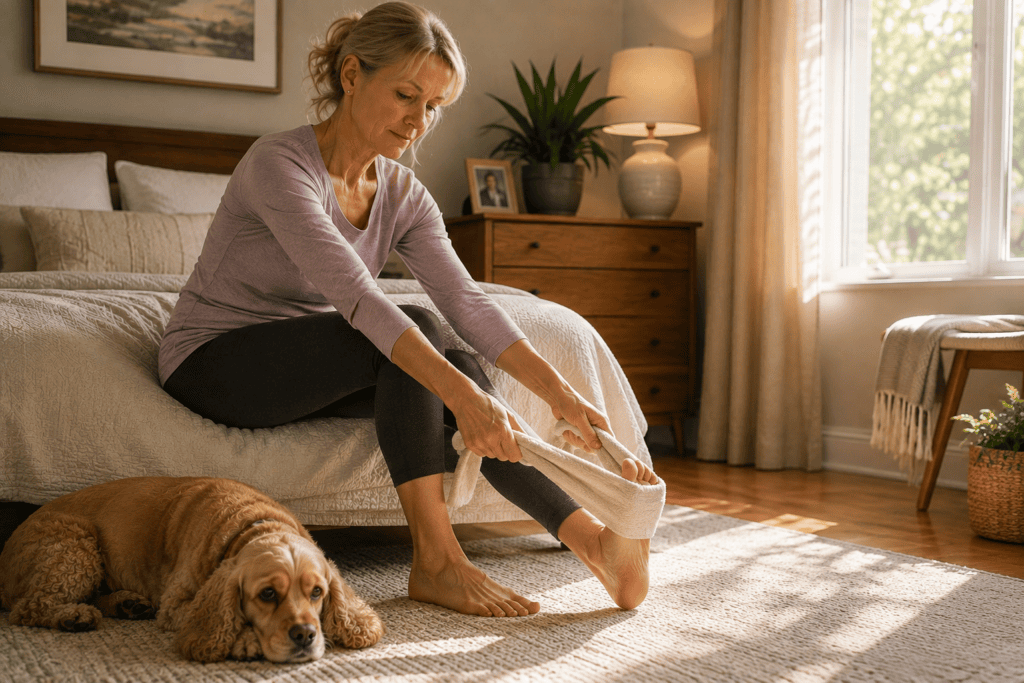
This one addresses the morning pain pattern directly. The plantar fascia tightens overnight while you sleep. Standing on it in that shortened state produces the sharp morning pain that plantar fasciitis is known for.
Before getting out of bed, sit up and gently pull your toes back toward your shin using a towel around the ball of the foot. Hold for 30 seconds and repeat two or three times per foot. This stretches the plantar fascia before you load it with body weight. Many patients notice a substantial reduction in morning pain within a week of consistent practice.
Roll a Frozen Water Bottle Under Your Foot
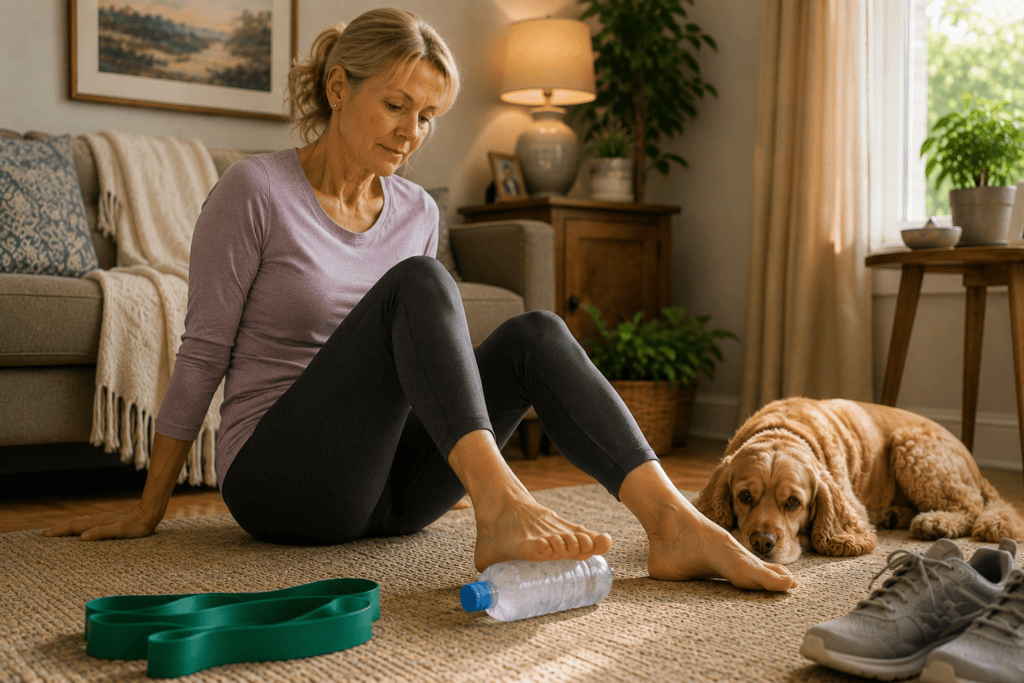
Fill a plastic water bottle three-quarters full and freeze it. When your foot flares up, roll it under the arch for 10 to 15 minutes at a time. The cold reduces inflammation while the rolling provides gentle massage to the plantar fascia.
This is one of the simplest and most effective home tools available. Keep a frozen bottle ready in the freezer so it is available whenever symptoms flare.
Do the Classic Wall Calf Stretch
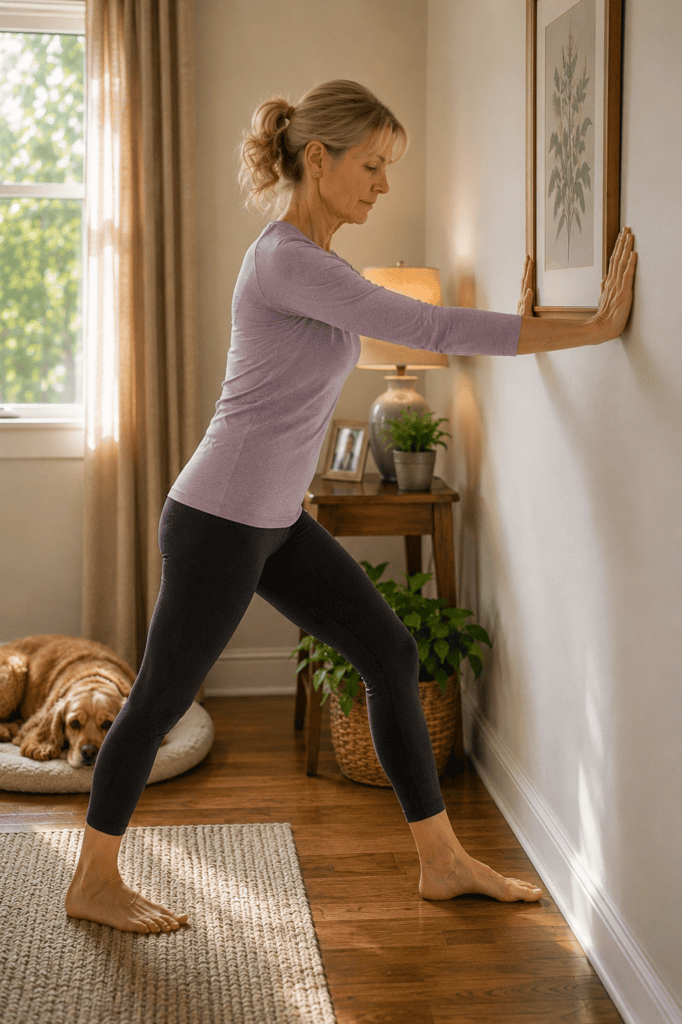
Tight calves contribute substantially to plantar fasciitis by increasing the load on the plantar fascia during walking. Stretching the calves regularly reduces this contributing factor.
Face a wall about arm’s length away. Place both hands on the wall. Step one foot back with the heel pressed to the floor and toes pointing forward. Keep the back leg straight and bend the front knee. You should feel a stretch in the calf of the back leg. Hold for 30 seconds. Then bend the back knee slightly to stretch the deeper calf muscles. Hold for another 30 seconds. Switch legs and repeat.
Do this stretch three times per day. Consistency matters more than intensity.
Massage With a Tennis Ball or Golf Ball
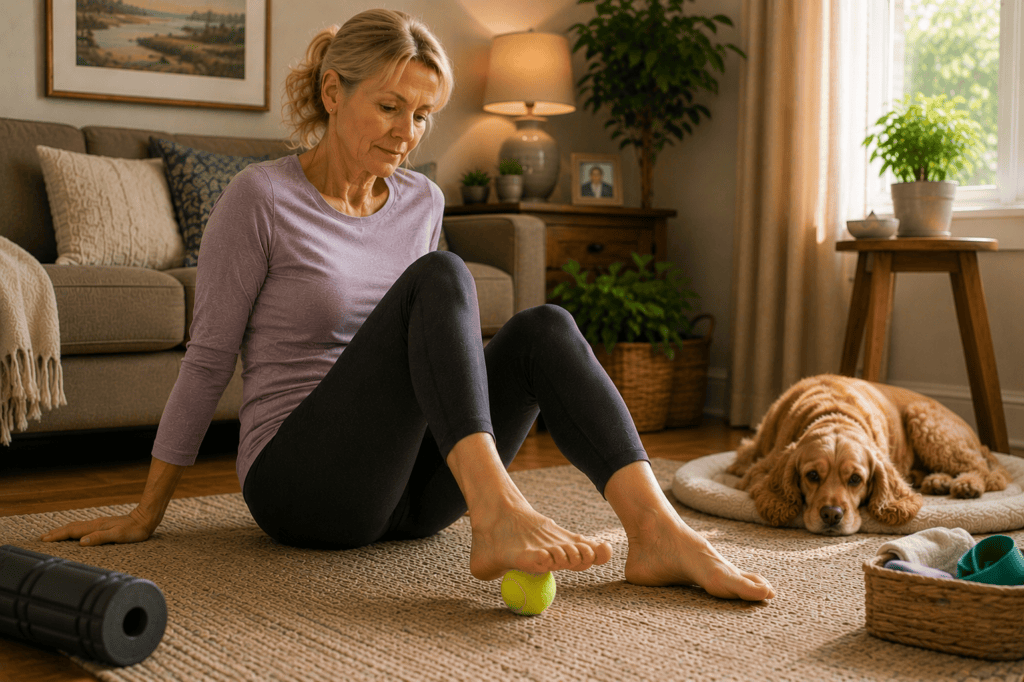
Self-massage supports the plantar fascia and reduces the muscular tension that contributes to the pain pattern.
Place a tennis ball or golf ball on the floor and roll your bare foot over it. Apply moderate pressure, particularly at the tight or tender areas of the arch. Roll for three to five minutes per foot. A golf ball provides more focused pressure. A tennis ball provides gentler broader coverage.
This works well in the evening as a way to release the day’s tension before bed.
Wear Supportive Sneakers Indoors

Many patients with plantar fasciitis walk barefoot around the house on hard floors. This continues to create stress and pressure that produces painful symptoms and interferes with the healing process.
Wear supportive sneakers, shoes or good arch-supporting sandals indoors during flares. This does not have to be forever. During the healing period, the arch support reduces the load on the plantar fascia and speeds up recovery.
Look for sneakers and shoes with good arch support and sufficient cushioning. Athletic shoes work well indoors during flare-ups.
Try a Night Splint
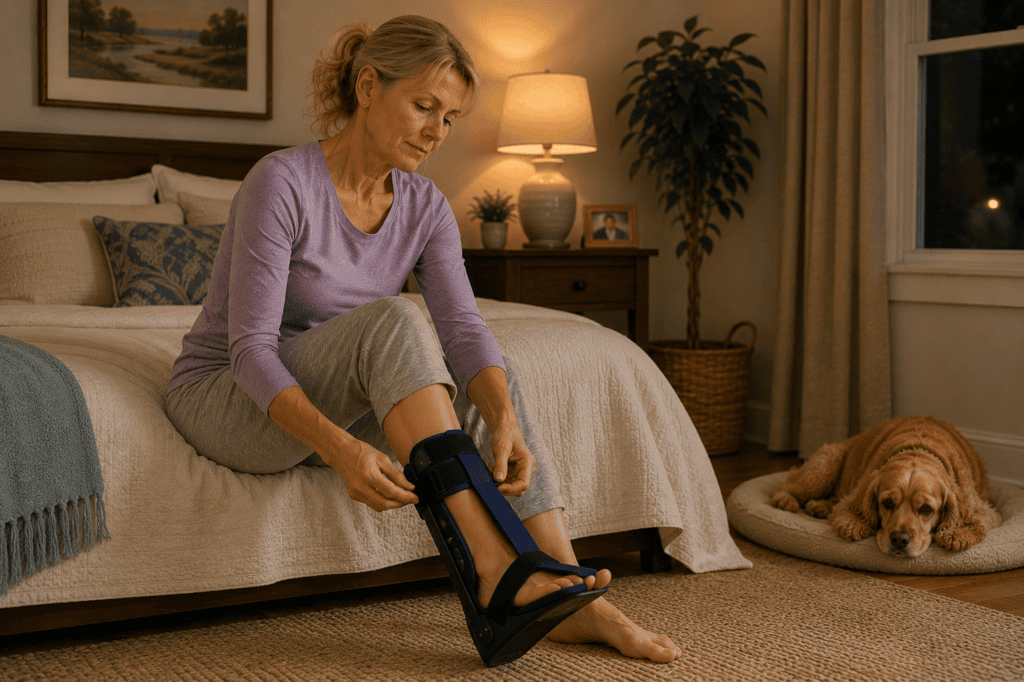
Night splints keep the foot at a right angle to the leg during sleep, which prevents the plantar fascia from tightening overnight. This addresses the morning pain pattern from a different angle than the pre-morning stretch.
Night splints are available at pharmacies and online. Some patients find them uncomfortable initially and stop using them before the real benefits emerge. Give it at least two weeks of consistent use before evaluating whether it is working or not.
Not every patient benefits equally from night splints, but for those who do, the improvement in morning pain can be substantial and significant.
Strengthen Your Foot Intrinsic Muscles
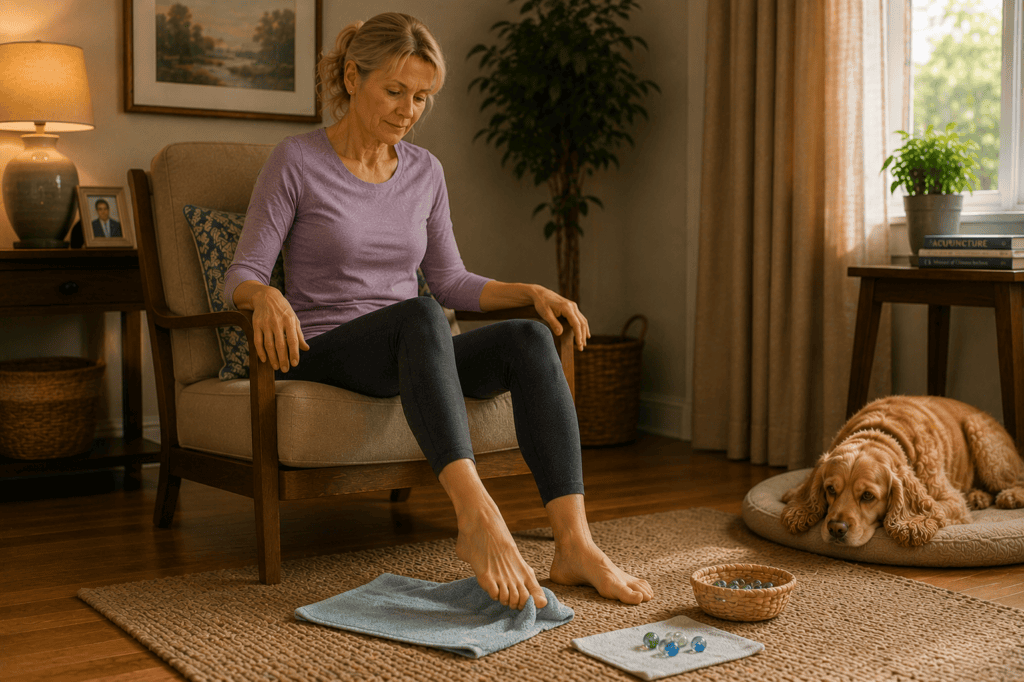
Weak foot muscles contribute to plantar fascia strain. Strengthening these small muscles supports the arch and reduces the load on the fascia itself.
- Towel curls. Place a small towel on the floor. Sit in a chair with your bare foot on the towel. Use your toes to scrunch the towel toward you. Do 10 to 15 curls per foot.
- Marble pickup. Place marbles or small objects on the floor. Use your toes to pick them up one at a time and place them in a container. This trains the foot intrinsic muscles directly.
- Short foot exercise. Sit or stand with your foot flat on the floor. Without curling your toes, try to shorten your foot by drawing the ball of the foot toward the heel. This activates the arch supporting muscles.
Do these exercises daily for 10 to 15 minutes total.
Modify Activities That Aggravate It

Reducing the specific activities that aggravate your plantar fasciitis supports healing without requiring complete rest and immoblization.
If prolonged standing increases the pain, be sure to shift weight periodically. If running triggers flare-ups, cross-train with swimming or cycling during the healing period. If a specific pair of shoes seems to cause problems, replace them or get new arch supports.
Complete rest is rarely necessary or possible. Modified activity supports healing while maintaining a fitness regiment.
Give It Consistent Time
Plantar fasciitis can be stubborn. Even with excellent home care, meaningful improvement typically takes six to eight weeks of consistent effort. Some patients need three to six months to fully resolve painful symptoms.
These home remedies work best when used consistently rather than sporadically. Try setting up daily routines as they will produces better results.
When Home Remedies Are Not Enough
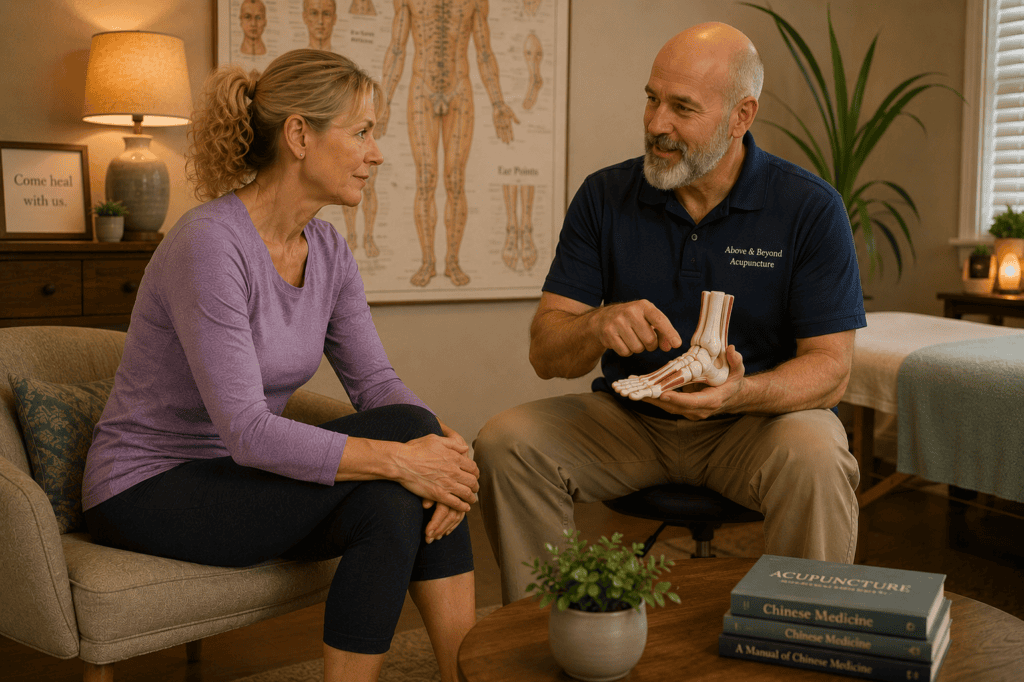
The remedies above work for many patients with mild to moderate plantar fasciitis. For patients whose plantar fasciitis is severe, chronic, or not improving with consistent home care over eight to twelve weeks, professional treatment is worth pursuing.
The Mayo Clinic overview of plantar fasciitis and the Cleveland Clinic summary provide the medical framework for understanding when to seek professional care.
Signs that home care alone is not enough include no improvement after two to three months of consistent home care, worsening pain despite treatment, pain that prevents walking or working, numbness or tingling suggesting nerve involvement, and signs of possible other pathology.
For patients dealing with chronic plantar fasciitis that is not fully responding to home care, Can Acupuncture Treat Plantar Fasciitis? covers the clinical framework and how acupuncture addresses the underlying tissue and constitutional patterns.
The nervous system patterns triggering chronic pain often connect to anxiety, stress, and depression conditions that affect many chronic pain patients.
Above and Beyond Acupuncture offers acupuncture, cupping, and lifestyle coaching at the North Frank Lloyd Wright Boulevard location in Scottsdale.
Reach out to Above and Beyond Acupuncture on North Frank Lloyd Wright Boulevard in Scottsdale to schedule a consultation.
Schedule an appointment online or call us today to start your healing journey.
About the Publisher
Paul Kerzner, L.Ac., is a licensed acupuncturist and board-certified herbalist, as well as the founder of Above and Beyond Acupuncture in Scottsdale. His own journey from chronic patient to practicing acupuncturist shapes his commitment to providing honest, clinically grounded information about acupuncture and Traditional Chinese Medicine. Learn more about Paul and his clinical approach on the About Us page.