
Key Takeaways
- To fall back asleep at 3am, avoid using your phone and instead slow your breathing through the nose to activate the parasympathetic nervous system.
- Practice acupressure on key points like Yintang, Anmian and HT7 to calm your mind and body.
- If awake for over twenty minutes, get out of bed and engage in a boring activity until you feel sleepy again.
- Limit factors like caffeine after 1pm, alcohol near bedtime, and create a cool sleep environment to minimize 3am wakefulness.
- Seek professional help if waking at 3am regularly affects your daily life or persists despite self-care efforts.
The clock reads 3:33am. You have been awake for what feels like an hour. Your mind is running through tomorrow’s meeting, an argument from last week, and a list of things you forgot to do. The harder you try to fall back asleep, the more awake you feel. By the time your alarm goes off, you have either fallen back asleep for forty-five minutes or you have not slept at all.
3am waking is one of the most common sleep complaints. The pattern is specific. You fall asleep without much trouble, sleep deeply for a few hours, and then wake somewhere between 2am and 4am with your mind already running. Sometimes you fall back asleep quickly. Other times you lie there for hours.
Here is what to do in the moment, why it works, and how to make it happen less often.
What to Do When You Wake Up
The first few minutes after you wake matter. The faster you respond with the right tools, the more likely you are to fall back asleep before the brain fully activates.
1. Do not reach for your phone. The blue light suppresses melatonin and the activation of checking notifications pulls your brain into alert mode. If you need to check the time because you have an alarm to worry about, use a clock instead. Knowing it is 3:17am and you have to be up at 6am makes the anxiety worse and prolongs the waking.

2. Slow your breathing through the nose. Take a slow breath in through the nose for four counts. Breathe out slowly through the nose for six or eight counts. Do this for at least four cycles. The longer exhale activates the parasympathetic nervous system, which is the part of the nervous system that calms the body back into rest mode. This is the same breathing pattern that helps with anxiety and hot flashes for the same reason.

3. Use acupressure on three specific points.
Yintang is the point between your eyebrows, right where many people press when they have a headache. Press gently with your index finger for one to two minutes. This point calms the mind and quiets racing thoughts.

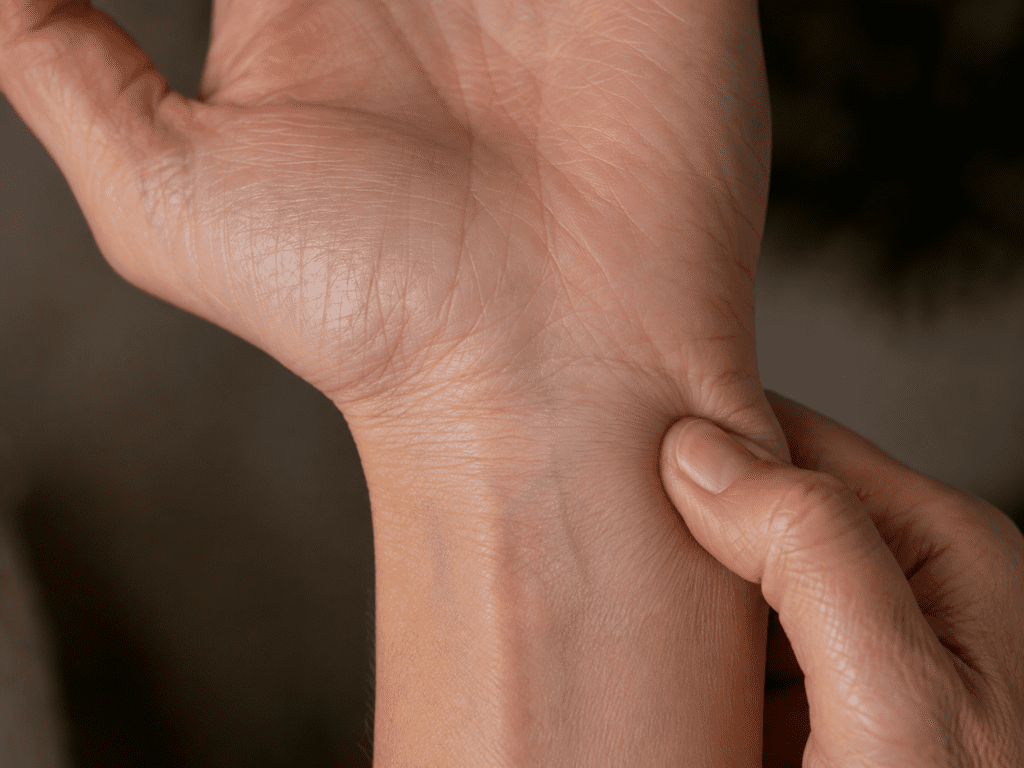
HT7 is on the inside of your wrist crease, on the pinky side. There is a small depression there where the bone meets the soft tissue. Press for one to two minutes on each wrist. This point calms the Heart in Chinese medicine, which is the organ system responsible for the Shen, or consciousness. When the Heart is calm, the mind settles.
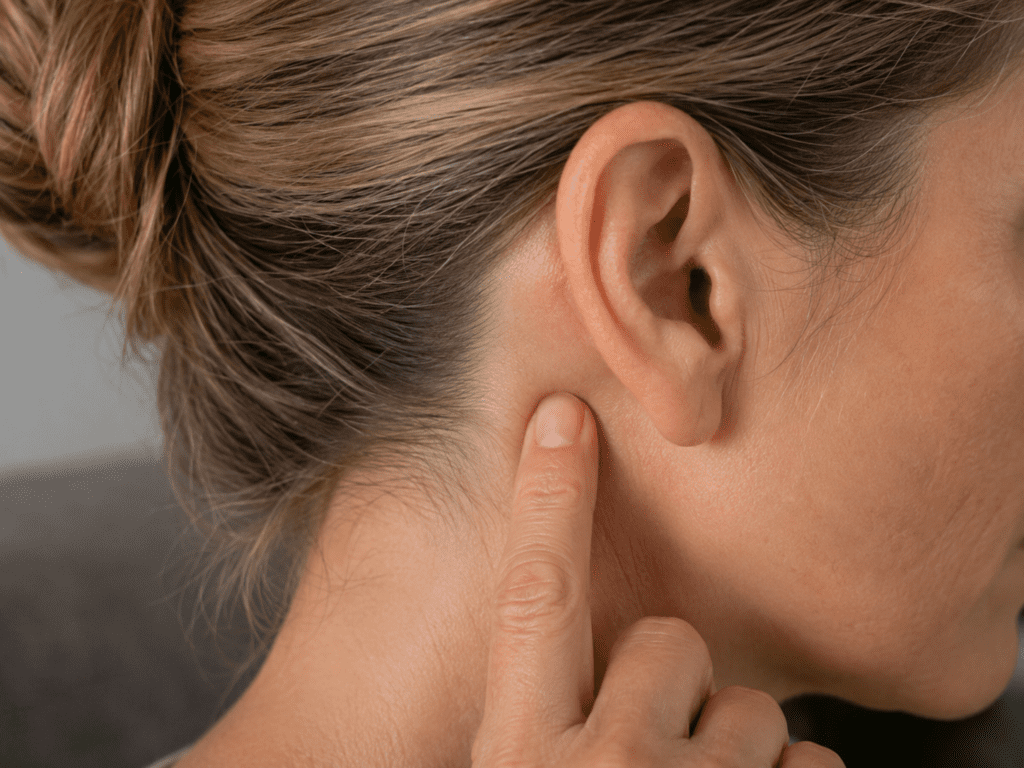
Anmian sits behind the ear, in the depression behind the earlobe and just below the bony bump. Press gently on both sides for one to two minutes. The name translates to “peaceful sleep” and the point is used specifically for insomnia and middle-of-night waking.
4. Do a body scan from feet to head. Start at your toes and slowly bring your attention up through your body. Feet, ankles, calves, knees, thighs, hips, belly, chest, arms, neck, head. Notice each part for a few breaths before moving up. This pulls your attention into the body and away from the racing thoughts that usually keep you awake at 3am.

5. If you are still awake after twenty minutes, get out of bed. The bed-as-tossing-place pattern trains your brain to associate the bed with frustration. Get up, sit in a chair in low light, do something boring like reading a physical book or folding laundry. When you feel sleepy, go back to bed. Do not turn on bright lights, do not look at screens, do not start a project.

6. Write down the racing thoughts if you have them. If your mind is stuck on something, get a piece of paper and write it down. Get it out of your head and onto paper so your brain can let it go. Tomorrow you can decide what to do with it. Right now, the page can hold it for you.

Why This Works
3am waking is your nervous system shifting out of deep sleep too early and getting stuck in an alert state instead of moving back into the next sleep cycle. The shift is often driven by a cortisol spike that happens earlier than it should. Cortisol is the wake-up hormone, and it is supposed to rise slowly over the last few hours of sleep to prepare your body to get up. When cortisol spikes early, you wake up early. What Is Cortisol and Why Do I Have So Much of It? is a helpful read to learn more about this imbalance.
The acute response tools work because they directly counter what is happening. Slow breathing brings down the sympathetic activation. Acupressure on Yintang, HT7, and Anmian calms the nervous system and the racing mind. Getting out of bed breaks the frustration loop. Writing down thoughts gives the brain permission to stop holding them.
In Traditional Chinese Medicine, 3am to 5am is the Lung time on the organ clock. Waking during this window often points to the Lung system being out of balance, which can be tied to grief, immune patterns, or breath issues. It can also point to broader Yin deficiency, where the cooling, grounding energy of the body has become depleted and is no longer holding the Yang in check during sleep.
How to Wake Up Less Often in the First Place
The acute tools handle individual nights. The frequency comes down through a different set of changes.
- Address the cortisol pattern. Chronic stress drives the cortisol dysregulation that causes 3am waking. A more elaborate picture of how chronic stress affects sleep is in the Do I Have “Sleep PTSD”? blog post.
- Cut alcohol close to bedtime. Alcohol fragments sleep and is one of the most common drivers of middle-of-night waking. The sedative effect wears off after a few hours and the rebound activation is what wakes you up.
- Stop caffeine after 1pm. Even if you can fall asleep, caffeine in your system at bedtime makes the second half of the night less stable. Sensitive sleepers should stop earlier.
- Cool the bedroom. Most people sleep better at 65 to 68 degrees. A bedroom that is too warm drives night waking, especially if you are also dealing with hormonal shifts.
- Address daytime stress and anxiety. The 3am waking is often the body releasing the stress that accumulated during the day.
- Keep consistent sleep timing. Going to bed and waking up at the same time strengthens the circadian rhythm and makes the wake-spike less likely.
- Consider the hormonal angle. For women in perimenopause and menopause, 3am waking is often tied to hormonal shifts.
When to Get Clinical Help
Self-care tools are useful, but they have limits. If you are waking at 3am most nights, if the waking is significantly affecting your daytime function, or if the pattern has been going on for months despite your best efforts, professional help is worth pursuing. To learn more about why this specific pattern keeps happening is covered in Why Am I Waking Up at 3am Every Night?.
Reach out to Above and Beyond Acupuncture on North Frank Lloyd Wright Boulevard in Scottsdale to schedule a consultation.
Schedule an appointment online or call us today to start your journey to relief.
The points above are only as effective as the technique used to apply them. Where to press, how firmly, and for how long all affect the result. For a full breakdown of how to perform acupressure properly at home, read Performing Acupressure in 3 Easy Steps.