Key Takeaways
- Infertility affects 1 in 6 couples, involving complex emotional and physical challenges.
- Acupuncture and Traditional Chinese Medicine provide holistic support for fertility, addressing hormonal balance and stress.
- Conditions like PCOS and endometriosis benefit from acupuncture, improving outcomes in fertility treatment.
- The 90-day preconception window is crucial, as it shows that lifestyle changes can significantly impact egg and sperm quality.
- A coordinated approach, including medical evaluation and regular acupuncture, optimizes fertility support.
Trying to conceive is one of the most significant experiences in adult life and one of the most difficult when conception does not happen quickly. Roughly 1 in 6 couples globally experience fertility challenges. Some couples conceive within a few months of trying. Others navigate months or years of tracking cycles, testing, medical evaluation, and sometimes assisted reproductive technology. The emotional weight can be substantial, and the search for support that actually helps is often ongoing.
Acupuncture and Traditional Chinese Medicine offer meaningful support for fertility across the full spectrum of the journey. The treatment addresses the physical, hormonal, and emotional dimensions of trying to conceive whether the goal is natural conception, IUI (intrauterine insemination), or IVF (in vitro fertilization). Acupuncture is not a guarantee of pregnancy and it does not replace medical fertility evaluation and treatment. What it does is address several of the underlying patterns that support conception including hormonal balance, blood flow to reproductive organs, stress regulation, and sleep.
Here is what fertility challenges involve, how acupuncture supports the journey, and how to structure a coordinated approach with your medical care.
What Fertility Challenges Look Like

Infertility is defined clinically as the inability to conceive after 12 months of unprotected intercourse for women under 35, or after 6 months for women 35 and older. Secondary infertility refers to the difficulty conceiving after previously having a child. Both are common and both benefit from evaluation and support.
The causes of fertility challenges are diverse and often involve multiple factors. Roughly one-third of cases involve female factors, one-third involve male factors, and one-third involve either combined factors or unexplained causes. This distribution is important because male fertility is often overlooked when it is genuinely half of the equation.
Common female factors include ovulatory dysfunction, polycystic ovary syndrome (PCOS), endometriosis, low ovarian reserve, luteal phase defect, tubal factors from previous infections or surgery, thyroid dysfunction, and uterine factors including fibroids or adhesions.
Common male factors include low sperm count, poor sperm motility, abnormal sperm morphology, hormonal imbalances, varicoceles, and lifestyle factors that affect sperm quality.
Common combined or unexplained factors include timing issues, cervical factors, immune-related patterns, and situations where all standard testing appears normal but conception is not happening.
The Mayo Clinic overview of infertility and the American Society for Reproductive Medicine resources provide the medical framework for understanding fertility challenges.
The Fertility Evaluation Process
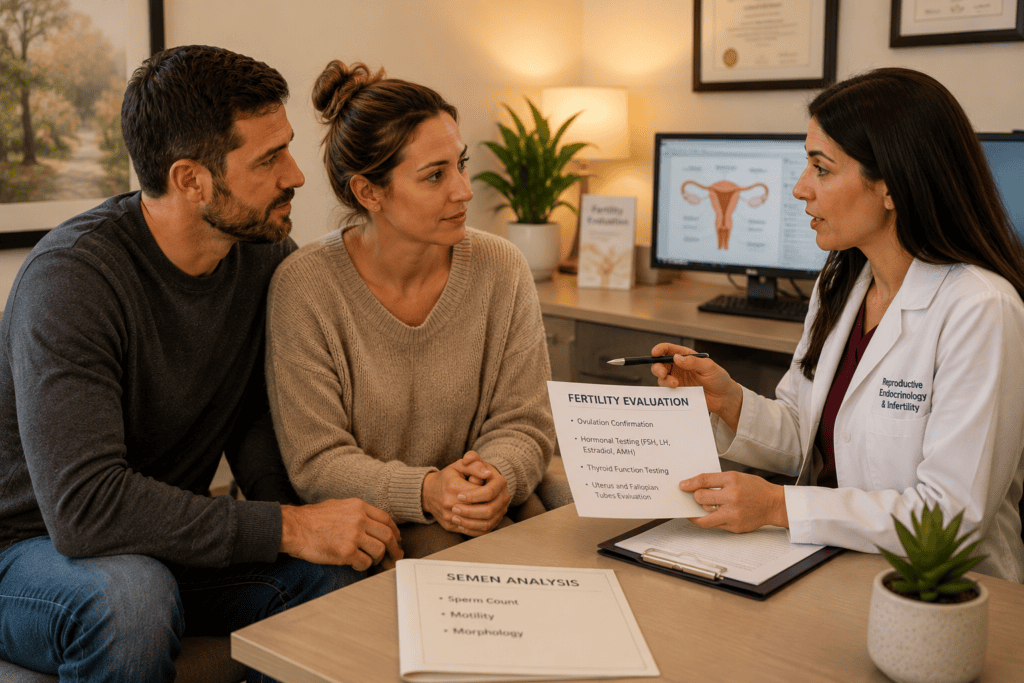
For couples who have been trying without success, the evaluation process typically includes several components.
For women, this often involves ovulation confirmation through basal body temperature tracking or ovulation predictor kits, hormonal testing including day 3 FSH, LH, estradiol, and AMH (anti-Müllerian hormone), thyroid function testing, evaluation of the uterus and fallopian tubes through hysterosalpingogram or saline sonogram, and sometimes evaluation of ovarian reserve through additional testing.
For men, evaluation typically involves semen analysis assessing sperm count, motility, and morphology, and sometimes hormonal testing if abnormalities are found.
The evaluation is guided by primary care, obstetric care, or a reproductive endocrinologist depending on the specific situation. Coordinated medical evaluation supports understanding what factors are involved so treatment can address them directly.
Common Conditions Affecting Fertility
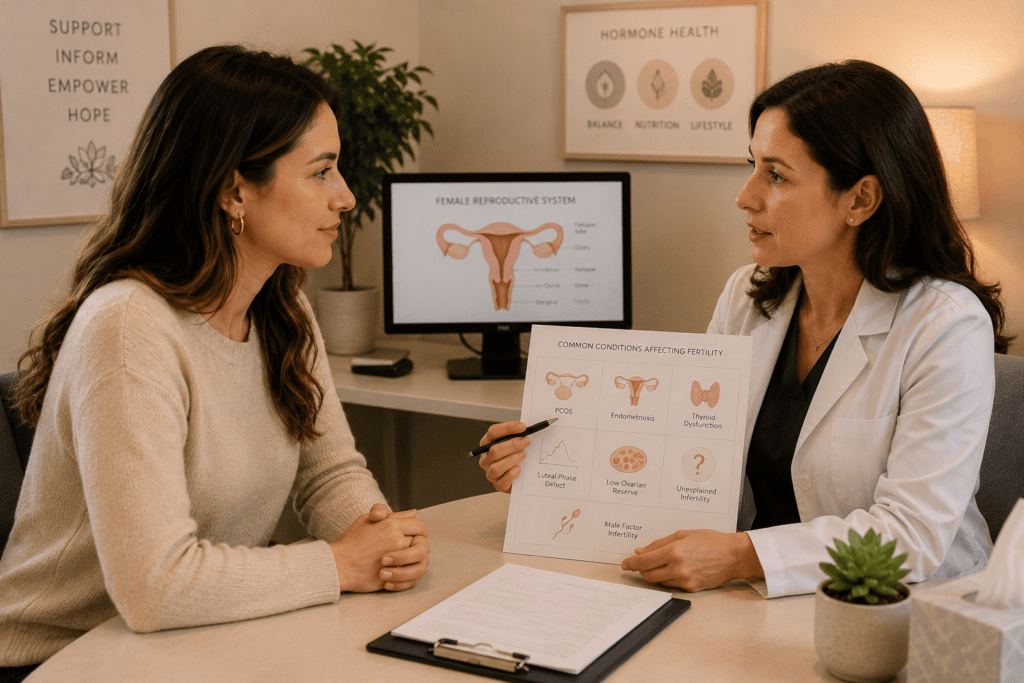
Several conditions commonly affect fertility and respond well to integrated care that includes acupuncture.
- Polycystic ovary syndrome (PCOS). PCOS is one of the most common causes of ovulatory infertility. It involves hormonal imbalance, insulin resistance, and often irregular or absent ovulation. Acupuncture has substantial research support for supporting cycle regulation and ovulation in PCOS.
- Endometriosis. Endometriosis involves uterine tissue growing outside the uterus, which can affect fertility through inflammation, scarring, and hormonal disruption. Acupuncture supports the pain and inflammatory dimensions and can support fertility in patients with mild to moderate endometriosis.
- Thyroid dysfunction. Both hypothyroidism and hyperthyroidism affect fertility. Standard care typically involves thyroid medication, and acupuncture supports the broader hormonal patterns.
- Luteal phase defect. A short luteal phase (the time between ovulation and the next period) can prevent implantation. Acupuncture supports the hormonal patterns that produce a healthy luteal phase.
- Low ovarian reserve. Diminished ovarian reserve is a common finding in women over 35 or with specific medical histories. Acupuncture supports blood flow and cellular function while medical intervention often becomes necessary.
- Unexplained infertility. For couples where all testing appears normal but conception is not happening, acupuncture supports the underlying patterns that testing may not detect.
- Male factor infertility. Sperm parameters respond to acupuncture through effects on hormonal balance, circulation, and cellular function.
How Traditional Chinese Medicine Views Fertility
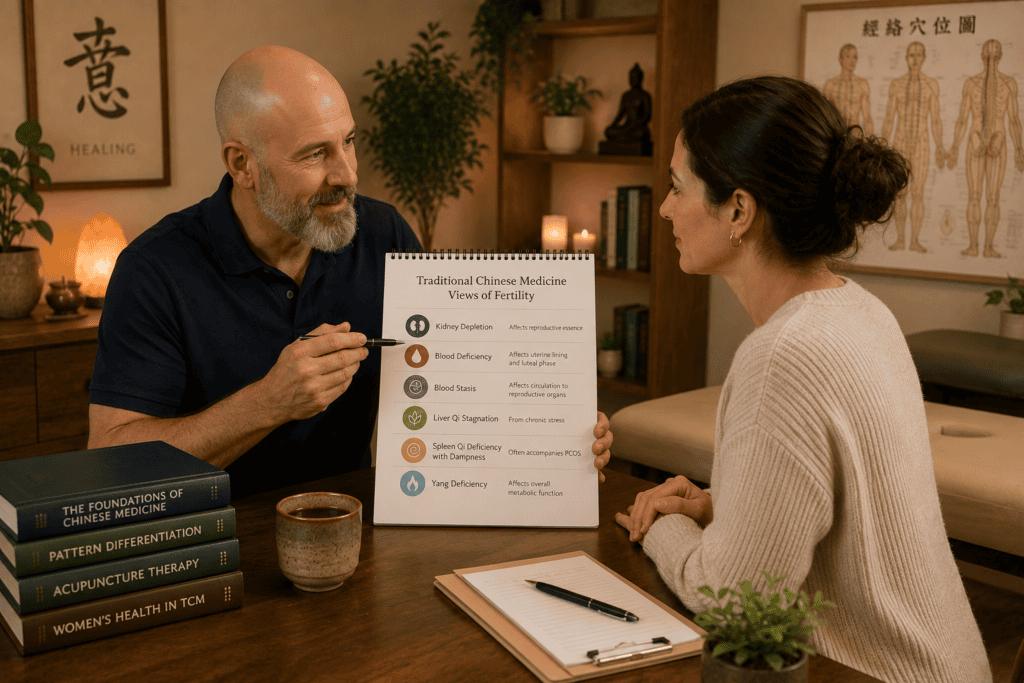
Traditional Chinese Medicine understands fertility as reflecting the overall balance of the body’s reserves and rhythms. Several patterns commonly affect fertility.
- Kidney depletion. The Kidneys in Chinese medicine store the deepest reserves including reproductive essence. Kidney depletion produces the diminished ovarian reserve pattern, low sperm parameters, and general reproductive weakness.
- Blood deficiency. Blood in Chinese medicine nourishes the tissues including the uterine lining. Blood deficiency produces thin uterine lining, poor implantation, and shorter luteal phases.
- Blood stasis. Poor circulation to the reproductive organs affects both female and male fertility. Blood stasis often accompanies endometriosis and can affect implantation.
- Liver Qi Stagnation. Chronic stress produces Liver Qi Stagnation, which affects hormonal cycles, ovulation timing, and the physical relaxation needed for conception.
- Spleen Qi Deficiency with Dampness. This pattern often accompanies PCOS and can affect ovulation, weight, and metabolic function.
- Yang Deficiency. Reproductive Yang deficiency produces low libido, cold sensations, and difficulty conceiving that reflects overall metabolic depletion.
A licensed acupuncturist identifies which patterns are dominant and treats accordingly. The individualized approach is what distinguishes the Chinese medicine framework from protocol-only approaches.
How Acupuncture Supports Fertility
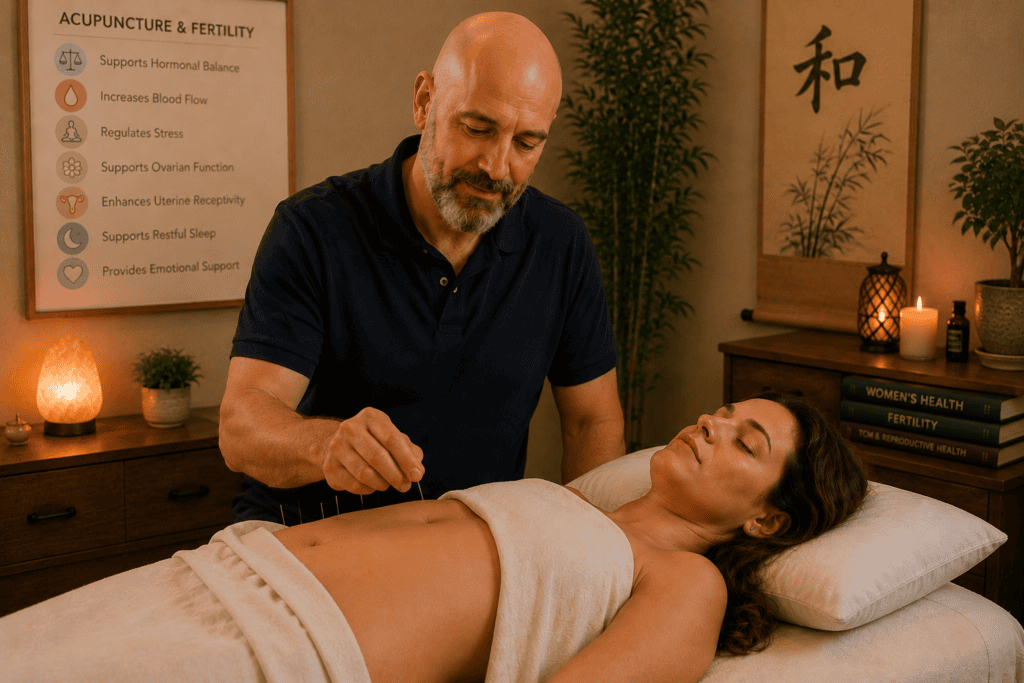
Acupuncture addresses fertility through several mechanisms.
- Hormonal regulation. Acupuncture affects the hypothalamic-pituitary-ovarian axis in women and the hypothalamic-pituitary-gonadal axis in men. This supports the hormonal balance that fertility requires.
- Blood flow to reproductive organs. Acupuncture increases blood flow to the uterus and ovaries in women and to the testes in men. Improved blood flow supports tissue quality and cellular function.
- Stress and cortisol regulation. Chronic stress affects fertility through multiple pathways. Acupuncture reduces cortisol and supports the nervous system regulation that fertility requires. The chronic stress component is addressed in more detail through what is cortisol and why do i have so much of it.
- Ovarian function support. Acupuncture supports the cellular function of ovarian follicles and the maturation process that produces healthy eggs.
- Sperm parameter support. Research has documented that acupuncture supports sperm count, motility, and morphology in men with abnormal semen analyses.
- Uterine receptivity. Acupuncture supports the uterine lining thickness and receptivity that implantation requires.
- Sleep support. Consistent quality sleep supports the hormonal patterns that fertility requires. Acupuncture supports sleep across the fertility journey.
- Emotional support. The emotional weight of fertility challenges is substantial. Acupuncture addresses the anxiety, disappointment, and grief that many couples navigate.
The mechanisms and functions of acupuncture are explored in more depth in what does acupuncture actually do to your body.
For couples specifically pursuing in vitro fertilization, can acupuncture help with IVF covers the Paulus protocol and the research base for acupuncture around embryo transfer.
The 90-Day Preconception Window

One of the most important frameworks in fertility acupuncture is the 90-day preconception window. Eggs and sperm both take approximately 90 days to develop before ovulation or ejaculation. This means the health, nutrition, stress, and lifestyle patterns of the three months before conception directly affect the quality of the eggs and sperm that produce a pregnancy.
For couples preparing for conception, the 90-day preparation window is when acupuncture, nutrition, sleep, and stress management have the most direct impact on egg and sperm quality. Weekly acupuncture across this window supports the maturation of healthy eggs and sperm, produces the hormonal patterns that support conception, and addresses the underlying patterns that may have contributed to fertility challenges.
For couples pursuing IUI or IVF, starting acupuncture three months before the procedure produces measurably better outcomes than starting at the time of transfer. The preparation window matters at least as much as the transfer-day protocol.
For couples in active trying, this framework is worth understanding even when the trying has already been going for some time. The next 90 days can meaningfully affect the cycle that produces conception.
Male Fertility Specifically

Male fertility deserves specific attention because it is often overlooked and because the interventions can produce meaningful improvement in sperm parameters.
Sperm regeneration follows the 90-day cycle. Every three months, the body produces an entirely new generation of sperm. This means that lifestyle and health interventions can measurably affect sperm quality within a relatively short window.
Common interventions that support male fertility include acupuncture for hormonal balance and testicular blood flow, appropriate management of underlying conditions including varicoceles when significant, avoiding heat exposure (hot tubs, laptops on lap, tight underwear), reducing alcohol, quitting tobacco and cannabis, managing weight and metabolic health, specific supplements including coenzyme Q10, zinc, selenium, and folate under appropriate guidance, and stress management.
Semen analysis every three months allows objective tracking of whether interventions are producing improvement.
The Holistic Integrated Approach

Fertility support responds best to a coordinated approach.
- Medical fertility evaluation and care. Working with primary care, obstetric care, or a reproductive endocrinologist depending on the situation supports understanding what factors are involved and what medical interventions are appropriate.
- Regular acupuncture treatment. Weekly acupuncture during active trying or the preconception preparation window supports the underlying patterns.
- Cycle awareness and timing. Understanding your cycle including ovulation timing, cervical mucus changes, and basal body temperature supports the practical dimension of trying.
- Nutrition support. Working with someone who understands fertility nutrition supports egg and sperm quality. Adequate protein, healthy fats, specific micronutrients, and blood sugar regulation all matter.
- Sleep and stress management. These affect hormonal function directly.
- Movement. Appropriate physical activity supports fertility for most people. Excessive exercise can affect fertility in some cases and warrants adjustment when relevant.
- Managing environmental exposures. Some environmental factors including certain plastics, pesticides, and endocrine disruptors affect fertility. Reducing exposure where reasonable supports overall reproductive health.
- Emotional support. Individual therapy, couples counseling, or fertility support groups all provide important support through the emotional weight of the journey.
When to See a Reproductive Endocrinologist
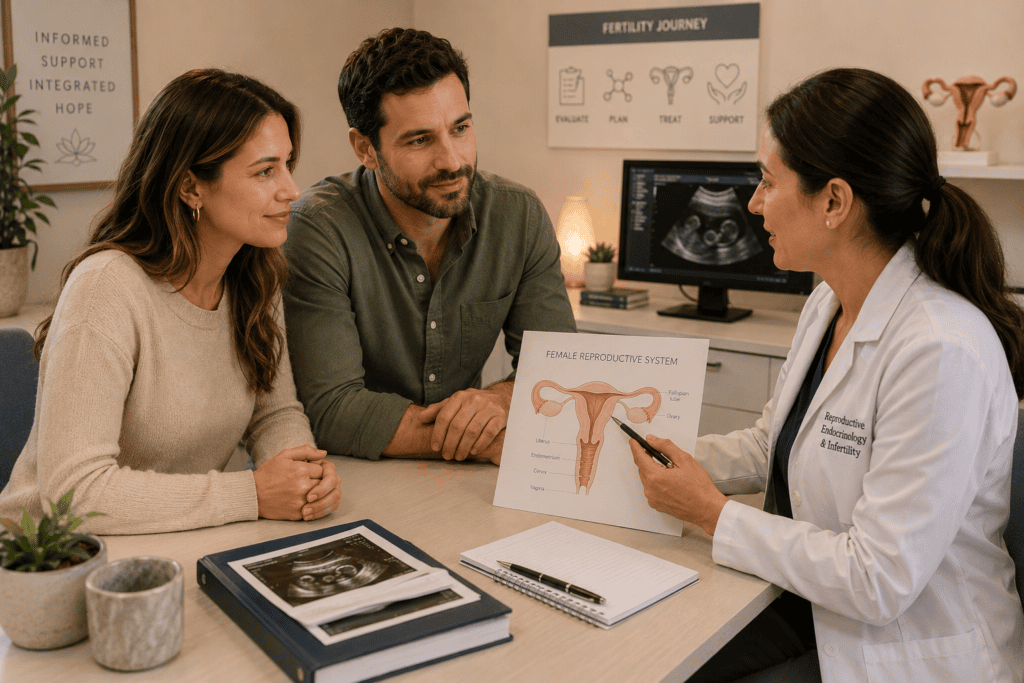
Several situations warrant evaluation with a reproductive endocrinologist.
Trying to conceive for 12 months without success for women under 35. Trying for 6 months without success for women 35 and older. Known conditions affecting fertility including PCOS, endometriosis, or history of tubal disease. History of pregnancy loss including recurrent miscarriage. Known male factor issues from previous evaluation. Same-sex couples or single parents pursuing assisted reproductive technology. Anyone with specific concerns about their fertility even before the standard time frames.
Reproductive endocrinologists provide the specialized evaluation and treatment that supports the medical dimension of fertility. Acupuncture works alongside their care rather than as a substitute for it.
The nervous system and stress triggers contributing to fertility challenges is covered in anxiety, stress, and depression.
Additional support for your fertility journey is available through acupuncture, cupping, and lifestyle coaching.
Reach out to Above and Beyond Acupuncture on North Frank Lloyd Wright Boulevard in Scottsdale to schedule a consultation.
Schedule an appointment online or call us today to start your healing journey.

About the Publisher
Paul Kerzner, L.Ac., is a licensed acupuncturist and board-certified herbalist, as well as the founder of Above and Beyond Acupuncture in Scottsdale. His own journey from chronic patient to practicing acupuncturist shapes his commitment to providing honest, clinically grounded information about acupuncture and Traditional Chinese Medicine. Learn more about Paul and his clinical approach on the About Us page.