
Key Takeaways
- Electroacupuncture combines electrical currents with traditional acupuncture techniques to enhance pain relief.
- It effectively addresses chronic pain issues such as plantar fasciitis, sciatica, and fibromyalgia by decreasing inflammation and enhancing blood circulation.
- Patients often experience sustained stimulation, leading to longer-lasting pain relief than regular acupuncture.
- Sessions typically last 25 to 45 minutes, and noticeable changes usually occur within three to five treatments.
- Consult Above and Beyond Acupuncture in Scottsdale for personalized electroacupuncture care if other treatments haven’t worked.

Chronic pain affects more than just the body. It can make it hard to walk without stopping, disrupt your sleep, and force you to plan your day around what your body can handle.
If you’re dealing with chronic pain and feel like you’ve exhausted all options, electroacupuncture might be the next step you haven’t tried yet. At Above and Beyond Acupuncture in Scottsdale, we prioritize delivering lasting results, and electroacupuncture is frequently one of the most effective treatments for pain that hasn’t responded to other approaches.
Here’s what you should know.
What Is Electroacupuncture?
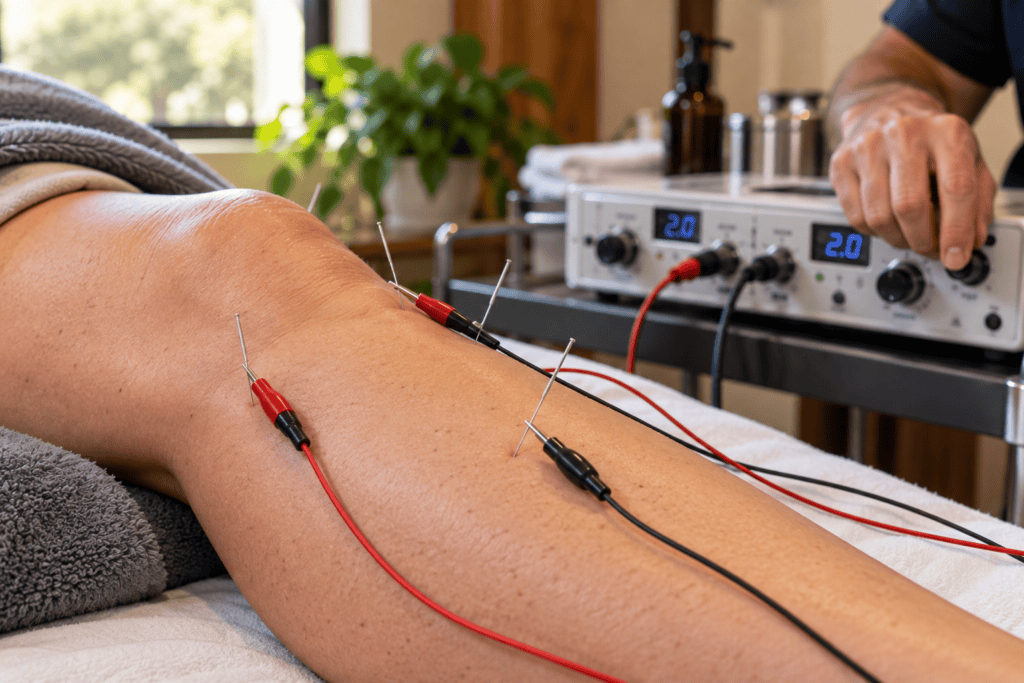
Electroacupuncture employs the same fundamental technique as traditional acupuncture, involving the insertion of fine, sterile needles at designated points along the body’s meridians. The primary distinction occurs after the needles are positioned.
Small clips are attached to the needles and linked to a device that delivers a gentle electrical current between two points. The frequency and intensity are customized according to your condition and your body’s response.
This provides consistent, controlled stimulation that is stronger than manual needling alone. Instead of depending solely on needle technique, an electrical current maintains activation of the acupuncture points throughout the session.
How It Differs from Traditional Needling
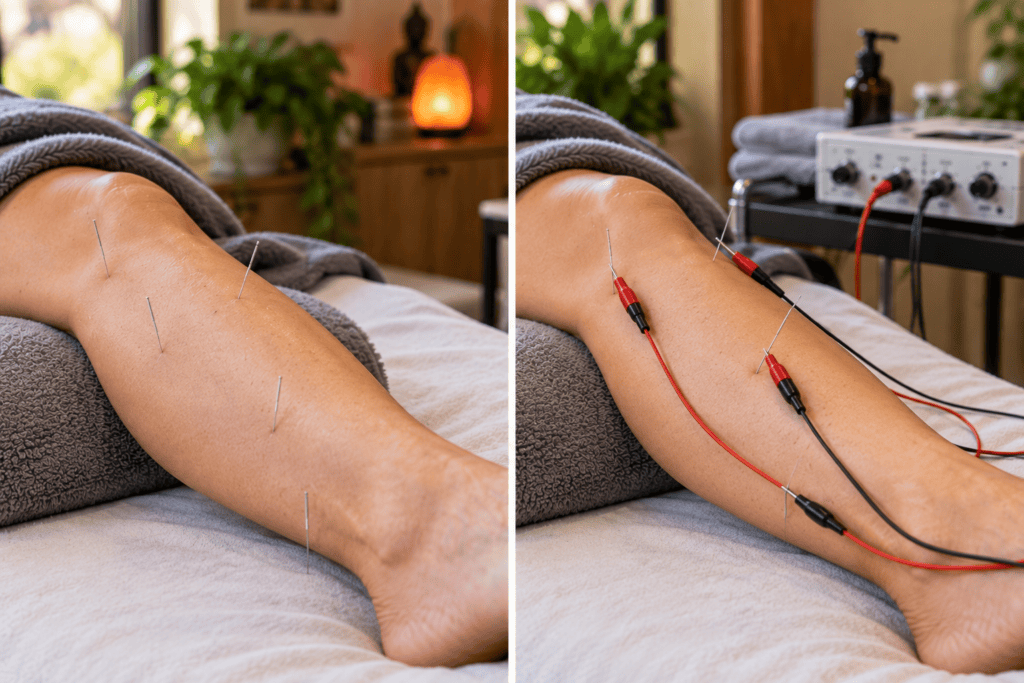
Traditional acupuncture stimulates the nervous system, helps Qi and Blood flow along the meridians, and activates the body’s natural healing. For many people, this is enough.
Electroacupuncture often works best for stubborn, deep, or long-lasting pain. The electrical current reaches deeper tissues, keeps the points activated longer, and gives the practitioner more control over your body’s pain response.
From a Western medical standpoint, this stimulation prompts your body to produce more endorphins and enkephalins for a prolonged period compared to manual needling. Additionally, it activates pain-relief pathways in the spinal cord, helping to diminish pain signals at their origin. Studies indicate that it can enhance local blood circulation, decrease inflammation, and promote nerve repair in injured tissue.
In Traditional Chinese Medicine, electrical currents aid in moving Qi and Blood through stagnated areas. Chronic pain often involves such stagnation, and the consistent stimulation from electroacupuncture is particularly effective at breaking up long-standing patterns that haven’t responded to milder treatments.
Why Electroacupuncture Works Well for Plantar Fasciitis
Treating plantar fasciitis with standard methods can be quite frustrating. You may experience sharp heel pain upon waking, a lingering ache after prolonged standing, and setbacks after a few weeks, making you feel like you’re back to the start.
Standard treatments encompass stretching, orthotics, cortisone injections, and, if necessary, surgery. Many patients experience only partial relief or reach a plateau, while some undergo cycles of improvement and relapse.
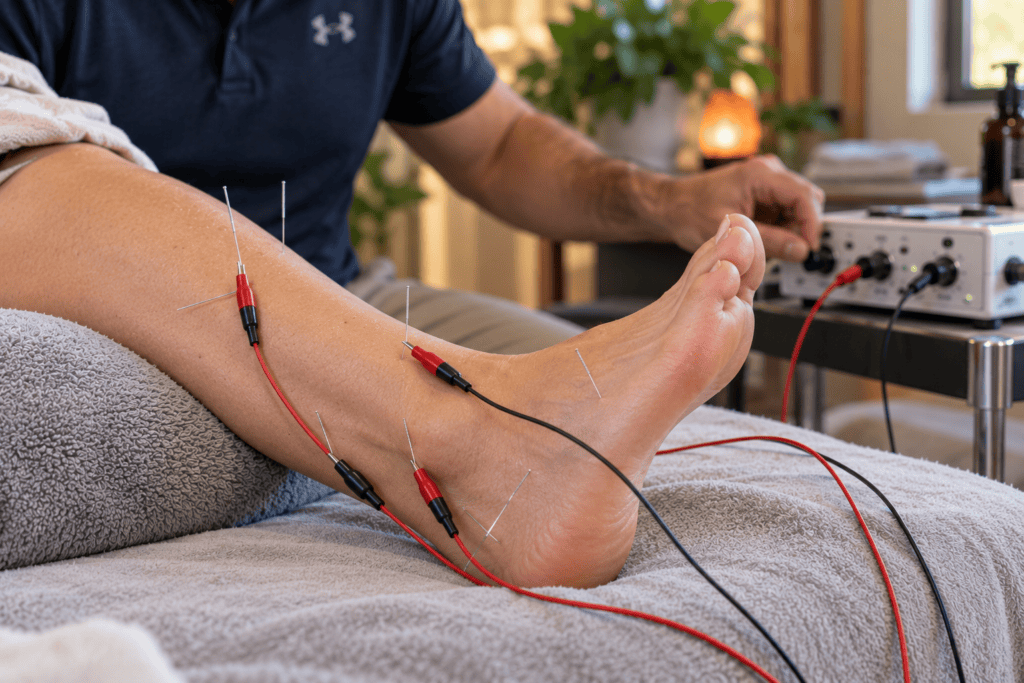
Electroacupuncture addresses plantar fasciitis in several ways. Needles are placed at the heel and along the Kidney and Bladder meridians, which run through the sole and up the calf. The electrical stimulation helps reduce chronic inflammation, break up adhesions from repeated small tears, improve blood flow to an area that heals slowly, and calm the nervous system’s pain signals.
Studies on electroacupuncture for plantar fasciitis have found significant pain relief and better mobility, even for people who have already tried other conservative treatments.
Other Chronic Pain Conditions That Respond Well

Plantar Fasciitis is a great example, but it’s not the only condition where this treatment can help. Patients who see a qualified acupuncturist in Scottsdale for the following issues often find electroacupuncture an important part of their care.
- Chronic back pain: When there’s disc degeneration, nerve issues, or deep muscle tension.
- Sciatica: Electrical stimulation can help reduce nerve irritation and improve signal transmission along the sciatic nerve.
- Knee osteoarthritis: Electroacupuncture can slow symptom progression by improving circulation and reducing inflammation.
- Neck and shoulder pain: These pains often occur with cervical radiculopathy or long-term upper-body tension.
- Fibromyalgia: Electroacupuncture helps address the widespread nervous system sensitivity that causes many symptoms.
- Nerve pain: Peripheral neuropathy in the hands and feet, with the goal of supporting nerve healing over time.
What these cases have in common is that the tissue has been affected for a long time, so they need a stronger and longer-lasting approach than regular acupuncture.
What to Expect During a Session
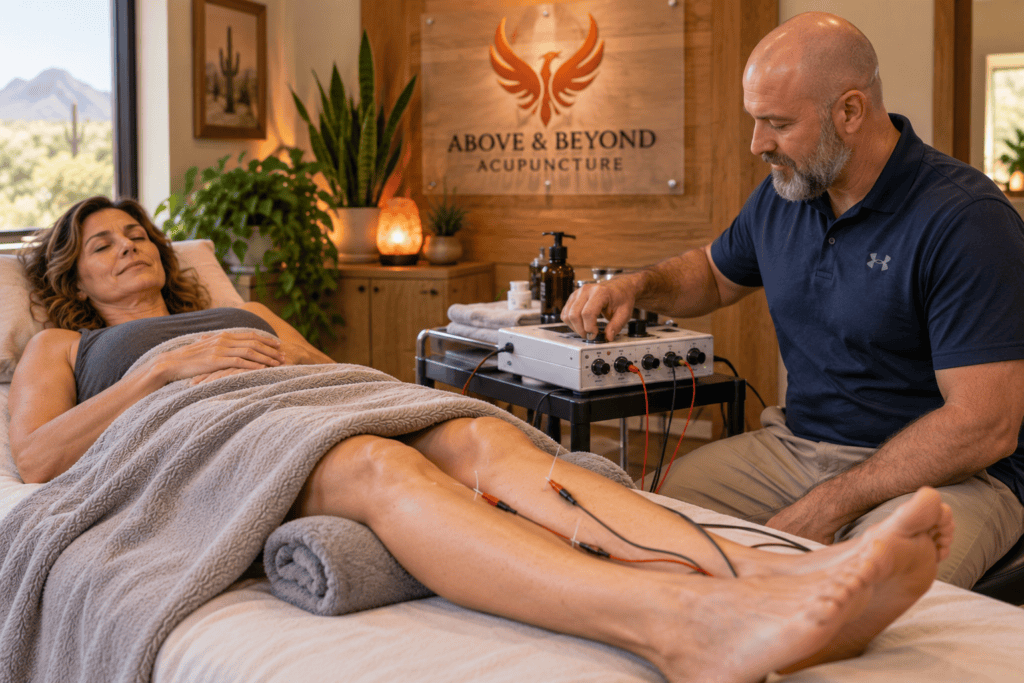
Many new patients worry that the electrical stimulation might hurt, but in most cases, it doesn’t. The current is low and usually feels like a gentle pulsing or buzzing where the needle is placed. After a short adjustment period, most people get used to it, and the intensity is always set to what feels comfortable.
Each session lasts about 25 to 45 minutes after the needles are placed. The number of sessions you’ll need depends on how long you’ve had the condition, how much tissue is involved, and how your body responds. People with chronic issues usually need several treatments, not just one. Most patients start to notice changes within three to five sessions.
Conclusion: Finding Lasting Relief
Living with chronic pain is exhausting, but finding relief shouldn’t be. Electroacupuncture is a unique and effective way to break the cycle of ongoing pain. It works by providing steady stimulation to deeper tissues, reducing inflammation, and helping your body release its own pain-fighting chemicals. Because of this, it often helps when other treatments haven’t worked. Whether you have pain from plantar fasciitis, sciatica, or muscle tension, this targeted approach offers a proven path forward.
You don’t have to accept discomfort as normal. Contact Above and Beyond Acupuncture today to schedule a consultation and see how our electroacupuncture treatments in Scottsdale can help you find lasting relief.
Taking the Next Step
If chronic pain has become part of your daily life and other methods haven’t helped much, it’s worth considering electroacupuncture.
At Above and Beyond Acupuncture in Scottsdale, every care plan starts with a thorough intake. Because pain symptoms are different for everyone, your treatment will be tailored to your needs. If you want to know if electroacupuncture is right for you, schedule a consultation.
If you’d like to learn more about acupuncture and Chinese medicine, check out the other articles on our site. Each post is meant to make TCM concepts easier to understand and show how this powerful system can help with many health issues.
Schedule an appointment online or call us today to start your journey to relief.

About the Publisher
Paul Kerzner, L.Ac., is a licensed acupuncturist and board-certified herbalist, as well as the founder of Above and Beyond Acupuncture in Scottsdale. His own journey from chronic patient to practicing acupuncturist shapes his commitment to providing honest, clinically grounded information about acupuncture and Traditional Chinese Medicine. Learn more about Paul and his clinical approach on the About Us page.