
Key Takeaways
- Grief presents unique physical and emotional challenges, significantly affecting the body and spirit.
- Acupressure can support the grieving process by easing distress and restoring energy through specific points.
- Seven key acupressure points address different aspects of grief, including chest tightness, emotional pain, and exhaustion.
- Consistency in practicing acupressure, alongside self-care, can offer meaningful support during grief.
- Seek professional help if grief leads to impairment, severe symptoms, or prolonged distress beyond six months.
The physical experience of grief is real and measurable. Elevated cortisol. Disrupted sleep. Weakened immune function. Changes in appetite. Increased inflammation. Chest tightness and breathing patterns that mirror the emotional weight. This is why grief is exhausting even when nothing else is going on. The body is doing significant work processing the loss.
Traditional Chinese Medicine identifies grief as primarily housed in the Lung. When grief is prolonged or overwhelming, it depletes Lung Qi, which produces the chest tightness, shallow breathing, and physical exhaustion common in grief. Grief also disturbs the Shen (the spirit housed in the Heart), which produces the emotional pain, sleep disruption, and mental fog that accompanies loss.
Acupressure will not remove grief. Grief is a natural response to loss and needs to be moved through rather than eliminated. What acupressure can do is support the body and mind during the grieving process. The points below help settle the physical distress, ease the tight chest, calm the disturbed spirit, and support the resources that grief depletes.
Here are seven acupressure points that support the grieving process, why they work, and when to reach out for professional support.
What to Press and Why
Each point addresses a different aspect of the grief experience. Use them individually when a specific symptom is bothering you, or work through the full protocol as a daily practice.
1. Press on LU1 below your collarbone for the primary Lung point of grief. LU1 sits in the depression just below the collarbone and lateral to the sternum, in the soft tissue near the shoulder. Press gently with your fingertips for one to two minutes on each side. LU1 is called “Central Treasury” in Chinese medicine and is the front-mu point of the Lung. In Chinese medicine, grief is housed in the Lung, and prolonged grief depletes Lung Qi. LU1 directly addresses this depletion and often produces a noticeable release of the tightness that grief creates in the chest.
2. Press on LU9 at your wrist for tonifying Lung Qi. LU9 sits at the wrist crease on the thumb side, in the depression where you can feel your pulse. Press gently with your thumb or fingertip for one to two minutes on each hand. LU9 is one of the primary tonification points for the Lung and directly addresses the Lung Qi depletion that grief produces. Regular use of LU9 supports the physical resilience needed to move through the grieving process without becoming completely depleted.
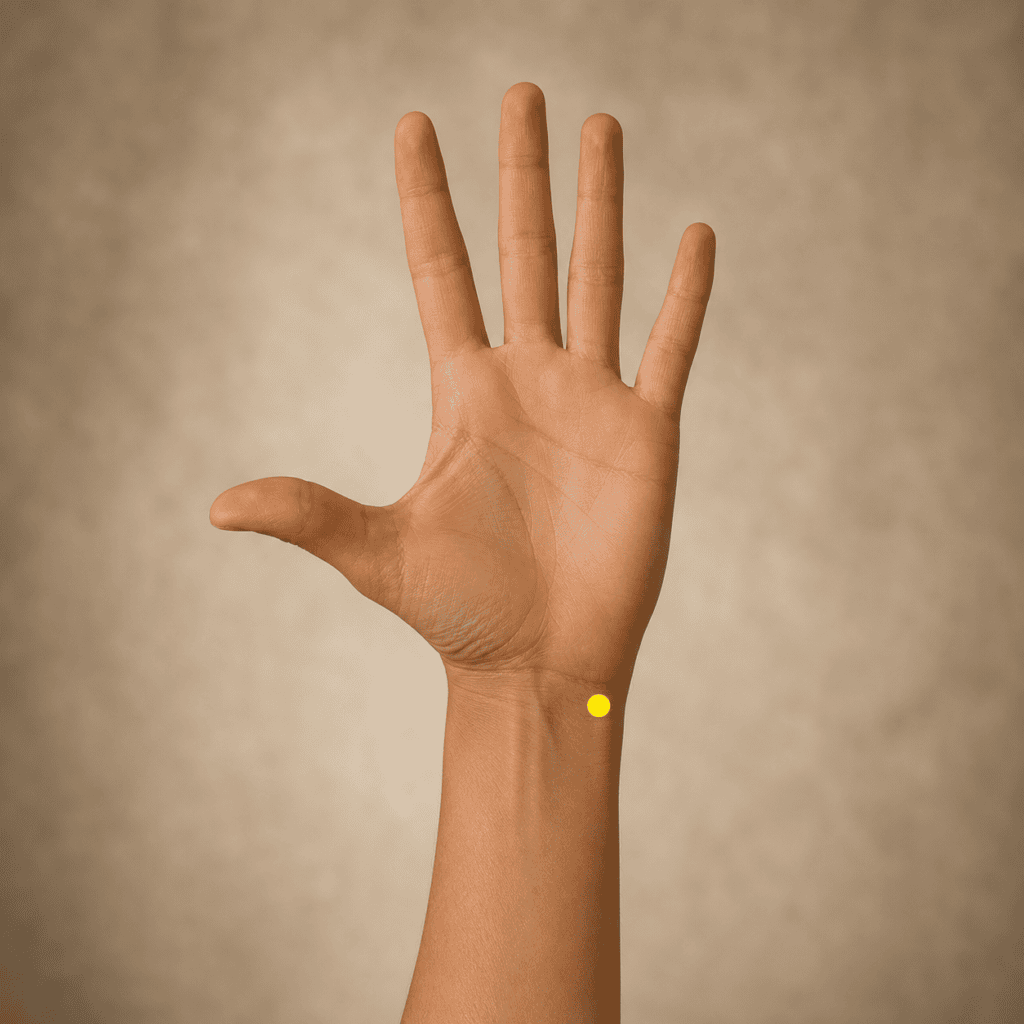
3. Press on HT7 at your wrist for calming the disturbed spirit. HT7 sits at the wrist crease on the pinky side, in the small depression just above the wrist bone. Press gently with your thumb or fingertip for one to two minutes on each hand. HT7 is called “Spirit Gate” in Chinese medicine and is the primary point for calming the Shen when it becomes disturbed by emotional pain. Grief disturbs the Shen deeply, which produces the sleep disruption, emotional pain, and mental fog common in grief. HT7 addresses this dimension directly.
4. Press on PC6 on your inner forearm for emotional distress. PC6 sits about three finger-widths above the inner wrist crease, between the two tendons in the center of the forearm. Press firmly with your thumb for one to two minutes on each arm. PC6 regulates the Heart and calms emotional distress. The point is one of the most useful for acute emotional pain and can be used during moments of intense grief to help settle the physical distress that accompanies waves of emotion.
5. Press on Yintang between your eyebrows for mental settling. Yintang sits in the small hollow directly between the eyebrows, above the bridge of the nose. Press gently with your index or middle finger for one to two minutes. Yintang calms the mind and settles the mental restlessness that often accompanies grief. The point supports the mental clarity that grief can cloud and helps settle the racing thoughts that sometimes appear during difficult periods.
6. Press on CV17 on the center of your chest for the tight chest of grief. CV17 sits on the center of the chest on the midline of the sternum, at the level of the fourth intercostal space (roughly the nipple line for most people). Press gently with your fingertips for one to two minutes. CV17 is called “Chest Center” in Chinese medicine and is the influential point for Qi. The point directly addresses the tight chest and constricted breathing that many people experience during grief. Gentle pressure on this point often produces a noticeable release and sometimes a spontaneous deeper breath.

7. Press on KI3 behind your inner ankle for restoring deep reserves. KI3 sits in the depression behind the inner ankle bone, between the ankle bone and the Achilles tendon. Press firmly with your thumb for one to two minutes on each leg. KI3 is called “Great Ravine” in Chinese medicine and tonifies Kidney essence. In Chinese medicine, prolonged grief depletes the Kidney reserves that provide the deepest energy and resilience. KI3 supports the restoration of these reserves and helps rebuild the physical foundation that extended grief can drain.
Why This Works
Grief involves several overlapping physical and emotional patterns. The Lung Qi depletion produces the chest tightness, shallow breathing, and physical exhaustion. The Shen disturbance produces the emotional pain, sleep disruption, and mental fog. The Kidney depletion produces the deep exhaustion that lingers long after acute grief has passed. The chronic stress activation produces the elevated cortisol and inflammatory patterns that grief creates in the body.
Acupressure works on several of these mechanisms at once.
- The Lung points (LU1, LU9) directly address the grief housed in the Lung and the Qi depletion that prolonged grief produces.
- The Heart and Shen points (HT7, PC6) calm the emotional distress and settle the disturbed spirit that loss creates.
- The mental settling point (Yintang) supports the clarity that grief clouds.
- The chest opening point (CV17) releases the physical tightness that emotional weight creates.
- The Kidney point (KI3) supports the deep reserves that extended grief depletes.
The chronic stress components that accompany grief affects the mind,. body and spirit. What Is Cortisol and Why Do I Have So Much of It? explains this topic in greater detail.
The Mayo Clinic overview of grief provides a medical framework for understanding the process.
The NCCIH summary on acupuncture covers the research base for the treatment as it applies to stress and emotional dimensions.
How to Use the Points
- For acute waves of grief, PC6, HT7, and CV17 provide the fastest relief. These points can be pressed when a wave of grief hits to help settle the physical and emotional distress.
- For daily support during a grieving period, working through the full seven-point protocol once or twice a day supports the underlying patterns. Consistency matters more than intensity. Even a few minutes of daily practice provides meaningful support.
- For prolonged grief, LU1, LU9, and KI3 support the deeper layers that extended periods grief taps out. Regular use of these points helps prevent the exhaustion that can accompany a long and extended grieving process.
Gentle sustained pressure works better than hard pressure for the grief points. Grief already involves physical distress. The touch should feel like support rather than force.
Pairing acupressure with the practices that support grief amplifies the results. Adequate sleep, even when sleep is disrupted. Consistent gentle movement. Nourishing food, even when appetite is low. Time in nature. Connection with people who can hold space for the grief without trying to fix it. Professional support when needed.
When to Get Professional Help
Grief is a natural process that takes time. Most grief follows waves that gradually become less intense and less frequent, though the loss continues to matter for the rest of a person’s life. This is normal and does not require intervention.
Certain patterns warrant professional support. Grief that becomes complicated by persistent daily impairment beyond six months to a year. Grief accompanied by significant depression, thoughts of self-harm, or substance use. Grief that produces severe physical symptoms that do not improve with basic self-care. Grief where the person cannot function in essential daily activities. Grief triggered by traumatic loss (sudden death, violence, suicide) which often benefits from specialized trauma-focused support.
If you are having thoughts of harming yourself, please reach out to the 988 Suicide and Crisis Lifeline by calling or texting 988. The service is available 24 hours a day and provides confidential support.
For patients dealing with grief and looking for support beyond home practices, acupuncture treatment offers substantial help with the physical and emotional patterns that grief produces.
Anxiety, Stress, and Depression is a major emotional factor that affects the nervous system and contributes to many patterns associated with grief.
To learn more about what services this clinic offers please click here: Acupuncture, Cupping & Lifestyle Coaching.
Reach out to Above and Beyond Acupuncture on North Frank Lloyd Wright Boulevard in Scottsdale to schedule a consultation.
Schedule an appointment online or call us today to start your healing journey.
The points above are only as effective as the technique used to apply them. Where to press, how firmly, and for how long all affect the result. For a full breakdown of how to perform acupressure properly at home, read Performing Acupressure in 3 Easy Steps.
About the Publisher
Paul Kerzner, L.Ac., is a licensed acupuncturist and board-certified herbalist, as well as the founder of Above and Beyond Acupuncture in Scottsdale. His own journey from chronic patient to practicing acupuncturist shapes his commitment to providing honest, clinically grounded information about acupuncture and Traditional Chinese Medicine. Learn more about Paul and his clinical approach on the About Us page.