Key Takeaways
- Acupuncture in America has roots in Traditional Chinese Medicine, dating back at least 2,500 years.
- The 1970s marked a turning point when James Reston’s article introduced acupuncture to a broader audience, sparking national interest.
- Before the 1970s, Chinese immigrants practiced acupuncture, but it gained significant attention and acceptance afterward.
- Acupuncture evolved into a recognized treatment in U.S. healthcare, with increasing use for pain management and growing institutional support.
- Today, acupuncture is common, with usage rising from 1% in 2002 to 2.2% in 2022, highlighting its integration into American health practices.

Although acupuncture may seem like a recent addition to American healthcare, it has roots dating back thousands of years. It began in Traditional Chinese Medicine and developed over centuries before spreading to other cultures and countries.
Acupuncture’s journey in the United States took a different path. While Chinese immigrant communities had practiced it long before the 1970s, it was during that decade that acupuncture became widely known. A journalist’s hospital stay in China, increased media coverage, changing views on complementary medicine, and later scientific developments all helped make acupuncture more familiar to Americans.
Today, acupuncture is used across the United States and is often chosen for pain and other health issues. To see how it became part of American healthcare, we have to look further back in time.
Acupuncture: An Ancient Healing Modality
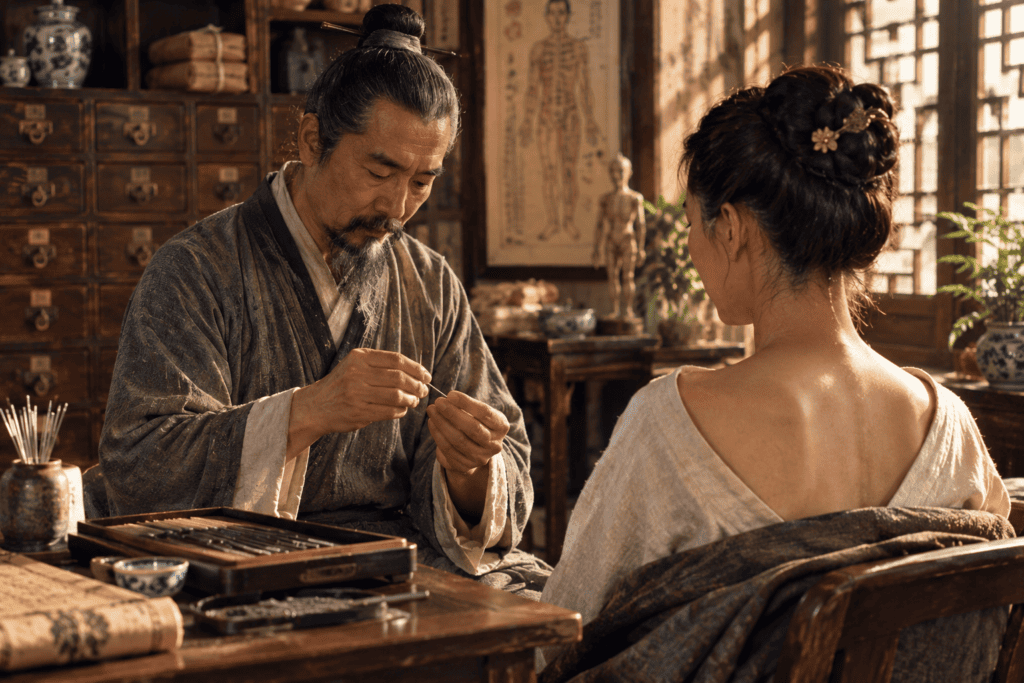
Acupuncture started as part of Traditional Chinese Medicine and has been used for at least 2,500 years. It involves inserting thin needles into specific points on the body to help treat health problems and support overall well-being.
Traditional Chinese Medicine created its own way of understanding health, using ideas like Qi, meridians, Yin and Yang, and patterns of imbalance. Acupuncture became one part of this larger tradition, which also included herbal medicine, diet therapy, and other methods.
Acupuncture was used in China for centuries and later spread to other parts of Asia. Its history in the United States is much shorter, but it was not completely unknown before the major changes of the 1970s.
Chinese immigrants had already brought acupuncture to cities like San Francisco, Los Angeles, and New York. The real change in the 1970s was not its first arrival in America, but its introduction to a much wider audience.
How Acupuncture Entered Mainstream American Awareness
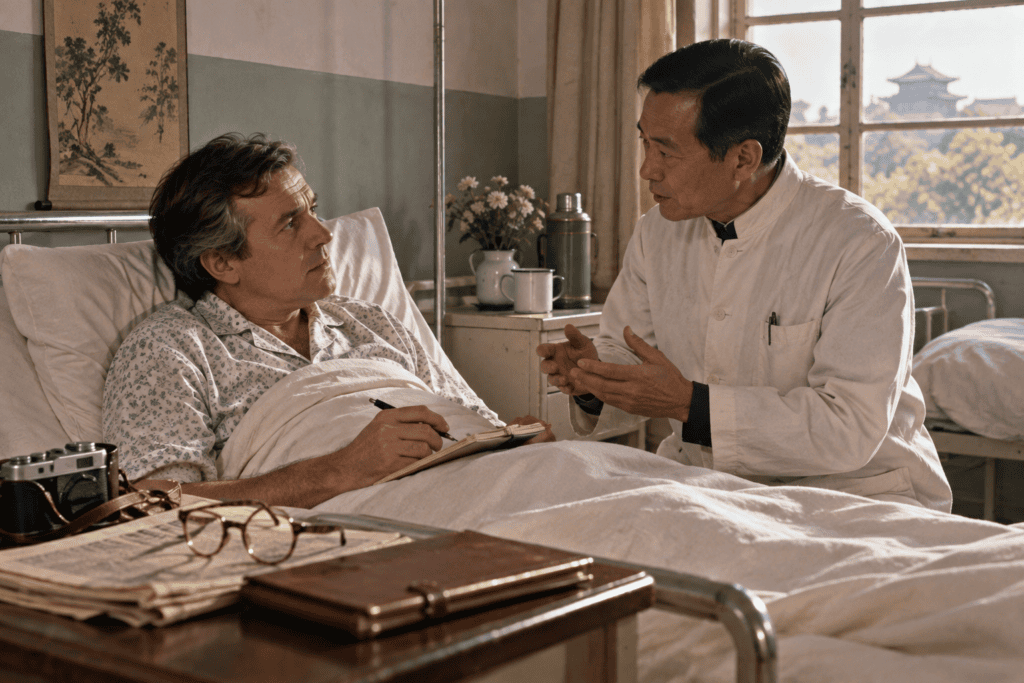
A key moment in American acupuncture history happened almost by chance.
In July 1971, New York Times journalist James Reston was traveling in China when he developed acute appendicitis. Reston underwent conventional surgery to have his appendix removed at the Anti-Imperialist Hospital in Beijing.
Despite a common misunderstanding, acupuncture was not used as anesthesia for his surgery. Reston received standard anesthesia for the operation. Acupuncture was given later, when he had pain and swelling after surgery.
Reston was fascinated by the experience.
Rather than simply going home and letting it go, he took the journalistic path and documented his experience in writing.
Acupuncture Gains National Media Attention
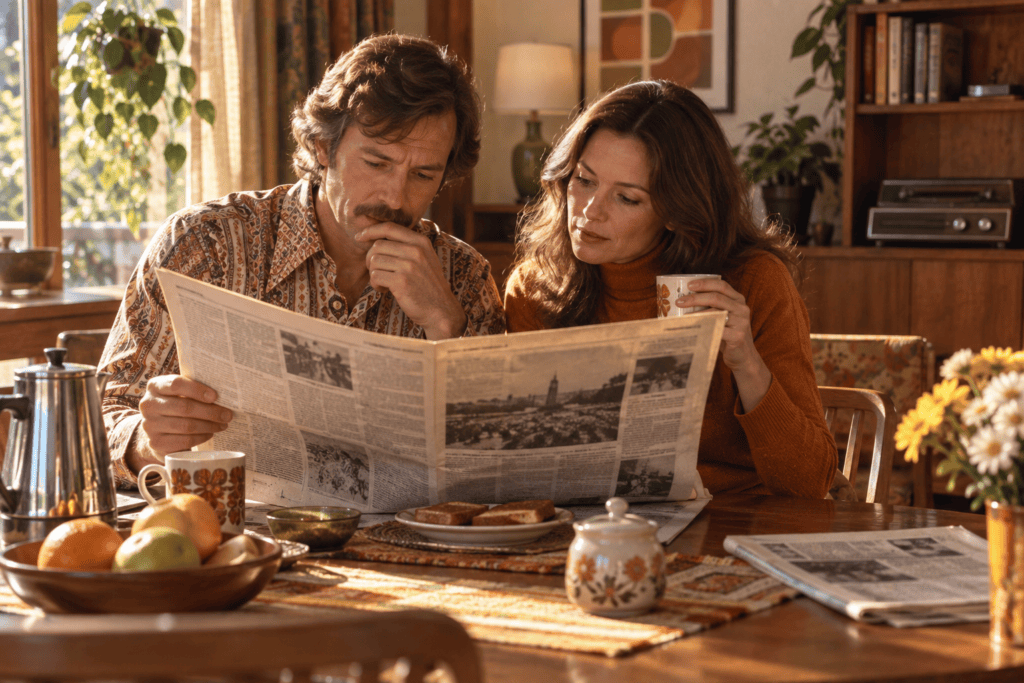
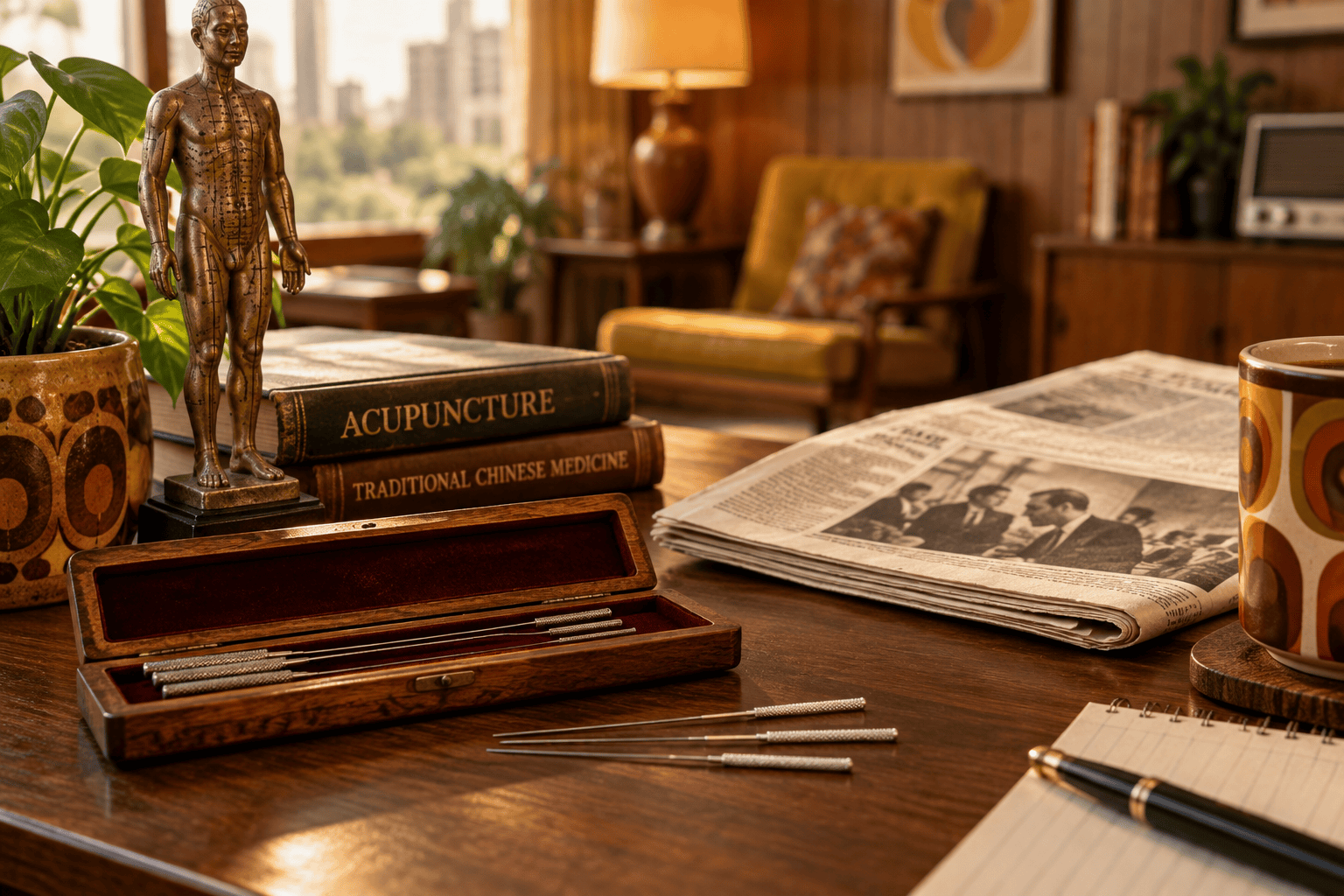
On July 26, 1971, Reston’s story appeared on the front page of The New York Times with the headline Now, About My Operation in Peking. He described his surgery, his time in a Chinese hospital, and the acupuncture he received while recovering.
The timing was remarkable.
At the time, Americans were very curious about China, which had been mostly closed off for many years. Diplomatic ties between the United States and China were starting to change, and President Nixon’s historic visit would happen in February 1972.
Reston’s story came out just as Americans were becoming more interested in Chinese culture and society.
For many readers, this was their first introduction to acupuncture. Soon, other major American publications covered the topic, leading to what some historians call an American “acupuncture fever.”
People often remember this event as the moment acupuncture arrived in America. While that makes a good story, the real history is more complex.
Acupuncture in America Before the 1970s
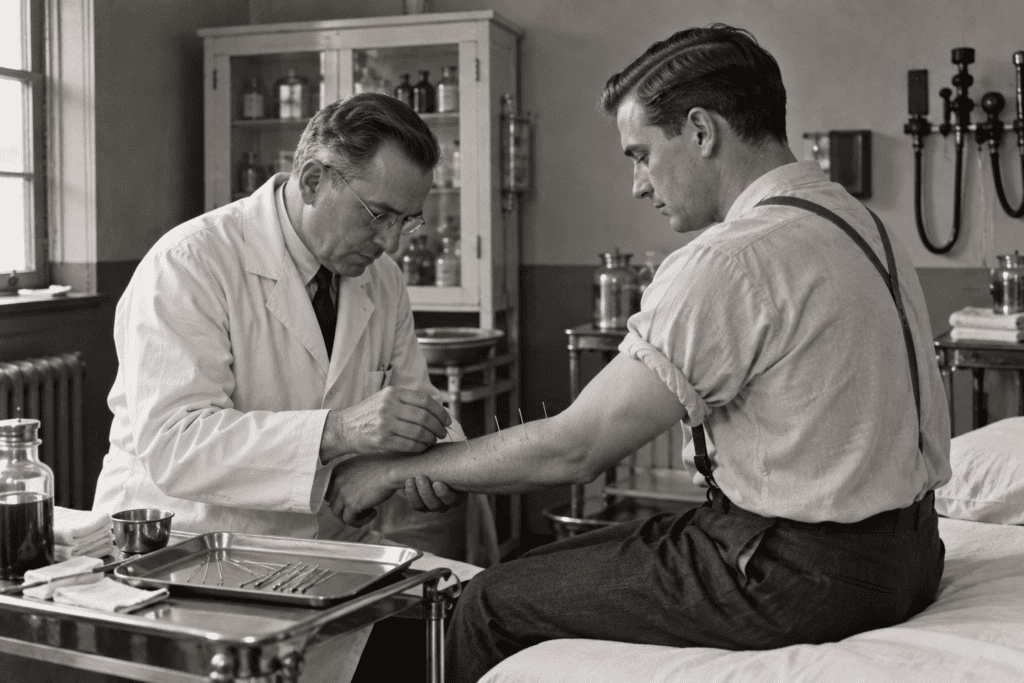
Acupuncture didn’t suddenly appear in the United States because of a newspaper article.
Chinese communities had practiced Traditional Chinese Medicine in America long before, and Western doctors had sometimes studied acupuncture and other needle techniques.
However, Western medicine often has a different perspective on acupuncture compared to Traditional Chinese Medicine.
Rather than using traditional ideas like qi and meridians, Western practitioners often explained acupuncture through anatomy, nerves, muscles, and the body’s responses. Over time, they also tried different electrical stimulation and needling methods.
Auricular acupuncture, which means stimulating points on the ear, became another area of study and later developed into its own treatment system.
These traditions didn’t always look the same, but they show that Americans were interested in therapeutic needling long before the 1970s.
What changed in the early 1970s was a huge increase in public awareness.
The 1970s Changed the Conversation

After acupuncture started getting national attention, Americans became curious and wanted to learn more.
Doctors traveled to China to see acupuncture in person. Researchers started asking how needling could affect pain and other body processes. Acupuncture clinics opened outside of traditional Chinese communities, and more patients began seeking treatment.
At the same time, states faced a practical question: Who should be legally allowed to practice acupuncture?
The answer came slowly, not through one national law. Instead, each state created its own licensing rules, leading to the professional regulations we have today.
This time also marked the start of a bigger change in how Americans viewed healthcare. Practices once called “alternative” began to attract more interest from patients, researchers, and healthcare workers.
Acupuncture became one of the most visible examples of that change.
Acupuncture Gains Scientific and Institutional Recognition
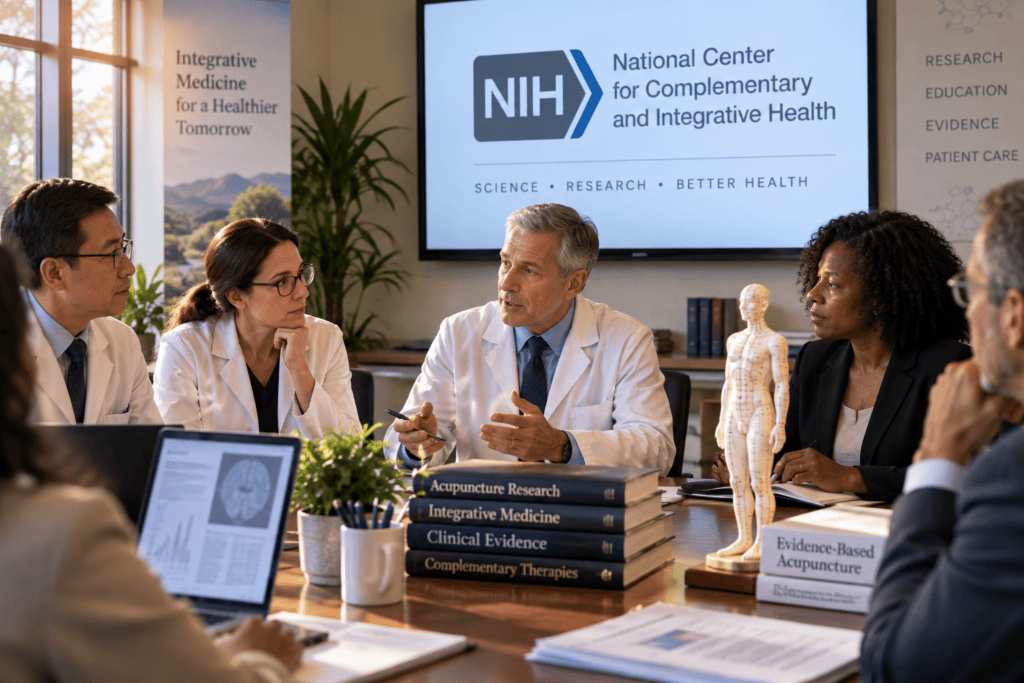
In the decades after the 1970s, another big change happened. Acupuncture became a topic of formal scientific research.
In 1991, Congress funded the creation of an office within the National Institutes of Health to investigate unconventional medical practices. The NIH Office of Alternative Medicine followed, and in 1998 Congress authorized its elevation to the National Center for Complementary and Alternative Medicine, which formally became an independent NIH component in 1999. Today, that organization is known as the National Center for Complementary and Integrative Health, or NCCIH.
Another major milestone occurred in 1997, when an NIH Consensus Development Conference evaluated the scientific evidence surrounding acupuncture.
The panel found promising evidence that acupuncture could help with adult postoperative and chemotherapy-related nausea and vomiting, as well as dental pain after surgery. They also noted that acupuncture might help with other conditions as part of a larger treatment plan, but stressed the need for more high-quality research.
That distinction is important because it clarifies that the NIH did not claim “acupuncture works for everything.” Rather, it indicates that acupuncture had advanced to a point where a major U.S. medical institution was systematically reviewing its evidence, potential applications, and future research needs, marking a significant shift since the early 1970s.
Acupuncture Becomes Part of American Healthcare
In the decades that followed, acupuncture continued to move into the mainstream of American healthcare.
Professional schools trained new practitioners. States set up licensing rules. Researchers ran clinical trials. Hospitals and medical centers began including complementary and integrative care, and some insurance plans began covering acupuncture.
Most importantly, patients continued to pursue acupuncture treatment.
Pain is still one of the main reasons Americans try acupuncture. In 2022, 72.8 percent of U.S. adults who used acupuncture said they did so for pain management.
Recent national surveys show how much acupuncture use has increased. The National Health Interview Survey found that 1 percent of U.S. adults used acupuncture in 2002. By 2022, that number had more than doubled to 2.2 percent.
Acupuncture is also part of a bigger world of complementary health. In 2022, 36.7 percent of American adults said they used at least one of seven complementary health methods, compared to 19.2 percent in 2002.
The economic footprint is substantial as well. Earlier federal survey data found that Americans spent approximately $30.2 billion out of pocket on complementary health approaches in a single year, including $14.7 billion on visits to complementary practitioners.
Acupuncture Today: Helping Millions of Americans
The history of acupuncture in America is ultimately a story of cultural exchange.
This ancient Chinese medical practice crossed borders, overcame skepticism, caught national attention during a key moment in U.S.-China relations, and slowly became part of American healthcare.
The 1970s were important, but they were not the start or the end of this story.
James Reston’s 1971 article did not bring the first acupuncture needle to the United States. Instead, it introduced acupuncture to a wide audience that knew little about it. That exposure sparked curiosity, debate, and research that continued long after the newspaper was gone.
Over more than fifty years, acupuncture has become well known to most Americans. It is now practiced across the country, studied by researchers, integrated into some healthcare settings, and used by individuals seeking relief from pain and other health concerns. This marks a remarkable journey.
At Above & Beyond Acupuncture in Scottsdale, that history lives on today. Modern acupuncture may look different from the treatments used centuries ago or from what amazed American readers in 1971, but its main goal is the same: offering personalized care for each person.
Above and Beyond Acupuncture offers acupuncture, cupping, and lifestyle coaching at the North Frank Lloyd Wright Boulevard location in Scottsdale.
Schedule an appointment online to start your healing journey.
About the Publisher
Paul Kerzner, L.Ac., is a licensed acupuncturist and board-certified herbalist, as well as the founder of Above and Beyond Acupuncture in Scottsdale. His own journey from chronic patient to practicing acupuncturist shapes his commitment to providing honest, clinically grounded information about acupuncture and Traditional Chinese Medicine. Learn more about Paul and his clinical approach on the About Us page.