Key Takeaways
- Meditation improves stress management, anxiety, and emotional stability, and it requires a suitable location to help you focus.
- Phoenix features serene environments like the Japanese Friendship Garden, Bradshaw Mountains, Desert Botanical Garden, and North Mountain for meditation.
- The Japanese Friendship Garden offers tranquility with its water features, greenery, and cultural programs, making it ideal for mindfulness.
- The Bradshaw Mountains provide a wilderness escape where hikers can meditate amidst nature, away from daily distractions.
- North Mountain offers great views and varying trails, allowing for a combination of hiking and meditation within the city.
Best Places to Meditate in Phoenix
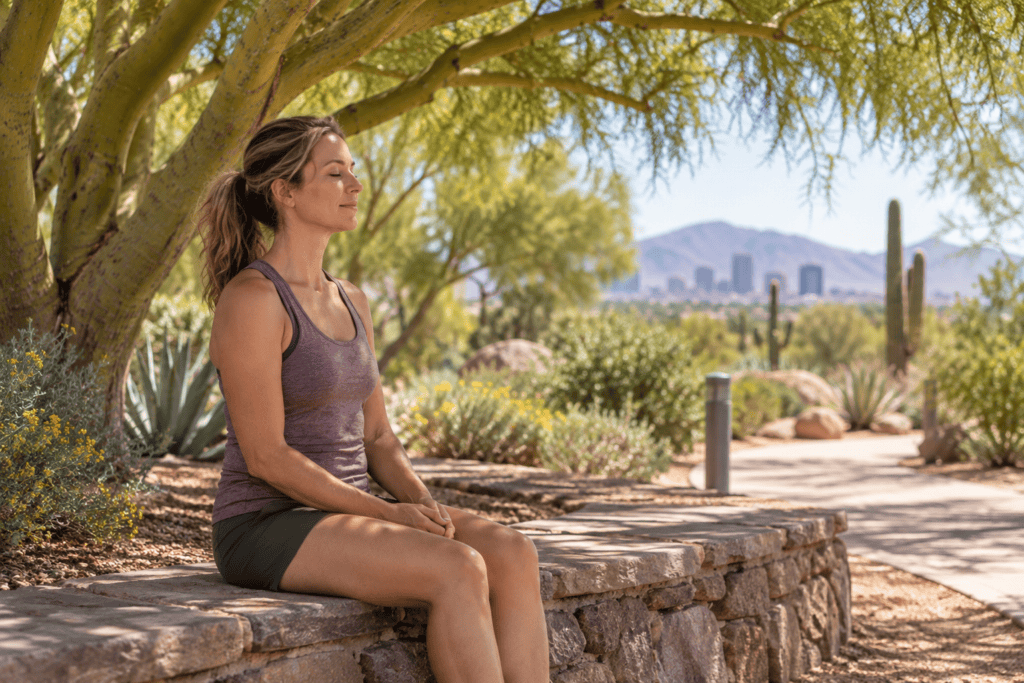
Meditation is a straightforward way to create a little gap between yourself and the ongoing demands of daily life. It requires no special equipment, complicated routines, or extensive free time. At its core, it simply involves slowing down, paying attention to your breath, and taking a few moments to notice what is happening in your body and mind.
Research indicates that consistent meditation and mindfulness practices can improve stress management, reduce anxiety, enhance sleep quality, promote emotional stability, and support overall health. For many individuals, meditation shifts from trying to silence the mind to simply observing thoughts and emotions without immediate reaction.
The location you select for meditation is important. Opting for a quiet area with minimal distractions can assist you in relaxing, particularly if you’re just starting out. Phoenix offers a variety of serene environments, including gardens, mountains, desert trails, and cultural sites, where you can escape the noise.
Meditation doesn’t require sitting cross-legged or closing your eyes. You can meditate while seated on a bench, taking a break after a hike, listening to flowing water, or strolling leisurely in a garden. The key is to allow yourself the opportunity to be fully present.
Here are some top spots in Phoenix to relax and be present:
1. Japanese Friendship Garden
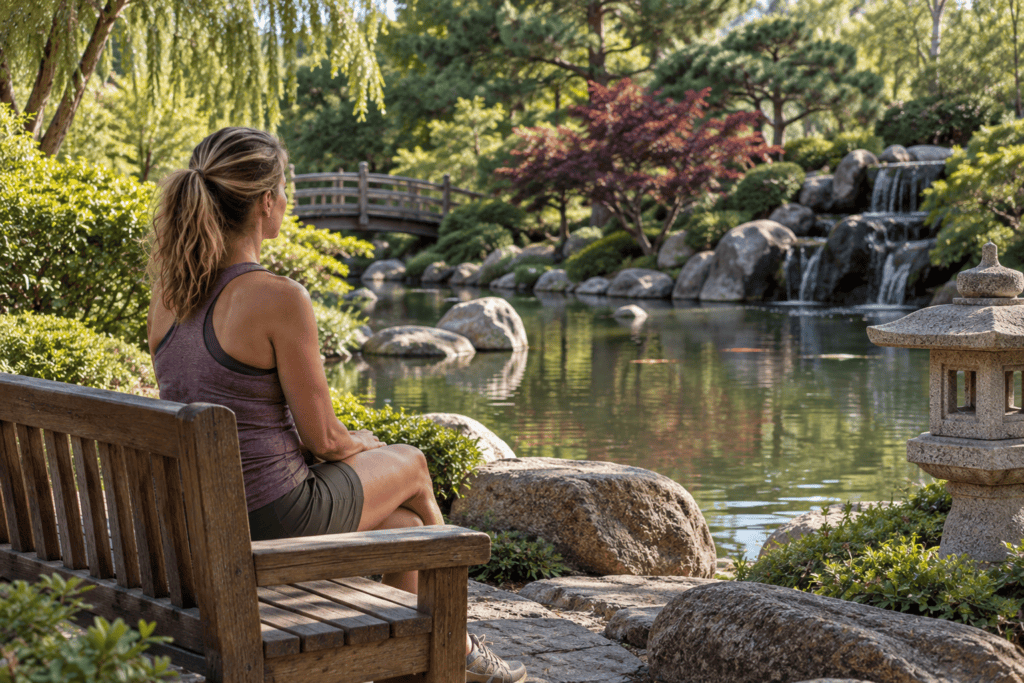
The Japanese Friendship Garden of Phoenix, also known as Rohoen, may be one of the city’s most natural places to slow down. In fact, its current mission includes giving visitors a place to slow down, experience deeper presence, and leave with a greater sense of peace and restoration.
This 3.5-acre garden in downtown Phoenix was built through the sister-city partnership with Himeji, Japan. It features a stroll garden, tea garden, tea house, streams, stone bridges and lanterns, a 14-foot waterfall, and a large koi pond. The garden includes over 1,500 tons of hand-picked rocks and more than 85 plant species.
Rohoen’s thoughtful design makes it a great place for meditation. Instead of looking for a place to sit right away, try walking slowly through the garden. Listen to the water, notice the shapes of the rocks, the pond’s reflections, the koi swimming, and the changing light under the trees. Focusing on these details is a form of mindfulness.
When you find a quiet spot, sit for a few minutes and let your breathing settle naturally. You don’t need to achieve anything. The goal is just to pause and focus on where you are right now.
The garden also has cultural and wellness programs, including meditation and other mindfulness activities. It is a good idea to check the schedule before you visit.
Why it works for meditation: The running water, greenery, shaded spots, thoughtful landscaping, and separation from the city make this one of Phoenix’s most peaceful places.
2. The Bradshaw Mountains
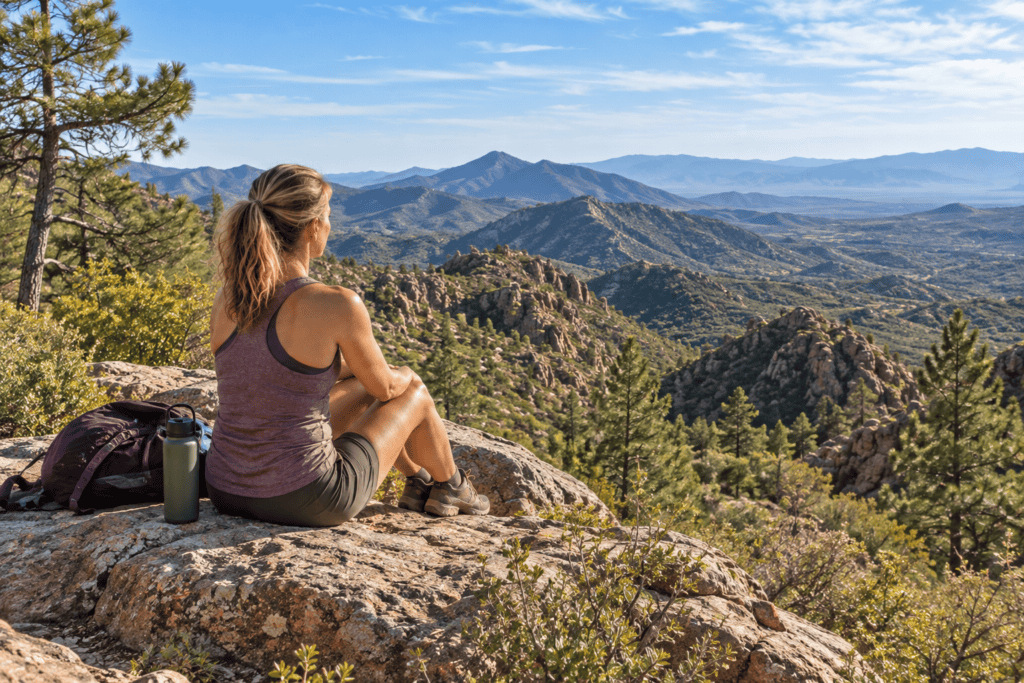
If your idea of meditation involves getting much farther away from the city, the Bradshaw Mountains offer a completely different experience.
Here, the main draw is open space. Instead of a planned garden, you get mountain ridges, rocky ground, pines and chaparral, wide views, changing elevations, and the quiet that comes from being far from your usual routine.
Visiting the Bradshaws can turn your hike into a form of meditation. During your walk, focus on your steps, breath, environment, and bodily sensations. Rather than rushing to reach a meditation spot, occasionally slow down and observe your surroundings. Listen to birds and the wind rustling through the plants. Notice how the temperature shifts as you ascend. Be mindful of when your breathing quickens or slows.
When you arrive at a safe viewpoint or a cozy place to relax, pause and set your phone aside. Sit quietly for ten or fifteen minutes and allow yourself to appreciate the peace.
This type of solitude differs from meditating at home, where phones, TVs, computers, chores, and people can distract you. In the mountains, most of these distractions disappear, leaving you with only the landscape and your thoughts.
The Bradshaw Mountains boast a rich and complex history that includes mining, settlement, Indigenous peoples, and Arizona’s territorial era. If you visit, keep in mind that this is genuine wilderness and historic land, not merely a scenic view. Stay on marked trails, carry sufficient water, check the weather forecast, and select a hike that suits your ability.
Why it works for meditation: The distance, quiet, movement, wide views, and fewer daily distractions make this a powerful place for reflection.
3. Desert Botanical Garden
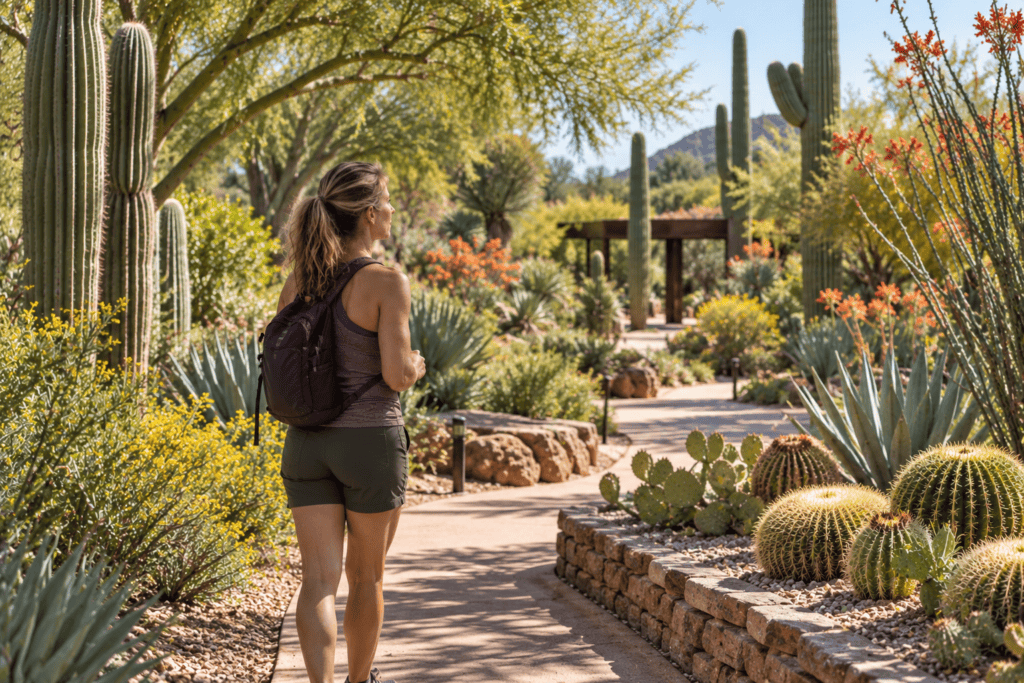
The Desert Botanical Garden is a great choice when you want to experience the Sonoran Desert without heading deep into the wilderness.
The garden features multiple trails and areas that teach visitors about desert plants, wildlife, and the relationship between people and the Sonoran Desert. Visitors can explore the Desert Discovery Trail, Sonoran Desert Nature Trail, Desert Wildflower Trail, Center for Desert Living Trail, and Plants & People of the Sonoran Desert Trail. Additionally, there are special locations such as the Sensory Garden and Contemplation Garden.
This variety is what makes the garden ideal for meditation. You can stroll among tall saguaros, stop by an agave garden, observe hummingbirds or butterflies, or simply relax in a shady spot to enjoy the view.
Consider turning your visit into a walking meditation. Slow down your pace slightly and resist the temptation to snap photos immediately. Observe the form of a saguaro, the symmetrical pattern of an agave, the crunch of gravel beneath your steps, or the abundant life in what many assume is a deserted area.
When you discover a spot that feels right, stop for a few moments. Breathe slowly a few times and concentrate on one thing nearby. This could be a plant swaying in the wind, the sound of birds, or simply the sensation of sun and shade on your skin.
Tours and educational programs are also available if you’re interested in learning more about the desert environment.
Why it works for meditation: The garden is easy to reach and full of sensory experiences, so you can practice seated meditation or mindful walking without leaving central Phoenix.
4. North Mountain
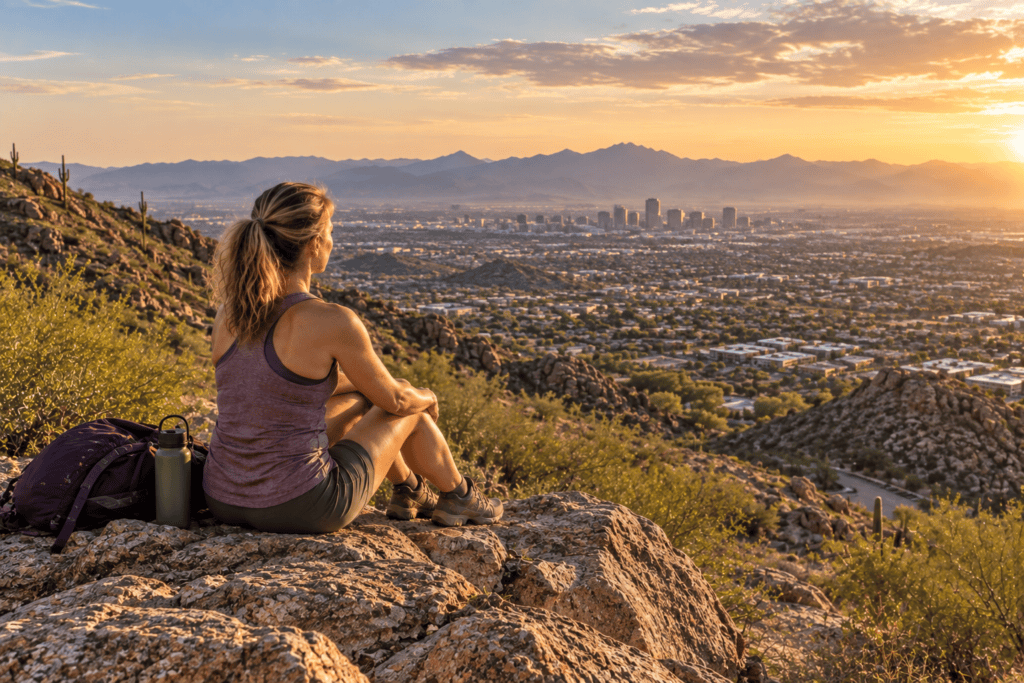
If you want hiking, meditation, and great views without going far from Phoenix, North Mountain is a top choice.
North Mountain stands at 2,104 feet, rising directly from the north Valley and providing a variety of trail options for different difficulty levels. Close by, Shaw Butte reaches 2,149 feet. The area features everything from short, easy trails to more challenging summit routes, giving you the flexibility to decide how much physical effort you’d like to invest in the experience.
Meditating here offers a fresh outlook. From this height, the city looks different: roads appear as fine lines, buildings seem tiny, and the bustling Valley feels distant.
Find a safe spot away from the trail, sit down, and gaze at the view for a moment. You may not even need to close your eyes. Let the scenery be your focus. Observe your breath, the ground beneath you, the wind, distant sounds, and the expansive space before you.
North Mountain offers an ideal setting to combine exercise and meditation. A challenging hike encourages mindfulness of your body, and afterward, sitting quietly as your breath and heart rate decrease provides a different experience than beginning meditation while already at rest.
If you’re interested in learning more before or after your hike, the North Mountain Visitor Center offers information on the trails, local wildlife, and the area’s history.
Phoenix’s desert heat is intense. Choose your hiking time carefully according to the season, carry sufficient water, and adhere to park regulations. The City of Phoenix states that more than 200 hikers are rescued annually from its desert and mountain parks.
Why it works for meditation: North Mountain lets you get some distance from the city while staying in Phoenix. Hiking, elevation, and wide Valley views enhance the experience.
Final Thoughts
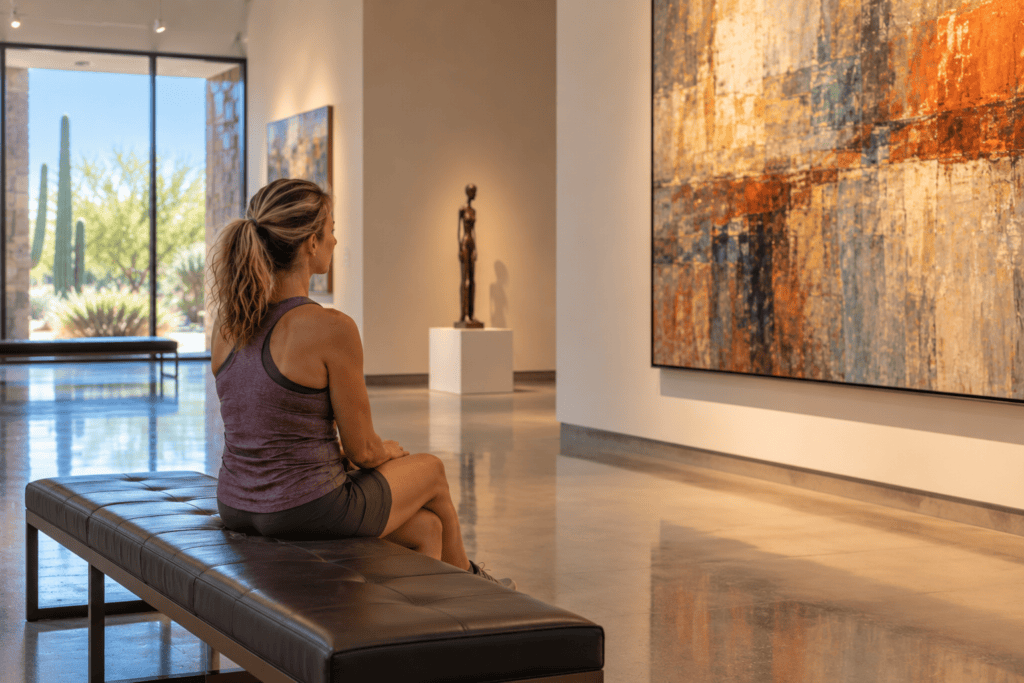
You don’t have to meditate on a mountaintop, and you definitely don’t have to do it outdoors.
That matters in Phoenix, where certain times of year make sitting outside uncomfortable or even unsafe because of the heat. Meditation should not be something you force yourself to do just because the setting is pretty.
On those days, look for quiet indoor environments instead. The Phoenix Art Museum offers a chance to slow down and quietly observe a single piece of art rather than rush through an entire gallery. A local place of worship may offer another peaceful environment when appropriate, and meditation or yoga studios can provide more structured practice.
You can also make a meditation space at home. Turn off the TV, silence your phone, pick a comfortable chair, and give yourself ten minutes without interruptions. Your space doesn’t have to be perfect.
In the end, the best place to meditate in Phoenix is wherever you can slow down and be present. It might be by the koi pond at the Japanese Friendship Garden, looking out from North Mountain, or sitting alone in an art gallery on a hot afternoon.
The place is just the backdrop. The real practice is learning to be still enough to notice what is happening inside and around you, and then bringing some of that awareness into the rest of your day.
About the Publisher
Paul Kerzner, L.Ac., is a licensed acupuncturist and board-certified herbalist, as well as the founder of Above and Beyond Acupuncture in Scottsdale. His own journey from chronic patient to practicing acupuncturist shapes his commitment to providing honest, clinically grounded information about acupuncture and Traditional Chinese Medicine. Learn more about Paul and his clinical approach on the About Us page.