Key Takeaways
- PMS symptoms such as mood swings, cramps, and fatigue are often manageable with acupressure.
- Key acupressure points like SP6, LR3, and LI4 target PMS effects, helping to relieve mood and physical discomfort.
- Use acupressure a few days prior to the onset of your menstrual cycle, concentrating on specific points tailored to your symptoms.
- Implement a comprehensive approach that combines exercise and diet to improve the efficacy of acupressure in managing PMS.
- Consult a healthcare professional if PMS symptoms interfere with daily activities, as this could signal a more serious underlying issue.
In the days before your period, you may experience mood swings, irritability, breast tenderness, bloating, low mood or anxiety, cramps, and fatigue. Many women encounter these symptoms, and for many, they recur monthly, making that time predictably uncomfortable. Premenstrual syndrome can start before you even realize it. Acupressure offers a drug-free option that can help. It can soothe your mood, relieve cramps and tension, reduce bloating, and improve how you feel overall.
In Traditional Chinese Medicine, PMS is primarily associated with the Liver, which governs smooth energy flow throughout the body and plays a vital role in the menstrual cycle. When this flow is obstructed, often due to stress, tension, or hormonal shifts, it can cause classic PMS signs like irritability, mood swings, breast tenderness, bloating, and cramps. This condition is known as Liver Qi stagnation. Additionally, Blood deficiency may lead to fatigue, low energy, or exhaustion as the body prepares to lose Blood. The acupressure points listed below aim to restore proper flow, replenish Blood, soothe your mood, and alleviate these symptoms.
Since PMS cramps blend into menstrual cramps, the application of acupressure for menstrual cramps complements this article.
Here are nine acupressure points that can help:
What Acupressure Points to Press and Why
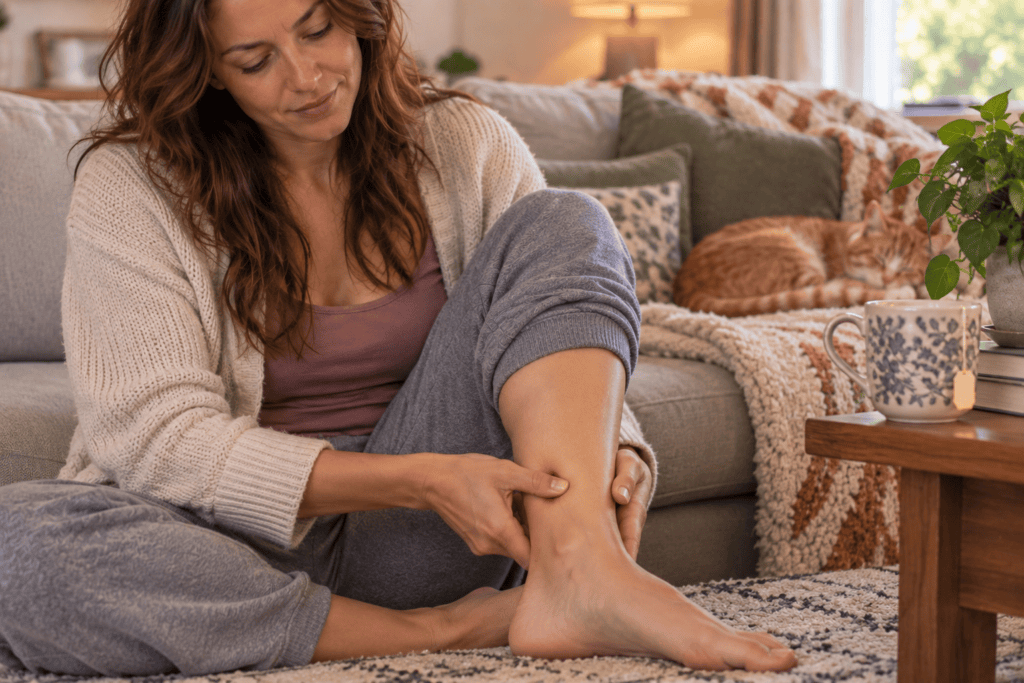
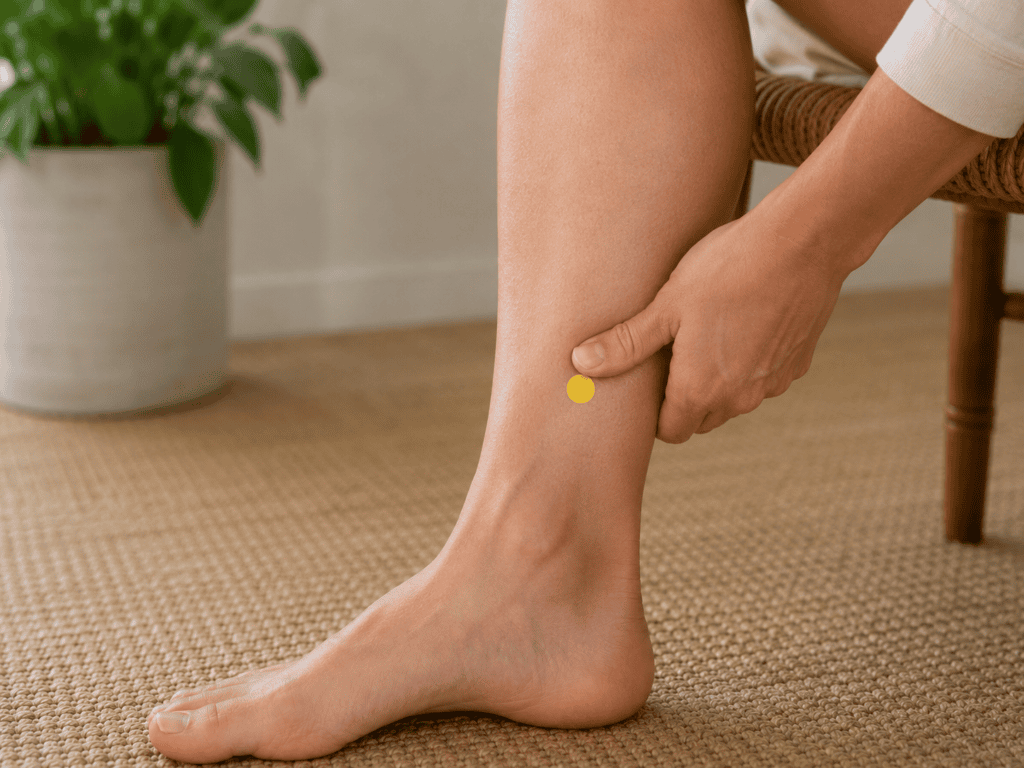
1. Press on SP6 above the inner ankle, the central point for PMS. SP6 sits four finger-widths up from the tip of the inner ankle bone, just behind the back edge of the shinbone. Press firmly for one to two minutes on each leg. SP6 is called “Sanyinjiao,” the “Three Yin Intersection,” where the Spleen, Liver, and Kidney channels meet. SP6 is avoided during pregnancy, so do not use it if there is any chance you are pregnant rather than premenstrual.
This point is vital for PMS management and has been thoroughly researched. Studies show it can decrease brain activity linked to PMS symptoms. By stimulating the Spleen, Liver, and Kidney channels, it helps relieve irritability, cramps, fatigue, mood swings, and bloating. Apply it daily on both legs during the week before menstruation. Because of its significant effects on the reproductive system, avoid using it if pregnancy is possible. Ensure your symptoms are truly premenstrual and not early pregnancy indicators.
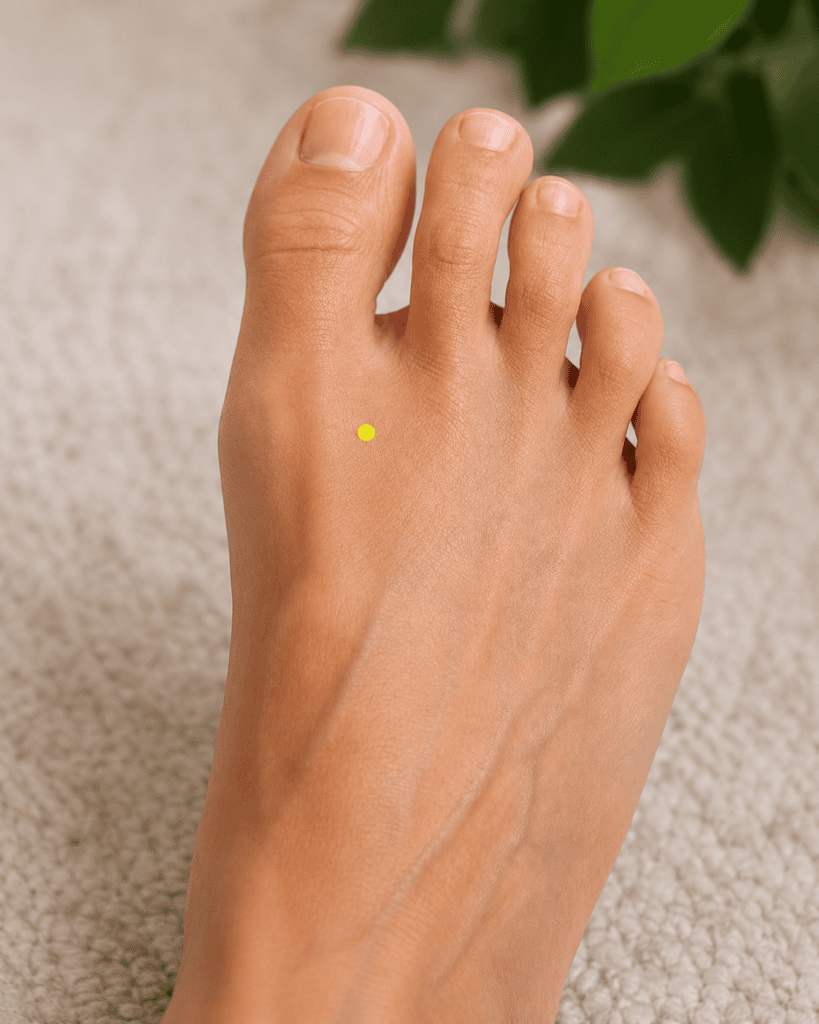
2. Press on LR3 on the top of the foot to soothe the stuck Liver. LR3 sits on the top of the foot, in the webbing between the big toe and second toe, about two finger-widths back where the bones meet in a small hollow. Press firmly with the thumb for one to two minutes on each foot. LR3 is called “Taichong,” the primary point for the Liver.
Since PMS is primarily associated with the Liver in Chinese medicine, LR3 is an important point for relief. It helps release blocked energy that contributes to irritability, mood swings, breast tenderness, and tension. This point can help you feel calmer and more centered by directing energy down to your feet. It is particularly effective for irritability and tension and is among the most studied points for PMS.
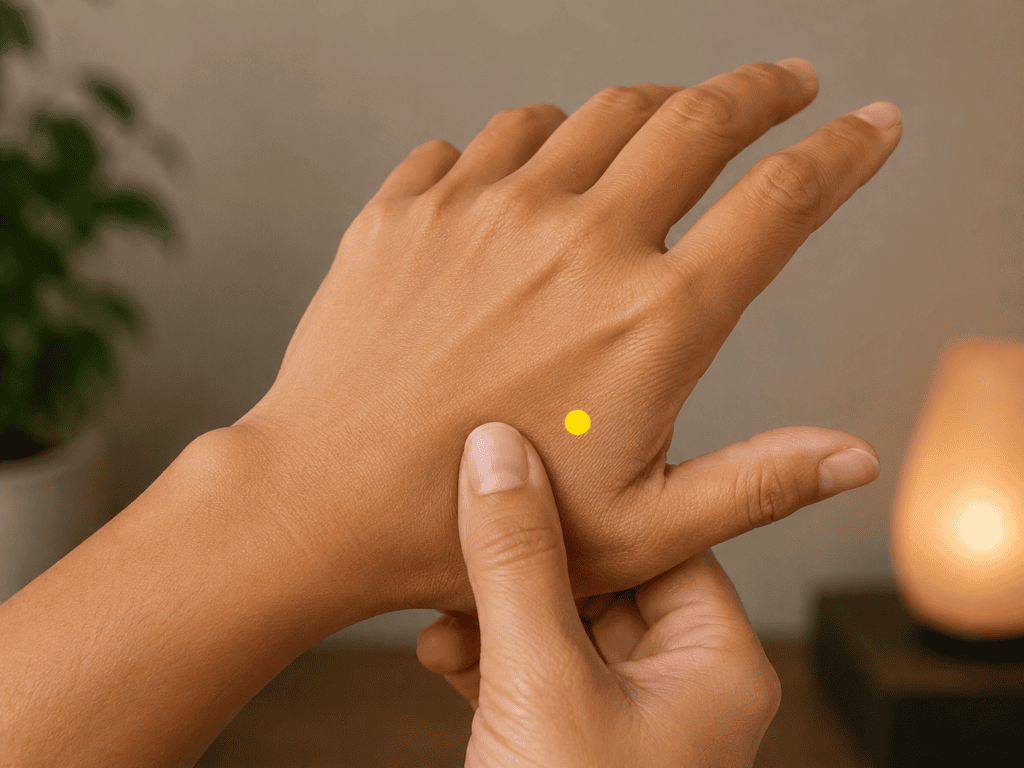
3. Press on LI4 in the hand to ease pain and move stagnation. LI4 sits in the webbing between the thumb and index finger, at the highest point of the muscle when you bring the thumb and finger together. Press firmly with the thumb of your other hand for one to two minutes on each hand. LI4 is called “Hegu,” and it is one of the great points for moving Qi and relieving pain. LI4 is avoided during pregnancy.
LI4 helps move stagnant energy in the body and acts as a potent pain reliever. When combined with LR3 on the foot, they create the Four Gates, a well-known pairing that effectively relieves stagnation—ideal for PMS. Research indicates that using LR3 and LI4 together can alleviate PMS symptoms, such as cramps, headaches, and the tension many experience before their period. Since LI4 is located on the hand, it is convenient to apply whenever tension or pain arises. However, avoid using this point if pregnancy is possible.
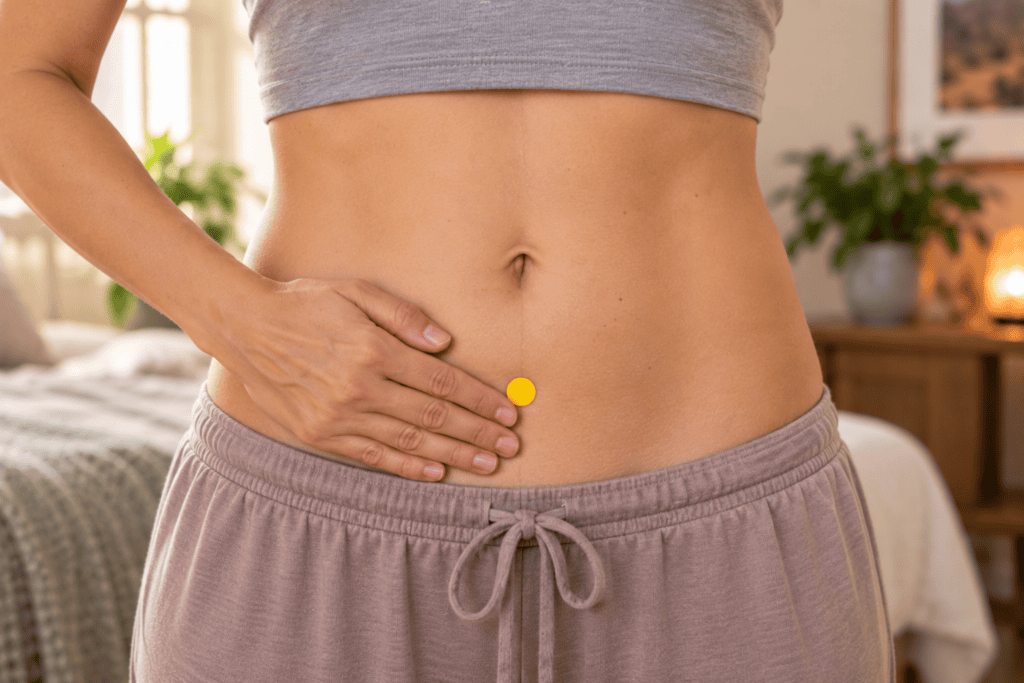
4. Press on CV4 below the navel to warm the lower abdomen and ease cramps. CV4 sits on the midline of the lower abdomen, about four finger-widths below the navel. Rest a warm hand there and press gently for one to two minutes. CV4 is called “Guanyuan,” the “Gate of Origin,” and it is one of the main points for the uterus and the lower abdomen. Use CV4 with caution during pregnancy.
CV4 is located right over the uterus and lower abdomen, making it a key point for menstrual issues. It helps warm and relax the area, easing cramps, heaviness, and pain before and during your period. Both research and tradition support its use for menstrual problems. Holding this point with a warm hand or heat pack can be especially soothing, as warmth helps relax the lower belly. If your PMS brings cramps and a heavy, achy feeling, this point can offer direct relief and support for the whole reproductive area.
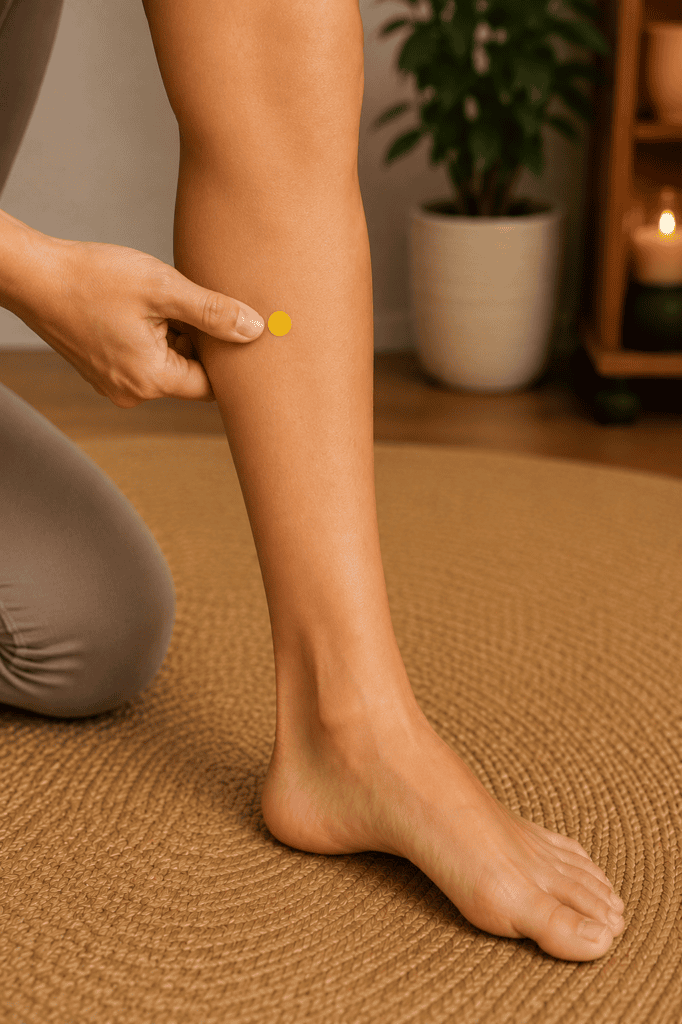
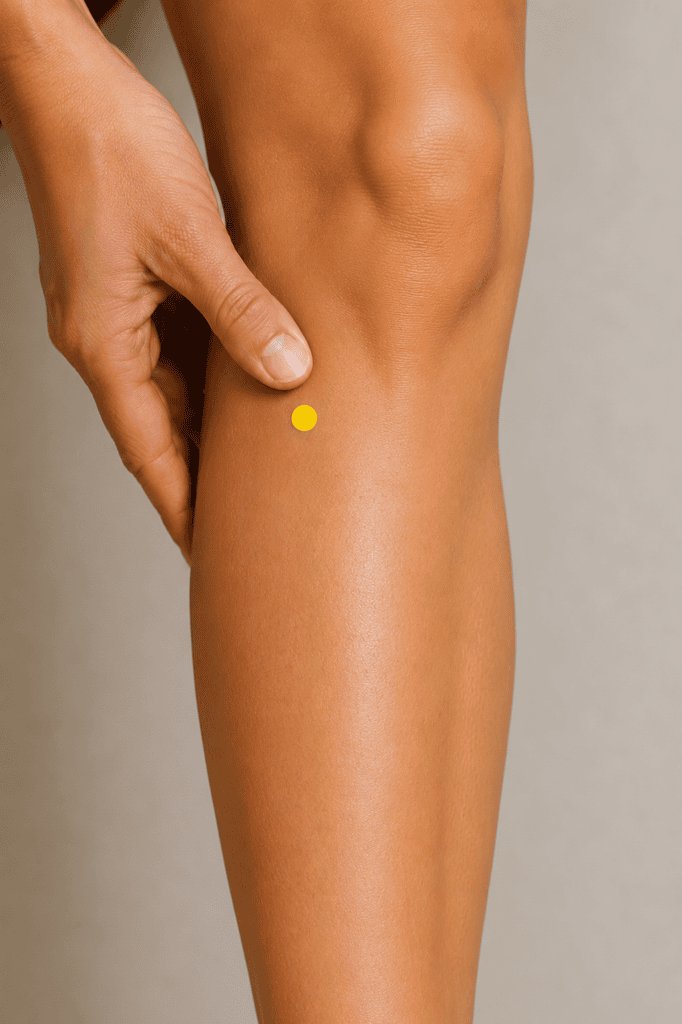
5. Press on SP8 below the knee for cramps and pain. SP8 sits on the inner lower leg, about a hand’s width below the inner knee, just behind the inner edge of the shinbone. Press firmly with your thumb for one to two minutes on each leg. SP8 is called “Diji,” and it is the point most specifically used for menstrual cramps and pain.
SP8 is a Spleen-channel point that’s especially good for relieving menstrual pain and cramps. It’s helpful if you get cramps before your period starts. This point helps move Blood and eases the spasms and pain in the lower abdomen, working from the leg to the uterus. If you have real cramping pain before your period, SP8 targets that pain directly. It also works well with CV4 on the belly and SP6 higher up the leg.
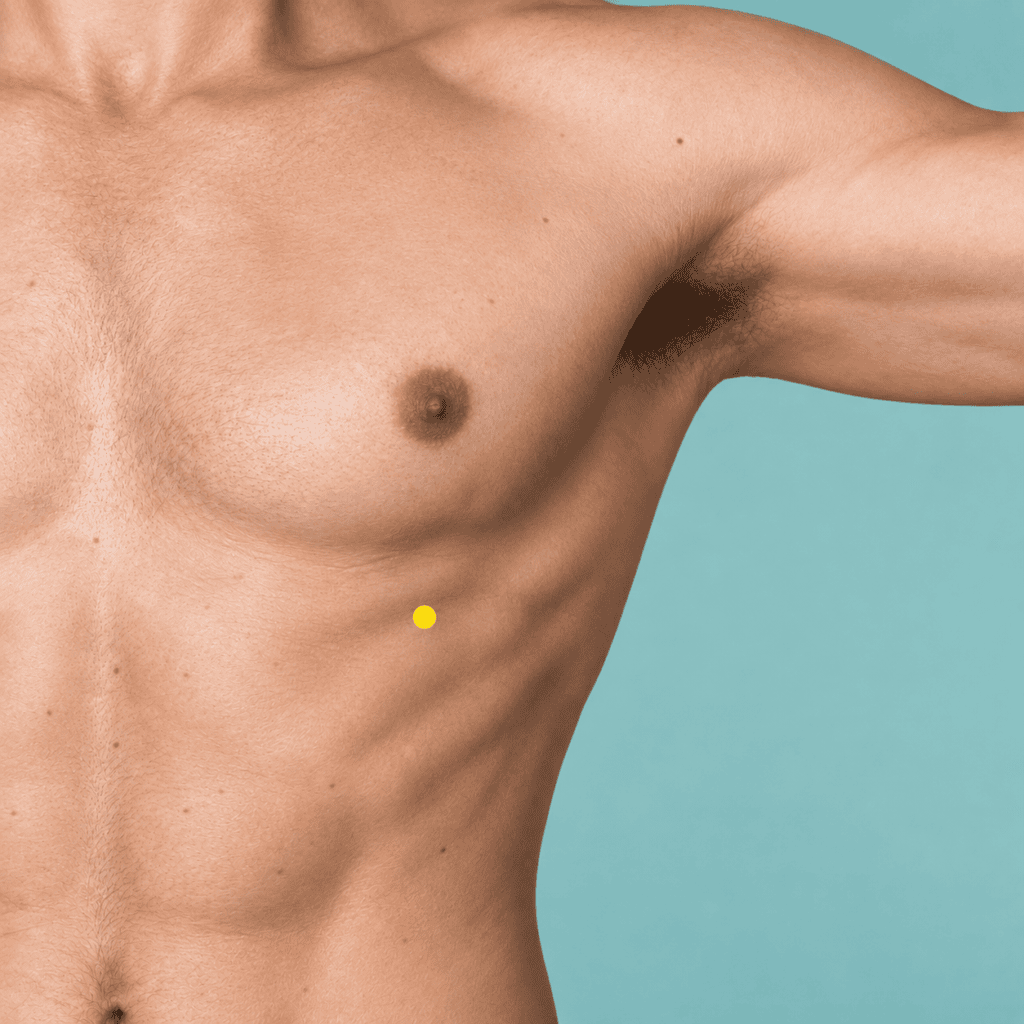
6. Press on LR14 below the chest for breast tenderness and the Liver. LR14 sits on the chest, below the nipple, in the space between the ribs roughly two ribs down from the nipple line. Press gently with your fingertips for one to two minutes on both sides. LR14 is called “Qimen,” the “Gate of Hope,” and it is where the Liver’s energy gathers at the front of the body.
Breast tenderness and swelling are common, uncomfortable PMS symptoms. LR14 is the point where Liver energy gathers in the chest, making it helpful for these issues. It helps release the stuck energy that causes sore, swollen breasts before your period and eases tightness in the chest and ribs. If your PMS brings these symptoms, pressing this point can help. Use it gently, and pair it with LR3 for even more relief.
7. Press on ST36 below the knee to rebuild energy and ease bloating. ST36 sits four finger-widths below the lower edge of the kneecap and one finger-width to the outside of the shinbone, on the muscle that rises when you flex your foot. Press firmly with your thumb for one to two minutes on each leg. ST36 is called “Zusanli,” the “Leg Three Miles,” and it is the master point for energy and digestion.
ST36 addresses two common PMS challenges: fatigue and digestive issues. It boosts energy and supports the Spleen and Stomach, easing tiredness and that run-down feeling. Additionally, this point helps relieve bloating, digestive discomfort, and food cravings that often occur before menstruation. As a grounding point, it helps stabilize your entire system during this period. If PMS leaves you feeling exhausted, bloated, or struggling with digestion, ST36 can help, especially when combined with SP6.
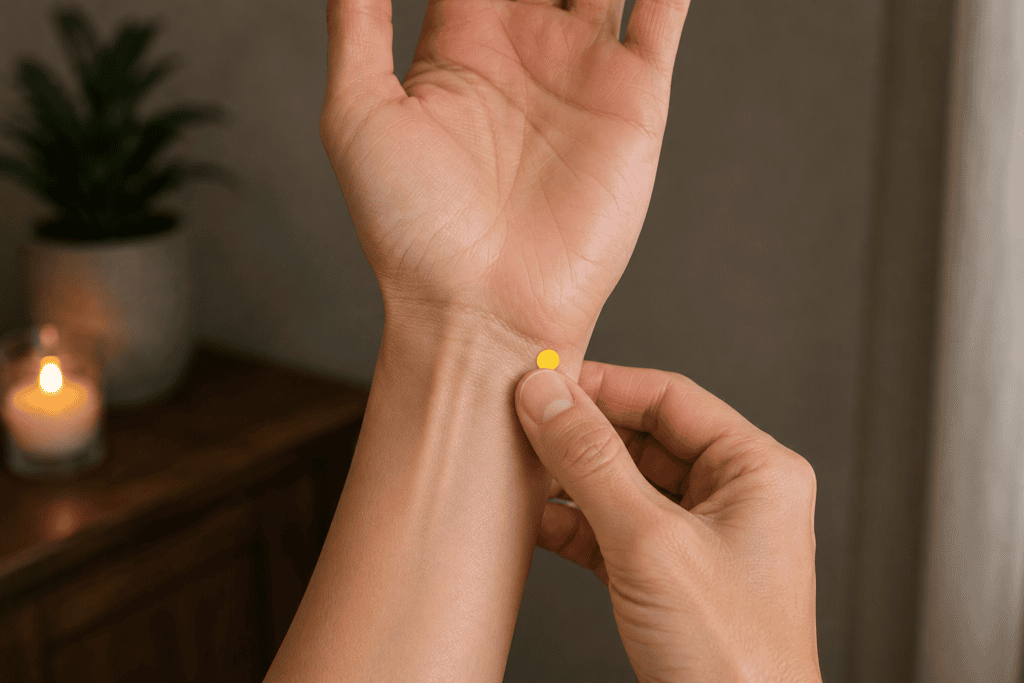
8. Press on HT7 at the wrist to calm the mood and steady the mind. HT7 sits on the inner wrist crease, on the pinky side, in the small hollow just inside the tendon. Press firmly with your thumb for one to two minutes on each wrist. HT7 is called “Shenmen,” the “Spirit Gate,” and it is the source point of the Heart and the most important point for calming the Shen.
PMS emotional symptoms such as anxiety, low mood, tearfulness, and feeling overwhelmed are often the hardest to manage. HT7 calms the Heart and settles the Shen, offering relief. As the Spirit Gate, it helps ease the anxious, raw emotional state common before menstruation and can improve related sleep issues. For those with mood-related PMS symptoms, this point helps regulate emotions and, when combined with LR3 and Yintang, can reduce irritability and anxiety.
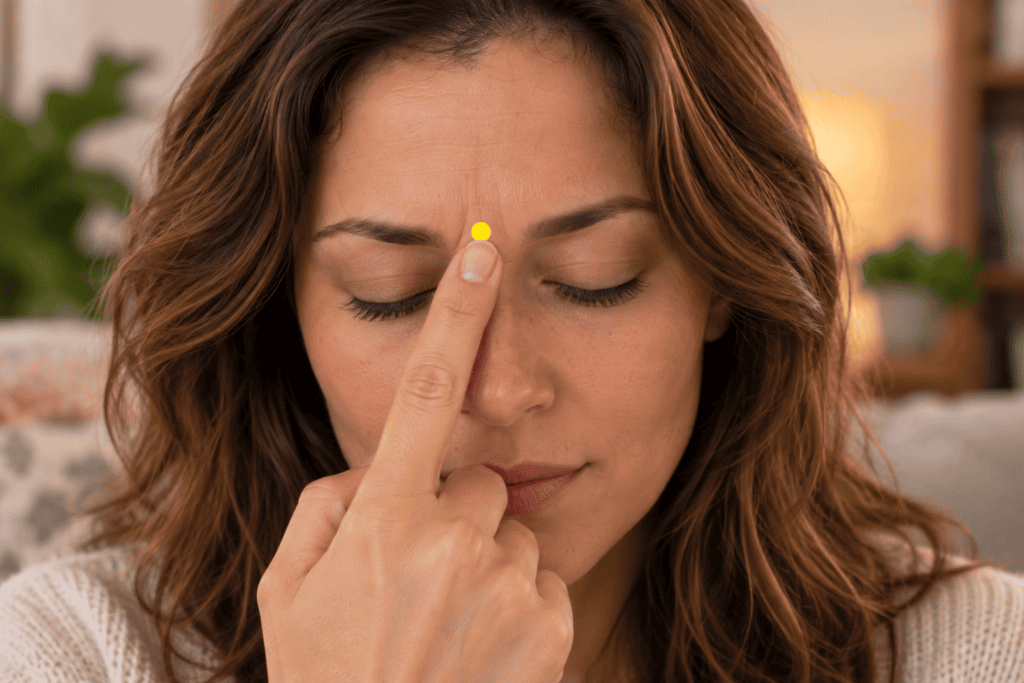
9. Press on Yintang between the eyebrows to settle the emotions. Yintang sits in the small hollow directly between the two eyebrows. Press steadily and hold, or make small, slow circles with your fingertip for one to two minutes. Yintang is an extra point and one of the most calming points in the body.
Yintang calms the Shen and soothes the entire nervous system, reducing mood swings, irritability, anxiety, and the tense, on-edge sensations common before menstruation. It helps create a centered calm, softening intense premenstrual emotions and alleviating headaches and facial tension. During PMS emotional turbulence, when everything feels overwhelming, this point helps ground the mind. Gentle pressure with deep breaths can bring stability on emotionally charged days. Overall, it provides a calming conclusion to a soothing premenstrual routine.
Why These Acupressure Points Work
In Traditional Chinese Medicine, PMS is primarily viewed as Liver Qi stagnation. The Liver is responsible for regulating menstrual Blood and ensuring smooth energy flow; however, stress and hormonal changes can disrupt this process. This disruption may lead to symptoms like irritability, breast tenderness, bloating, and cramps. Additionally, Blood deficiency might cause fatigue or low energy. The acupressure points mentioned target these specific symptoms to provide relief.
- The core PMS points (SP6, LR3, LI4) soothe the stuck Liver, move the stagnation, and ease the pain, with LR3 and LI4 forming the Four Gates and SP6 addressing the whole picture.
- The abdominal and cramp points (CV4, SP8) warm the lower abdomen and relieve the cramping directly.
- The Liver chest point (LR14) releases the bound Qi behind premenstrual breast tenderness.
- The strengthening point (ST36) rebuilds the energy and eases the bloating and digestive symptoms.
- The calming points (HT7, Yintang) settle the mood swings, anxiety, and irritability that are so often the hardest part.
The primary focus is on calming the Liver and restoring the smooth flow, which is why premenstrual anxiety, stress, and depression, which tend to worsen, also respond to this calming approach.
How to Properly Use These Acupressure Points
Start using these points a few days before your period, as soon as PMS symptoms appear, rather than waiting for them to worsen.
- Begin with SP6 and LR3, the two central PMS points, along with LI4 as the Four Gates with LR3, and use them daily through the premenstrual week.
- For cramps, add CV4 and SP8, working CV4 with a warm hand. For breast tenderness, add LR14. For bloating and fatigue, add ST36. For the mood, add HT7 and Yintang.
- Press the abdominal and chest points gently, and the leg, hand, and foot points more firmly, holding each for one to two minutes and breathing slowly.
- Since PMS tends to follow a pattern, using these points regularly in the week before your period can help make the whole experience easier. Doing this consistently for a few cycles often works better than just trying it once.
Acupressure works best when paired with a holistic strategy to ease PMS symptoms. Regular exercise significantly reduces premenstrual discomfort, as does managing stress, which can worsen Liver stagnation. Using warmth on the lower abdomen can relieve cramps, while cutting back on salt, caffeine, sugar, and alcohol during the week before menstruation may help decrease bloating, breast tenderness, and mood swings for many women. Moreover, getting enough sleep and eating consistent, nutritious meals support energy levels and help control cravings.
When to Get Professional Help
PMS is common, and these tips can assist with daily symptoms. However, some premenstrual symptoms may require additional support. If your symptoms are so intense that they interfere with work, relationships, or daily activities, consult a doctor. This could indicate premenstrual dysphoric disorder, which is treatable.
If you’re overwhelmed by depression, anxiety, or have thoughts of hopelessness or self-harm, seek help immediately. You can reach the 988 Suicide and Crisis Lifeline via call or text anytime. Additionally, see a doctor for severe pain, heavy bleeding, or major changes in cycle or symptoms.
Acupressure may assist in managing daily PMS symptoms and can complement medical treatments for more severe conditions.
Above and Beyond Acupuncture offers acupuncture, cupping, and lifestyle coaching at the North Frank Lloyd Wright Boulevard location in Scottsdale.
Schedule an appointment online to start your healing journey.
The points above are only as effective as the technique used to apply them. Where to press, how firmly, and for how long all affect the result. For a full breakdown of how to perform acupressure properly at home, read Performing Acupressure in 3 Easy Steps.

About the Publisher
Paul Kerzner, L.Ac., is a licensed acupuncturist and board-certified herbalist, as well as the founder of Above and Beyond Acupuncture in Scottsdale. His own journey from chronic patient to practicing acupuncturist shapes his commitment to providing honest, clinically grounded information about acupuncture and Traditional Chinese Medicine. Learn more about Paul and his clinical approach on the About Us page.