
Key Takeaways
- Acupuncture has proven effectiveness for various conditions, including chronic pain, anxiety, and digestive issues.
- Patients typically experience a thorough consultation, relaxation during treatment, and varying outcomes over multiple sessions.
- Acupuncture works best for individuals with chronic conditions, those wanting to reduce medication reliance, and patients preferring integrated approaches.
- Not every situation suits acupuncture; medical emergencies and certain severe conditions require other treatments.
- Consult a licensed acupuncturist to assess your situation and commit to a trial of six to eight sessions to evaluate effectiveness.

If you are wondering whether acupuncture might help you, you are asking the right question. Acupuncture has helped millions of patients over thousands of years of continuous practice, and modern research has documented its effectiveness for a wide range of conditions. But acupuncture is not the answer for every situation. Knowing whether it fits your specific circumstances requires honest information about what it does and does not do, and how to assess whether it is worth trying for what you are dealing with.
This article covers what acupuncture can help with, what patients typically experience during treatment, who benefits most from acupuncture, when it might not be the right fit, and how to determine whether it is worth pursuing for your specific situation. The goal is to give you the information you need to make an informed decision without any pressure to try treatment that may not fit your circumstances.
What Does Acupuncture Help With?
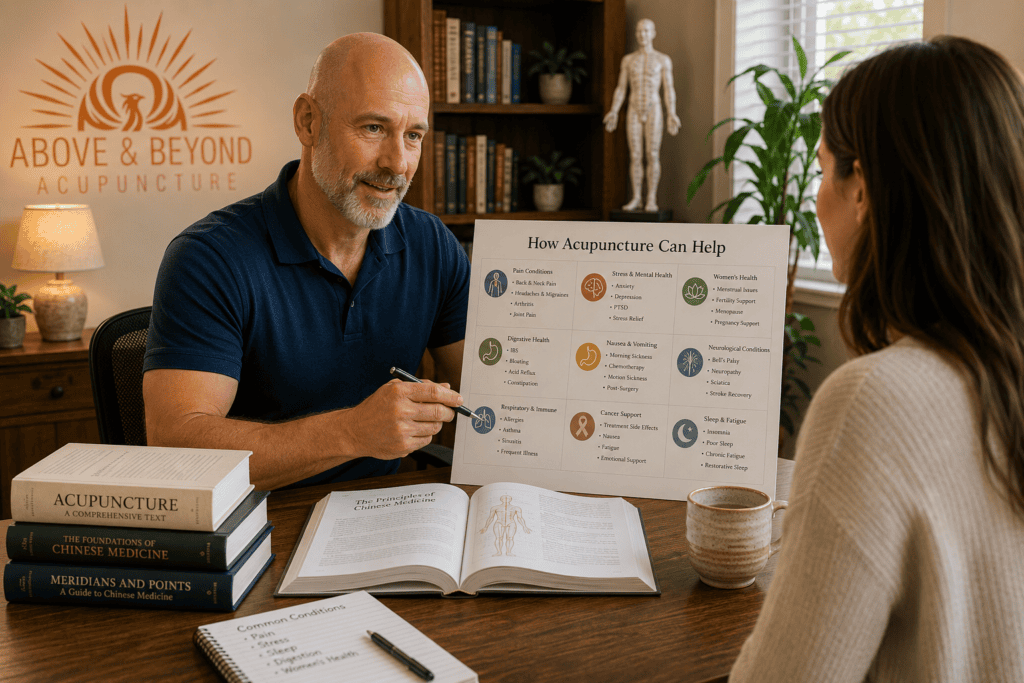
Acupuncture has been shown to be effective for many health conditions affecting various body systems. The most well-supported and reliably effective applications include the following:
- Chronic pain conditions. Back pain, neck pain, shoulder pain, knee pain, arthritis, sciatica, herniated discs, degenerative disc disease, carpal tunnel, tennis elbow, plantar fasciitis, migraines, tension headaches, fibromyalgia, and TMJ disorders all respond well to acupuncture. The 2017 American College of Physicians guidelines specifically recommend acupuncture as a first-line treatment for acute and chronic low back pain.
- Stress and mental health support. Anxiety, depression, PTSD, panic attacks, insomnia, chronic fatigue, and stress-related patterns respond to the nervous system regulation acupuncture provides. Acupuncture supports the physical patterns underlying these conditions while patients continue their mental health care.
- Women’s health. Menstrual pain, PMS, PCOS, endometriosis, fertility support, pregnancy-related symptoms, labor preparation, and menopausal symptoms including hot flashes all have research support for acupuncture treatment.
- Digestive issues. IBS, functional dyspepsia, acid reflux, chronic constipation, and other digestive patterns respond to acupuncture through effects on gut motility and the gut-brain connection.
- Nausea and vomiting. Chemotherapy-induced nausea, postoperative nausea, and pregnancy-related nausea have some of the strongest research support of any acupuncture application.
- Neurological conditions. Bell’s palsy, post-stroke recovery, peripheral neuropathy, and certain chronic neurological patterns respond to acupuncture treatment.
- Respiratory and immune conditions. Chronic sinusitis, allergies, asthma support, and recurring illness patterns respond to acupuncture through immune and inflammatory pathways.
- Cancer treatment support. Chemotherapy-induced nausea, chemotherapy-induced peripheral neuropathy, hot flashes from hormone therapies, xerostomia from radiation, cancer-related fatigue, and quality of life issues throughout treatment all respond well.
- Sleep issues. Trouble falling asleep, trouble staying asleep, and sleep disorders generally respond to acupuncture through nervous system regulation and Shen calming in Chinese medicine terms.
- Emotional and life transitions. Grief, life changes, trauma recovery, and the emotional patterns that accompany chronic conditions respond to the nervous system and Shen effects of acupuncture.
For patients seeking detailed research on various conditions, “Is There Any Proof That Acupuncture Actually Works?” provides a more in-depth review of the evidence.
What Do Patients Typically Experience During an Acupuncture Treatment?
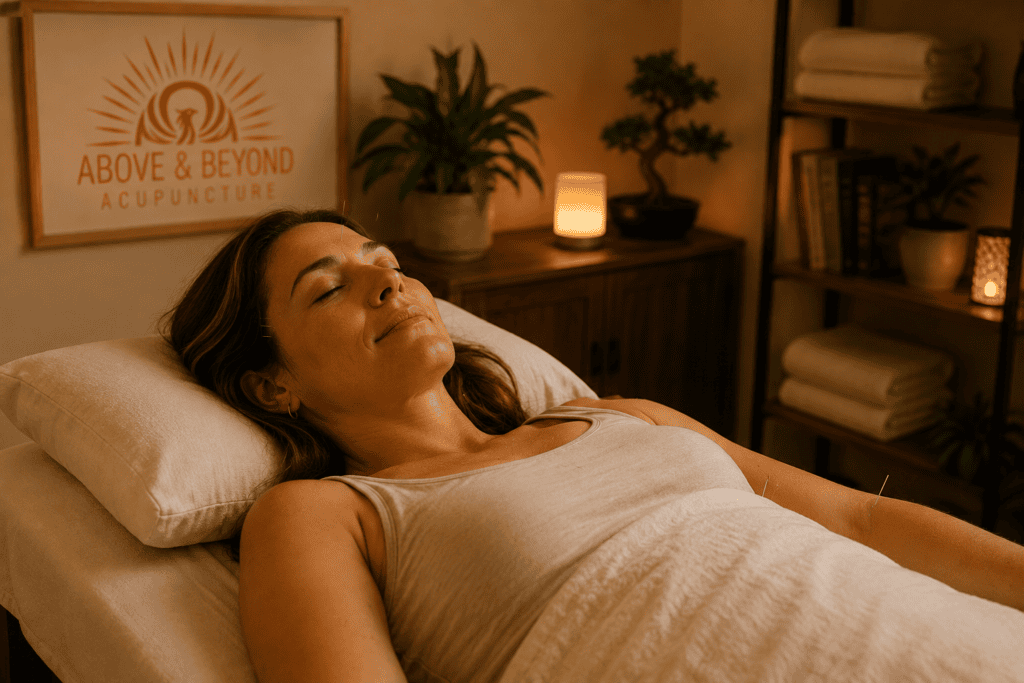
For patients who are new to acupuncture, knowing what to expect can help make the decision to try it easier.
- The initial consultation. The first appointment typically involves an in-depth conversation about your health history, current concerns, and goals. Chinese medicine diagnosis includes pulse examination and tongue examination that reveal information about internal patterns. The practitioner asks questions about sleep, digestion, emotions, and other patterns that may seem unrelated but actually inform the treatment approach.
- The treatment itself. After the consultation, you rest on a comfortable treatment table while the acupuncturist places fine sterile needles at selected points. The needles are extremely thin, typically smaller than a human hair. Most patients feel little more than a slight sensation on insertion. Some points produce a dull ache, warmth, or tingling as the point activates. The needles remain in place for 20 to 45 minutes while you rest.
- During the session. Most patients find the experience deeply relaxing. Many fall asleep during treatment. The parasympathetic nervous system activation produces a state of calm that is one of the immediate benefits of the treatment.
- After the session. Most patients feel relaxed and calm after treatment. Some feel energized. A few feel initially tired as the body shifts into recovery mode. Any of these responses is normal.
- Typical outcomes. Improvements typically appear over the course of several sessions rather than after a single treatment. Some patients experience meaningful improvement after one or two sessions. Most conditions require six to twelve sessions to see substantial sustained improvement. Chronic conditions may need longer treatment courses.
For patients seeking more in-depth information about acupuncture, “Can Acupuncture Help Me Heal?” offers an honest overview of what the treatment entails.
Who Benefits Most from Acupuncture?
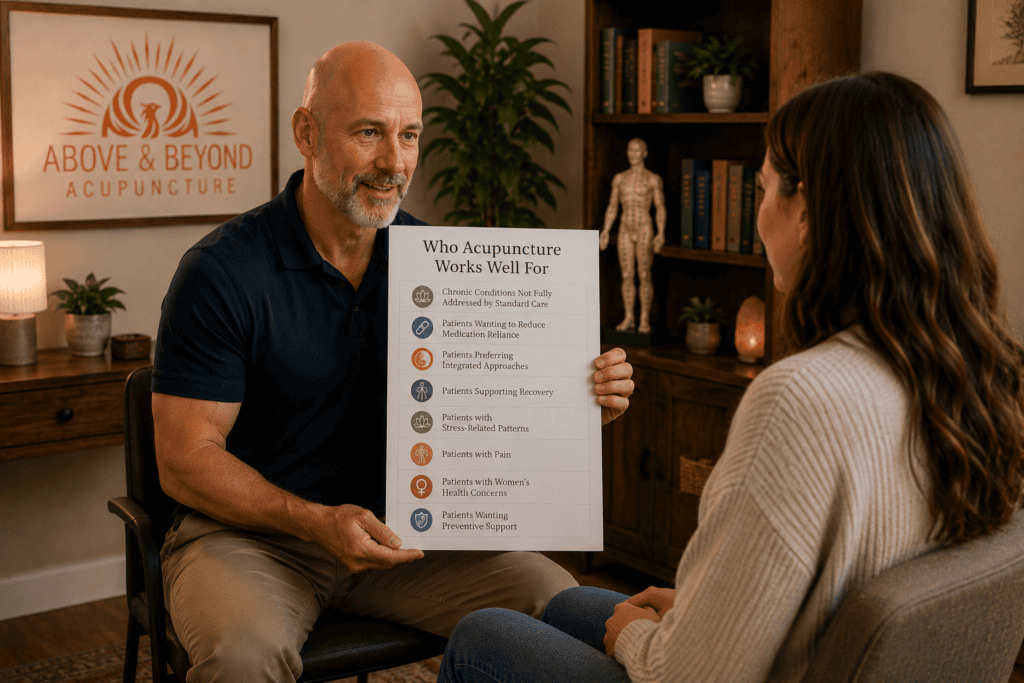
Certain patients benefit especially well from acupuncture. Understanding whether you fit these profiles helps clarify whether acupuncture might help you:
- Patients with chronic conditions not fully addressed by standard care. If you have been dealing with a chronic condition and standard Western care has helped but not resolved the issue, acupuncture often provides the additional support that produces meaningful improvement.
- Patients wanting to reduce medication reliance. If you are taking medications with side effects that concern you or wanting to reduce dependency patterns, acupuncture can support the underlying patterns that medications address while working with your prescribing physician on any dose adjustments.
- Patients preferring integrated approaches. If you value having multiple approaches to your health rather than relying on one modality alone, acupuncture fits well alongside your other care.
- Patients wanting to support recovery. If you are recovering from injury, illness, surgery, or medical treatment, acupuncture supports the recovery patterns and reduces symptom burden during recovery.
- Patients with stress-related patterns. If your primary concerns include stress, anxiety, or the physical patterns that develop from chronic stress, acupuncture directly addresses the nervous system patterns underlying these conditions.
- Patients with pain patterns. If you have chronic pain that has not fully responded to physical therapy, medications, or other approaches, acupuncture has strong research support across pain conditions.
- Patients with women’s health concerns. If you are dealing with menstrual, fertility, pregnancy, or menopausal patterns, acupuncture has substantial research support and clinical experience across these applications.
- Patients wanting preventive support. If you want to support your health proactively rather than only addressing conditions after they develop, acupuncture provides constitutional support that reduces the likelihood of chronic patterns developing.
When Is Acupuncture Not a Good Fit?

It’s important to know when acupuncture is not appropriate or may be ineffective.
- Medical emergencies. Heart attacks, strokes, severe injuries, sepsis, and other emergencies require emergency medical care immediately. Acupuncture is not appropriate first-line care for emergencies.
- Structural conditions requiring surgery. Broken bones, torn ligaments requiring repair, tumors requiring removal, and other structural conditions need surgical or procedural intervention. Acupuncture may support recovery but does not replace the intervention.
- Cancer as primary treatment. Acupuncture is valuable supportive care during cancer treatment. It is not a treatment for cancer itself. Patients diagnosed with cancer need oncology care.
- Severe mental health crises. Acute psychosis, active suicidality, severe eating disorder crises, and other acute mental health emergencies require psychiatric intervention. Acupuncture supports ongoing mental health care but is not appropriate for acute crisis management.
- Bacterial infections requiring antibiotics. Pneumonia, urinary tract infections that have progressed, cellulitis, and other bacterial infections need antibiotic treatment. Acupuncture may support recovery but does not replace antibiotics.
- Type 1 diabetes and insulin-dependent conditions. These conditions require the medications they require. Acupuncture supports quality of life and complications but does not replace insulin.
For patients seeking a clear understanding of acupuncture’s limitations, ‘What Can Acupuncture Not Treat?‘ honestly outlines where it does not apply.
How Do I Determine If Acupuncture Is Right For My Health Condition?
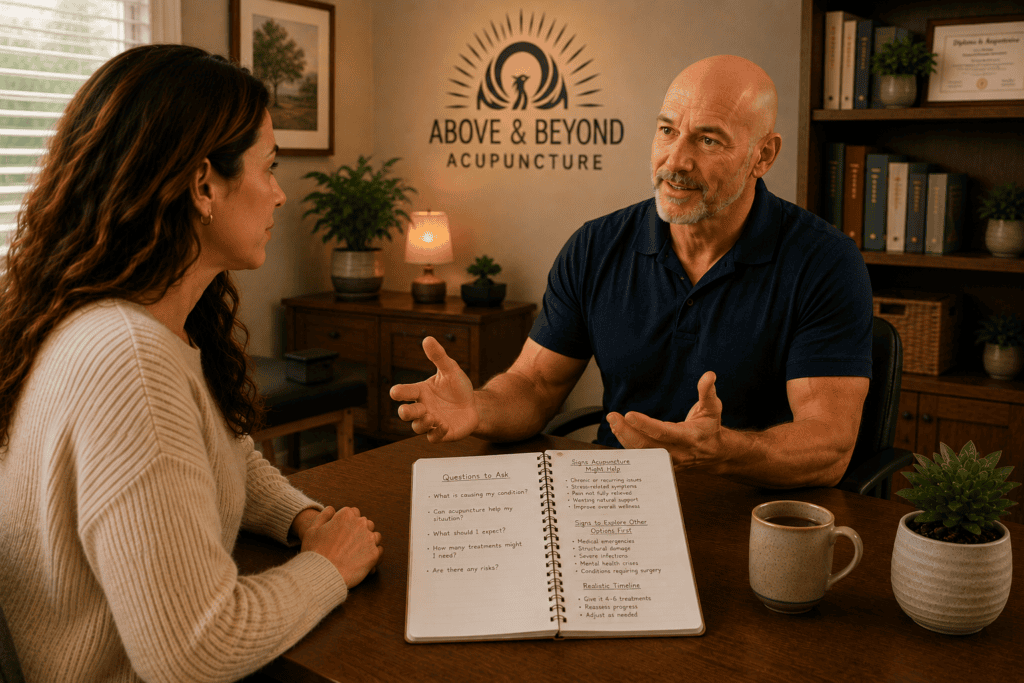
The best way to determine whether acupuncture is right for your situation is to consult a licensed acupuncturist who can assess your specific presentation.
- Questions to ask during the consultation. What acupuncture does for conditions like yours based on the practitioner’s clinical experience. Typical treatment course including frequency and duration. What outcomes are realistic to expect. How the treatment integrates with any other care you are receiving. What lifestyle support would amplify the treatment effects.
- Signs that acupuncture might help you. Your condition falls within the range of conditions acupuncture treats well. Standard Western care has helped but not fully resolved your situation. You are open to an integrated approach. You are willing to commit to a course of treatment rather than expecting immediate resolution. You want to support your health beyond just symptom management.
- Signs to explore other options first. Your condition requires emergency medical care. You need a specific diagnostic evaluation before treatment. You are looking for a cure to a condition where cure is not realistic. You have not consulted with your physician about a condition that warrants medical evaluation.
- A realistic timeline for evaluating acupuncture. Give the treatment a reasonable trial before drawing conclusions. Six to eight sessions provides enough time to see whether the treatment is producing meaningful improvement for your specific situation. Some conditions respond faster. Chronic conditions typically need longer trials.
What Are the Practical Next Steps for Scheduling an Acupuncture Treatment?

If you’ve decided that trying acupuncture could be beneficial, here are the steps to help you find professional care:
- Find a licensed acupuncturist. Look for practitioners with proper licensing (LAc or DAOM credentials in the United States). Licensed acupuncturists complete extensive graduate training in Chinese medicine, anatomy, and safe needle practice. Avoid practitioners without proper licensing.
- Schedule a consultation. The initial appointment allows you to discuss your specific situation with the practitioner and get their honest assessment of whether acupuncture fits your circumstances. A good practitioner will tell you honestly if your situation is not a good fit for the treatment rather than trying to convince you to try it anyway.
- Commit to a reasonable treatment plan. Give the treatments enough time to work. Six to eight sessions typically provide a meaningful indication of whether the treatment is producing results for your specific situation.
- Evaluate honestly. After the trial period, assess whether you are experiencing meaningful improvement. Discuss with your practitioner what has changed and what has not. Make decisions from this honest assessment rather than from hope or from disappointment about a single session.
If you’re curious about the basics of acupuncture, “What Is Acupuncture?” provides an overview of the medicine, its tradition, and how it works.
Many patients also experience anxiety, stress, and depression alongside their primary concerns that respond well to Traditional Chinese Medicine.
Above and Beyond Acupuncture offers acupuncture, cupping, and lifestyle coaching at the North Frank Lloyd Wright Boulevard location in Scottsdale.
Schedule an appointment online or call us today to start your healing journey.

About the Publisher
Paul Kerzner, L.Ac., is a licensed acupuncturist and board-certified herbalist, as well as the founder of Above and Beyond Acupuncture in Scottsdale. His own journey from chronic patient to practicing acupuncturist shapes his commitment to providing honest, clinically grounded information about acupuncture and Traditional Chinese Medicine. Learn more about Paul and his clinical approach on the About Us page.