Key Takeaways
- Fibromyalgia management involves dealing with widespread pain, fatigue, and disrupted sleep, which can be difficult to communicate.
- Acupressure offers a gentle way to ease fibromyalgia symptoms by stimulating specific points that soothe the nervous system and reduce pain.
- There are nine key acupressure points, such as LI4 for general pain relief and ST36 for boosting energy, all designed to reduce symptoms effectively.
- Use gentle, light pressure when applying acupressure, especially on sensitive areas, to prevent increasing pain.
- Integrate acupressure with other holistic approaches to manage fibromyalgia effectively, and seek medical advice if symptoms worsen.

Managing fibromyalgia means dealing with pain in various parts of the body, which many people might not see or understand. It’s a condition that can be hard to explain and even harder to live with.
Persistent ache or burning feelings, extreme fatigue that doesn’t lessen with rest, disturbed sleep, mental fog, and a constant state of hyperalertness can be very challenging and are frequently misunderstood. Although acupressure isn’t a cure for fibromyalgia, it provides a gentle way to reduce pain, calm a hypersensitive nervous system, improve sleep, and offers an accessible self-care option for those managing this long-term condition.
Before you start, be gentle and kind to yourself. Fibromyalgia makes your nervous system more sensitive to pressure and pain, so use only light to moderate touch. Avoid firm or deep pressure, as it may worsen your symptoms instead of helping. Start very gently, focus on calming sensations, and go slowly; don’t push beyond what feels comfortable at first. The goal is to help your system relax, not to add any extra strain.
In Traditional Chinese Medicine, fibromyalgia is seen as a result of imbalanced Qi and Blood circulation, which causes widespread pain. It often accompanies low energy and an unsettled spirit. When Qi and Blood do not flow properly or fail to nourish the body, it leads to aching pain throughout the body. Deficiencies can cause deep fatigue and poor sleep. The Liver, which governs energy movement and stress regulation, may become blocked, and the Shen, or spirit, may be affected, resulting in anxiety, restless sleep, and nervousness. Modern perspectives suggest this reflects an overly sensitive, hyperactive nervous system. The listed acupuncture points in this article are meant to unblock energy, relieve pain, calm the nervous system, restore vitality, and improve sleep through gentle techniques.
For the broader picture of managing this condition, holistic approaches to fibromyalgia address a wide scope, while acupuncture for fibromyalgia focuses on the clinical side of Traditional Chinese Medicine.
Here are nine acupressure points to help manage fibromyalgia.
What Acupressure Points to Press and Why
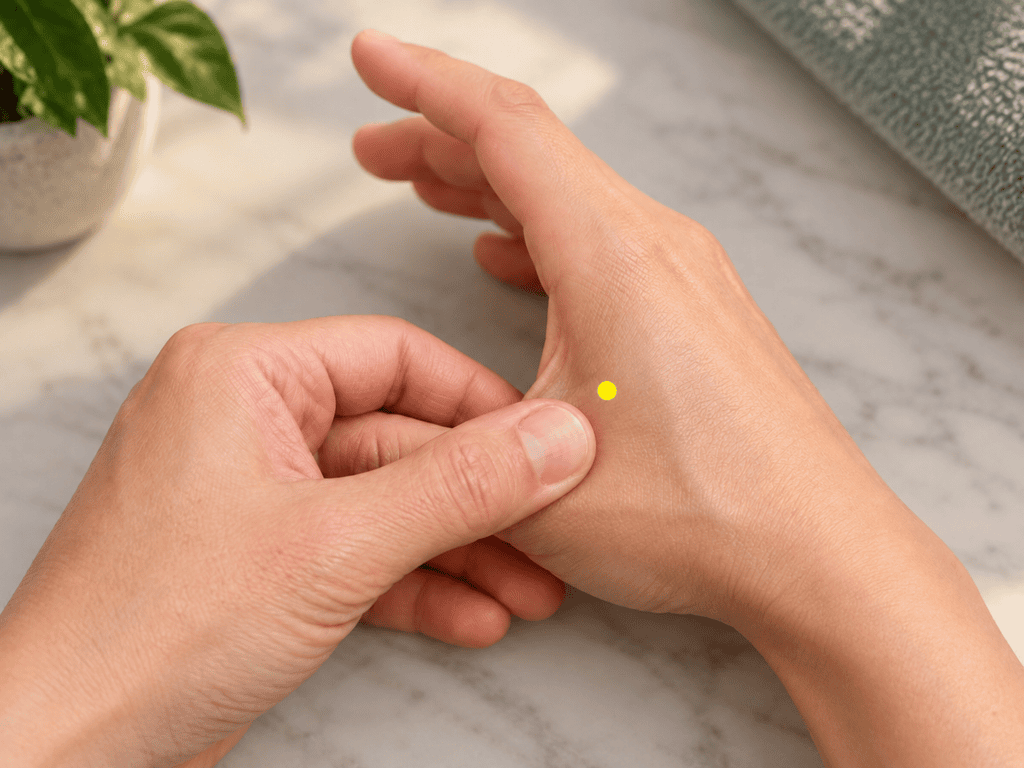
1. Press on LI4 in the hand to ease pain throughout the body. LI4 sits in the webbing between the thumb and index finger, at the highest point of the muscle when you bring the thumb and finger together. Press gently to moderately with the thumb of your other hand for one to two minutes on each hand. LI4 is called “Hegu,” and it is one of the great general pain-relieving points in the body. LI4 is avoided during pregnancy.
LI4 is a key acupoint for managing various types of pain because it helps unblock Qi throughout the body and reduces pain remotely. Its effectiveness makes it especially valuable for fibromyalgia, which involves widespread, all-over pain. Instead of targeting a specific location, LI4 offers a general pain relief suitable for conditions where pain is diffuse. Situated on the hand, it can be gently pressed and easily accessed without disturbing sore areas. This broad pain-relief benefit addresses the diffuse ache of fibromyalgia. Although patients often have heightened sensitivity, the hand typically tolerates gentle pressure well.
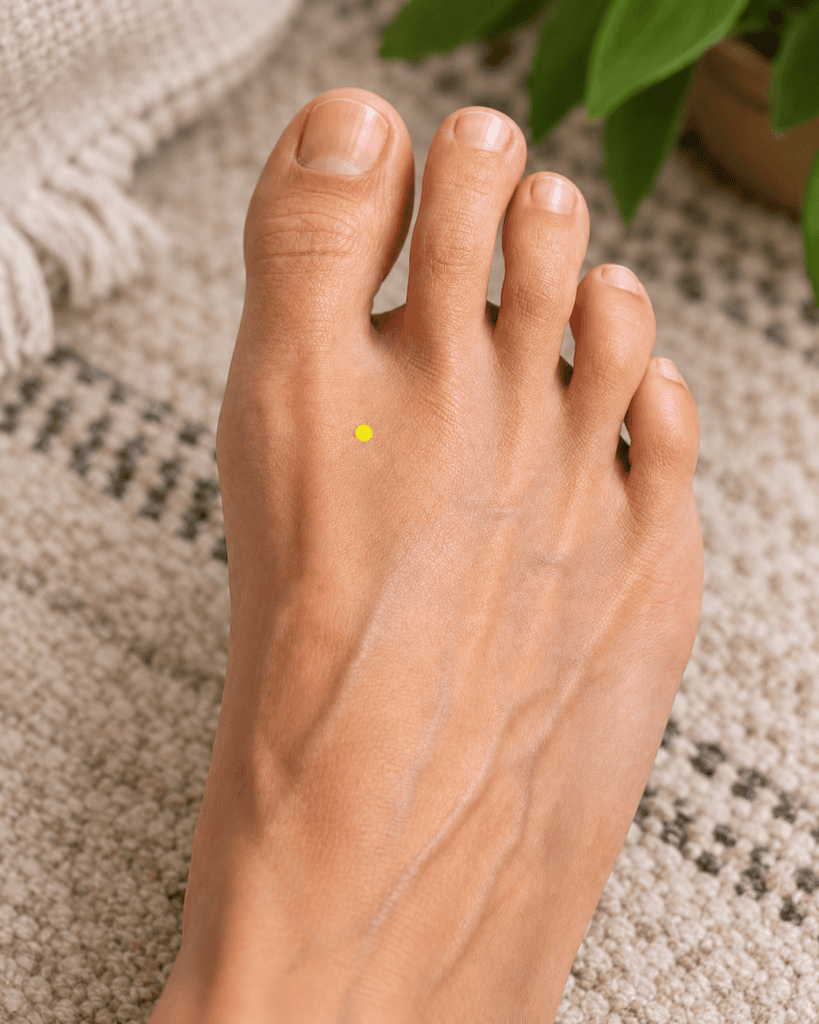
2. Press on LR3 on the top of the foot to move stagnation and ease stress. LR3 sits on the top of the foot, in the webbing between the big toe and second toe, about two finger-widths back where the bones meet in a small hollow. Press gently to moderately with the thumb for one to two minutes on each foot. LR3 is called “Taichong,” the primary point for moving stuck Liver Qi.
The LR3 point targets Liver Qi stagnation, which causes pain and tension in fibromyalgia. Since the Liver is connected to stress, it also assists in lowering stress levels that can worsen the condition. By encouraging energy movement and flow in stagnated areas, it alleviates pain and calms a stressed system by guiding energy downward to the feet. When used with LI4, forming the familiar Four Gates, it creates a strong acupressure combination that effectively releases stagnation across the body, making it especially useful for fibromyalgia’s widespread discomfort. Overall, this point helps reduce pain, tension, and stress related to the condition.
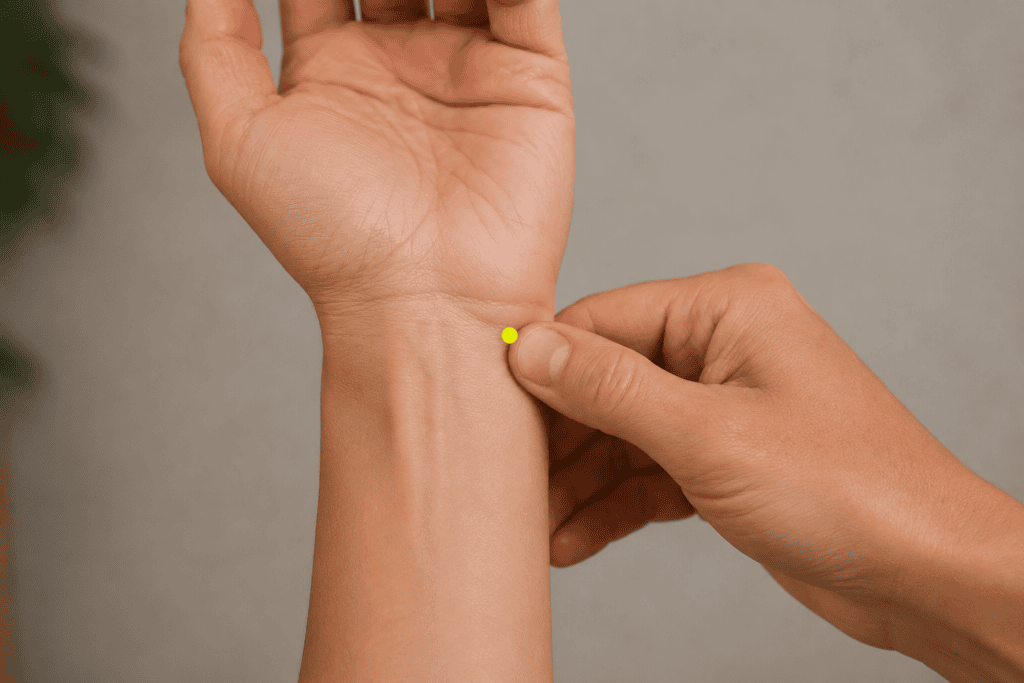
3. Press on HT7 at the wrist to calm the over-sensitized system. HT7 sits on the inner wrist crease, on the pinky side, in the small hollow just inside the tendon. Press gently with your thumb for one to two minutes on each wrist. HT7 is called “Shenmen,” the “Spirit Gate,” and it is the most important point for calming the Shen.
Fibromyalgia involves an overly sensitive and alert nervous system. HT7, a key point for calming the Shen, helps reduce this heightened, anxious state. It alleviates anxiety and restless feelings common in fibromyalgia, soothes the mind, and improves sleep issues associated with the condition. Since calming an overactive nervous system is essential for relief, this gentle and calming point is especially important and not just secondary. For symptoms like anxiety, hypervigilance, and restlessness, this point offers relief, and it is soft and easy to stimulate.
4. Press on Yintang between the eyebrows to calm the mind and ease the fog. Yintang sits in the small hollow directly between the two eyebrows. Press gently and hold, or make small, slow circles with your fingertip for one to two minutes. Yintang is an extra point and one of the most calming points in the body.
Yintang helps calm the Shen and soothe the entire nervous system, reducing anxiety and the overwhelmed, wired feeling often linked to fibromyalgia. It also helps clear brain fog, or ‘fibro fog,’ that hampers thinking and concentration. By pressing the point slowly with your breath, it promotes a calm, centered state needed for a highly sensitive, overstimulated system. Regarding the mental symptoms of fibromyalgia, such as fog, overwhelm, and difficulty settling, Yintang contributes to increased quietness and clarity. People often use it alongside HT7 to calm both the mind and the nervous system.

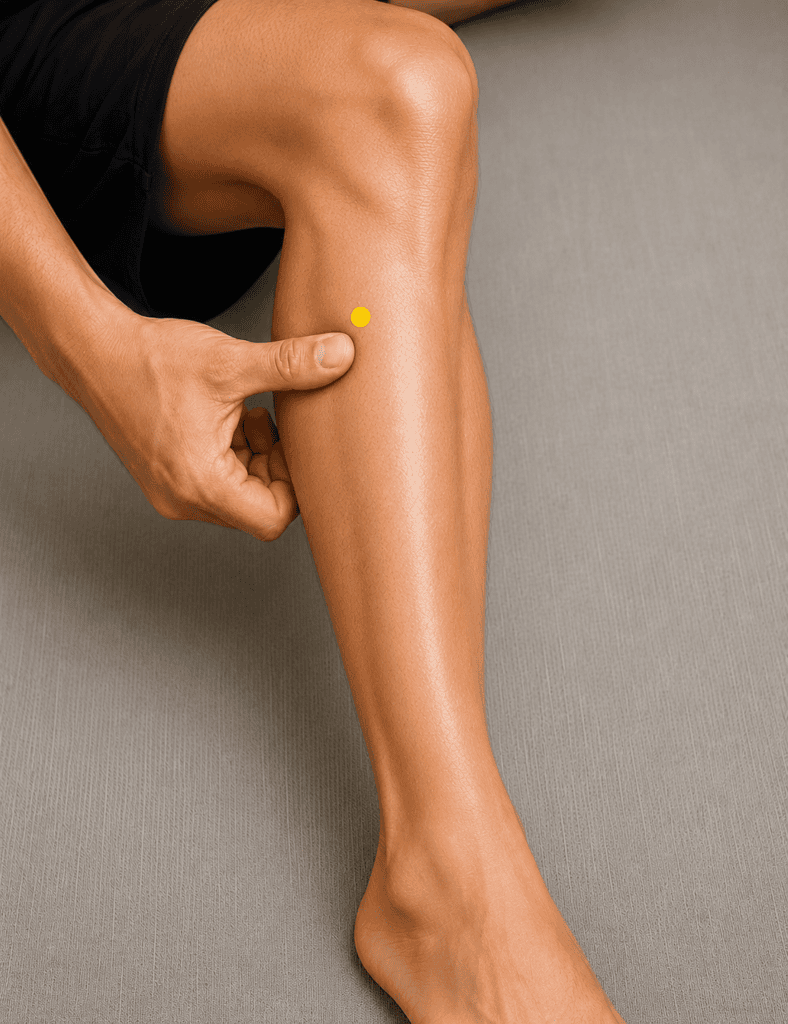
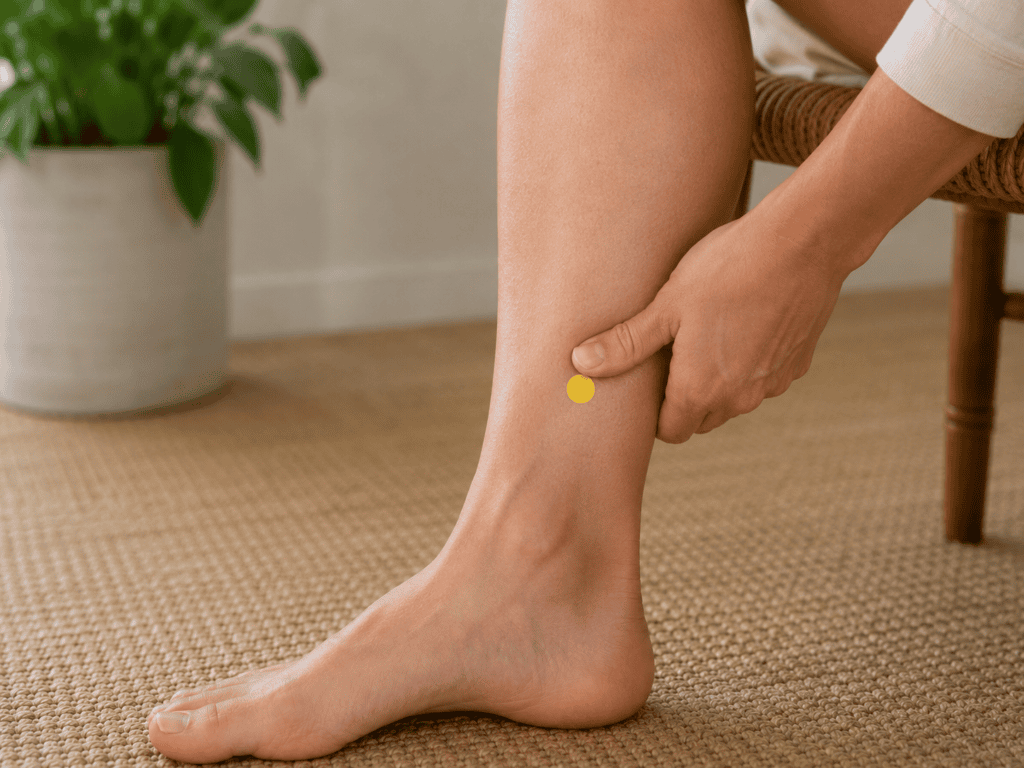
5. Press on ST36 below the knee to rebuild the deep fatigue. ST36 sits four finger-widths below the lower edge of the kneecap and one finger-width to the outside of the shinbone, on the muscle that rises when you flex your foot. Press gently to moderately with your thumb for one to two minutes on each leg. ST36 is called “Zusanli,” the “Leg Three Miles,” and it is the master point for energy in the body.
Fibromyalgia’s intense and persistent fatigue is one of its most difficult symptoms. ST36, a crucial acupoint, helps restore energy levels by boosting vitality. It enhances the function of the Spleen and Stomach, which produce the body’s Qi, addressing the core issues of depletion and exhaustion. Furthermore, it offers a grounding and stabilizing effect on an overtaxed system. For individuals severely depleted by fibromyalgia-related tiredness, this acupoint can help rebuild energy stores. When used gently and regularly, it continually supports the fundamental energy that’s drained by living with the condition.
6. Press on SP6 above the inner ankle to nourish and support sleep. SP6 sits four finger-widths up from the tip of the inner ankle bone, just behind the back edge of the shinbone. Press gently to moderately for one to two minutes on each leg. SP6 is called “Sanyinjiao,” the “Three Yin Intersection,” where the Spleen, Liver, and Kidney channels meet. SP6 is avoided during pregnancy.
SP6 is a highly nourishing acupoint that is particularly effective for fibromyalgia. It helps replenish Blood and Yin, which are often depleted in this condition, thereby alleviating fatigue and enhancing sleep quality. Moreover, it calms the mind and stabilizes the whole system. Since SP6 connects three meridians involved in fibromyalgia, stimulating it supports better sleep, reduces feelings of exhaustion, and helps soothe the hyper-sensitive system. Due to the poor sleep and severe depletion common in fibromyalgia, activating this point both rebuilds and calms the body, especially when done in the evening to promote rest.
7. Press on GB20 at the base of the skull to ease pain and clear the head. GB20 sits in the two hollows at the base of the skull, between the two large vertical neck muscles and the outer edge, roughly level with the tops of the ears. Tip your head back slightly and press gently up and inward with your thumbs for one to two minutes. GB20 is called “Fengchi,” and it eases the head, neck, and upper body.
Fibromyalgia often causes pain, tension, and headaches in the neck, shoulders, and upper back, along with mental fog. GB20 helps relieve this discomfort by reducing tension at the base of the skull, easing fibromyalgia-related headaches, and clearing the foggy, heavy sensation in the head. It also promotes calming effects that soothe an overactive nervous system. For common fibromyalgia symptoms like pain, tension, and fog, especially in the neck and head, this point gently alleviates these issues with light pressure, being mindful of the area’s sensitivity.

8. Press on the Ashi points gently at your sorest spots. The Ashi points are wherever your tenderness is greatest, the specific sore, tender areas that fibromyalgia creates. Feel gently for the tender spots and rest light pressure on each for a minute or so, using a soft, soothing touch rather than firm pressure. “Ashi” means “that’s it,” the sound of finding the sore point.
In Traditional Chinese Medicine, practitioners target tender points directly because pain indicates blockage of Qi and Blood, and fibromyalgia is characterized by sensitive spots. Treatment varies from other conditions and requires caution: due to hypersensitivity in fibromyalgia, gentle pressure, light touch, rest, and soothing techniques are vital, unlike the firm pressure used for typical knots. Gentle circular massage or light pressure can alleviate pain, while excessive force might worsen symptoms. This gentle method helps relieve tender spots without stressing the body. If a particular spot resists touch, it’s best to skip it and concentrate on other accessible points.

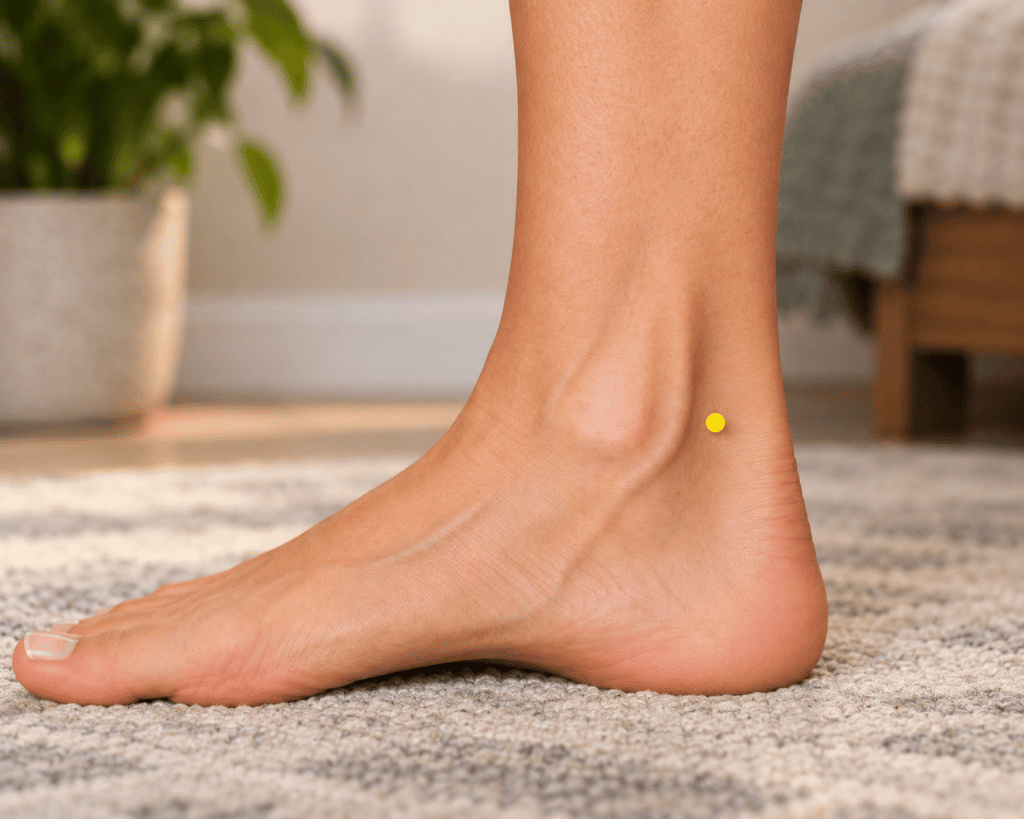
9. Press on KI3 above the inner ankle to support the deep reserves. KI3 sits in the hollow between the inner ankle bone and the Achilles tendon, level with the tip of the ankle bone. Press gently to moderately with your thumb for one to two minutes on each ankle. KI3 is called “Taixi,” the Kidney’s source point.
Fibromyalgia often involves deep depletion, and KI3, the Kidney’s source point, helps replenish the body’s basic reserves. It supports vital constitutional energy, affecting vitality, sleep, and resilience, while stabilizing an overtaxed system. For those with severe exhaustion common in fibromyalgia, this point addresses core needs by strengthening reserves essential for recovery and daily activities. It is usually combined with SP6 and ST36 to gently restore the depleted system.
Why These Acupressure Points Work
In Traditional Chinese Medicine, fibromyalgia is viewed as a result of Qi and Blood stagnation, leading to widespread pain. This occurs against a backdrop of deficiency, causing fatigue and sleep issues, linked to a Liver that is constrained and an unsettled Shen, all signs of an overly active nervous system. The nine-point treatment gently addresses the overall condition.
- The pain-and-stagnation points (LI4, LR3) help relieve pain throughout the body and redirect stagnation, working together as the Four Gates.
- The calming points (HT7, Yintang) help soothe an oversensitive nervous system and reduce anxiety and mental fog.
- The rebuilding points (ST36, SP6, KI3) help replenish reserves depleted by deep fatigue and promote better sleep.
- The neck-and-head point (GB20) alleviates pain, tension, and mental fog in the upper body.
- The Ashi points softly target your sensitive areas where the pain is most intense.
A common theme is easing pain while also soothing and nourishing a system that is overly sensitive and depleted, making gentleness the primary guiding principle.
How to Properly Use These Acupressure Points
When managing fibromyalgia, it is essential to prioritize gentleness and pacing; allow these principles to steer your approach.
- Apply light to moderate pressure, avoiding firm or deep presses. Be especially gentle on the tender Ashi points, using a soft, resting touch. Start with less pressure than you think you need, especially at the beginning.
- Work on the distal points LI4, LR3, ST36, SP6, and KI3 to relieve pain and promote recovery. Use the calming points HT7 and Yintang to calm the nervous system and clear fog. Gently stimulate GB20 for the neck and head, and softly target the Ashi points at your sore areas.
- Practice SP6 and calming points in the evening to promote sleep. Use the routine gently and consistently, not intensely, as a sensitive system responds better to calm, steady input than to strong stimulation.
- Hold each point for one to two minutes, and if you experience increased pain, reduce or stop the activity, as gentleness is key with fibromyalgia.
Acupressure is a soothing technique that complements other fibromyalgia treatments, so incorporate it with those strategies.
A highly effective strategy for those with fibromyalgia is gentle, paced movement, as long as it is gradually introduced and not overexerted. Pacing activities can help avoid the push-and-crash cycle and provide important protection. Good sleep is essential since poor rest can exacerbate other symptoms, and stress management is critical because stress consistently increases pain levels. Beneficial practices include applying warmth, gentle stretching, and practicing patience and self-compassion. Although acupressure can offer relief, it should serve as a complement to these other approaches, not a substitute.
When to Get Professional Help
Fibromyalgia is a chronic illness needing proper treatment.
If you haven’t received a diagnosis, consult a doctor instead of attributing your widespread pain to fibromyalgia, since other conditions can cause similar symptoms and should be ruled out. If diagnosed, continue collaborating with your healthcare team, as effective fibromyalgia management includes various strategies such as exercise, medication when necessary, pain and sleep therapies, stress management, and considering acupressure as an additional treatment, not a substitute. Contact your healthcare provider if symptoms worsen, change, new symptoms emerge, or if pain and fatigue become overwhelming.
If you’re experiencing suicidal thoughts, reach out by calling or texting the 988 Suicide and Crisis Lifeline.
Acupressure may assist in managing stress associated with fibromyalgia when included as part of a holistic treatment approach.
Schedule an appointment online to start your healing journey.
The points above are only as effective as the technique used to apply them. Where to press, how firmly, and for how long all affect the result. For a full breakdown of how to perform acupressure properly at home, read Performing Acupressure in 3 Easy Steps.

About the Publisher
Paul Kerzner, L.Ac., is a licensed acupuncturist and board-certified herbalist, as well as the founder of Above and Beyond Acupuncture in Scottsdale. His own journey from chronic patient to practicing acupuncturist shapes his commitment to providing honest, clinically grounded information about acupuncture and Traditional Chinese Medicine. Learn more about Paul and his clinical approach on the About Us page.