Key Takeaways
- Night sweats, often experienced during menopause, can be caused by factors such as anxiety, stress, or medications.
- Acupressure aids in cooling internal heat and calming the body, leading to more restful sleep.
- Nine targeted acupressure points help address Yin deficiency and soothe the mind, effectively managing night sweats.
- To alleviate night sweats, press key points such as HT6 and KI7 before bed and when experiencing disturbances.
- It is advisable to consult a physician if experiencing heavy, persistent night sweats or if they are accompanied by other concerning symptoms.
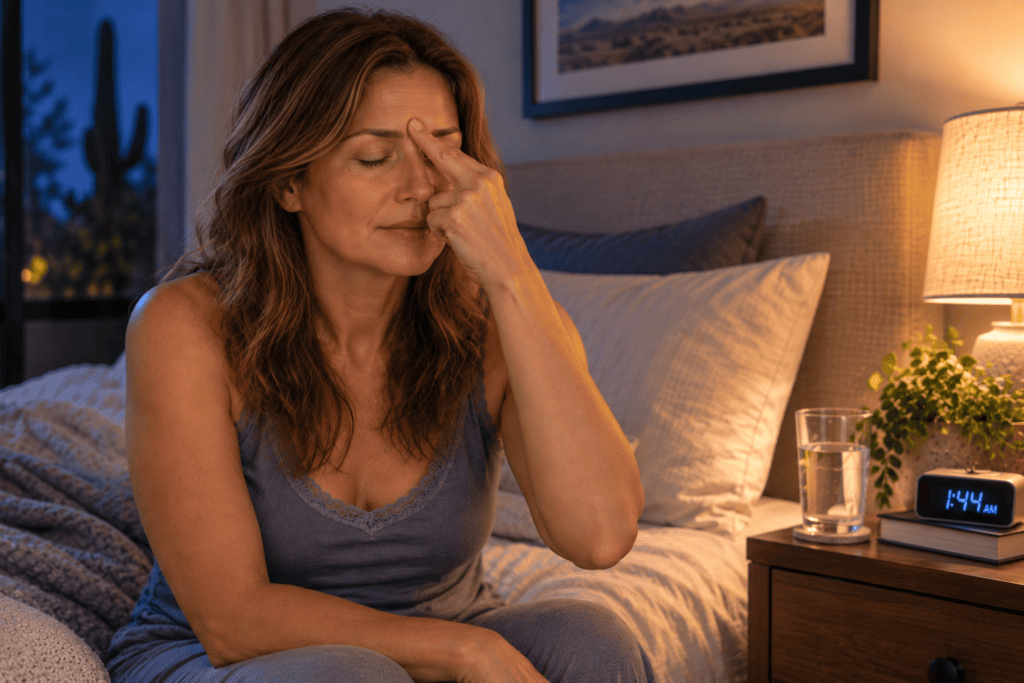
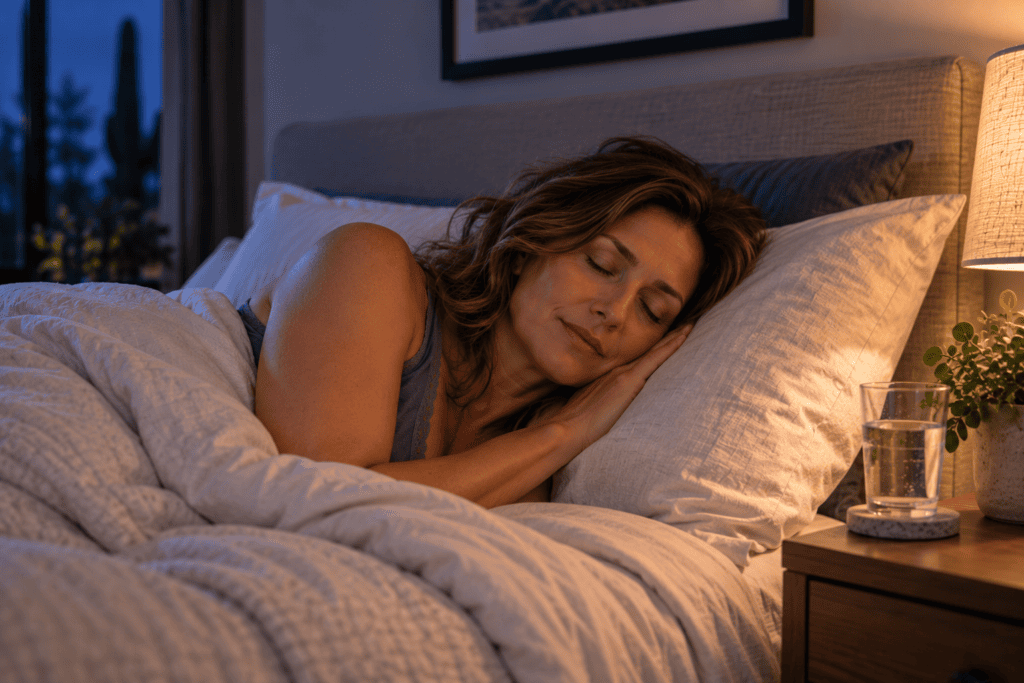
You wake up sweating profusely in the middle of the night, drenched sheets beneath you, tossing off the covers only to pull them back shortly after.
Restless, sweaty sleep can leave you feeling exhausted the next day. Although night sweats are common during menopause, they can also affect people of any age due to factors like anxiety, stress, illness, or certain medications. These disruptive nights can be draining regardless of the cause. Acupressure may help by cooling the internal heat that triggers sweating, calming the body, and promoting more restful sleep.
In Traditional Chinese Medicine, night sweats are often viewed as a sign of Yin deficiency accompanied by empty heat. Yin embodies the body’s cooling and calming energies. When Yin declines due to aging, illness, overexertion, or natural changes, it fails to regulate the body’s warmth, allowing heat to accumulate. This excess heat causes fluids to be expelled as sweat during the night, resulting in hot, restless, and disrupted sleep. The Heart and Kidney are typically involved, with the Kidney storing Yin and the Heart governing sweat and spirit. The following points aim to nourish Yin, dispel heat, soothe the Heart and mind, and reduce sweating to improve sleep.
Because night sweats are such a common part of the menopausal transition, acupressure for hot flashes and acupressure for menopause provide more detailed information.
Here are nine acupressure points that can help reduce night sweats.
What Acupressure Points to Press and Why
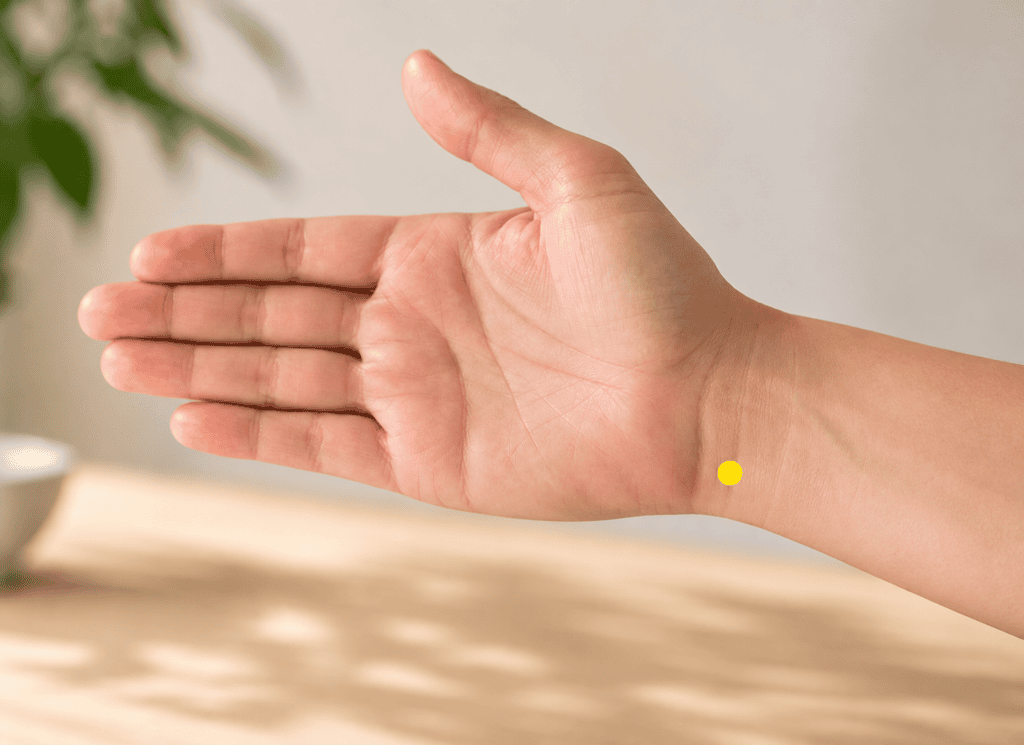
1. Press on HT6 on the inner forearm, the classic point for night sweats. HT6 sits on the inner forearm, on the pinky side, about half a thumb-width above the wrist crease, just off the tendon there. Press firmly with your thumb for one to two minutes on each arm. HT6 is called “Yinxi,” the traditional point for night sweats.
HT6 is the primary point for addressing night sweats. Traditionally, it helps prevent sweating during the night by aiding the body in retaining fluids and calming the Heart, which directly reduces sweating. It’s the first point recommended for night sweats and can be easily pressed before bed or upon waking. For severe, heavy sweating, HT6 is essential, especially when combined with Kidney points that support Yin.
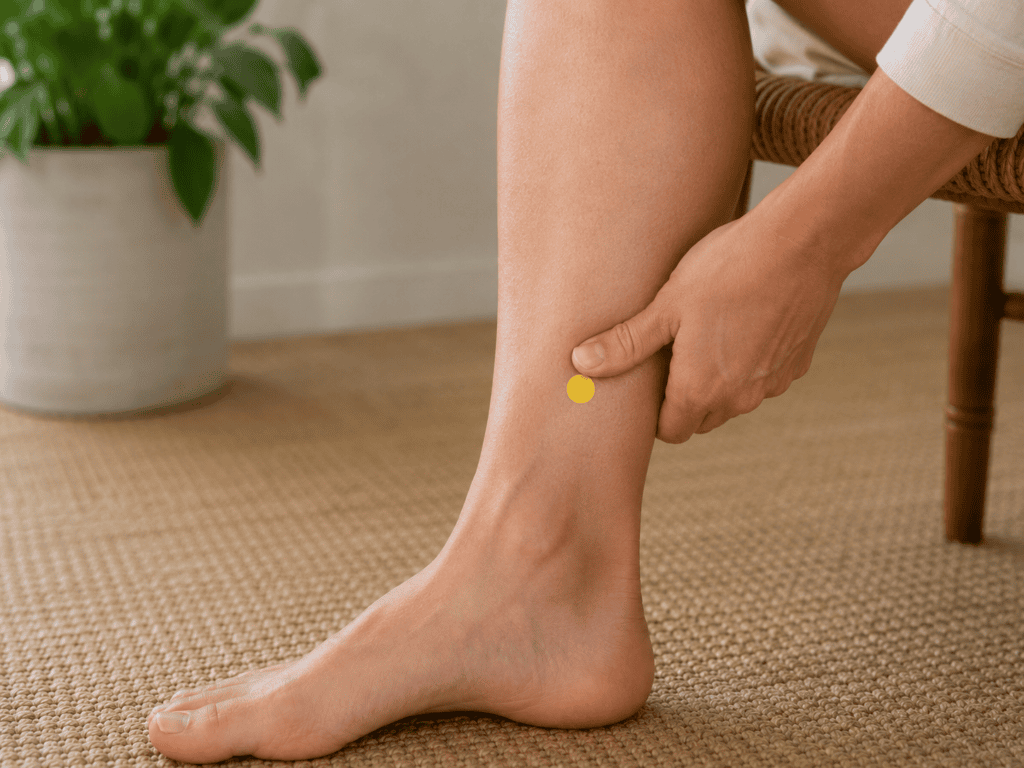
2. Press on KI7 above the inner ankle to regulate sweating. KI7 sits on the inner lower leg, about two thumb-widths above KI3, in the hollow between the inner ankle bone and the Achilles tendon, along the back edge of the shinbone. Press firmly with your thumb for one to two minutes on each leg. KI7 is called “Fuliu,” the main point for regulating sweating.
KI7 is the primary point for managing abnormal sweating, particularly night sweats. It enhances Kidney Yin and helps halt sweating caused by empty heat. KI7 targets the root issue of night sweats: insufficient Kidney Yin, which cannot retain fluids or cool the body. It is frequently combined with HT6, creating a dependable treatment pair for night sweats. By addressing both the symptom of sweating and the underlying Kidney deficiency, KI7 is essential in treating night sweats regardless of the cause.
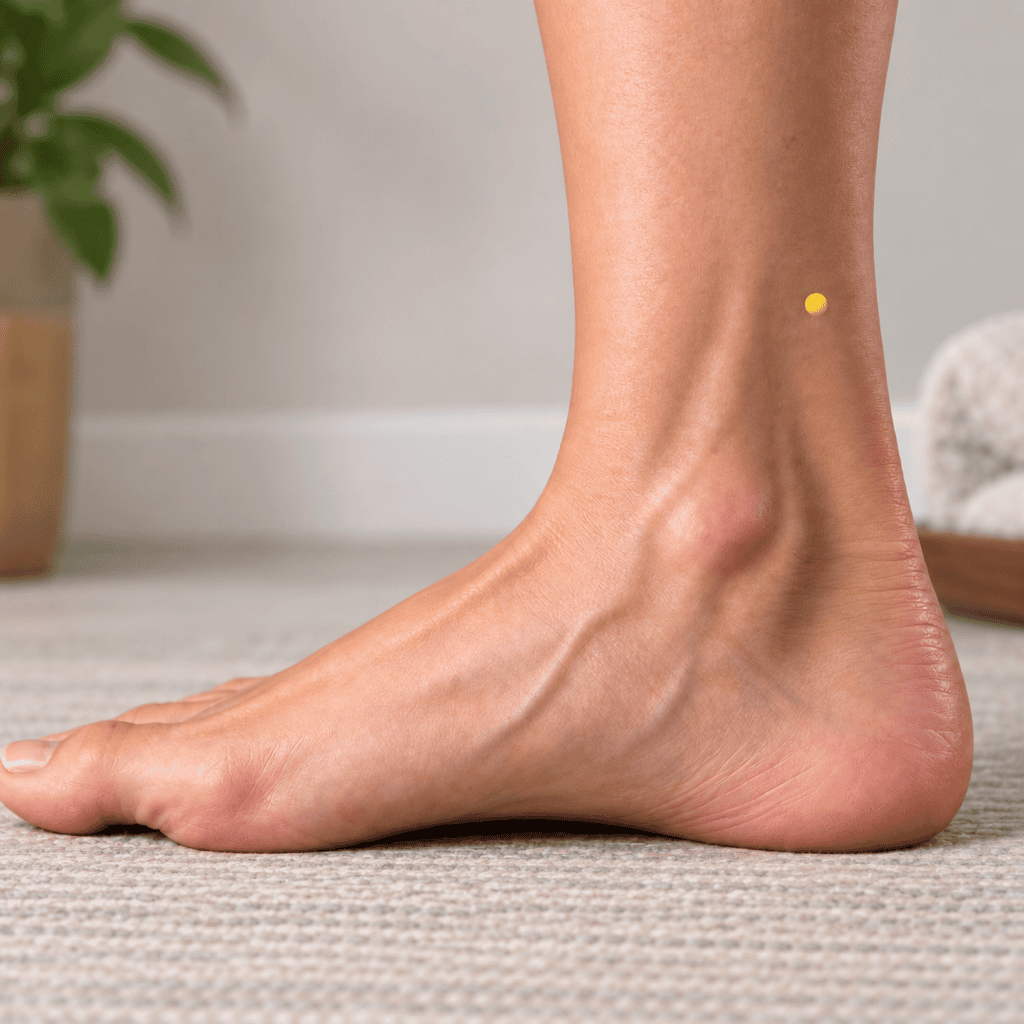
3. Press on KI3 above the inner ankle to nourish the Kidney Yin. KI3 sits in the hollow between the inner ankle bone and the Achilles tendon, level with the tip of the ankle bone. Press firmly with your thumb for one to two minutes on each ankle. KI3 is called “Taixi,” the Kidney’s source point.
Night sweats often occur when Kidney Yin is depleted. KI3, the Kidney’s source point, helps restore these cooling energy stores. It nourishes Kidney Yin, preventing empty heat from rising and triggering night sweats. Located just below KI7 on the same channel, KI3 and KI7 complement each other: KI7 controls sweating, while KI3 enhances Yin. For night sweats associated with fatigue or aging, KI3 acts deeply and is essential for addressing Yin deficiency.
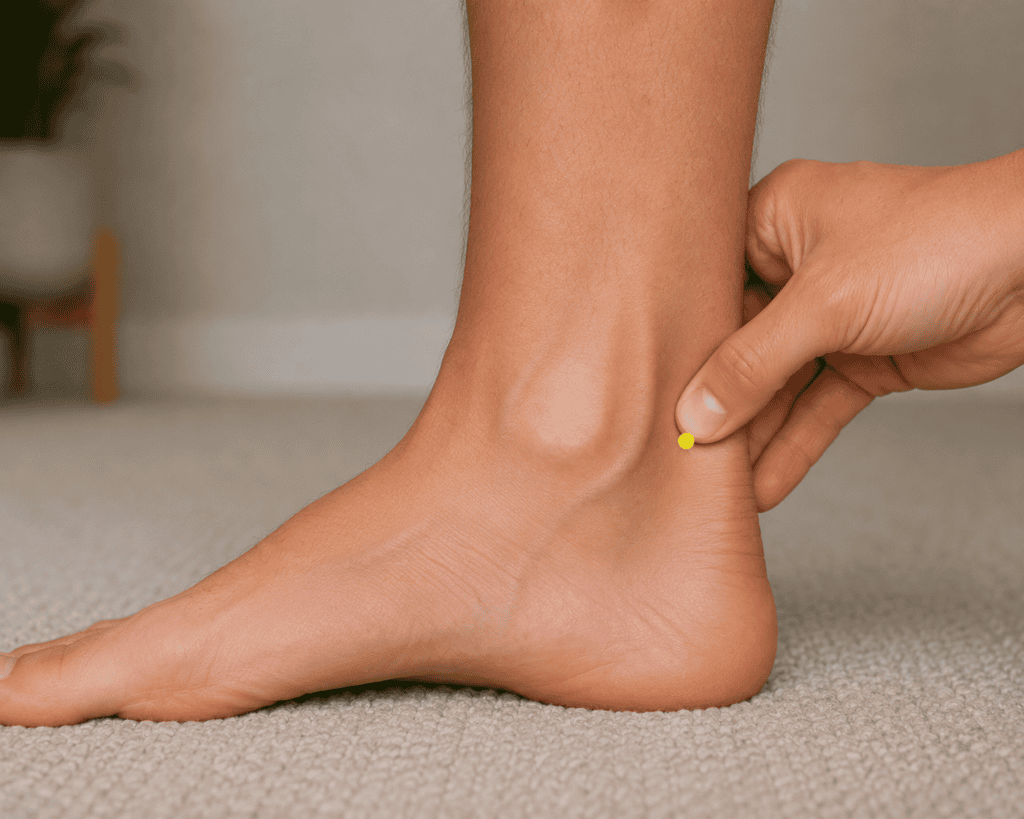
4. Press on KI6 below the inner ankle to cool the empty heat. KI6 sits in the hollow just below the tip of the inner ankle bone. Press firmly with your thumb for one to two minutes on each ankle. KI6 is called “Zhaohai,” and it nourishes the Kidney Yin and cools deficient heat.
KI6 is particularly effective for managing hot, restless, and sweaty symptoms associated with night sweats caused by a deficiency of cooling Yin. It nourishes Kidney Yin and helps dissipate the internal heat that elevates at night, targeting the root cause of night sweats. Additionally, KI6 calms the body and enhances sleep disrupted by heat. For hot, dry, sleepless nights, this point provides cooling and calming effects and works well alongside KI3 and KI7 to support Kidney health.
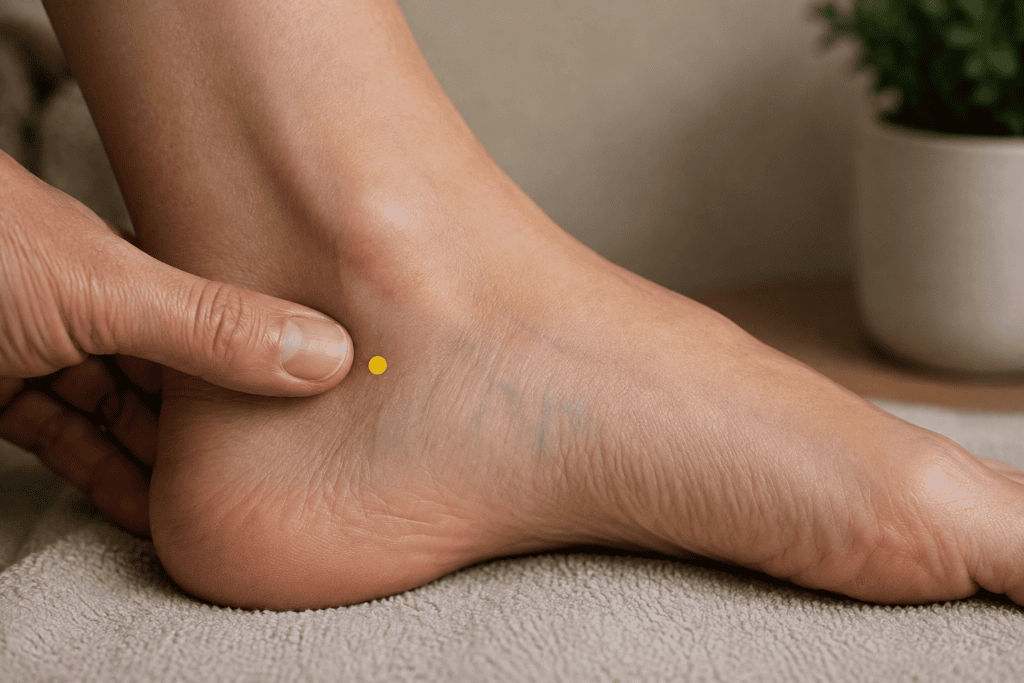
5. Press on HT7 at the wrist to calm the Heart and the sweat. HT7 sits on the inner wrist crease, on the pinky side, in the small hollow just inside the tendon. Press firmly with your thumb for one to two minutes on each wrist. HT7 is called “Shenmen,” the “Spirit Gate,” and it is the source point of the Heart.
In Traditional Chinese Medicine, the Heart governs sweat and houses the Shen, or spirit. HT7 is the key point for calming the spirit and reduces both sweating and restless sleep. It calms an anxious Heart and mind, alleviates anxiety that may trigger or intensify night sweats, and promotes deeper, more restorative sleep. If your night sweats are accompanied by anxiety, a racing mind, or poor sleep, HT7 can address all these issues. Like HT6, it also helps calm the mind and control sweating.
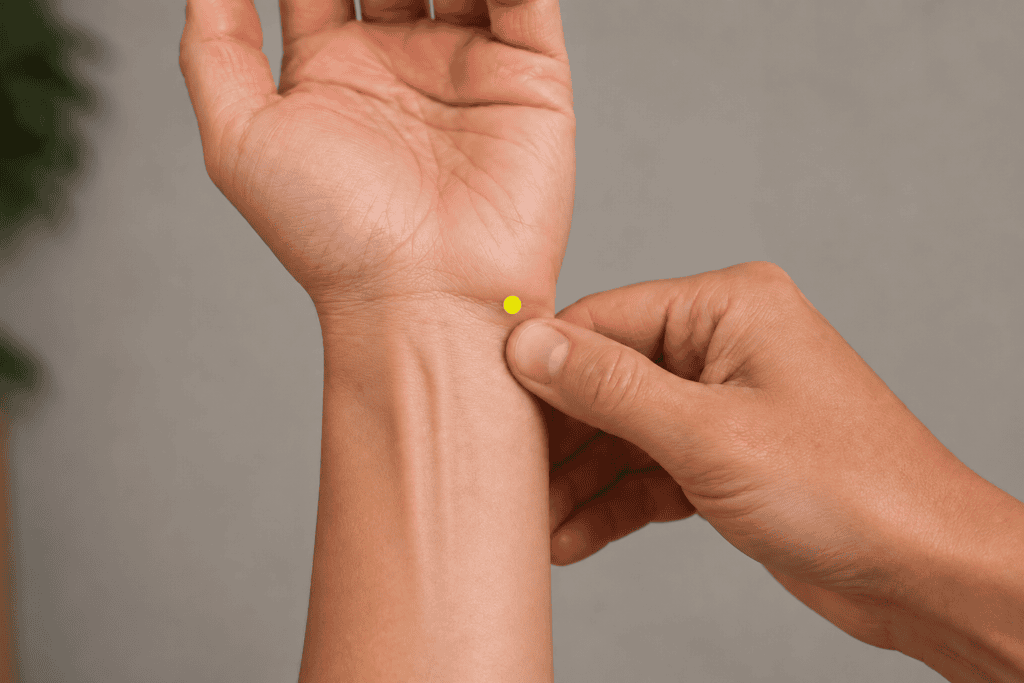
6. Press on SP6 above the inner ankle to nourish the Yin and Blood. SP6 sits four finger-widths up from the tip of the inner ankle bone, just behind the back edge of the shinbone. Press firmly for one to two minutes on each leg. SP6 is called “Sanyinjiao,” the “Three Yin Intersection,” where the Spleen, Liver, and Kidney channels meet. SP6 is avoided during pregnancy.
SP6 is a key nourishing point because it connects the three Yin channels in the leg. It helps with night sweats caused by low Yin and Blood. This point replenishes Yin, calms the mind, and promotes sleep, tackling both underlying issues and symptoms. For night sweats related to fatigue or hormonal shifts, SP6 helps restore reserves and is best used in the evening before sleep. Pregnant women should avoid this point.
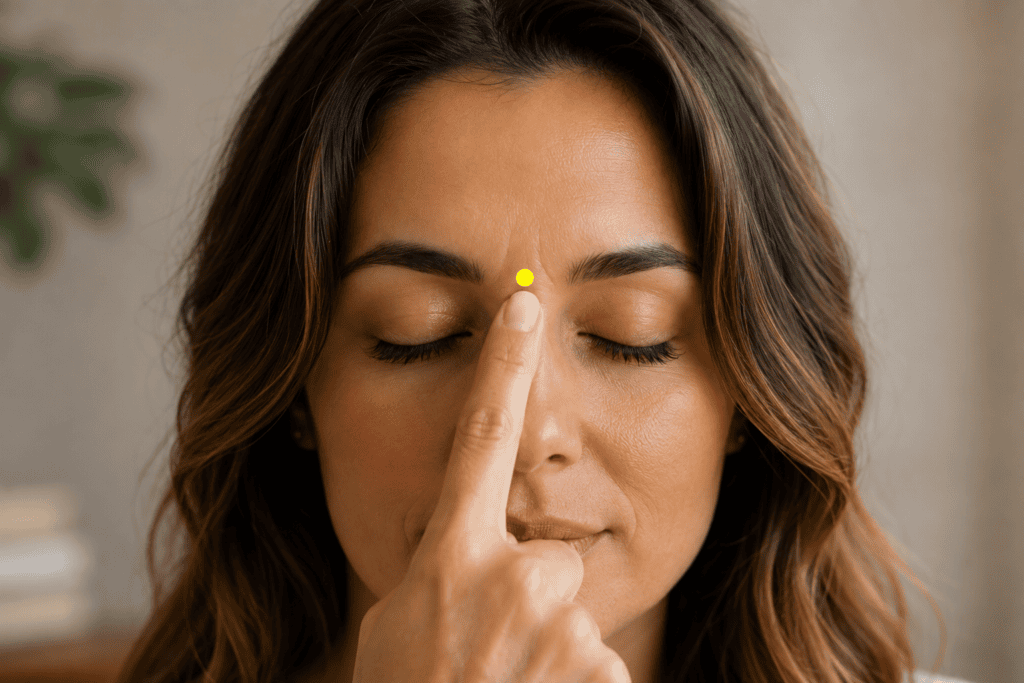
7. Press on Yintang between the eyebrows to calm for sleep. Yintang sits in the small hollow directly between the two eyebrows. Press steadily and hold, or make small slow circles, with your fingertip for one to two minutes. Yintang is an extra point, and it is one of the most calming points in the body.
Night sweats and poor sleep often go hand in hand. Yintang helps calm the mind and nervous system, reducing the restless, hot sensations that interfere with sleep. It quiets the mind, alleviates anxiety that may cause night sweats, and promotes a calming feeling at bedtime. For those experiencing sleeplessness and restlessness associated with night sweats, this point offers soothing relief. Applying gentle pressure while winding down can help you sleep more peacefully. It is a gentle, effective addition to your evening routine.
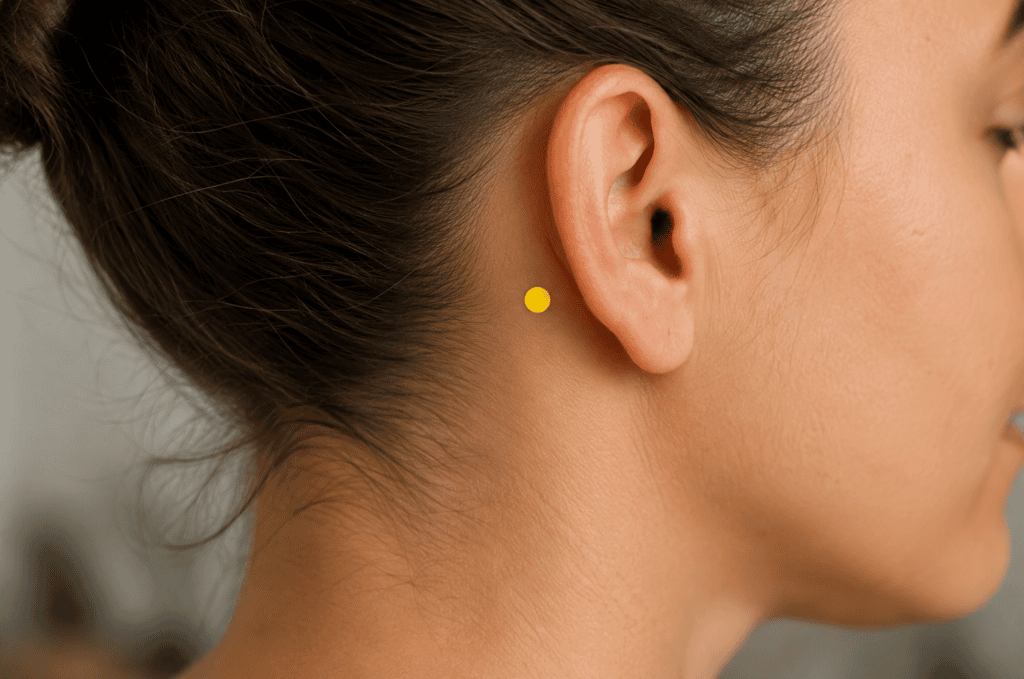
8. Press on Anmian behind the ear to support settled sleep. Anmian sits behind the ear, in the hollow between the bony bump behind the earlobe and the base of the skull, a little above the jaw. Press firmly with your fingertip for one to two minutes on both sides. Anmian is an extra point whose name literally means “Peaceful Sleep,” and it is used specifically for insomnia.
Night sweats often disturb sleep, and Anmian is a crucial point for addressing sleeplessness. It soothes the mind and helps the body relax into and maintain restful sleep, which night sweats and restlessness can interrupt. While other points target sweating, Anmian supports the sleep that night sweats may disrupt. If night sweats hinder your sleep, this point can help restore better rest, making it a good choice to use in the evening alongside calming and cooling points.
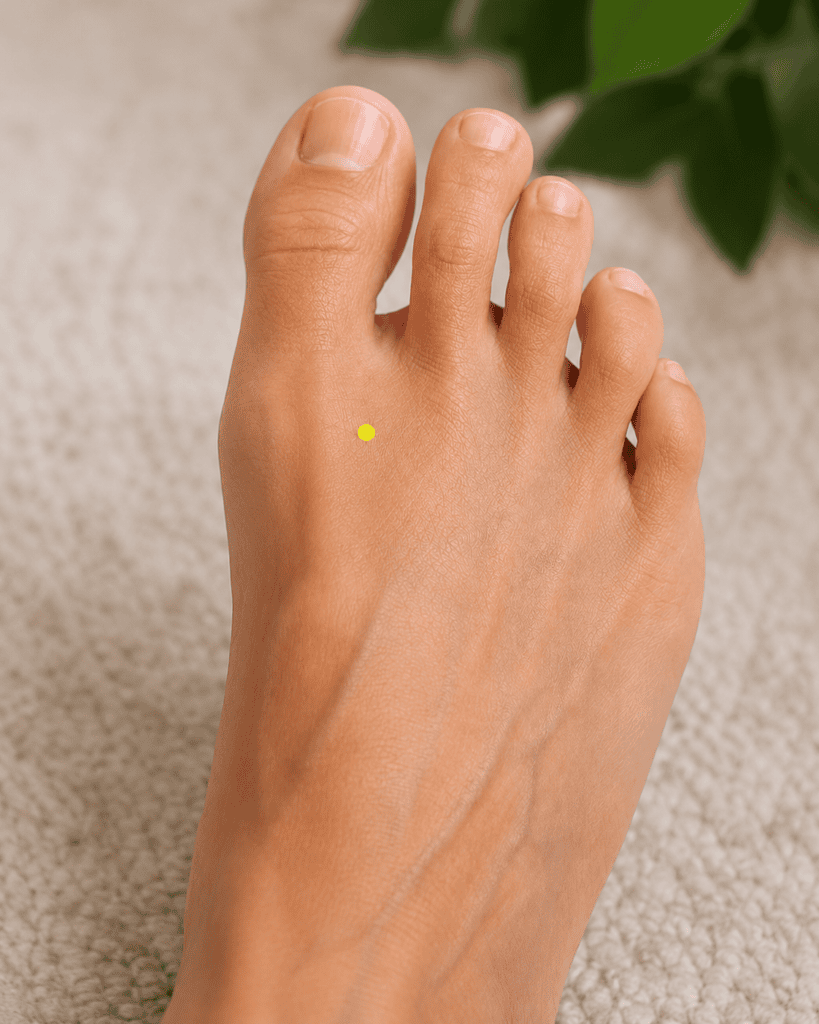
9. Press on LR3 on the top of the foot to settle heat and stress. LR3 sits on the top of the foot, in the webbing between the big toe and second toe, about two finger-widths back where the bones meet in a small hollow. Press firmly with the thumb for one to two minutes on each foot. LR3 is called “Taichong,” the primary point for the Liver.
If your night sweats come with stress, irritability, or feeling hot and tense, it may indicate Liver involvement. LR3 helps soothe the Liver, reduce stress and irritability, and decrease the internal heat that rises at night. Additionally, it grounds the overall system. For those whose night sweats worsen with stress or are linked to tension and irritability, this point can promote calmness and support more restful sleep.
Why These Acupressure Points Work
In Traditional Chinese Medicine, night sweats are viewed as a symptom of Yin deficiency combined with empty heat. This indicates that the body’s cooling energy is depleted, causing heat to rise at night and resulting in sweating. Typically, the Kidney, which stores Yin, and the Heart which governs sweat and spirit, are involved. The nine points listed above target all aspects of this pattern.
- The sweat-regulating points (HT6, KI7) directly settle night sweats; these two classic points are paired for exactly this.
- The Yin-nourishing and cooling points (KI3, KI6, SP6) rebuild the cooling reserves and clear the empty heat behind the sweats at the root.
- The calming points (HT7, Yintang, Anmian) settle the Heart and mind, ease the anxiety that drives sweating, and support the sleep the sweats disrupt.
- The Liver point (LR3) settles the stress and heat that can trigger or worsen night sweats.
The primary goal is to nourish Yin, reduce heat, and soothe the body. That’s why regularly stimulating these points in the evening gradually enhances their effects.
How to Properly Use These Acupressure Points
Work through these points in the evening as part of winding down, and again during a night waking if the sweats disturb you.
- Lead with the sweat-specific points, HT6 and KI7, the classic pairing for night sweats, along with KI3 and KI6 to nourish the Yin and cool the heat.
- Add HT7, Yintang, and Anmian in the evening to calm the mind and support settled sleep, and LR3 if stress or irritability is part of your picture.
- Hold each point for one to two minutes with steady pressure, breathing slowly, and make it a consistent bedtime practice, since nourishing the Yin behind night sweats works over time rather than in a single night.
- If you wake drenched, HT6, KI7, and Anmian are good ones to press to help settle and get back to sleep.
Acupressure is most effective when paired with simple measures to reduce night sweats. Keep your room cool, choose light bedding and breathable, natural-fiber sleepwear, and use a fan or open a window if needed. Avoid usual triggers before bed, like alcohol, caffeine, spicy foods, and heavy late meals, as these can raise body heat and cause sweating. Staying hydrated and managing stress are also important, as anxiety can intensify night sweats. Additionally, Chinese medicine suggests consuming cooling, Yin-nourishing foods instead of hot, spicy, or greasy dishes, especially if you experience empty heat.
When to Get Professional Help
Pay attention to night sweats, as they can be harmless or signal health issues. Many cases stem from menopause, a warm room, stress, or a short illness. However, if night sweats are frequent, very heavy, persistent, unexplained, or recently appeared, consult a doctor. Seek immediate medical care if you experience unexplained weight loss, fevers, swollen glands, a persistent cough, or feel generally unwell, as these symptoms require evaluation. If night sweats occur with other symptoms or after starting a new medication, discuss them with your healthcare provider. Menopausal night sweats are common and treatable, so mentioning them to your doctor can be helpful.
Acupressure can help ease night sweats and improve sleep, but it is not a substitute for identifying the cause if your symptoms are persistent, unexplained, or accompanied by other health issues.
Above and Beyond Acupuncture offers acupuncture, cupping, and lifestyle coaching at the North Frank Lloyd Wright Boulevard location in Scottsdale.
Schedule an appointment online to start your healing journey.
The points above are only as effective as the technique used to apply them. Where to press, how firmly, and for how long all affect the result. For a full breakdown of how to perform acupressure properly at home, read Performing Acupressure in 3 Easy Steps.
About the Publisher
Paul Kerzner, L.Ac., is a licensed acupuncturist and board-certified herbalist, as well as the founder of Above and Beyond Acupuncture in Scottsdale. His own journey from chronic patient to practicing acupuncturist shapes his commitment to providing honest, clinically grounded information about acupuncture and Traditional Chinese Medicine. Learn more about Paul and his clinical approach on the About Us page.