Key Takeaways
- Low self-esteem impacts how people view themselves and behave, highlighting the importance of cultivating self-acceptance and forming genuine relationships.
- Acupressure may reduce anxiety, improve mood, and boost self-esteem by stimulating points such as GV20, HT7, and Yintang.
- The recommended acupressure points help soothe the mind, restore inner strength, and foster self-compassion, thereby addressing emotional challenges.
- Building self-esteem involves regular practice, self-care, supportive relationships, and seeking professional help when necessary.
- Acupressure can be a helpful addition, but for more profound self-esteem problems, it’s important to also consider other approaches such as therapy.
Low self-esteem significantly affects our self-perception, interactions with others, and behavior.
That harsh inner critic, feelings of inadequacy, holding back, and difficulty trusting yourself can be challenging and affect every part of life. Building self-esteem takes patience, experience, self-kindness, meaningful connections, and genuine inner effort; acupressure alone isn’t enough. It can help calm anxious thoughts, lift your mood, and help you feel grounded and centered. Here are some gentle, caring tips to aid you on this path.
In Traditional Chinese Medicine, the concept of self is viewed through various systems. The Heart is said to house the Shen, which represents the mind and spirit and forms the essence of your identity. When the Shen is restless, it can lead to feelings of anxiety, confusion, or self-doubt. The Kidney is believed to contain Zhi, reflecting your willpower and inner resilience. A depletion of Zhi can cause confidence and self-trust to decline. Low self-esteem often manifests as a sense that your energy and spirit are being drained, with the mind trapped in self-criticism. The following points are designed to soothe the Shen, quiet the inner critic, elevate your spirit, restore inner strength, and help you feel more balanced and centered.
Because a harsh inner critic is so much of what destroys self-esteem, being less hard on yourself is worth reading alongside this article, and the anxiety, stress, and depression that so often are associated with low self-worth respond well to additional treatment.
Here are nine acupressure points that can help:
What Acupressure Points to Press and Why
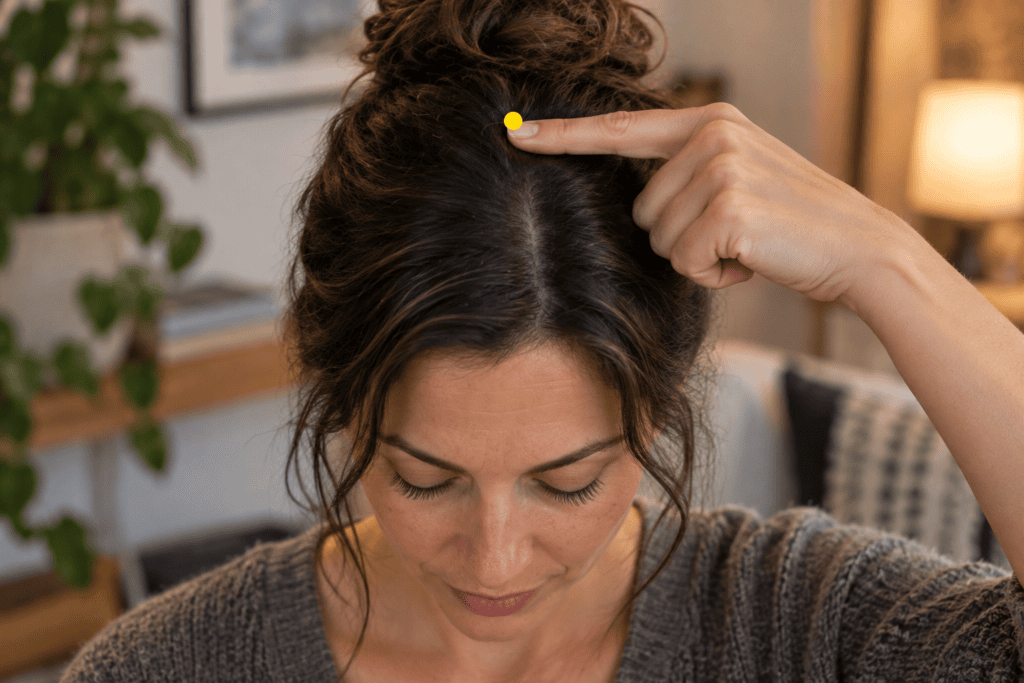
1. Press on GV20 at the top of the head to lift the spirit. GV20 sits at the very top of the head, on the midline, on a line drawn up from the tops of both ears. Press straight down, or make small circles, with your fingertip for one to two minutes. GV20 is called “Baihui,” the “Hundred Meetings,” where many channels converge at the crown.
GV20 is considered the body’s primary lifting point. It boosts self-esteem by countering feelings of being sunken or shrinking from low self-worth, elevating your energy and spirit. This point can improve your mood, clear your mind, and help you feel more upright and present. If you feel small or diminished, start here. Press it gently while sitting or standing taller to start your routine on a positive note.
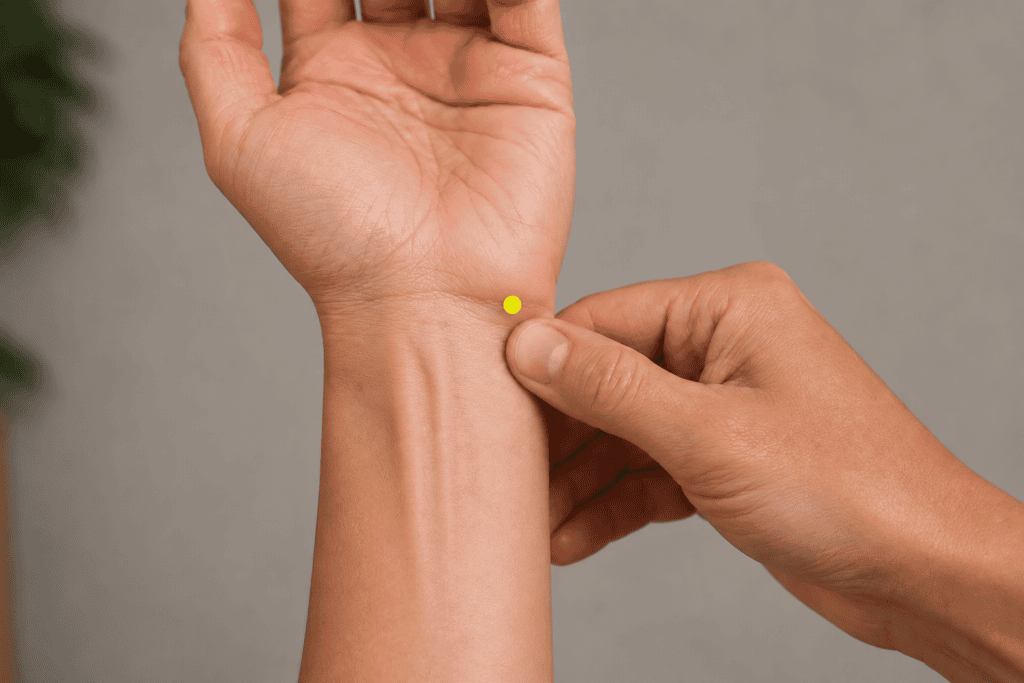
2. Press on HT7 at the wrist to steady the sense of self. HT7 sits on the inner wrist crease, on the pinky side, in the small hollow just inside the tendon. Press firmly with your thumb for one to two minutes on each wrist. HT7 is called “Shenmen,” the “Spirit Gate,” and it is the source point of the Heart and the most important point for the Shen.
Because the Heart is believed to contain the Shen, or your core self, HT7 helps stabilize your sense of identity. Known as the Spirit Gate, it calms anxiety or restlessness linked to low self-esteem and promotes grounding and security. Additionally, it can alleviate anxiety and sleep issues often linked to low self-worth. Whenever you feel unbalanced or insecure, this point is gentle and accessible for restoring your sense of centeredness.
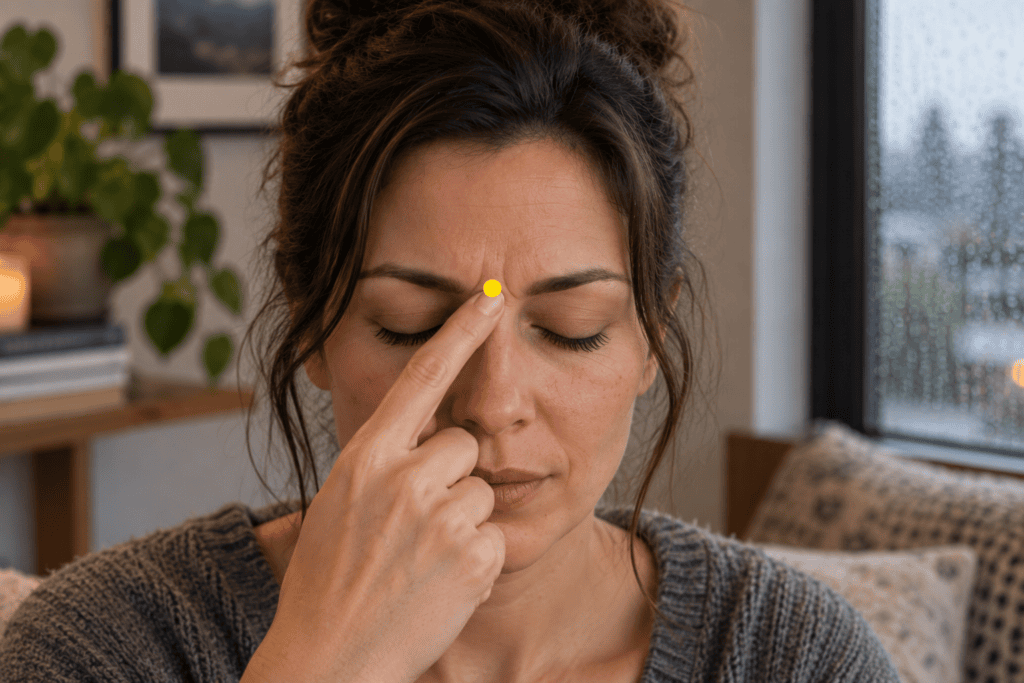
3. Press on Yintang between the eyebrows to quiet the inner critic. Yintang sits in the small hollow directly between the two eyebrows. Press steadily and hold, or make small, slow circles with your fingertip for one to two minutes. Yintang is an extra point and one of the most calming points in the body.
The harsh inner critic and persistent thoughts of inadequacy are among the most challenging aspects of low self-esteem. Yintang calms the mind and reduces those critical, anxious feelings. It relaxes the nervous system and provides a break from self-judgment, creating space and calm. If your low self-worth is linked to a harsh inner voice, this point can help ease it. Gently pressing it while breathing deeply offers a soft way to step back from self-criticism. A calmer mind makes it easier to be compassionate toward yourself.
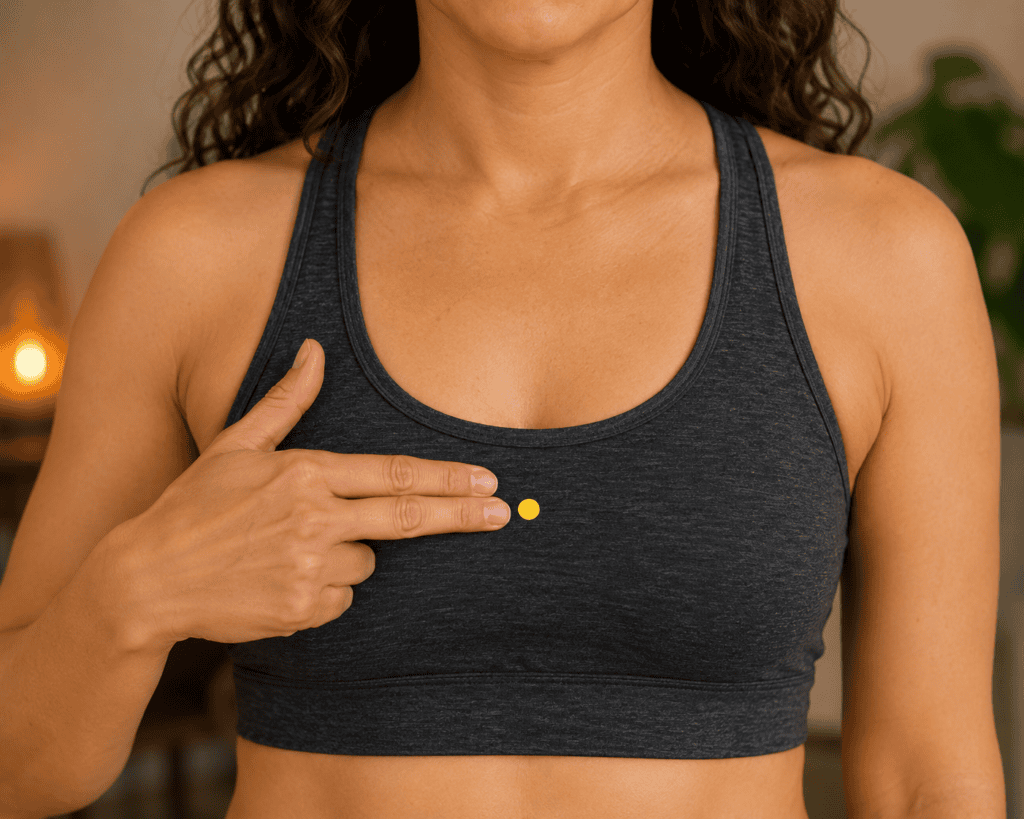
4. Press on CV17 at the center of the chest to open to self-compassion. CV17 sits on the midline of the breastbone, level with the space between the nipples, in the center of the chest. Press gently and steadily with your fingertip for one to two minutes, breathing slowly. CV17 is called “Shanzhong,” the gathering point of Qi in the chest and the body’s emotional center.
CV17 helps open the chest and heart area, alleviating the tight or heavy sensation often linked to low self-esteem. It creates space for warmth and self-compassion and helps to soften feelings of unworthiness. If you’re usually hard on yourself, this point can gently encourage a more kindness-filled relationship with yourself. Apply gentle pressure while taking deep breaths, possibly resting your hand over your heart, to experience a calming, nourishing effect.
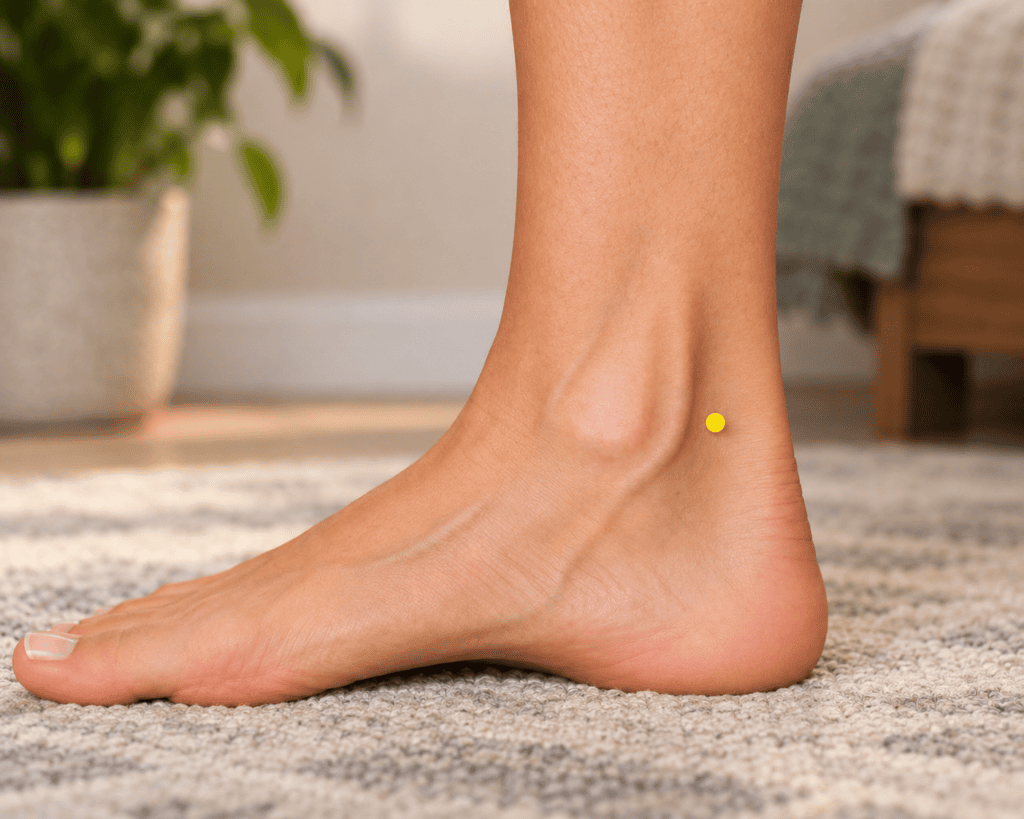
5. Press on KI3 above the inner ankle to rebuild the core sense of self. KI3 sits in the hollow between the inner ankle bone and the Achilles tendon, level with the tip of the ankle bone. Press firmly with your thumb for one to two minutes on each ankle. KI3 is called “Taixi,” the Kidney’s source point.
In Traditional Chinese Medicine, the Kidney is believed to store the Zhi, representing your will and inner strength. KI3, the primary point for the Kidney, helps restore this vital foundation. It bolsters your deep reserves, fostering confidence and a stable sense of self, addressing the roots of self-esteem. When feelings of low self-worth are persistent and profound, this point can help rebuild your core, grounding fears and insecurities. It is a crucial point for nurturing internal self-esteem.
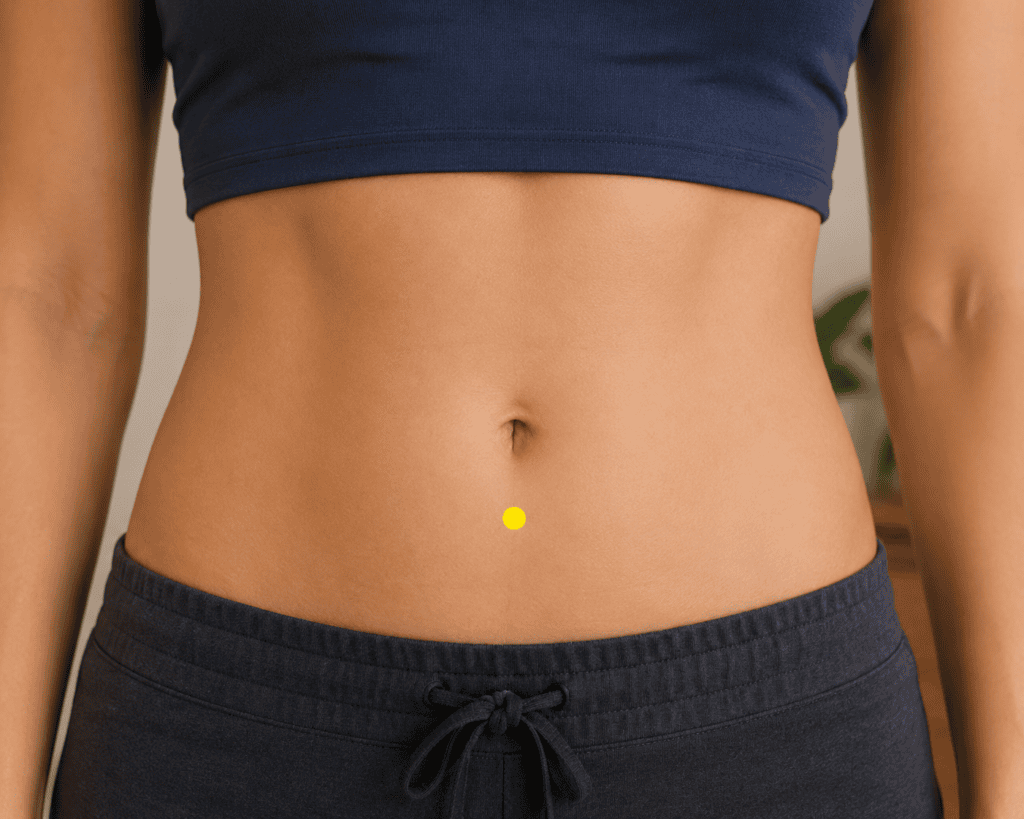
6. Press on CV6 below the navel to build inner strength from the center. CV6 sits on the midline of the lower abdomen, about two finger-widths below the navel. Rest your fingertips or palm there and press gently for one to two minutes. CV6 is called “Qihai,” the “Sea of Qi,” the gathering point of the body’s Qi in the lower abdomen.
CV6 is located at the body’s center of gravity and energy, where a grounded, confident individual feels rooted. It helps develop core energy and inner resilience, maintaining a stable self-perception. This point can boost your sense of solidity and strength at your core, essential for confidence. If you feel weak, empty, or disconnected, pressing this point and resting a warm hand there while breathing slowly can promote stability and centeredness.
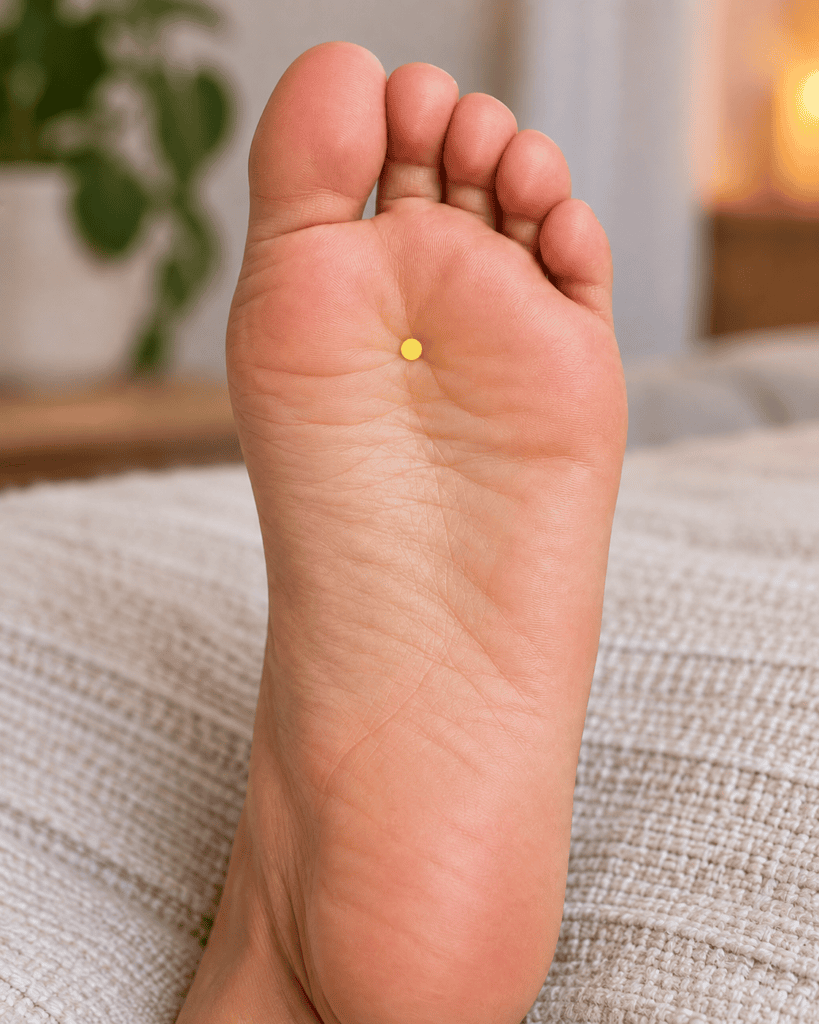
7. Press on KI1 on the sole of the foot to ground the sense of self. KI1 sits on the sole of the foot, in the hollow that forms in the center of the ball of the foot when you curl the toes, about a third of the way down from the toes to the heel. Press firmly with your thumb for one to two minutes on each foot. KI1 is called “Yongquan,” the “Bubbling Spring,” and it is the lowest point on the body.
KI1 offers grounding by channeling anxious energy downward and anchoring your entire being, creating a firm base when feelings of insecurity emerge. Positioned at the lowest part of the body and at the start of the Kidney channel, it is connected to your deep self-awareness and helps steady you if you’re feeling unbalanced. For anyone feeling ungrounded, stimulating this point while standing firmly with your feet on the ground can boost your sense of stability.
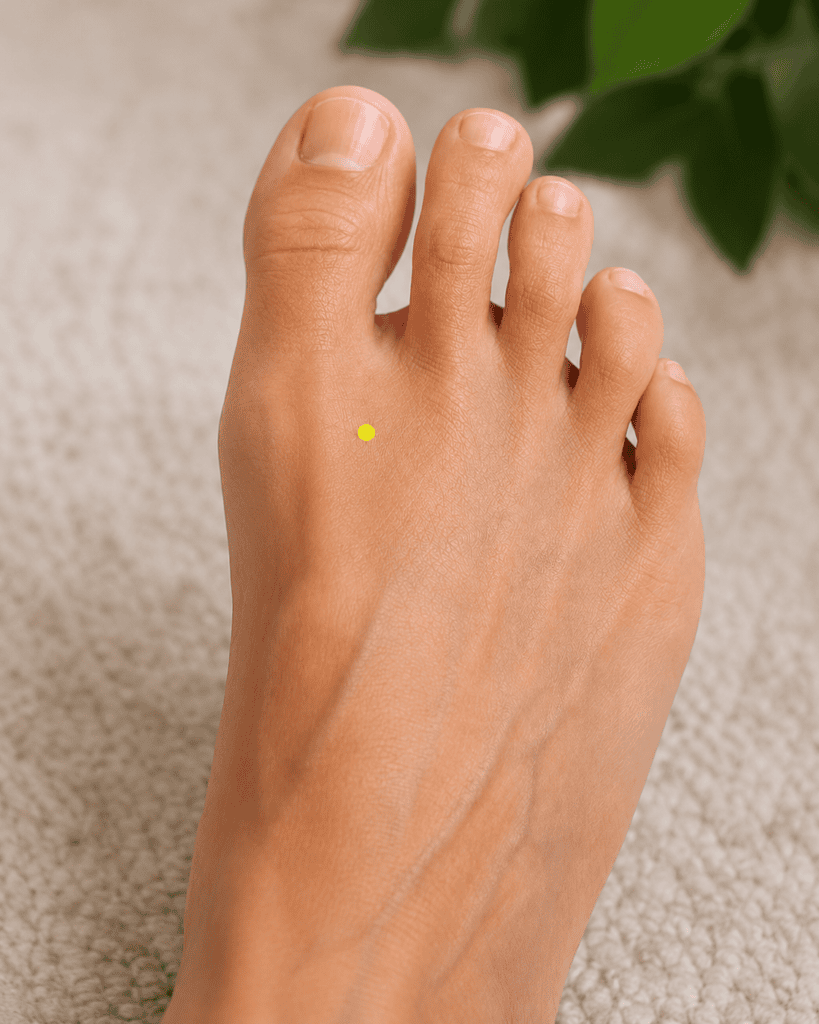
8. Press on LR3 on the top of the foot to relieve the held-down feeling. LR3 sits on the top of the foot, in the webbing between the big toe and second toe, about two finger-widths back where the bones meet in a small hollow. Press firmly with the thumb for one to two minutes on each foot. LR3 is called “Taichong,” and it is the primary point for moving stuck Liver Qi.
Low self-esteem can make you feel stuck or hinder your progress, which Chinese medicine links to Liver Qi stagnation. The point LR3 helps to disperse this stagnation, encouraging energy flow to support movement forward. It also reduces frustration and irritability related to low self-worth by grounding your energy and directing it downward toward your feet. If you feel held back, this point can help to liberate and stabilize you.
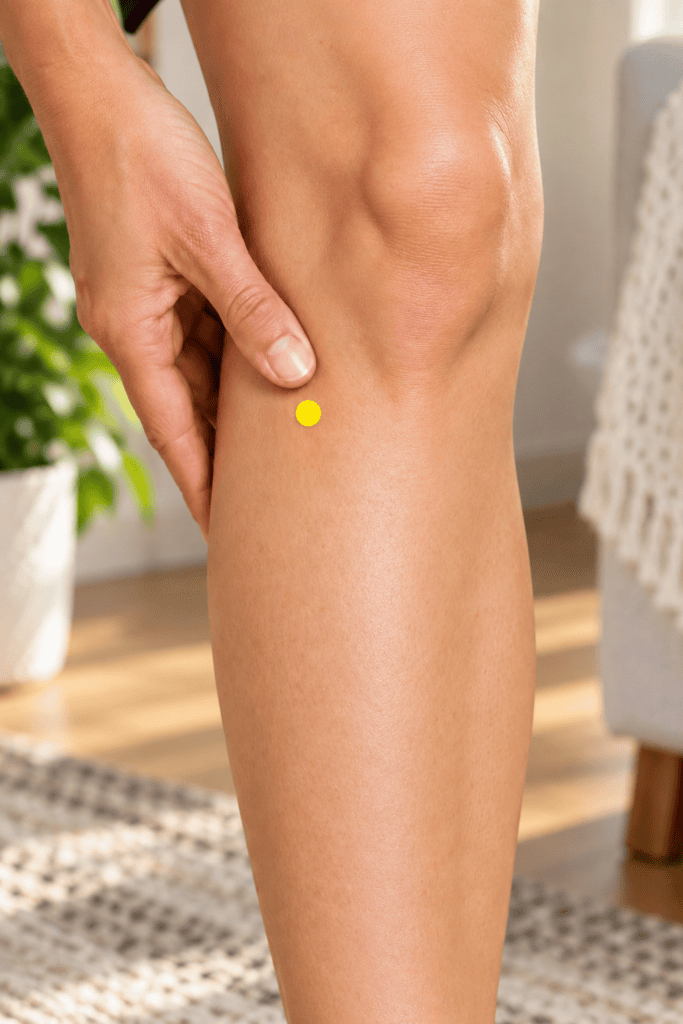
9. Press on ST36 below the knee to build resilience and steadiness. ST36 sits four finger-widths below the lower edge of the kneecap and one finger-width to the outside of the shinbone, on the muscle that rises when you flex your foot. Press firmly with your thumb for one to two minutes on each leg. ST36 is called “Zusanli,” the “Leg Three Miles,” and it is the master point for energy and resilience.
ST36 promotes your body’s energy and vitality, helping you feel more confident and stable. When you feel strong and healthy, it’s easier to maintain a positive self-image. This point boosts your entire system, fosters emotional stability, and provides deep grounding. If low self-esteem also brings fatigue or weakness, ST36 can help replenish your energy and resilience, completing your routine with comprehensive body support.
Why These Acupressure Points Work
In Traditional Chinese Medicine, the sense of self is centered on the Heart, which contains the Shen, and the Kidney, which embodies the will and the core of identity. Low self-esteem appears as an unsettled or dimmed Shen, a weakened Kidney, a spirit that feels sunken and shrinking, and a harsh, critical mind. The nine points collectively illustrate this whole picture.
- The lifting point (GV20) helps elevate the sunken, shrinking spirit, encouraging a more upright and present feeling.
- The Shen and mind points (HT7, Yintang, CV17) stabilize the sense of self, quiet the inner critic, and foster self-compassion.
- The core and grounding points (KI3, CV6, KI1) reinforce a strong sense of self and inner resilience, stabilizing an uncertain sense of identity.
- The points LR3 and ST36, which promote liberation and strengthening, release stored feelings and enhance resilience, providing a foundation for steadiness.
These points support your inner well-being but do not directly create self-esteem. Self-esteem grows through experience, self-compassion, and authentic inner effort. Acupressure provides a gentle, supportive touch on this path, helping you feel calmer, more stable, and grounded as your sense of self-worth increases.
How to Properly Use These Acupressure Points
Try applying these points regularly with gentle pressure, viewing the act as a form of self-care.
- Start with GV20 to elevate the spirit, then use HT7 and Yintang to calm the mind and soothe the inner critic. Finish with CV17, pressing gently and compassionately to foster self-understanding.
- Use KI3, CV6, and KI1 to strengthen and stabilize your core identity, and LR3 and ST36 to release trapped emotions and increase resilience. Practice these regularly as they have cumulative benefits.
- Hold each point for one to two minutes, breathing slowly. You can also include a kind intention or gentle affirmation, as the calmness these points cultivate makes it an ideal moment for it.
- Make it a regular practice instead of an occasional habit, as consistently supporting a stronger sense of self develops over time.
Acupressure provides a solid foundation, but cultivating self-esteem is an ongoing process. Be patient and gentle with yourself, speaking kindly as you would to someone you care about. Identify and challenge negative thoughts, take small steps to build your confidence, and care for your body with enough sleep, exercise, and nutrition. Maintain connections with supportive individuals. If low self-esteem continues, consulting a therapist can help, and adding acupressure to your routine can offer extra support.
When to Reach Out for Support
Everyone goes through periods of low self-worth, and these tools aim to support you through daily challenges. Sometimes low self-esteem runs deeper and requires additional help. If persistent feelings of low self-worth impact your life or are connected to past trauma or difficult experiences, seeking help from a therapist or counselor can be very beneficial.
Anxiety, stress, and depression are often linked to low self-esteem, are common but treatable, and talk therapies can foster a more positive relationship with yourself.
If you ever have thoughts of harming yourself or feel you would be better off gone, please contact the 988 Suicide and Crisis Lifeline anytime. You deserve support and care.
Acupressure can provide support, but it cannot replace the support needed for more serious issues.
Want to Go a Little Deeper?
Acupressure can help support self-esteem, but changing how you talk to and think about yourself matters just as much. If you struggle with self-criticism, perfectionism, or feeling like you’re never good enough, check out our article “Stop Being So Hard on Yourself!” for practical tips on building a kinder, healthier relationship with yourself.
Above and Beyond Acupuncture offers acupuncture, cupping, and lifestyle coaching at the North Frank Lloyd Wright Boulevard location in Scottsdale.
Schedule an appointment online to start your healing journey.
The points above are only as effective as the technique used to apply them. Where to press, how firmly, and for how long all affect the result. For a full breakdown of how to perform acupressure properly at home, read Performing Acupressure in 3 Easy Steps.

About the Publisher
Paul Kerzner, L.Ac., is a licensed acupuncturist and board-certified herbalist, as well as the founder of Above and Beyond Acupuncture in Scottsdale. His own journey from chronic patient to practicing acupuncturist shapes his commitment to providing honest, clinically grounded information about acupuncture and Traditional Chinese Medicine. Learn more about Paul and his clinical approach on the About Us page.