Key Takeaways
- Dizziness may result from several causes, including low blood pressure, anxiety, and inner-ear problems.
- Acupressure reduces dizziness by targeting specific points to stabilize the head and support Qi and Blood flow.
- The article details nine acupressure points, such as GV20, GB20, and ST36, each offering specific relief for dizziness.
- To use acupressure effectively, apply pressure to each point for one to two minutes while seated or in a reclining position, concentrating on your breathing.
- Consult a healthcare professional if you experience severe or ongoing dizziness that interferes with your daily activities, to exclude serious health problems.

Dizziness is a strange, unsettling feeling that can manifest in many ways.
You might feel lightheaded or faint when you stand up too quickly, feel unsteady and off balance, or experience a heavy, foggy sensation in your head. Sometimes it feels like you might tip over. Dizziness is a very common problem and can be caused by low blood pressure, dehydration, low blood sugar, anxiety, fatigue, inner-ear issues, and more. Acupressure can help steady your head, ease wooziness, and calm your system using your own hands.
Here’s a quick safety reminder: because dizziness can impair your balance and might occur suddenly, it’s safest to press these points while seated or lying down. If you feel faint or unsteady, avoid standing up quickly; take your time getting up.
Traditional Chinese Medicine identifies multiple patterns behind dizziness. A common cause is deficiency of Qi and Blood, which leads to inadequate nourishment of the head and results in lightheadedness or faintness, especially when tired or standing. Stress can cause Liver yang to rise, triggering dizziness, tension, and irritability. Phlegm and dampness build up in the head, creating a heavy, foggy sensation. Reduced Kidney energy may also cause persistent dizziness, especially with age. In each case, the head either lacks sufficient clear Qi or is affected by rising or clouding factors. The following points aim to strengthen and nourish clear Qi, reduce disturbances, clear fog, and restore overall stability.
Here are nine acupressure points to help reduce dizziness:
What Acupressure Points to Press and Why
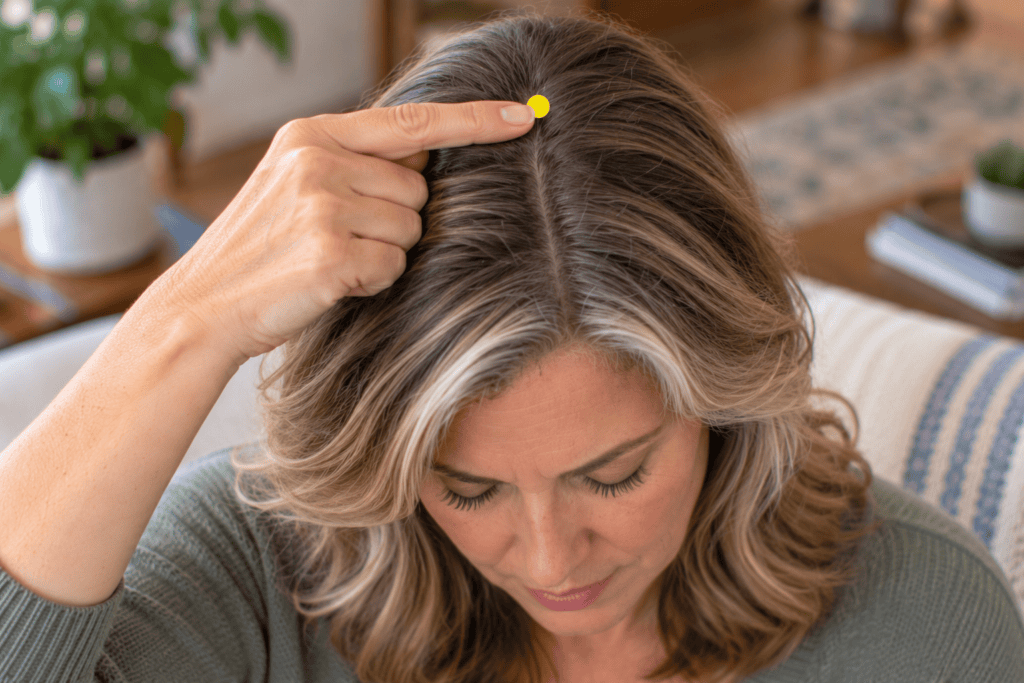
1. Press on GV20 at the top of the head to steady and clear the head. GV20 sits at the very top of the head, on the midline, on a line drawn up from the tops of both ears. Press straight down, or make small circles, with your fingertip for one to two minutes. GV20 is called “Baihui,” the “Hundred Meetings,” where many channels converge at the crown.
GV20 is one of the most important acupressure points for almost all types of dizziness. It helps clear the head and, most importantly, raises clear Qi upward to nourish and stabilize the head, especially useful for deficiency, lightheadedness, and faintness. It reduces wooziness, unsteadiness, and mental fog, brightening a dull head. Located at the crown where many meridians meet, it influences the head from above. During dizziness, press GV20 first while sitting, as its lifting and clearing action addresses the most common underlying cause.
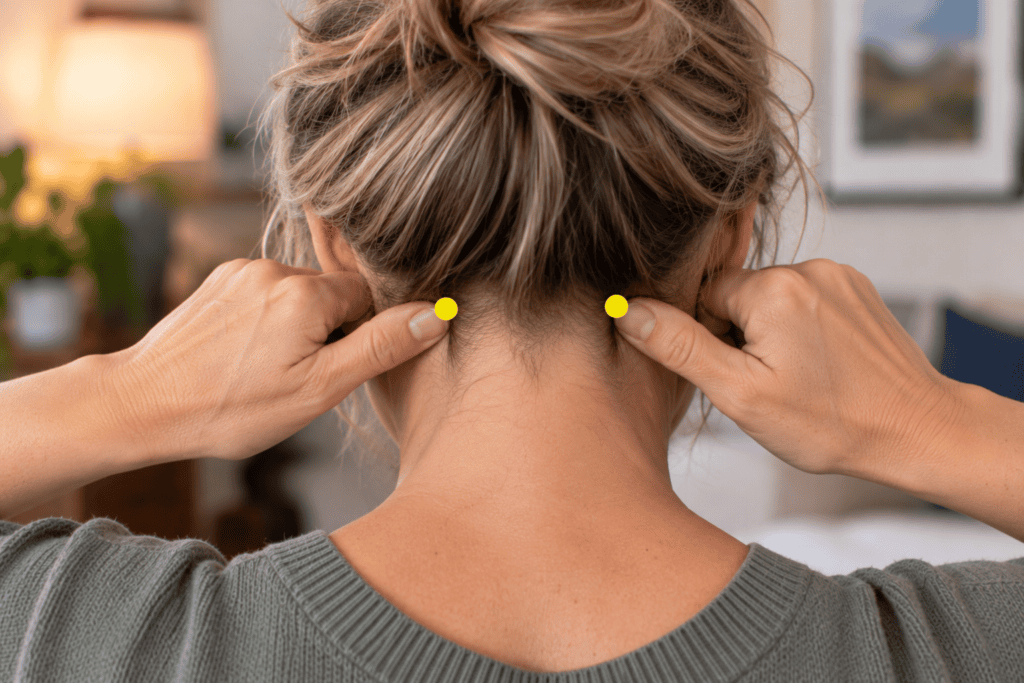
2. Press on GB20 at the base of the skull to ease the dizziness. GB20 sits in the two hollows at the base of the skull, between the two large vertical neck muscles and the outer edge, roughly level with the tops of the ears. Tip your head back slightly and press firmly up and inward with your thumbs for one to two minutes. GB20 is called “Fengchi,” and it is a major point for dizziness and the head.
GB20 is a primary point for dizziness, targeting the head and the area near the inner ear involved in balance. It clears the mind, relieves dizziness and associated headaches, and reduces rising yang that disturbs the head. Located at the junction of the neck and skull, it also eases neck tension that may worsen dizziness. This point helps address feelings of wooziness and unsteadiness, especially when linked to a tense neck or headache. Often combined with GV20, it stabilizes the head from both the top and the base.
3. Press on Yintang between the eyebrows to calm and settle. Yintang sits in the small hollow directly between the two eyebrows. Press steadily and hold, or make small, slow circles with your fingertip for one to two minutes. Yintang is an extra point and one of the most calming points in the body.
Yintang soothes the Shen and calms the entire nervous system, which matters for dizziness in two ways: it steadies the disoriented, anxious sensation that dizziness causes, and it directly relieves dizziness commonly caused by anxiety and stress. When the system is overactive, dizziness and lightheadedness often occur, and calming it brings relief from both. For the kind of shaky, anxious, and detached feeling associated with anxiety and stress, and for dizziness caused by stress, this point produces a calming, steadying effect, and it is genuinely reassuring to press it slowly while sitting with the breath.

4. Press on ST36 below the knee to rebuild the Qi and Blood. ST36 sits four finger-widths below the lower edge of the kneecap and one finger-width to the outside of the shinbone, on the muscle that rises when you flex your foot. Press firmly with your thumb for one to two minutes on each leg. ST36 is called “Zusanli,” the “Leg Three Miles,” and it is the master point for building Qi and Blood.
Dizziness commonly results from a deficiency of Qi and Blood, which leads to inadequate nourishment of the head. The acupuncture point ST36, known for strengthening both Qi and Blood, directly addresses this issue. It strengthens the Spleen and Stomach, which produce the body’s Qi and Blood, thereby alleviating lightheadedness and faintness caused by insufficient Qi and Blood reaching the head. Additionally, ST36 provides grounding and stability. When dizziness is paired with fatigue, weakness, or occurs upon standing, this point helps restore a solid foundation and, with consistent use, targets the root cause of recurrent lightheadedness.

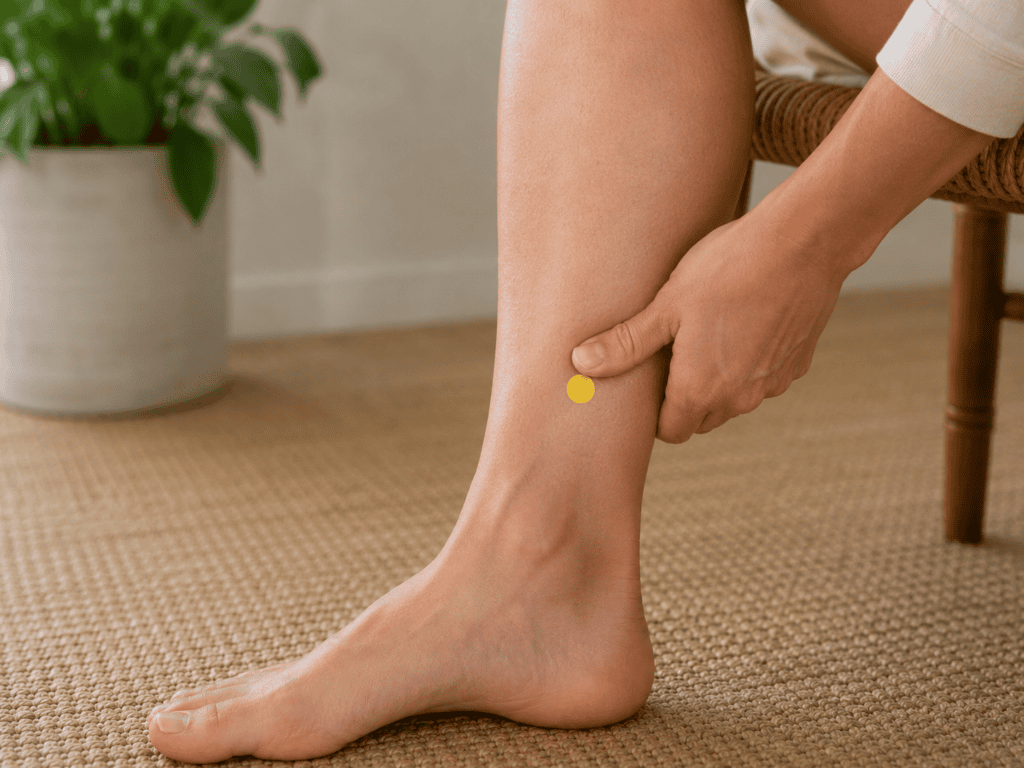
5. Press on SP6 above the inner ankle to nourish the Blood. SP6 sits four finger-widths up from the tip of the inner ankle bone, just behind the back edge of the shinbone. Press firmly for one to two minutes on each leg. SP6 is called “Sanyinjiao,” the “Three Yin Intersection,” where the Spleen, Liver, and Kidney channels meet. SP6 is avoided during pregnancy.
SP6 is a vital acupressure point that nourishes Blood, often linked to dizziness marked by pallor and lightheadedness that worsens with activity. It connects the three channels and boosts the Spleen, which produces Blood, supporting the whole system by targeting the root of dizziness. When dizziness results from weakness, depletion, or Blood deficiency, this point helps replenish what’s lacking and works with ST36 to nourish both Qi and Blood. The same pregnancy warning applies.
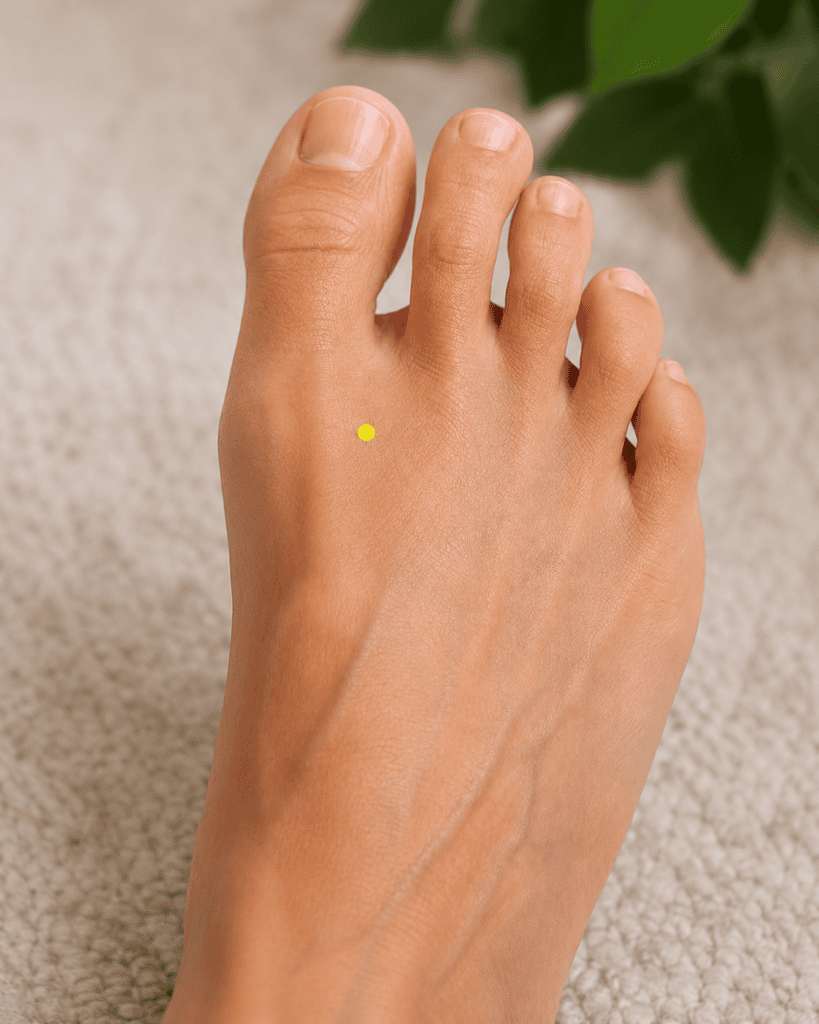
6. Press on LR3 on the top of the foot to bring down rising yang. LR3 sits on the top of the foot, in the webbing between the big toe and second toe, about two finger-widths back where the bones meet in a small hollow. Press firmly with the thumb for one to two minutes on each foot. LR3 is called “Taichong,” the primary point for the Liver.
When dizziness occurs alongside stress, tension, headaches, or a flushed, excited sensation, Chinese medicine sees it as Liver yang rising and disturbing the head. LR3 is used to calm this rise by suppressing yang, calming the Liver, and directing energy downward toward the feet rather than the head. For those whose dizziness worsens under stress or is linked to high blood pressure and tension, this point addresses that pattern, helping to ground and stabilize an overactive, top-heavy system.
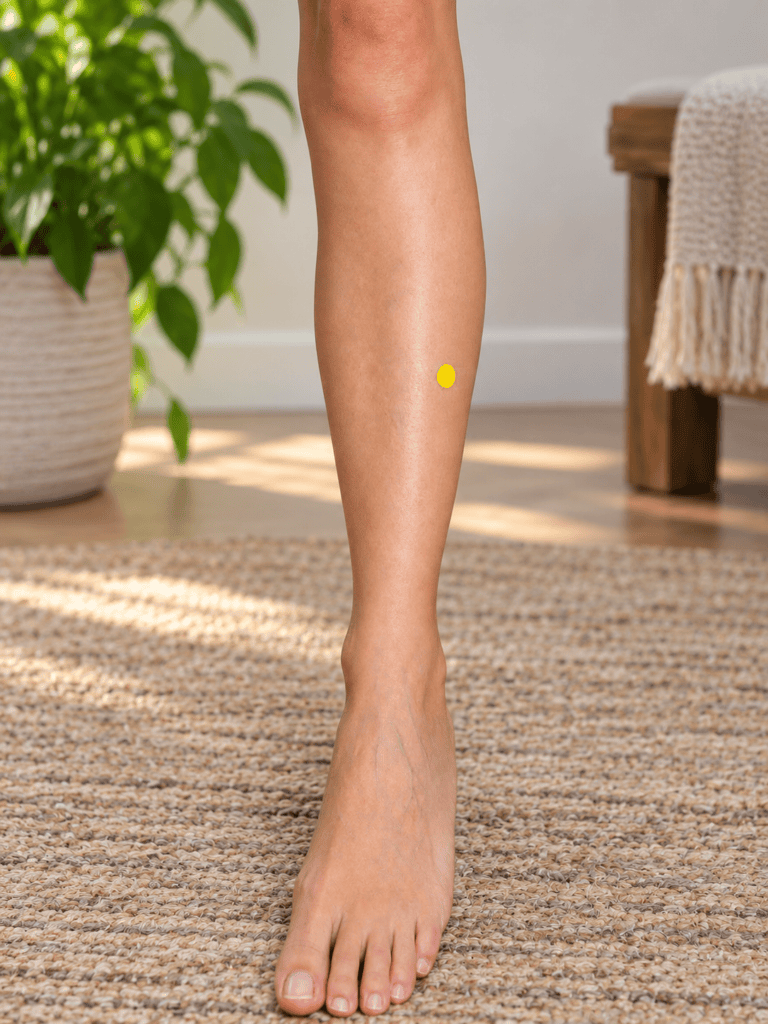
7. Press on ST40 on the lower leg to clear the foggy dizziness. ST40 sits on the outer lower leg, midway between the knee and the outer ankle bone, about two finger-widths outside the shinbone, on the muscle. Press firmly with your thumb for one to two minutes on each leg. ST40 is called “Fenglong,” and it is the body’s main point for clearing phlegm.
If dizziness feels heavy, hazy, and foggy, with a sensation of a thick, cloudy head rather than a light, faint one, Traditional Chinese Medicine interprets this as phlegm and dampness clouding the head. ST40 is the primary point used to eliminate these. It helps clear the phlegm and dampness that cloud the head and disrupt balance, alleviating a heavy, waterlogged feeling of dizziness. For those experiencing foggy, muddy heaviness often accompanied by a full or cloudy head, this point specifically targets that cause. It works best when combined with GV20 and GB20 to clear the head.
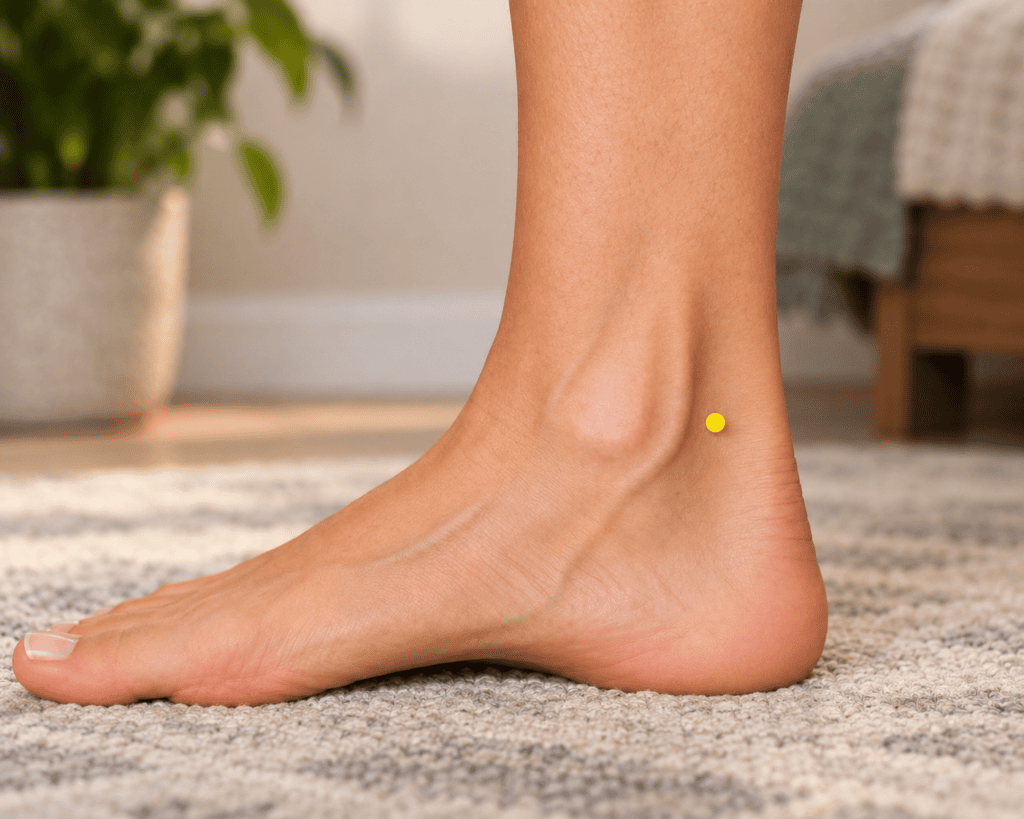
8. Press on KI3 above the inner ankle for chronic dizziness. KI3 sits in the hollow between the inner ankle bone and the Achilles tendon, level with the tip of the ankle bone. Press firmly with your thumb for one to two minutes on each ankle. KI3 is called “Taixi,” the Kidney’s source point.
In Traditional Chinese Medicine, persistent dizziness, especially when associated with aging or a weakened condition, often signals Kidney deficiency. The Kidney source point KI3 helps rebuild this essential foundation. It strengthens the deep reserves that maintain stability in the head and the entire body, addressing the root cause of long-term dizziness from constitutional deficiency. For individuals experiencing chronic dizziness from depleted reserves, this point works at a core level, helping stabilize the body alongside other points.
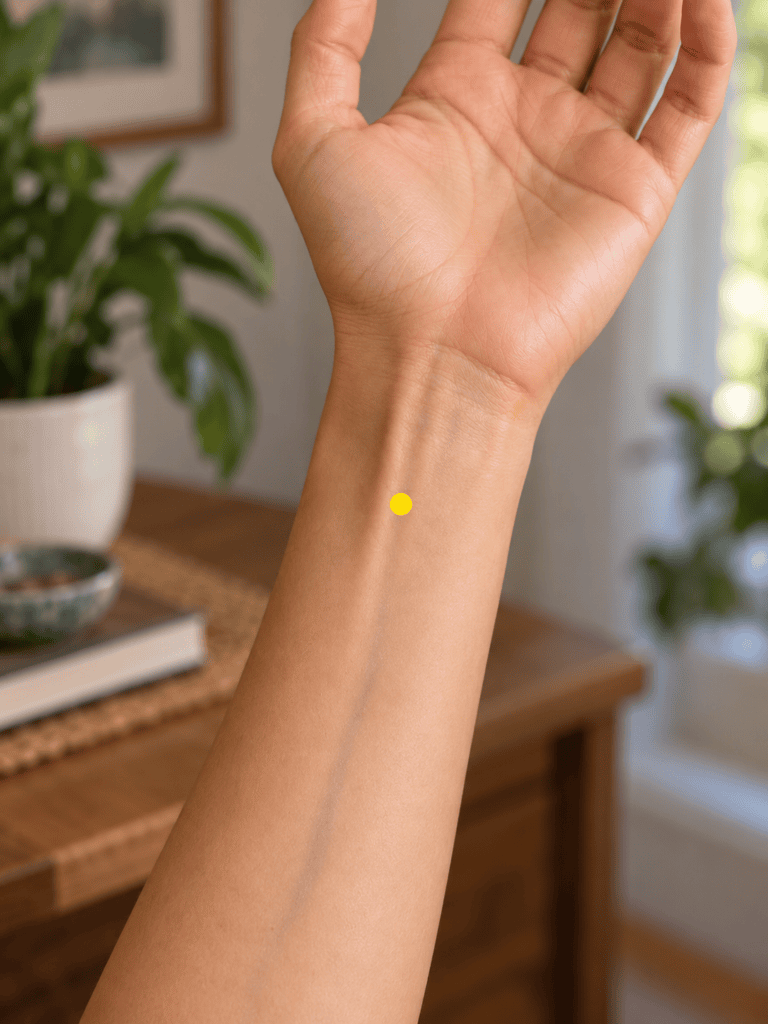
9. Press on PC6 on the inner forearm for queasy, anxious dizziness. PC6 sits three finger-widths above the inner wrist crease, in the center of the forearm between the two tendons. Press firmly with your thumb for one to two minutes on each arm. PC6 is called “Neiguan,” the “Inner Pass,” and it settles nausea and calms the mind.
Dizziness often comes with a queasy stomach and feelings of unease, and it is frequently linked to anxiety. PC6 effectively addresses both issues by simultaneously alleviating nausea and soothing the nervous system. It targets the uncomfortable, swirling sensation in the stomach commonly associated with dizziness and also reduces anxiety, which not only causes dizziness but can intensify it. For individuals experiencing dizziness alongside nausea or with a nervous, panic-prone disposition, this acupressure point helps to resolve both problems. Located on the forearm, it is easy to press while sitting. The treatment routine addresses both stomach discomfort and the nerves, which are often connected to dizziness.
Why These Acupressure Points Work
In Traditional Chinese Medicine, dizziness occurs when the head lacks sufficient nourishment and stability. This can result from a deficiency of Qi and Blood, excess Liver Yang, phlegm affecting the head, or weakened Kidney function. The nine points aim to address all these factors.
- The head points (GV20, GB20, Yintang) clear and steady the head, lift the clear Qi that nourishes it, and calm disorientation.
- The nourishing points (ST36, SP6, KI3) rebuild Qi and Blood and replenish the deep Kidney reserves underlying deficient, chronic dizziness.
- The descending and clearing points (LR3, ST40) bring down the rising yang and clear the phlegm-fog that disturbs the head.
- The settling point (PC6) calms queasiness and the anxiety that so often accompanies dizziness.
The common theme is effectively nurturing and stabilizing an unbalanced head, which is why both lifting and nourishing points are as important as the calming ones.
How to Properly Use These Acupressure Points
Use these points while sitting or lying down, and select the ones suitable for your type of dizziness.
- For any kind of dizziness, begin with GV20 and GB20 to steady and clear your head, and use Yintang to help calm yourself.
- Add ST36 and SP6 if dizziness occurs with fatigue, weakness, or when standing. Use LR3 for stress and tension, ST40 for heavy or foggy dizziness, KI3 for persistent or age-related dizziness, and PC6 for nausea or anxiety.
- Press each point for one to two minutes with steady pressure while breathing slowly. Stay seated or lying down until the dizziness passes, then get up slowly.
- Between episodes, using the nourishing and pattern points regularly may help reduce how often dizziness returns, especially for ongoing or deficiency-related dizziness.
Acupressure may help reduce symptoms, and simple measures can also be effective. Stay well hydrated, as dehydration is a common and easily corrected cause of dizziness. Avoid skipping meals since low blood sugar can cause dizziness. When transitioning from sitting or lying down, do so slowly rather than quickly, because one common cause of everyday dizziness is a sudden drop in blood pressure. Ensure you get enough rest and manage stress, as anxiety can also contribute to dizziness. During a dizzy spell, sit or lie down until it passes and fix your gaze on a stable point. Because dizziness increases fall risk, be careful when using stairs or rising.
When to Get Professional Help
Most everyday dizziness is harmless and temporary, and acupressure, along with other measures, can help manage it. However, some dizziness requires medical attention, so it’s important to tell them apart. Treat sudden, severe dizziness as an emergency, especially if you have signs like a severe headache, chest pain, an irregular or rapid heartbeat, shortness of breath, fainting, weakness, numbness, speech difficulties, trouble walking, facial drooping, sudden hearing loss, double or blurred vision, or confusion. These could indicate a stroke, heart problem, or other serious condition. Seek medical help for new, recurring, or ongoing dizziness that interferes with daily life, as it might stem from treatable issues like blood pressure problems, medication side effects, inner-ear issues, or anemia. Dizziness linked with fainting or near-fainting also needs medical assessment.
Although acupressure is a safe and effective choice for treating common dizziness, it should not substitute for professional diagnosis if symptoms are severe, sudden, or persistent.
Above and Beyond Acupuncture offers acupuncture, cupping, and lifestyle coaching at the North Frank Lloyd Wright Boulevard location in Scottsdale.
Schedule an appointment online to start your healing journey.
The points above are only as effective as the technique used to apply them. Where to press, how firmly, and for how long all affect the result. For a full breakdown of how to perform acupressure properly at home, read Performing Acupressure in 3 Easy Steps.
For dizziness that is specifically a spinning sensation, where you or the room seems to be spinning, acupressure for vertigo addresses that particular condition more directly.

About the Publisher
Paul Kerzner, L.Ac., is a licensed acupuncturist and board-certified herbalist, as well as the founder of Above and Beyond Acupuncture in Scottsdale. His own journey from chronic patient to practicing acupuncturist shapes his commitment to providing honest, clinically grounded information about acupuncture and Traditional Chinese Medicine. Learn more about Paul and his clinical approach on the About Us page.