Key Takeaways
- Jaw pain can stem from muscle tension due to clenching, grinding, and stress, causing discomfort in the jaw, face, and neck.
- Acupressure is an effective treatment that targets key points such as ST6, ST7, and Taiyang.
- To use acupressure for jaw pain, apply pressure to specific points for one to two minutes, focusing on local jaw points and stress-relief points.
- Managing stress and muscle tension is essential; incorporating gentle movement and relaxation techniques can improve the effectiveness of acupressure.
- If jaw pain continues, worsens, or is accompanied by other serious symptoms, seek professional medical help, as some conditions need prompt attention.
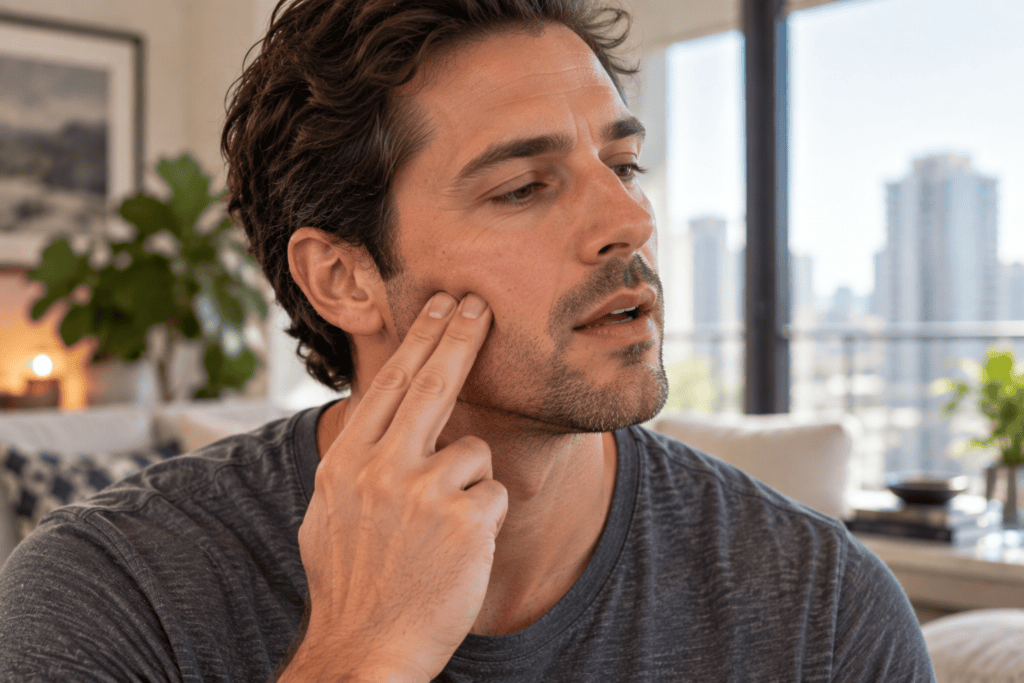
Jaw pain can show up with every bite, word, or yawn.
You may experience jaw ache, tightness, facial tension, stiffness, or clicking when opening your mouth. Deep pain may also radiate to your temple, ear, or neck. Most jaw pain stems from muscle tension from clenching, grinding, stress, or overuse, though it can sometimes originate in the jaw joint. Fortunately, muscle-related jaw pain often responds well to acupressure.
In Traditional Chinese medicine, jaw pain is seen as a blockage of Qi and Blood in the muscles and channels of the jaw and face, called Bi syndrome. Causes include clenching, grinding, stress, overuse, cold, or dampness, which can cause tightness, soreness, and pain. The Stomach channel, passing through the main cheek muscle used for chewing, is especially important, along with nearby channels around the jaw joint and ear. Stress often worsens jaw pain, as many unconsciously clench or grind their teeth, especially at night. The acupressure points listed below support the flow of Qi and Blood, relax tense jaw and face muscles, clear the channels, and reduce stress and clenching that lead to jaw pain.
Here are nine acupressure points that can reduce tension, ease discomfort, and relax a sore jaw.
What Acupressure Points to Press and Why
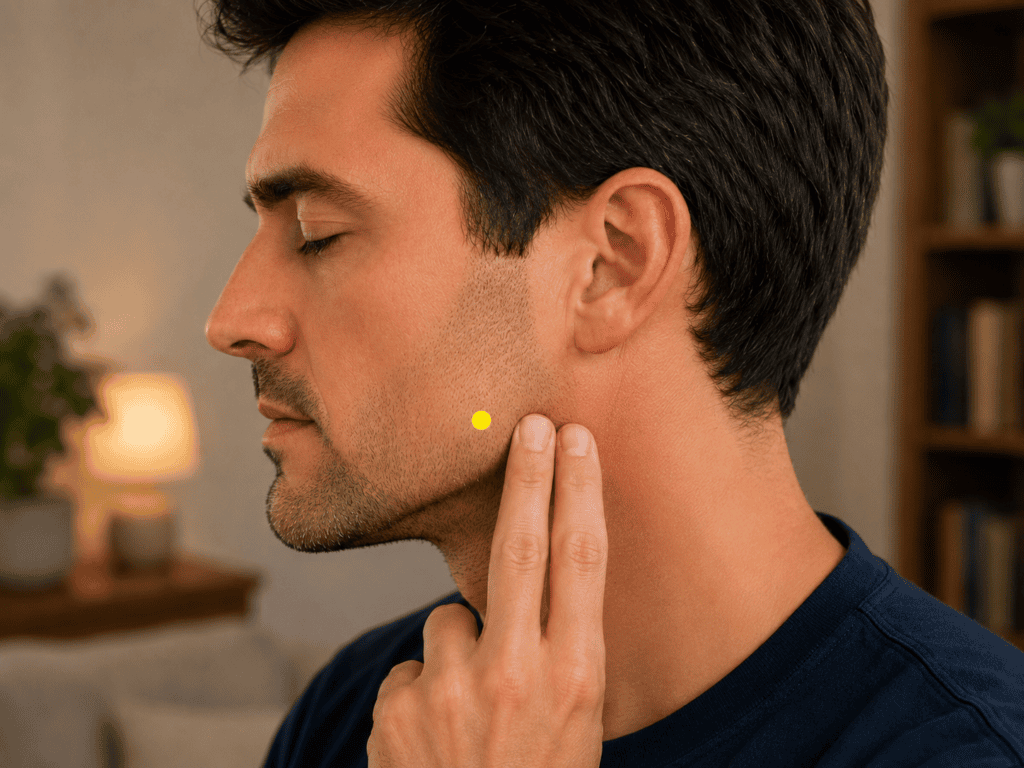
1. Press on ST6 on the jaw muscle, the key point for jaw pain. ST6 sits on the cheek, on the bulge of the muscle that pops out when you clench your teeth, about a finger-width up and forward from the jaw angle. Press firmly, or make small circles, with your fingertip for one to two minutes on both sides. ST6 is called “Jiache,” which means the “Jaw Chariot,” and it is the primary point for the jaw muscle.
This point is the most important for jaw pain. Its name, “Jaw Chariot,” indicates it lies directly over the masseter, the main chewing muscle that often tightens and becomes sore. It helps move Qi and Blood through the muscle and relaxes the jaw at the pain’s origin. Pressing and massaging this spot can release the knot that causes much of the discomfort. For a tight, sore, or clenched jaw, start here for the most direct relief.
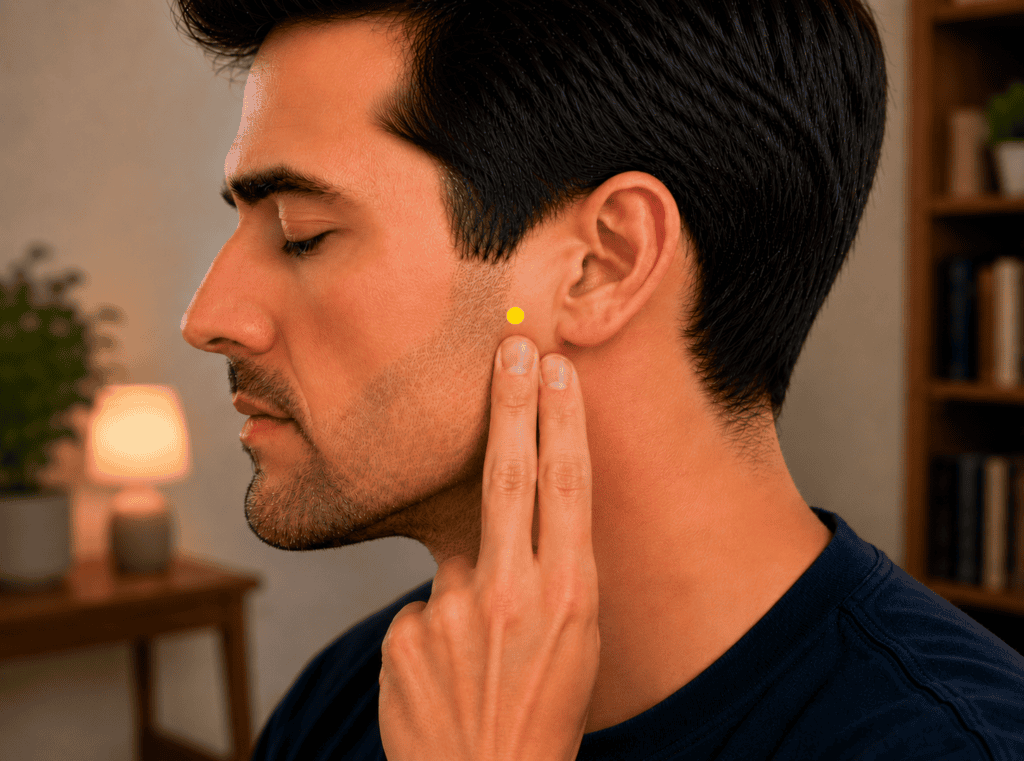
2. Press on ST7 in front of the ear at the jaw joint. ST7 sits just in front of the ear, in the hollow you can feel below the cheekbone when you open your mouth slightly, right over the jaw joint. Press gently with your fingertip for one to two minutes on both sides. ST7 is called “Xiaguan,” the key point for the jaw joint.
ST7 is situated directly above the jaw joint, where the jaw connects to the skull. This makes it the primary point for addressing pain, clicking, and stiffness in the joint. It helps circulate Qi and Blood in the area and alleviates tension and discomfort, especially when paired with ST6, located just underneath on the muscle. Together, ST6 and ST7 target both the muscle and the joint. For jaw joint pain or clicking in front of the ear, gently press this point while slightly opening your mouth to locate the correct spot.
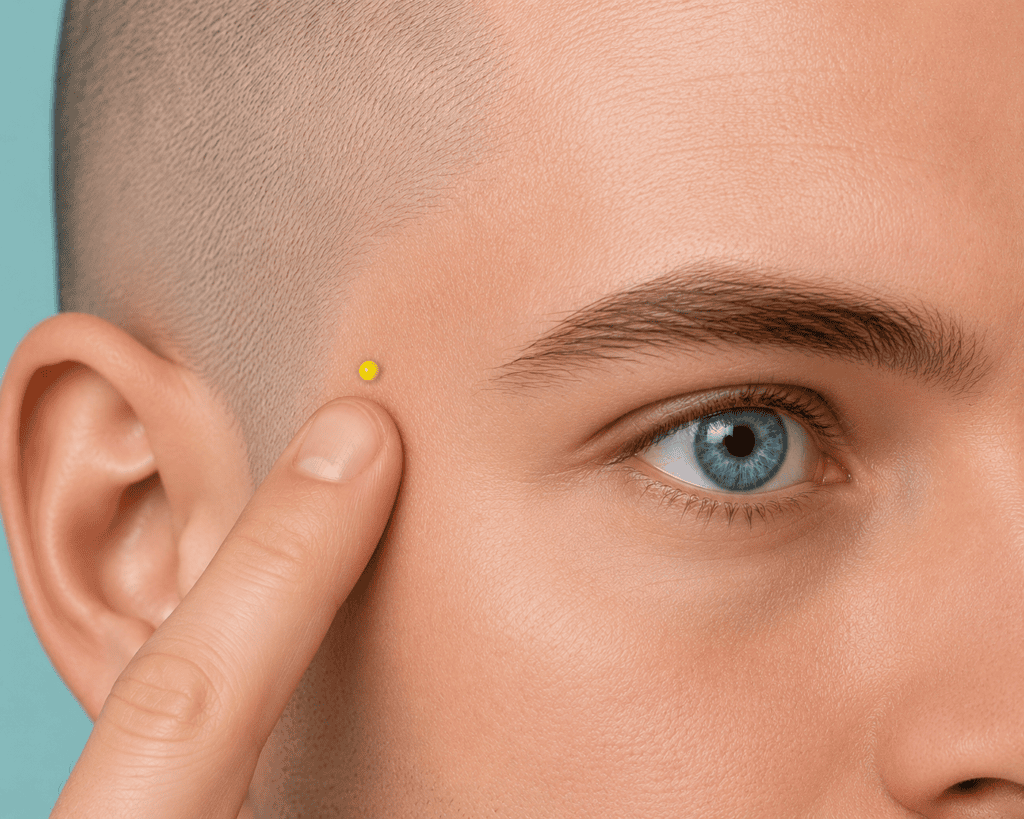
3. Press on Taiyang at the temple to release the clenching muscle above. Taiyang sits in the soft hollow of the temple, about a finger-width back from the midpoint between the outer end of the eyebrow and the outer corner of the eye. Press firmly and make small, slow circles with your fingertips for one to two minutes on both sides. Taiyang is an extra point, widely used for the temple and the side of the head.
The temporalis muscle, which covers the temple and aids in jaw clenching, often becomes tight and sore. The Taiyang point lies over this muscle and helps release tension from clenching or grinding, easing headaches and pressure on the side of the head. If jaw pain extends to the temple or causes tension headaches, this point can help relax that area. It is especially effective when used with jaw points to relax the entire chewing system.
4. Press on the Ashi points in the tight jaw muscles. The Ashi points are the tightest, sorest knots in your jaw and cheek muscles; the tender spots you feel when you press into the muscle that clenches. Feel around the jaw muscle and temple, and press each tight knot firmly but tolerably, holding for about a minute until it softens. “Ashi” means “that’s it,” the sound of finding the exact sore point.
In Traditional Chinese Medicine, Ashi points are tender areas that indicate blocked Qi and Blood flow. Jaw muscles often develop tight knots from clenching and grinding. The most painful areas in your jaw and cheek muscles are ideal for treatment. Applying pressure, holding, or gently massaging these knots in circular motions can help alleviate tension and pain. For jaw discomfort, these knots typically provide the greatest relief. You can also carefully press inside your cheek with a clean thumb to target deeper muscles.
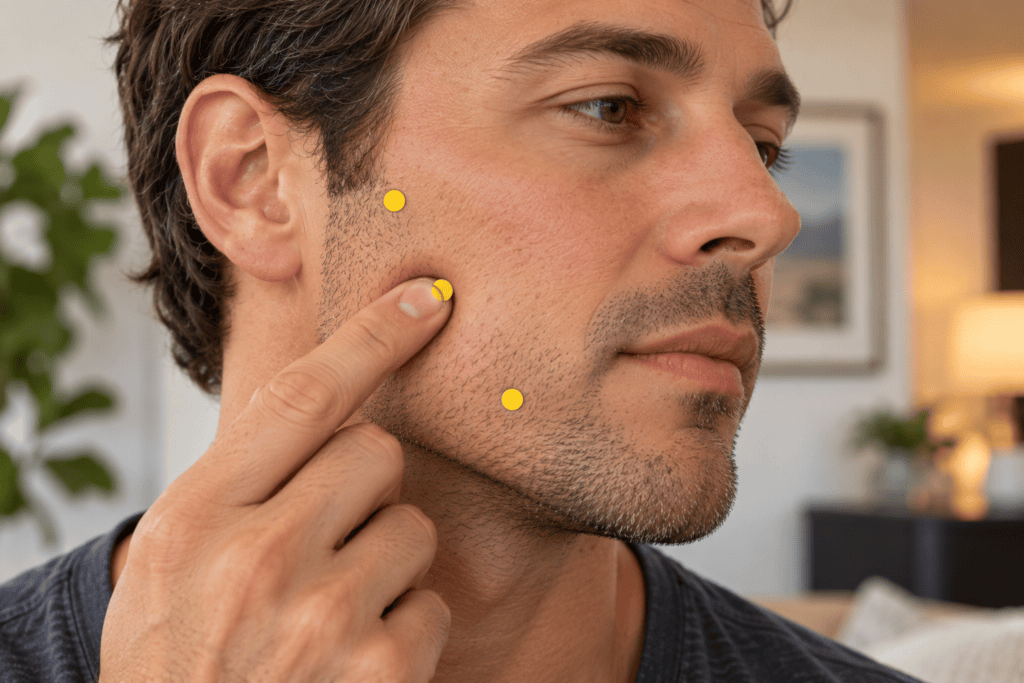
5. Press on GB20 at the base of the skull to release the neck and jaw connection. GB20 sits in the two hollows at the base of the skull, between the two large vertical neck muscles and the outer edge, roughly level with the tops of the ears. Tip your head back slightly and press firmly up and inward with your thumbs for one to two minutes. GB20 is called “Fengchi,” a major point for the head, neck, and jaw region.
The jaw, neck, and skull base form a connected region, so tension in one part can impact the others. GB20 relieves jaw tension by relaxing the neck and skull base, which can help clear your head and reduce headaches often linked to jaw strain. If jaw pain comes with a stiff neck or headaches, this point can relax the whole area, especially when combined with local jaw points.
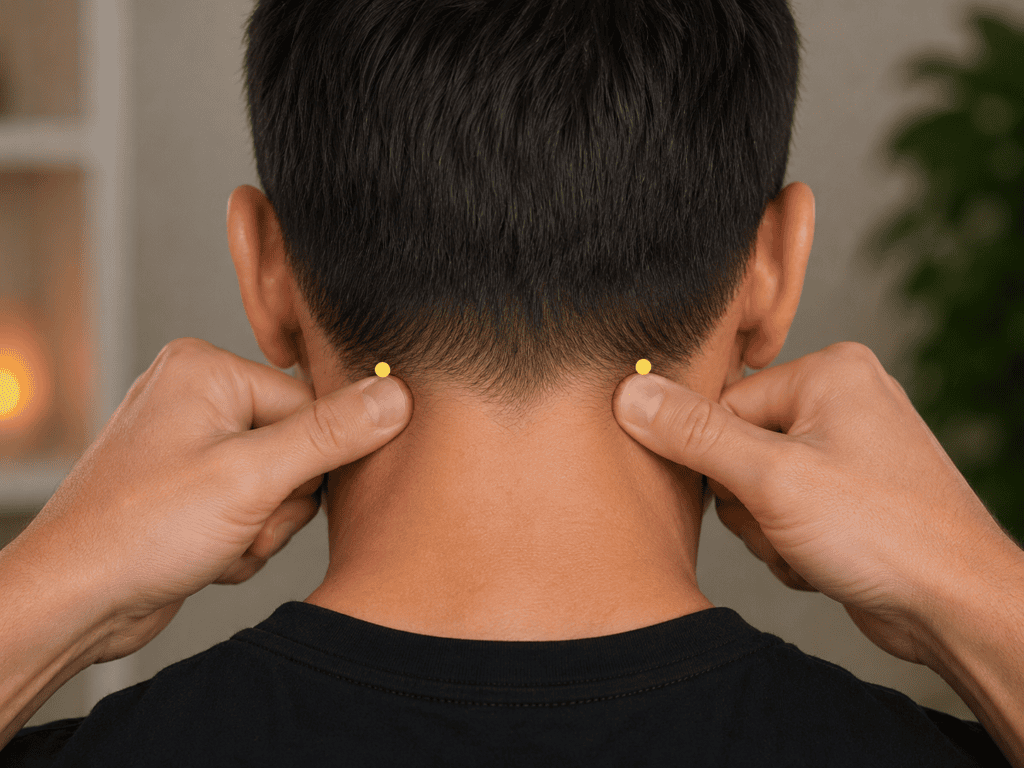
6. Press on LI4 in the hand to relieve the pain and clear the face. LI4 sits in the webbing between the thumb and index finger, at the highest point of the muscle when you bring them together. Press firmly with the thumb of your other hand for one to two minutes on each hand. LI4 is called “Hegu,” and it is the command point for the face and one of the strongest pain-relieving points in the body. LI4 is avoided during pregnancy.
LI4 is a major acupuncture point for the face and jaw, known for moving Qi and alleviating pain even from afar. It is among the body’s most powerful pain-relief points, making it effective for jaw, facial, and dental discomfort. Located on the hand, away from the sore jaw, it is easy to press and convenient to use anywhere. This is especially useful if you want jaw pain relief without touching the painful area directly. Apply firm pressure and use it regularly.
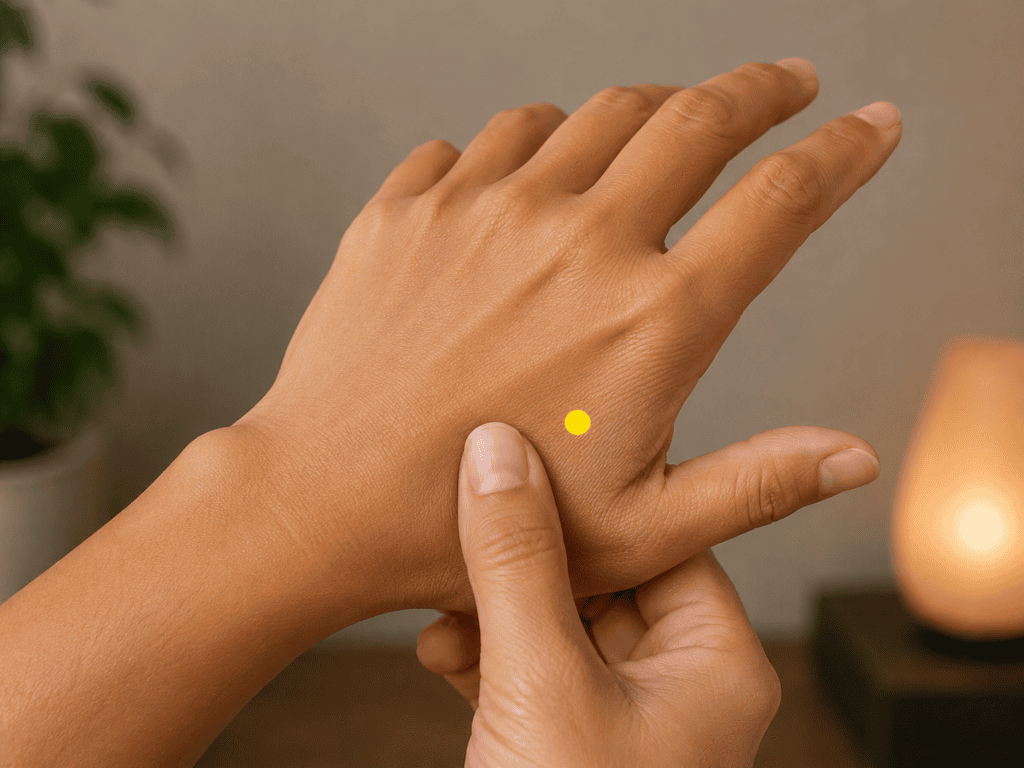
7. Press on LR3 on the top of the foot to ease stress and clenching. LR3 sits on the top of the foot, in the webbing between the big toe and second toe, about two finger-widths back where the bones meet in a small hollow. Press firmly with the thumb for one to two minutes on each foot. LR3 is called “Taichong,” and it is the primary point for moving stuck Liver Qi.
Much jaw pain results from stress-induced clenching and grinding, often occurring unnoticed, especially at night. In Chinese medicine, this is attributed to blocked Liver Qi, which LR3 can help to unblock. Stimulating this point eases the stress and tension that lead to clenching, calms the nervous system, and promotes grounding. When combined with LI4 in the hand, it creates the Four Gates, an effective technique for reducing tension across the entire body. If stress and clenching cause your jaw pain, this point targets the underlying cause.
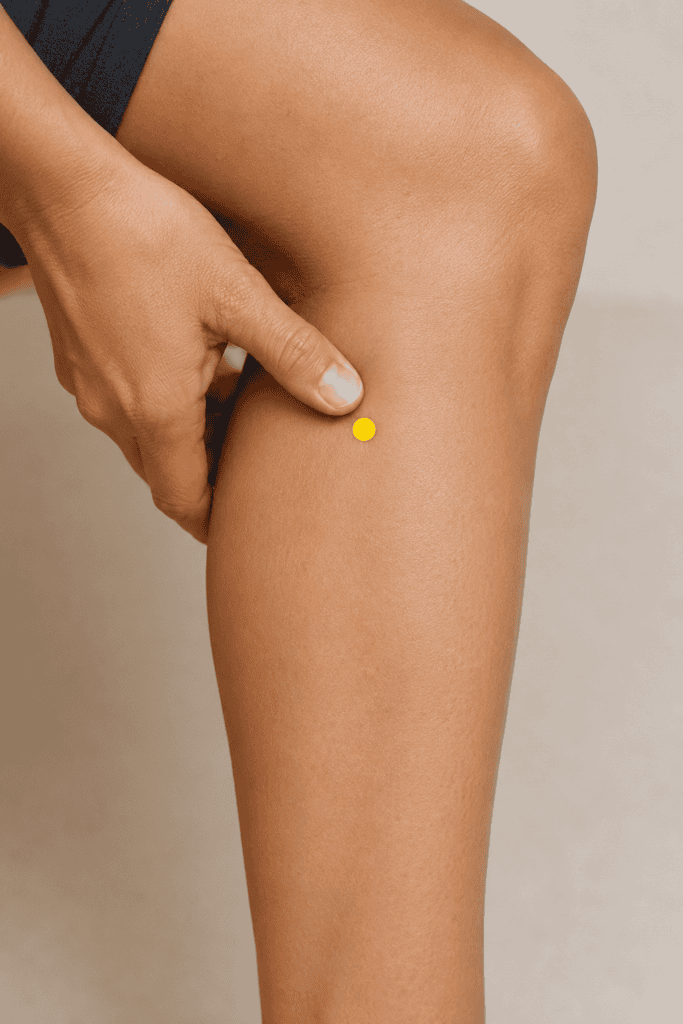
8. Press on GB34 below the outer knee to relax the muscles. GB34 sits on the outer lower leg, in the hollow just below and in front of the head of the fibula, the bony knob below the outer side of the knee. Press firmly with your thumb for one to two minutes on each leg. GB34 is called “Yanglingquan,” and it is the influential point for the sinews and muscles of the whole body.
Jaw pain is mainly caused by tight, overused muscles. GB34, a point located on the leg, is key for loosening muscles and tendons throughout the body. Although it is far from the jaw, stimulating this point helps relieve muscle tension throughout the body, including the jaw and face. For jaw pain caused by muscle tightness or clenching, this point can provide local relief and is easy to press while your jaw relaxes.
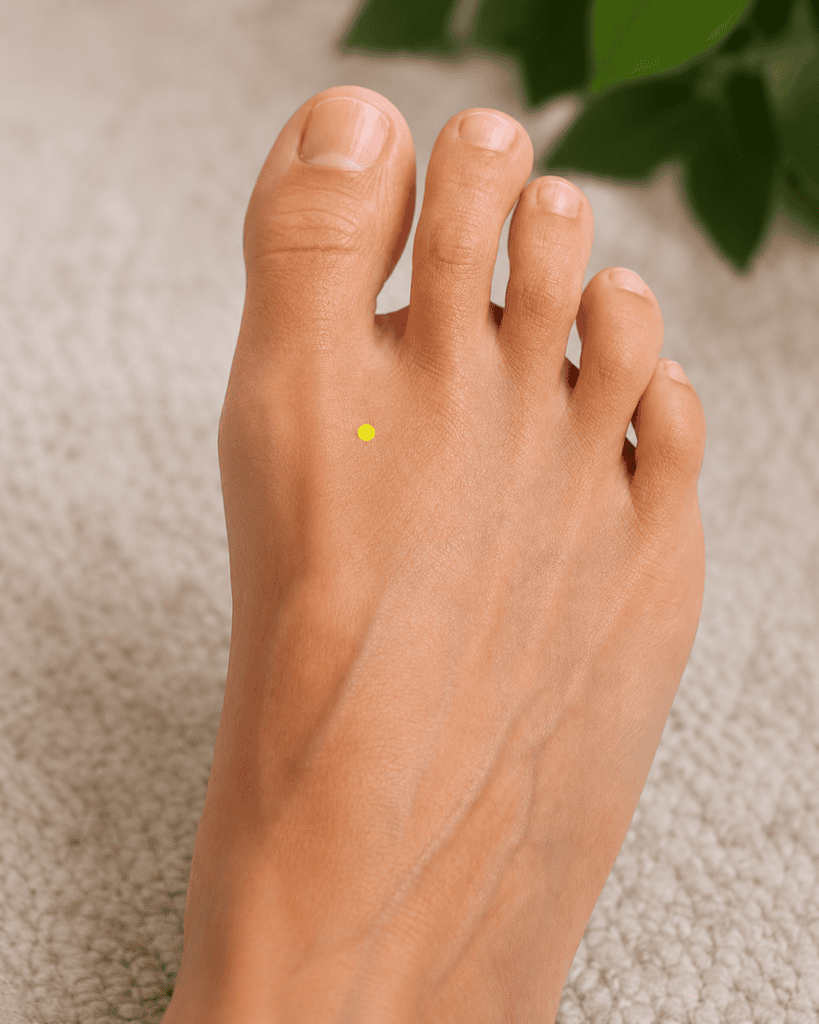
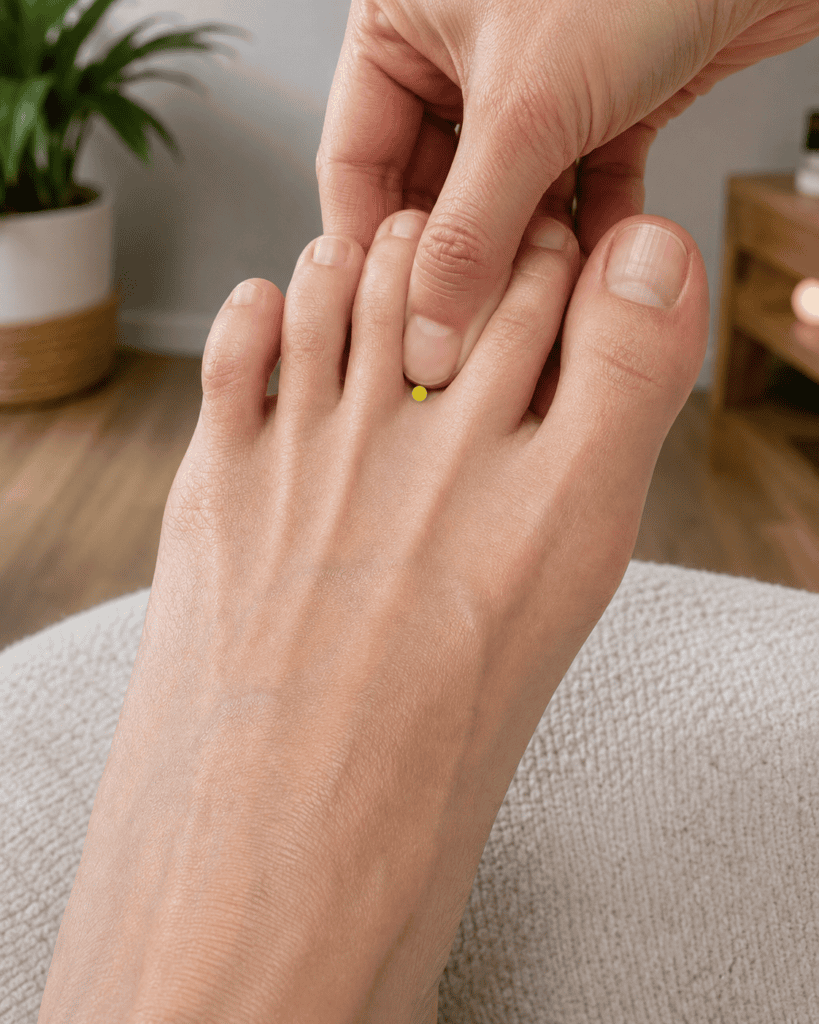
9. Press on ST44 between the toes to relieve pain along the Stomach channel. ST44 sits on the top of the foot, in the webbing between the second and third toes, just where they meet. Press firmly with your thumb for one to two minutes on each foot. ST44 is called “Neiting,” and it clears heat and pain along the Stomach channel.
The Stomach channel extends from your foot to your jaw, crossing the main chewing muscle. ST44, located between the toes, is a point that can alleviate jaw and facial pain remotely. It’s particularly effective for hot, throbbing jaw pain or dental issues. Stimulating this point not only reduces pain along the channel but also benefits the local muscles.
Why These Acupressure Points Work
In Traditional Chinese Medicine, jaw pain is considered a blockage of Qi and Blood in the jaw muscles and channels, often caused by clenching, grinding, stress, or overuse. Most of this occurs along the Stomach channel. The nine acupressure points target these various causes.
- The local jaw points (ST6, ST7, Taiyang, and the Ashi knots) directly target the tight chewing muscles and the jaw joint at the site of pain, providing relief.
- The neck point (GB20) helps relieve neck and skull base tension related to the jaw.
- The distal pain points (LI4, ST44) help alleviate jaw and facial pain along the channels, with LI4 acting as the main point for the face.
- The stress and muscle points (LR3, GB34) help release tension that causes clenching and relax the muscles. LR3 and LI4 together form the Four Gates.
The core concept is to relax tight, clenched muscles and stimulate the flow of Qi and Blood. Therefore, it is equally important to manage stress and prevent clenching while focusing on the jaw.
How to Properly Use These Acupressure Points
Relax your jaw muscles and release tension to help prevent clenching and promote relaxation.
- Work the local jaw points, ST6 on the muscle and ST7 at the joint, along with Taiyang at the temple and the Ashi knots in the jaw and cheek muscles, pressing and massaging them until they soften.
- Add GB20 for the neck connection, and use LI4, LR3, GB34, and ST44 from the hands and feet for pain relief, muscle release, and easing the stress and clenching.
- Massage the jaw and temple muscles along with the point work, and gently open and close and move the jaw within a comfortable range, since gentle movement helps release a tight jaw.
- Hold each point for one to two minutes, press the jaw joint gently, and work the jaw a few times a day, especially when you notice yourself clenching.
Acupressure helps ease tension, but it is also important to address the causes of jaw pain. Notice when you clench your jaw and relax it, keeping your teeth slightly apart and your tongue resting gently. Managing stress is key, since clenching often happens when you’re stressed. Applying warmth to a tight, sore jaw can relax the muscles and improve circulation. Eat softer foods and avoid gum or very chewy foods while your jaw is sore. If you grind your teeth at night, your dentist can make a night guard to protect your teeth and reduce strain. Gentle jaw stretches and good posture also help.
When to Get Professional Help
Most jaw pain comes from muscle tension, which acupressure and stress reduction can alleviate, including by minimizing clenching. Certain types of jaw pain require medical evaluation. Left-sided jaw pain may sometimes indicate a heart issue. If you experience jaw pain along with symptoms like chest pain or pressure, shortness of breath, sweating, nausea, dizziness, or pain radiating to your arm, neck, or shoulder, treat it as a potential heart attack and seek emergency assistance immediately. This presentation is more common in women and may occur without typical chest pain. You should also consult a dentist or doctor if your jaw pain is severe, persistent, or worsening; if you experience jaw locking, limited opening or closing, noticeable swelling, fever, a toothache, or pain after an injury. A professional should evaluate ongoing jaw joint issues, as dentists and doctors offer effective treatments.
Acupressure and healthy habits can alleviate normal jaw tension, but they should not replace medical treatment when necessary.
Above and Beyond Acupuncture offers acupuncture, cupping, and lifestyle coaching at the North Frank Lloyd Wright Boulevard location in Scottsdale.
Schedule an appointment online to start your healing journey.
The points above are only as effective as the technique used to apply them. Where to press, how firmly, and for how long all affect the result. For a full breakdown of how to perform acupressure properly at home, read Performing Acupressure in 3 Easy Steps.
If your jaw pain has been diagnosed as a jaw joint disorder, acupressure for TMJ pain is a more targeted approach for that specific condition. Since much jaw pain comes from clenching, understanding why you clench your jaw is worth reading.

About the Publisher
Paul Kerzner, L.Ac., is a licensed acupuncturist and board-certified herbalist, as well as the founder of Above and Beyond Acupuncture in Scottsdale. His own journey from chronic patient to practicing acupuncturist shapes his commitment to providing honest, clinically grounded information about acupuncture and Traditional Chinese Medicine. Learn more about Paul and his clinical approach on the About Us page.