Key Takeaways
- Memory issues can stem from stress, lack of sleep, or aging; acupressure can help improve recall.
- Nine specific acupressure points enhance memory by nourishing the Kidney, Heart, and Spleen systems.
- For optimal results, apply these points consistently and maintain healthy lifestyle habits such as proper sleep and nutrition.
- Seek medical advice if experiencing severe memory issues, as they could signal a need for professional care.

Many people experience forgetfulness, whether it’s struggling to recall a name, losing track of why they entered a room, or misplacing keys.
Memory can fade a bit due to stress, lack of sleep, aging, overwork, or simply having too much on your mind. While it’s normal for memory to slip occasionally, it’s still important to support it. Acupressure can help by targeting specific points to sharpen your mind, nourish your brain, and improve recall.
Traditional Chinese Medicine associates memory with three primary systems. The Kidney stores the essence, known as the Sea of Marrow, which nourishes the brain and underpins memory and mental clarity. Aging or depletion of this essence can lead to memory decline. The Heart houses the Shen, and its Blood sustains the mind; thus, maintaining a healthy Heart supports clear memory. The Spleen governs Yi, or thinking and remembering capacity, and produces the Blood that nourishes the brain. When memory deteriorates, it often reflects imbalances among these systems. The strategies below aim to nourish Kidney essence, sharpen mental faculties, support Heart Blood, calm the Shen, and strengthen Spleen function to improve memory.
Here are nine acupressure points to support your memory.
What Acupressure Points to Press and Why
1. Press Si Shen Cong at the crown to sharpen memory and the mind. Si Shen Cong is a group of four points surrounding the very top of the head, each about one thumb-width in front of, behind, and to either side of GV20, the point at the crown on a line drawn up from the tops of the ears. Press each of the four in turn, or hold two at a time with your fingertips, for one to two minutes. The name means “four spirit intelligence,” and this group is the classic point set for the mind and memory.
Si Shen Cong is the primary point group for memory, widely used to enhance memory, focus, and mental clarity. Located around the crown, where many channels converge, these points help sharpen the mind, improve recall, and eliminate mental fog. Typically, this group is the first choice for memory support and forms the basis of routines that emphasize mental focus and recall at the top of the head.
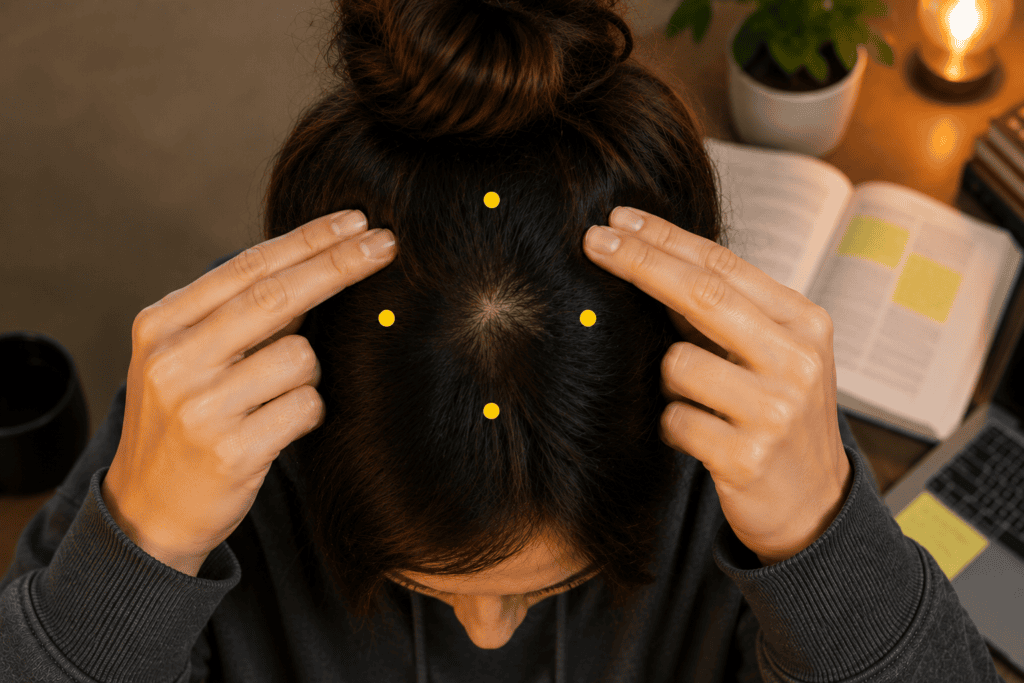
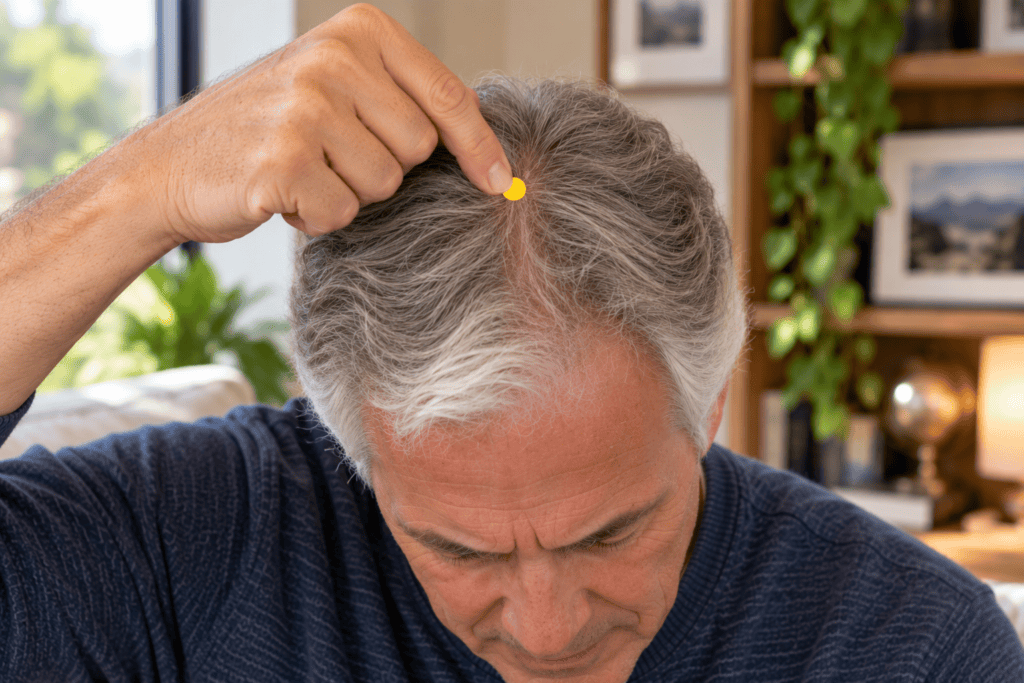
2. Press on GV20 at the top of the head to lift the clear Qi to the brain. GV20 sits at the very center of the crown, on the midline, on a line drawn up from the tops of both ears, in the middle of the four Si Shen Cong points. Press straight down, or make small circles, with your fingertip for one to two minutes. GV20 is called “Baihui,” the “Hundred Meetings,” where many channels converge at the crown.
GV20 directs clear Qi to the head and brain, helping to clear the mind and enhance memory and mental acuity. The brain requires this pure Qi to function optimally. It can brighten a foggy mind and increase mental energy for recall. As a key point linked to the brain, or Sea of Marrow, it works well with the Si Shen Cong points as a central combination to improve memory and clarity. If your memory feels dull or foggy, this point can help refresh and sharpen your thinking.
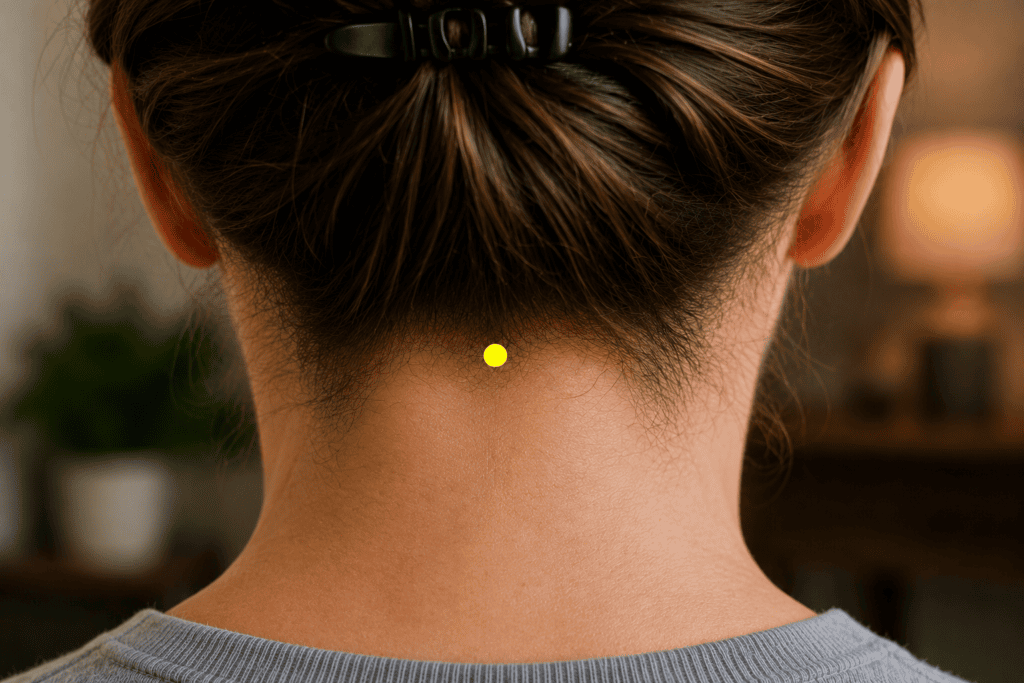
3. Press on GV16 at the base of the skull, a Sea of Marrow point. GV16 sits in the hollow at the center of the base of the skull, on the midline just above the top of the neck, where the head meets the neck. Press gently but firmly with your fingertip for one to two minutes. GV16 is called “Fengfu,” the “Wind Mansion,” and it is one of the points connected to the brain, the Sea of Marrow.
GV16 is located at the base of the skull on the Governing Vessel, near the brain. In Chinese medicine, it is a key point for the Sea of Marrow, which relates to the brain. This point aids the brain and head, clears the mind, and supports mental functions like memory. Unlike GV20 and Si Shen Cong, which are on the crown, GV16 is at the back of the head. Use gentle pressure because the area is sensitive. This point supports the Sea of Marrow from below, enhancing brain and memory functions.
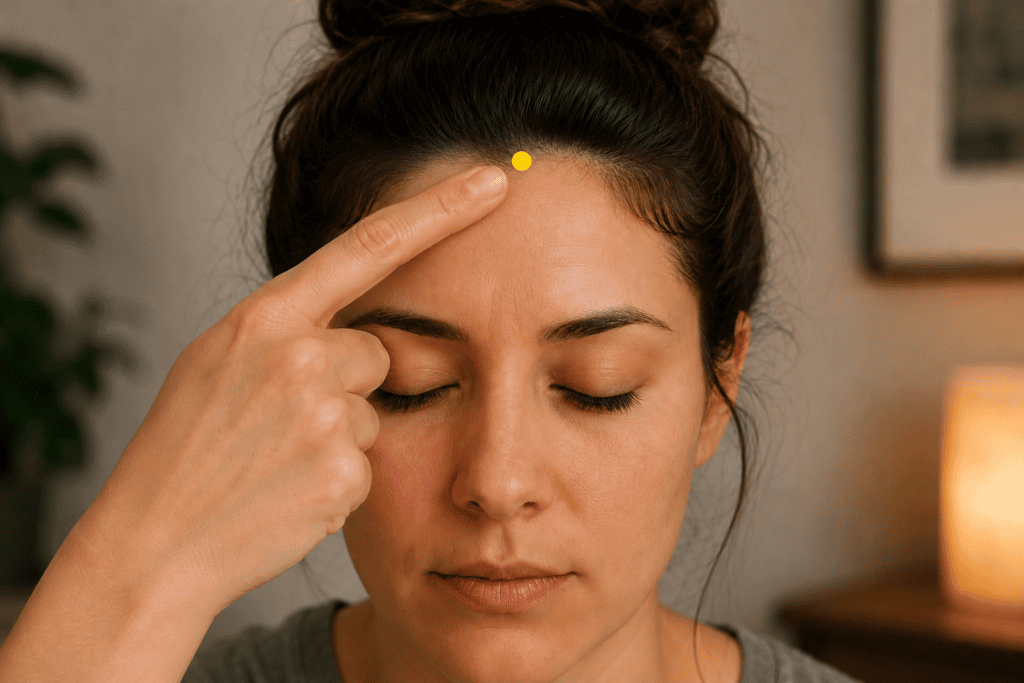
4. Press on GV24 on the forehead to calm and clear the mind. GV24 sits on the midline of the forehead, at the front hairline, about half a thumb-width up, above the forehead center. Press with your fingertip for one to two minutes. GV24 is called “Shenting,” the “Spirit Court,” and it is used for the mind, memory, and mental clarity.
GV24, also known as the Spirit Court, is situated at the front of the head along the Governing Vessel. It helps to soothe the Shen and clear the mind, promoting better memory and focus. This point can calm a distracted or stressed mind and restore mental clarity. A serene mind retains information more effectively than an anxious or cluttered one. If stress or mental overload impacts your memory, this point can help stabilize and clarify your thoughts. It works in conjunction with the crown points to support mental function from both the front and top of the head.
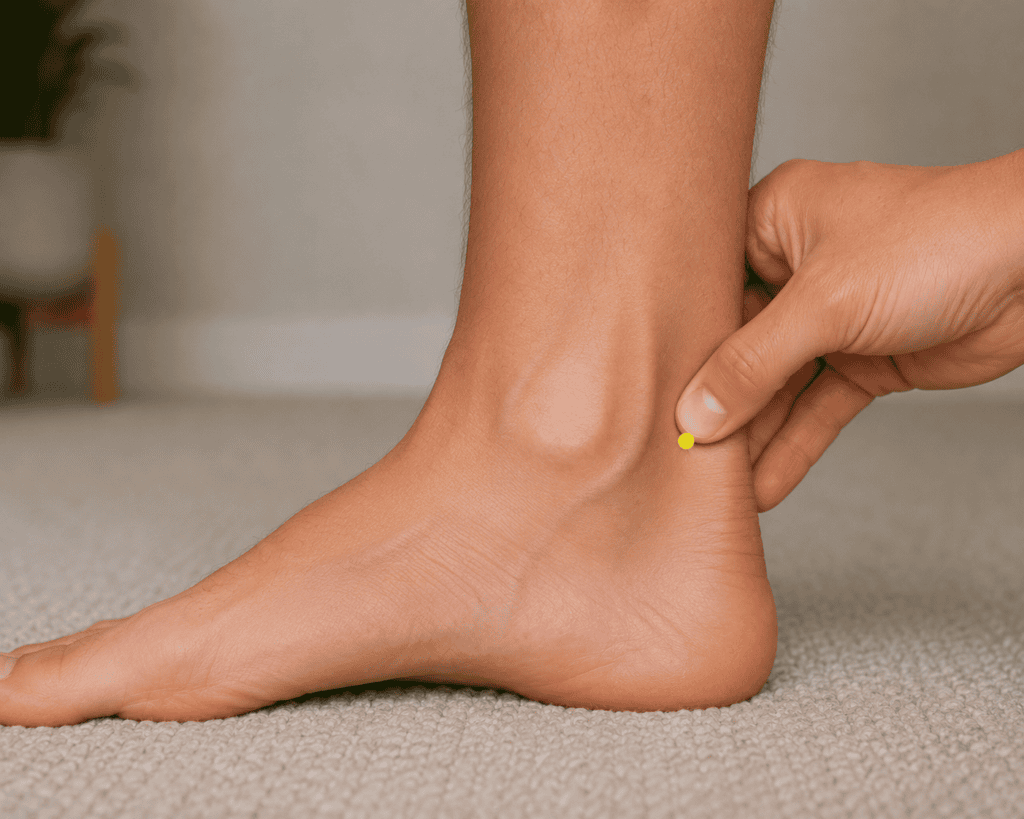
5. Press on KI3 above the inner ankle to nourish the essence that fills the brain. KI3 sits in the hollow between the inner ankle bone and the Achilles tendon, level with the tip of the ankle bone. Press firmly with your thumb for one to two minutes on each ankle. KI3 is called “Taixi,” the Kidney’s source point.
Because the Kidney stores the essence that fills the brain and supports memory, KI3 is the primary point that works at the deepest level of recall. It nourishes the Kidney essence, which often diminishes with age, overwork, or depletion, frequently leading to memory loss. If your memory has faded over time or you feel run down, this point addresses the root cause, supported by the head points above. KI3 is one of the most vital points for memory, and regular stimulation can help restore the foundation for recall.
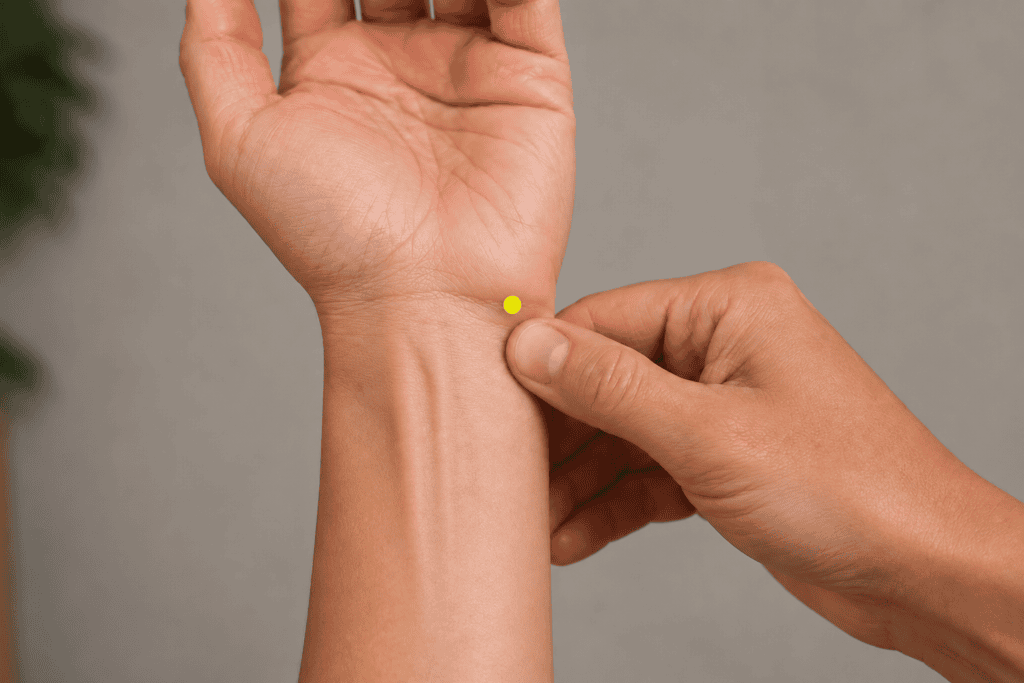
6. Press on HT7 at the wrist to support the Heart Blood and memory. HT7 sits on the inner wrist crease, on the pinky side, in the small hollow just inside the tendon. Press firmly with your thumb for one to two minutes on each wrist. HT7 is called “Shenmen,” the “Spirit Gate,” and it is the source point of the Heart.
In Traditional Chinese Medicine, the Heart is believed to house the Shen, with its Blood nourishing the mind. A calm and well-nourished Heart is essential for good memory, and HT7, the Heart’s source point, supports this by calming and nourishing the Heart, settling the Shen, and reinforcing the Heart Blood that sustains the mind. Additionally, this point can help alleviate anxiety and sleep issues that often impair memory. If forgetfulness occurs during restlessness, anxiety, or when the mind is undernourished, this point can help support memory from the Heart. It is also simple and discreet to stimulate.
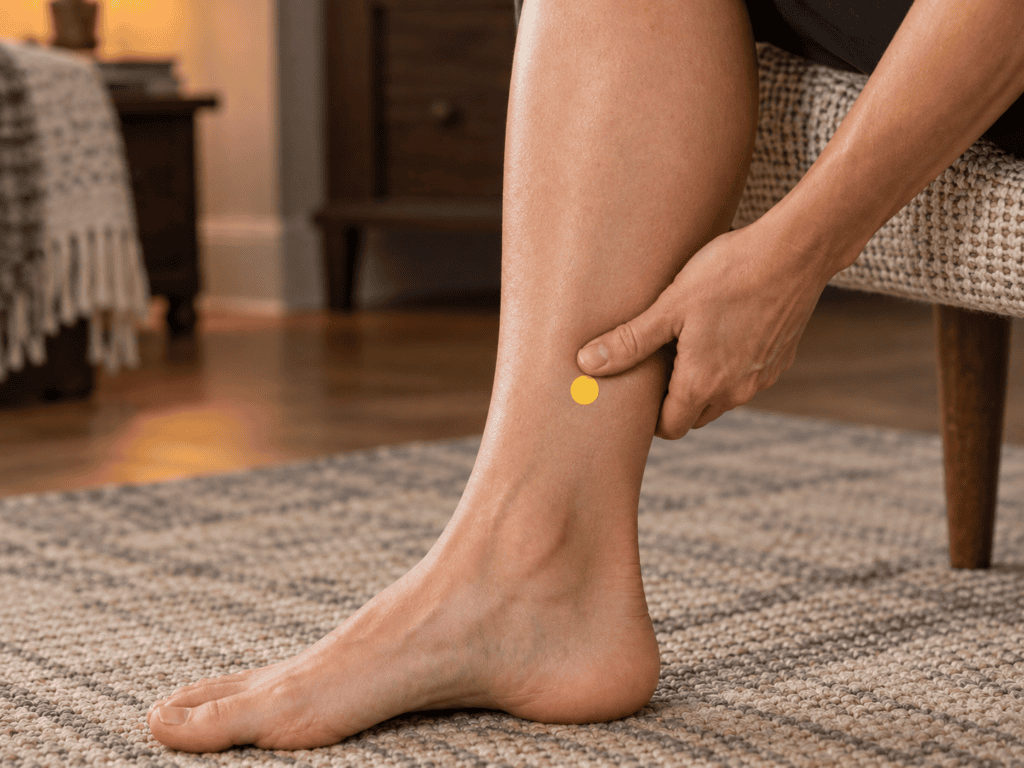
7. Press on SP6 above the inner ankle to nourish the Blood that feeds the brain. SP6 sits four finger-widths up from the tip of the inner ankle bone, just behind the back edge of the shinbone. Press firmly for one to two minutes on each leg. SP6 is called “Sanyinjiao,” the “Three Yin Intersection,” where the Spleen, Liver, and Kidney channels meet. SP6 is avoided during pregnancy.
SP6 is a highly nourishing point because it connects the three Yin channels. It nourishes the Blood that feeds the brain and the essence that supports memory. Since memory relies on proper nourishment and SP6 strengthens the Spleen (which produces Blood) and the Kidney (which stores essence), this point enhances memory by improving nourishment. If your memory weakens due to fatigue or poor nutrition, SP6 can help rebuild the Blood and essence needed for brain function. It pairs well with KI3 and ST36 to support recall. Note: Avoid this point during pregnancy.
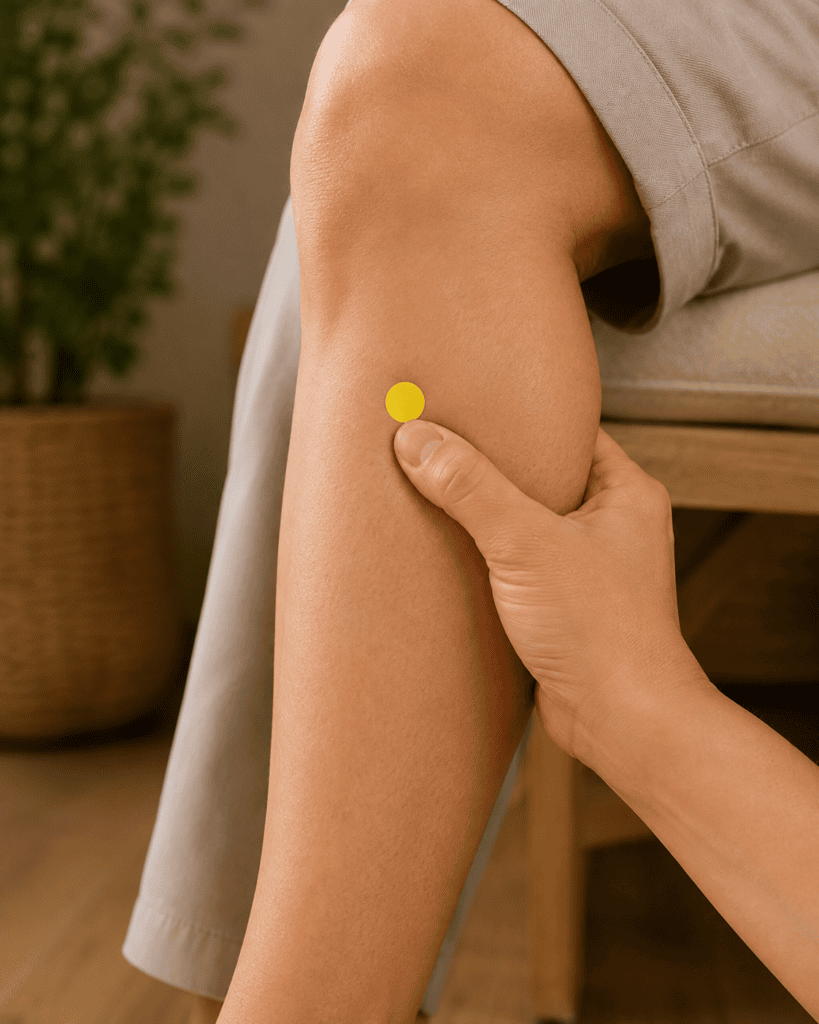
8. Press on ST36 below the knee to strengthen the Spleen behind retention. ST36 sits four finger-widths below the lower edge of the kneecap and one finger-width to the outside of the shinbone, on the muscle that rises when you flex your foot. Press firmly with your thumb for one to two minutes on each leg. ST36 is called “Zusanli,” the “Leg Three Miles,” and it is the master point for the Spleen and for building Qi and Blood.
The Spleen governs the Yi, which includes thinking and remembering, and also produces Blood to nourish the brain. ST36 strengthens both Spleen and Stomach functions, helping you process and retain information. This point helps rebuild Qi and Blood, essential for a nourished mind, and supports the Spleen’s role in learning and memory. When fatigue, overwork, or exhaustion cause increased forgetfulness, ST36 can strengthen the Spleen’s foundation for memory retention. Regular use can boost your mind’s capacity to remember what you learn.
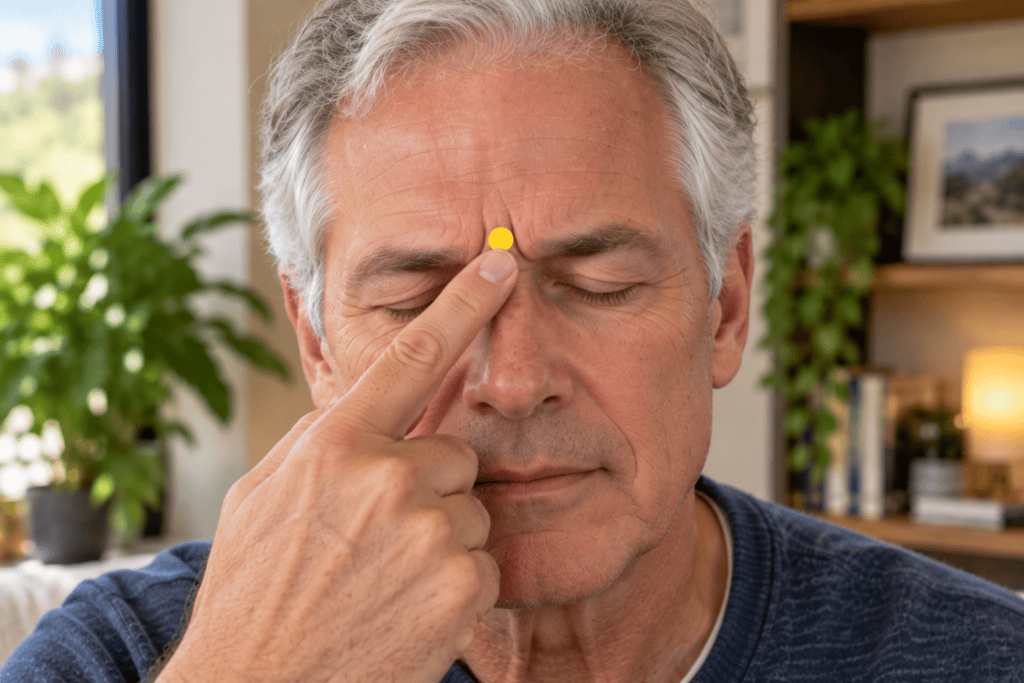
9. Press on Yintang between the eyebrows to settle and clear the mind for recall. Yintang sits in the small hollow directly between the two eyebrows. Press steadily and hold, or make small, slow circles with your fingertip for one to two minutes. Yintang is an extra point and one of the most calming and clearing points in the body.
Yintang calms the Shen and clears the mind, making it easier to remember things. A calm, uncluttered mind retains information better than a stressed or distracted one. Stress, anxiety, and mental overload often cause memory issues because a busy mind struggles to process and recall information. Yintang addresses this by promoting calm and mental clarity, which supports memory. If stress or mental busyness hampers your memory, this point can help clear your mental space. Gently pressing it while breathing deeply is an effective way to relax your mind before needing to focus or remember.
Why These Acupressure Points Work
In Traditional Chinese Medicine, memory depends on Kidney essence filling the brain (the Sea of Marrow), along with Heart Blood nourishing the mind and the Spleen, which supports retention and produces Blood. The nine points relate to this entire system.
- The head points (Si Shen Cong, GV20, GV16, GV24, Yintang) sharpen the mind, lift the clear Qi to the brain, work the Sea of Marrow, and settle and clear the mind for recall.
- The essence point (KI3) nourishes the Kidney essence that fills the brain, the deep root of memory.
- The Heart point (HT7) supports the Heart Blood and settles the Shen that steadies the mind.
- The nourishing points (SP6, ST36) rebuild the Blood that feeds the brain and strengthen the Spleen faculty behind retention.
The core concept is to nourish and invigorate your mind, making the deep essence and Blood points as significant as the points on the head.
How to Properly Use These Acupressure Points
Use these points consistently, as they support long-term memory rather than a single session.
- Begin with the head points, Si Shen Cong and GV20 at the crown, GV16 at the base of the skull, GV24 on the forehead, and Yintang between the brows, to sharpen and clear the mind.
- Work the deeper points, KI3, SP6, and ST36, to nourish the essence and Blood behind memory, and HT7 to support the Heart and settle the mind, using these consistently.
- Hold each point for one to two minutes with steady pressure, breathing slowly, and make it a daily practice, since the benefit for memory builds with regular use.
- Gently press the head and forehead points, especially GV16 on the sensitive midline at the base of the skull.
Acupressure works best for memory when paired with healthy habits. Get enough sleep, since it boosts memory; too little can lead to forgetfulness. Stay active, since exercise benefits your brain and memory. Keep your mind engaged and challenged to maintain sharpness. Manage stress, eat nutritious foods for your brain, stay hydrated, and use practical strategies like taking notes and maintaining routines to improve recall. A well-rested, well-nourished, and regularly active mind demonstrates the strongest memory.
When to Get Professional Help
Memory lapses are common, especially when you’re stressed, tired, or aging, and these tools can aid your memory. Consult a doctor before making certain changes. Seek medical advice if your memory issues are severe, worsening, or interfere with daily activities. Also see a doctor if you experience memory loss with confusion, getting lost in familiar places, difficulty with familiar tasks, trouble finding words, or personality or behavior changes, as these may indicate a condition that requires medical attention. Some memory problems are caused by treatable issues like thyroid problems, vitamin B12 deficiency, depression, sleep disorders, or medication side effects, which a healthcare provider can address. If you experience sudden memory loss or confusion, seek emergency medical care immediately.
Acupressure may help with daily memory, but it should not replace medical assessment if memory issues are severe or worsening.
Above and Beyond Acupuncture offers acupuncture, cupping, and lifestyle coaching at the North Frank Lloyd Wright Boulevard location in Scottsdale.
Schedule an appointment online to start your healing journey.
The points above are only as effective as the technique used to apply them. Where to press, how firmly, and for how long all affect the result. For a full breakdown of how to perform acupressure properly at home, read Performing Acupressure in 3 Easy Steps.
For sustained attention and focus rather than recall, acupressure to improve concentration is the companion post, and for using acupressure points while learning, please read the top acupressure points to use while studying.

About the Publisher
Paul Kerzner, L.Ac., is a licensed acupuncturist and board-certified herbalist, as well as the founder of Above and Beyond Acupuncture in Scottsdale. His own journey from chronic patient to practicing acupuncturist shapes his commitment to providing honest, clinically grounded information about acupuncture and Traditional Chinese Medicine. Learn more about Paul and his clinical approach on the About Us page.