Key Takeaways
- Long study sessions can drain you, so use acupressure points to enhance focus and memory.
- Ten specific acupressure points support studying by improving concentration and relieving tension.
- Traditional Chinese Medicine connects successful studying to balance in the body’s systems, including the Spleen, Heart, and Kidney.
- Press points like Si Shen Cong and GV20 to clear the mind, or HT7 and PC6 to calm anxiety and boost recall.
- Combine acupressure with effective study habits, like taking breaks and staying hydrated, for optimal results.

Long study sessions can drain your mind and body. To stay focused, retain information, and improve your memory, it’s important to stay calm and reduce stress when possible. A simple, accessible way to support you while you study is acupressure. You can press acupressure points at your desk, whether you’re on a break or between chapters, to enhance focus, boost energy, and soothe your nerves. Remember, taking small, mindful steps can make your study time more enjoyable and effective.
Traditional Chinese Medicine views focus, memory, and mental stamina as the result of several systems working together. The Spleen is closely connected with thinking and concentration, while the Heart houses the Shen, or mind and spirit, which needs to be settled for you to focus clearly. The Kidneys are associated with memory and deeper learning, and the mind also depends on a healthy flow of Qi and sufficient Blood to remain nourished. When these systems are out of balance, studying can leave you feeling foggy, distracted, forgetful, restless, or mentally exhausted. The points below are traditionally used to clear the mind, improve concentration, support memory, maintain alertness, and calm the Shen while you study.
Acupressure is a helpful tool when it comes to studying, and it works even better when combined with the fundamental strategies for effective studying, which you’ll find in the closing section. For those moments on exam day when staying calm under pressure really matters, ‘How to Use Acupressure for Test Anxiety‘ is a wonderful resource that complements this information perfectly.
Here are ten helpful acupressure points to assist your studying. These points aim to improve concentration, enhance memory, keep you alert, and promote relaxation, helping make your study sessions more efficient.
What Acupressure Points to Press and Why
1. Press Si Shen Cong at the crown to sharpen focus and memory. Si Shen Cong is a group of four points surrounding the very top of the head, each about one thumb-width in front of, behind, and to either side of GV20, the point at the crown on a line drawn up from the tops of the ears. Press each of the four in turn, or hold two at a time with your fingertips, for one to two minutes. The name Si Shen Cong means “four spirit intelligence,” and this group is the classic point set for the mind.
Si Shen Cong is a highly specialized point group, traditionally used to boost memory, focus, and mental clarity- exactly what a studying mind requires. Located at the crown where multiple channels converge, it calms and clears the mind simultaneously, enhancing focus while reducing mental clutter. It’s especially helpful for poor memory and scattered, foggy thinking. Start your study session with this point group and revisit it whenever your concentration wanes, as it anchors the entire set and addresses the essential needs of studying.
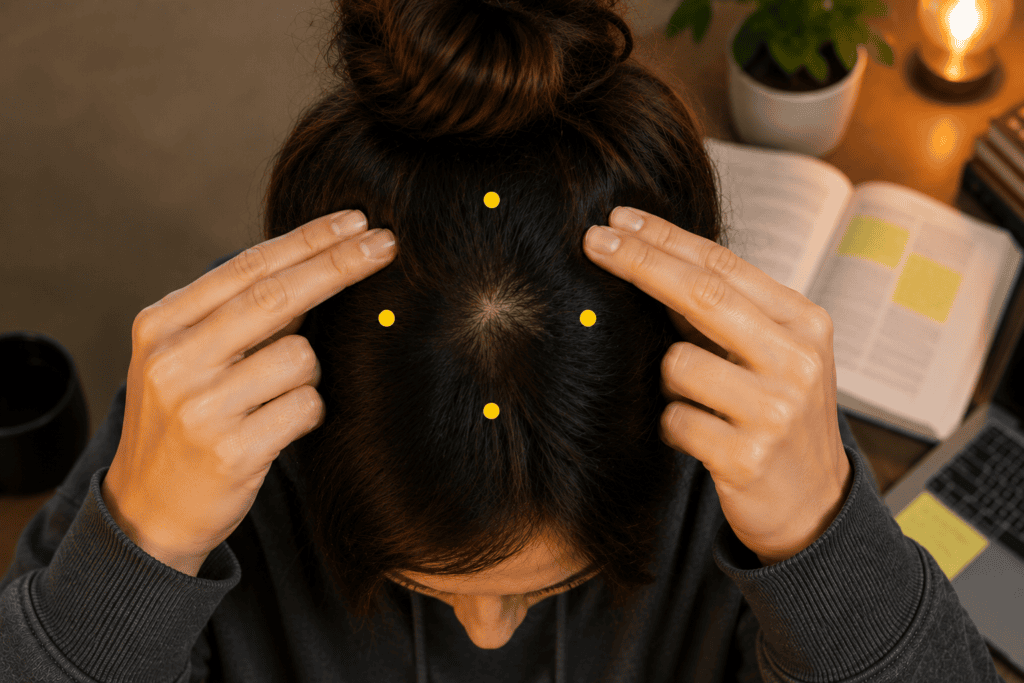
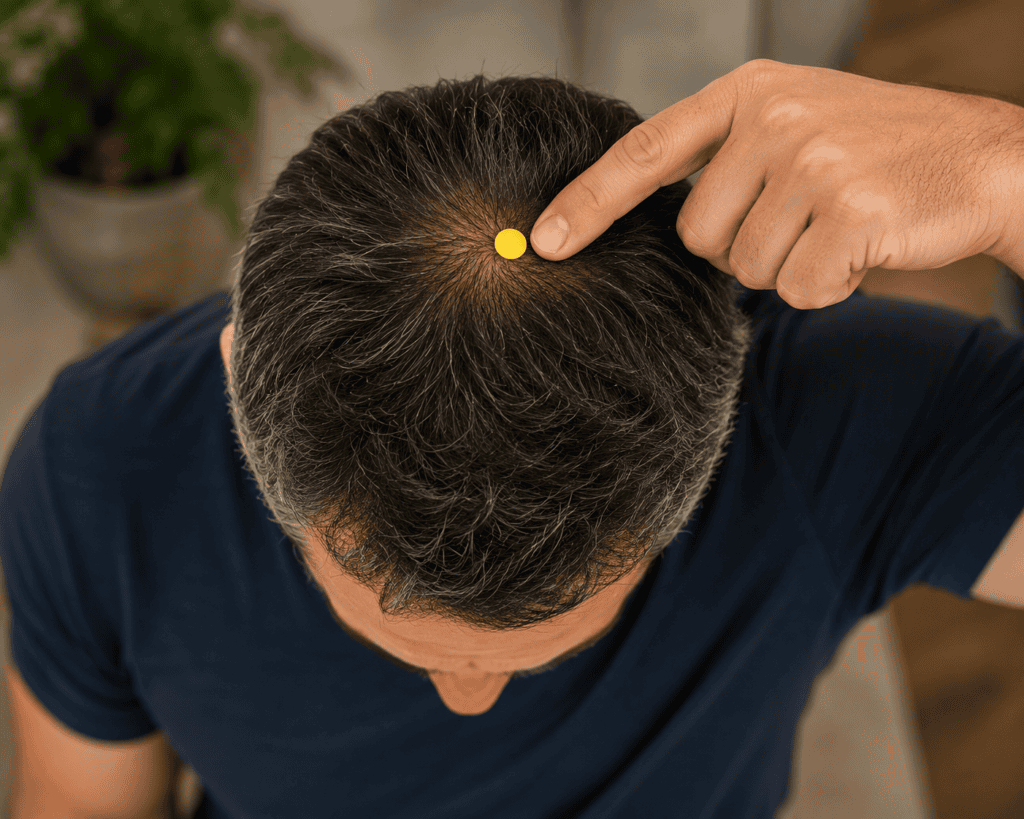
2. Press on GV20 at the top of the head to clear and lift the mind. GV20 sits at the center of the crown, on the midline, on a line drawn up from the tops of both ears, between the four Si Shen Cong points. Press straight down, or make small circles, with your fingertip for one to two minutes. GV20 is called “Baihui,” the “Hundred Meetings,” where many channels converge.
GV20 clears the head and elevates the Qi, enhancing mental clarity and concentration while boosting the alertness that often diminishes during extended study sessions. It helps counteract the heavy, foggy, sinking sensation that appears after hours of work, keeping the mind sharp and attentive. Positioned at the center of Si Shen Cong, it naturally complements that group, together forming a key focus and clarity tool for studying. Use it whenever your thoughts become dull or sluggish to regain mental sharpness.
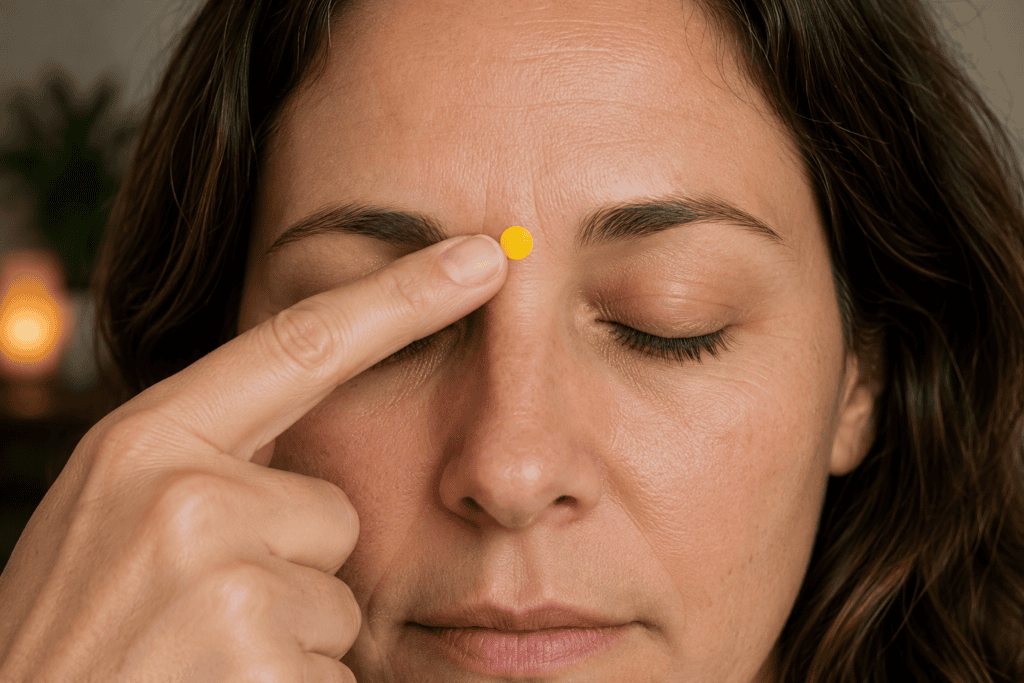
3. Press on Yintang between the eyebrows to calm and steady concentration. Yintang sits in the small hollow directly between the two eyebrows. Press steadily and hold, or make small, slow circles with your fingertip for one to two minutes. Yintang is an extra point and one of the most calming and centering points in the body.
Yintang helps settle the Shen and calms a restless, distracted mind, enabling better concentration. Since a scattered or anxious mind struggles to focus, this point quiets mental agitation and reduces low-grade stress that distracts attention from studying. It fosters a centered, clear state of mind. For students whose minds tend to wander or race, Yintang stabilizes their focus and alleviates the tension between the brows that often arises during prolonged concentration.
4. Press on GV24.5 (Ezhong) for a clear, focused head. This point, on the midline of the forehead, sits at the front hairline directly above the nose, about one thumb-width above Yintang. Press with your fingertip for one to two minutes. It is sometimes grouped with Yintang and is used to calm the spirit and clear the mind.
This forehead point helps clear and settle the mind, aiding concentration. Located just above Yintang, it stabilizes the front of the head, where mental fatigue and distraction tend to gather. It calms the Shen while maintaining mental clarity, making it ideal for sustained focus. It also eases the frazzled, overloaded feeling that often comes during long study sessions. For students experiencing mental scatter and fog at the front of the head, this point provides clarity and pairs well with Yintang below.
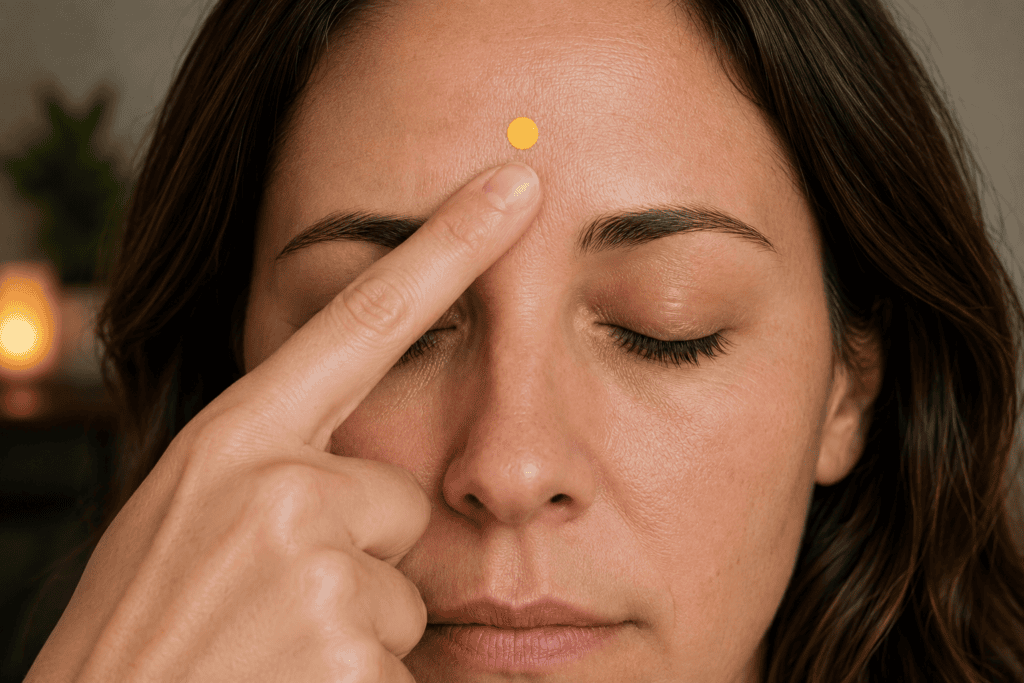
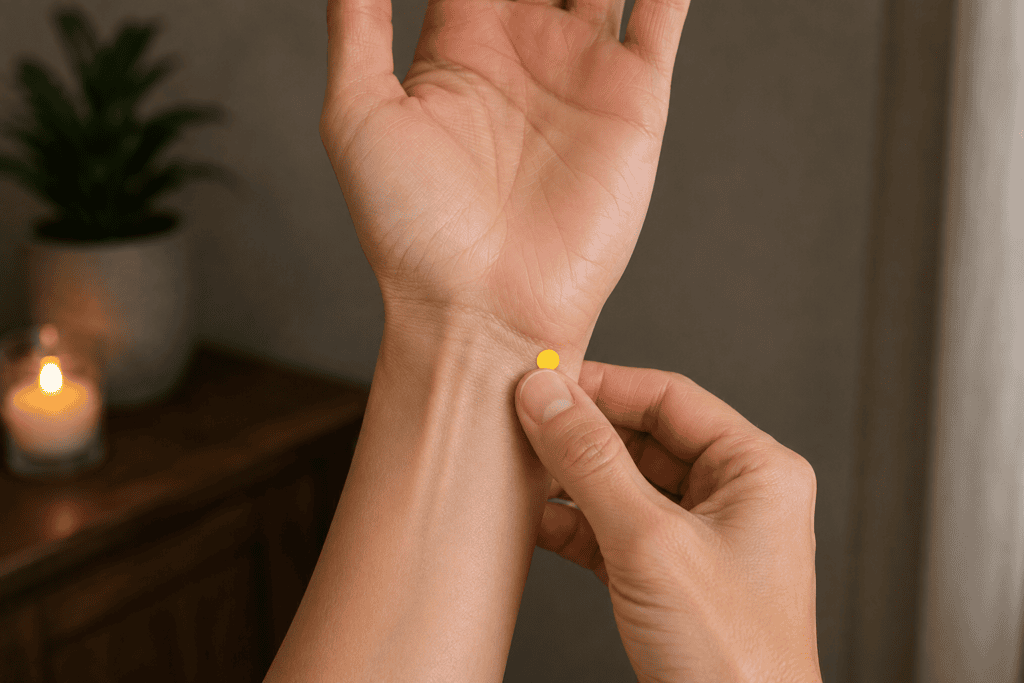
5. Press on HT7 at the wrist to calm the mind and support memory. HT7 sits on the inner wrist crease, on the pinky side, in the small hollow just inside the tendon. Press firmly with your thumb for one to two minutes on each wrist. HT7 is called “Shenmen,” the “Spirit Gate,” and it is the source point of the Heart and the most important point for calming the Shen.
HT7 calms and nourishes the Heart, which houses the Shen and is closely linked to memory and mental clarity in Traditional Chinese Medicine. This helps steady concentration and enhance recall. It quiets a restless, anxious mind that struggles to focus and relieves mental strain from long study sessions. Its calming properties help the mind retain more information when relaxed rather than stressed. For students who are too anxious or distracted to concentrate or remember, this point stabilizes the mind and is simple to press at the desk, making it a discreet aid.
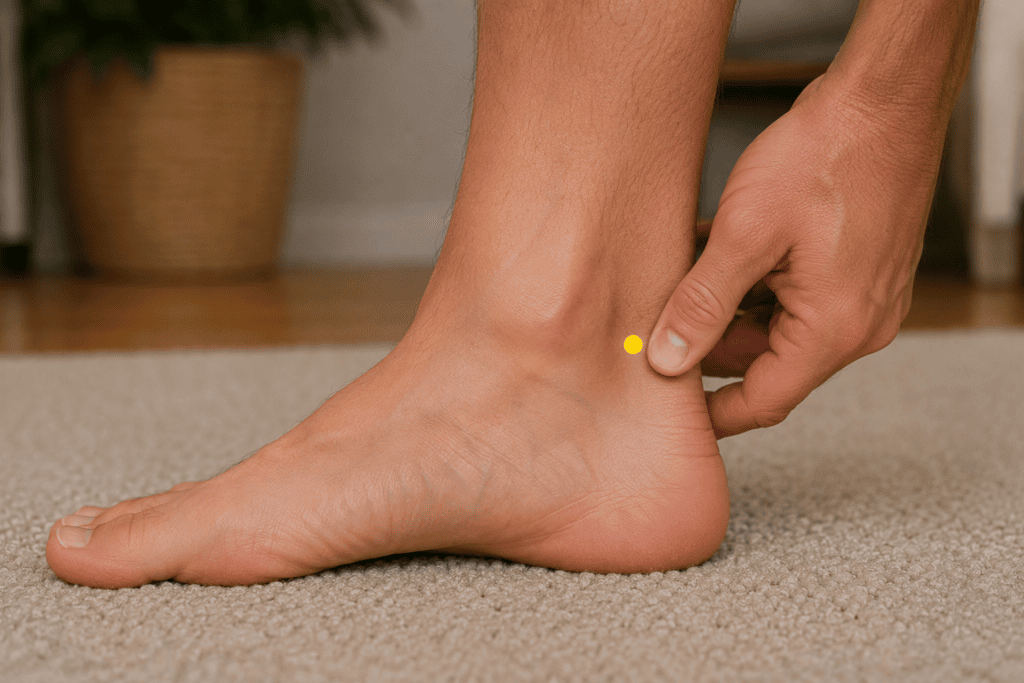
6. Press on KI3 above the inner ankle to strengthen memory at its root. KI3 sits in the hollow between the inner ankle bone and the Achilles tendon, level with the tip of the ankle bone. Press firmly with your thumb for one to two minutes on each ankle. KI3 is called “Taixi,” the source point of the Kidney.
In Chinese medicine, the Kidney stores the essence that nourishes the brain and underpins memory and learning ability. KI3, as its primary point, directly reinforces this foundation. It enhances memory, mental stamina, and the ability to absorb and retain information during extended study sessions by addressing the root source of these faculties. Additionally, it helps calm fear and insecurity, which can impair exam performance. For students experiencing tiredness in memory and mental resilience, especially during intense study periods, this point helps restore the deep reserves essential for effective learning.
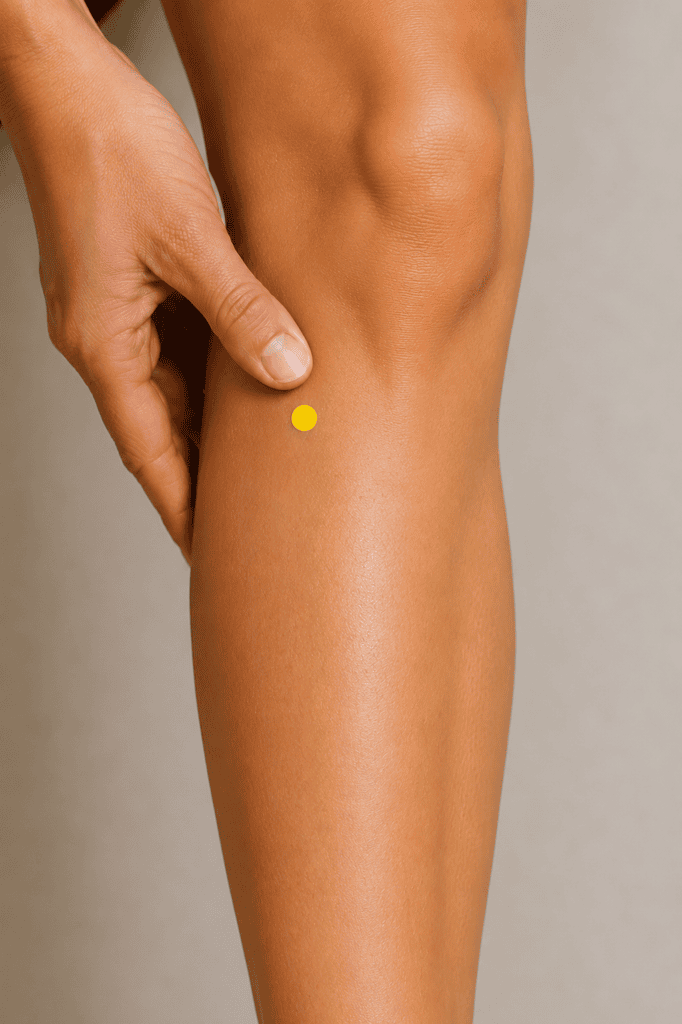
7. Press on ST36 below the knee to sustain mental energy and stamina. ST36 sits four finger-widths below the lower edge of the kneecap and one finger-width to the outside of the shinbone, on the muscle that rises when you flex your foot. Press firmly with your thumb for one to two minutes on each leg. ST36 is called “Zusanli,” the “Leg Three Miles,” and it is the master point for energy in the whole body.
ST36 revitalizes Qi and strengthens the Spleen and Stomach, which generate the body’s energy. This energy sustains mental alertness during extended study periods and combats fatigue that can diminish focus. Since the Spleen also influences thought processes, strengthening it directly promotes mental clarity. For students who get tired and lose concentration over time, this point helps restore stamina, ease digestive discomfort often caused by snacking, and stabilize the entire system.
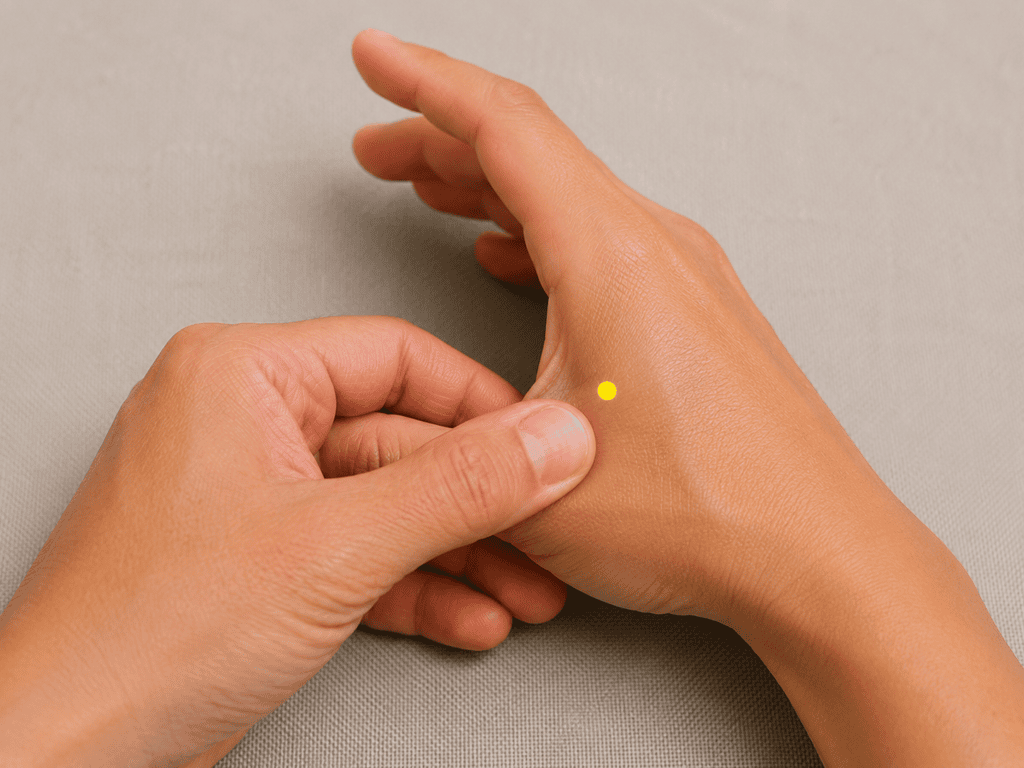
8. Press on LI4 in the hand to clear the head and relieve study tension. LI4 sits in the webbing between the thumb and index finger, at the highest point of the muscle when you bring the thumb and finger together. Press firmly with the thumb of your other hand for one to two minutes on each hand. LI4 is called “Hegu,” the command point for the head and face. LI4 is avoided during pregnancy.
LI4 helps clear the mind and alleviates tension and dull headaches that develop after hours of reading and screen time. Acting as the command point for the head, it promotes the movement of stuck Qi throughout the region, revitalizing a tired, foggy head. This makes it both a focus enhancer and tension reliever. For students enduring long study sessions that cause heaviness or tension headaches, LI4 offers relief while remaining discreet enough to press without disrupting concentration.
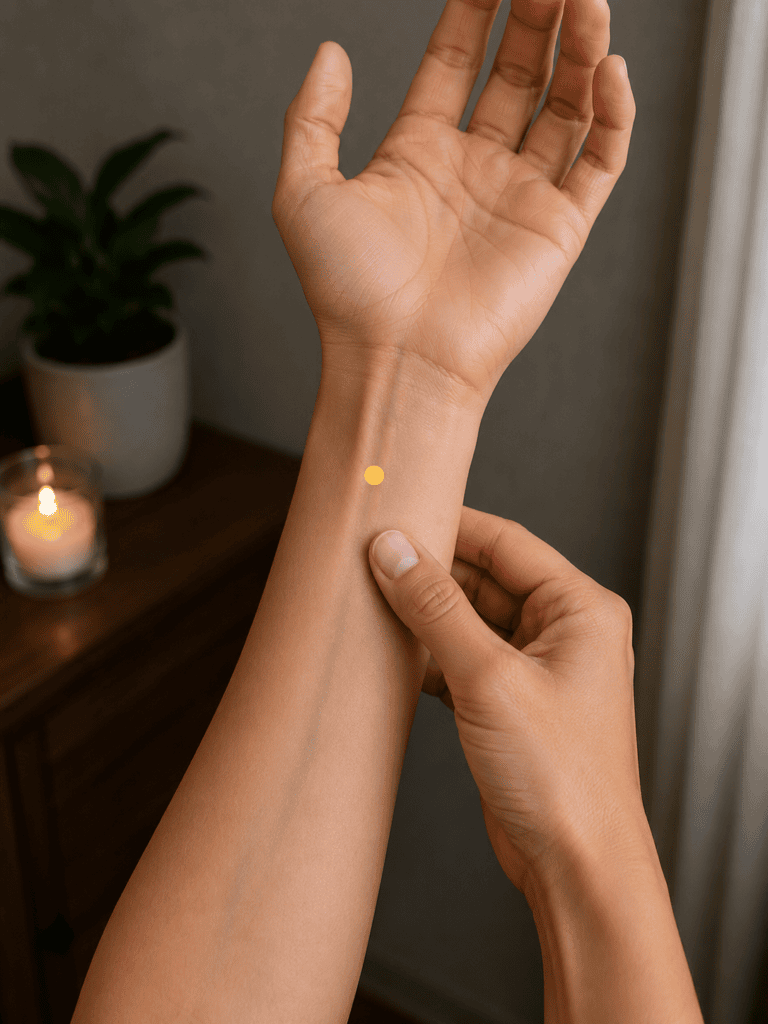
9. Press on PC6 on the inner forearm to settle nerves and the stomach. PC6 sits three finger-widths above the inner wrist crease, in the center of the forearm between the two tendons. Press firmly with your thumb for one to two minutes on each arm. PC6 is called “Neiguan,” the “Inner Pass,” and it opens the chest and calms the mind.
PC6 relaxes the mind and soothes the chest and stomach, making it helpful when study stress causes a tight chest, upset stomach, or low anxiety from looming deadlines or exams. It eases both physical tension and mental unrest, promoting a calmer, more focused state. For students whose nerves and stomach are upset during intense study sessions, this point helps stabilize them and works well with HT7 and Yintang when stress hampers concentration.
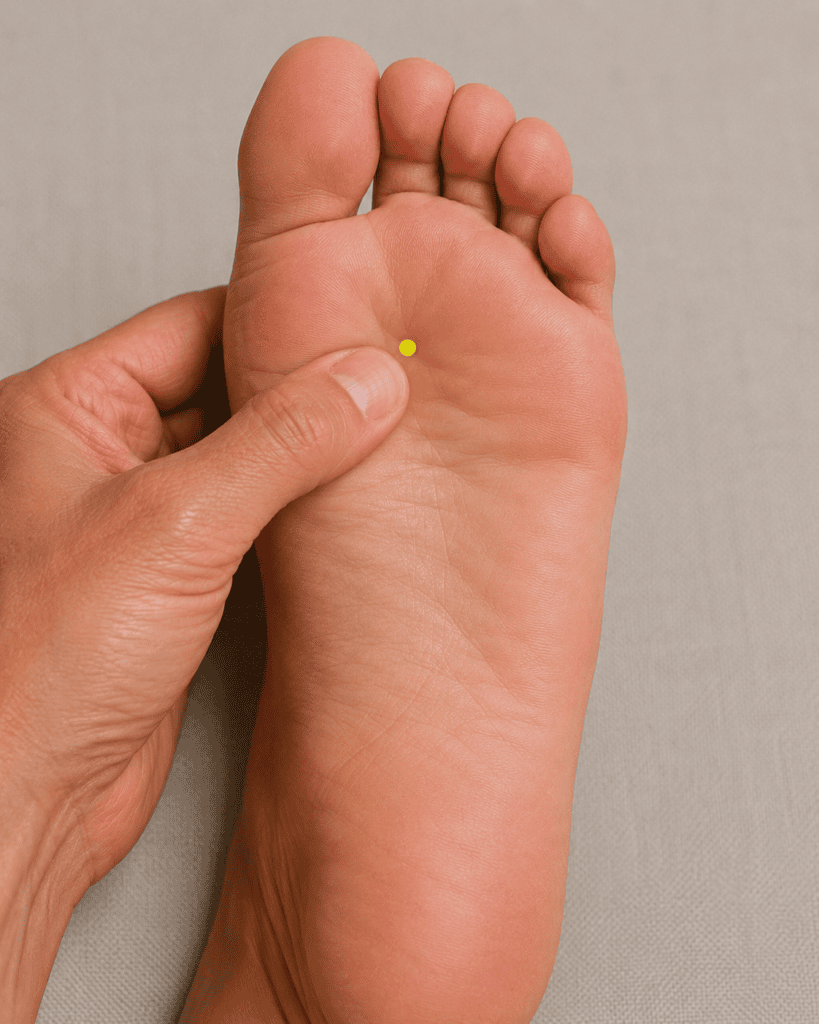
10. Press on KI1 on the sole of the foot to ground and refocus. KI1 sits on the sole of the foot, in the hollow that forms in the center of the ball of the foot when you curl the toes, about a third of the way down from the toes to the heel. Press firmly with your thumb for one to two minutes on each foot. KI1 is called “Yongquan,” the “Bubbling Spring,” and it is the lowest point on the body.
KI1 helps calm a scattered, overstimulated mind by redirecting excess mental energy. As the body’s lowest point, it provides a deeply grounding effect, soothing a frazzled, busy mind and restoring focus. For students feeling wired, unfocused, or overwhelmed, this point grounds and clears their thoughts. It also makes a strong end to a study break, helping students return to their work feeling refreshed.
Why These Acupressure Points Work
In Traditional Chinese Medicine, effective study relies on several key systems: the Spleen governs thinking; the Heart houses the Shen, which needs calming for better concentration; the Kidney stores essence crucial for memory and brain health; and smooth Qi, along with abundant Blood, support mental stability. These ten points form the foundation of all these components.
- The head points (Si Shen Cong, GV20, Yintang, GV24.5) clear and focus the mind, sharpen concentration and memory, and lift alertness right where thinking happens.
- The calming points (HT7, PC6) settle the Shen and ease the stress and nerves that block focus and recall.
- The root points (KI3, ST36) strengthen the Kidney essence behind memory and the Spleen energy behind mental stamina.
- The grounding point (KI1) settles an overloaded, scattered mind so focus can return.
How to Properly Use These Acupressure Points
Use these points at the start of a study session, during breaks, and whenever needed.
- Begin with Si Shen Cong and GV20 at the crown to set the mind clear and focused, and add Yintang and GV24.5 to settle and center concentration.
- When energy fades, work GV20, ST36, and KI1 to lift alertness and refresh a tired, overloaded head, and when stress creeps in, use HT7 and PC6 to calm the nerves.
- For the deeper work of memory and mental stamina over a heavy study stretch, press KI3 and ST36 regularly, not just in the moment.
- Hold each point for one to two minutes with firm, steady pressure, breathing slowly, and use a short point routine as a natural break between study blocks.
Acupressure complements effective study habits. Take regular breaks, as focus declines over time, and short pauses can refresh concentration better than continuous effort. Stay hydrated and don’t skip meals, since the brain needs fuel to concentrate and retain information. Prioritize sleep, as it consolidates memory; a good night’s rest improves recall more than late-night cramming. Limit heavy caffeine intake, which can cause jitteriness, and study in focused intervals instead of long, uninterrupted sessions.
When to Get Professional Help
These points address the everyday demands of studying. If you genuinely cannot concentrate no matter what you try, if focus and memory problems extend well beyond study stress and affect daily life, or if studying brings overwhelming anxiety, low mood, or exhaustion that does not lift with rest, it is worth reaching out. A doctor can check for physical causes of poor focus and fatigue, and a school counselor or therapist can help with attention difficulties, learning challenges, and the anxiety or burnout that heavy study can bring. All of these are common and treatable.
Acupressure is a helpful tool for the everyday demands of studying, but it is not a substitute for support when focus, memory, or mood problems require additional support.
Above and Beyond Acupuncture offers acupuncture, cupping, and lifestyle coaching at the North Frank Lloyd Wright Boulevard location in Scottsdale.
Schedule an appointment online or call us today to start your healing journey.
The points above are only as effective as the technique used to apply them. Where to press, how firmly, and for how long all affect the result. For a full breakdown of how to perform acupressure properly at home, read Performing Acupressure in 3 Easy Steps.

About the Publisher
Paul Kerzner, L.Ac., is a licensed acupuncturist and board-certified herbalist, as well as the founder of Above and Beyond Acupuncture in Scottsdale. His own journey from chronic patient to practicing acupuncturist shapes his commitment to providing honest, clinically grounded information about acupuncture and Traditional Chinese Medicine. Learn more about Paul and his clinical approach on the About Us page.