
Key Takeaways
- Vomiting can result from many causes such as stomach infections, overeating, or stress, causing discomfort and tiredness.
- Acupressure for vomiting consists of pressing specific points to help restore Stomach Qi and reduce symptoms.
- Important acupressure points include PC6 for nausea, CV12 for settling the stomach, and ST34 for acute upset, among others.
- Hydration and rest are essential following vomiting; slowly reintroduce fluids and bland foods as tolerated.
- Seek medical help if signs of severe dehydration are present or if vomiting persists for more than two days.

Vomiting can make you miserable.
Nausea, heaving, fatigue afterward, and worries about keeping anything down can dominate your day. Most episodes of sudden vomiting are caused by a stomach bug, certain foods, overeating, migraines, or anxiety. While it typically resolves within a day, focus on soothing your stomach so you can rest and stay hydrated. Acupressure offers assistance by targeting specific points on the stomach. It doesn’t require eating or drinking and can be performed while lying down, making it convenient when you’re feeling unwell.
In Traditional Chinese Medicine, vomiting is considered an imbalance where the Stomach Qi reverses direction. Normally, the stomach pushes food downwards, but disruptions cause energy to ascend. The cause of vomiting shapes its presentation: a stomach bug or spoiled food introduces harmful, often hot, substances, leading to sudden, intense vomiting, possibly with fever, a sour or foul taste, and a burning sensation. Overeating leads to food stagnation, causing fullness, belching, and relief after vomiting. Stress and anger can affect the Liver, leading to vomiting accompanied by tension, a bitter taste, and rib pain. A weak stomach and spleen may cause persistent nausea and vomiting after meals. The following points aim to restore downward Stomach Qi, eliminate harmful factors and heat, move stuck food, soothe the Liver, and help the system settle for rest and rehydration.
Here are nine acupressure points that may help calm your stomach and reduce the urge to vomit.
What Acupressure Points to Press and Why
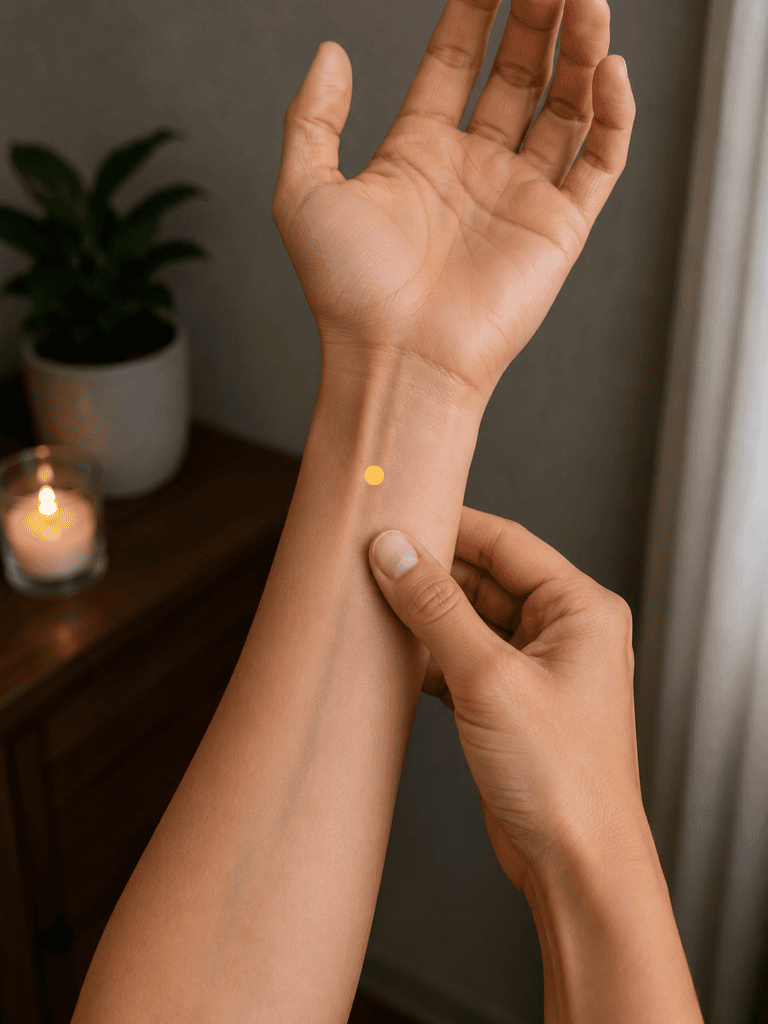
1. Press on PC6 on the inner forearm, the most important point for vomiting. PC6 sits three finger-widths above the inner wrist crease, in the center of the forearm between the two tendons. Press firmly with your thumb for two to three minutes on each arm, and return to it often. PC6 is called “Neiguan,” the “Inner Pass,” and it is the best-known point for nausea and vomiting.
PC6 is the most reliable point for promoting downward movement of Stomach Qi, with the most research supporting it for nausea and vomiting. It helps reduce nausea, calm the stomach, and alleviate anxiety or panic often associated with illness. Anti-nausea wristbands target this point, providing consistent, hands-free relief during rest. If you choose to use just one point, focus on this one on both wrists and revisit it frequently.
2. Press on CV12 above the navel to settle the Stomach directly. CV12 sits on the midline of the abdomen, halfway between the navel and the lower end of the breastbone, about four finger-widths above the belly button. Rest your fingertips there and press gently for one to two minutes, or simply rest a warm hand over it. CV12 is called “Zhongwan,” the Stomach’s gathering point.
CV12 sits just above your stomach and is a key point for supporting smooth function. It can relieve symptoms like nausea, cramping, and the pressure that may lead to vomiting. Apply gentle pressure, especially if your abdomen is sensitive after vomiting, and avoid pressing if it is very painful. Often, resting a warm hand on this area while taking slow, deep breaths can provide comfort.

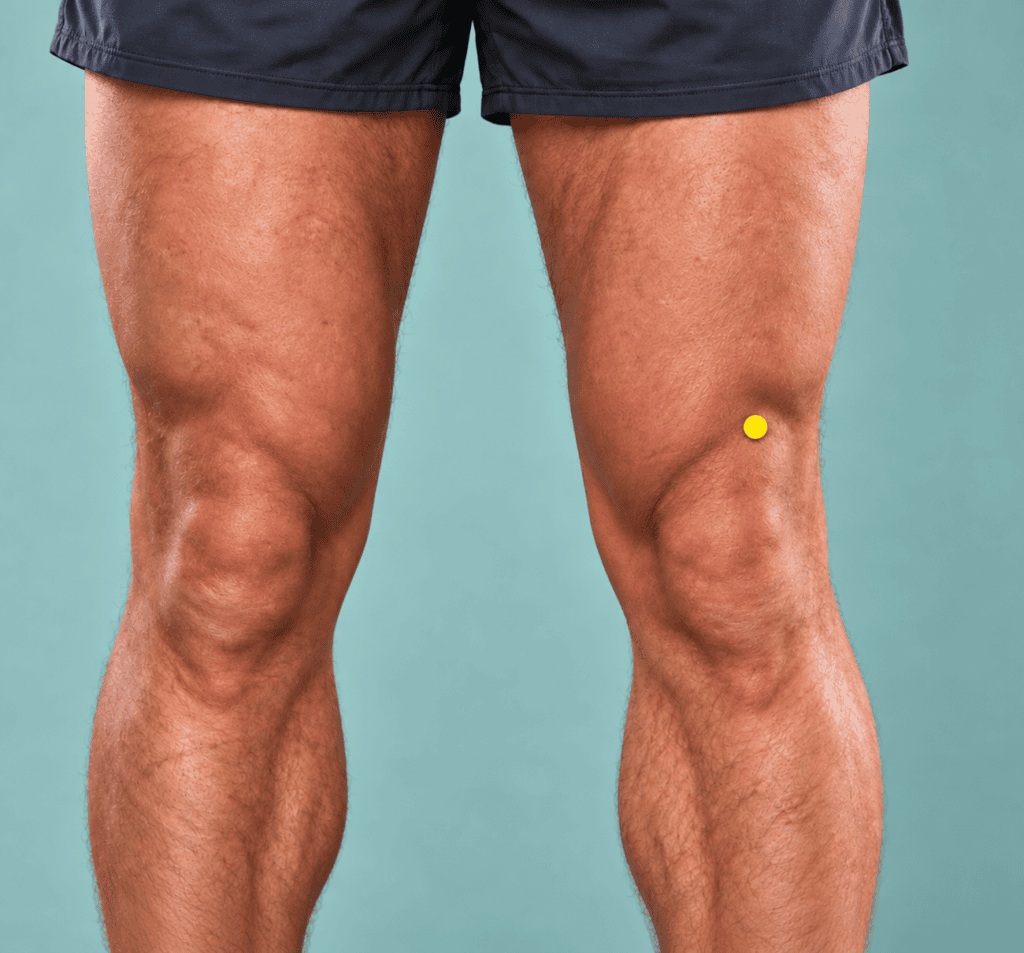
3. Press on ST34 above the knee for acute stomach upset. ST34 sits on the front of the thigh, about three finger-widths above the outer upper corner of the kneecap, in a small hollow in the muscle. Press firmly with your thumb for one to two minutes on each leg. ST34 is called “Liangqiu,” the cleft point of the Stomach, and is used for sudden, acute stomach problems.
In Chinese medicine, cleft points target sudden, severe issues. ST34, the stomach’s cleft point, is particularly effective for sudden stomach pain, cramps, and vomiting. It’s an excellent option during a stomach bug or after consuming something that quickly disturbs your stomach. Because it works at a distance, you can press it firmly even if your abdomen is too tender to touch.
4. Press on ST36 below the knee to strengthen and settle the Stomach. ST36 sits four finger-widths below the lower edge of the kneecap and one finger-width to the outside of the shinbone, on the muscle that rises when you flex your foot. Press firmly with your thumb for one to two minutes on each leg. ST36 is called “Zusanli,” the “Leg Three Miles,” and it is the master point for the Stomach.
ST36 supports smooth stomach function, directs energy downward, and boosts digestion when the stomach is upset. It is especially useful during vomiting and in recovery, when the stomach feels weak, appetite is low, and fatigue is present. Combining it with ST34 above the knee addresses the stomach channel both above and below the joint.

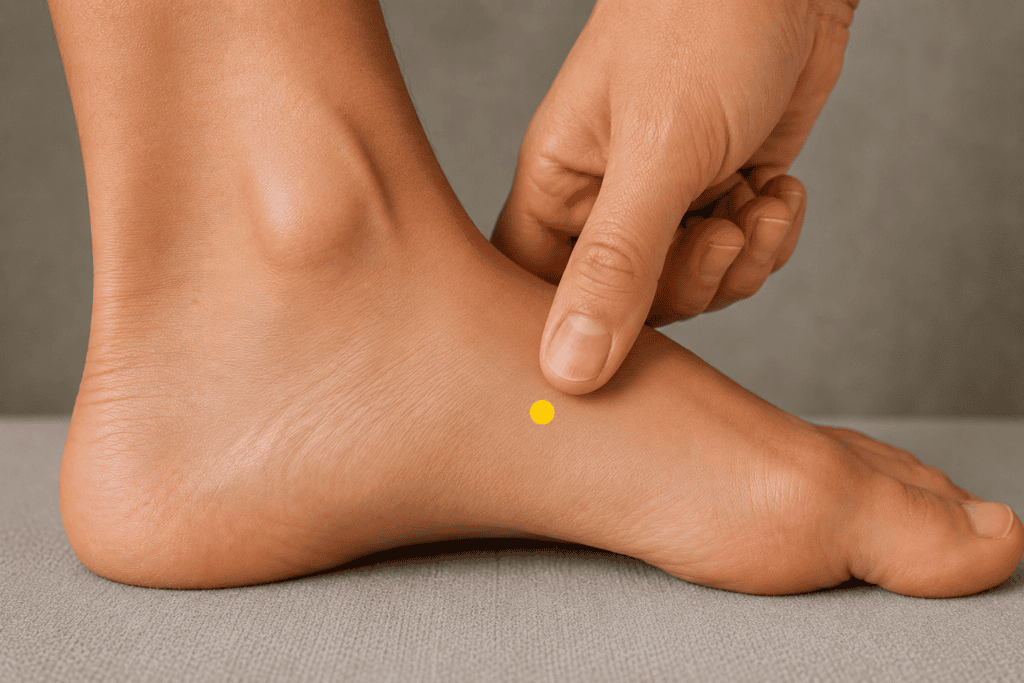
5. Press on SP4 on the arch of the foot, PC6’s classic partner. SP4 sits on the inner arch of the foot, in the depression just below and ahead of the bony bump behind the big-toe joint. Press firmly with your thumb for one to two minutes on each foot. SP4 is called “Gongsun,” and it is traditionally paired with PC6 for the stomach.
SP4 and PC6 form one of the most dependable acupressure pairs for an upset stomach, involving one point on the wrist and another on the foot. SP4 alleviates nausea, cramping, and stomach discomfort, while also supporting the spleen and stomach. When vomiting is severe, applying pressure to both SP4 and PC6 offers the maximum benefit, and someone can comfortably press these points while you relax.
6. Press on ST44 between the toes to clear heat from the Stomach. ST44 sits on the top of the foot, in the webbing between the second and third toes, just where they meet. Press firmly with your thumb for one to two minutes on each foot. ST44 is called “Neiting,” and it clears heat from the Stomach and intestines.
If vomiting is accompanied by heat, a sour or unpleasant taste, burning in the stomach, bad breath, thirst, or a low fever, it often indicates heat in the stomach, common in cases of food poisoning or stomach bugs. Chinese medicine considers this an excess of heat. The main point for clearing this heat is ST44. It cools the stomach and helps calm sudden, intense vomiting. For vomiting caused by eating rich, greasy, or spoiled food, this point addresses the underlying heat.

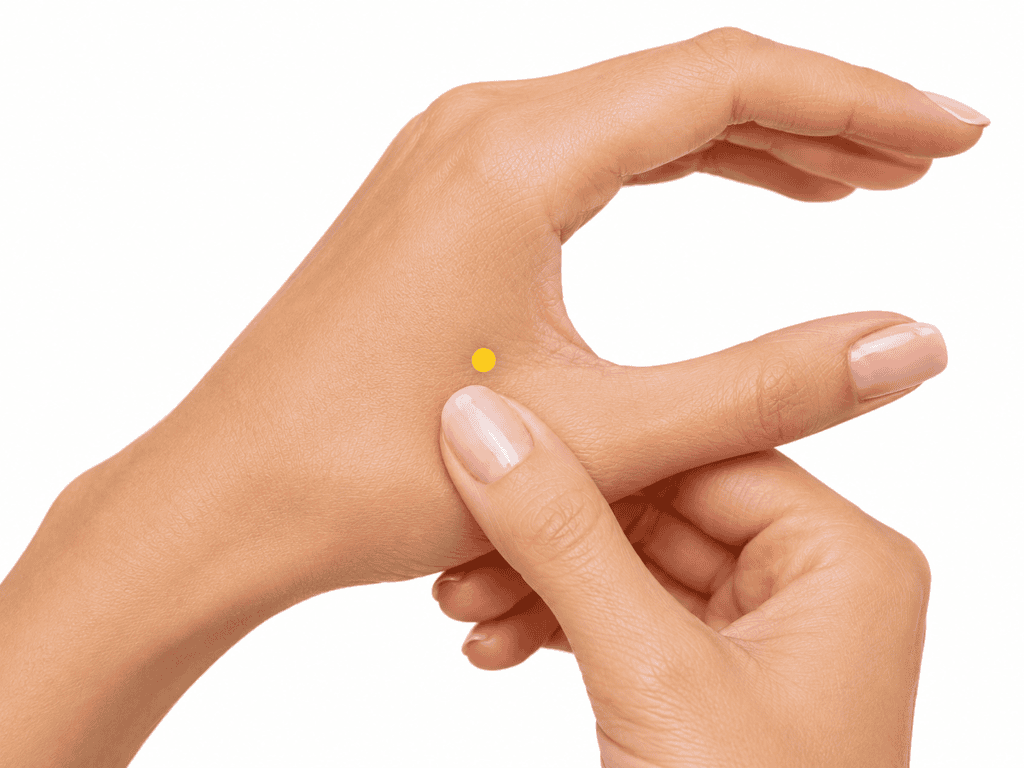
7. Press on LI4 in the hand to move Qi and ease the discomfort. LI4 sits in the webbing between the thumb and index finger, at the highest point of the muscle when you bring them together. Press firmly with the thumb of your other hand for one to two minutes on each hand. LI4 is called “Hegu,” and it is one of the great points for moving Qi and relieving pain. LI4 is avoided during pregnancy.
LI4 helps eliminate the source of a stomach bug, relieves headaches and body aches commonly associated with it, and enhances the calming effect of the stomach points. When combined with ST36, it forms a traditional duo for calming upset stomachs and intestines. Located on your hand, it’s easy to press even while lying in bed.
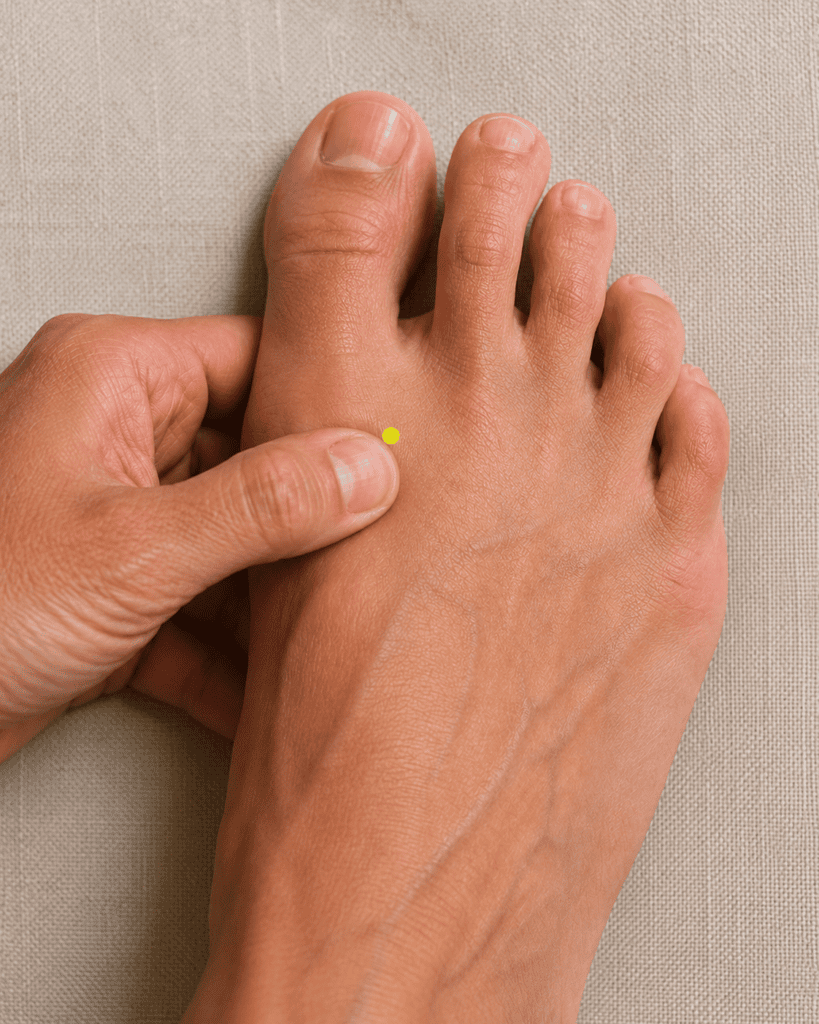
8. Press on LR3 on the top of the foot when stress or anger triggers vomiting. LR3 sits on the top of the foot, in the webbing between the big toe and second toe, about two finger-widths back where the bones meet in a small hollow. Press firmly with your thumb for one to two minutes on each foot. LR3 is called “Taichong,” and it is the primary point for moving stuck Liver Qi.
Some people vomit when they feel stressed, upset, or anxious. In Chinese medicine, this is attributed to the Liver affecting the Stomach and causing its energy to rise. LR3 helps release stagnant Liver energy and relaxes tension, relieving pressure on the stomach. If vomiting occurs along with tension, a bitter taste, or pain under the ribs, this point can help treat the underlying cause.
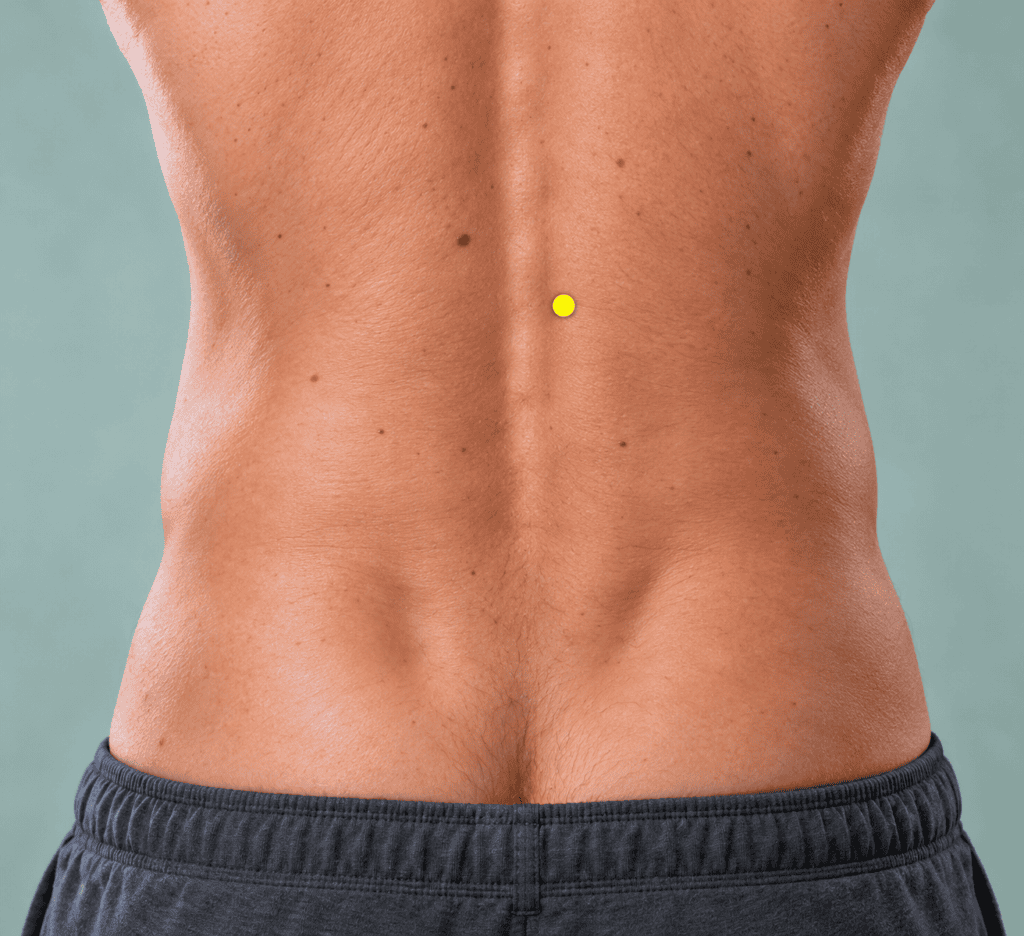
9. Press on BL21 on the mid-back to support the Stomach from behind. BL21 sits on the mid-back, about two finger-widths out to each side of the spine, just below the lowest ribs, a few finger-widths above waist level. Have someone press both sides with their thumbs for one to two minutes while you lie on your side or sit leaning forward, or rub the area gently to warm it. BL21 is called “Weishu,” the back-shu point of the Stomach.
BL21 is an acupressure point located on the back that can access the stomach’s energy. It helps balance the stomach and relieve vomiting without pressing on a painful abdomen. Gentle pressing or warming this area while resting can provide comfort and support. When combined with CV12 on the front, it can effectively treat the stomach from both sides.
Why These Acupressure Points Work
In Traditional Chinese Medicine, vomiting occurs when stomach energy rises instead of descending. This may be due to harmful factors, heat, lodged food, the Liver affecting the Stomach, or poor digestion. The nine points listed above address all these issues.
- The main points for vomiting (PC6, SP4, CV12, BL21) help move the stomach’s energy downward and settle the stomach from different angles. PC6 has the most evidence supporting its use.
- The points for sudden stomach problems (ST34, ST36, ST44) help calm quick upsets, strengthen the stomach, and clear heat from food poisoning or stomach bugs.
- The moving points (LI4, LR3), which promote energy flow, help your body remove harmful factors, reduce aches, and relieve stress that may raise stomach energy.
During active vomiting, keep it simple: rest and rehydrate.
- Start by pressing PC6 points on both wrists for two to three minutes each, repeating as necessary. Alternatively, consider using anti-nausea wristbands.
- Add SP4, ST34, and ST36 to your legs and feet. A helper can apply pressure to these points while you relax. Use ST44 if your vomiting is hot, sour, or foul-smelling.
- Use CV12 softly or simply place a warm hand on it. Have someone press or warm BL21 on your back.
- Include LR3 if stress or feeling upset triggered your vomiting.
- Maintain steady pressure on your arms and legs while gently pressing your belly. Breathe slowly with each wave of nausea.
Rehydration is essential for recovery after vomiting. After an episode, give your stomach a short rest, then start with small sips of water, an oral rehydration solution, or suck on ice chips. If you tolerate these, gradually increase your intake. Once you’ve gone several hours without vomiting, try eating bland foods such as broth, rice, toast, or crackers. Ginger tea or small sips of flat ginger ale can also help soothe your stomach. Avoid alcohol, caffeine, greasy, or rich foods until fully recovered, and ensure you get plenty of rest.
When to Get Professional Help
Seek medical attention immediately if you notice signs of dehydration such as minimal or no urine output, dark urine, dizziness upon standing, extreme thirst, a very dry mouth, or unusual sleepiness. Additionally, seek help if you cannot keep any fluids down for about a day as an adult. Infants, young children, older adults, pregnant women, and individuals with diabetes or other chronic illnesses are more prone to dehydration and should seek medical advice sooner. Emergency care is necessary if you vomit blood or material resembling coffee grounds, experience severe or worsening abdominal pain, have a hard or swollen abdomen, vomit along with a severe headache and stiff neck, vomit after a head injury, or show confusion or signs of severe dehydration. Consult a doctor if vomiting lasts more than two days, recurs frequently, or occurs with a high fever.
Acupressure may ease an upset stomach and is generally safe, but it should complement rest, fluids, and any medical care when needed.
Above and Beyond Acupuncture offers acupuncture, cupping, and lifestyle coaching at the North Frank Lloyd Wright Boulevard location in Scottsdale.
Schedule an appointment online to start your healing journey.
For nausea without vomiting, “How to Stop Nausea With Acupressure” addresses this condition. If you’re pregnant, you can use acupressure for morning sickness, but avoid several points during pregnancy.
The points above are only as effective as the technique used to apply them. Where to press, how firmly, and for how long all affect the result. For a full breakdown of how to perform acupressure properly at home, read Performing Acupressure in 3 Easy Steps.

About the Publisher
Paul Kerzner, L.Ac., is a licensed acupuncturist and board-certified herbalist, as well as the founder of Above and Beyond Acupuncture in Scottsdale. His own journey from chronic patient to practicing acupuncturist shapes his commitment to providing honest, clinically grounded information about acupuncture and Traditional Chinese Medicine. Learn more about Paul and his clinical approach on the About Us page.