
Key Takeaways
- Acupressure can effectively relieve morning sickness during pregnancy using specific points.
- PC6 on the inner forearm is the primary acupressure point for nausea, often used in wristbands.
- The article highlights six acupressure points: PC5, PC 6, ST36, CV12, KI21, and Yintang, each targeting different aspects of nausea.
- The integration of acupressure techniques with fundamental nausea mitigation strategies improves overall effectiveness.
- Seek medical evaluation for severe vomiting that could indicate hyperemesis gravidarum, as acupressure alone is insufficient.

There’s a good reason why those pressure wristbands, often used for motion sickness, also find their way into the bags of pregnant women. The point they press, PC6 on the inner forearm, is extensively studied as an effective acupressure spot for relieving nausea, especially during pregnancy. For a woman in her first trimester who wants to stay comfortable without turning to medication, acupressure provides a simple, accessible tool that she can easily use on her own.
This article highlights six helpful acupressure points that can calm morning sickness, and all are safe to use during pregnancy. Choosing the right points matters, since some are intentionally avoided during pregnancy. Rest assured, each point listed below has been carefully selected with your safety in mind.
An important note before starting. Some acupressure points can stimulate uterine activity and should be avoided during pregnancy until you reach full term. The points listed here are all safe for relieving pregnancy nausea. If you’re experiencing hyperemesis gravidarum, which is severe and persistent vomiting preventing you from keeping fluids down, acupressure alone may not be enough, and it’s best to consult your healthcare provider.
Here are six acupressure points that can help:
What Acupressure Points to Press and Why
Each point addresses a different part of the nausea pattern. You can press them individually as nausea rises or work through the full set as a daily practice.
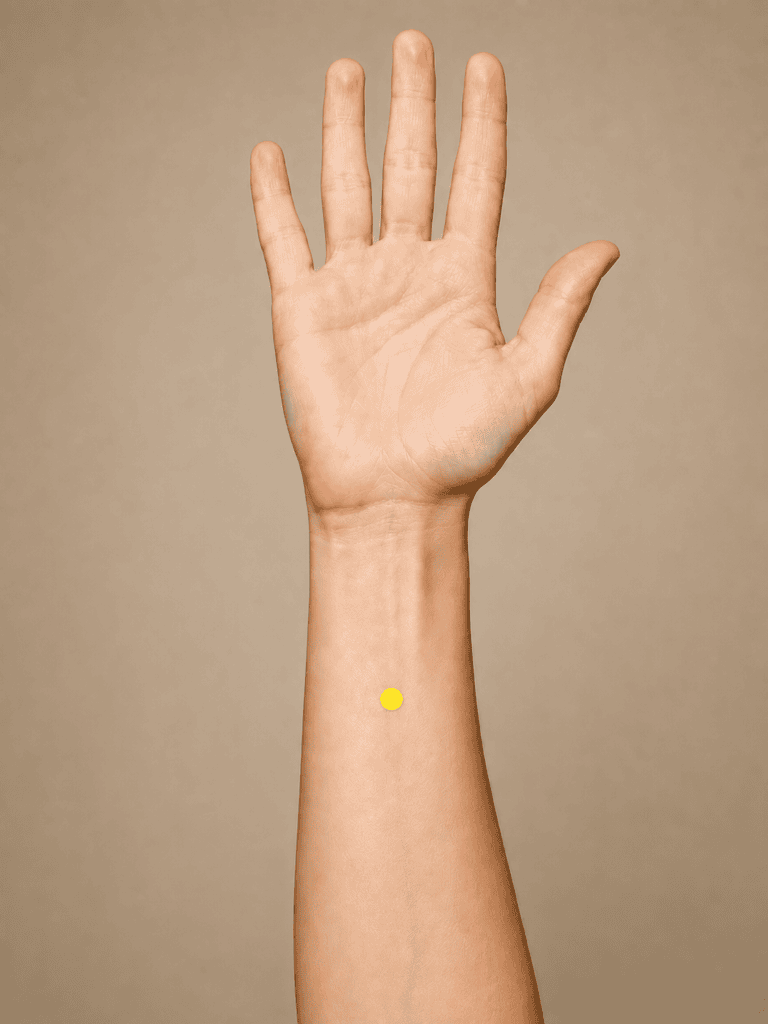
1. Press on PC6 on your inner forearm for the primary nausea point. PC6 sits about three finger-widths above the inner wrist crease, between the two tendons in the center of the forearm. Press firmly with your thumb for one to two minutes on each arm. PC6 is called “Neiguan” or “Inner Pass” and is the most researched acupressure point for nausea of any kind.
PC6 is the point that pressure wristbands target. For morning sickness, wearing the bands on both wrists through the day gives continuous relief, and you can press the point by hand anytime nausea rises. This is the single most important point for morning sickness and the first one to reach for.
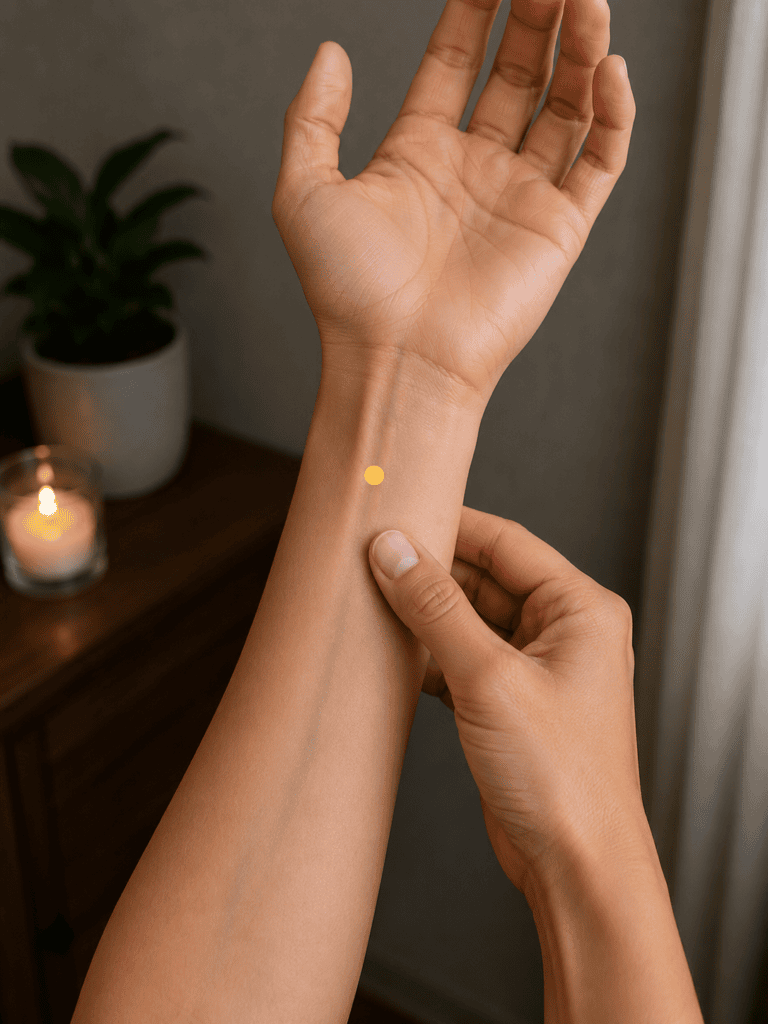
2. Press on PC5 on your inner forearm for Stomach regulation. PC5 sits about four finger-widths above the inner wrist crease, one finger-width above PC6, between the same two tendons. Press firmly with your thumb for one to two minutes on each arm. PC5 is called “Jianshi” or “Intermediary Messenger.”
PC5 regulates the Stomach and calms the nausea that comes with rebellious Stomach Qi rising upward. Because it sits just above PC6, you can cover both by pressing along that stretch of the inner forearm, which many women find easier than isolating a single spot. PC5 also helps settle the emotional unease that often rides along with nausea.
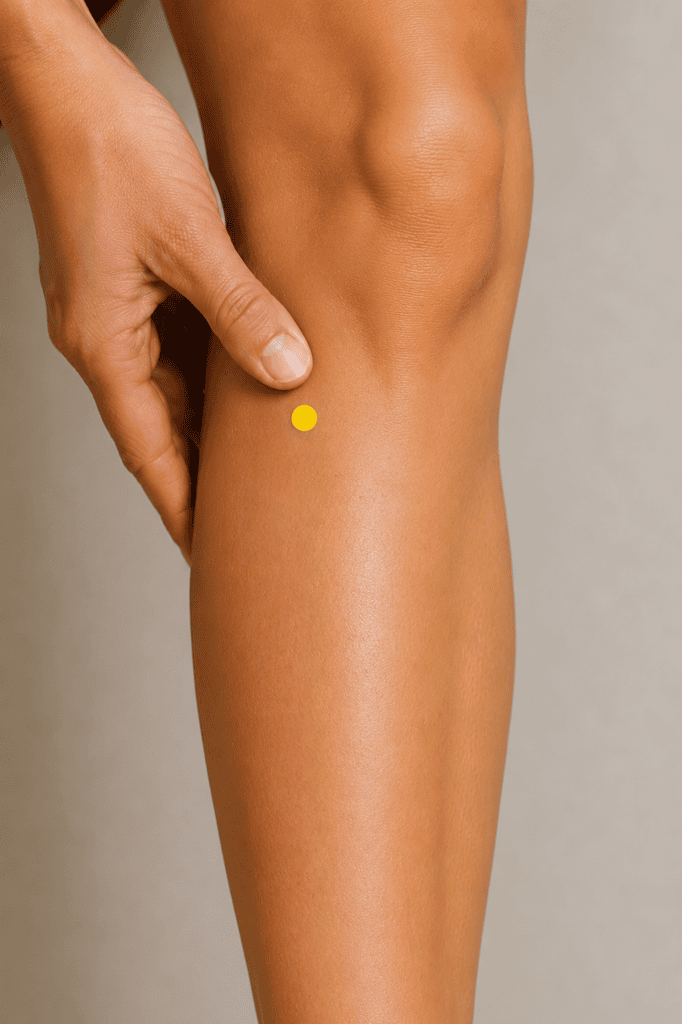
3. Press on ST36 below your knee for Stomach support. ST36 sits about four finger-widths below the kneecap, one finger-width to the outside of the shinbone in the muscular depression there. Press firmly with your thumb for one to two minutes on each leg. ST36 supports Stomach function and digestion directly.
The point strengthens the digestive system that morning sickness disrupts and helps the body hold and process food. ST36 works particularly well combined with PC6, settling the nausea from both the Pericardium and Stomach meridians at once.
4. Press on CV12 on your upper abdomen for the Stomach gathering point. CV12 sits on the midline of the upper abdomen, about halfway between the bottom of the breastbone and the navel. Press gently with your fingertips for one to two minutes. CV12 is called “Zhongwan” or “Middle Cavity” and is the gathering point of the Stomach.
The point directly addresses the Stomach Qi and the nausea that comes when that Qi is disturbed. Use gentle pressure here, especially as pregnancy progresses. CV12 works well combined with the forearm points for a fuller settling of the stomach.

5. Press on KI21 on your upper abdomen for directing Stomach Qi downward. KI21 sits on the upper abdomen, about six finger-widths above the navel and roughly half a thumb-width out to the side of the midline, just below the ribcage. Press gently with your fingertips for one to two minutes on each side. KI21 is called “Youmen” or “Dark Gate.”
In Chinese medicine, nausea and vomiting reflect Stomach Qi rebelling upward when it should be descending. KI21 has a traditional indication for redirecting that rebellious Qi downward, which is the corrective direction for nausea. It is classically used for morning sickness and for difficulty keeping food down. Use gentle pressure given the abdominal location.

6. Press on Yintang between your eyebrows for calming the mind. Yintang sits in the small hollow directly between the eyebrows, above the bridge of the nose. Press gently with your fingertip for one to two minutes. Yintang activates the parasympathetic nervous system directly.
Nausea and anxiety feed each other. The more unwell you feel, the more the nervous system activates, which deepens the nausea. Yintang calms that loop and settles the mind, which often takes the edge off the nausea itself. It is gentle, safe, and easy to use anywhere.

Why These Acupressure Points Work
Morning sickness consists of several interconnected patterns. Normally, the Stomach Qi should descend during digestion, but it instead rebels upward, causing nausea and vomiting. Early pregnancy hormonal changes disrupt the digestive system, while increased sensitivity enhances smells and sensations. Additionally, anxiety about feeling unwell triggers the nervous system, intensifying nausea.
Acupressure works on several of these patterns at once:
- The forearm points (PC6, PC5) are the primary anti-nausea points, with PC6 carrying the strongest research support of any acupressure point for nausea.
- The Stomach support point (ST36) strengthens the digestion that pregnancy disrupts.
- The abdominal points (CV12, KI21) address the Stomach Qi directly and redirect the rebellious Qi downward, the corrective direction for nausea.
- The calming point (Yintang) settles the anxiety-nausea loop that amplifies the experience.
The article ‘Can Acupuncture Treat Morning Sickness?‘ explains the Traditional Chinese Medicine method for handling pregnancy-related nausea.
How to Use These Acupressure Points
For nausea, pressing PC6 and PC5 together on the inner forearm gives the fastest response. Use this combination in the moment it takes place. Press firmly and breathe slowly.
- For daily prevention, working through the full six-point set once or twice a day supports the underlying patterns and reduces how often and how strongly nausea hits.
- For pressure wristbands, wear them on both wrists through the day to keep steady pressure on PC6. This is one of the most practical tools for morning sickness because it works passively while you go about your day.
- For nausea triggered by smells, Yintang and PC6 pressed together settle both the nervous system response and the nausea itself.
- For difficulty keeping food down, CV12 and KI21 pressed gently before eating help settle the stomach and encourage the downward movement that holds food.
- Firm pressure works well for the forearm and leg points. Gentle pressure is better for the abdominal points and Yintang, especially as pregnancy progresses.
Combining acupressure with simple morning sickness strategies enhances effectiveness. Eat small, frequent meals instead of large ones. Keep plain crackers near your bed to eat before getting up. Use ginger tea, ginger chews, or ginger capsules. Sip fluids steadily throughout the day. Steer clear of known smell and food triggers. Ensure sufficient rest, as fatigue can intensify nausea. Take advantage of fresh air whenever possible.
When to Get Professional Help
Acupressure may alleviate typical morning sickness; however, certain situations necessitate medical intervention.
Seek medical care for severe, persistent vomiting that prevents you from keeping fluids or food down, which may indicate hyperemesis gravidarum and requires medical treatment. Signs of dehydration such as very dark urine, dizziness, or infrequent urination. Vomiting accompanied by fever or pain. Weight loss during pregnancy. Nausea and vomiting that begin for the first time after nine weeks of pregnancy. Any symptom that worries you or does not feel right.
Morning sickness is a common, typically harmless condition; however, hyperemesis gravidarum is a serious medical concern that requires professional treatment. Do not attempt to address severe and persistent vomiting solely through acupressure.
For the range of ways acupuncture supports pregnancy beyond nausea, Benefits of Acupuncture While Pregnant covers the fuller picture.
Many pregnant women also experience anxiety, stress, and depression that overlap with the physical demands of pregnancy.
Above and Beyond Acupuncture offers acupuncture, cupping, and lifestyle coaching at the North Frank Lloyd Wright Boulevard location in Scottsdale.
Schedule an appointment online or call us today to start your healing journey.
The points above are only as effective as the technique used to apply them. Where to press, how firmly, and for how long all affect the result. For a full breakdown of how to perform acupressure properly at home, read Performing Acupressure in 3 Easy Steps.
About the Publisher
Paul Kerzner, L.Ac., is a licensed acupuncturist and board-certified herbalist, as well as the founder of Above and Beyond Acupuncture in Scottsdale. His own journey from chronic patient to practicing acupuncturist shapes his commitment to providing honest, clinically grounded information about acupuncture and Traditional Chinese Medicine. Learn more about Paul and his clinical approach on the About Us page.