
Key Takeaways
- Peripheral neuropathy leads to tingling, burning sensations, and numbness in the hands and feet caused by nerve damage.
- Diabetes is the primary cause, although chemotherapy and vitamin deficiencies also play a role.
- Acupressure for peripheral neuropathy focuses on specific points to improve blood flow, support nerve health, and alleviate symptoms.
- Regularly applying pressure to specific acupressure points can support conventional treatments and enhance nerve health.
- Consult a healthcare professional to identify underlying causes and get assistance for sudden or intense symptoms.

Do your hands or feet tingle, burn, or feel numb, and the feeling just will not go away?
Peripheral neuropathy occurs when nerves outside the brain and spinal cord are damaged. These nerves transmit sensation and movement signals to your hands, feet, and internal organs. Around twenty million Americans are affected, and the symptoms can be quite distressing. You may experience burning pain at night, pins and needles, numbness that causes unsteady walking, sharp jolts, sensitivity to touch or cold, a weak grip or weak ankles, or loss of feeling that leads to missed injuries.
While standard nerve-pain medications can help manage these symptoms for some, they rarely restore nerve function. Daily at-home acupressure practice can support circulation, nerve health, and symptom relief.
What Causes Peripheral Neuropathy
Peripheral neuropathy isn’t a single disease but a condition with many causes. Diabetes is the most common cause, but others include chemotherapy, medications, vitamin B12 deficiency, excessive alcohol intake, autoimmune conditions, kidney or thyroid issues, infections, inherited disorders, and nerve injuries. Sometimes no specific cause is identified.
Neuropathy typically begins in the longest nerves, often starting in the toes and feet and progressing to the fingers and hands, a pattern known as stocking-and-glove. It can affect sensory nerves (leading to numbness, tingling, and pain), motor nerves (causing weakness and cramps), or autonomic nerves (affecting blood pressure, digestion, sweating, and bladder function). Identifying and addressing the underlying cause is crucial, and acupressure can complement other treatments.
How Traditional Chinese Medicine Views Peripheral Neuropathy
Traditional Chinese Medicine views peripheral neuropathy as an interconnected pattern pointing to the same underlying issue: insufficient nourishment and blocked flow to the hands and feet. Weak Qi and Blood impede circulation, causing numbness and weakness. Blood stagnation in the tiny vessels results in burning, stabbing pain and altered sensation, often worsening at night. Wind in the channels causes tingling and pins and needles, while dampness leads to heaviness and swelling. In chronic cases, the Kidney’s deep reserves and the Liver’s role in nourishing the sinews become depleted.
The points below aim to enhance Qi and Blood, relieve stagnation, relax the sinews, support reserve energy, and unblock the channels in both hands and feet.
Find the Right Guide for Your Symptoms
This article discusses peripheral neuropathy affecting both the hands and feet. If your symptoms are localized or have a specific origin, these related articles provide more detailed information:
- Acupressure for neuropathy in the feet
- Acupressure for neuropathy in the hands
- Acupressure for diabetic neuropathy
What Acupressure Points to Press and Why for Peripheral Neuropathy
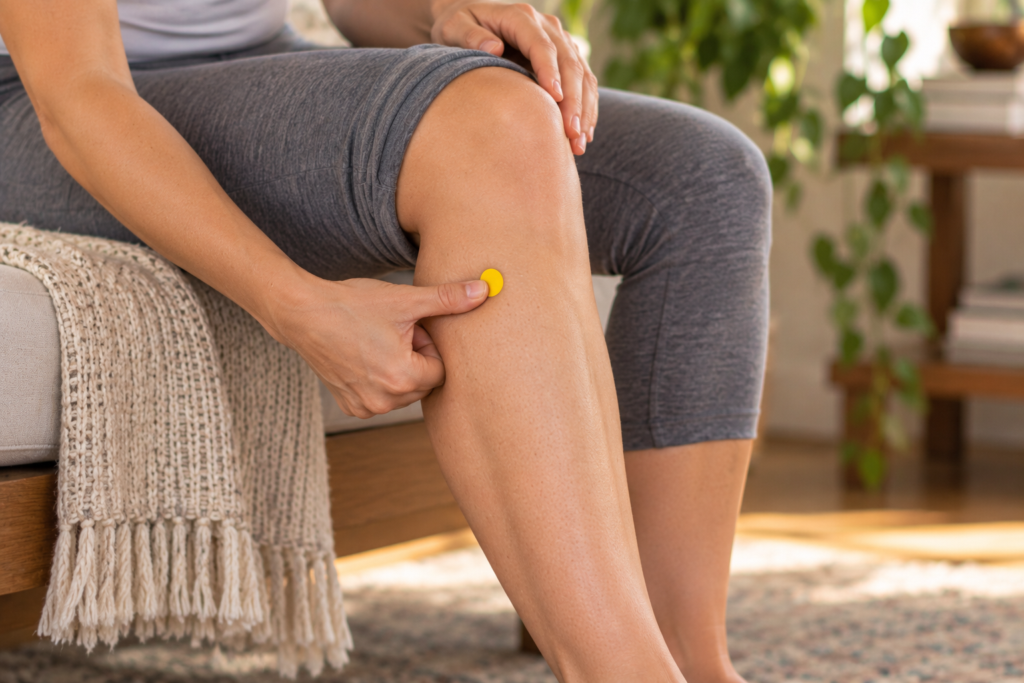
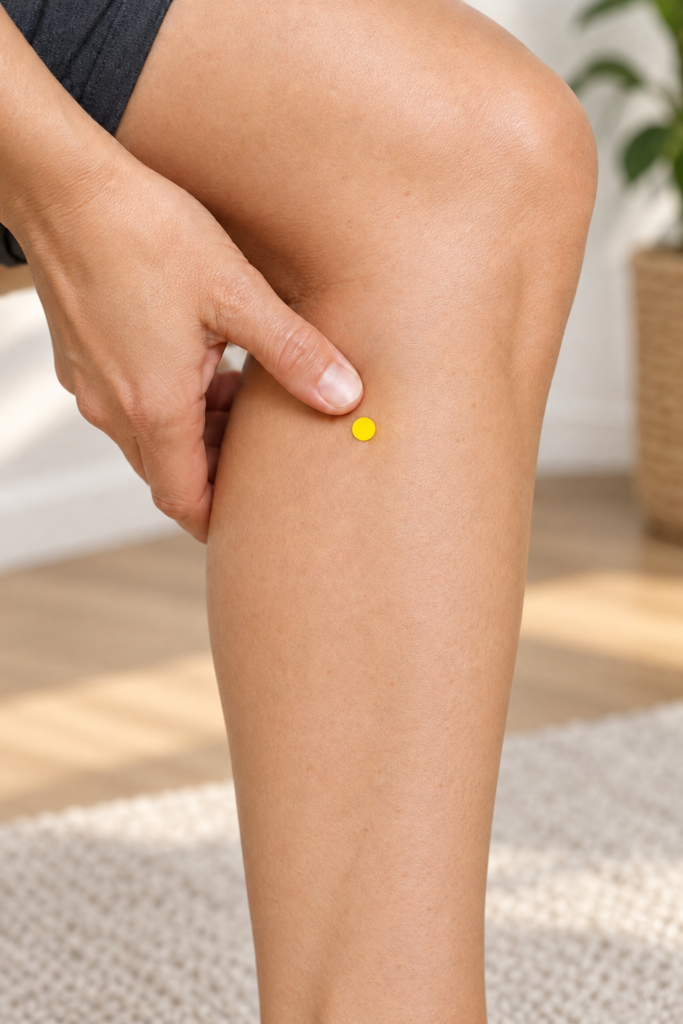
1. Press on ST36 below the knee to build Qi and Blood. ST36 sits four finger-widths below the lower edge of the kneecap and one finger-width to the outside of the shinbone, on the muscle that rises when you flex your foot. Press firmly with your thumb for one to two minutes on each leg. ST36 is called “Zusanli,” the “Leg Three Miles.”
ST36 is fundamental for treating neuropathy because it boosts Qi and Blood, nourishes nerves, enhances leg blood flow, and addresses depletion that causes numbness and weakness. It is one of the most commonly studied points in acupuncture research for neuropathy. Located on the upper shin area where sensation usually remains, it can be pressed firmly daily.
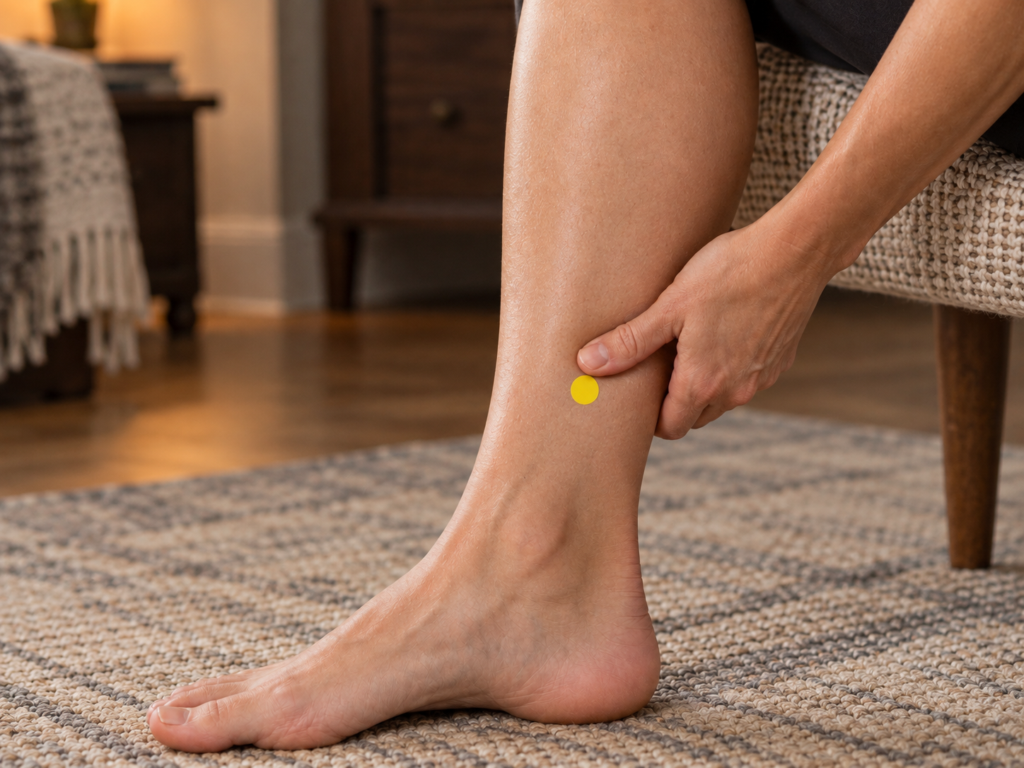
2. Press on SP6 above the inner ankle to nourish and move the Blood. SP6 sits four finger-widths up from the tip of the inner ankle bone, just behind the back edge of the shinbone. Press firmly for one to two minutes on each leg. SP6 is called “Sanyinjiao,” the “Three Yin Intersection.” SP6 is avoided during pregnancy.
SP6 also supports the Spleen, Liver, and Kidneys, enhancing and nourishing the blood that the nerves depend on. It targets both the deficiency that leads to numbness and the stagnation that causes burning pain, while also calming the mind and supporting sleep to relieve the nighttime nerve pain often experienced.
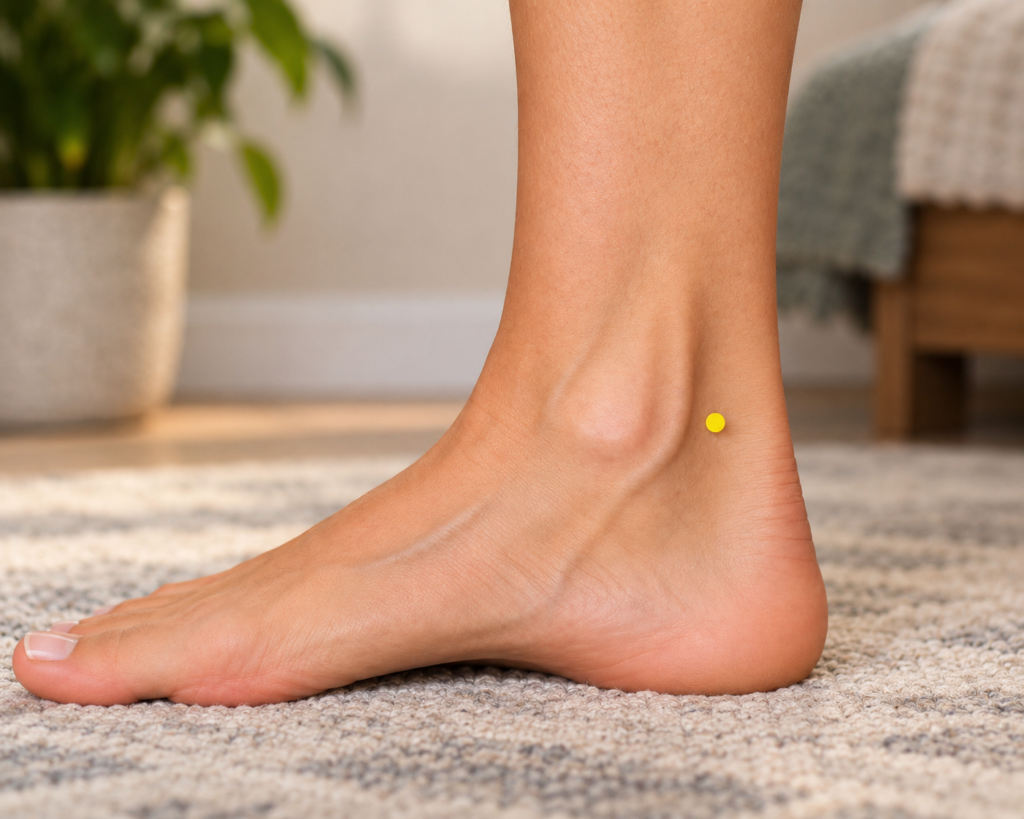
3. Press on KI3 above the inner ankle to rebuild the deep reserves. KI3 sits in the hollow between the inner ankle bone and the Achilles tendon, level with the tip of the ankle bone. Press firmly with your thumb for one to two minutes on each ankle. KI3 is called “Taixi,” the Kidney’s source point.
Chronic neuropathy depletes the body’s essential reserves, and KI3 helps rebuild this foundation. It is especially vital for long-lasting neuropathy caused by aging or chemotherapy. When combined with ST36 and SP6, KI3 forms a key part of the supportive routine.
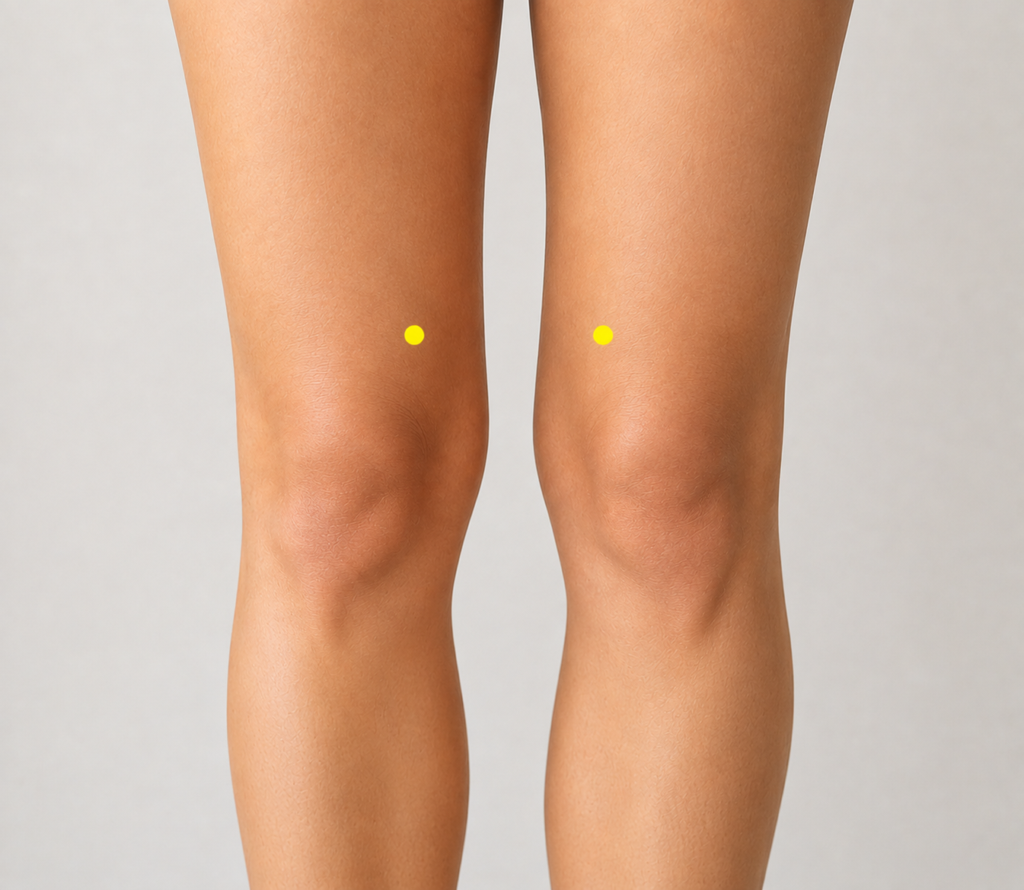
4. Press on SP10 above the knee to move stagnant Blood. SP10 sits on the inner thigh, about three finger-widths above the inner upper corner of the kneecap, on the muscle bulge there. Press firmly with your thumb for one to two minutes on each leg. SP10 is called “Xuehai,” the “Sea of Blood.”
If neuropathy causes a burning, stabbing pain that worsens at night, Chinese medicine links this to blood stagnation in the small vessels of the extremities. SP10 is a primary acupoint used to disperse this stagnation. When combined with SP6, located below SP10, it helps to nourish and activate the blood.
5. Press on GB34 below the outer knee to relax the sinews. GB34 sits on the outer lower leg, in the hollow just below and in front of the head of the fibula, the bony knob below the outer side of the knee. Press firmly with your thumb for one to two minutes on each leg. GB34 is called “Yanglingquan,” the influential point for the sinews.
If the motor nerves are affected, causing cramping, weakness, and a stiff, unsteady feeling in the legs, GB34 will help relax and nourish the sinews throughout the body while also promoting circulation along the outer leg down to the foot.
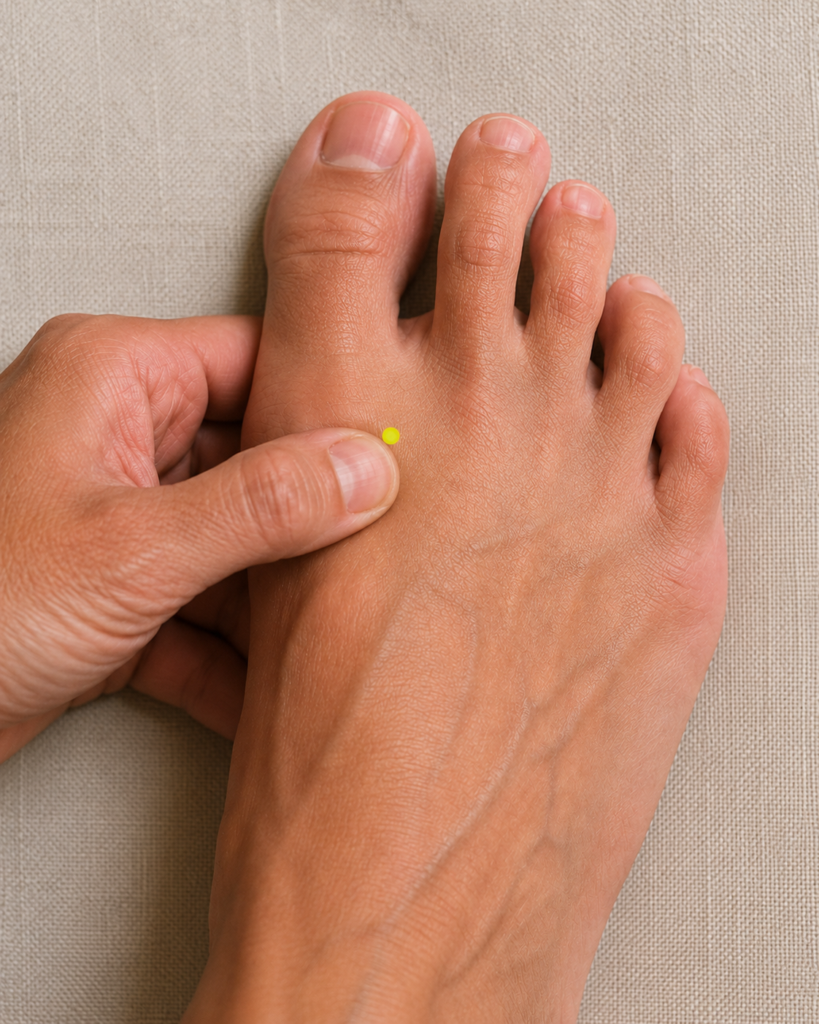
6. Press on LR3 on the top of the foot to move the Blood through the feet. LR3 sits on the top of the foot, in the webbing between the big toe and second toe, about two finger-widths back where the bones meet in a small hollow. Press with your thumb for one to two minutes on each foot, adjusting for reduced sensation. LR3 is called “Taichong.”
LR3 helps unblock Liver Qi and Blood flow along the foot, relieving burning and abnormal sensations. It also addresses stress and sleep issues caused by nerve pain. If you experience numbness in your feet, monitor the pressure at this point.
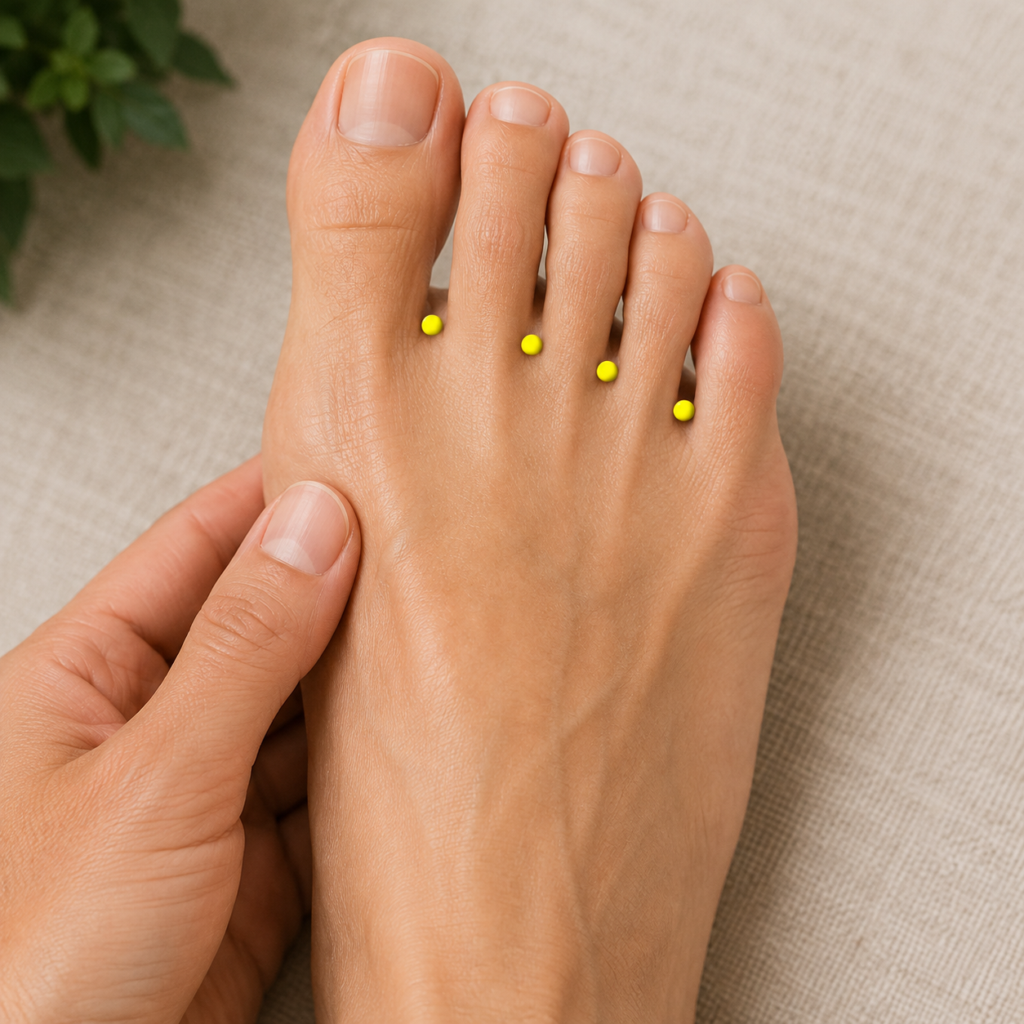
7. Press on Ba Feng between the toes, the classic points for the feet. Ba Feng are four points on the top of each foot, in the webbing between the toes where each pair meets the foot. Gently press each with your thumb for thirty seconds to a minute, working across the foot. Ba Feng means “Eight Winds.”
Ba Feng is a traditional point group linked to numbness, tingling, burning, and pins and needles in the feet and toes, where peripheral neuropathy usually begins. Use gentle pressure, stay attentive during treatment, and avoid areas with cuts, blisters, cracks, or fungal infections.
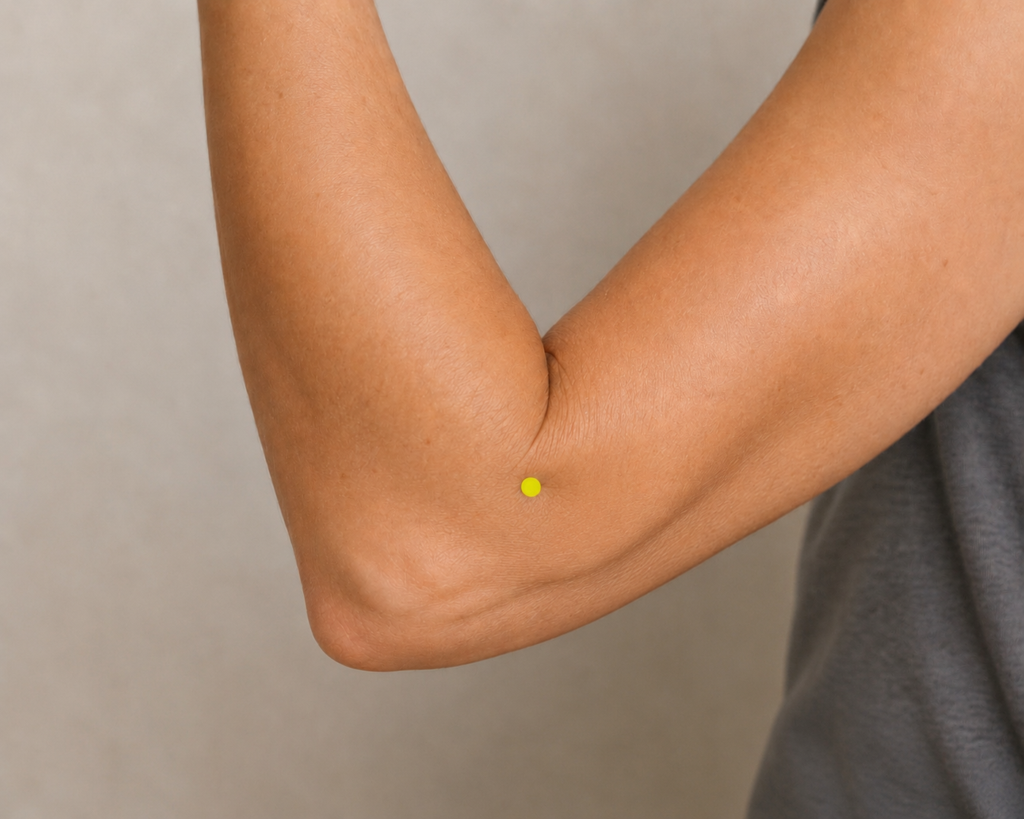
8. Press on LI11 at the elbow to open the path to the hands. LI11 sits at the outer end of the elbow crease, in the hollow that forms when you bend your elbow. Press firmly with your thumb for one to two minutes on each arm. LI11 is called “Quchi,” the “Pool at the Crook.”
LI11 is a key point for opening the elbow because circulation must pass through it to reach the hands. It is traditionally used for numbness, weakness, and pain in the arm and hand. Additionally, its heat-clearing property makes it effective for burning pain.
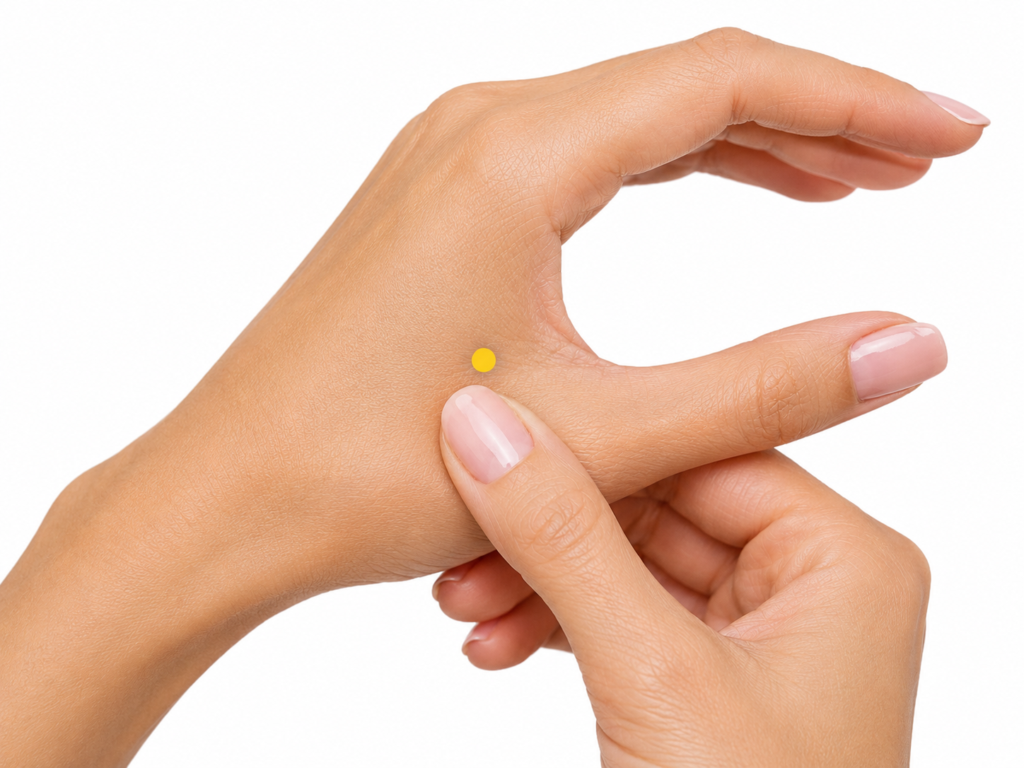
9. Press on LI4 in the hand to move the Qi through the hand. LI4 sits in the webbing between the thumb and index finger, at the highest point of the muscle when you bring the thumb and index finger together. Press with the thumb of your other hand for one to two minutes on each hand. LI4 is called “Hegu.” LI4 is contraindicated during pregnancy.
LI4 effectively stimulates Qi flow in the hand and is one of the most potent points for pain relief. When used with LI11 and Baxie, it targets local, distal, and classical hand points simultaneously.
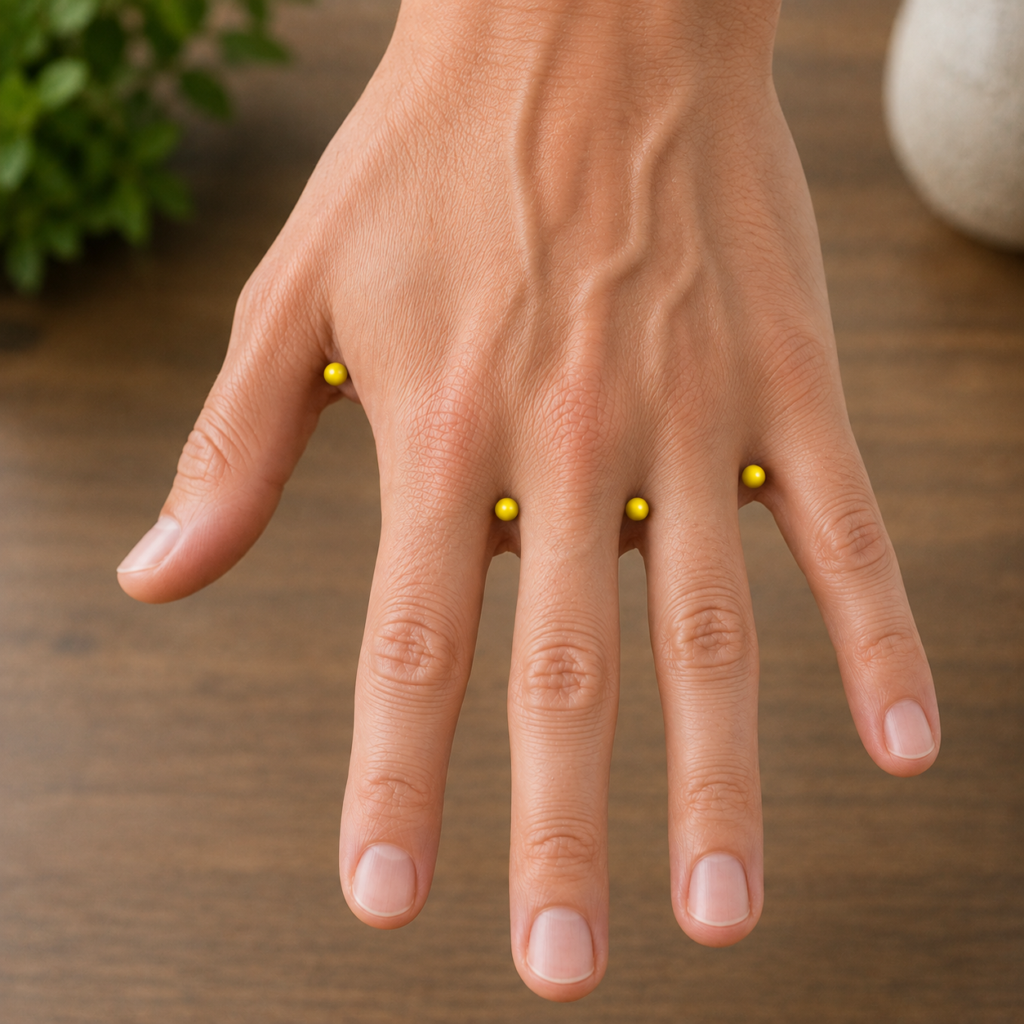
10. Press on Baxie between the knuckles, the classic points for the hands. Baxie are four points on the back of each hand, in the webbing between each pair of fingers, just behind where the fingers meet the hand. Press each with your thumb and index finger for thirty seconds to a minute. Baxie means “Eight Evils.”
Baxie is the manual equivalent of Ba Feng, a traditional point group used to treat numbness, tingling, and burning sensations in the fingers; it helps improve circulation and eliminate wind that causes pins and needles. If your neuropathy hasn’t affected your hands yet, you can skip this treatment or use it preventively.
Why These Acupressure Points Work
In Traditional Chinese Medicine, peripheral neuropathy is seen as a condition in which the hands and feet lack nourishment because Qi and Blood flow are blocked. This blockage results from weak Qi and Blood, Blood stagnation, wind in the meridians, and the gradual exhaustion of the body’s deep reserves. The ten points target all these factors.
- The nourishing points (ST36, SP6, KI3) enhance Qi and Blood, restoring deep reserves.
- The blood-moving points and sinew points (SP10, GB34) help clear stagnation and relieve cramping and weak muscles.
- The foot points (LR3, Ba Feng) are located at common starting points for neuropathy.
- The hand points (LI11, LI4, Baxie) open the arm and directly work the fingers.
How to Properly Use These Acupressure Points
- Perform the complete routine once or twice daily, beginning with ST36, SP6, KI3, SP10, and GB34 on the legs, then transition to working on the feet and hands.
- Press the points on the leg and arm firmly; however, apply a lighter touch to the hands and feet if sensation is diminished, focusing on your actions rather than relying solely on sensation.
- Examine the skin on your hands and feet before and after each session, and avoid pressing on cuts, blisters, sore spots, or cracks.
- Avoid using heating pads or hot soaks on numb hands or feet because you might not realize if they are burning. Instead, keep them warm using socks, gloves, and a comfortable room, and always test the water with your elbow or a thermometer before applying.
- Hold each point for one to two minutes, then practice consistently daily for two to four weeks to evaluate the benefits.
Acupressure works best when combined with proper neuropathy treatment. Address underlying issues like blood sugar control, medication review, correcting vitamin deficiencies, or cutting back on alcohol. Talk to your doctor about checking vitamin B12 levels, especially if you take metformin. Gentle activities such as walking, swimming, or tai chi can enhance circulation and improve balance. Simple strength and balance exercises help prevent falls. Wear well-fitting shoes, avoid walking barefoot, and keep your home well-lit and free from tripping hazards.
When to Get Professional Help
Always consult a doctor for peripheral neuropathy to identify and treat the underlying cause, which is essential for nerve health. Seek emergency care if you experience sudden weakness, numbness, or tingling on one side of your body, especially with facial drooping or speech difficulties, as these may indicate a stroke. Visit urgent care if weakness rapidly spreads up your legs over hours or days, which may signal a serious nerve issue. Schedule an appointment promptly if your symptoms are new, worsening, or spreading; if you’ve fallen or feel unsteady; if a wound on a numb hand or foot isn’t healing or appears infected; or if you have dizziness when standing, digestive or bladder problems, or other signs of organ issues.
Although acupressure may help alleviate daily symptoms, it should be complemented with appropriate medical treatment for the underlying condition.
Above and Beyond Acupuncture offers acupuncture, cupping, and lifestyle coaching at the North Frank Lloyd Wright Boulevard location in Scottsdale.
Schedule an appointment online to start your healing journey.
The points above are only as effective as the technique used to apply them. Where to press, how firmly, and for how long all affect the result. For a full breakdown of how to perform acupressure properly at home, read Performing Acupressure in 3 Easy Steps.
For a detailed ten-point protocol organized around hand and foot combinations, acupressure for neuropathy is the companion to this article, and can acupuncture treat neuropathy explains how neuropathy is treated in the clinic.
About the Publisher
Paul Kerzner, L.Ac., is a licensed acupuncturist and board-certified herbalist, as well as the founder of Above and Beyond Acupuncture in Scottsdale. His own journey from chronic patient to practicing acupuncturist shapes his commitment to providing honest, clinically grounded information about acupuncture and Traditional Chinese Medicine. Learn more about Paul and his clinical approach on the About Us page.