
Key Takeaways
- Chemotherapy-induced peripheral neuropathy (CIPN) causes persistent symptoms like tingling and numbness in hands and feet due to nerve damage from certain chemotherapy drugs.
- Acupressure for chemotherapy-induced peripheral neuropathy offers techniques to restore Qi and Blood, improve circulation, and relieve discomfort.
- Key acupressure points include ST36, SP6, and KI3, which help rebuild energy and alleviate numbness.
- It’s essential to inform your oncology team if your symptoms worsen, as they could signal nerve problems that require prompt attention.
- Consistent acupressure on specific points may promote nerve health and ease discomfort throughout and following chemotherapy.
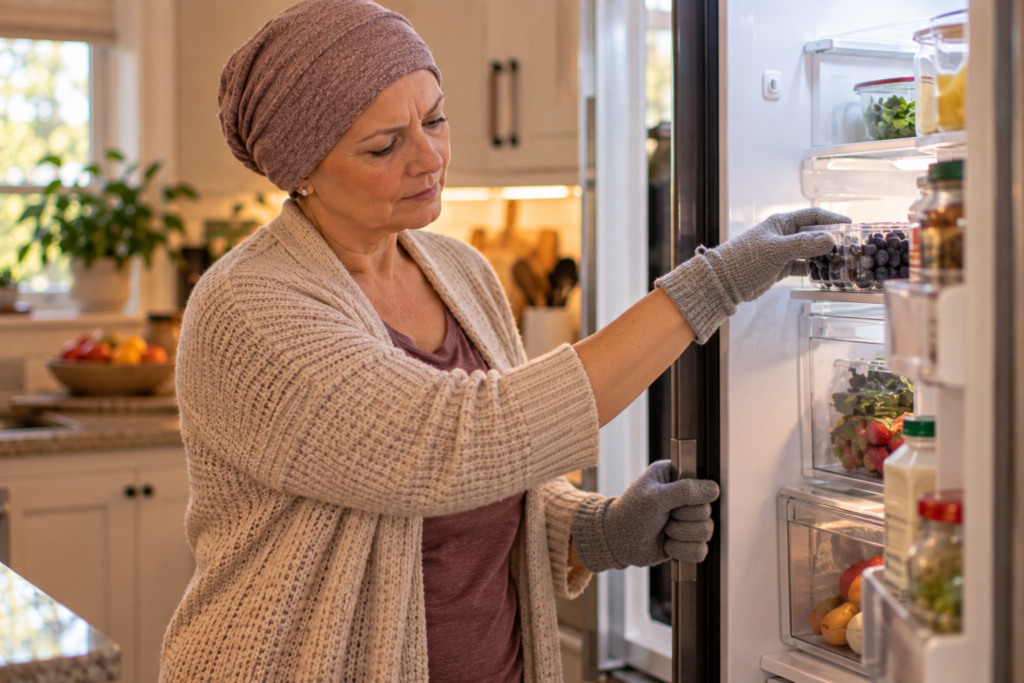
Did you experience tingling in your fingers and toes during chemotherapy that hasn’t fully gone away?
Chemotherapy-induced peripheral neuropathy (CIPN) is a frequent and persistent side effect of cancer therapy. Some chemotherapy drugs can also damage the nerves in your hands and feet, causing symptoms like tingling, numbness, burning sensations, cold sensitivity, and unsteadiness, which can interfere with daily activities and walking. The drugs most commonly associated with CIPN include platinum agents such as oxaliplatin and cisplatin, taxanes like paclitaxel and docetaxel, vincristine, and bortezomib. For some individuals, symptoms may improve a few months after finishing treatment; for others, they may persist for years. Acupressure is a gentle technique you can practice at home during and after treatment to support circulation, nerve health, and comfort.
Chemotherapy-related neuropathy has distinctive features. It commonly affects both hands and feet at the same time, following a stocking-and-glove pattern. For instance, oxaliplatin can cause immediate cold sensitivity during and after infusions, so contact with cold objects or drinks may trigger tingling in the hands, mouth, or throat. Some medications may also lead to symptoms worsening for weeks or months after the last dose, a phenomenon known as coasting. Since this increasing neuropathy can impact your treatment options, it’s crucial to report your symptoms promptly and honestly.
In Traditional Chinese Medicine, chemotherapy is viewed as a potent treatment that, while combating cancer, may also deplete the body’s Qi, Blood, and Yin. This can lead to heat and stagnation in the body’s channels. The Spleen and Stomach, essential for producing Qi and Blood, may weaken, reducing energy and appetite, while the Kidney’s reserves become depleted. Insufficient Qi and Blood flow to the extremities can lead to numbness and weakness in the hands and feet. Blood stagnation and toxin accumulation in small vessels may cause burning or stabbing pain, while wind in the channels can cause tingling or pins and needles.
Here are ten acupressure points that restore Qi and Blood, nourish Yin, move stagnation, and improve circulation to your fingers and toes.
What Acupressure Points to Press and Why
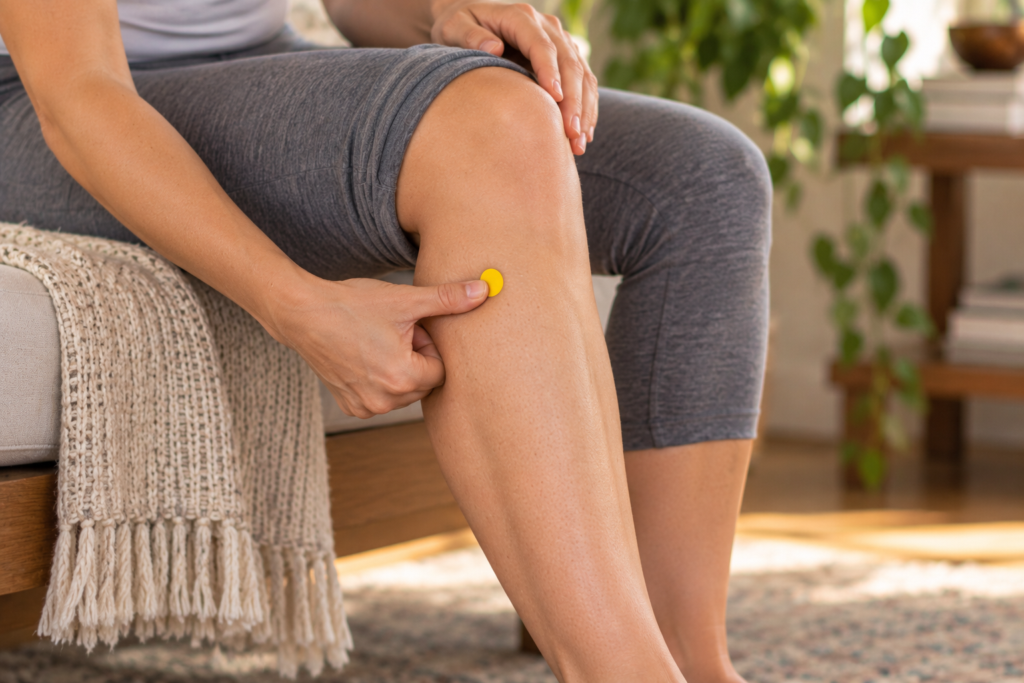
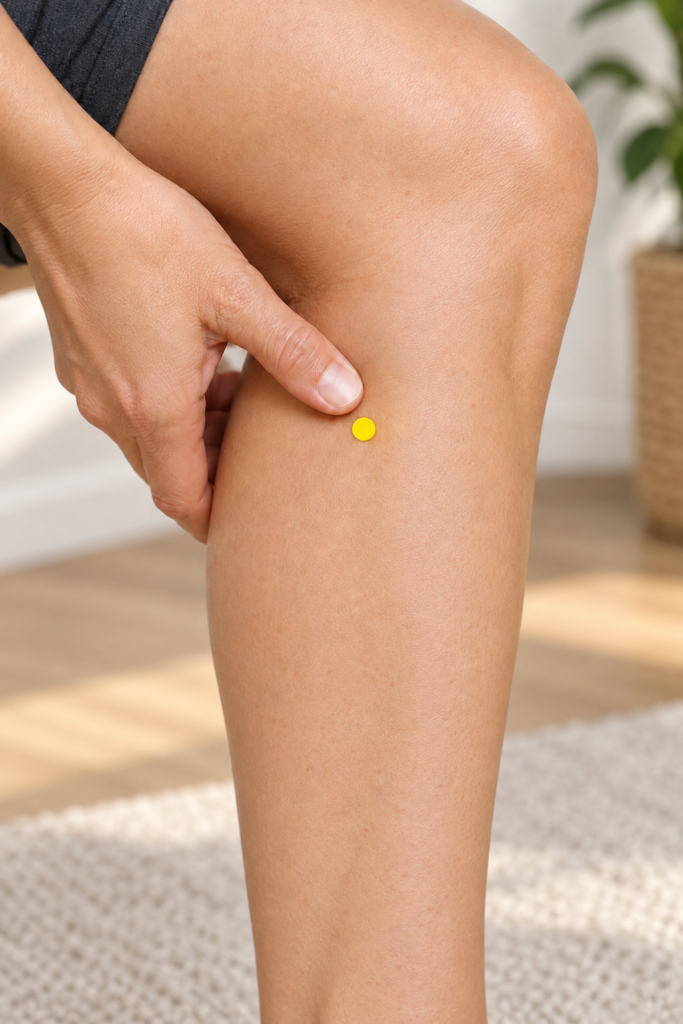
1. Press on ST36 below the knee to rebuild what treatment drains. ST36 sits four finger-widths below the lower edge of the kneecap and one finger-width to the outside of the shinbone, on the muscle that rises when you flex your foot. Press firmly with your thumb for one to two minutes on each leg. ST36 is called “Zusanli,” the “Leg Three Miles.”
Chemotherapy can weaken the Spleen and Stomach, which are crucial for generating Qi and Blood. ST36 helps restore these functions at their source. This point enhances your energy, appetite, digestion, and encourages circulation in your legs. It is often used in acupuncture treatments for chemotherapy-induced neuropathy and is a key component of this routine. Try to incorporate this point into your daily practice.
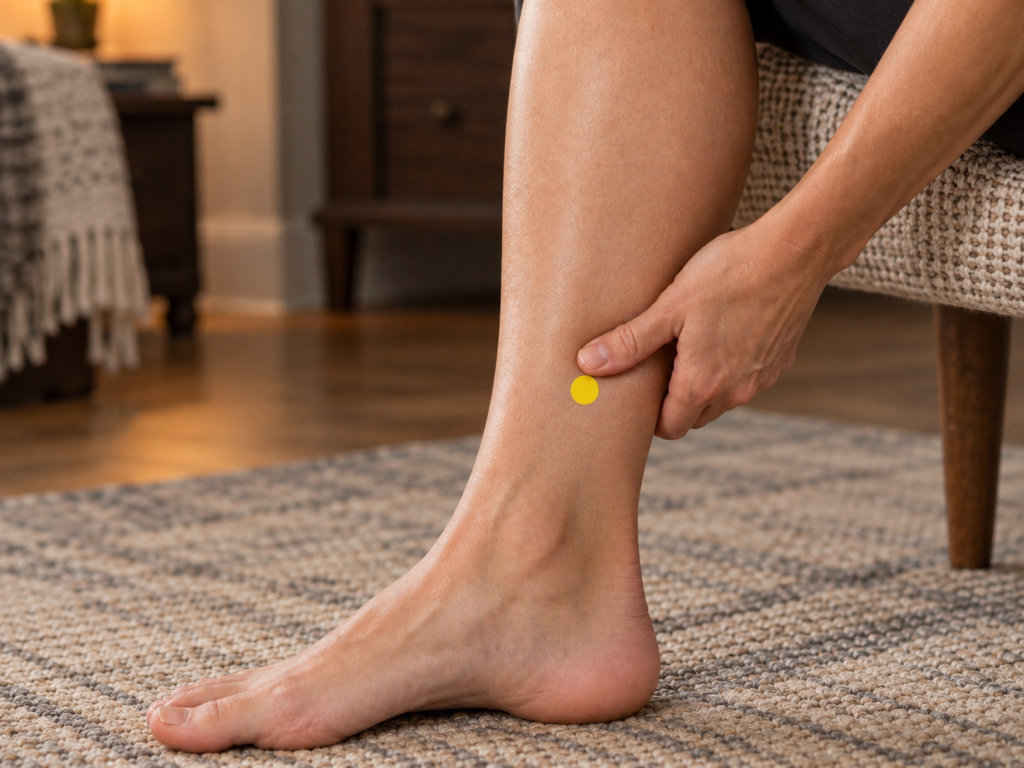
2. Press on SP6 above the inner ankle to nourish the Blood and Yin. SP6 sits four finger-widths up from the tip of the inner ankle bone, just behind the back edge of the shinbone. Press moderately for one to two minutes on each leg. SP6 is called “Sanyinjiao,” the “Three Yin Intersection.” SP6 is not contraindicated during pregnancy.
SP6 helps restore the Blood and Yin that chemotherapy can reduce, and it moves Blood through your lower legs. This can help with both numbness and burning sensations. SP6 also supports better sleep, which nerve pain and treatment often disrupt.
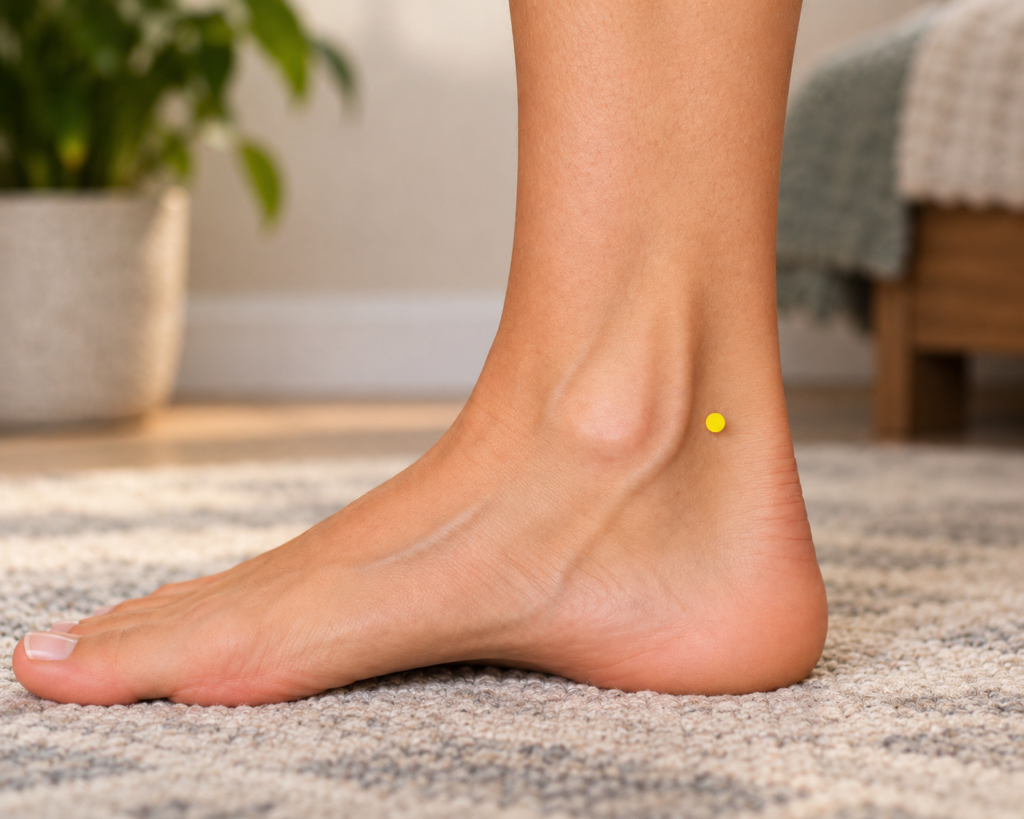
3. Press on KI3 above the inner ankle to replenish the deep reserves. KI3 sits in the hollow between the inner ankle bone and the Achilles tendon, level with the tip of the ankle bone. Press moderately with your thumb for one to two minutes on each ankle. KI3 is called “Taixi,” the Kidney’s source point.
Cancer treatment may deplete the Kidney’s deep reserves, often leading to persistent neuropathy as a sign of this depletion. KI3 gradually helps restore these reserves. Practicing this point daily over weeks and months is more effective than a single session.
4. Press on GB34 below the outer knee for leg weakness and cramping. GB34 sits on the outer lower leg, in the hollow just below and in front of the head of the fibula, the bony knob below the outer side of the knee. Press firmly with your thumb for one to two minutes on each leg. GB34 is called “Yanglingquan,” the influential point for the sinews.
When chemotherapy affects the nerves controlling movement, you might notice cramping, weakness, or unsteadiness in your legs and ankles. GB34 helps relax and nourish the sinews, supporting more stable walking and better balance. This is especially important if numbness in your feet raises your fall risk.
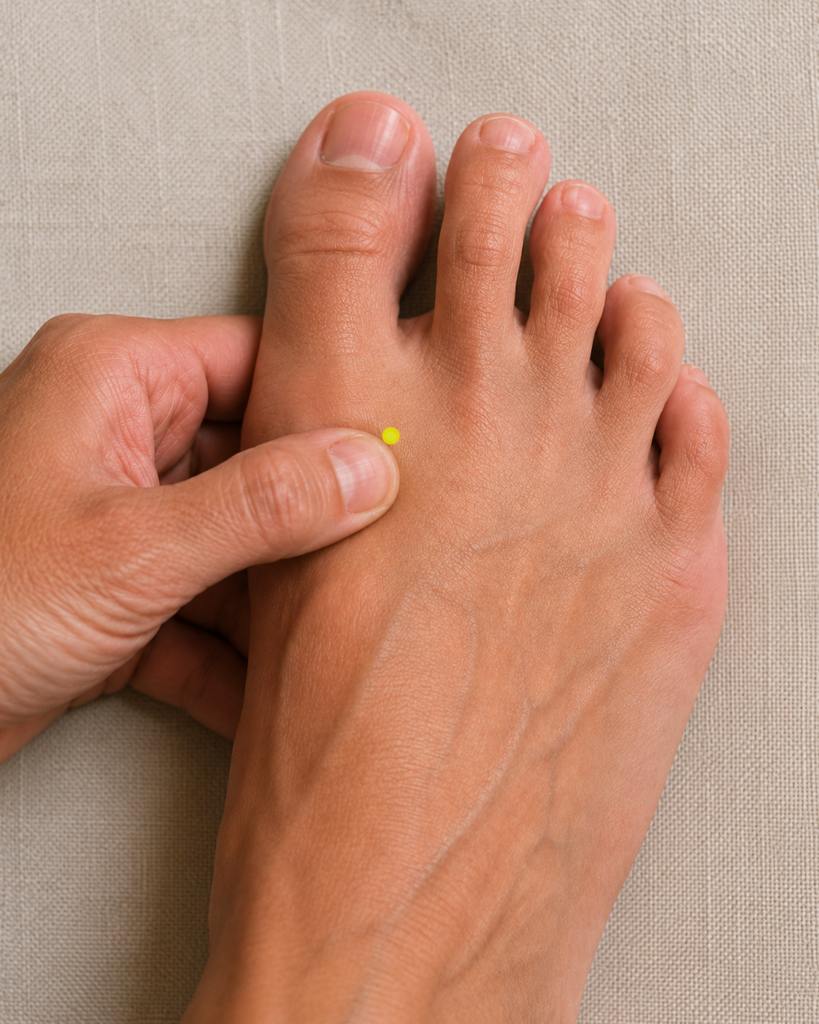
5. Press on LR3 on the top of the foot to move the Blood through the feet. LR3 sits on the top of the foot, in the webbing between the big toe and second toe, about two finger-widths back where the bones meet in a small hollow. Press gently with your thumb for one to two minutes on each foot. LR3 is called “Taichong.”
LR3 stimulates the flow of Qi and Blood in your foot, helping to reduce burning and other odd sensations. It may also alleviate stress and tension caused by cancer treatment. If your feet are numb, apply gentle pressure and focus carefully while working on this point.
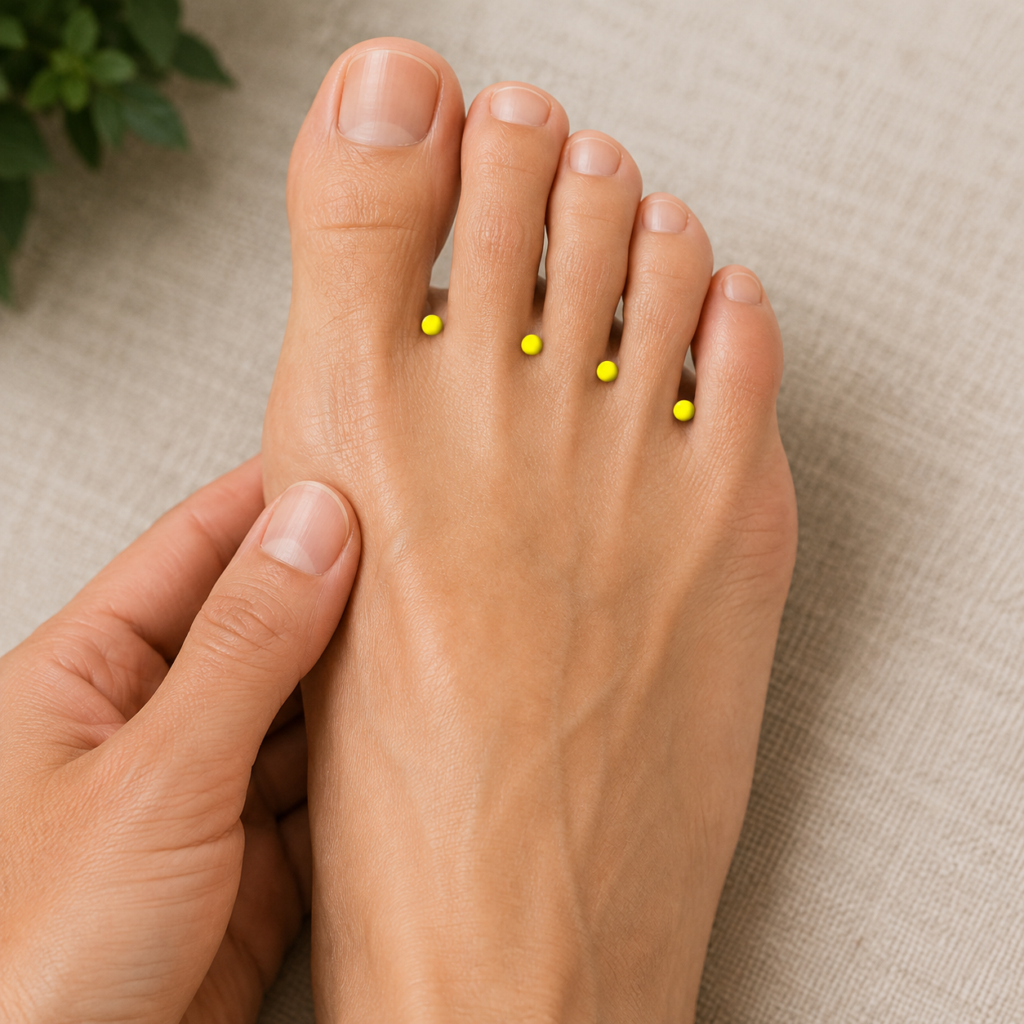
6. Press on Ba Feng between the toes, the classic points for the feet. Ba Feng are four points on the top of each foot, in the webbing between the toes where each pair meets the foot. Gently press each with your thumb for thirty seconds to a minute, working across the foot. Ba Feng means “Eight Winds.”
Ba Feng points are particularly effective for relieving numbness, tingling, and burning sensations in the toes. These points are commonly used in acupuncture as part of treatment for chemotherapy-induced neuropathy. Apply gentle pressure and avoid areas with cracked, blistered, or irritated skin, since your skin may be more sensitive during and after treatment.
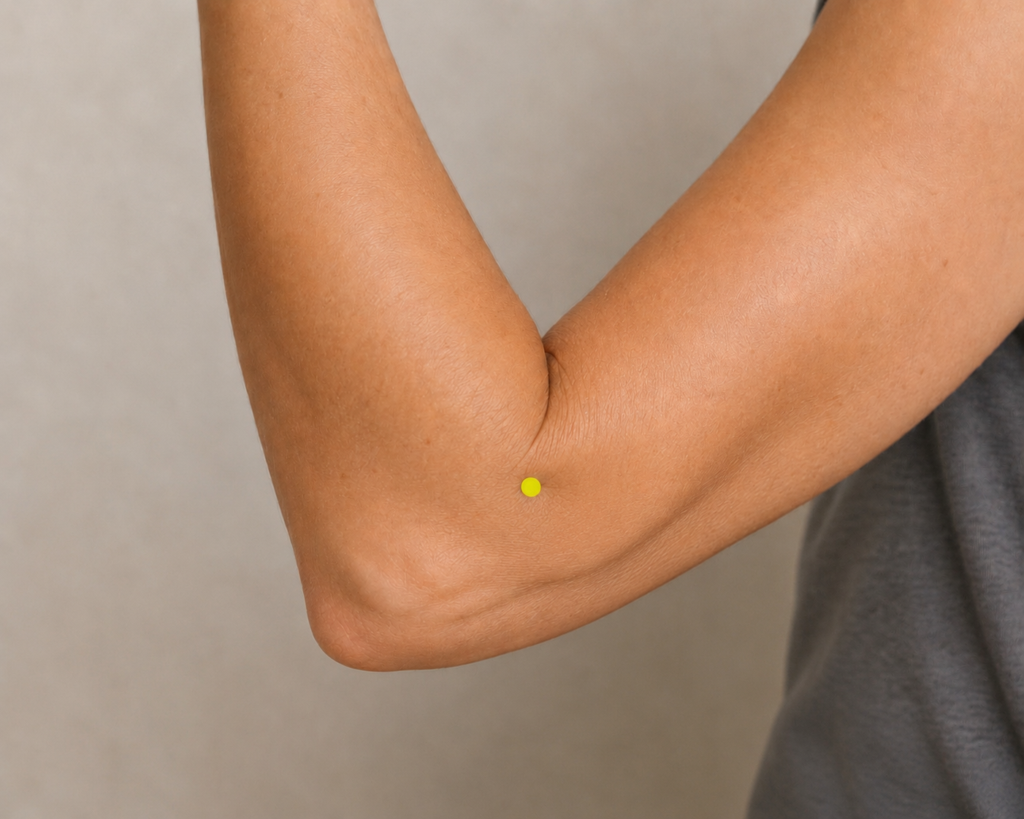
7. Press on LI11 at the elbow to open the path to the hands. LI11 sits at the outer end of the elbow crease, in the hollow that forms when you bend your elbow. Press firmly with your thumb for one to two minutes on each arm, unless that arm is affected by lymphedema or recent lymph node removal. LI11 is called “Quchi,” the “Pool at the Crook.”
LI11 aids in opening the elbow, a crucial point for blood circulation to the hands. In Chinese medicine, it also serves to clear heat, which is linked to the burning sensation often resulting from chemotherapy-induced nerve pain. This point is commonly used to alleviate numbness and weakness in the arm and hand.
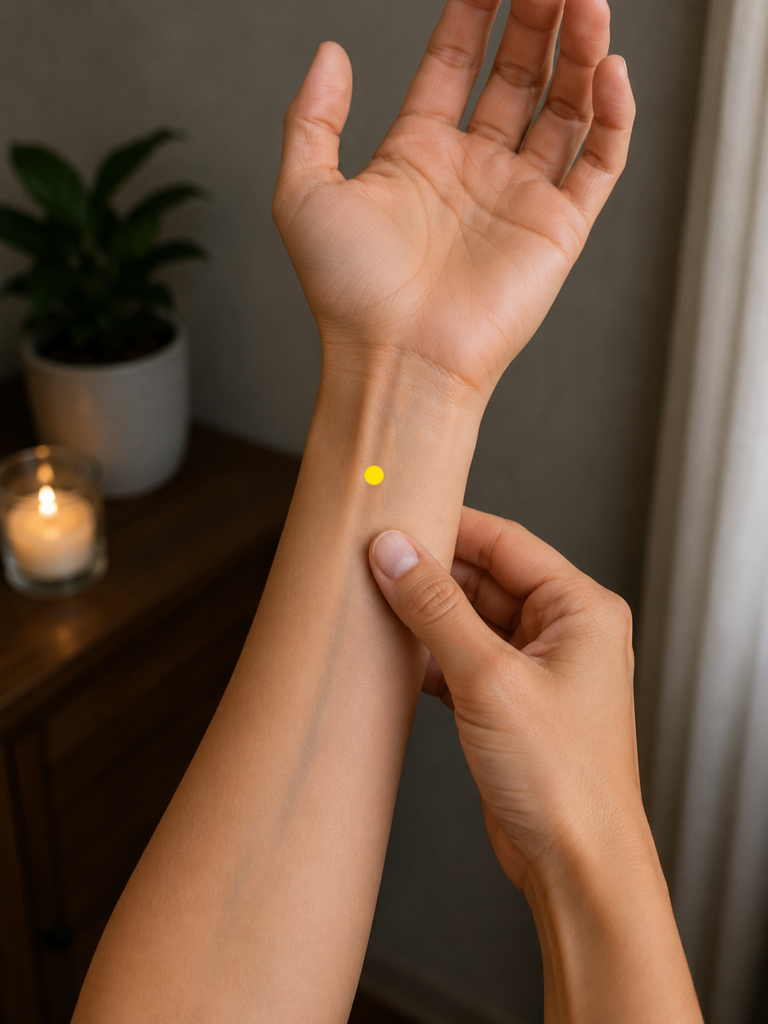
8. Press on PC6 on the inner forearm for the palm and for treating nausea. PC6 sits three finger-widths above the inner wrist crease, in the center of the forearm between the two tendons. Press firmly with your thumb for one to two minutes on each arm. PC6 is called “Neiguan,” the “Inner Pass.”
PC6 helps move Qi and Blood in your inner forearm toward your palm and fingers. It is widely studied for its effectiveness in relieving nausea, a common side effect of chemotherapy. This point also supports hand health and can help soothe your stomach during treatment.
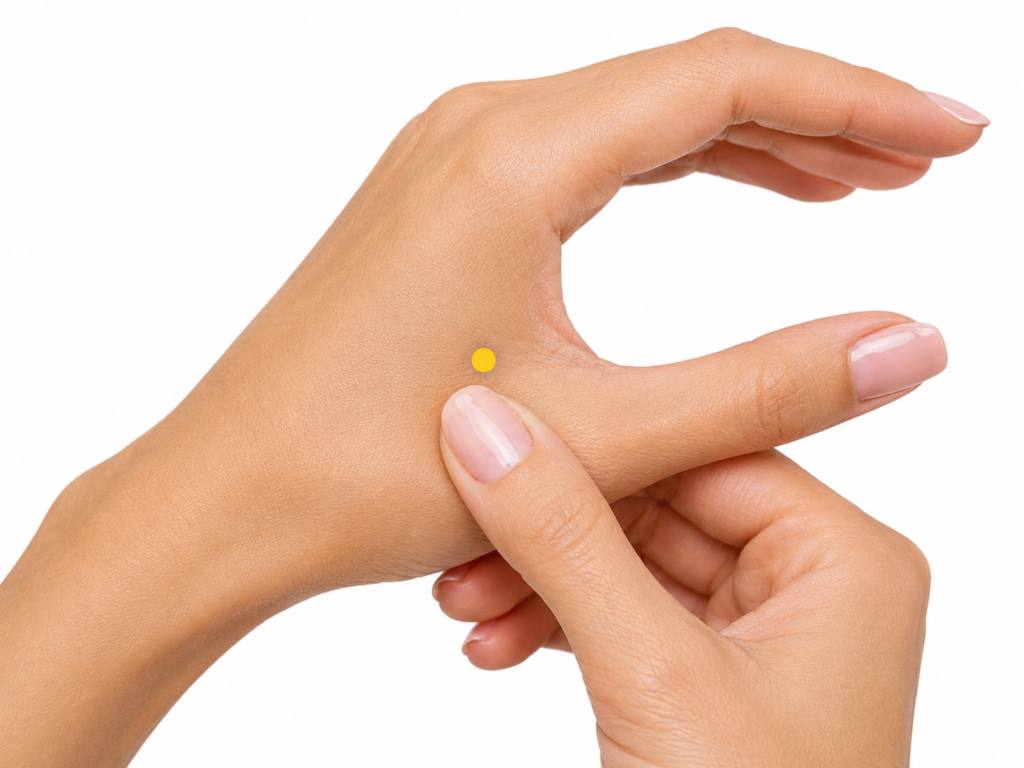
9. Press on LI4 in the hand to move the Qi through the hand. LI4 sits in the webbing between the thumb and index finger, at the highest point of the muscle when you bring the thumb and index finger together. Press moderately with the thumb of your other hand for one to two minutes on each hand. LI4 is called “Hegu.” LI4 is avoided during pregnancy.
LI4 promotes the flow of Qi in the hand, aiding in reducing numbness, stiffness, and finger pain. It also serves as a key point for alleviating general pain. If you experience decreased sensation in your hand, adjust the pressure as needed.
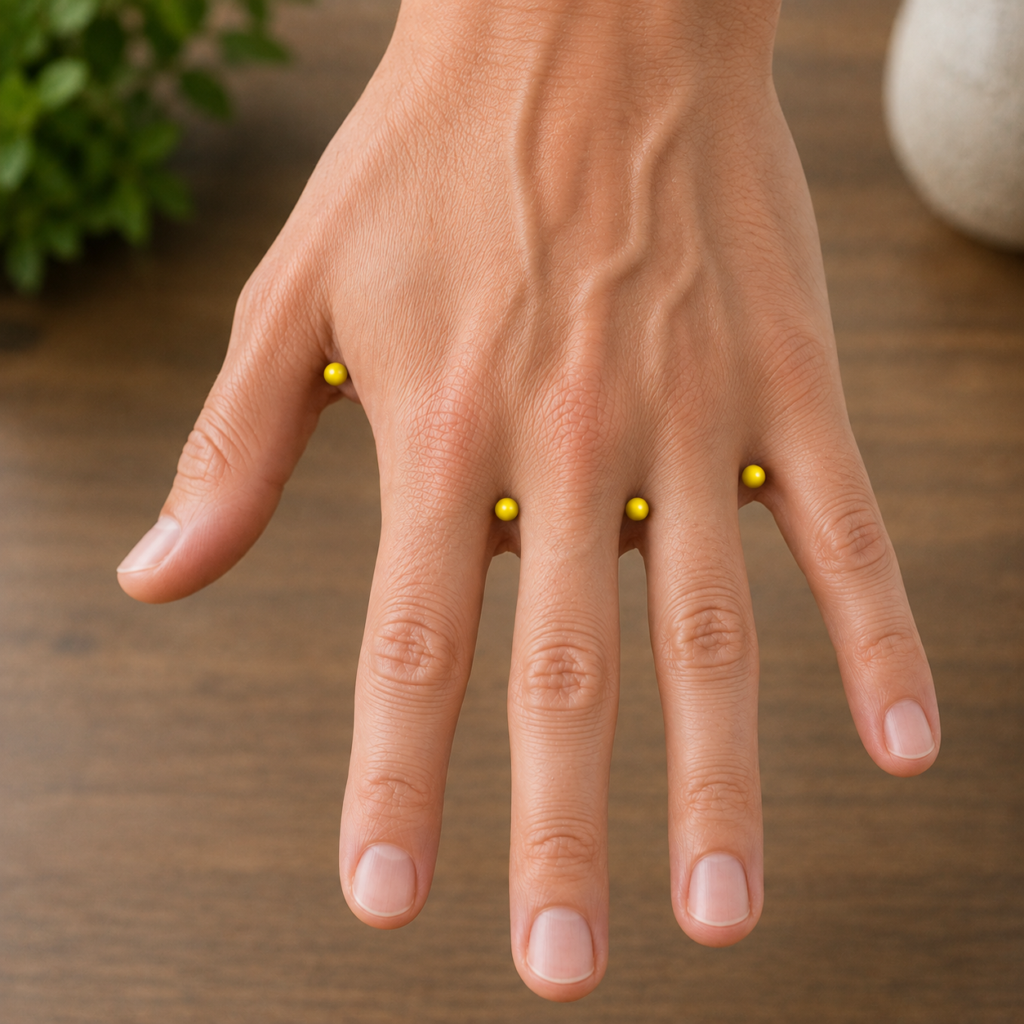
10. Press on Baxie between the knuckles, the classic points for the fingers. Baxie are four points on the back of each hand, in the webbing between each pair of fingers, just behind where the fingers meet the hand. Gently press each one with your thumb and index finger for thirty seconds to a minute. Baxie means “Eight Evils.”
Baxie points are the hand counterparts of Ba Feng and are commonly used in acupuncture to treat chemotherapy-induced neuropathy. They promote blood circulation in your fingers and may reduce tingling sensations. Gently stimulating these points daily, combined with opening and closing your hands, can help increase comfort and flexibility in your fingers.
Why These Acupressure Points Work
In Traditional Chinese Medicine, chemotherapy-induced neuropathy is considered a result of Qi, Blood, and Yin deficiency caused by strong medicine, combined with stagnation and heat in the channels of the hands and feet. The ten points listed above are selected to target all these concerns.
- The rebuilding points (ST36, SP6, KI3) replenish the Qi, Blood, Yin, and deep reserves depleted during treatment.
- The leg and foot points (GB34, LR3, Ba Feng) help relax the sinews, facilitate blood flow, and directly influence the toes.
- The arm and hand points (LI11, PC6, LI4, Baxie) facilitate access to the hands and directly target the fingers, with PC6 also helping to reduce nausea.
Some small clinical trials indicate that acupuncture might help alleviate symptoms of chemotherapy-induced neuropathy, often using these same points. Although research is still ongoing, acupressure lets you apply pressure to these points at home daily.
How to Properly Use These Acupressure Points
Be gentle with yourself first, and try to be consistent with your practice.
- Try to do the full routine once a day: start with ST36, SP6, KI3, GB34, then LR3, Ba Feng on your feet, and finish with LI11, PC6, LI4, Baxie on arms and hands.
- Apply moderate pressure to your legs and lighter pressure to your hands and feet. If sensation is reduced in these areas, pay extra attention during your practice.
- Avoid pressing on or near ports, surgical sites, skin with radiation, cuts, blisters, or cracks. If you’ve had lymph nodes removed or have lymphedema, use only a light touch on that arm or focus on the other side.
- If your platelet count is low or you bruise easily, apply gentle pressure and consult your oncology team before starting. If you have bone cancer, avoid pressing on painful areas.
- Don’t apply heating pads or hot soaks to numb hands or feet. Keep them warm with gloves, socks, and a comfortable room. Check water temperature with your elbow or a thermometer before use.
- Hold each point for one to two minutes and maintain this routine during and after treatment, since recovery from chemotherapy-induced neuropathy can take several months.
A few habits can complement acupressure. Let your oncology team know right away if you notice tingling, numbness, or clumsiness, as early reporting can help protect your nerves. If you are receiving oxaliplatin, wear gloves when handling cold items, avoid cold drinks and ice, and cover your mouth and nose in cold air around infusion days. Some centers use cooling gloves and socks during certain infusions, so ask your team whether this is right for you. Gentle, regular exercise, such as walking and balance work, can help ease neuropathy and lower your risk of falls. Protect numb hands and feet from injury, wear supportive shoes, keep walkways clear and well lit, and ask about physical or occupational therapy if daily tasks become hard.
When to Get Professional Help
Report any new or worsening neuropathy symptoms like numbness, tingling, pain, dropping objects, difficulty with buttons or writing, or unsteadiness when walking to your oncology team right away, as your treatment plan might need adjustments. Seek prompt care for increasing weakness, foot dragging, falls, unhealed or infected-looking wounds on numb hands or feet, dizziness when standing, constipation, or bladder issues, since these could indicate nerve problems in internal organs. During chemotherapy, a fever requires immediate medical attention; contact your care team immediately. Seek emergency care for sudden weakness or numbness on one side of the body, especially if accompanied by facial drooping or speech problems.
Acupressure may function as a gentle and supportive method for managing chemotherapy-associated neuropathy, complementing your cancer therapy.
Above and Beyond Acupuncture offers acupuncture, cupping, and lifestyle coaching at the North Frank Lloyd Wright Boulevard location in Scottsdale.
Schedule an appointment online to start your healing journey.
The points above are only as effective as the technique used to apply them. Where to press, how firmly, and for how long all affect the result. For a full breakdown of how to perform acupressure properly at home, read Performing Acupressure in 3 Easy Steps.

About the Publisher
Paul Kerzner, L.Ac., is a licensed acupuncturist and board-certified herbalist, as well as the founder of Above and Beyond Acupuncture in Scottsdale. His own journey from chronic patient to practicing acupuncturist shapes his commitment to providing honest, clinically grounded information about acupuncture and Traditional Chinese Medicine. Learn more about Paul and his clinical approach on the About Us page.