
Key Takeaways
- Sleep inertia can leave you feeling sluggish, but starting your morning with acupressure is a simple way to feel more awake.
- Nine key acupressure points stimulate Yang energy, clear fog, and improve alertness without getting out of bed.
- Start this routine in bed with KI1, then move to ear massage and GV20. Afterward, transition to sitting and standing points for a thorough energizing session.
- Adopting good habits, such as waking up at a regular time and staying hydrated, can boost your morning energy.
- Consult a doctor if you frequently feel unrefreshed despite getting adequate sleep, as this may indicate an underlying health issue.

Does your morning alarm leave you feeling sluggish and foggy? This feeling, called sleep inertia, is common and usually goes away within fifteen to thirty minutes. However, after poor sleep, late nights, heavy meals, or an irregular schedule, it can last longer, making mornings tougher. Acupressure offers a natural, holistic, energizing routine you can do before getting out of bed.
According to Traditional Chinese Medicine, morning is when the body’s Yang energy rises to prepare you for the day. If this process slows down, waking up can be difficult. Weak Qi from poor sleep, overexertion, or ongoing fatigue can leave you feeling unrefreshed. Eating heavy or sugary foods late at night can create dampness, leading to a heavy, foggy head. Low Kidney Yang might cause cold sensations, stiffness, and sluggishness, especially during winter. These points are designed to enhance Yang flow to the head, promote Qi movement, alleviate heaviness, and warm the body; you can do them in bed, sitting, or standing.
Here are nine acupressure points to help you wake up with a clearer, more alert mind.
What Acupressure Points to Press and Why
**Start in bed**
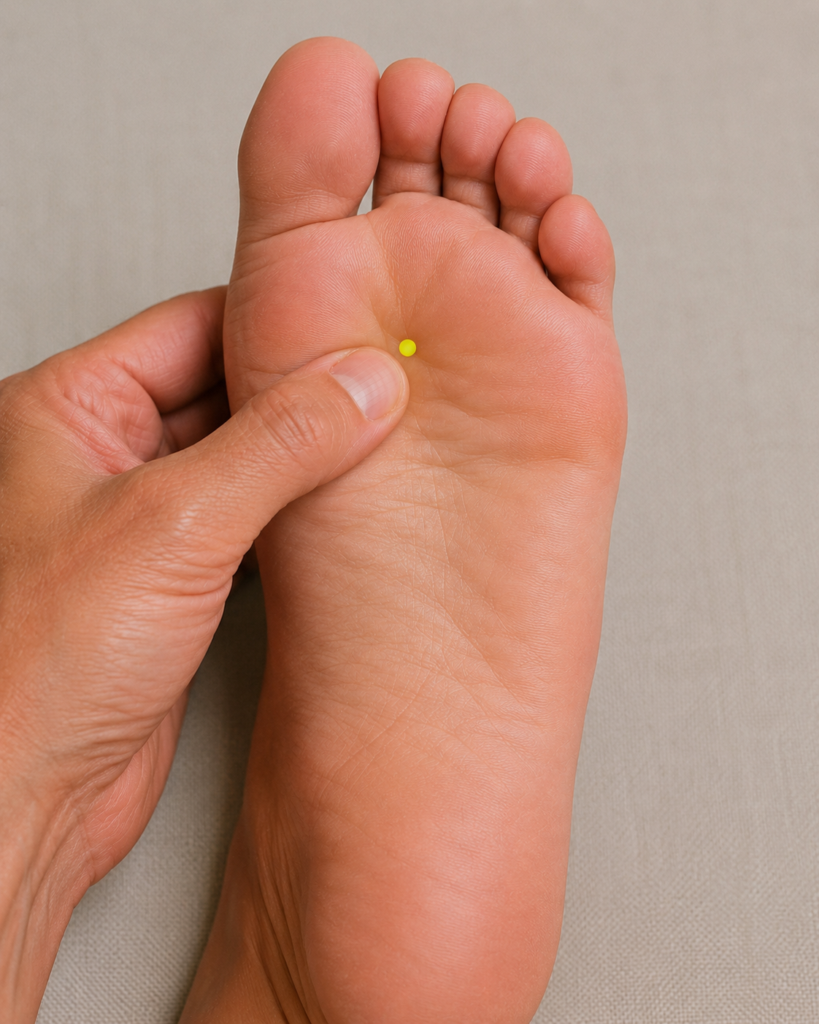
1. Rub KI1 on the soles of the feet to wake the body from the ground up. KI1 sits on the sole of the foot, in the hollow that forms in the center of the ball of the foot when you curl the toes, about a third of the way down from the toes to the heel. Still lying in bed, bend one knee and rub the sole briskly with your thumb or the heel of your hand for about thirty seconds, then press firmly into the point for a few seconds, and switch feet. KI1 is called “Yongquan,” the “Bubbling Spring.”
KI1 is the starting point of the Kidney meridian and has been traditionally used in Traditional Chinese Medicine to revive the body, restore consciousness, and boost energy from the ground up. Gentle rubbing stimulates blood circulation in the feet and signals the whole body to wake up. It’s a simple position to start with while still in bed.
2. Rub the ears briskly to wake the whole system. With your palms or fingertips, rub both ears firmly from top to bottom for about thirty seconds, then gently pull and squeeze the outer rim of each ear from top to lobe. The ears should feel warm and tingling when you finish.
In Traditional Chinese Medicine, the ear contains points that correspond to the entire body. That is why ear massage has traditionally been used to invigorate the whole system. Rubbing your ears until they feel warm enhances blood circulation to the head, boosts alertness, and is one of the quickest ways to feel more awake while still in bed. See Image.

3. Tap GV20 at the top of the head to lift the Yang. GV20 sits at the very top of the head, on the midline, on a line drawn up from the tops of both ears. Tap it lightly with your fingertips for about thirty seconds, then press straight down for a few seconds. GV20 is called “Baihui,” the “Hundred Meetings.”
The GV20 point, located at the top of the head where the Yang channels meet, is essential for raising Qi and Yang energy to the head. It helps clear the fog and heaviness of sleep inertia and improves mental clarity. Tapping this point, instead of pressing, offers an energizing effect, making it perfect for morning wake-up routines.

**Sitting up**
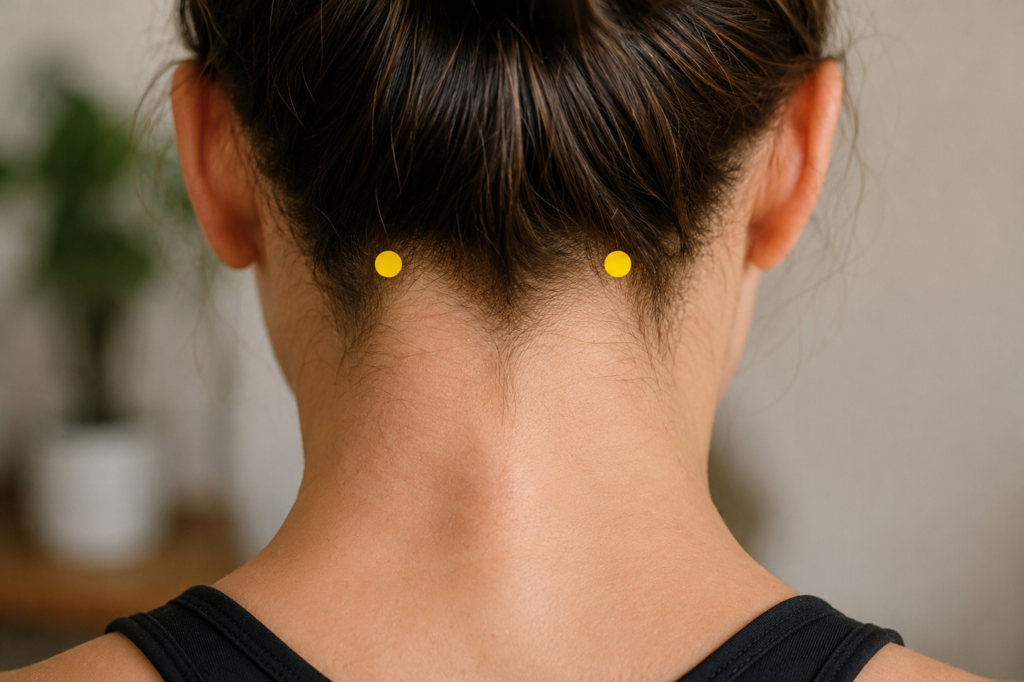
4. Press on GB20 at the base of the skull to clear the head. GB20 sits in the two hollows at the base of the skull, between the two large vertical neck muscles and the outer edge, roughly level with the tops of the ears. Sitting on the edge of the bed, press firmly up and inward with your thumbs for thirty seconds to a minute, adding small circles. GB20 is called “Fengchi,” the “Wind Pool.”
GB20 helps clear the mind, boosts blood flow to the brain, and eases the stiff neck common after sleep. It effectively eases heaviness and fogginess in the head, making mornings easier. It works well with GV20, situated above it.
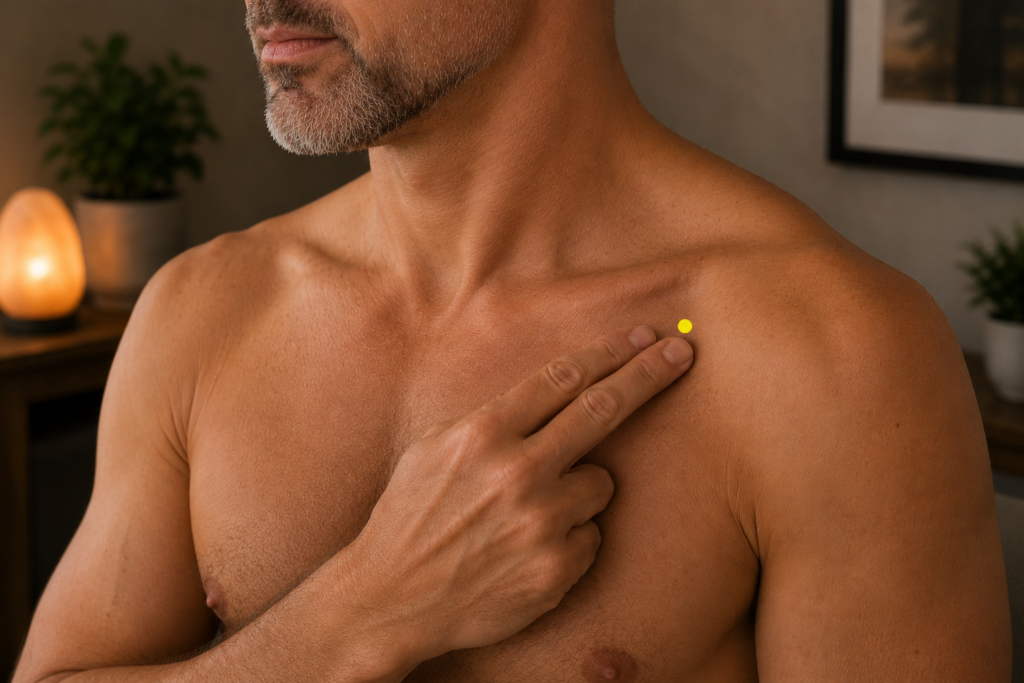
5. Press on LU1 below the collarbone while taking deep breaths. LU1 sits on the upper chest, below the outer end of the collarbone, in the hollow about a thumb-width below it, roughly in line with the front of the armpit. Cross your arms so each hand rests on the opposite side, press firmly with your fingertips, and take five slow, deep breaths, filling the chest fully. LU1 is called “Zhongfu.”
The Lungs govern the body’s Qi. By taking deep breaths while applying pressure to LU1, you can circulate fresh air and energy after hours of shallow breathing. This practice opens the chest and shoulders, which often curl forward during sleep, and quickly helps you feel more alert within a minute.
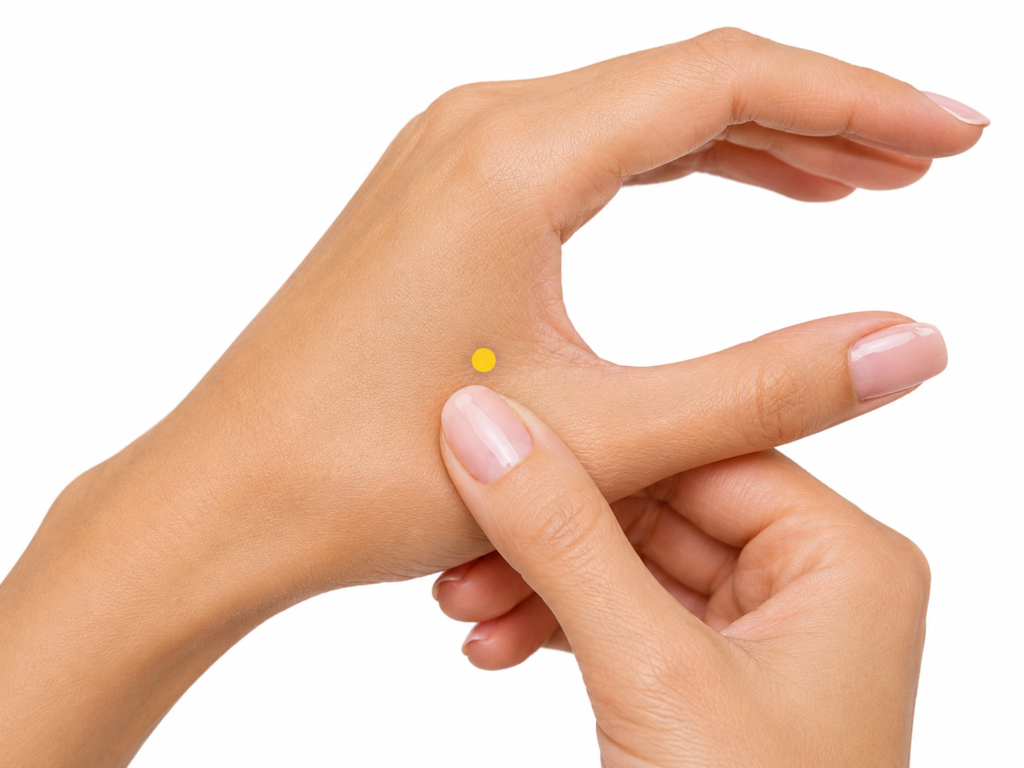
6. Press on LI4 in the hand to get the Qi moving. LI4 sits in the webbing between the thumb and index finger, at the highest point of the muscle when you bring them together. Press firmly, with a few quick pulses, for thirty seconds to a minute on each hand. LI4 is called “Hegu.” LI4 is contraindicated during pregnancy.
LI4 is a highly stimulating point because it effectively circulates Qi throughout the head, face, and entire system. Applying firm, pulsing pressure here can significantly boost alertness, clear the mind, and reduce the dull headaches some wake up with.
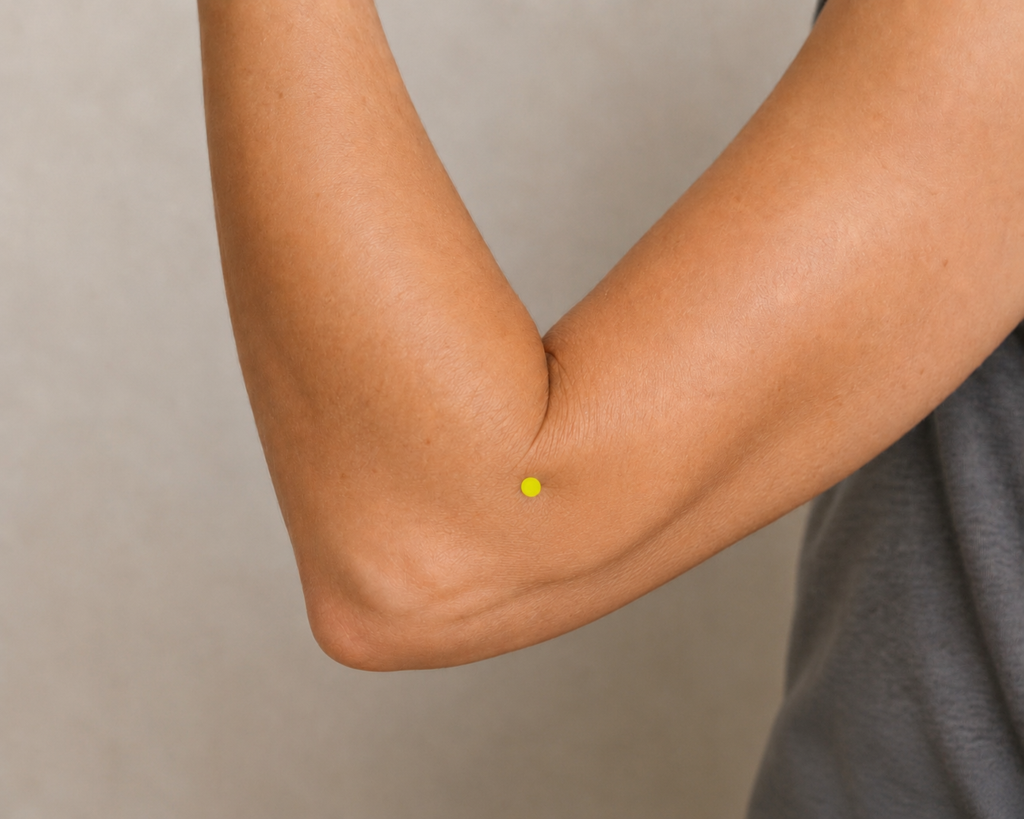
7. Press on LI11 at the elbow to brighten and energize. LI11 sits at the outer end of the elbow crease, in the hollow that forms when you bend your elbow. Press firmly with your thumb for thirty seconds to a minute on each arm. LI11 is called “Quchi,” the “Pool at the Crook.”
LI11 shares the same frequency as LI4 and offers a clearing, invigorating effect on the head. This helps eliminate the heavy, sluggish sensation often felt in the morning. It is especially beneficial when waking up feeling hot, heavy, or sluggish after a rich meal or a night of drinking.
**Standing up**
8. Rub BL23 on the lower back to warm and wake the body. BL23 sits on the lower back, at about waist level, roughly two finger-widths out to each side of the spine. Standing, make loose fists or place your palms over the area and rub briskly up and down for thirty seconds to a minute, until the lower back feels warm. BL23 is called “Shenshu,” the Kidney’s back point.
A common method to boost Kidney Yang, the deep warmth that energizes the body’s functions, is to massage the lower back until it feels warm. This practice is especially helpful on chilly, stiff mornings, as it helps relax the lower back after a night of stillness.

9. Press on ST36 below the knee to build energy for the day ahead. ST36 sits four finger-widths below the lower edge of the kneecap and one finger-width to the outside of the shinbone, on the muscle that rises when you flex your foot. Press firmly or tap it with a loose fist for thirty seconds to a minute on each leg. ST36 is called “Zusanli,” the “Leg Three Miles.”
ST36 is an important point for boosting energy and enhancing Qi the body uses during the day. Its name implies that stimulating this point can provide travelers with enough energy to walk an additional three miles. A simple tap on this point offers an easy, effective way to complete the routine and start the day.

Why These Acupressure Points Work
In Traditional Chinese Medicine, waking occurs when Yang energy ascends from the deeper parts of the body to the surface and head, and the nine points facilitate this upward movement to happen more quickly and smoothly.
- The stimulating points (KI1, ear massage) activate the body through the feet and ears while you remain lying down.
- The head points (GV20, GB20) elevate the Yang energy to the head and dispel sleepiness.
- The moving points (LU1, LI4, LI11) infuse the body with breath and promote the circulation of Qi.
- The warming points (BL23, ST36) stimulate Kidney Yang and help build energy for the day.
How to Properly Use These Acupressure Points
- Perform the routine in order: KI1, ear massage, and GV20 while in bed; then move to GB20, LU1, LI4, and LI11 sitting on the bed’s edge; finally, stand for BL23 and ST36. The entire process lasts approximately five minutes.
- In the morning, opt for lively, invigorating methods like rubbing, tapping, and quick, firm pulses rather than slow, sustained holds used for relaxation.
- Keep taking deep breaths steadily, especially when pressing on LU1.
- Stick to the routine by drinking a glass of water and, if possible, spending a few minutes in daylight.
Adopting a few simple habits can make your mornings easier. Wake up at the same time daily, including weekends, to maintain a steady circadian rhythm. Spend around thirty minutes in bright light, preferably sunlight, after waking to signal to your brain that the day has begun. Drink a glass of water to help prevent mild dehydration overnight. Avoid hitting snooze, as it disturbs sleep cycles and makes you groggier; placing your alarm across the room can encourage getting up. In the evening, steer clear of heavy meals, alcohol, and screens before bed, and follow a consistent sleep schedule to ensure quality rest, since no morning routine can compensate for lack of sleep.
When to Get Professional Help
Consult a doctor if you often wake up unrefreshed despite getting enough sleep, especially if you snore loudly, gasp or choke in your sleep, have morning headaches, or feel excessively sleepy during the day. These signs might point to sleep apnea, which is common and treatable. For persistent exhaustion, trouble getting out of bed, low mood, loss of interest in usual activities, weight changes, feeling cold, or grogginess after starting new medication, seek medical advice, as these could indicate thyroid problems, depression, anemia, or medication side effects.
Acupressure can complement good sleep habits and medical treatment when appropriate, providing a simple, energizing way to start the day.
Above and Beyond Acupuncture offers acupuncture, cupping, and lifestyle coaching at the North Frank Lloyd Wright Boulevard location in Scottsdale.
Schedule an appointment online to start your healing journey.
The points above are only as effective as the technique used to apply them. Where to press, how firmly, and for how long all affect the result. For a full breakdown of how to perform acupressure properly at home, read Performing Acupressure in 3 Easy Steps.
On the sleep side of the picture, restoring your circadian rhythm explains how to reset the body clock, and if you feel tired all day rather than just in the morning, acupressure for fatigue is the companion post.

About the Publisher
Paul Kerzner, L.Ac., is a licensed acupuncturist and board-certified herbalist, as well as the founder of Above and Beyond Acupuncture in Scottsdale. His own journey from chronic patient to practicing acupuncturist shapes his commitment to providing honest, clinically grounded information about acupuncture and Traditional Chinese Medicine. Learn more about Paul and his clinical approach on the About Us page.