Key Takeaways
- Many factors like stress and lack of sleep can intensify cravings; they often arise from emotional rather than physical hunger.
- Acupressure can effectively decrease appetite and reduce stress-related eating through specific pressure points on the body.
- Nine acupressure points target issues: from quelling cravings to calming emotional eating and stabilizing energy levels.
- Incorporating healthy eating habits with acupressure can enhance the process of recognizing true hunger and fullness.
- Seek professional help if you experience significant changes in appetite or emotional eating linked to distress.

Do you ever reach for snacks even when you are not really hungry, or feel unsatisfied after eating?
Many people notice their appetite feels stronger than their body actually needs. This may manifest as persistent cravings for sweets or salty snacks, eating out of stress or boredom, snacking late into the evening, or still feeling hunger after a meal. Frequently, these behaviors are driven more by stress, inadequate sleep, blood sugar fluctuations, and emotional states than by true physical hunger. Acupressure can assist in reducing cravings, managing stress-related eating, and helping your body recognize fullness. The points below might prove helpful.
Before starting, remember that hunger is a key signal from your body. The aim isn’t to ignore hunger or eat minimally, but to diminish cravings and stress eating that interfere with your body’s actual needs. If you’ve experienced eating disorders or if eating is linked to fear, guilt, or rigid rules, consult your care team before applying these tips. Support resources are also available at the end of this article.
Traditional Chinese Medicine identifies several causes for appetite imbalance. Excess heat in the Stomach can lead to constant hunger, feeling never full, thirst, and sometimes bad breath or acid reflux. Stress or frustration can cause Liver Qi stagnation, prompting emotional and stress-related eating to release tension. A weakened Spleen with dampness may result in fatigue, heaviness, and cravings for sweets and starches as the body seeks quick energy. An unsettled Heart and Shen can lead to eating for comfort during feelings of loneliness, anxiety, or boredom.
Here are nine acupressure points to help cool the Stomach, promote Liver Qi, strengthen the Spleen, and soothe the mind to reduce emotional eating.
What Acupressure Points to Press and Why
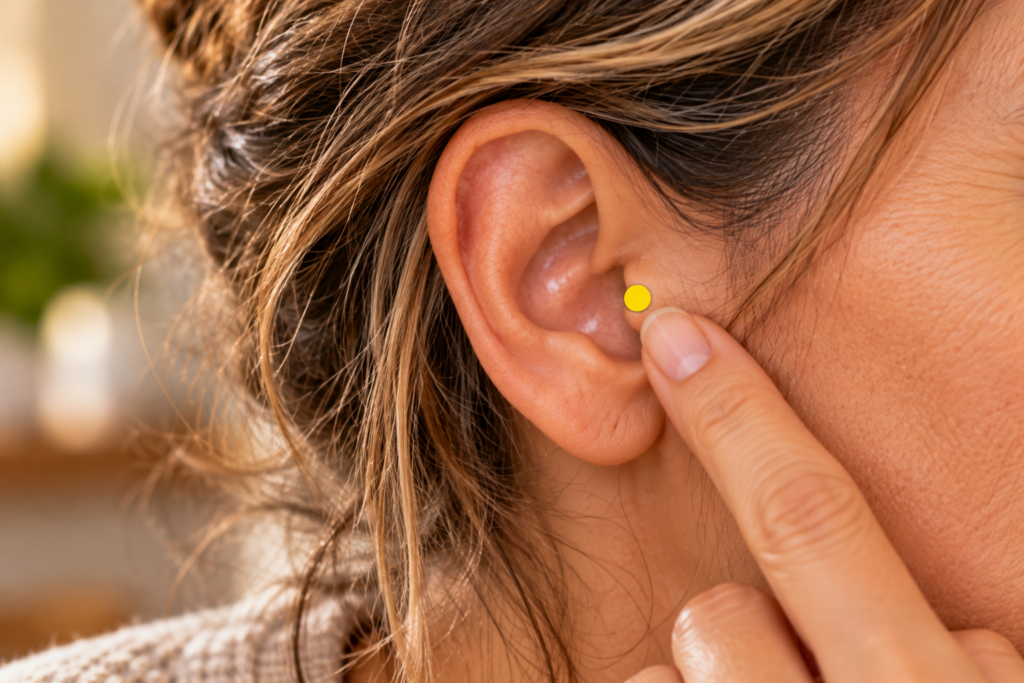
1. Press the ear Hunger point to quiet cravings. The Hunger point sits on the front of the ear, on the small flap of cartilage that covers the ear canal, near its upper edge where it meets the face. Press it with a fingertip, or gently squeeze the flap between your finger and thumb for about thirty seconds to a minute on both ears, especially when a craving hits or about fifteen minutes before a meal.
The Hunger point is a widely used ear point to help decrease appetite and reduce snack cravings. It’s a simple, discreet technique capable of overcoming the urge to snack when not genuinely hungry. Several studies of overweight individuals have shown modest drops in weight and BMI, though these studies are often developing, and the Hunger point typically features in ear acupressure treatments.
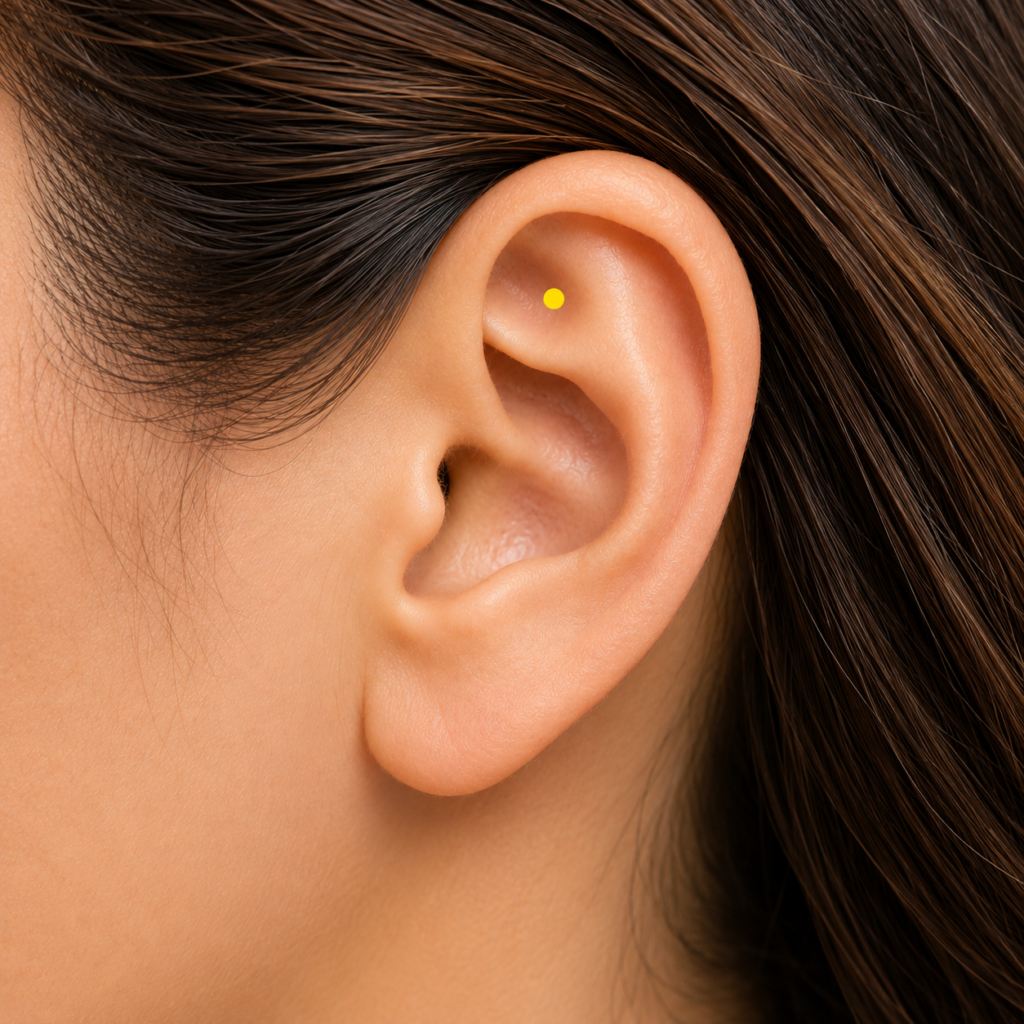
2. Press Ear Shenmen to calm emotional eating. Ear Shenmen sits in the upper part of the ear, in the triangular hollow near the top, at its apex. Press gently with your fingertip for about thirty seconds to a minute on both ears. Ear Shenmen shares its name, “Spirit Gate,” with the Heart point HT7.
Ear Shenmen is a very calming ear point that reduces anxiety, restlessness, and stress. When cravings are caused more by emotions than hunger, calming the mind can often decrease the urge to eat. This point is also frequently used in ear therapies aimed at appetite control and weight management.
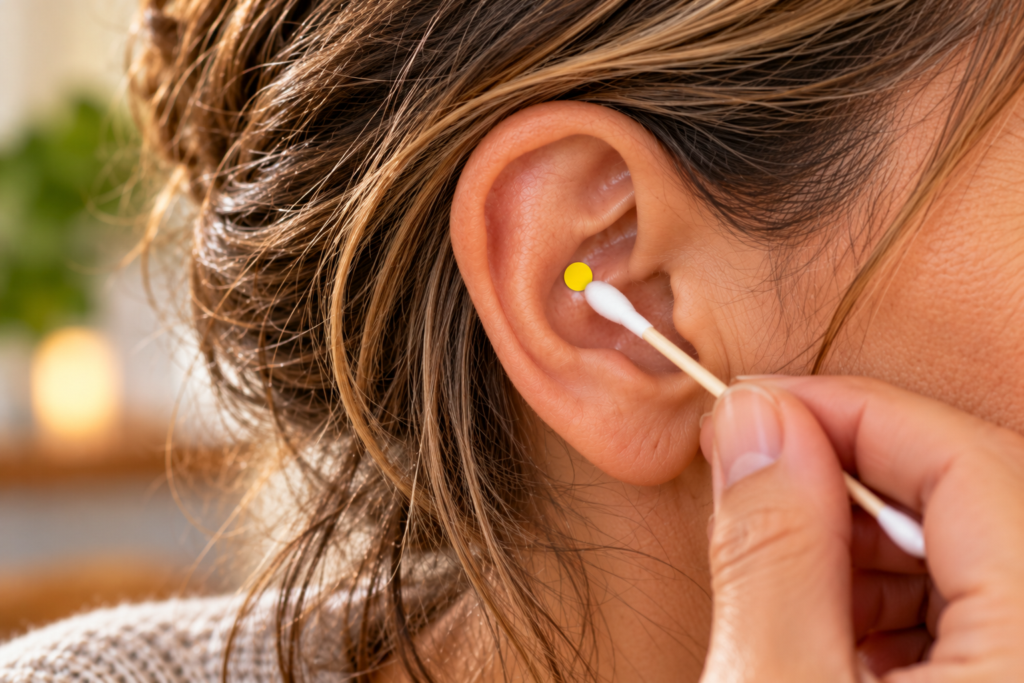
3. Press the ear Stomach point to settle the Stomach. The ear Stomach point sits in the bowl of the ear, just where the curved ridge running up from the ear canal ends and disappears. Press gently with a fingertip or the tip of a cotton swab for about thirty seconds to a minute on both ears.
This ear point for the Stomach helps regulate its function by soothing intense and frequent hunger caused by Stomach heat and aiding the Stomach in recognizing when it is full. When combined with the Hunger point and the Ear Shenmen point, it creates a straightforward ear routine you can do anywhere.
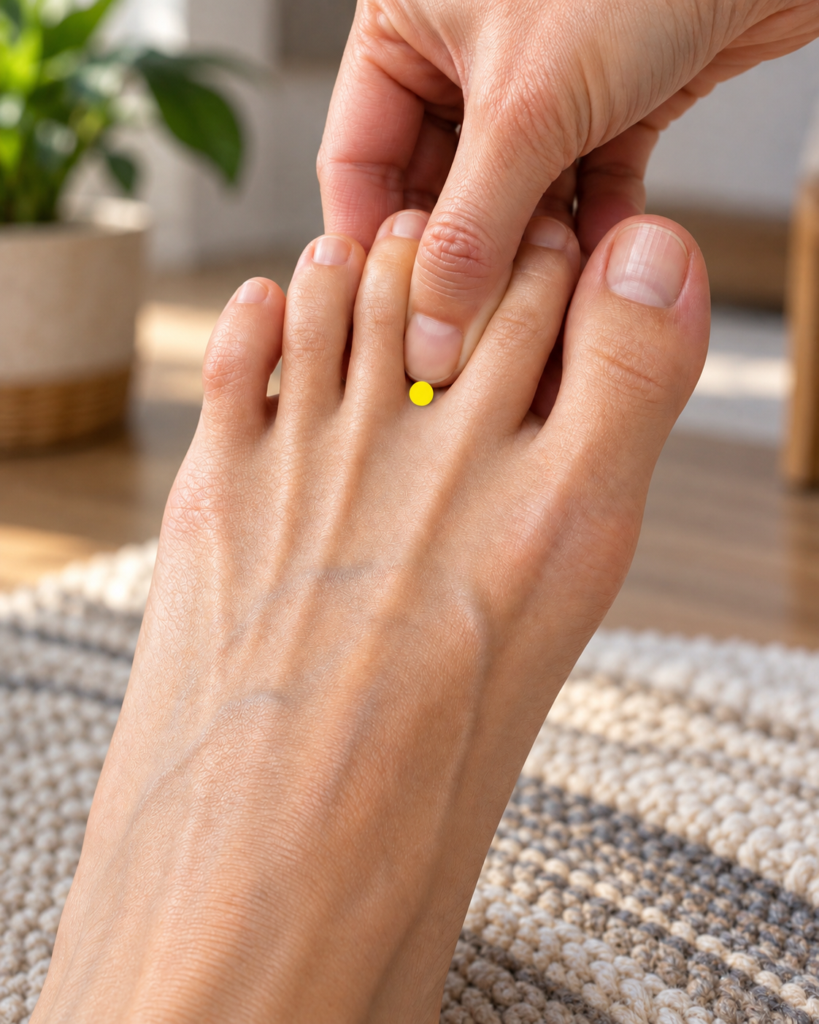
4. Press on ST44 between the toes to cool Stomach heat. ST44 sits on the top of the foot, in the webbing between the second and third toes, just where they meet. Press firmly with your thumb for one to two minutes on each foot. ST44 is called “Neiting.”
If hunger feels intense, you may never feel satisfied and often experience thirst, acid reflux, or bad breath. In Traditional Chinese Medicine, heat in the Stomach is seen as the cause, and ST44 is the main point to reduce it. When the heat is cooled, the persistent burning hunger generally subsides.
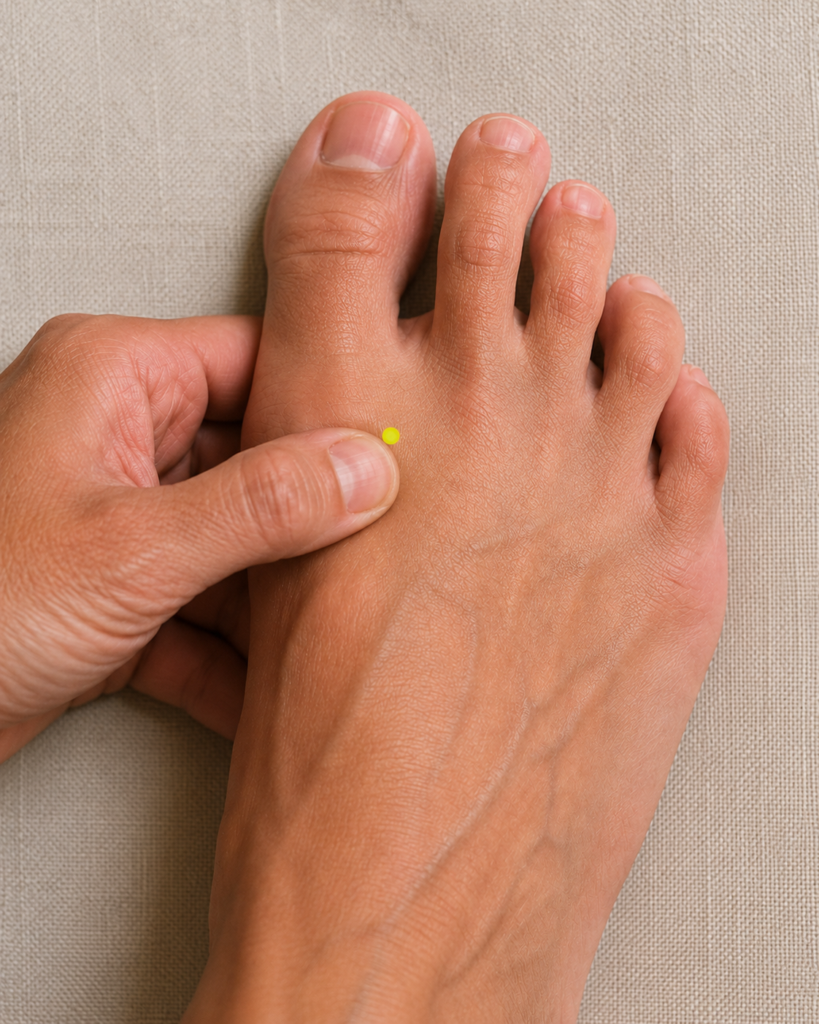
5. Press on LR3 on the top of the foot to ease stress eating. LR3 sits on the top of the foot, in the webbing between the big toe and second toe, about two finger-widths back where the bones meet in a small hollow. Press firmly with your thumb for one to two minutes on each foot. LR3 is called “Taichong.”
Stress eating often occurs because of unresolved tension, which in Traditional Chinese Medicine is attributed to Liver Qi stagnation. The primary acupressure point for alleviating this is LR3. Pressing LR3 during moments of tension and cravings can offer a healthy outlet for releasing stress.
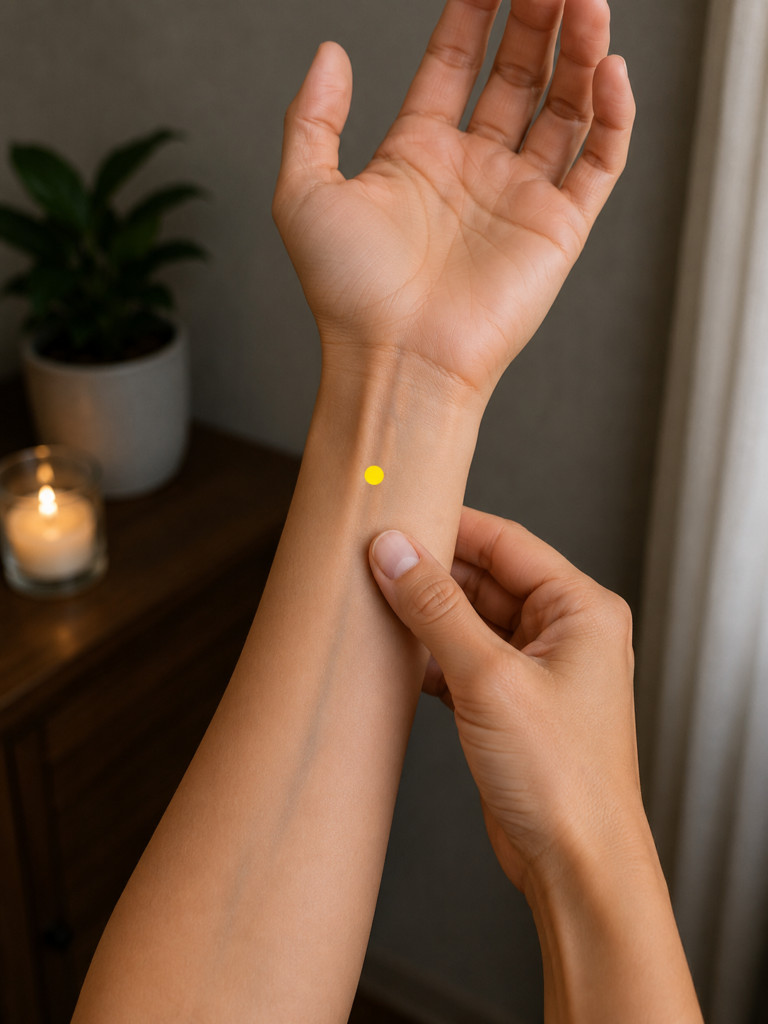
6. Press on PC6 on the inner forearm to settle the urge. PC6 sits three finger-widths above the inner wrist crease, in the center of the forearm between the two tendons. Press firmly with your thumb for one to two minutes on each arm. PC6 is called “Neiguan,” the “Inner Pass.”
PC6 helps calm the mind and soothe the stomach, reducing the anxiety and restlessness that often lead to cravings. Its wrist placement makes it easy to press discreetly whenever a craving hits.
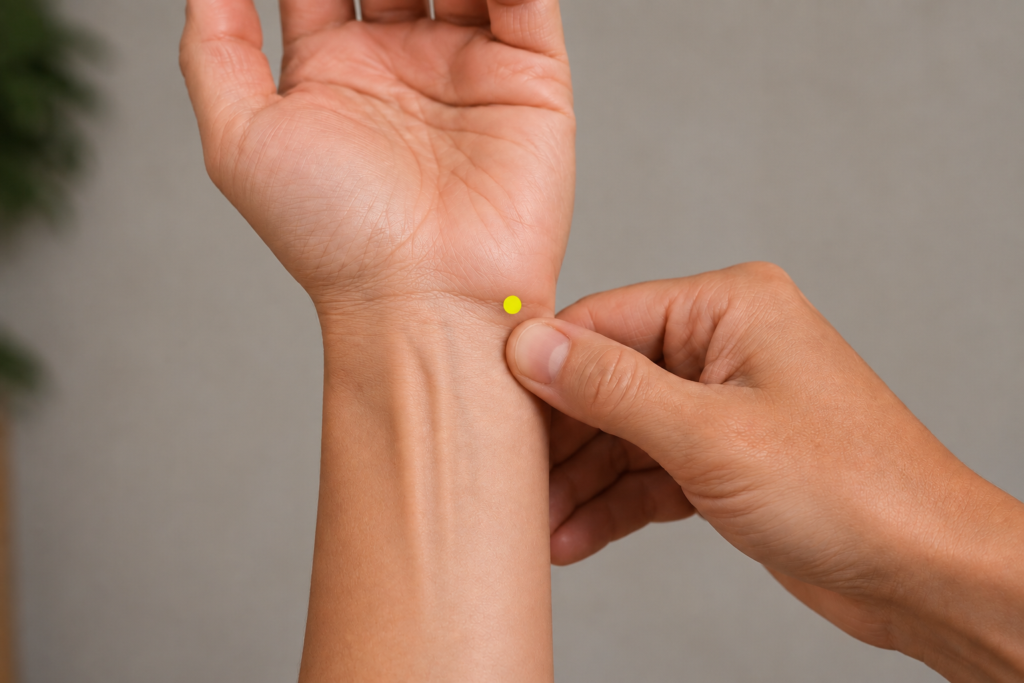
7. Press on HT7 at the wrist when eating to soothe emotions. HT7 sits on the inner wrist crease, on the pinky side, in the small hollow just inside the tendon. Press firmly with your thumb for one to two minutes on each wrist. HT7 is called “Shenmen,” the “Spirit Gate.”
HT7 helps soothe the Heart and settle the Shen when food is used to cope with loneliness, sadness, boredom, or anxiety, encouraging alternative sources of comfort; it is especially effective in the evening, when emotional eating tends to be more common.
8. Press on ST36 below the knee to steady energy and ease sugar cravings. ST36 sits four finger-widths below the lower edge of the kneecap and one finger-width to the outside of the shinbone, on the muscle that rises when you flex your foot. Press firmly with your thumb for one to two minutes on each leg. ST36 is called “Zusanli,” the “Leg Three Miles.”
Cravings for sweet and starchy foods often stem from low or fluctuating energy levels, as the body seeks quick energy boosts. The ST36 point enhances Spleen and Stomach function, supporting a steady energy supply and reducing these cravings. Instead of merely stimulating digestion, it helps regulate it, promoting balanced appetite whether it’s excessive or insufficient.
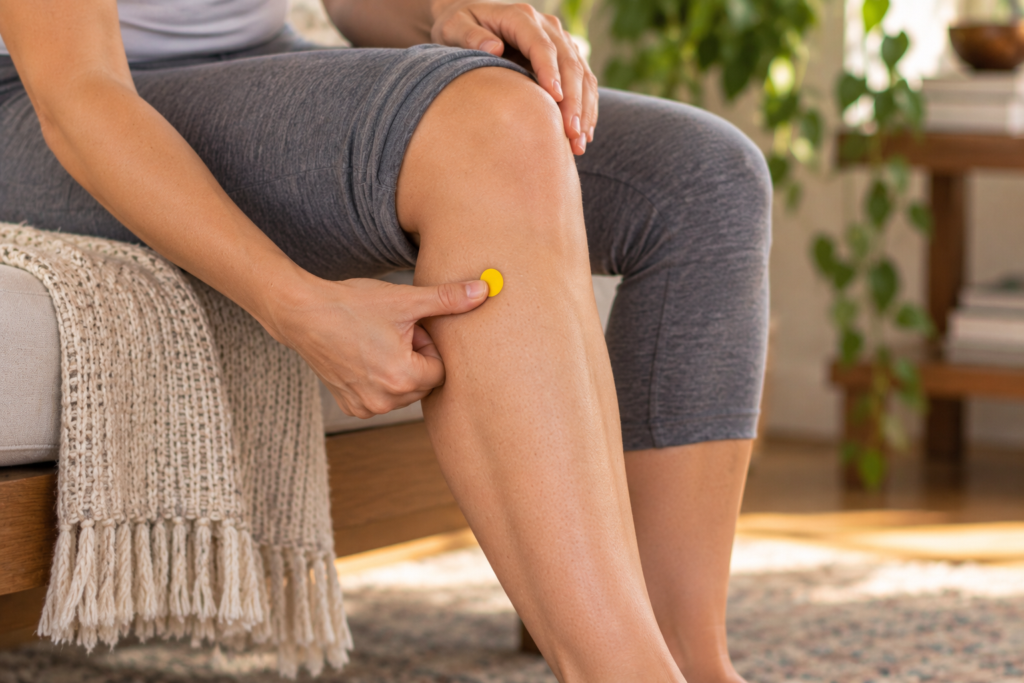
9. Press on SP9 below the inner knee to clear dampness and heaviness. SP9 sits on the inner lower leg, in the hollow just below the bulge at the top of the shinbone, under the inner side of the knee. Press firmly with your thumb for one to two minutes on each leg. SP9 is called “Yinlingquan.”
If cravings come with heaviness, sluggishness, and swelling, Traditional Chinese Medicine sees this as dampness affecting the Spleen. The main acupressure point for eliminating dampness is SP9. Once the heaviness alleviates, energy stabilizes, and the desire for sugary and starchy comfort foods typically diminishes.
Why These Acupressure Points Work
In Traditional Chinese Medicine, an unbalanced appetite can result from heat in the Stomach, stress impacting the Liver, a weak Spleen seeking quick energy, or an unsettled mind using food for comfort; all nine points address these causes.
- The ear points (Hunger, Ear Shenmen, Ear Stomach) help suppress cravings, soothe the mind, and assist the Stomach in recognizing fullness.
- The cooling point (ST44) alleviates the persistent appetite caused by Stomach heat.
- The calming points (LR3, PC6, HT7) help reduce stress and emotional responses related to eating when not hungry.
- The points ST36 and SP9 help stabilize energy levels and reduce the heaviness associated with sugar cravings.
How to Properly Use These Acupressure Points
- When a craving occurs, stop for a moment, take three slow breaths, and apply pressure to the ear Hunger point and PC6. Usually, the urge subsides within a few minutes.
- About fifteen minutes before meals, press the three ear points to promote slower eating and a sense of satisfaction with a comfortable portion.
- If stress or emotions influence your eating habits, focus on stimulating LR3, HT7, and Ear Shenmen, particularly in the evening.
- Work on ST36 and SP9 daily whenever cravings for sweets are accompanied by fatigue or heaviness, and include ST44 if hunger feels unending.
- Apply consistent pressure to each point for 30 seconds to 2 minutes.
The acupressure points are most effective when paired with habits that support a balanced appetite. Eating regular meals instead of skipping them prevents long gaps that can trigger intense hunger and lead to overeating later. Prioritize protein, vegetables, and fiber-rich foods in your meals, as they help you stay full longer. Eat slowly and without screens to give your body time to recognize fullness. Take breaks during meals to check in on how you feel. Stay hydrated throughout the day, since thirst can feel like hunger. Prioritize sleep, as insufficient sleep increases hunger and cravings. Before eating, ask whether you’re genuinely hungry or seeking relief from stress, boredom, or emotions. Find alternative ways to address these needs, such as a brief walk, calling a friend, or practicing slow breathing.
When to Get Professional Help
If you notice a sudden increase in appetite alongside unexplained weight loss, increased thirst, or more frequent urination, it could signal diabetes. If these symptoms occur with a rapid heartbeat, heat intolerance, or trembling, it may point to an overactive thyroid. In either case, see a doctor. You should also consult your doctor if your appetite has risen after starting a new medication, as many common drugs can affect hunger. When you find yourself eating large amounts out of control, secretly, or feeling intense guilt or shame afterward, it’s important to contact a healthcare professional or an eating disorder support service, as binge eating is common and treatable. If food is linked to restriction, fear of weight gain, or strict rules, seek support before trying any appetite-control methods. Emotional eating connected to ongoing low mood or anxiety can benefit from talking to a counselor.
Acupressure offers a safe, natural method to reduce cravings and stress eating, but it should complement healthy habits and be used alongside professional advice when necessary.
Above and Beyond Acupuncture offers acupuncture, cupping, and lifestyle coaching at the North Frank Lloyd Wright Boulevard location in Scottsdale.
Schedule an appointment online to start your healing journey.
The points above are only as effective as the technique used to apply them. Where to press, how firmly, and for how long all affect the result. For a full breakdown of how to perform acupressure properly at home, read Performing Acupressure in 3 Easy Steps.
If stress triggers eating, acupressure for stress goes deeper into that condition, and for the opposite issue, acupressure to increase your appetite is the companion post.

About the Publisher
Paul Kerzner, L.Ac., is a licensed acupuncturist and board-certified herbalist, as well as the founder of Above and Beyond Acupuncture in Scottsdale. His own journey from chronic patient to practicing acupuncturist shapes his commitment to providing honest, clinically grounded information about acupuncture and Traditional Chinese Medicine. Learn more about Paul and his clinical approach on the About Us page.