
Key Takeaways
- Many individuals suffer from a loss of appetite caused by factors such as illness, stress, or age, potentially leading to reduced energy and weight loss.
- Acupressure provides a natural method to enhance digestion and increase appetite by stimulating points connected to the Spleen and Stomach.
- Nine acupressure points can effectively boost appetite by enhancing digestion, alleviating stress, and targeting dampness.
- Use these points about 20-30 minutes prior to meals, and pair them with habits such as eating smaller, nutrient-dense meals and staying properly hydrated.
- Seek medical advice if loss of appetite continues, particularly in older adults or those recovering from illness, since it could signal serious underlying problems.

Have you noticed you’re less interested in food, or that you feel full after just a small bite?
Many people experience a poor appetite, especially after illness, surgery, stress, grief, or with age. It can also be related to digestive issues, low mood, fatigue, and certain treatments like chemotherapy. Older adults are particularly affected, with about 20% of those living at home and up to 65% of hospital patients showing poor appetite. Not eating enough over time can cause low energy, slow healing, and unwanted weight and muscle loss. Acupressure offers a natural way to support digestion and boost appetite.
What the Research Shows
Research on acupressure for appetite is ongoing, but studies with acupuncture show promising results. In a research trial, stage III or IV cancer patients with appetite loss were given either ear acupuncture or standard care. The acupuncture group experienced a 51.4% increase in appetite after four weeks and gained weight, while the control group lost weight. Even four weeks post-treatment, the acupuncture group maintained better appetite. Researchers found ear acupuncture to be safe and effective for boosting appetite and weight gain. Because the same ear points can be pressed at home, they are included here along with the main digestion points.
In Traditional Chinese Medicine, the Spleen and Stomach are responsible for regulating appetite. Together, they take in food, break it down, and transform it into Qi and Blood that nourish the body. Weakness in these organs caused by illness, aging, overexertion, worry, or consuming excessive cold and raw foods can reduce appetite, making small amounts of food cause fullness and fatigue. Loose stools often occur as well. Stress and emotional pressure can block Liver Qi, impairing digestion and reducing the desire to eat, a common issue when people feel too anxious or upset. Dampness can hinder digestion, resulting in feelings of heaviness, swelling, and disinterest in food. Additionally, when the Stomach’s Yin fluids are depleted due to fever or aging, one might feel slightly hungry but unable to eat much, often accompanied by a dry mouth.
Here are nine acupressure points that help strengthen the Spleen and Stomach, release stagnant Liver Qi, remove dampness, and gently restore appetite.
What Acupressure Points to Press and Why
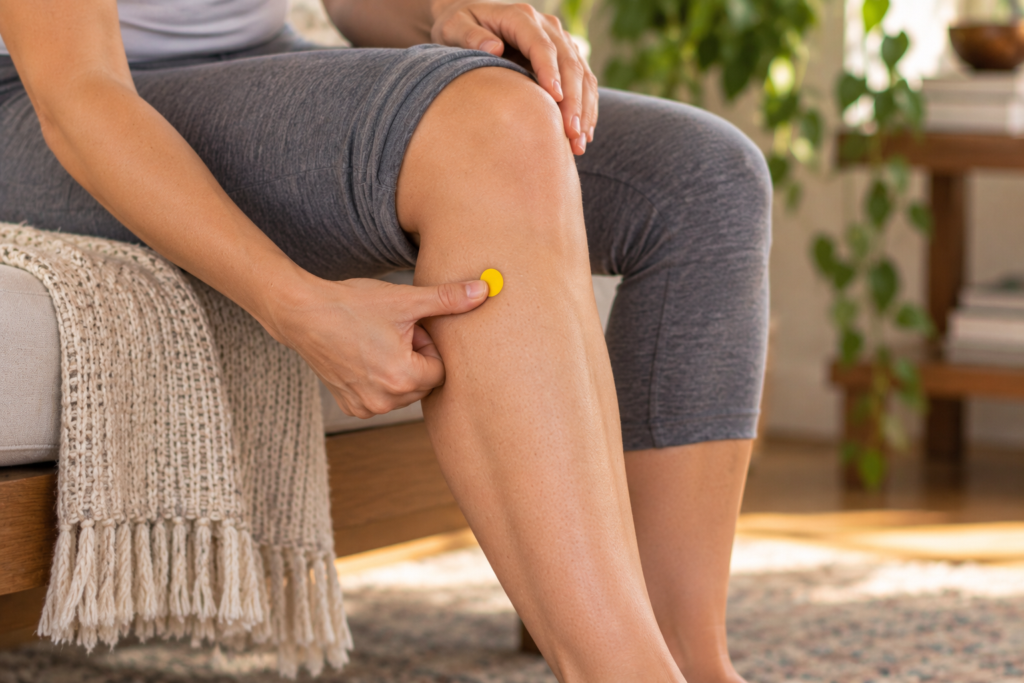
1. Press on ST36 below the knee, the master point for digestion. ST36 sits four finger-widths below the lower edge of the kneecap and one finger-width to the outside of the shinbone, on the muscle that rises when you flex your foot. Press firmly with your thumb for one to two minutes on each leg. ST36 is called “Zusanli,” the “Leg Three Miles.”
ST36 is a crucial acupuncture point for the Stomach and Spleen, aiding digestion, enhancing the Stomach’s ability to receive food, and replenishing energy depleted by poor appetite. It serves as the foundation of the routine and should be used daily.
2. Press on CV12 above the navel to wake up the Stomach. CV12 sits on the midline of the abdomen, halfway between the navel and the lower end of the breastbone, about four finger-widths above the belly button. Press gently with your fingertips in slow clockwise circles for one to two minutes, or rest a warm hand over it. CV12 is called “Zhongwan,” the Stomach’s gathering point.
CV12 is located just above the stomach and serves as the key point for harmonizing it. Gently circling this area before eating can help the stomach prepare to receive food and ease fullness, which might otherwise reduce appetite.

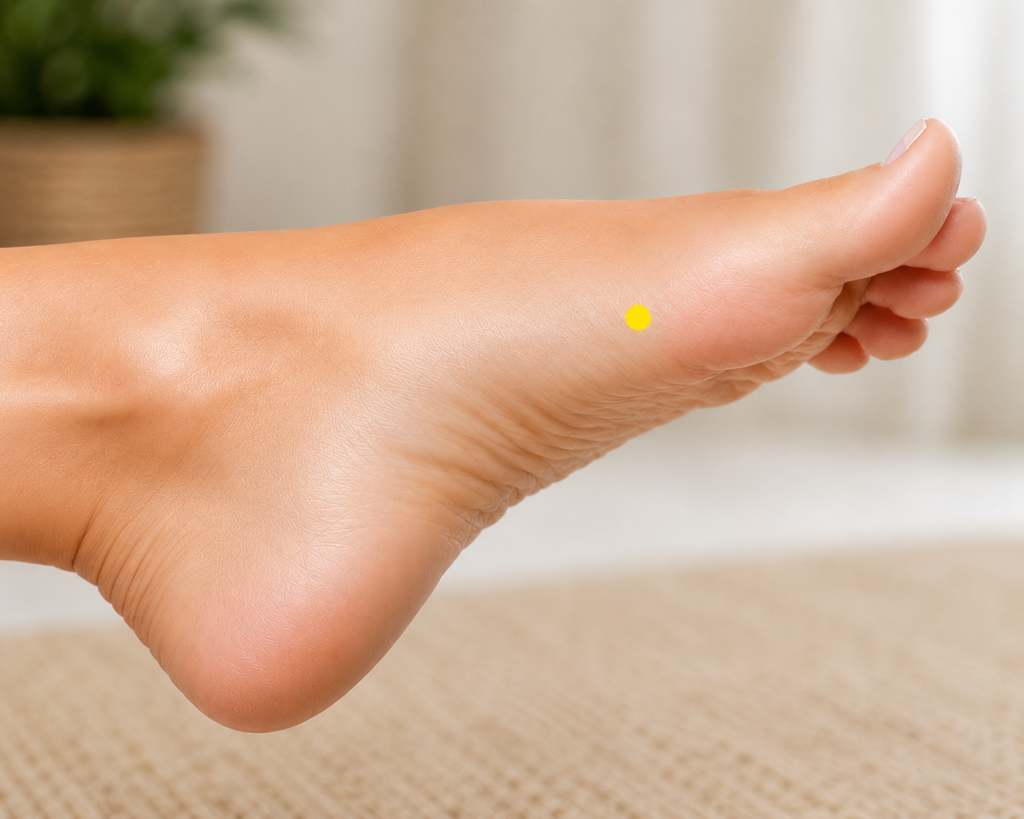
3. Press on SP3 on the inner foot to strengthen the Spleen. SP3 sits on the inner edge of the foot, in the hollow just behind and below the ball of the big toe, where the skin changes color along the side of the foot. Press firmly with your thumb for one to two minutes on each foot. SP3 is called “Taibai,” the source point of the Spleen.
When you have a lack of appetite and fatigue, feel full after eating only a small amount, and have loose stools, Traditional Chinese Medicine views this as a sign of a weak Spleen. To address this, SP3 is applied to strengthen the Spleen at its root. It is typically combined with ST36 to enhance digestion by supporting both the Spleen and the Stomach.
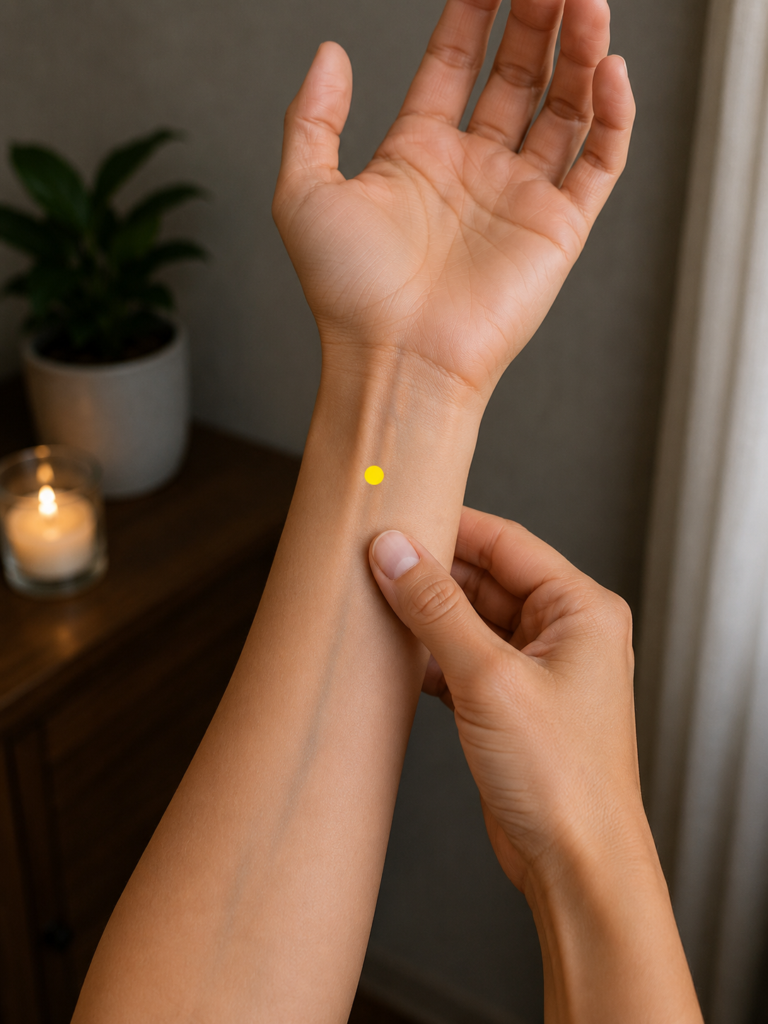
4. Press on PC6 on the inner forearm to settle queasiness. PC6 sits three finger-widths above the inner wrist crease, in the center of the forearm between the two tendons. Press firmly with your thumb for one to two minutes on each arm. PC6 is called “Neiguan,” the “Inner Pass.”
People often experience mild nausea or an upset stomach, which is why they may not want to eat. PC6 is the acupuncture point that has been studied most extensively in relation to nausea, and it also has a soothing effect on the mind and opens the chest; this is beneficial when anxiety is involved. Applying pressure to it before meals can make eating seem more feasible.
5. Press on BL20 and BL21 on the mid-back to support digestion from behind. BL20 and BL21 sit on the mid-back, about two finger-widths out to each side of the spine, just above and just below the lowest ribs. Lie on your back with a tennis ball under each side, or have someone press both sides with their thumbs, for one to two minutes. BL20 is called “Pishu,” the back point of the Spleen, and BL21 is “Weishu,” the back point of the Stomach.
These are the common back access points for the Spleen and Stomach, traditionally used to enhance digestion and stimulate appetite. Gentle pressing or warming of this area can be especially comforting and helpful, especially after an illness.

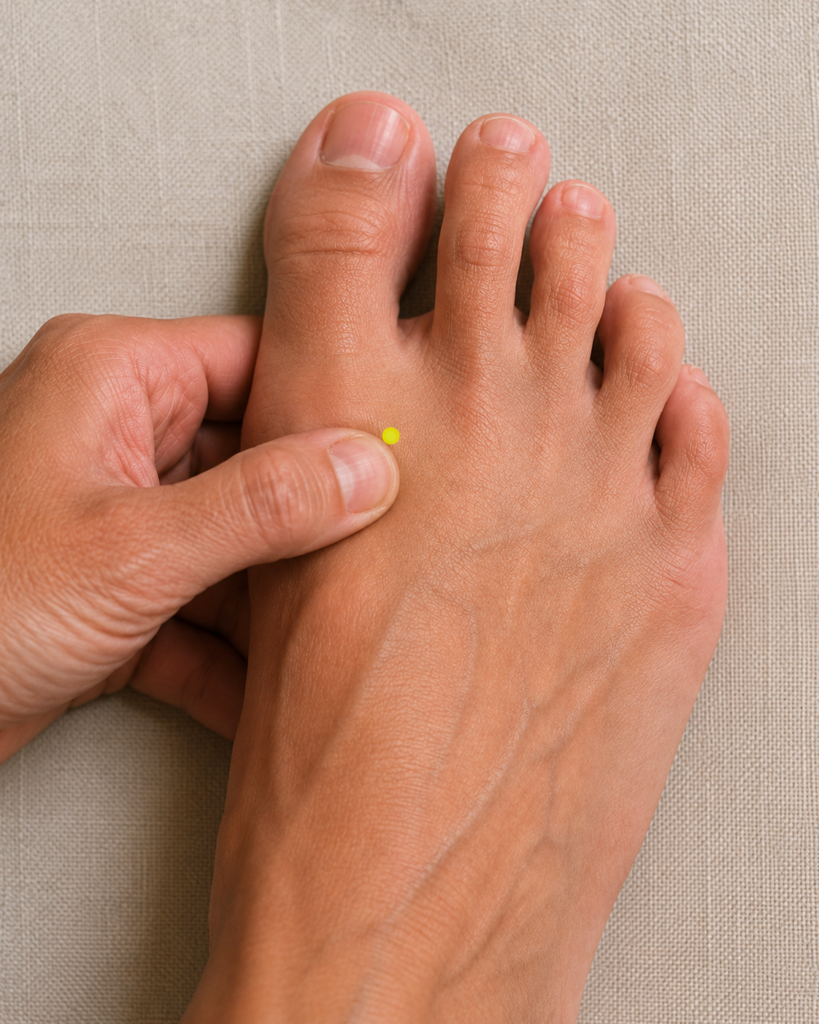
6. Press on LR3 on the top of the foot when stress takes your appetite. LR3 sits on the top of the foot, in the webbing between the big toe and second toe, about two finger-widths back where the bones meet in a small hollow. Press firmly with your thumb for one to two minutes on each foot. LR3 is called “Taichong.”
When stress, anxiety, grief, or upset makes you lose your appetite, Traditional Chinese Medicine suggests that the Liver is affecting digestion. The LR3 point helps to free the stuck Liver Qi and alleviate tension, enabling the Stomach and Spleen to resume their functions.
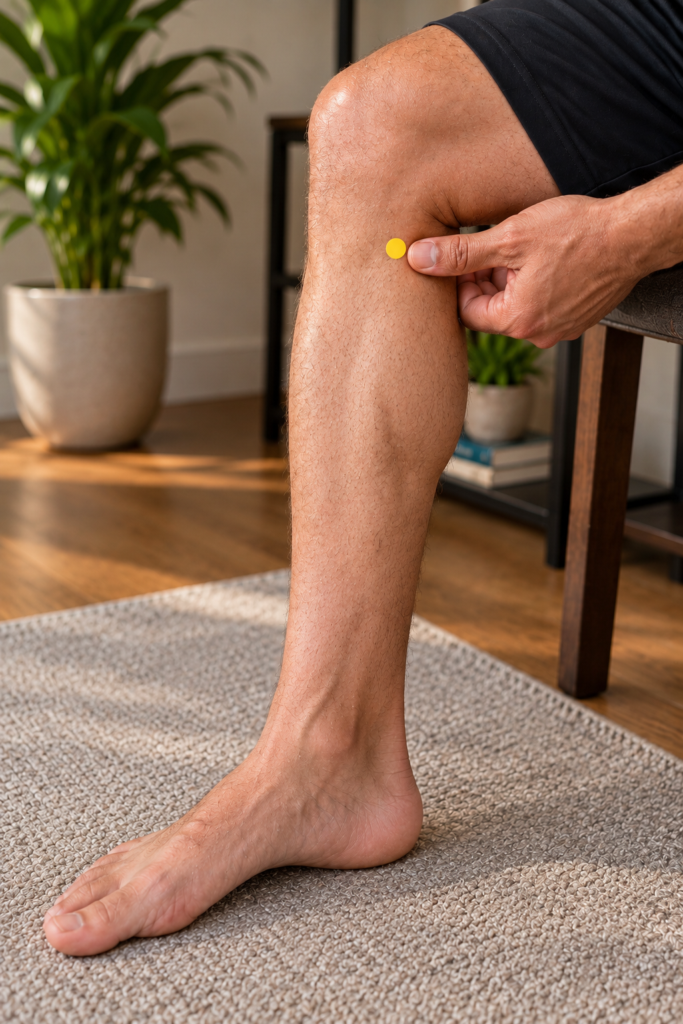
7. Press on SP9 below the inner knee to clear heaviness. SP9 sits on the inner lower leg, in the hollow just below the bulge at the top of the shinbone, under the inner side of the knee. Press firmly with your thumb for one to two minutes on each leg. SP9 is called “Yinlingquan.”
If poor appetite occurs alongside a heavy, swollen, and sluggish feeling, Traditional Chinese Medicine attributes this to dampness obstructing digestion and identifies SP9 as the key point for resolving it. Once the heaviness subsides, interest in food typically returns.
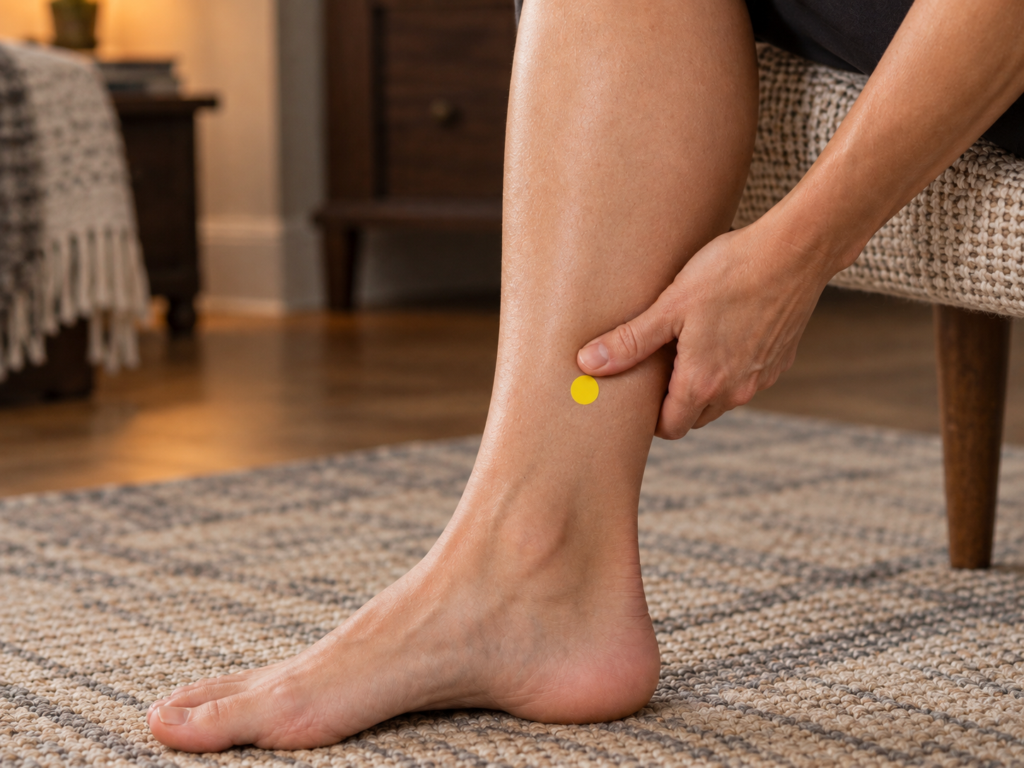
8. Press on SP6 above the inner ankle to nourish and restore. SP6 sits four finger-widths up from the tip of the inner ankle bone, just behind the back edge of the shinbone. Press firmly for one to two minutes on each leg. SP6 is called “Sanyinjiao,” the “Three Yin Intersection.” SP6 should be avoided during pregnancy.
SP6 enhances the Spleen’s function, boosts Blood and Yin, and soothes the mind. It is especially helpful for those who feel mildly hungry but cannot eat much, suffer from dry mouth, or are recovering from an illness. Additionally, it supports restful sleep, which is crucial during recovery.
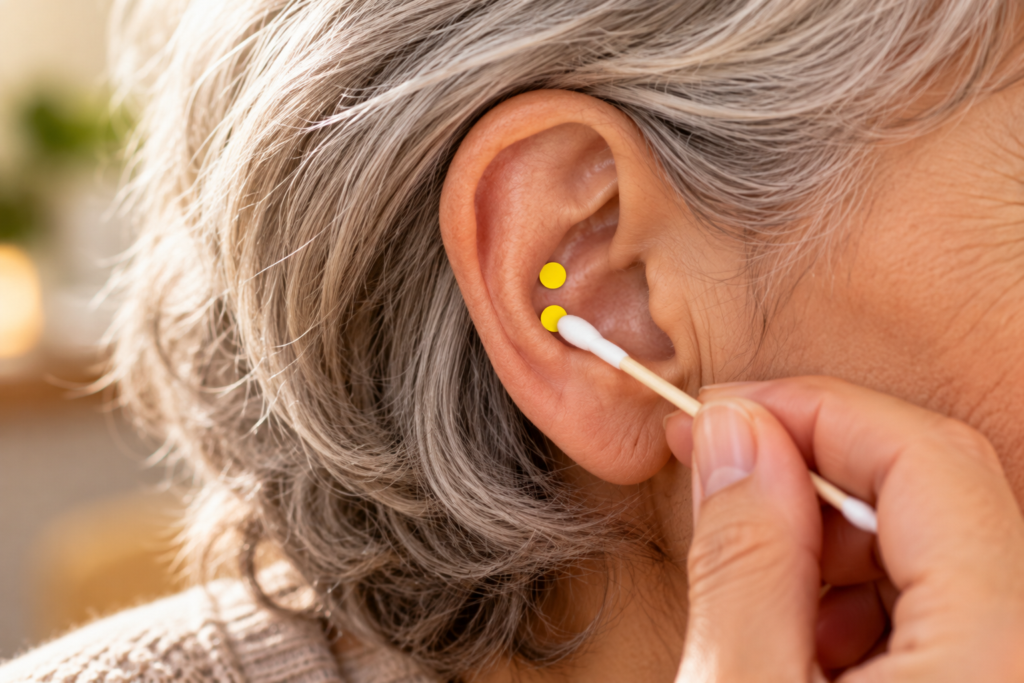
9. Press the ear points for the Stomach and Spleen. In the ear, the Stomach point sits in the middle of the ear’s inner ridge, just where the curved ridge running up from the ear canal ends and disappears into the bowl of the ear, and the Spleen point sits just below and behind it, in the lower part of that bowl. Gently press each with a fingertip or the tip of a cotton swab for about thirty seconds to a minute on both ears.
The appetite study method involves ear acupuncture, focusing on points for the Stomach and Spleen, which are commonly used to support digestion and appetite. Gently pressing these points before eating is simple and unobtrusive. Alternatively, a practitioner may place small seeds or beads on these points, allowing you to press them anytime during the day.
Why These Acupressure Points Work
In Traditional Chinese Medicine, appetite hinges on the Spleen and Stomach functioning harmoniously. It diminishes when these organs lose their ability, when stress impacts the Liver, when dampness hampers digestion, or when the Stomach becomes dry. The nine points address all these factors.
- The digestive points (ST36, CV12, SP3, BL20, BL21) support the Spleen and Stomach, aiding them in processing food.
- The settling points (PC6, LR3) help reduce nausea and relieve stress, which can suppress appetite.
- The clearing and nourishing points (SP9, SP6) help reduce heaviness and replenish fluids and Blood.
- The ear points influence the Stomach and Spleen via the ear, based on methods used in appetite research.
How to Properly Use These Acupressure Points
- Work on the points about twenty to thirty minutes before meals, as they can help prepare the body to eat.
- Start with CV12 and ST36, then include SP3, PC6, and ear points. If stress or emotions affect your appetite, add LR3; if heavy and bloated, add SP9.
- Each day, have someone press on BL20 and BL21 from behind, or use a tennis ball.
- Apply gentle pressure to the abdomen and firm pressure to the legs, feet, and hands, holding each position for one to two minutes.
- Try this routine daily for two to three weeks to evaluate its benefits.
To help rebuild your appetite, develop a few simple habits: eat smaller, more frequent meals with nutrient-rich foods such as eggs, yogurt, nut butters, broth-based soups, and smoothies. Taking a quick walk before eating can increase your hunger. Avoid drinking large amounts of fluids just before or during meals; instead, sip small quantities between meals. Make your meals attractive and share them if possible. According to Chinese medicine, choose warm, cooked foods that are easy to digest rather than cold, raw, or fatty foods that can burden a weakened digestive system. Warming spices like fresh ginger can also help stimulate your appetite gently.
When to Get Professional Help
See a doctor if your loss of appetite persists for several weeks, especially if you’re losing weight unexpectedly. Causes can include thyroid problems, infections, digestive issues, depression, cancer, or certain medications. Seek urgent medical care if you experience difficulty swallowing, early satiety, ongoing nausea or vomiting, stomach pain, black or bloody stools, yellowing skin or eyes, fever, or night sweats. Older adults, recovery patients, or those receiving cancer treatment should consult their healthcare team early, as poor appetite can cause weight and muscle loss. A dietitian can offer extra support. If low appetite is paired with persistent sadness or disinterest, tell your doctor. If eating is linked to fear of weight gain or strict rules, contact a healthcare professional or eating disorder support service.
Acupressure provides a natural, low-risk method to help regulate your appetite, but it should complement treatment for the root cause.
Above and Beyond Acupuncture offers acupuncture, cupping, and lifestyle coaching at the North Frank Lloyd Wright Boulevard location in Scottsdale.
Schedule an appointment online to start your healing journey.
The points above are only as effective as the technique used to apply them. Where to press, how firmly, and for how long all affect the result. For a full breakdown of how to perform acupressure properly at home, read Performing Acupressure in 3 Easy Steps.
If nausea is what keeps you from eating, how to stop nausea with acupressure is the companion post.

About the Publisher
Paul Kerzner, L.Ac., is a licensed acupuncturist and board-certified herbalist, as well as the founder of Above and Beyond Acupuncture in Scottsdale. His own journey from chronic patient to practicing acupuncturist shapes his commitment to providing honest, clinically grounded information about acupuncture and Traditional Chinese Medicine. Learn more about Paul and his clinical approach on the About Us page.