Key Takeaways
- Polycystic ovary syndrome (PCOS) affects women’s reproductive health, causing irregular periods, weight gain, and acne.
- Acupressure for PCOS includes nine points that help strengthen the kidneys, clear phlegm, and regulate hormonal balance.
- Acupressure complements medical treatment and lifestyle changes for effective PCOS management, while seeking professional help is crucial.
- Key acupressure points include CV4 for reproductive health, SP6 for cycle regulation, and ST40 for clearing phlegm.
- Consult a doctor if you experience severe symptoms or irregular periods for an extended period, as this can indicate serious health issues.

Are you experiencing irregular or missing periods, along with stubborn weight gain, acne, or unwanted hair growth?
These symptoms are common in polycystic ovary syndrome (PCOS), a hormonal disorder that affects many women of reproductive age. PCOS often involves irregular or absent ovulation, higher levels of male hormones called androgens, and sometimes insulin resistance, which means the body has trouble using insulin well. This can cause irregular periods, trouble getting pregnant, acne, extra facial or body hair, thinning scalp hair, weight gain around the belly, tiredness, and mood changes. Not everyone with PCOS has ovarian cysts, despite the name. Medical care is important for managing PCOS and lowering long-term health risks. Acupressure can also be a gentle daily way to help regulate cycles, lower stress, and address symptoms.
Research on acupuncture for PCOS is ongoing. Multiple studies, especially on electroacupuncture, show improvements in ovulation and hormone levels. Overall, acupuncture and acupressure should be viewed as supportive options that help with cycle regulation, stress reduction, and maintaining overall balance, complementing medical treatment and lifestyle adjustments crucial for managing PCOS.
Traditional Chinese Medicine does not have a single diagnosis for PCOS, but it recognizes several patterns that match its symptoms. In this system, the Kidney is linked to reproduction and the menstrual cycle. If the Kidney is weak, periods may become irregular, last longer, or stop. The Spleen is responsible for processing food and fluids. When it is weak, phlegm and dampness can build up, leading to weight gain, slow metabolism, and blockages in the uterus and ovaries that make ovulation harder. This is similar to insulin resistance seen in many women with PCOS. Stress can cause Liver Qi to get stuck, disrupting the cycle and turning into heat that shows up as acne, irritability, and extra hair growth. Over time, Blood can also stagnate, causing painful or light periods.
Here are nine acupressure points to help strengthen the Kidney, eliminate phlegm and dampness, move Liver Qi, clear heat, and support the uterus and ovaries.
What Acupressure Points to Press and Why
1. Press on CV4 below the navel to strengthen the reproductive center. CV4 sits on the midline of the lower abdomen, about four finger-widths below the navel. Rest your fingertips or a warm hand there and press gently for one to two minutes. CV4 is called “Guanyuan,” the “Gate of Origin.”
CV4 is situated above the uterus and is a crucial point in the reproductive system because it supports Kidney health and promotes regular cycles. It is especially beneficial when cycles are long, irregular, or absent. Applying warmth, such as a warm hand or heat pack, to this area can boost its nourishing effects.
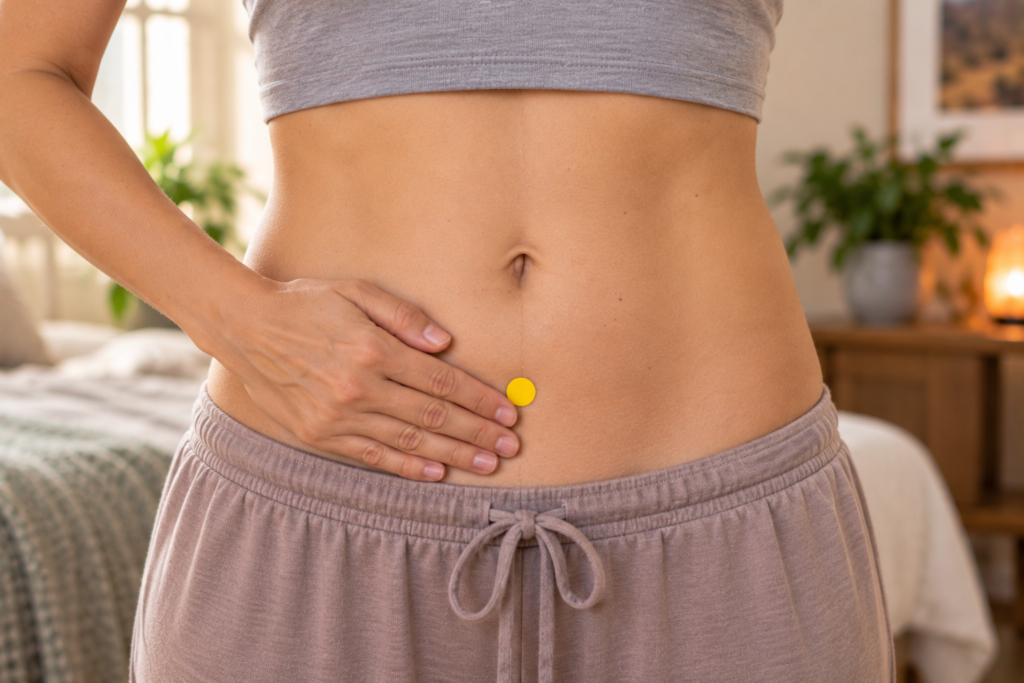
2. Press on Zigong on the lower abdomen, the uterus point. Zigong sits on the lower abdomen, about four finger-widths to each side of the midline and a little below CV4, roughly over the ovaries. Press gently with your fingertips for one to two minutes on both sides. Zigong is an extra point whose name means “Palace of the Child.”
Zigong is the empirical point for the uterus and the ovaries and has traditionally been used to treat irregular periods and difficulty conceiving; it acts directly on the area affected by PCOS by promoting blood circulation to the reproductive organs. Apply the pressure gently and in a comfortable way.
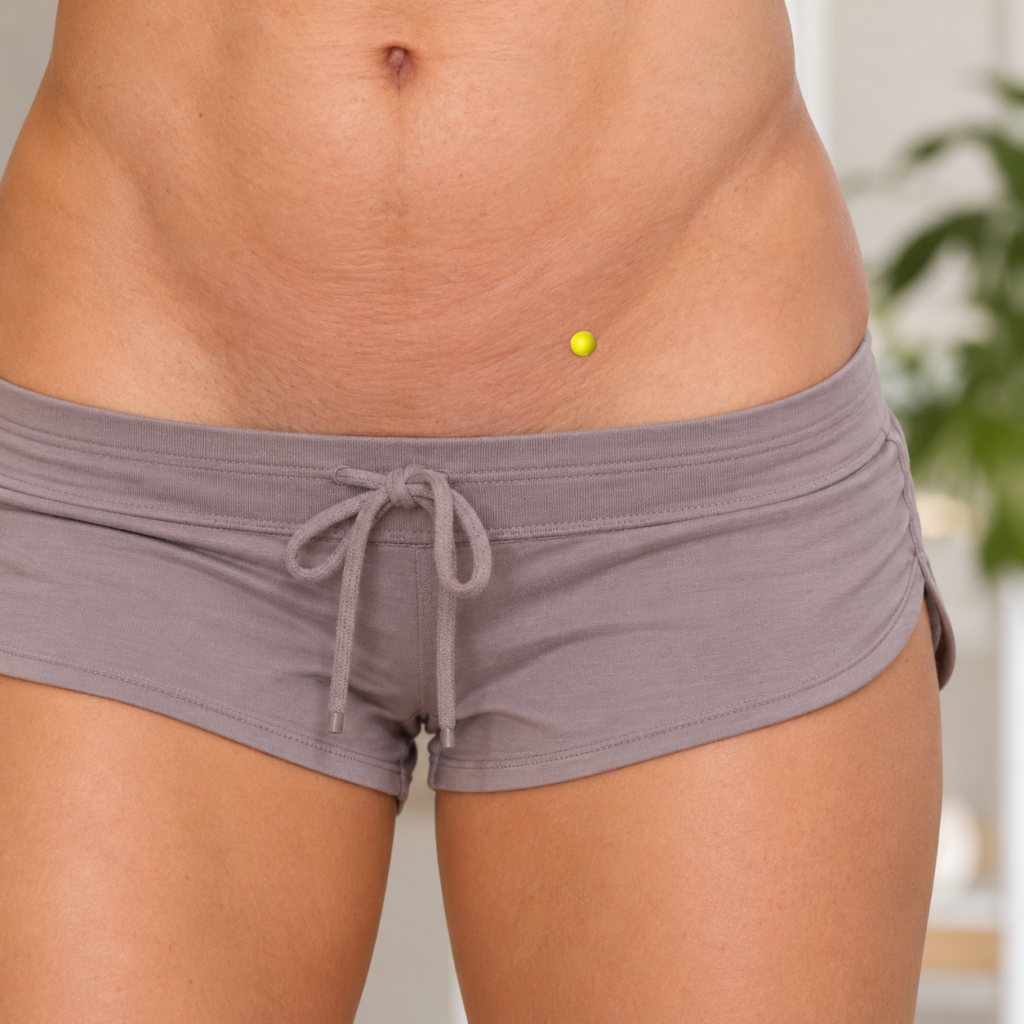
3. Press on SP6 above the inner ankle to regulate the cycle. SP6 sits four finger-widths up from the tip of the inner ankle bone, just behind the back edge of the shinbone. Press firmly for one to two minutes on each leg. SP6 is called “Sanyinjiao,” the “Three Yin Intersection.” SP6 is avoided during pregnancy.
SP6 is one of the most important acupressure points in women’s health because the Spleen, Liver, and Kidney meridians that are most closely related to the menstrual cycle all converge at this point. It helps regulate the cycle, move stagnated blood, and support hormonal balance. When trying to conceive, use it in the first half of your cycle and then stop after ovulation until you have established whether you are pregnant.
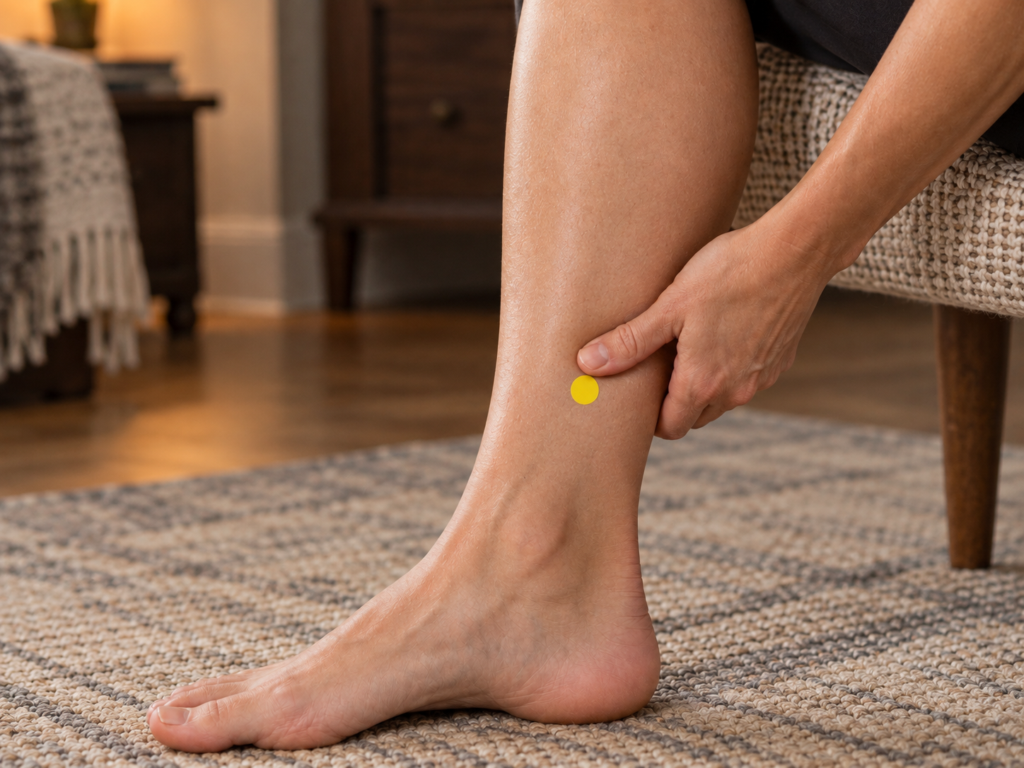
4. Press on ST40 on the lower leg to clear phlegm. ST40 sits on the outer lower leg, midway between the knee and the outer ankle bone, about two finger-widths to the outside of the shinbone. Press firmly with your thumb for one to two minutes on each leg. ST40 is called “Fenglong.”
ST40 is a vital acupoint for removing phlegm, which in Traditional Chinese Medicine is associated with weight gain, a sluggish metabolism, and phlegm obstructing the ovaries in PCOS. Regular stimulation of this point is recommended daily to target the phlegm-damp element of PCOS.
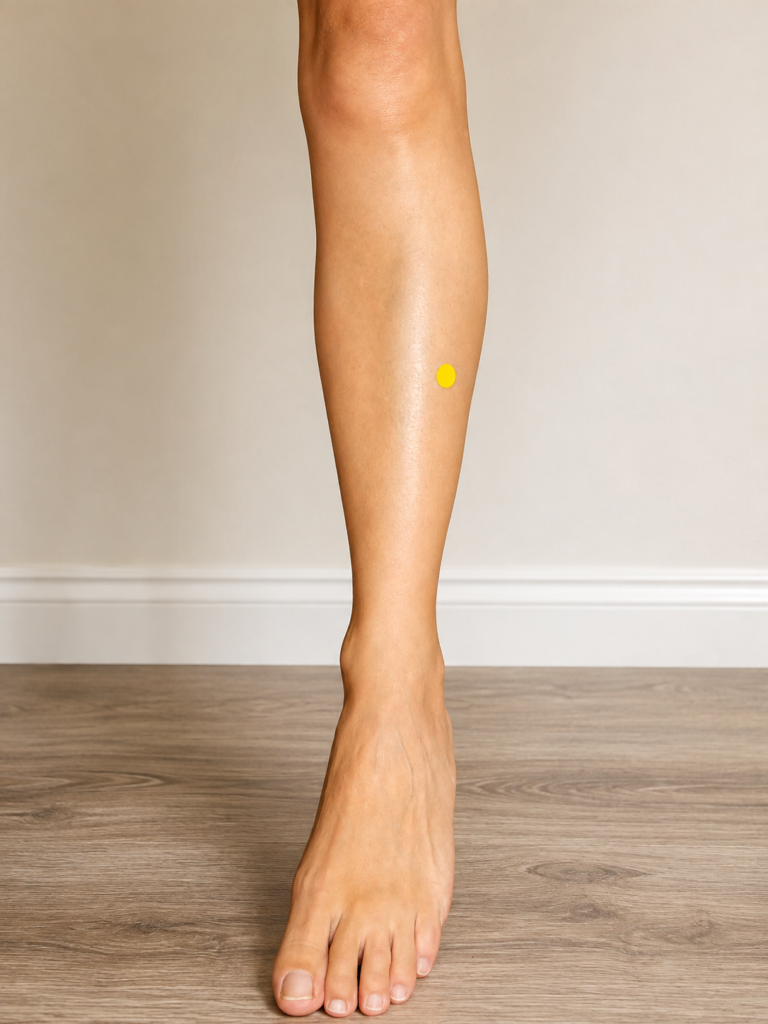
5. Press on SP9 below the inner knee to drain dampness. SP9 sits on the inner lower leg, in the hollow just below the bulge at the top of the shinbone, under the inner side of the knee. Press firmly with your thumb for one to two minutes on each leg. SP9 is called “Yinlingquan.”
SP9 is essential for removing dampness and alleviating the heavy, swollen, sluggish sensation that often occurs with PCOS; when combined with ST40, it treats the phlegm and dampness at the root of the condition’s metabolic aspect.
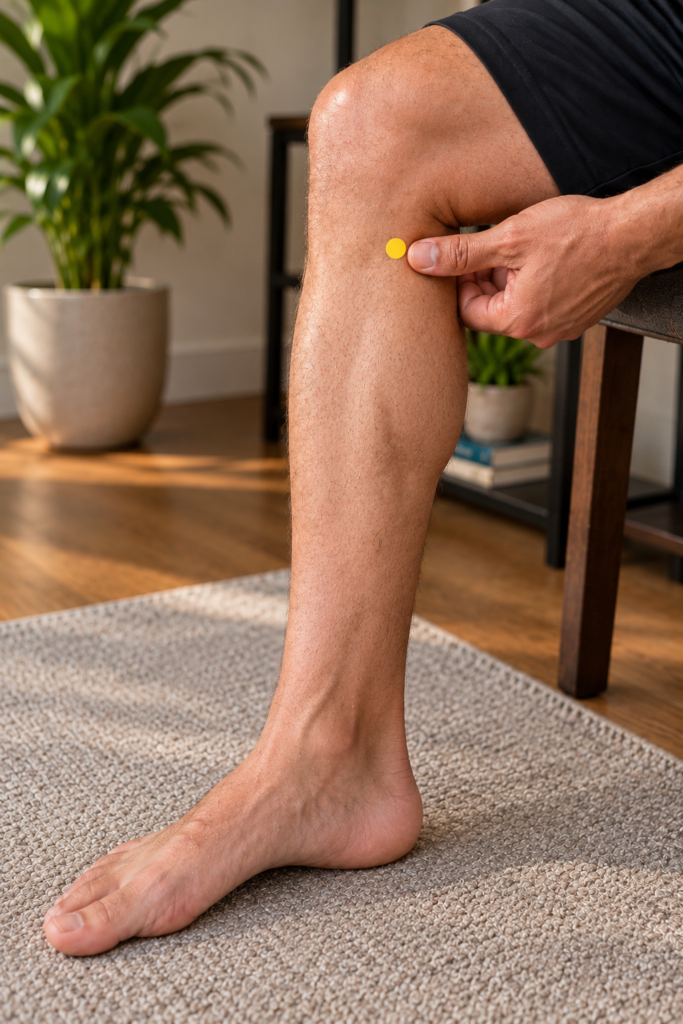
6. Press on ST36 below the knee to strengthen metabolism. ST36 sits four finger-widths below the lower edge of the kneecap and one finger-width to the outside of the shinbone, on the muscle that rises when you flex your foot. Press firmly with your thumb for one to two minutes on each leg. ST36 is called “Zusanli,” the “Leg Three Miles.”
The acupoint ST36 strengthens the Spleen and Stomach, organs in Traditional Chinese Medicine that are responsible for the body’s processing of food and converting it into energy rather than storing it as phlegm and dampness; it boosts energy, aids digestion, and is helpful in dealing with the fatigue that is often associated with PCOS.
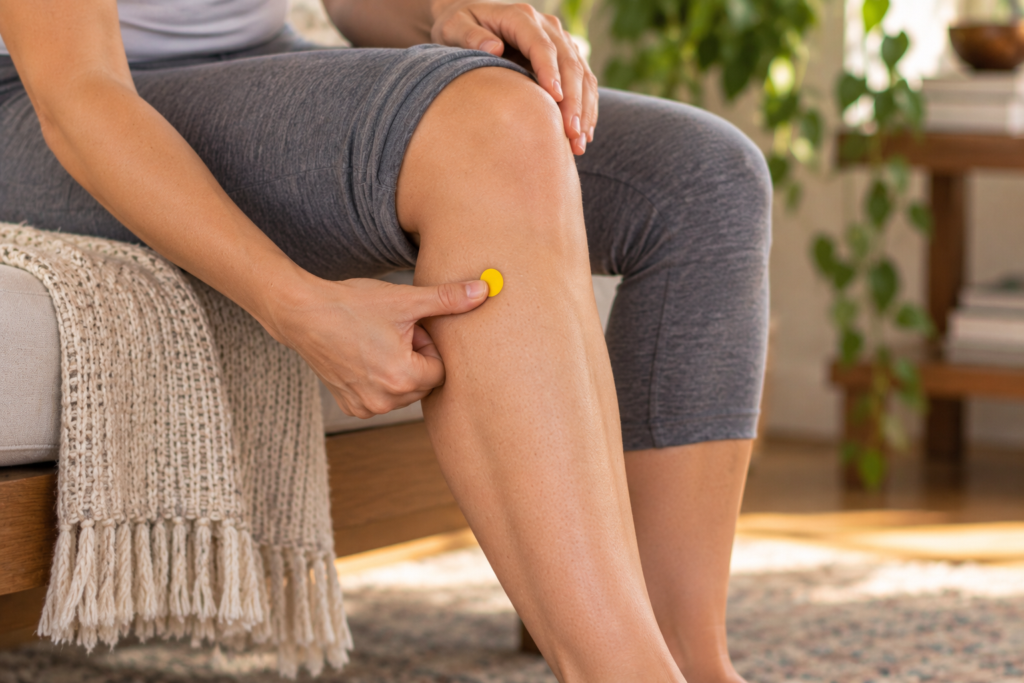
7. Press on LR3 on the top of the foot to move stuck Qi and ease stress. LR3 sits on the top of the foot, in the webbing between the big toe and second toe, about two finger-widths back where the bones meet in a small hollow. Press firmly with your thumb for one to two minutes on each foot. LR3 is called “Taichong.”
Stress disrupts the menstrual cycle, and in Traditional Chinese Medicine, this is seen as Liver Qi that has become stuck and may turn into heat, leading to irritability, breast tenderness, and acne. By acting on LR3, the stuck Qi is released, the effects of stress are reduced, and the cycle becomes more smoothly regulated.
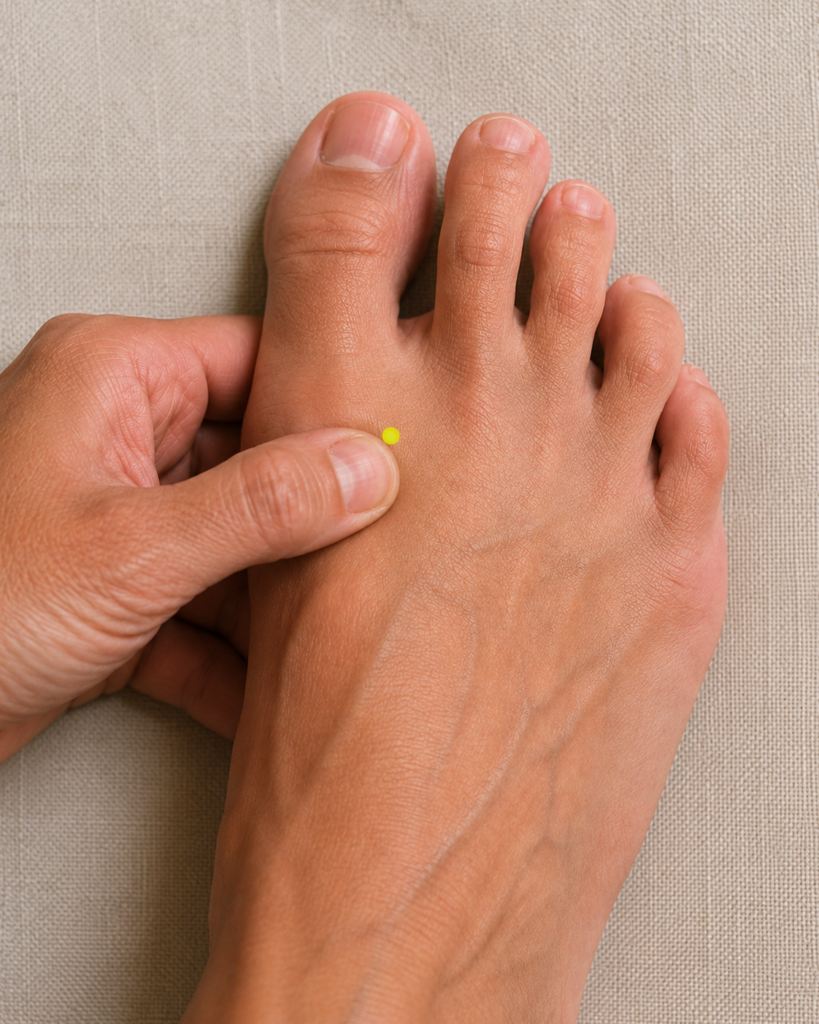
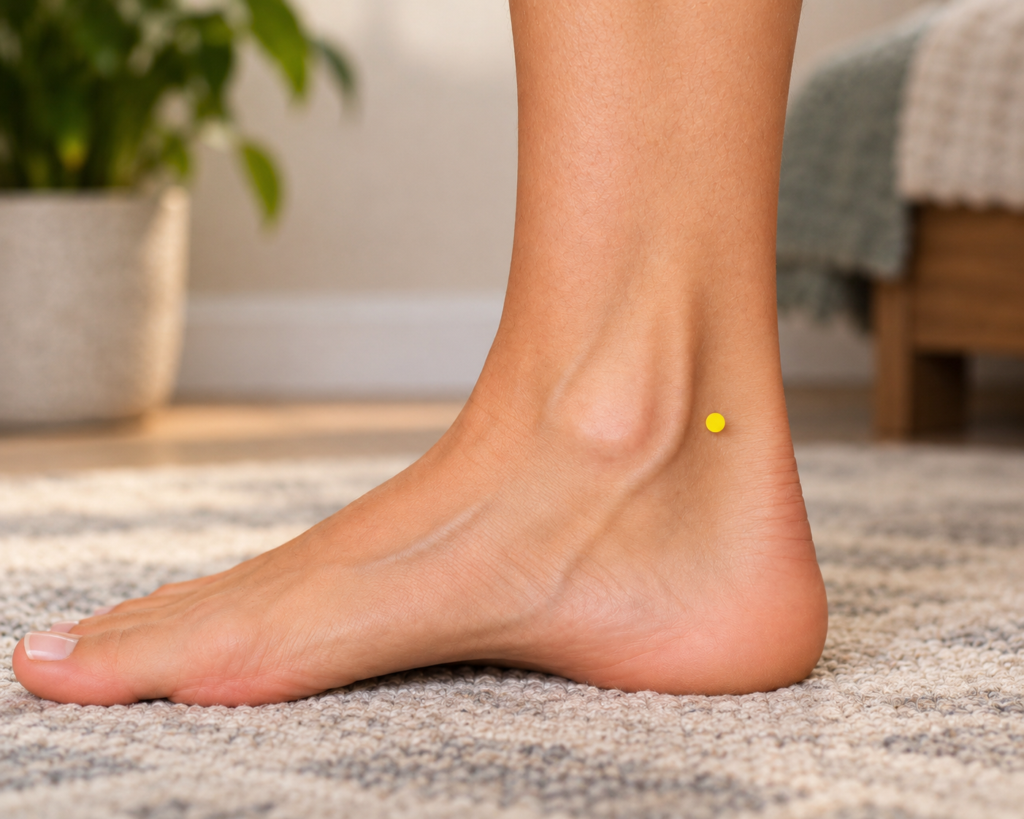
8. Press on KI3 above the inner ankle to strengthen the Kidney. KI3 sits in the hollow between the inner ankle bone and the Achilles tendon, level with the tip of the ankle bone. Press firmly with your thumb for one to two minutes on each ankle. KI3 is called “Taixi,” the Kidney’s source point.
In Traditional Chinese Medicine, the Kidney governs reproduction and the menstrual cycle, and KI3 is its source point; it strengthens the cycle’s foundation, which is especially important when periods are long, irregular, or absent. It works slowly, so daily use matters.
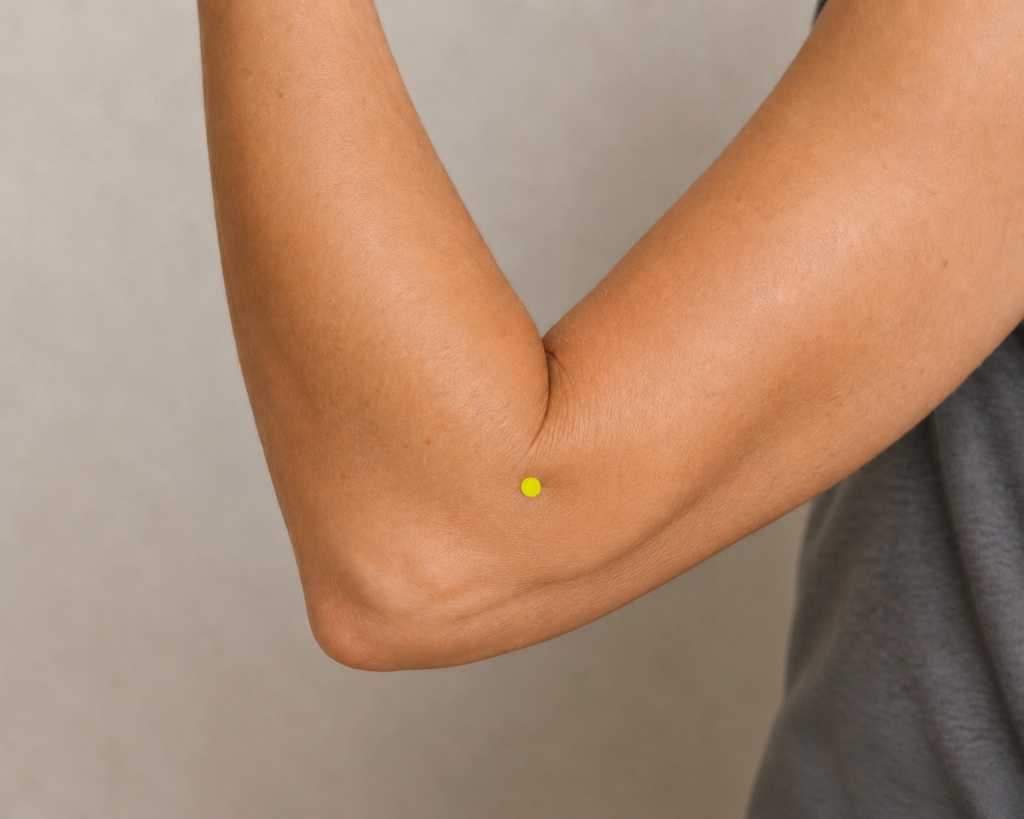
9. Press on LI11 at the elbow to clear heat behind acne. LI11 sits at the outer end of the elbow crease, in the hollow that forms when you bend your elbow. Press firmly with your thumb for one to two minutes on each arm. LI11 is called “Quchi,” the “Pool at the Crook.”
In cases of PCOS where a person has acne, oily skin, and feels hot and irritable, Traditional Chinese Medicine views this as excess heat in the body. LI11 is a highly effective point for clearing this heat; it supports skin health and helps soothe the heat caused by stagnant Liver Qi.
Why These Acupressure Points Work
In Traditional Chinese Medicine, PCOS results from a weak Kidney; dampness and phlegm from a weak Spleen; and stagnant Liver Qi, heat, and Blood. The nine points apply to this situation.
- The acupressure points for reproduction (CV4, Zigong, SP6, KI3) support the uterus, the ovaries, and the deep foundation of the cycle.
- Acupressure points ST40, SP9, and ST36 help eliminate phlegm and dampness, supporting digestion and energy processing.
- Acupressure points LR3 and LI11 help release blocked Qi, reduce stress, and clear the heat that causes acne.
How to Properly Use These Acupressure Points
- Perform the entire routine once each day and hold at each point for one to two minutes.
- Apply light pressure to the abdomen and firmer pressure to the arms and legs.
- Before pressing the points CV4 and Zigong, apply a heat pack to the lower abdomen, as warmth helps to improve circulation to the reproductive organs.
- When trying to conceive, use SP6 and the lower abdominal points only in the first half of your cycle, then stop after ovulation until your period arrives or a pregnancy test is negative. If there is any chance you are pregnant, skip SP6 entirely.
- Keep up the routine for at least three months because the cycles change slowly.
Lifestyle changes are among the best ways to manage PCOS, especially if you have insulin resistance. Eat three regular meals each day that include protein, vegetables, and fiber, and cut back on sugary drinks and refined starches, which can cause spikes in both blood sugar and insulin. It’s important to stay active every day, for example by taking a walk after eating and doing some strength training, as this helps your body use insulin more efficiently. If you are overweight, even a small amount of weight loss can help make your cycles more regular. Ensure that you are getting adequate sleep, control your stress levels, and consider keeping a record of your cycles so that both you and your doctor can identify any patterns. Before beginning any supplements, consult your doctor. A practitioner can recommend Chinese herbal formulas that suit your particular needs.
When to Get Professional Help
Consult your doctor about PCOS diagnosis and management, as it can lead to long-term issues like type 2 diabetes and uterine lining changes. Seek medical attention if you haven’t had a period in three months or more, if your periods are very heavy or prolonged, if you’ve been trying to conceive for a year (or six months over age thirty-five), or if you notice high blood sugar symptoms like excessive thirst or frequent urination. See a doctor promptly if you experience rapid hair growth, a deepened voice, or sudden changes, as these may need further investigation. Visit the emergency room for sudden, severe pelvic pain on one side, especially with nausea or vomiting, which could indicate a twisted ovary. Also, inform your doctor of symptoms like low mood, anxiety, loud snoring, or excessive daytime sleepiness, as these are common in PCOS and treatable.
While acupressure can help support PCOS management, it should complement your medical treatment.
Above and Beyond Acupuncture offers acupuncture, cupping, and lifestyle coaching at the North Frank Lloyd Wright Boulevard location in Scottsdale.
Schedule an appointment online to start your healing journey.
The points above are only as effective as the technique used to apply them. Where to press, how firmly, and for how long all affect the result. For a full breakdown of how to perform acupressure properly at home, read Performing Acupressure in 3 Easy Steps.

About the Publisher
Paul Kerzner, L.Ac., is a licensed acupuncturist and board-certified herbalist, as well as the founder of Above and Beyond Acupuncture in Scottsdale. His own journey from chronic patient to practicing acupuncturist shapes his commitment to providing honest, clinically grounded information about acupuncture and Traditional Chinese Medicine. Learn more about Paul and his clinical approach on the About Us page.