
Key Takeaways
- PMDD causes severe emotional symptoms before menstruation, impacting women’s lives significantly.
- Acupressure for PMDD offers relief by activating specific points to alleviate symptoms like irritability, anxiety, and fatigue.
- Key acupressure points include LR3, LR2, HT7, and SP6, each addressing different aspects of PMDD.
- Consistent acupressure practice combined with proper self-care can improve emotional stability throughout the menstrual cycle.
- Consult a doctor to obtain a PMDD diagnosis and consider treatments such as acupressure, in addition to medical options.

Do you feel like a different person in the week or two before your period, overwhelmed by rage, sadness, or anxiety that subsides once your period begins?
This could be premenstrual dysphoric disorder, or PMDD, a severe variant of premenstrual syndrome that impacts many women and surpasses typical PMS. After ovulation, the brain’s response to hormonal shifts can trigger intense irritability, anger, deep sadness, hopelessness, anxiety, mood swings, tearfulness, overwhelm, concentration issues, fatigue, sleep disturbances, food cravings, and physical symptoms such as bloating and breast tenderness. These symptoms can negatively affect relationships, work, and self-esteem, yet many women are told for years it’s just hormones. PMDD is genuine and manageable. Acupressure offers a gentle daily method to alleviate mood symptoms and support your body throughout the cycle, alongside medical treatment. The points below might be helpful.
If PMDD leads to thoughts of ending your life or self-harm, reach out to the 988 Suicide and Crisis Lifeline via call or text, available 24/7. For some women, these thoughts are associated with PMDD, and they are treatable. You deserve support and assistance.
In Traditional Chinese Medicine, PMDD is commonly associated with the Liver, which plays a key role in maintaining the smooth flow of Qi, Blood, and emotions, especially before menstruation. When Liver Qi becomes stagnant, it can lead to emotional build-up, resulting in irritability, tension, breast tenderness, and a feeling of tightness under the ribs. If this stagnation transforms into heat, symptoms such as rage, irritability, headaches, or a flushed face may appear. The Heart is regarded as the home of the Shen, or mind and spirit, and when the Shen is disturbed, it can cause anxiety, insomnia, tearfulness, or a sense of not feeling like yourself. A weak Spleen may contribute to bloating, cravings, and fatigue, while low Blood levels can cause sadness and weepiness.
Here are nine acupressure points to promote Liver Qi flow, reduce anger heat, calm the Shen, and nourish Blood and Spleen.
What Acupressure Points to Press and Why
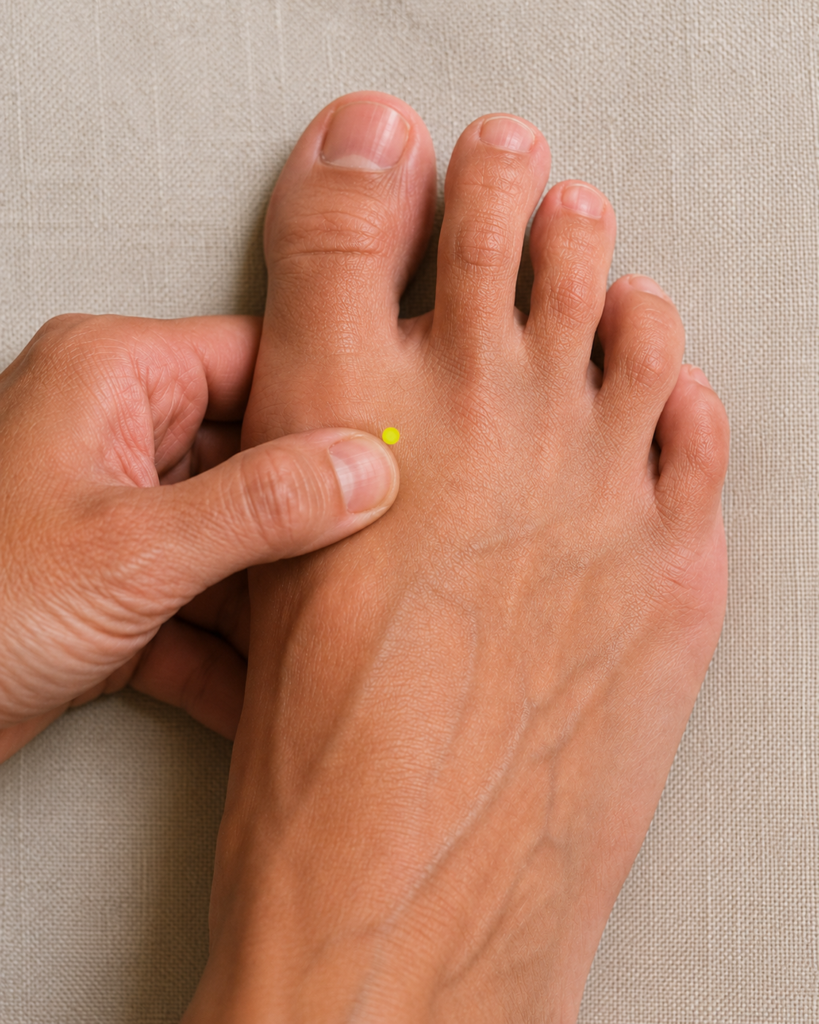
1. Press on LR3 on the top of the foot to move stuck emotion. LR3 sits on the top of the foot, in the webbing between the big toe and second toe, about two finger-widths back where the bones meet in a small hollow. Press firmly with your thumb for one to two minutes on each foot. LR3 is called “Taichong,” the source point of the Liver.
LR3 is a crucial point for easing stagnant Liver Qi, which is central to PMDD in Chinese medicine. It eases irritability, tension, and a tightly wound feeling, promoting the free flow of emotions rather than letting them build up until they explode. This point serves as the foundation of the routine.
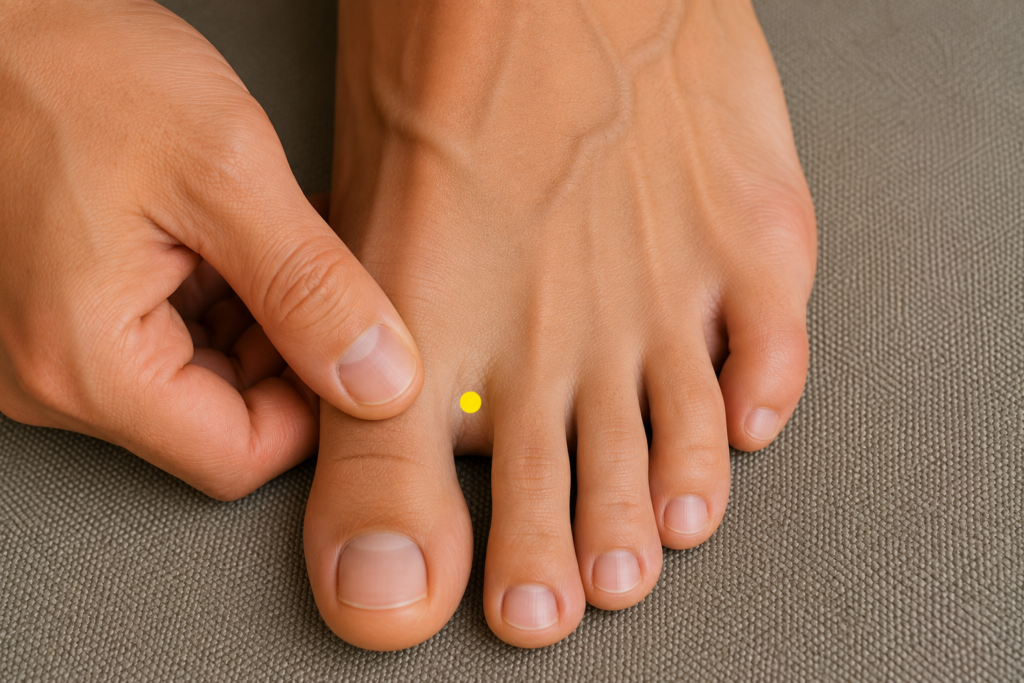
2. Press on LR2 just in front of LR3 to cool rage. LR2 sits on the top of the foot, at the edge of the webbing between the big toe and second toe, just in front of LR3. Press firmly with your thumb for one to two minutes on each foot. LR2 is called “Xingjian,” the “Moving Between.”
If premenstrual irritability develops into outbursts of rage, a very easily riled temper, headaches, or a hot, flushed face, Traditional Chinese Medicine attributes this to Liver Qi getting stuck and transforming into heat. LR2 is the principal point for reducing it. You can cool the heat and move the Qi by pressing both LR2 and LR3, which are situated side by side on the foot.
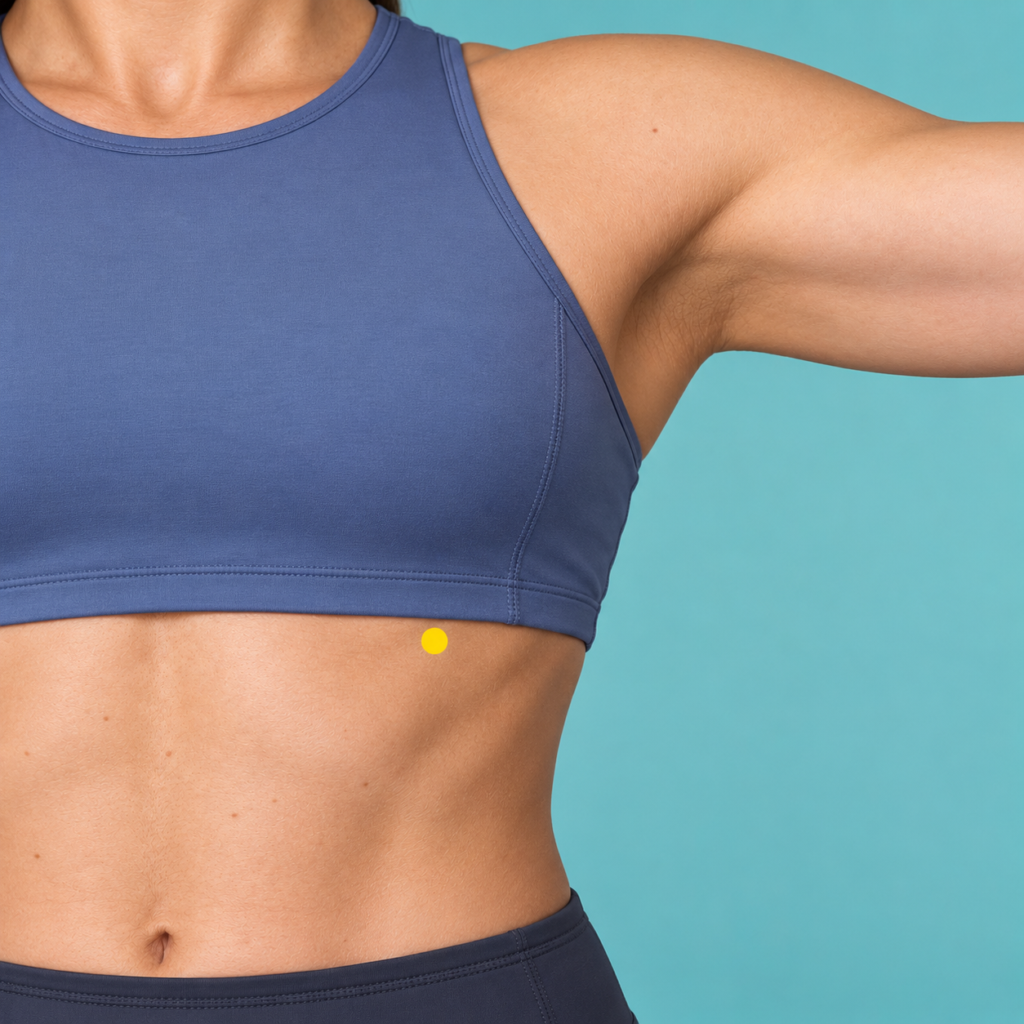
3. Press gently on LR14 below the chest for tension and breast tenderness. LR14 sits on the chest directly below the nipple, in the space between the ribs about two ribs down. Press gently with your fingertips for one to two minutes on both sides, easing off if the area is tender. LR14 is called “Qimen,” the “Gate of Hope.”
LR14 serves as the point where the Liver’s energy gathers at the front of the body, helping to alleviate the tight, constricted feeling in the chest and beneath the ribs that many women experience before their period. It also lessens breast tenderness and the emotional pressure that builds up in the chest. Known as the ‘Gate of Hope,’ this name fits, given the despair often associated with PMDD.
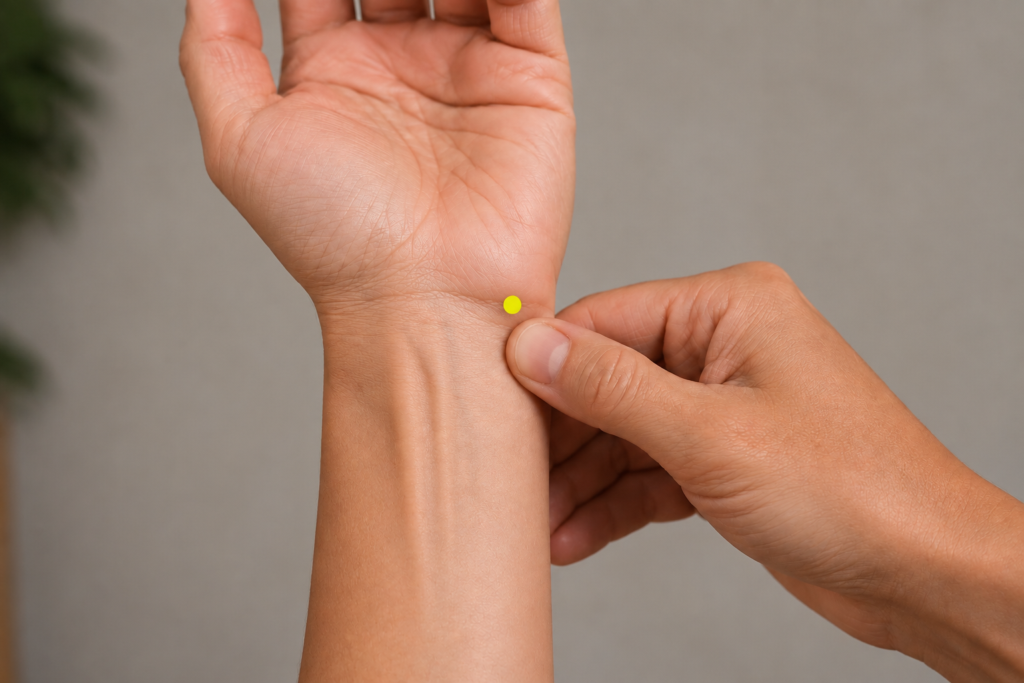
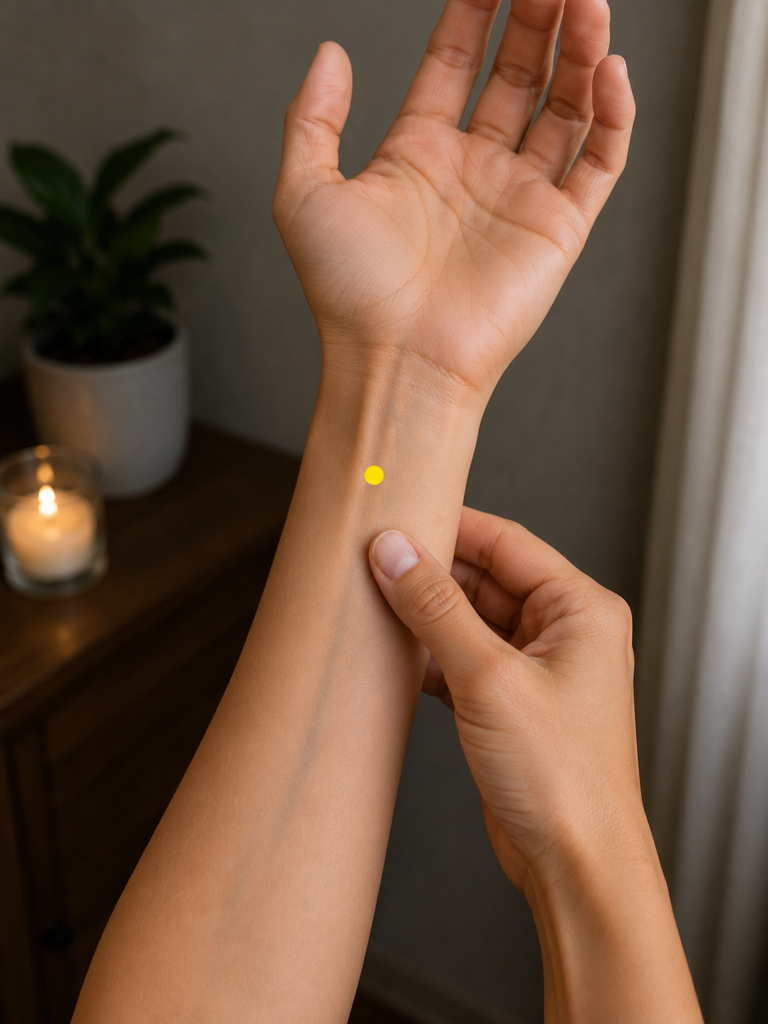
4. Press on HT7 at the wrist to settle the Shen. HT7 sits on the inner wrist crease, on the pinky side, in the small hollow just inside the tendon. Press firmly with your thumb for one to two minutes on each wrist. HT7 is called “Shenmen,” the “Spirit Gate.”
HT7 is essential for calming the Heart and stabilizing the Shen, which relieves symptoms like anxiety, tearfulness, restlessness, and insomnia linked to PMDD. It helps restore a sense of self when emotions become intense and is especially beneficial at bedtime during premenstrual weeks.
5. Press on PC6 on the inner forearm to calm anxiety and nausea. PC6 sits three finger-widths above the inner wrist crease, in the center of the forearm between the two tendons. Press firmly with your thumb for one to two minutes on each arm. PC6 is called “Neiguan,” the “Inner Pass.”
PC6 calms the mind, expands the chest, and soothes the stomach, helping to ease anxiety, panic, and overwhelm linked to PMDD, as well as premenstrual nausea. Located just above HT7, you can press both points together whenever emotional waves occur.
6. Press on Yintang between the eyebrows to quiet a racing mind. Yintang sits in the small hollow directly between the two eyebrows. Press steadily, or make small, slow circles with your fingertip for one to two minutes while breathing slowly. Yintang is an extra point.
Yintang is a deeply calming point because it eases racing thoughts, relieves tension headaches, and helps the nervous system shift out of a state of high alert. Pressing it gently with eyes closed and breathing slowly can lessen sudden feelings of anger or anxiety.

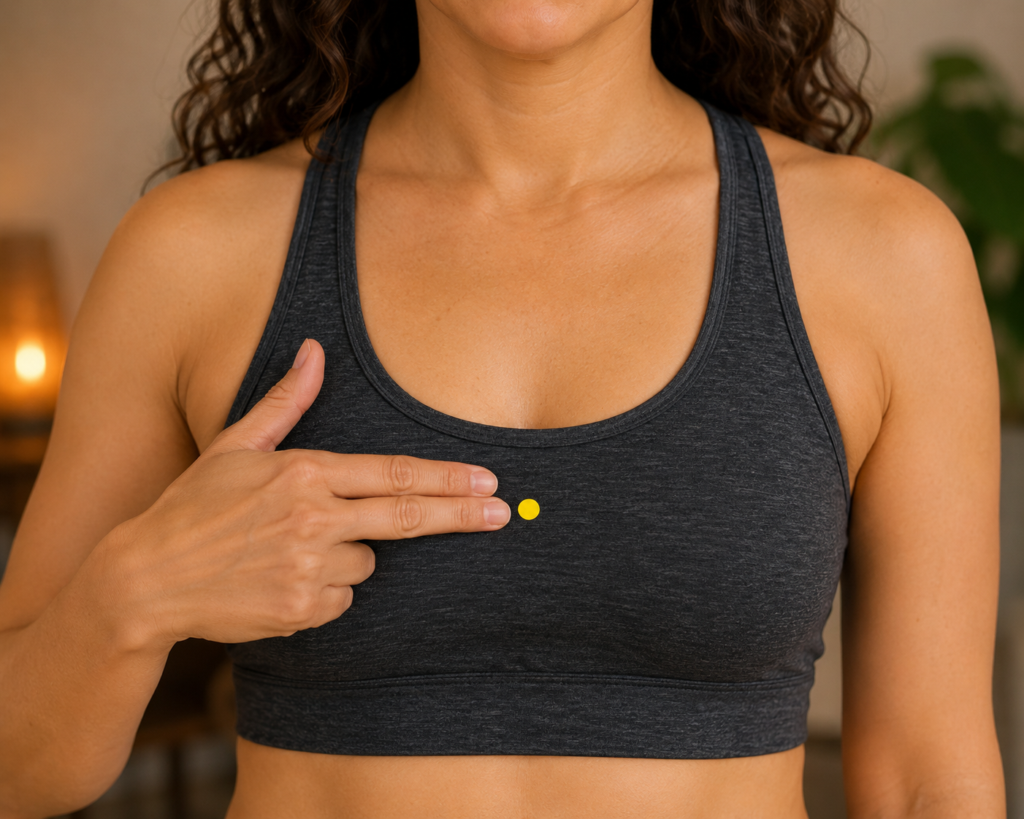
7. Press on CV17 at the center of the chest to release emotional pressure. CV17 sits on the midline of the breastbone, level with the space between the nipples. Press gently with your fingertips, or rest your palm over it, for one to two minutes while breathing slowly. CV17 is called “Shanzhong.”
CV17 opens the chest, releasing built-up emotional tension that can feel like it lies directly behind the breastbone. This deepens the breath and fosters relief when emotions build up without an outlet.
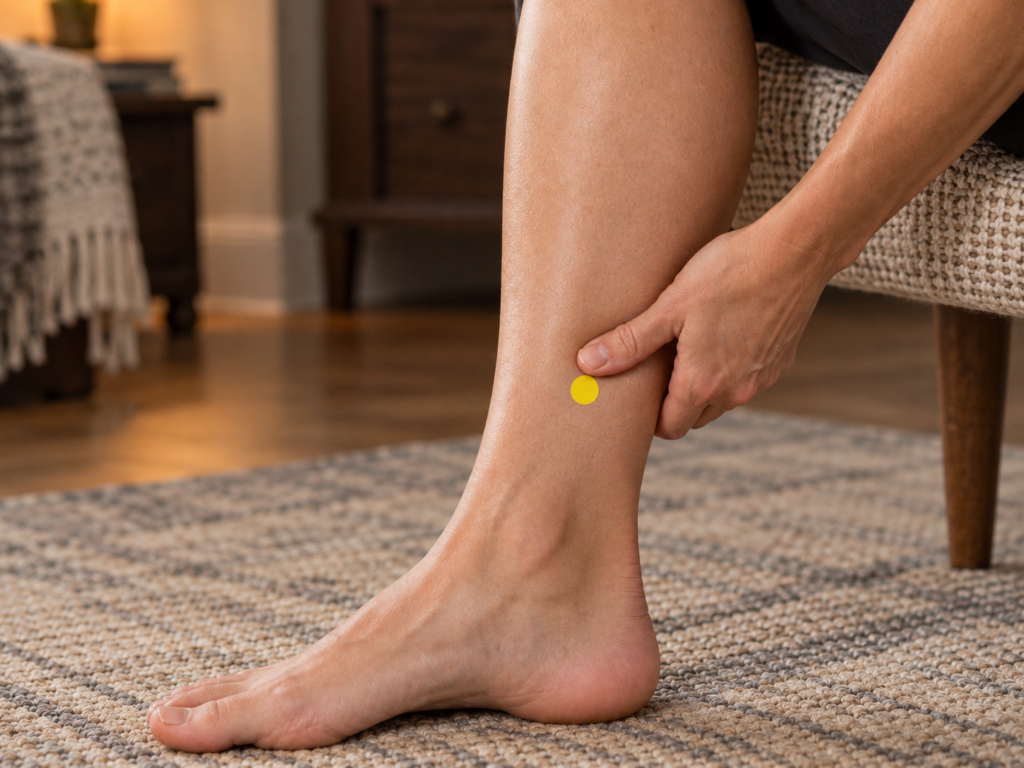
8. Press on SP6 above the inner ankle to balance the cycle. SP6 sits four finger-widths up from the tip of the inner ankle bone, just behind the back edge of the shinbone. Press firmly for one to two minutes on each leg. SP6 is called “Sanyinjiao,” the “Three Yin Intersection.” SP6 is avoided during pregnancy.
SP6 is a vital acupressure point in women’s health because the Spleen, Liver, and Kidney meridians converge there. It nourishes Blood, supports menstrual regulation, decreases cravings and bloating, and calms the mind. Because PMDD falls after ovulation, if there is any chance you could be pregnant, skip SP6 during that phase and use it only in the first half of your cycle.
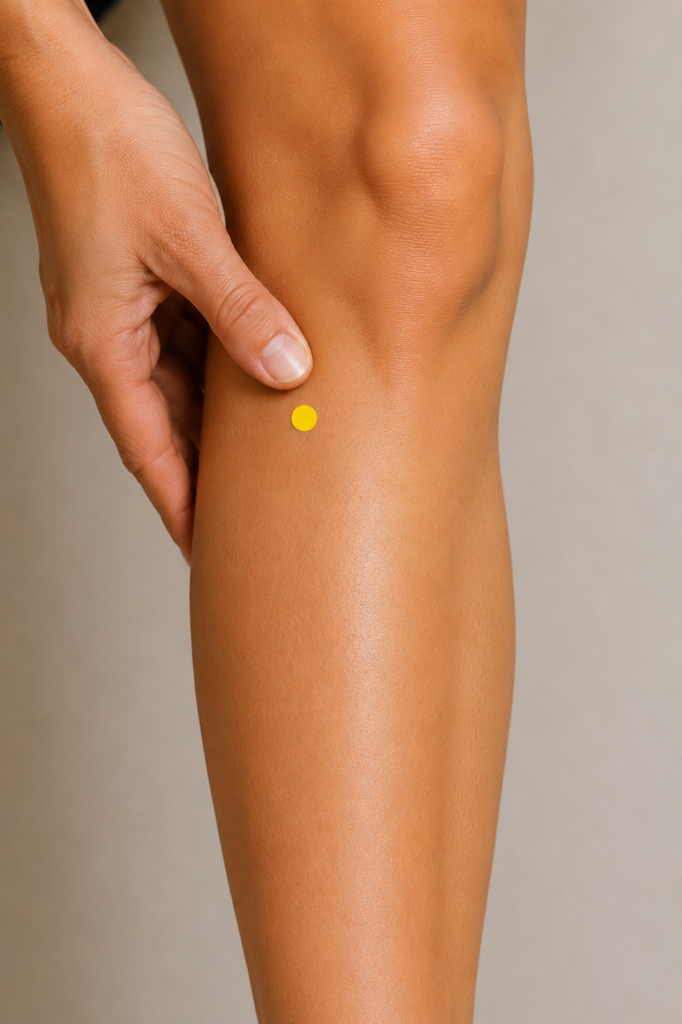
9. Press on ST36 below the knee to steady energy and cravings. ST36 sits four finger-widths below the lower edge of the kneecap and one finger-width to the outside of the shinbone, on the muscle that rises when you flex your foot. Press firmly with your thumb for one to two minutes on each leg. ST36 is called “Zusanli,” the “Leg Three Miles.”
ST36 enhances the Spleen, increasing energy and reducing fatigue, bloating, and sugar cravings often linked with PMDD. It also nourishes Blood, supporting more stable mood regulation.
Why These Acupressure Points Work
In Traditional Chinese Medicine, PMDD is viewed as Liver Qi stagnation that can turn into fire, accompanied by an unsettled Spirit (Shen) and depleted Blood and Spleen; the nine points address this condition.
- The Liver points (LR3, LR2, LR14) help move stuck emotions, calm anger, and release tension and breast tenderness.
- The Shen points (HT7, PC6, Yintang, CV17) help calm anxiety, settle the mind, and relieve emotional tension.
- The nourishing points (SP6, ST36) help regulate the cycle, replenish Blood, and stabilize energy and cravings.
Research suggests acupuncture may improve premenstrual symptoms; studies on PMDD specifically are developing, and acupressure is best used alongside medical care.
How to Properly Use These Acupressure Points
Monitor your cycle and symptoms for at least two months. Identifying when your PMDD window opens allows you to begin your routine a few days prior to when symptoms typically start.
- During your symptom window, perform the routine once or twice daily, holding each point for one to two minutes.
- When anger rises, press LR2 and LR3. For anxiety or tears, press HT7, PC6, and Yintang while breathing slowly.
- Press LR14 and CV17 gently, particularly if your breasts are tender.
- If there is any chance you could be pregnant, skip SP6 after ovulation.
- Continue using any medication your doctor has prescribed for PMDD.
Daily habits can significantly alleviate PMDD symptoms. Regular aerobic exercise, including simple daily walks, can greatly improve overall well-being. Prioritizing sleep during peak symptom periods is crucial. Consuming balanced, regular meals helps maintain stable blood sugar levels, while cutting back on caffeine, alcohol, and sugar can prevent mood swings from worsening. On challenging days, try scheduling lighter activities, reducing commitments, and telling loved ones about your condition for support. Cognitive-behavioral therapy and counseling can also be very effective. Additionally, following Traditional Chinese Medicine guidance, opt for warm, cooked, nourishing foods, and avoid greasy, spicy dishes and alcohol, as these may increase body heat.
When to Get Professional Help
A PMDD diagnosis must be confirmed by your doctor, usually after tracking symptoms over at least two menstrual cycles. Effective treatments include certain antidepressants that can be helpful even if taken only during premenstrual weeks, hormonal therapies, and counseling. You should consult your doctor if your premenstrual symptoms disrupt your relationships, work, or daily activities; if your mood symptoms persist when your period starts, which might indicate depression or another condition; or if your symptoms worsen.
If you ever have thoughts of ending your life or harming yourself, contact the 988 Suicide and Crisis Lifeline immediately by calling or texting 988; call 911 if you’re in immediate danger, and inform your doctor.
Acupressure is a natural, holistic, and supportive option for PMDD that can be used alongside medical treatment.
Above and Beyond Acupuncture offers acupuncture, cupping, and lifestyle coaching at the North Frank Lloyd Wright Boulevard location in Scottsdale.
Schedule an appointment online to start your healing journey.
The points above are only as effective as the technique used to apply them. Where to press, how firmly, and for how long all affect the result. For a full breakdown of how to perform acupressure properly at home, read Performing Acupressure in 3 Easy Steps.
For more common premenstrual symptoms, acupressure for PMS is the companion post; if anger is your most difficult symptom, acupressure for anger goes deeper into that emotion. If low mood lingers, acupressure for depression may also help.

About the Publisher
Paul Kerzner, L.Ac., is a licensed acupuncturist and board-certified herbalist, as well as the founder of Above and Beyond Acupuncture in Scottsdale. His own journey from chronic patient to practicing acupuncturist shapes his commitment to providing honest, clinically grounded information about acupuncture and Traditional Chinese Medicine. Learn more about Paul and his clinical approach on the About Us page.