Key Takeaways
- Anger is a normal emotion, but if it’s not managed, it can cause negative effects; acupressure provides a natural way to relieve it.
- The article highlights nine acupressure points to calm anger, reduce tension, and promote emotional balance.
- Traditional Chinese Medicine links anger to the Liver; using specific acupressure points helps clear Liver fire and restore Qi flow.
- Activate points like LR2 and LR3 to cool anger, while points such as Yintang and PC8 calm the mind and heart.
- Professional help is essential if anger becomes frequent or harmful; acupressure is a tool but not a replacement for therapy.

Anger is a powerful emotion that can often be felt throughout your body.
Your face may flush, your chest might feel hot, muscles tense, your jaw clenches, shoulders tighten, and a headache might start as your temper rises. Anger is a normal emotion, sometimes justified. However, quick temper, frequent anger, or difficulty letting go can affect you and those around you. Acupressure offers a practical way to calm yourself in the moment. Pressing certain points can reduce physical tension, soothe your mind, and help you respond thoughtfully instead of reacting impulsively. Regular use of these points may also help manage a quick temper.
Traditional Chinese Medicine views anger as closely linked to the Liver. The Liver is responsible for ensuring the smooth flow of Qi throughout the body, and when this flow is blocked, it manifests as Liver-related issues. Stagnant, repressed feelings cause Liver Qi to become stuck. When this stagnation ignites, it turns into Liver fire and yang rising, which ascend to the head and produce symptoms like heat, a red face, headache, bloodshot eyes, and an explosive temper. The points listed help to dissipate this fire, reduce the rising yang, ground the excess energy, and soothe the spirit affected by the heat.
Anger is a natural human emotion, not a medical disorder, and acupressure can help you calm down and manage it, but it’s not a cure. Since it’s closely connected to frustration, the feeling that builds up before anger erupts, learning about this related emotion can be really helpful alongside this information.
Here are nine acupressure points you can use whenever you start to feel overwhelmed with anger and need to calm down to regain self-control:
What Acupressure Points to Press and Why
1. Press on LR2 between the toes to clear the fire of anger. LR2 sits on the top of the foot, right at the margin of the webbing between the big toe and the second toe, where the web skin meets the toes. Press firmly with your thumbnail or fingertip for one to two minutes on each foot. LR2 is called “Xingjian,” the fire point of the Liver channel and the single best point for clearing Liver fire.
LR2 is the most direct point for addressing anger, as it specifically drains the Liver fire that flares up during a temper. It cools the heat, calms redness, hot-headedness, and explosive tendencies, and eases irritability caused by excess Liver fire. For intense anger, with a flushed face, burning chest, and pounding head, this is the first point to target. It also helps differentiate genuine anger from simple frustration.
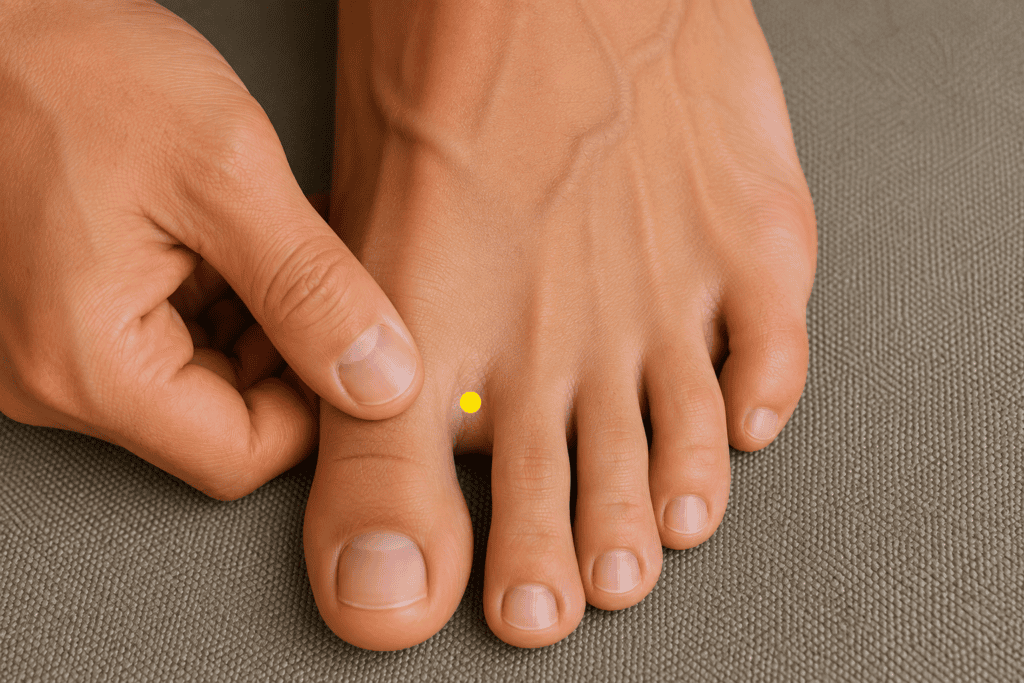
2. Press on LR3 on the top of the foot to bring the rising energy down. LR3 sits on the top of the foot, in the webbing between the big toe and second toe, about two finger-widths back from LR2, where the bones meet in a small hollow. Press firmly with the thumb for one to two minutes on each foot. LR3 is called “Taichong,” the primary point for the Liver.
LR3 is the primary point for regulating the Liver, especially concerning anger. It accomplishes two key functions: it suppresses the Liver yang that rises to the head and facilitates the smooth flow of Qi, which anger tends to scatter. While LR2 clears heat, LR3 helps bring the rising, surging energy of anger back down, grounding it and redirecting it from the head toward the feet. This point helps reduce tension, irritability, and the tense, tight sensation, making it crucial for any anger or Liver disharmony. Located just behind LR2 on the same foot, together these points clear fire and guide yang downward in a single treatment.
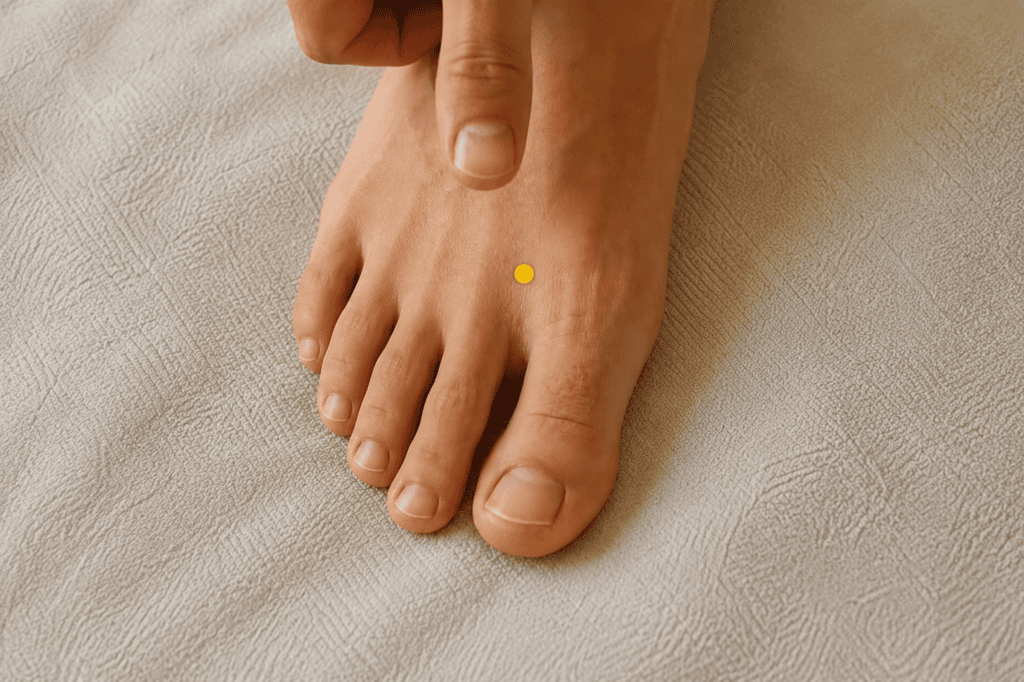
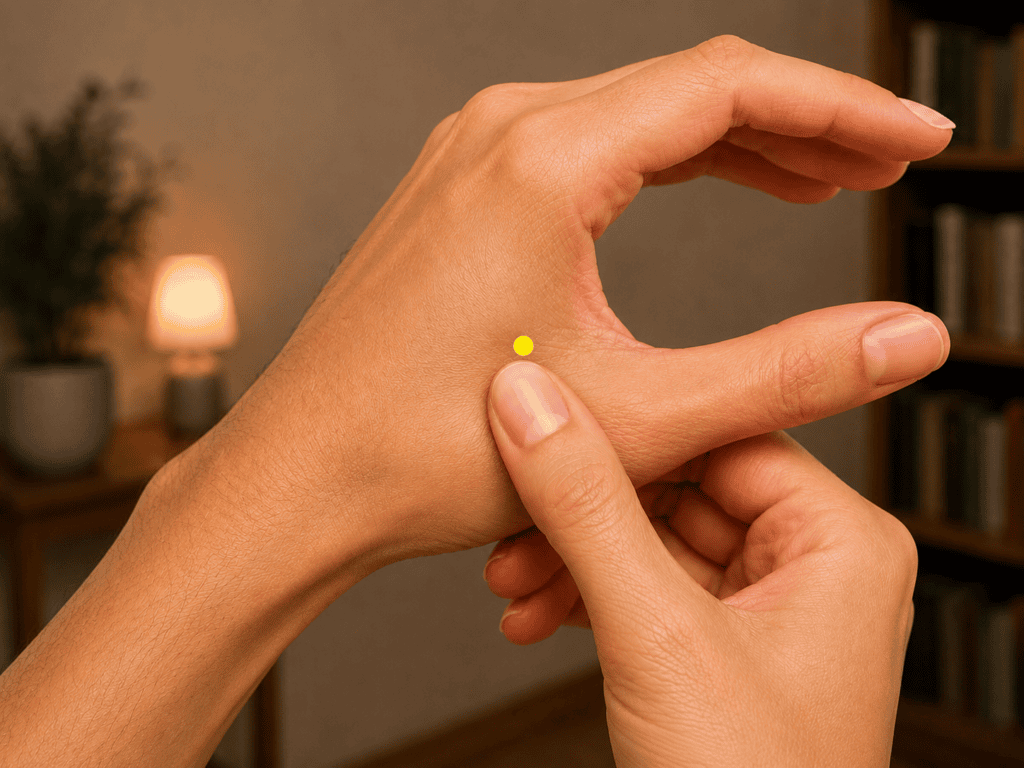
3. Press on LI4 in the hand to move Qi and clear the head. LI4 sits in the webbing between the thumb and index finger, at the highest point of the muscle when you bring the thumb and finger together. Press firmly with the thumb of your other hand for one to two minutes on each hand. LI4 is called “Hegu,” a major point for moving Qi and clearing the head and face. LI4 is avoided during pregnancy.
LI4 releases heat and tension from the head and face while encouraging stuck Qi to move throughout the body, making it an ideal partner for Liver points during episodes of rising anger. When combined with LR3 on the foot, it creates the well-known Four Gates, a highly effective acupressure pair that promotes Qi flow and calms an agitated, heated system. This combination helps alleviate headaches, facial redness, and the upward pressure of anger, providing grounding. LI4’s subtlety lets you press it discreetly when your temper starts to flare in social settings.
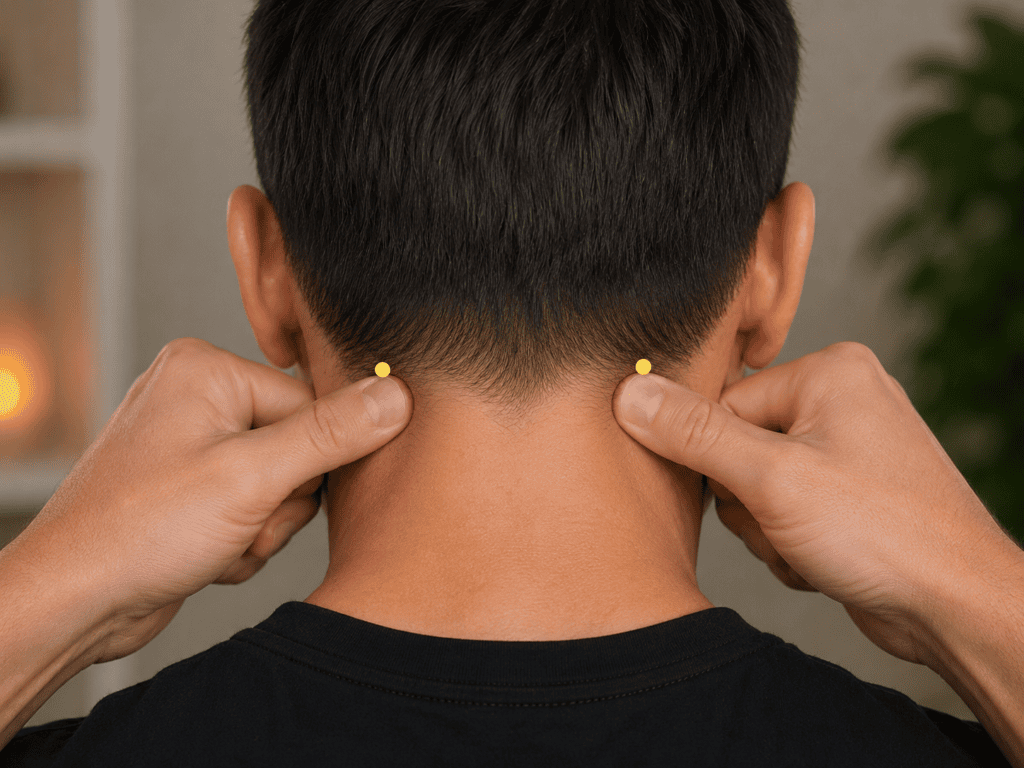
4. Press on GB20 at the base of the skull to settle the head. GB20 sits in the two hollows at the base of the skull, between the two large vertical neck muscles and the outer edge, roughly level with the tops of the ears. Tip your head back slightly and press firmly up and inward with your thumbs for one to two minutes. GB20 is called “Fengchi,” and it is a major point for subduing rising yang.
GB20 reduces the Liver yang that ascends to the head during anger, alleviating symptoms like headaches, stiff neck and shoulders, red or strained eyes, and head pressure that occurs when temper flares. Located on the Gallbladder channel, which is closely related to the Liver, it helps control the upward surge and eases the physical tension anger causes in the head and neck. For those whose anger causes pounding headaches and clenched neck muscles, this point offers relief, calming both body and mind.
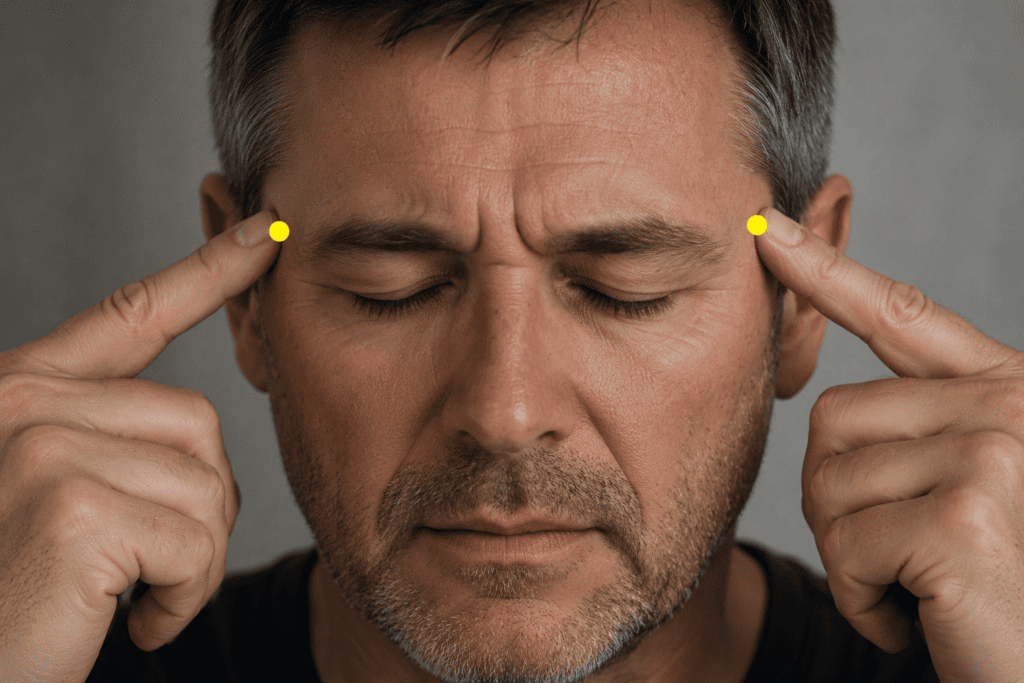
5. Press on Taiyang at the temple to ease the heated head. Taiyang sits in the soft hollow of the temple, about a finger-width back from the midpoint between the outer end of the eyebrow and the outer corner of the eye. Press firmly and make small slow circles with your fingertips for one to two minutes on both sides. Taiyang is an extra point, widely used for headaches and heat in the head.
Taiyang relieves the throbbing tension of anger, such as the tight, hot, pressured sensation at the sides of the head that often accompanies a flare of temper. It helps move trapped Qi and clears heat in the temporal area, cooling and soothing the head. This point directly addresses headaches linked to anger, and using it slowly with a few deep breaths can be calming, especially when you sense rising heat.
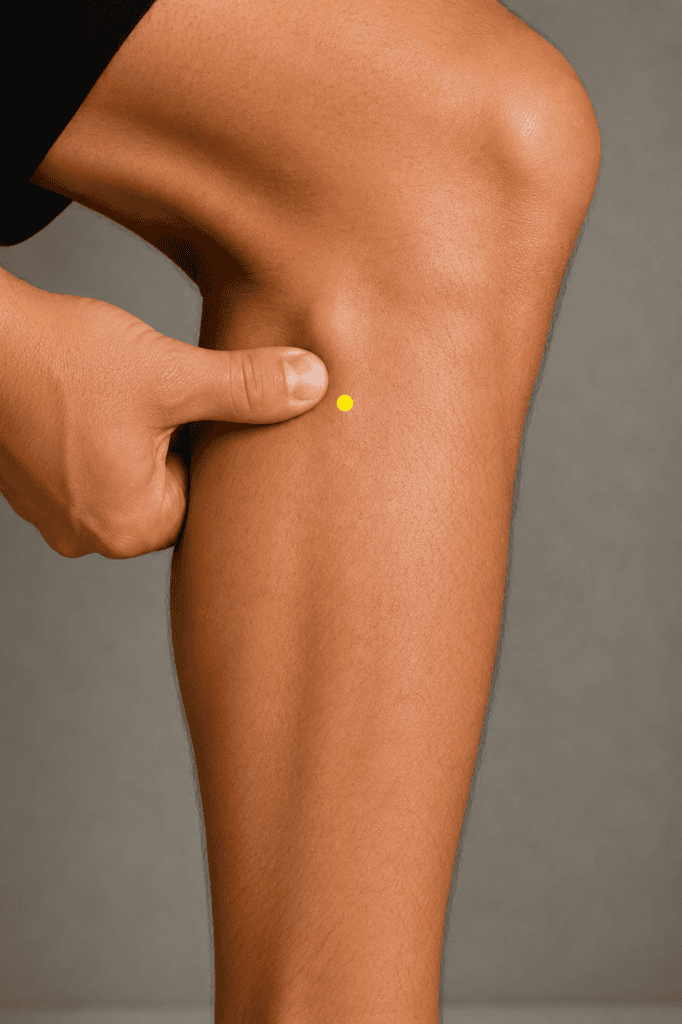
6. Press on GB34 on the outer lower leg to soothe the Liver. GB34 sits on the outer lower leg, in the hollow just below and in front of the head of the fibula, the bony knob below the outer side of the knee. Press firmly with your thumb for one to two minutes on each leg. GB34 is called “Yanglingquan,” and it is one of the main points for relaxing and soothing the Liver and Gallbladder.
GB34 helps relax the Liver and Gallbladder, reducing tension, tightness, and irritability linked to anger in both mood and body. Known for releasing systemic tension, it works alongside the Liver point on the foot to calm the entire Liver-and-Gallbladder network, which controls the flow of Qi. Disruptions here can lead to anger. For individuals who experience anger as physical tension or a quick temper, this point helps release that tension and ground energy lower in the body.
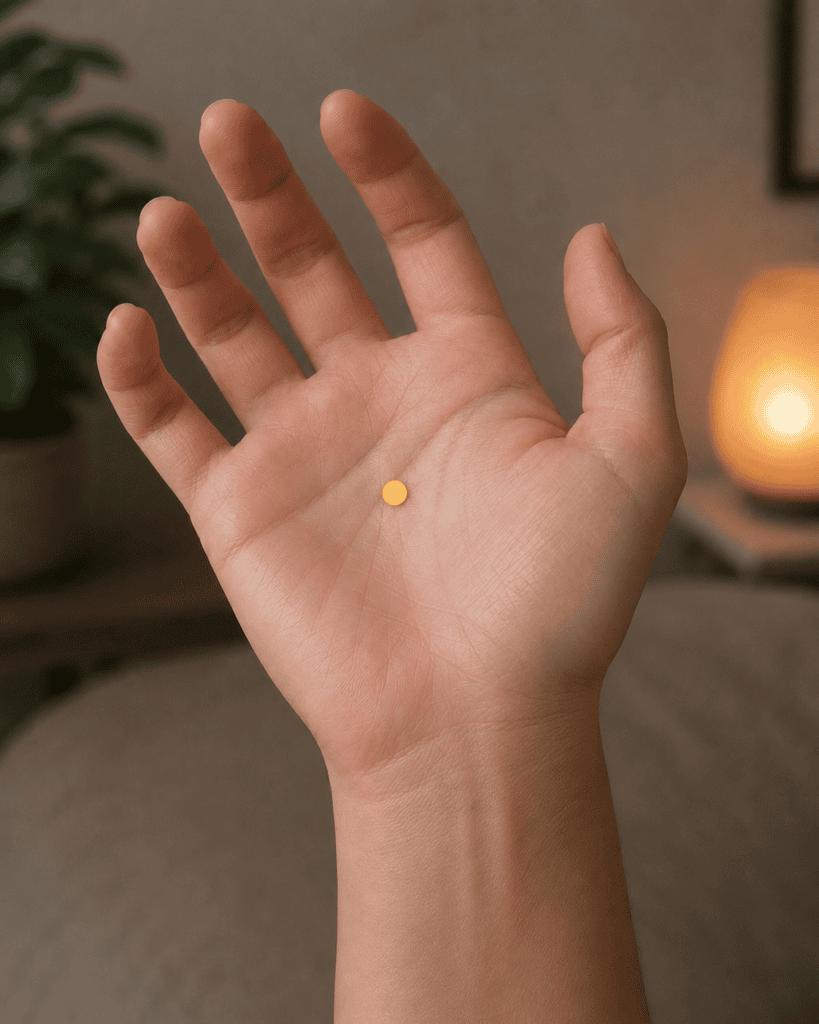
7. Press on PC8 in the palm to cool an agitated heart. PC8 sits in the center of the palm, where the tip of the middle finger touches when you make a loose fist. Press firmly with the thumb of your other hand for one to two minutes on each hand. PC8 is called “Laogong,” and it clears heat from the Heart and calms an agitated spirit.
Anger not only heats the Liver but also ignites heat in the Heart, creating a racing, agitated feeling and a flushed, frantic temper. PC8 helps clear this Heart heat and calm the restless Shen, restoring a cooling calm to an overactive system. For those experiencing anger with a pounding heart and restless agitation, this point cools and stabilizes. You can press it discreetly whenever you start to feel the heat rising.
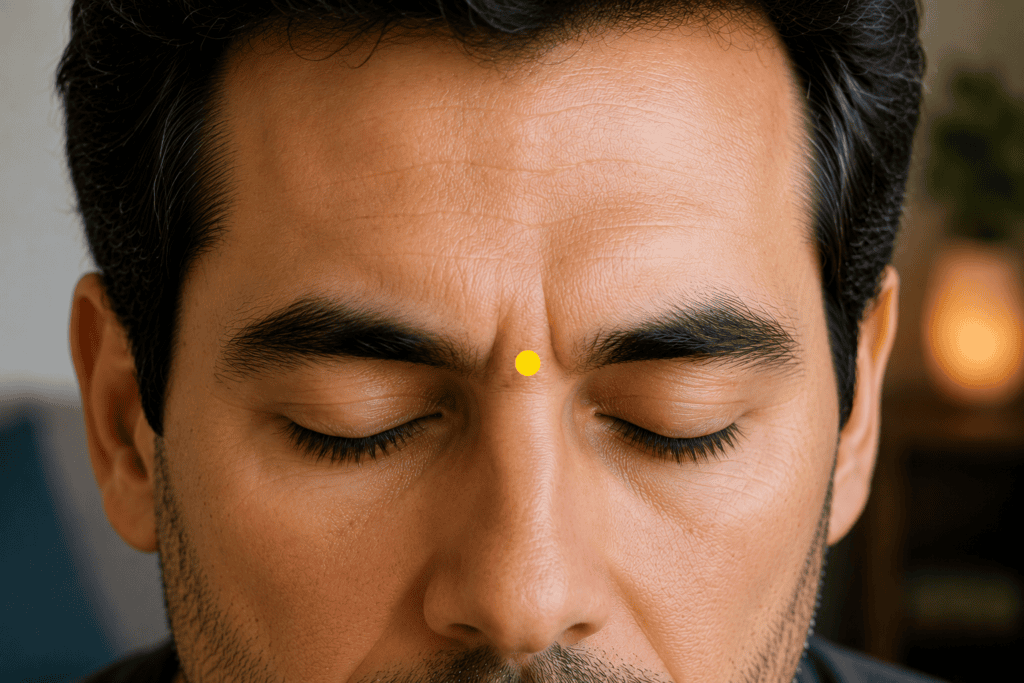
8. Press on Yintang between the eyebrows to calm the mind. Yintang sits in the small hollow directly between the two eyebrows. Press steadily and hold, or make small, slow circles with your fingertip for one to two minutes. Yintang is an extra point and one of the most calming points in the body.
Yintang calms the Shen and quiets the mind, reducing mental heat and reactive thoughts associated with anger. It helps you pause before reacting, soothing the nervous system and easing tension between the brows when you are worked up. When anger begins to rise and you need to steady yourself, gently pressing this point while taking a few deep breaths creates the space to prevent reactive outbursts.
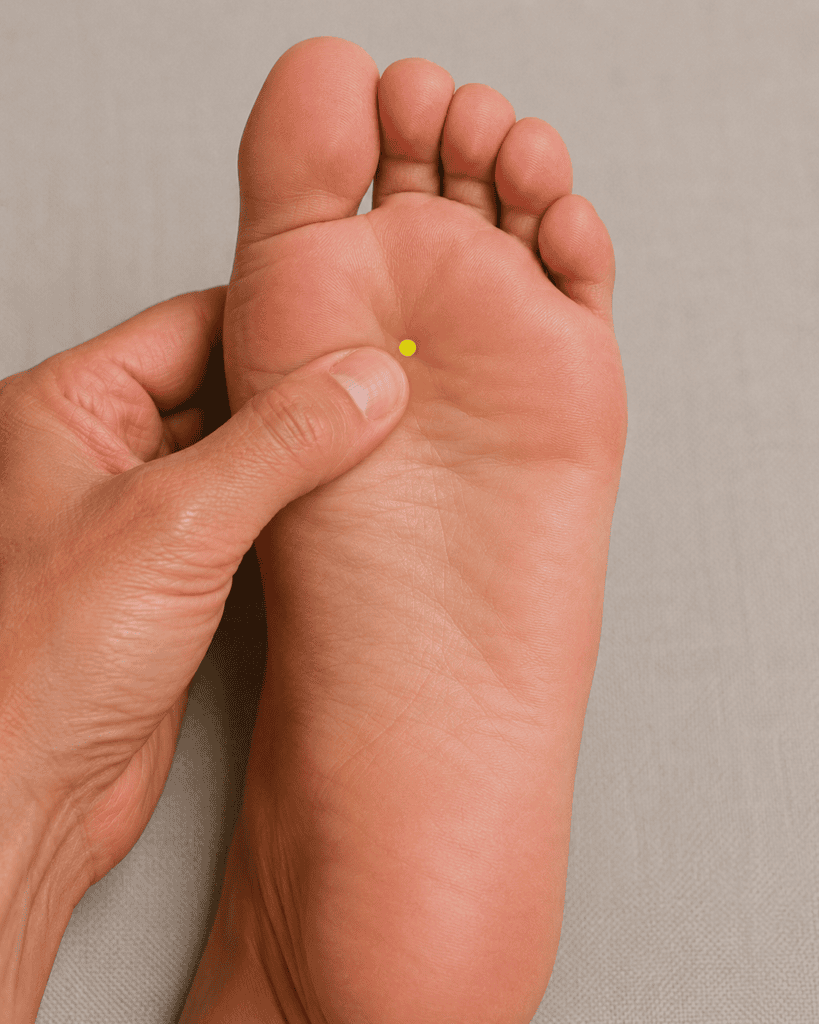
9. Press on KI1 on the sole of the foot to ground the fire. KI1 sits on the sole of the foot, in the hollow that forms in the center of the ball of the foot when you curl the toes, about a third of the way down from the toes to the heel. Press firmly with your thumb for one to two minutes on each foot. KI1 is called “Yongquan,” the “Bubbling Spring,” and it is the lowest point on the body.
KI1 serves as a crucial grounding point, channeling the rising fire and energy of anger downward and outward from the head and chest, directing it toward the earth. Located at the lowest part of the body, it pulls heat downward in contrast to anger’s tendency to push it upward, providing a calming effect when tempers flare. In this tradition, Kidney water also cools and stabilizes Liver fire, helping settle anger on a deep level. This makes it an ideal point to conclude the routine, grounding the entire system after releasing heat.
Why These Acupressure Points Work
In Traditional Chinese Medicine, anger is the Liver losing its smooth flow and becoming agitated, with the stuck Qi transforming into Liver fire and Liver yang that blaze upward to the head, stirring heat in the Heart and unsettling the spirit along the way. The nine points work across that whole pattern.
- The Liver points (LR2, LR3) clear the fire and bring the rising yang back down, with LR2 draining the heat and LR3 grounding and smoothing the flow.
- The head-clearing points (LI4, GB20, Taiyang) release the headache, facial heat, and neck tension that anger drives upward, with LI4 and LR3 together forming the Four Gates.
- The soothing point (GB34) relaxes the Liver and Gallbladder and eases the tension and short temper.
- The calming points (PC8, Yintang) cool an agitated Heart and quiet a reactive mind.
- The grounding point (KI1) draws the fire down and anchors the whole system, with the Kidney water cooling the Liver fire at its root.
How to Properly Use These Acupressure Points
Use these acupressure points both when anger spikes and afterward to reduce the intensity.
- In a heated moment, work the points that ground and cool fastest, LR3 and KI1 on the feet to bring the energy down, Yintang and PC8 to calm the mind and heart, and slow your breathing while you press.
- Add LR2 to clear the fire, LI4 with LR3 as the Four Gates to move the stuck, heated Qi, and GB20 and Taiyang for the headache and neck tension anger brings.
- Worked regularly, GB34 and the Liver points help soothe an easily triggered Liver over time, which softens a quick temper at its root.
- Hold each point for one to two minutes with firm, steady pressure, breathing slowly, and use the pressing itself as a moment to pause before reacting.
Combining acupressure with holistic techniques that help cool the Liver proves most effective over time. Practicing slow, deep breathing during moments of anger can genuinely calm the system, and stepping back before reacting allows the heat to subside. Regular exercise helps move the stuck Qi that fuels anger, while Chinese medicine suggests moderating alcohol, coffee, and rich, greasy, spicy foods that ignite Liver fire.
When anger keeps arising over the same issues, it’s crucial to find its source just as much as to de-escalate the situation.
When to Get Professional Help
Anger is a natural emotion, and these acupressure points can help calm occasional outbursts.
Seek professional support if anger is uncontrollable, frequent, or harmful to relationships, work, or health, or if it leads to hurting yourself or others. Anger linked to depression, anxiety, or trauma needs additional care and attention.
If you ever feel you might harm yourself or someone else, please reach out right away by calling or texting the 988 Suicide and Crisis Lifeline, available any hour of the day. Acupressure is a helpful tool for cooling and steadying everyday anger, not a substitute for the support that ongoing or dangerous anger requires.
Above and Beyond Acupuncture offers acupuncture, cupping, and lifestyle coaching at the North Frank Lloyd Wright Boulevard location in Scottsdale.
Schedule an appointment online or call us today to start your healing journey.
The points above are only as effective as the technique used to apply them. Where to press, how firmly, and for how long all affect the result. For a full breakdown of how to perform acupressure properly at home, read Performing Acupressure in 3 Easy Steps.

About the Publisher
Paul Kerzner, L.Ac., is a licensed acupuncturist and board-certified herbalist, as well as the founder of Above and Beyond Acupuncture in Scottsdale. His own journey from chronic patient to practicing acupuncturist shapes his commitment to providing honest, clinically grounded information about acupuncture and Traditional Chinese Medicine. Learn more about Paul and his clinical approach on the About Us page.