
Key Takeaways
- A hangover results from excessive alcohol consumption, causing symptoms like headache, nausea, and dehydration.
- Acupressure for a hangover includes nine specific points that help relieve nausea, headaches, and restore energy.
- Key points include PC6 for nausea, LI4 for headaches, and Yintang for calming anxiety.
- Proper technique enhances the effectiveness of acupressure; hold each point for one to three minutes.
- Stay hydrated and rest to support recovery, and seek medical help for severe symptoms or signs of alcohol poisoning.

Did you wake up with a pounding headache, nausea, and exhaustion?
A hangover occurs as your body’s response to consuming excessive alcohol, leading to discomfort the next day. Typical symptoms include a severe headache, nausea or vomiting, fatigue, dizziness, heightened sensitivity to light and sound, intense thirst, dry mouth, difficulty concentrating, and sometimes anxiety or feelings of depression. Hangovers result from multiple factors such as dehydration, disrupted sleep, stomach upset, inflammation, low blood sugar, and the byproducts produced during alcohol metabolism. Although only time can fully eliminate a hangover, acupressure may provide relief from some of the most severe symptoms during recovery.
In Traditional Chinese Medicine, alcohol is seen as hot and moist. When consumed in moderation, it warms the body and promotes circulation. However, excessive intake can lead to damp heat, which may rise to the head and cause headaches, facial flushing, and irritability. The dampness can also disturb the Stomach and Spleen, causing nausea, heaviness, and sluggishness. Additionally, the Liver, which governs smooth energy flow, may become strained and overheated, while the body loses fluids, leading to a dry mouth and intense thirst.
Here are nine acupressure points to stabilize the stomach, relieve headaches, eliminate heat and dampness, calm the Liver and mind, and restore energy.
What Acupressure Points to Press and Why
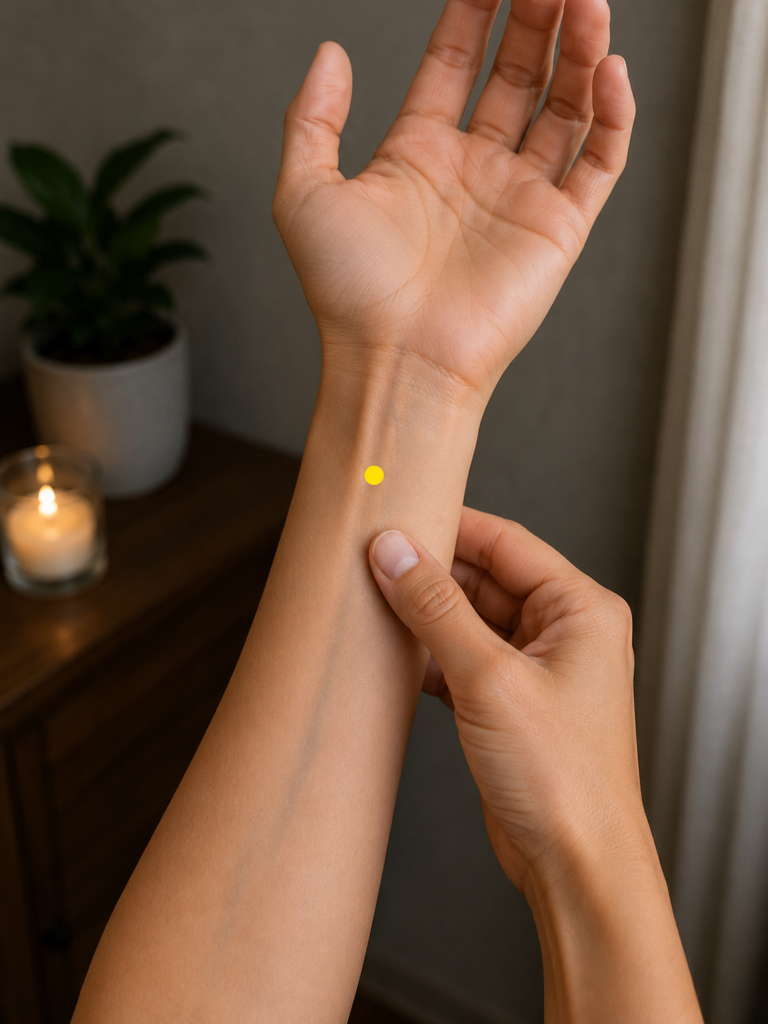
1. Press on PC6 on the inner forearm to settle a queasy stomach. PC6 sits three finger-widths above the inner wrist crease, in the center of the forearm between the two tendons. Press firmly with your thumb for one to three minutes on each arm. PC6 is called “Neiguan,” the “Inner Pass.”
PC6 is a well-researched acupressure point commonly used for nausea. It’s typically the first treatment choice for an upset stomach, as it helps soothe the stomach, reduce the urge to vomit, and calm the mind. You can press this point while lying down or wear anti-nausea wristbands that exert steady pressure on it.
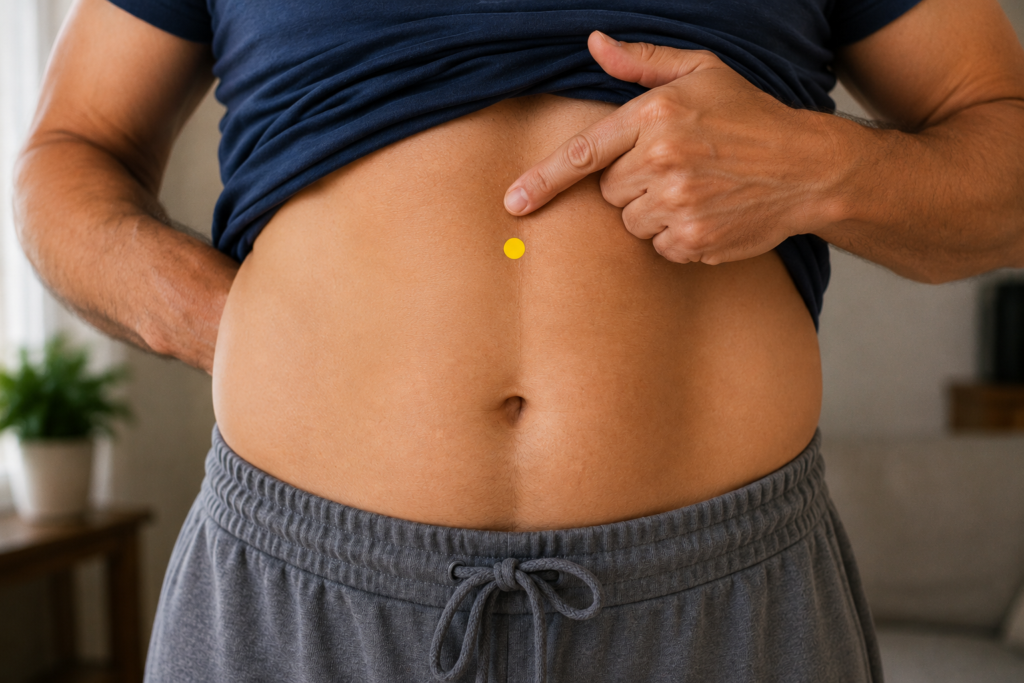
2. Press gently on CV12 above the navel to calm the stomach. CV12 sits on the midline of the abdomen, halfway between the navel and the lower end of the breastbone, about four finger-widths above the belly button. Rest your fingertips there and make slow, gentle clockwise circles for one to two minutes. CV12 is called “Zhongwan,” the Stomach’s gathering point.
CV12 is situated directly above the stomach and may help soothe an upset stomach after drinking. Apply very gentle pressure, especially if you’re feeling nauseous, and discontinue if it worsens your symptoms.
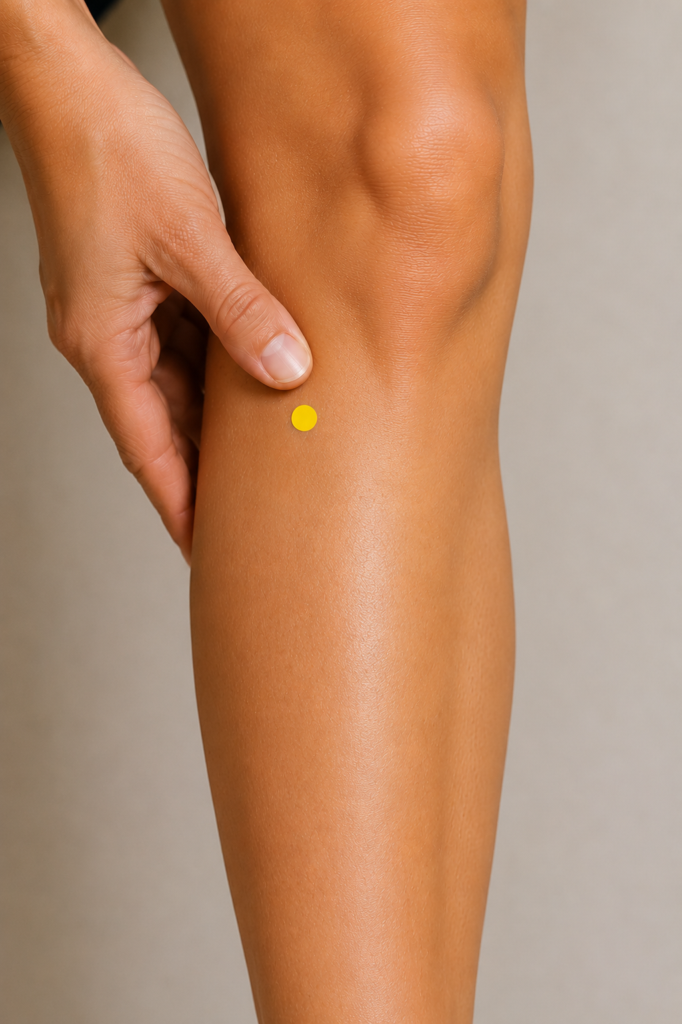
3. Press on ST36 below the knee to restore energy and settle digestion. ST36 sits four finger-widths below the lower edge of the kneecap and one finger-width to the outside of the shinbone, on the muscle that rises when you flex your foot. Press firmly with your thumb for one to two minutes on each leg. ST36 is called “Zusanli,” the “Leg Three Miles.”
ST36 supports the Stomach and Spleen, aiding digestion in recovering from alcohol-related dampness, and boosts energy when you’re feeling drained and sluggish. It works well with PC6 to relieve nausea.
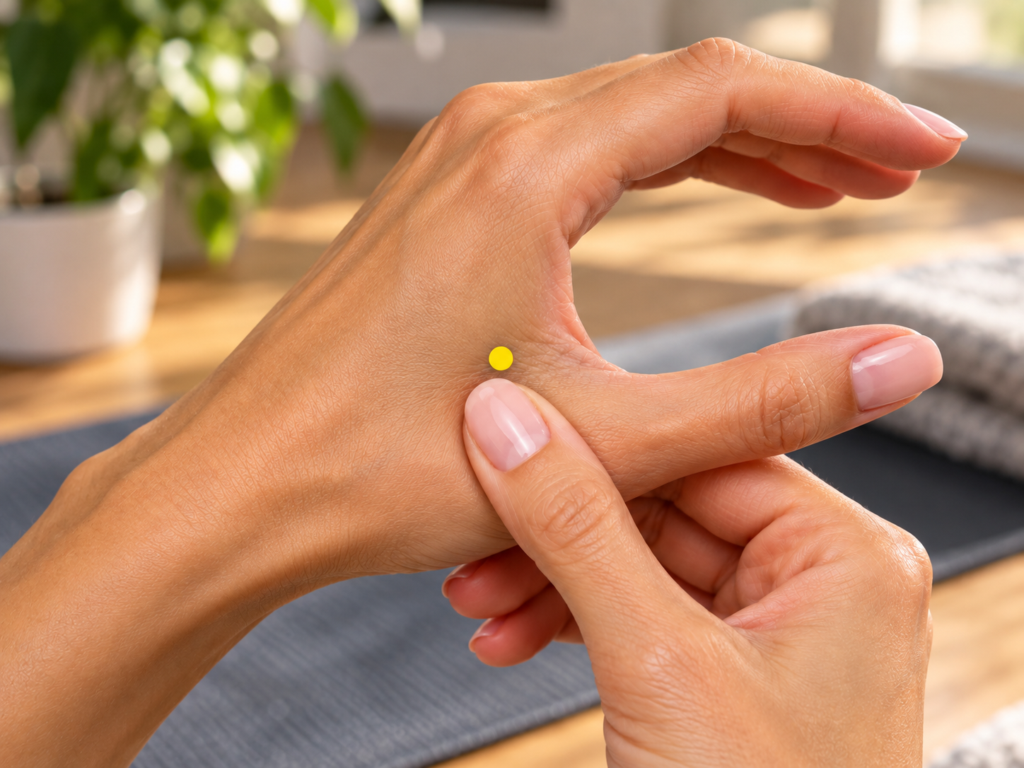
4. Press on LI4 in the hand to ease a pounding headache. LI4 sits in the webbing between the thumb and index finger, at the highest point of the muscle when the thumb and finger are brought together. Press firmly with the thumb of your other hand for one to two minutes on each hand. LI4 is called “Hegu.” LI4 is avoided during pregnancy.
LI4 is known as the main point for the head and face and is one of the strongest points for pain relief. It helps with headaches, clears heat from the head, and, when used with LR3, creates the Four Gates, a classic combination for easing pain and calming the body.
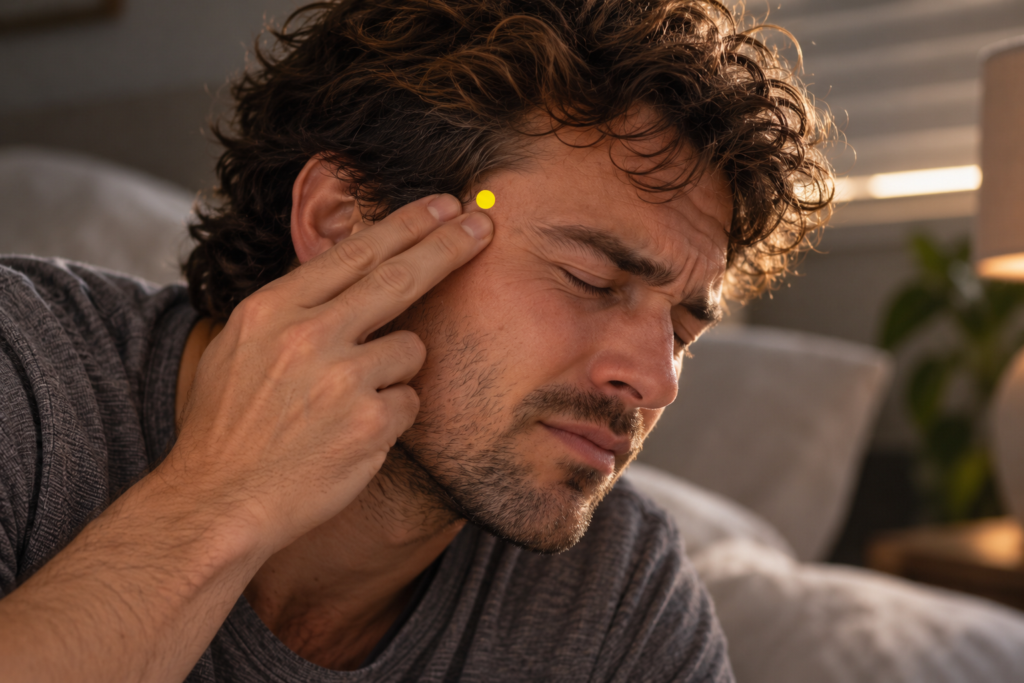
5. Press on Taiyang at the temples for throbbing pain. Taiyang sits in the soft hollow at the temple, about a thumb-width behind the outer end of the eyebrow. Press gently with your fingertips, or make slow circles, for one to two minutes on both sides. Taiyang is an extra point whose name means “Greatest Yang.”
Taiyang is a common point for throbbing pain at the temples and around the eyes, which is the type of headache many people get with a hangover. Use gentle pressure, and if light bothers you, try this point with your eyes closed in a dim room.
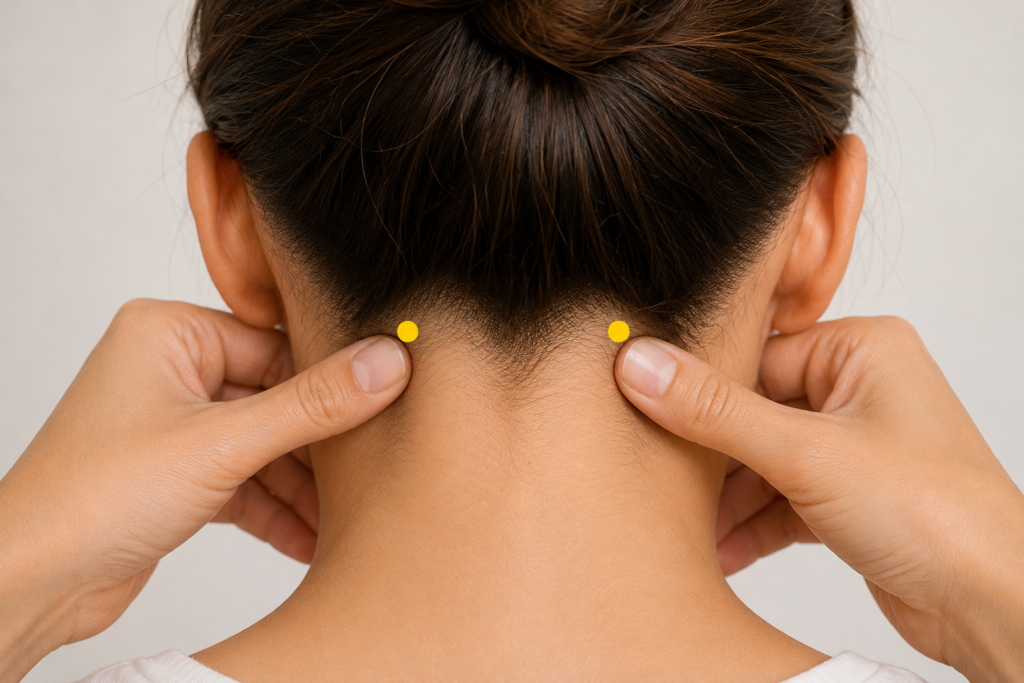
6. Press on GB20 at the base of the skull to release the head and neck. GB20 sits in the two hollows at the base of the skull, between the two large vertical neck muscles and the outer edge, roughly level with the tops of the ears. Press up and inward with your thumbs for one to two minutes. GB20 is called “Fengchi,” the “Wind Pool.”
GB20 alleviates headaches located at the back of the head and behind the eyes. It can also relax a stiff neck, which frequently occurs after insufficient sleep. Additionally, it might reduce dizziness experienced the following day.
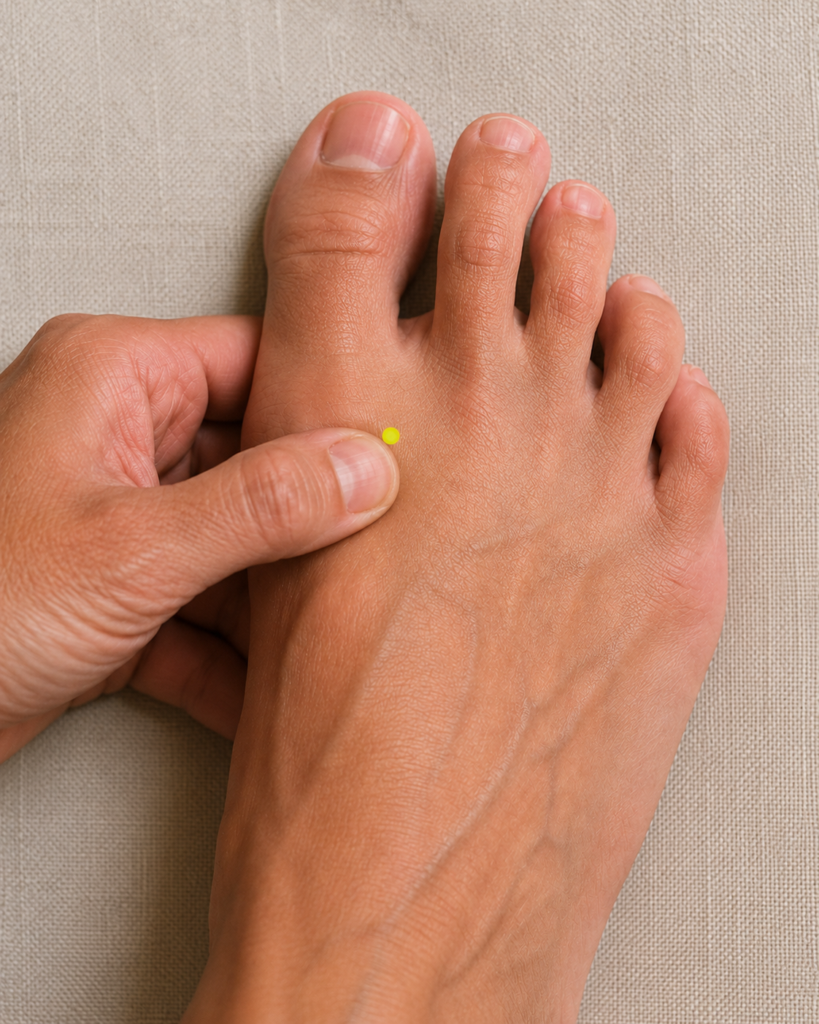
7. Press on LR3 on the top of the foot to calm the overheated Liver. LR3 sits on the top of the foot, in the webbing between the big toe and second toe, about two finger-widths back where the bones meet in a small hollow. Press firmly with your thumb for one to two minutes on each foot. LR3 is called “Taichong.”
In Traditional Chinese Medicine, heavy drinking stresses the Liver and causes heat to ascend to the head. LR3 helps dissipate this heat and tension, alleviating headaches and irritability. When combined with LI4, it forms the essential Four Gates.
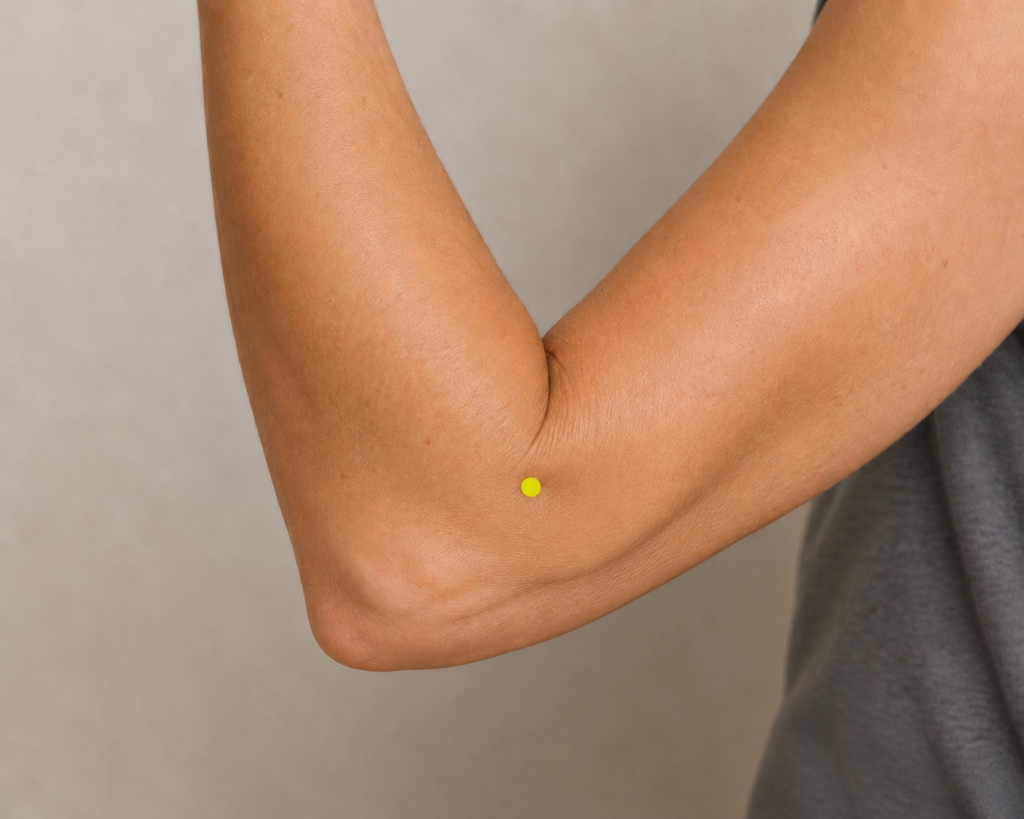
8. Press on LI11 at the elbow to clear heat. LI11 sits at the outer end of the elbow crease, in the hollow that forms when you bend your elbow. Press firmly with your thumb for one to two minutes on each arm. LI11 is called “Quchi,” the “Pool at the Crook.”
LI11 is highly effective for clearing heat from the body, particularly the damp heat associated with alcohol in Traditional Chinese Medicine. It is especially beneficial if your hangover presents with a hot, flushed face, irritability, and a pounding headache.
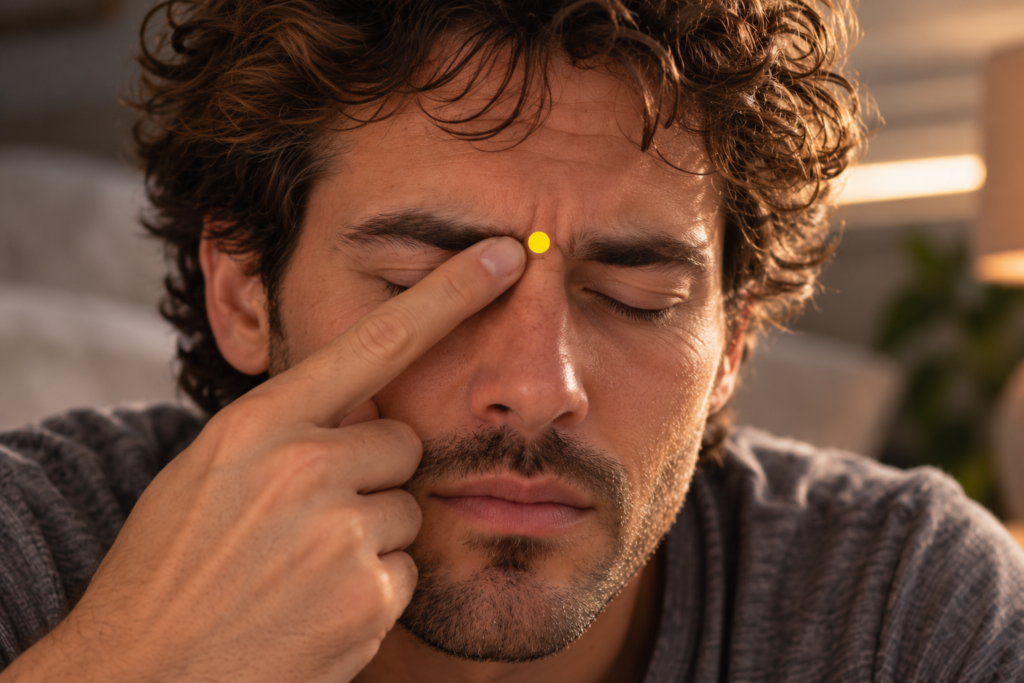
9. Press on Yintang between the eyebrows to calm next-day anxiety. Yintang sits in the small hollow directly between the two eyebrows. Press gently and steadily, or make slow circles, for one to two minutes with your eyes closed. Yintang is an extra point.
It’s common to feel jittery, anxious, or down the day after drinking as the effects fade. Yintang helps soothe the mind, reduces pressure across the forehead, and can ease that restless, uneasy sensation.
Why These Acupressure Points Work
In Traditional Chinese Medicine, a hangover is viewed as damp heat from alcohol ascending to the head and impacting the Stomach, combined with an overheated Liver and dehydration. These nine points target those concerns.
- The stomach points (PC6, CV12, ST36) alleviate nausea and support digestion recovery.
- The head points (LI4, Taiyang, GB20) help relieve headache and neck tension.
- The cooling and calming points (LR3, LI11, Yintang) help clear heat, reduce irritability, and calm next-day anxiety.
Acupressure won’t speed up alcohol processing in your body, but it can alleviate symptoms during recovery.
How to Properly Use These Acupressure Points
- Begin with PC6 if you experience nausea, pressing it while lying still if necessary.
- To alleviate headaches, press LI4 and LR3 simultaneously, then gently apply pressure to Taiyang and GB20.
- If your face is hot and flushed, add LI11. For feelings of anxiety or unease, try Yintang.
- Apply only gentle pressure on CV12 and avoid this point if pressing it increases your nausea.
- Hold each point for one to three minutes, breathing slowly. Feel free to repeat this as needed throughout the day.
The fundamentals of managing a hangover are straightforward. Stay hydrated by drinking water regularly, and if you’ve been vomiting or sweating, incorporate an electrolyte drink or broth. When possible, eat mild foods such as toast, crackers, rice, bananas, or soup to boost blood sugar and soothe your stomach. Prioritize rest and sleep if you can. Avoid taking acetaminophen while alcohol is still in your system, as it can stress your liver. If you choose an anti-inflammatory pain reliever, take it with food to protect your stomach. Avoid the “hair of the dog” remedy, as it just postpones the hangover. For next time, pace your drinking, alternate alcoholic beverages with water, and eat before and during drinking to help prevent a hangover.
When to Get Professional Help
Call emergency services immediately if you observe signs of alcohol poisoning such as confusion, difficulty staying awake, persistent vomiting, seizures, slow or irregular breathing, blue or pale skin, or low body temperature. Seek medical help promptly if you vomit blood or material resembling coffee grounds, experience severe stomach pain, chest pain, a racing or irregular heartbeat, a headache unlike your usual ones, or cannot keep fluids down for more than a day. Support is available if you frequently experience hangovers or struggle to reduce alcohol intake. You can contact the SAMHSA National Helpline at 1-800-662-4357 for free, confidential assistance anytime. Traditional Chinese Medicine has a long history of aiding people in changing their relationship with alcohol, which we explore in our article on how it views addiction.
Acupressure provides a simple method to reduce hangover symptoms, especially when combined with rest, fluids, and professional medical attention if needed.
Above and Beyond Acupuncture offers acupuncture, cupping, and lifestyle coaching at the North Frank Lloyd Wright Boulevard location in Scottsdale.
Schedule an appointment online to start your healing journey.
The points above are only as effective as the technique used to apply them. Where to press, how firmly, and for how long all affect the result. For a full breakdown of how to perform acupressure properly at home, read Performing Acupressure in 3 Easy Steps.
If nausea is your main problem, how to stop nausea with acupressure; for headaches, acupressure for a tension headache is a companion post.

About the Publisher
Paul Kerzner, L.Ac., is a licensed acupuncturist and board-certified herbalist, as well as the founder of Above and Beyond Acupuncture in Scottsdale. His own journey from chronic patient to practicing acupuncturist shapes his commitment to providing honest, clinically grounded information about acupuncture and Traditional Chinese Medicine. Learn more about Paul and his clinical approach on the About Us page.