
Key Takeaways
- Sadness can affect you physically and emotionally, sometimes lingering and draining your energy. It differs from grief and depression.
- Acupressure for sadness targets specific points to restore Qi, balance emotions, and alleviate discomfort in the chest and lungs.
- The nine acupressure points are KI25, HT1, LU3, PC4, HT5, BL42, CV6, ST36, and KI4, each serving a unique purpose in uplifting the spirit.
- Practicing acupressure regularly, along with healthy habits and lifestyle choices, can help you process feelings of sadness.
- Consider seeking professional help if sadness lasts for two weeks or affects daily life, as it may point to a deeper issue, such as depression.

The chest is often the first place to feel it. Breathing becomes shallow, the shoulders droop, and a heavy or hollow feeling settles behind the breastbone. The voice grows softer, tears come more readily, and the body may feel weighed down. This is how sadness often shows up.
As one of the most natural human emotions, sadness arises after losing something important, such as a person, a relationship, a job, a hope, or a phase of life. It slows a person down, turns attention inward, and signals to others that support is needed. Crying, talking, and resting can help it pass, and for most people, it fades over time.
Sometimes the feeling persists. It may last for weeks after a setback, return each fall, or arise for no obvious reason. Grief is different because it follows a specific loss, while depression involves a persistent low mood, changes in sleep and appetite, and losing interest in things once enjoyed. Still, sadness that won’t lift can drain your energy, motivation, and enjoyment of daily life.
In Traditional Chinese Medicine, each organ is linked to an emotion, and sadness is associated with the Lung. The Lung governs breathing and the body’s Qi, and houses the Po, the part of the soul tied to the body and feelings. Classical texts say that sadness dissolves Qi. When sadness lingers, it can weaken the Lung, leading to shallow breathing, a weak voice, fatigue, and more frequent colds. It can also constrict the Heart, which houses the Shen, or spirit, causing warmth and joy to fade.
These nine points open the chest, strengthen the Lung, calm the Heart, and help restore the Qi that sadness depletes.
What Acupressure Points to Press and Why
1. Press on KI25 on the upper chest to lift the spirit. KI25 sits on the upper chest, in the second space between the ribs, about three finger-widths to each side of the center of the breastbone. To find it, start just below the collarbone and move down two rib spaces. Press both points gently with your fingertips, or make slow circles, for one to two minutes while breathing slowly. KI25 is called “Shencang,” the “Spirit Storehouse.”
KI25 is part of a group of points located on the upper chest and has traditionally been used in cases when the spirit is low and the chest is tight; it opens up the chest, alleviates shallow breathing, and helps to counteract the heavy, sinking sensation caused by sadness.
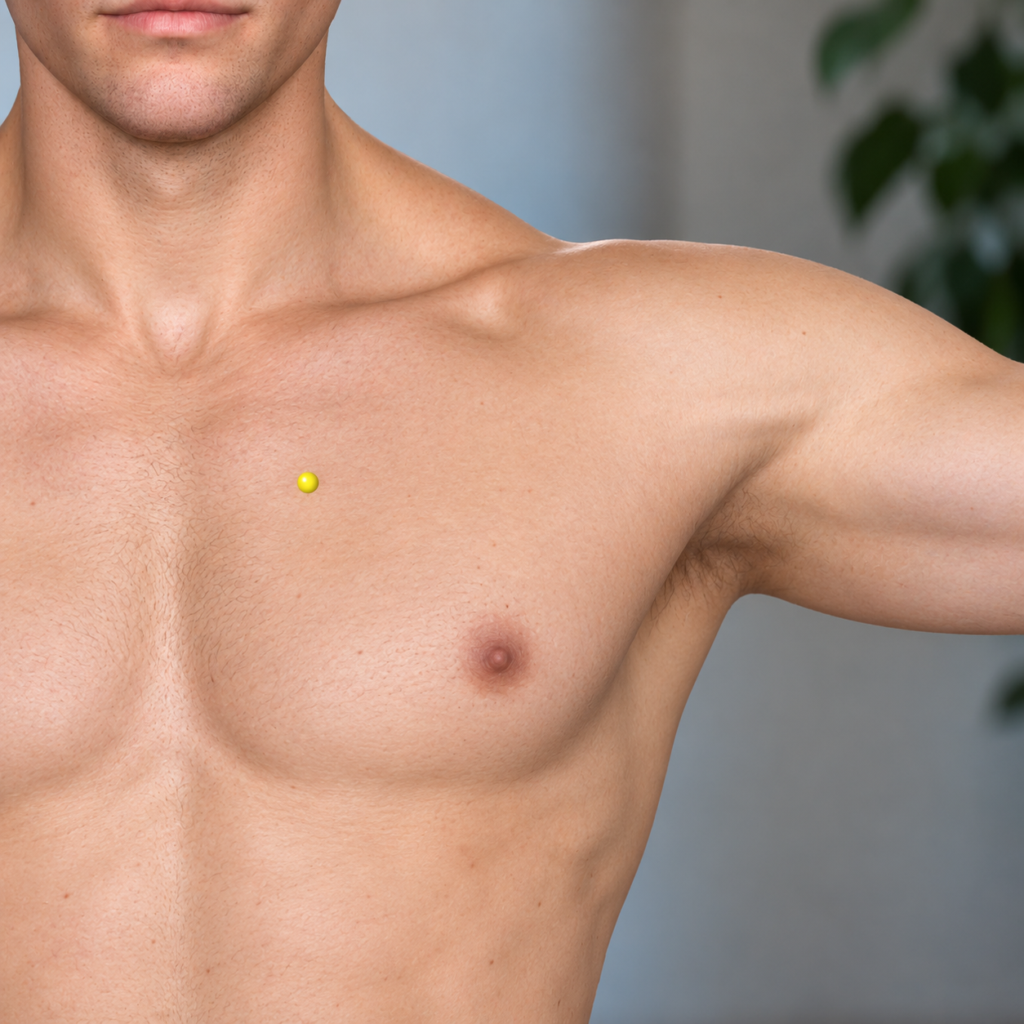
2. Press on HT1 in the armpit to open the Heart. HT1 sits at the center of the armpit, where you can feel the pulse. Raise one arm slightly away from the body, then press gently into the hollow with the fingertips of the other hand for about one minute on each side. HT1 is called “Jiquan,” the “Summit Spring.”
HT1 is the first point on the Heart channel. In Traditional Chinese Medicine, it is used for sadness, anxiety, and a heavy or constricted feeling in the chest. Gentle pressure on this point releases tension where the arm meets the chest and helps the Heart’s Qi flow freely again.

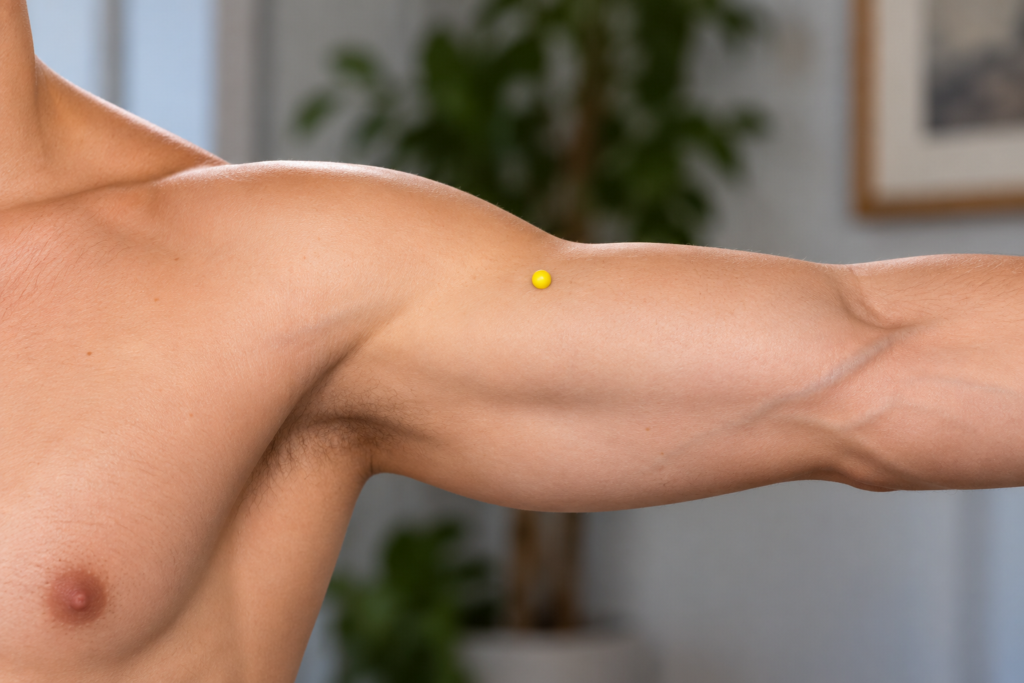
3. Press on LU3 on the upper arm to support the Lung. LU3 sits on the inner side of the upper arm, about three thumb-widths below the front end of the armpit crease, on the outer edge of the biceps muscle. A traditional way to find it is to raise the arm straight out in front and bring the nose toward the upper arm; the point lies where the tip of the nose touches. Press firmly with your thumb for one to two minutes on each arm. LU3 is called “Tianfu,” the “Celestial Storehouse.”
LU3 is a classic point for sadness and weeping in Traditional Chinese Medicine. Known as a Window of Heaven point, it belongs to a group traditionally used when emotions overwhelm someone and the connection between body and spirit feels disrupted. LU3 strengthens the Lung and helps sadness pass through instead of settling in.
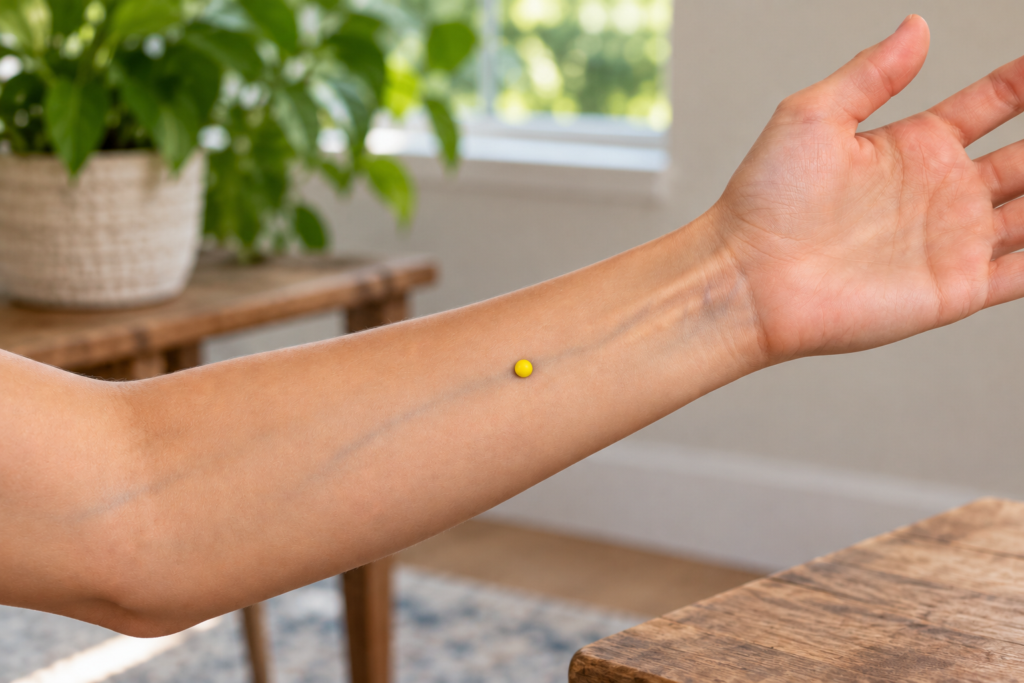
4. Press on PC4 on the inner forearm to calm the Heart. PC4 sits on the inner forearm, between the two tendons, about one thumb-width below the midpoint between the wrist crease and the elbow crease. Press firmly with the thumb of your other hand for one to two minutes on each arm. PC4 is called “Ximen,” the “Cleft Gate.”
PC4 is the cleft point of the Pericardium, the protector of the Heart. Cleft points are used for acute and intense symptoms, and PC4 is traditionally used for melancholy, fearfulness, and a racing or aching heart. It is especially helpful when sadness comes in strong waves.
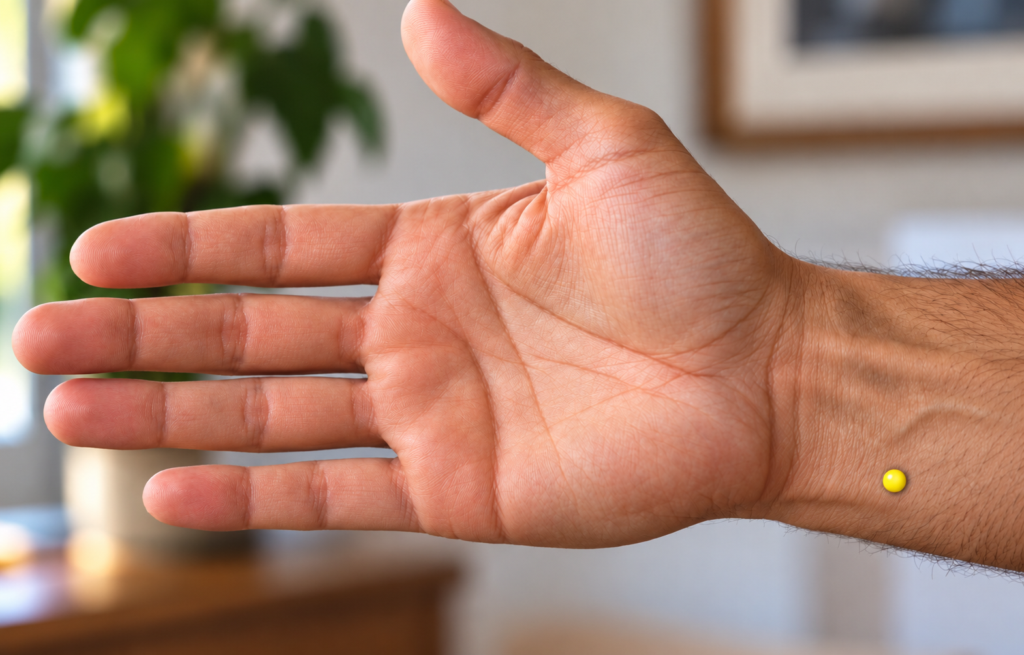
5. Press on HT5 on the wrist to connect with the spirit. HT5 sits on the inner wrist, on the pinky side, just inside the tendon, about one thumb-width above the wrist crease. Press gently with the thumb of your other hand for one to two minutes on each wrist. HT5 is called “Tongli,” the “Connecting Interior.”
HT5 is the Heart’s connecting point to its paired channel, the Small Intestine. In Traditional Chinese Medicine, it is used for sadness, low spirits, and difficulty expressing feelings. HT5 settles the Shen and supports the voice, helping people find words for what weighs on them.
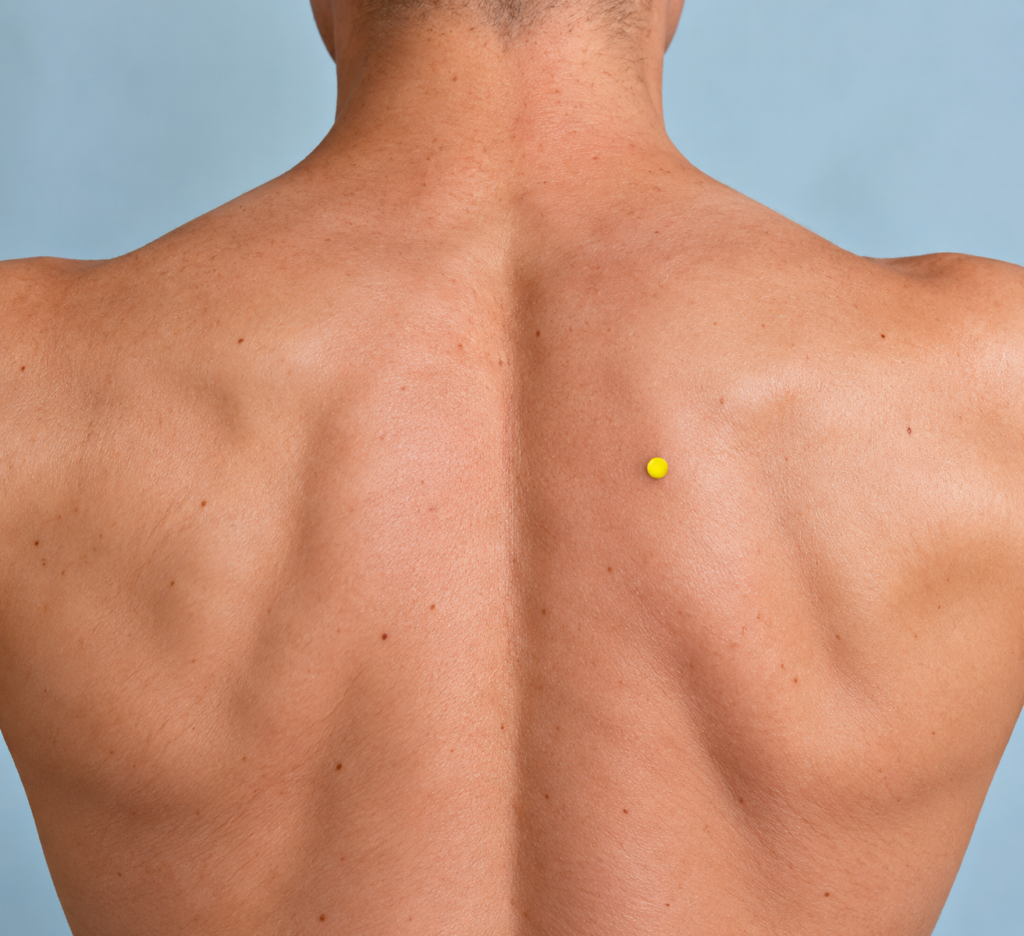
6. Press on BL42 on the upper back to support the Po. BL42 sits on the upper back, about four finger-widths to each side of the spine, along the inner edge of the shoulder blade, roughly level with the inner end of the bony ridge that runs across the shoulder blade. Since this area is hard to reach, place a tennis ball between your upper back and a wall, lean into it gently, and hold for one to two minutes on each side. BL42 is called “Pohu,” the “Door of the Corporeal Soul.”
BL42 lies beside the back point of the Lung and is named for the Po, the part of the spirit housed in the Lung. Traditionally, it eases sadness, grief, and a tight, heavy feeling across the upper back and chest. Releasing BL42 can help the shoulders drop and the breath deepen.
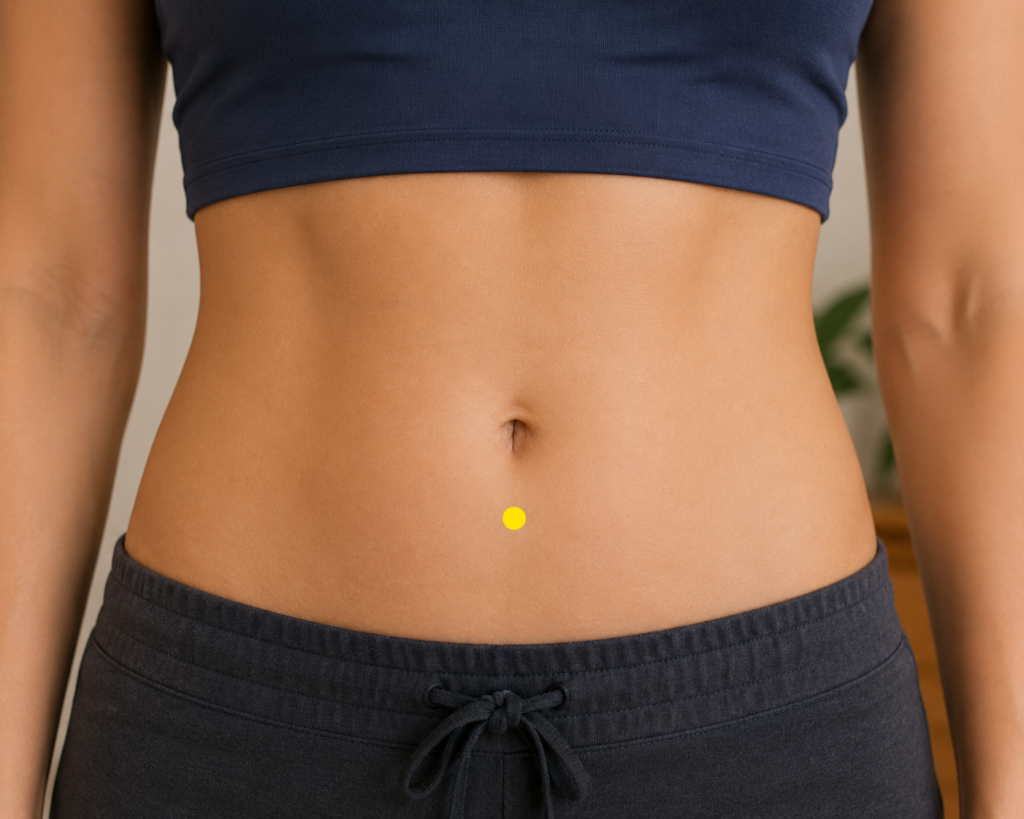
7. Press on CV6 below the navel to rebuild the Qi. CV6 sits on the midline of the lower abdomen, about two finger-widths below the navel. Rest your fingertips or a warm palm on the point and press gently for one to two minutes while breathing slowly into the belly. CV6 is called “Qihai,” the “Sea of Qi.” CV6 is avoided during pregnancy.
Because sadness can deplete Qi, restoring it is an important part of recovery. In Traditional Chinese Medicine, CV6 is one of the key points for strengthening Qi throughout the body. It can restore energy, deepen the breath, and help the body feel steadier and more grounded.
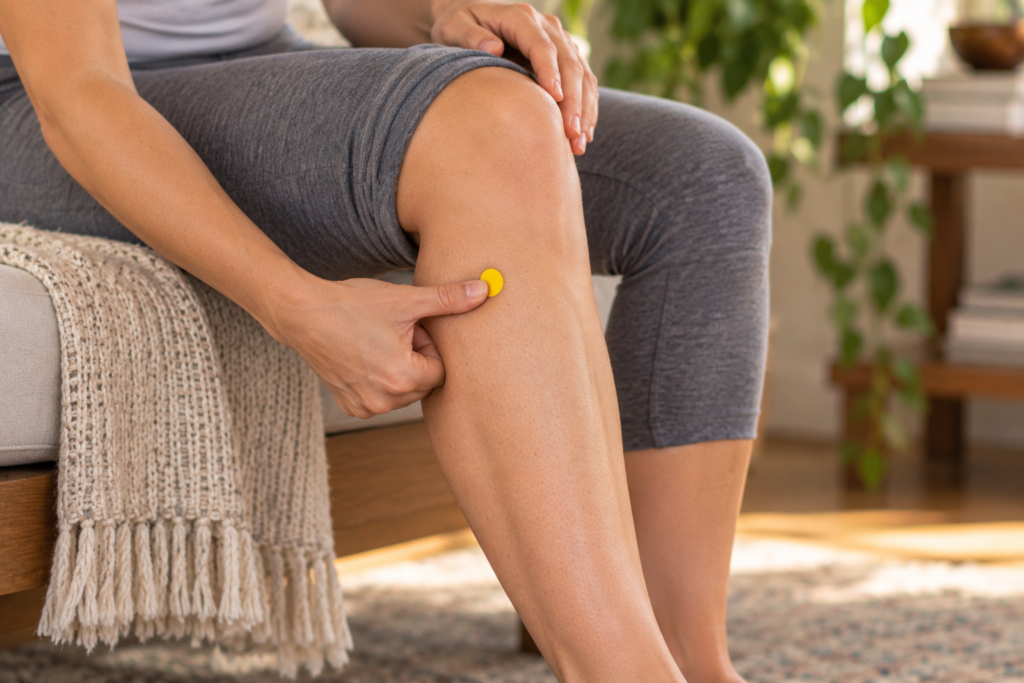
8. Press on ST36 below the knee to restore energy. ST36 sits four finger-widths below the lower edge of the kneecap and one finger-width to the outside of the shinbone. Press firmly with your thumb for one to two minutes on each leg. ST36 is called “Zusanli,” the “Leg Three Miles.”
In Traditional Chinese Medicine, the Spleen and Stomach produce the Qi that nourishes the Lung, much like the earth nourishes what grows from it. ST36 strengthens digestion and builds Qi and Blood, helping ease the fatigue, heaviness, and low appetite that often accompany lingering sadness.
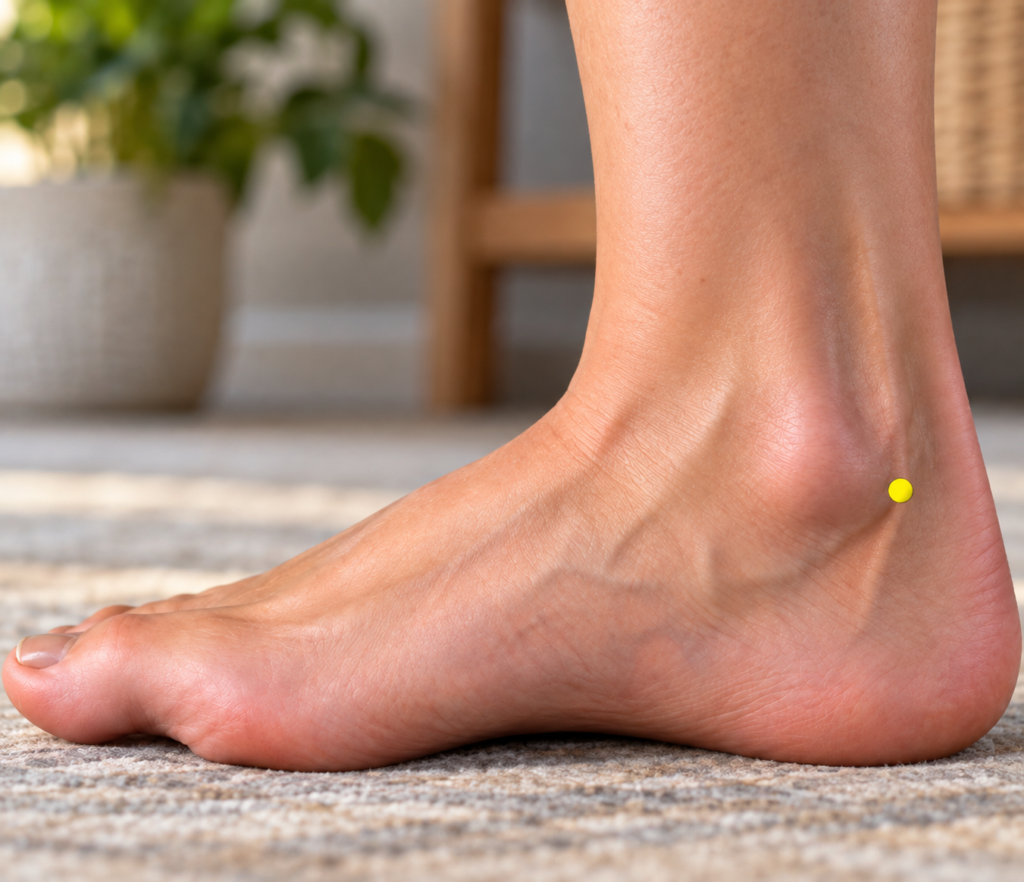
9. Press on KI4 near the inner heel to restore the will. KI4 sits on the inner side of the foot, just below and behind the inner ankle bone, in the small hollow at the front edge of the Achilles tendon where it meets the heel bone. Press gently with your thumb for one to two minutes on each foot. KI4 is called “Dazhong,” the “Great Bell.”
KI4 is the Kidney’s connecting point, housing the Zhi, the willpower and drive to move forward. It is traditionally used to address low spirits, a desire to stay indoors and withdraw, and lethargy. KI4 helps restore motivation to reengage with daily life when sadness makes everything feel slow and heavy.
Why These Acupressure Points Work

In Traditional Chinese Medicine, emotional balance depends on a Lung strong enough to hold Qi, a Heart that circulates warmth and joy, and the energy and will to move forward. Lingering sadness disperses Qi, weakens the Lung, and constricts the Heart, leaving the chest heavy, the breath shallow, and the spirit low.
The nine points work together to lift sadness:
- The chest and back points (KI25, HT1, BL42) open the chest, release tension across the upper back, and help the breath deepen.
- The Lung and Heart points (LU3, PC4, HT5) support the Lung, calm waves of sadness, and settle the Shen.
- The strengthening points (CV6, ST36) rebuild the Qi that sadness dissolves.
- The grounding point (KI4) restores the will and motivation to reengage with life.
How to Properly Use These Acupressure Points

For sadness, acupressure works best as a gentle daily practice that accepts and processes feelings instead of pushing them away.
- Complete the full routine once daily, holding each position for one to two minutes while breathing slowly into your chest and abdomen.
- When you experience a wave of sadness, apply pressure to PC4 on both arms, then rest your fingertips on KI25 while taking five slow, deep breaths.
- Apply gentle pressure to the chest, armpits, wrists, and abdomen, and firmer pressure to the arms, back, and legs.
- Practice consistently over several weeks, particularly during seasons or around anniversaries when feelings of sadness tend to return.
Simple daily habits can help alleviate feelings of sadness. Let yourself experience what you’re feeling without resistance. Crying, journaling, or talking with someone you trust may help sadness pass rather than linger. Spend time outdoors in daylight, especially in the morning, and try to take a short walk each day. Movement and fresh air can support the Lung and lift your mood. You might also practice slow, deep breathing with a long, gentle exhale, and sit or stand up straight to give your lungs room to expand. Choose warm, nourishing foods, keep a regular sleep routine, and consider limiting alcohol, which can make a low mood feel worse. Stay connected with others, even in small ways, and make time for activities you once enjoyed, even if the pleasure hasn’t fully returned yet. Learn more about checking in with how you feel.
When to Get Professional Help

See a mental health professional or your doctor if sadness lasts most of the day for two weeks or longer, if you lose interest in things you once enjoyed, or if it comes with changes in sleep, appetite, or energy, since these can be signs of depression, which responds well to treatment. Seek support as well if sadness keeps you from work, school, or relationships, if you are turning to alcohol or other substances to cope, or if sadness returns every fall and winter. If you feel hopeless or have thoughts of harming yourself, call or text 988 to reach the Suicide and Crisis Lifeline right away.
Acupressure can gently support people experiencing sadness, but it does not replace diagnosis or medical care.
For related emotional challenges, acupressure for grief, acupressure for depression, and acupressure for loneliness are companion posts.
Above and Beyond Acupuncture offers acupuncture, cupping, and lifestyle coaching at the North Frank Lloyd Wright Boulevard location in Scottsdale.
Schedule an appointment online to start your healing journey.
The points above are only as effective as the technique used to apply them. Where to press, how firmly, and for how long all affect the result. For a full breakdown of how to perform acupressure properly at home, read Performing Acupressure in 3 Easy Steps.

About the Publisher
Paul Kerzner, L.Ac., is a licensed acupuncturist and board-certified herbalist, as well as the founder of Above and Beyond Acupuncture in Scottsdale. His own journey from chronic patient to practicing acupuncturist shapes his commitment to providing honest, clinically grounded information about acupuncture and Traditional Chinese Medicine. Learn more about Paul and his clinical approach on the About Us page.