Key Takeaways
- Betrayal is the deep hurt that comes when someone you trusted, such as a partner, friend, family member, colleague, or institution, seriously breaks that trust.
- It often brings shock, anger, and grief, replaying what happened, questioning your judgment, trouble sleeping, and difficulty trusting others again.
- In Traditional Chinese Medicine, betrayal shocks the Heart and its protector, the Pericardium; inflames the Liver; shakes the Gallbladder’s trust in its judgment; and leaves the Kidneys braced in fear.
- Nine acupressure points, including several cleft points traditionally used to treat acute pain, help settle shock, ease anger and fear, calm a racing mind, and restore trust in yourself.
- Acupressure works best when paired with support from people you trust, honest processing at your own pace, healthy boundaries, and professional help when the hurt runs deep.

Betrayal can make everything feel different. Whether it’s a partner’s affair, a friend revealing a secret, a business partner taking advantage, or a family member choosing someone else, the pain lingers beyond the moment. It often makes you revisit memories, searching for missed signs and questioning what was real.
Betrayal hurts most because it comes from someone you trusted. Psychologist Jennifer Freyd calls this betrayal trauma, which occurs when the people or institutions you rely on break that trust. The closer the relationship, the deeper the hurt, because it shakes your sense of safety and your confidence in your judgment.
Reactions to betrayal often unfold in waves: first shock and disbelief, then anger, grief, and finally a rush of questions. Many people replay conversations at night, lose their appetite, feel their heart race when reminded of what happened, and become guarded with everyone, not just the person who hurt them. Some blame themselves for missing the signs, while others struggle to let anyone get close again.
In Traditional Chinese Medicine, sudden shock scatters Qi and unsettles the Heart, which houses the Shen, or spirit. The Pericardium protects the Heart and is meant to shield it from emotional harm. When that protection is breached, it may close off to prevent further hurt. The Liver responds with anger at the injustice, the Gallbladder loses trust in its own judgment, and the Kidney, associated with fear, braces for another blow.
The nine points below can help you process shock, manage anger and fear, quiet a mind that repeatedly revisits events, and rebuild self-trust, allowing your heart to begin healing.
What Acupressure Points to Press and Why
1. Press on TE16 on the side of the neck to recover from shock. TE16 sits on the side of the neck, just behind the large muscle that runs from behind the ear down to the collarbone, roughly level with the angle of the jaw. Press gently with your fingertips for thirty seconds to one minute on each side, and never press on the front of the neck or over the pulse. TE16 is called “Tianyou,” the “Window of Heaven.”
TE16 is one of the Window of Heaven points, used when something overwhelming disrupts the connection between the head and body. After betrayal, many people feel dazed or disconnected. TE16 may help you feel steadier and more present.

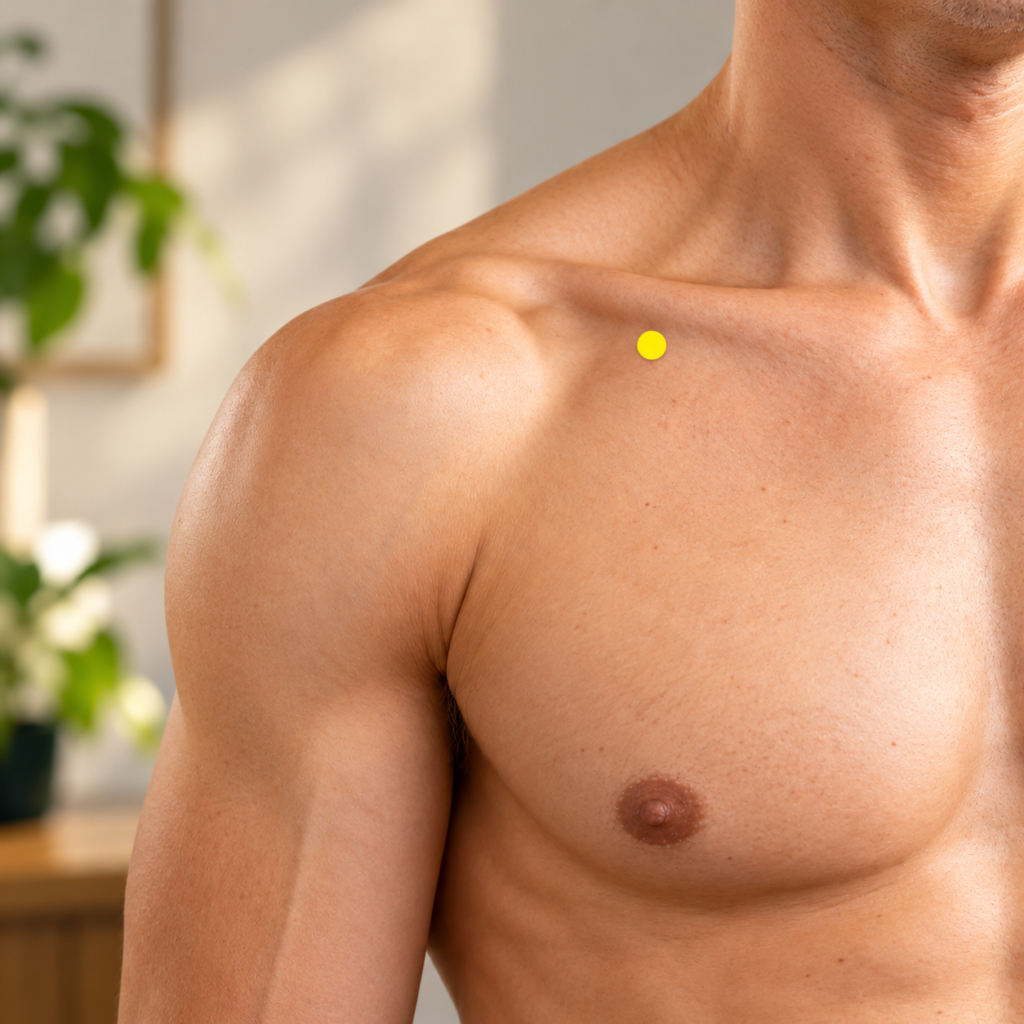
2. Press on LU2 below the collarbone to breathe again. LU2 sits on the front of the chest, in the hollow just below the outer end of the collarbone. Raise your arm slightly forward to feel the hollow deepen, then press gently with your fingertips for one to two minutes on each side. LU2 is called “Yunmen,” the “Cloud Gate.”
After painful news, your chest may tighten, and your breath may become shallow or feel stuck. LU2 helps open the chest and allows your breath to flow more freely. The Lung also supports letting go, an important part of beginning to heal.
3. Press on GB25 on the side of the waist to ease fear and vigilance. GB25 sits on the side of the waist, just below the free tip of the twelfth rib (the lowest rib). To find it, follow your lowest rib around toward your back until it ends, then press gently just below the tip for one to two minutes on each side. GB25 is called “Jingmen,” the “Capital Gate.”
GB25 is the Kidney’s front collecting point, and in Traditional Chinese Medicine, the Kidney is linked to fear. After betrayal, your body may remain on high alert, constantly watching for the next threat. Because GB25 is also on the Gallbladder channel, it supports the Kidney’s steadiness and the Gallbladder’s trust in its judgment.

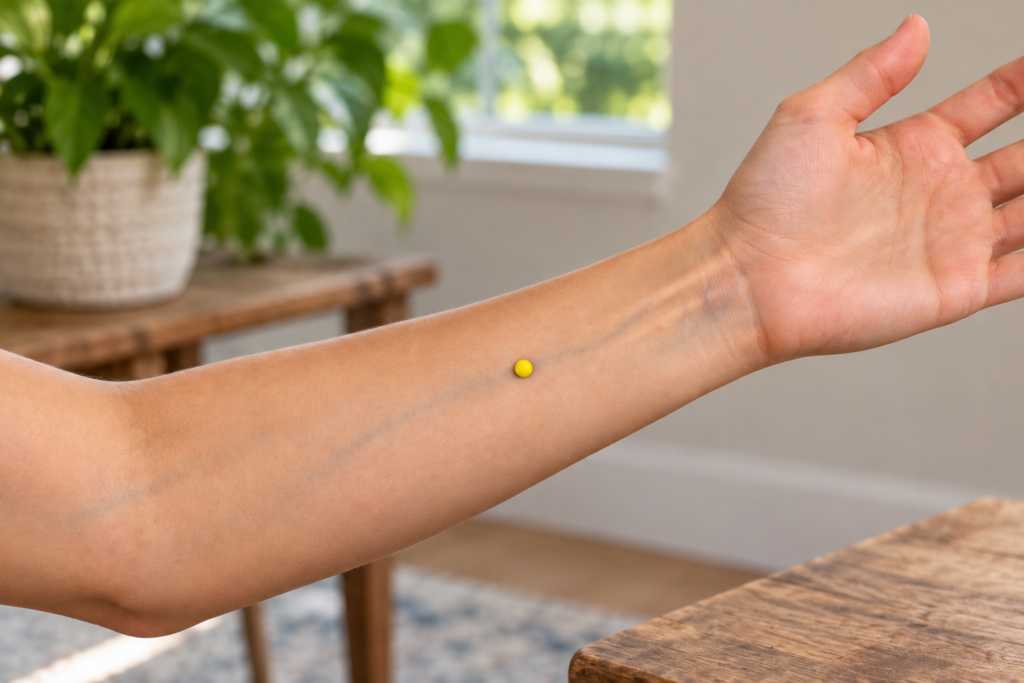
4. Press on PC4 on the inner forearm to soothe acute heartache. PC4 sits on the inner forearm, between the two tendons, about one thumb-width below the midpoint between the wrist crease and the elbow crease. Press firmly with the thumb of your other hand for one to two minutes on each arm. PC4 is called “Ximen,” the “Cleft Gate.”
PC4 is the Pericardium’s cleft point, and the Pericardium protects the Heart. Cleft points are used for sudden, intense symptoms; PC4 may help with fear, fright, and chest pain. It can also soothe the sharp heartache that follows discovering a betrayal.
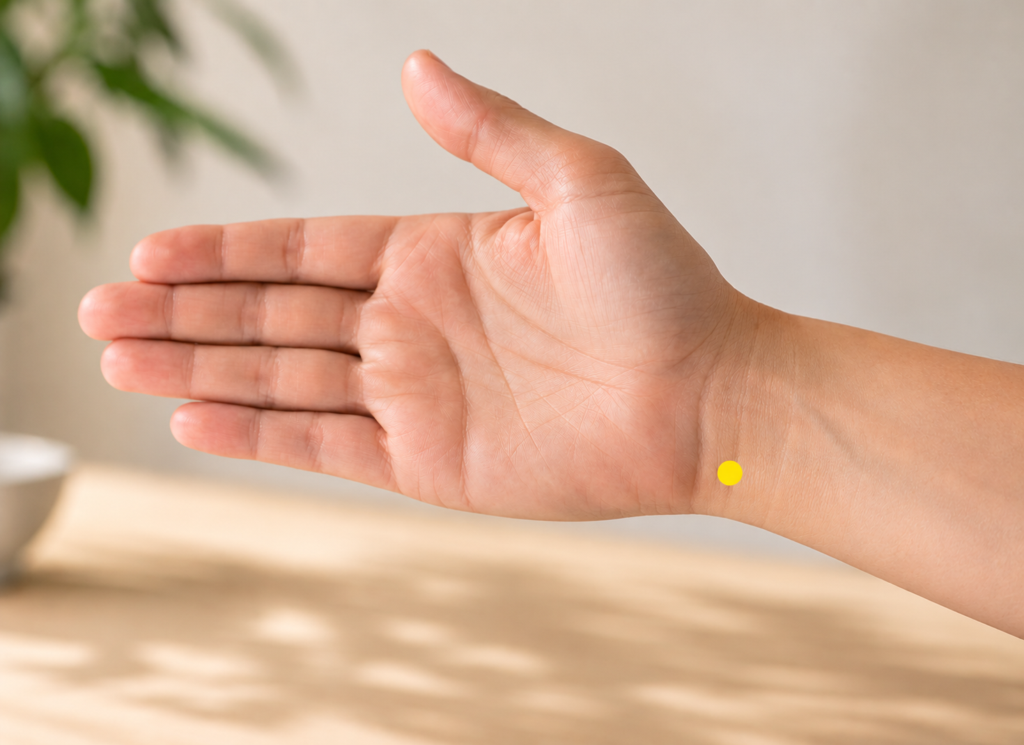
5. Press on HT6 on the inner wrist to calm the Heart. HT6 sits on the inner wrist, on the pinky side, just inside the tendon, about half a thumb-width above the wrist crease. Press gently with the thumb of your other hand for one to two minutes on each wrist. HT6 is called “Yinxi,” the “Yin Cleft.”
HT6 is the cleft point of the Heart and is often used to nourish Heart Yin. When shock or anger makes your heart race and your mind restless, especially at night, HT6 can help calm the Shen and restore a steadier rhythm.
6. Press on LR6 on the inner shin to ease anger and hurt. LR6 sits on the inner side of the lower leg, about nine finger-widths above the tip of the inner ankle bone, on the flat inner surface of the shinbone. Press firmly with your thumb for one to two minutes on each leg. LR6 is called “Zhongdu,” the “Central Capital.”
LR6 is the cleft point of the Liver. In Traditional Chinese Medicine, the Liver is associated with anger, and feeling wronged can cause Liver Qi to flare up. LR6 is used to relieve sudden pain along the Liver channel and help release intense anger rather than letting it become stuck in the body.
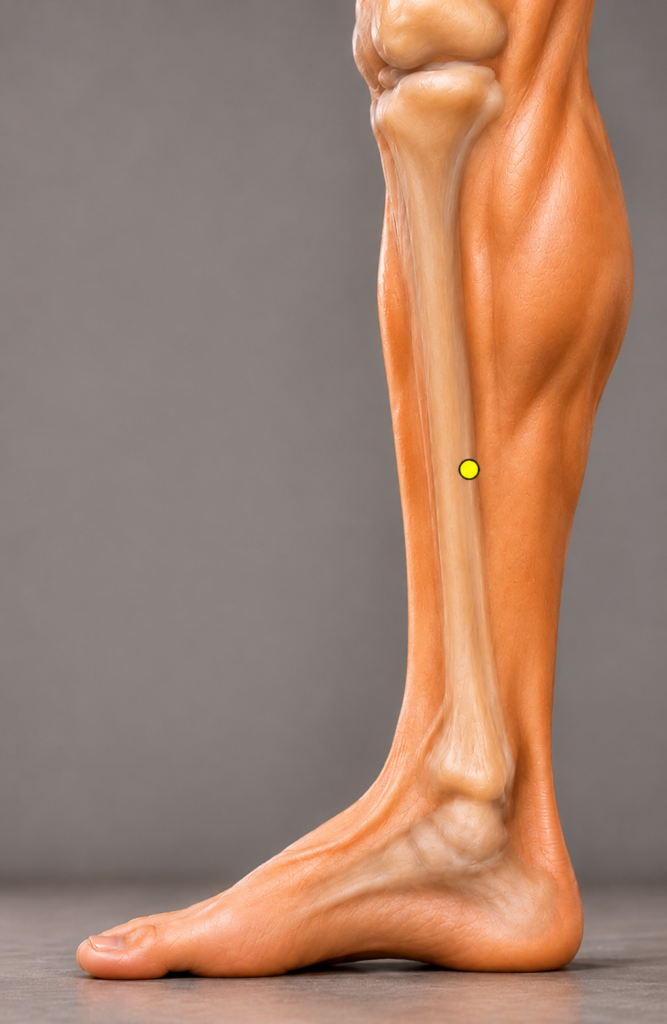
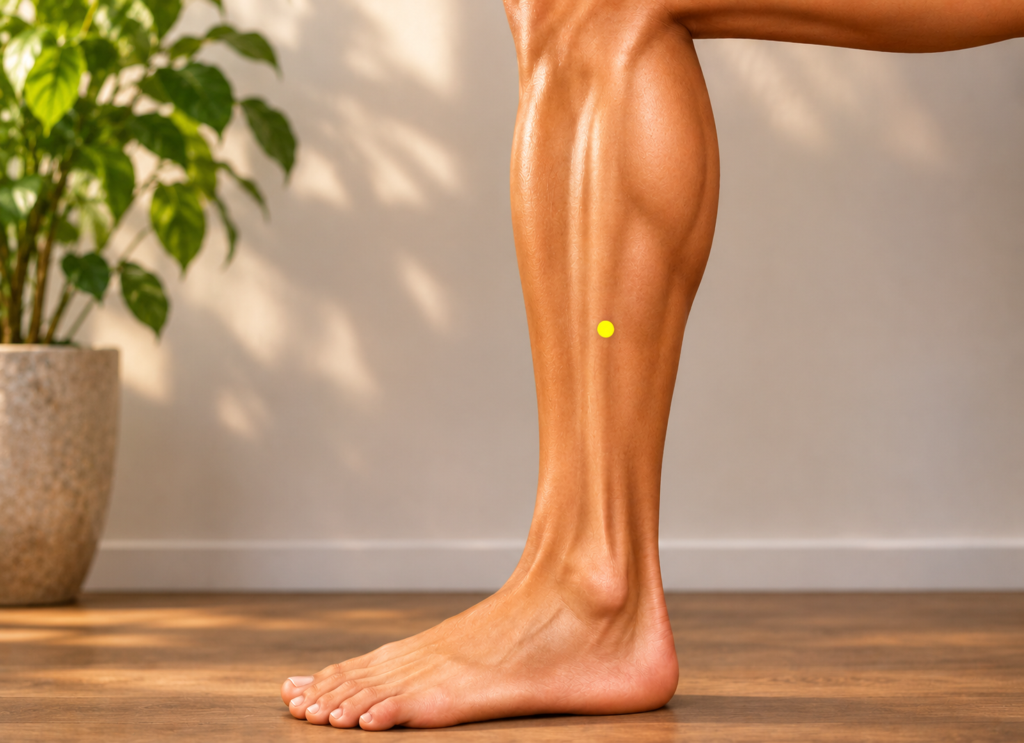
7. Press on GB36 on the outer shin to restore trust in yourself. GB36 sits on the outer side of the lower leg, about nine finger-widths above the tip of the outer ankle bone, just in front of the fibula. Press firmly with your thumb for one to two minutes on each leg. GB36 is called “Waiqiu,” the “Outer Hill.”
GB36 is the Gallbladder’s cleft point, and the Gallbladder governs judgment and decisiveness. One of the hardest parts of betrayal is feeling unable to trust your own instincts. During this acute period, GB36 supports the Gallbladder and helps rebuild confidence in your ability to judge people and situations.
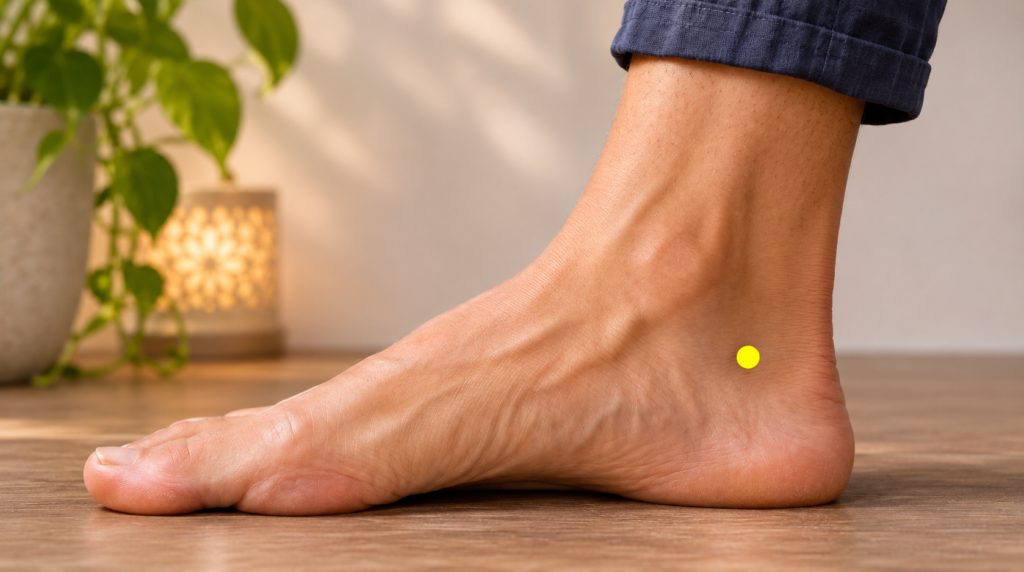
8. Press on KI5 below the inner ankle to steady the body. KI5 sits about one thumb-width directly below the hollow behind the inner ankle bone, in a small hollow just above the heel bone. Press gently with your thumb for one to two minutes on each foot. KI5 is called “Shuiquan,” the “Water Spring.”
KI5 is the Kidney’s cleft point, associated with fear and the body’s deepest reserves. Betrayal can leave you feeling unsafe and drained. KI5 helps steady the body and support the Kidney as it recovers from shock.
9. Press on SP1 on the big toe to quiet a mind that keeps replaying thoughts at night. SP1 sits on the inner corner of the big toe, just behind the corner of the toenail. Press firmly with your fingertip or the edge of your thumbnail for thirty seconds to one minute on each foot. SP1 is called “Yinbai,” the “Hidden White.”
The Spleen governs thought, and after a betrayal, the mind can replay the same scenes again and again, especially at night. In Traditional Chinese Medicine, SP1 is a classic point for restless, dream-disturbed sleep. It helps quiet the looping thoughts that keep the hurt fresh.

Why These Acupressure Points Work

In Traditional Chinese Medicine, healing from betrayal involves soothing the Heart’s shock, allowing the Pericardium to protect without shutting down, releasing the Liver’s anger, restoring the Gallbladder’s confidence in its judgment, and calming the Kidney’s fear. Cleft points can be especially helpful for sudden, intense pain like this.
The nine points work together to help the heart heal:
- The shock points (TE16, LU2) restore steadiness after the blow and help the breath move again.
- The Heart and protector points (PC4, HT6) soothe acute heartache and calm a racing heart.
- The Liver and Gallbladder points (LR6, GB36) help anger move and rebuild trust in your own judgment.
- The fear and rest points (GB25, KI5, SP1) ease hypervigilance, steady the body, and quiet a replaying mind.
How to Properly Use These Acupressure Points

Following a betrayal, acupressure is most effective when practiced gently each day over the ensuing weeks and months, with a few points reserved for moments when emotional distress resurfaces.
- Complete the full routine once daily, holding each point for one to two minutes, or for 30 seconds to one minute for TE16 and SP1.
- When a reminder triggers a sudden wave of pain or anger, apply pressure to PC4 on both arms, followed by LR6, while taking five slow breaths.
- Apply gentle pressure to the neck, chest, sides of the waist, and wrists, and firmer pressure to the forearms and legs.
- Practice consistently for several weeks because healing from betrayal rarely follows a straight line.
Daily habits can help you heal at your own pace. Lean on people you trust, even if that feels difficult right now. Allow yourself to feel anger and grief without rushing the process. Set clear boundaries with the person who betrayed you. This could mean taking space, limiting contact, or having a structured conversation. Try not to replay the details with everyone. Instead, talk to one or two safe people. Move your body every day, keep a regular sleep schedule, and eat warm, regular meals, even if you’re not hungry. Forgiveness, if it comes, is a choice for later, not something you need to do in order to heal.
Learn more about the power of forgiveness.
When to Get Professional Help

Consider seeing a mental health professional if the pain of betrayal interferes with working, sleeping, or caring for yourself, or is accompanied by depression, panic attacks, nightmares, flashbacks, or a persistent sense of being on guard. These may be signs of trauma, which often responds well to treatment. If you’re deciding whether to rebuild the relationship, a couples therapist can help you both work through what happened. If the betrayal involved infidelity, ask your doctor about testing for sexually transmitted infections.
If you feel unsafe with a partner, contact the National Domestic Violence Hotline at 1-800-799-7233 or text START to 88788.
If you have thoughts of harming yourself or someone else, call or text 988 to reach the Suicide and Crisis Lifeline right away.
Acupressure is a gentle, supportive practice after experiencing betrayal. It complements, and does not replace, diagnosis and medical care.
For related emotional concerns, acupressure for heartbreak, acupressure for resentment, and acupressure for trauma are companion articles. If the betrayal has left you doubting your own worth, learn about acupressure for self-esteem.
Above and Beyond Acupuncture offers acupuncture, cupping, and lifestyle coaching at the North Frank Lloyd Wright Boulevard location in Scottsdale.
Schedule an appointment online to start your healing journey.
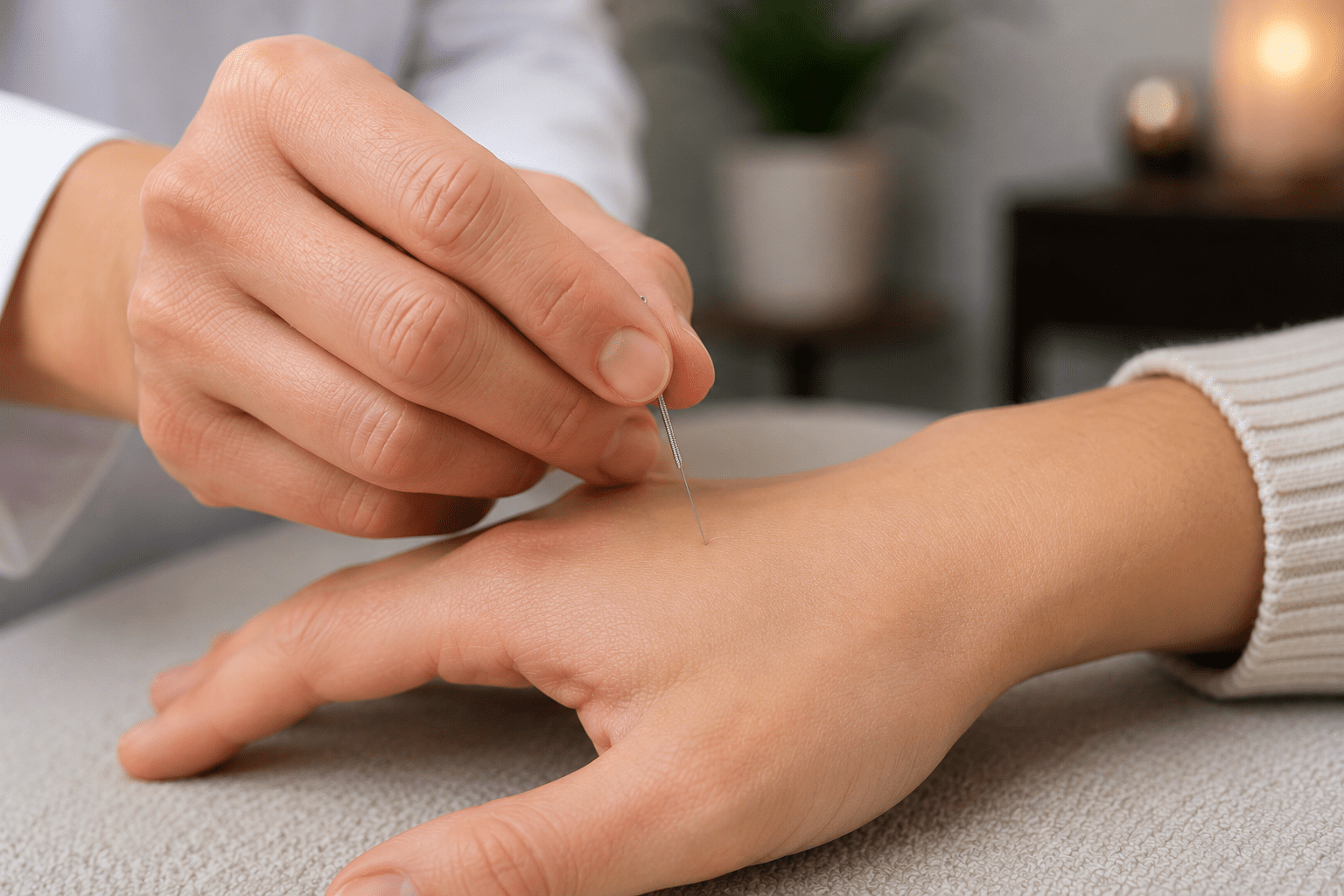
The points above are only as effective as the technique used to apply them. Where to press, how firmly, and for how long all affect the result. For a full breakdown of how to perform acupressure properly at home, read Performing Acupressure in 3 Easy Steps.

About the Publisher
Paul Kerzner, L.Ac., is a licensed acupuncturist and board-certified herbalist, as well as the founder of Above and Beyond Acupuncture in Scottsdale. His own journey from chronic patient to practicing acupuncturist shapes his commitment to providing honest, clinically grounded information about acupuncture and Traditional Chinese Medicine. Learn more about Paul and his clinical approach on the About Us page.