
Key Takeaways
- Gout is a form of arthritis caused by uric acid crystals depositing in a joint, leading to sudden, severe attacks of pain, redness, heat, and swelling, most often in the big toe.
- Attacks often begin at night and are commonly triggered by alcohol, rich foods, sugary drinks, dehydration, crash dieting, surgery, or sudden illness.
- In Traditional Chinese Medicine, gout is a form of Bi syndrome caused by Damp Heat, in which a strained Spleen and Kidney allow Dampness and heat to accumulate in the joints of the feet.
- Nine acupressure points clear heat during attacks, drain Dampness, and support the Spleen and Kidney between flares, with most of the work performed away from the painful joint.
- Acupressure works best alongside a proper diagnosis, prescribed treatment to lower uric acid when needed, plenty of water, and changes to diet and alcohol intake.
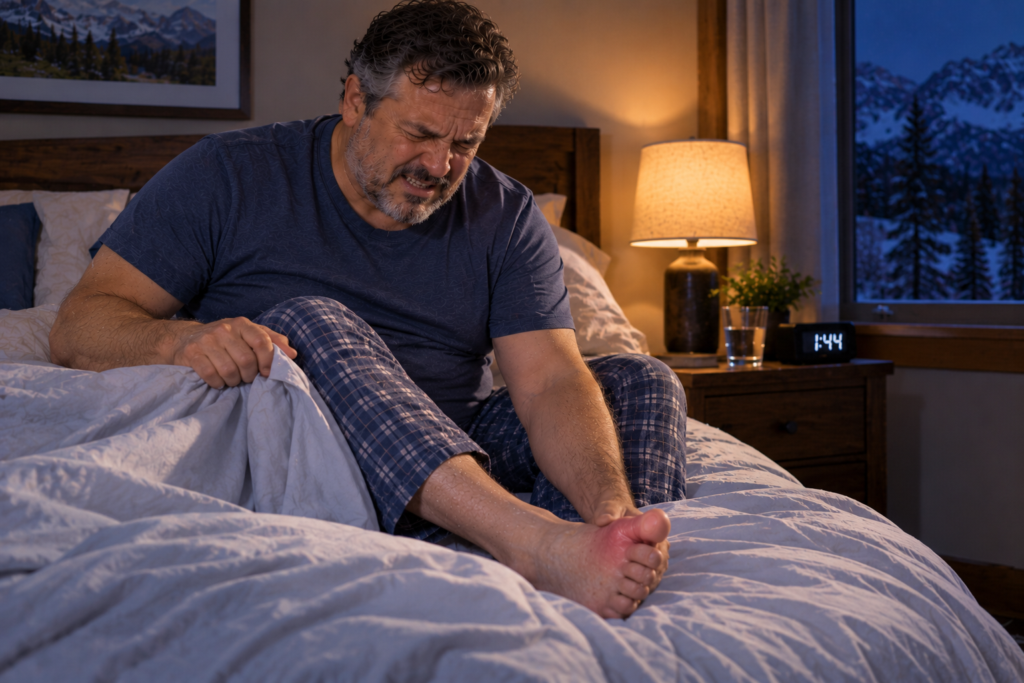
Even a bedsheet can feel too heavy. Someone might go to bed feeling fine, then wake up with a big toe that is hot, red, swollen, and so tender that even a light touch is painful. By morning, putting on a shoe or walking to the kitchen can seem impossible.
This is a classic sign of gout, a type of arthritis caused by uric acid crystals building up in a joint and triggering inflammation. According to UW Medicine, gout attacks usually affect one joint at a time, most often the big toe, and the first attack often starts at night. An attack usually goes away in five to ten days, but repeated attacks can damage the joint, cause hard lumps called tophi under the skin, and lead to kidney stones.
Uric acid builds up when the body produces too much or the kidneys don’t remove enough. Common triggers include alcohol (especially beer), organ meats, shellfish, sugary drinks, crash diets, dehydration, surgery, and sudden illness. Gout usually begins in men in midlife and becomes more common in women after menopause. It is also associated with high blood pressure, kidney disease, diabetes, and certain medications, such as some diuretics.
Traditional Chinese Medicine views gout as a type of Bi syndrome caused by Damp Heat. Rich foods and alcohol place strain on the Spleen, making it harder to process fluids. This creates Dampness, which combines with heat and settles in the joints of the feet. If the Kidney is weak, it cannot clear the resulting buildup. During an attack, heat dominates, and the joint becomes red, hot, and swollen. Between attacks, the focus is on clearing Dampness and strengthening the Spleen and Kidney to help prevent recurrence.
The nine points below clear heat during flares, drain Dampness, and support the Spleen and Kidney between attacks, with most of the work performed well away from the painful joint.
What Acupressure Points to Press and Why
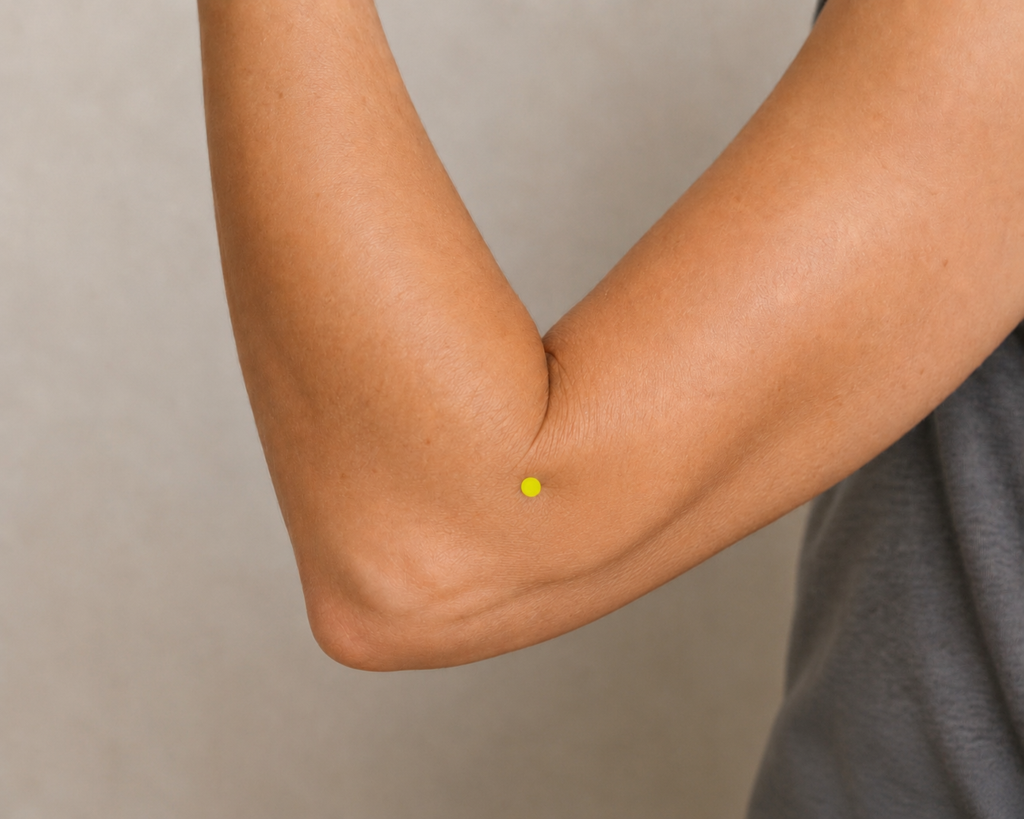
1. Press on LI11 at the outer elbow to clear heat. Bend the elbow and find the outer end of the elbow crease. LI11 sits midway between the end of the crease and the bony bump on the outer side of the elbow. Press firmly with the thumb of your other hand for one to two minutes on each arm. LI11 is called “Quchi,” the “Pool at the Bend.”
In Traditional Chinese Medicine, LI11 is a key point for clearing heat throughout the body. During a flare, when the joint is red, hot, and swollen, it is used to cool the heat from a distance, without touching the painful area.
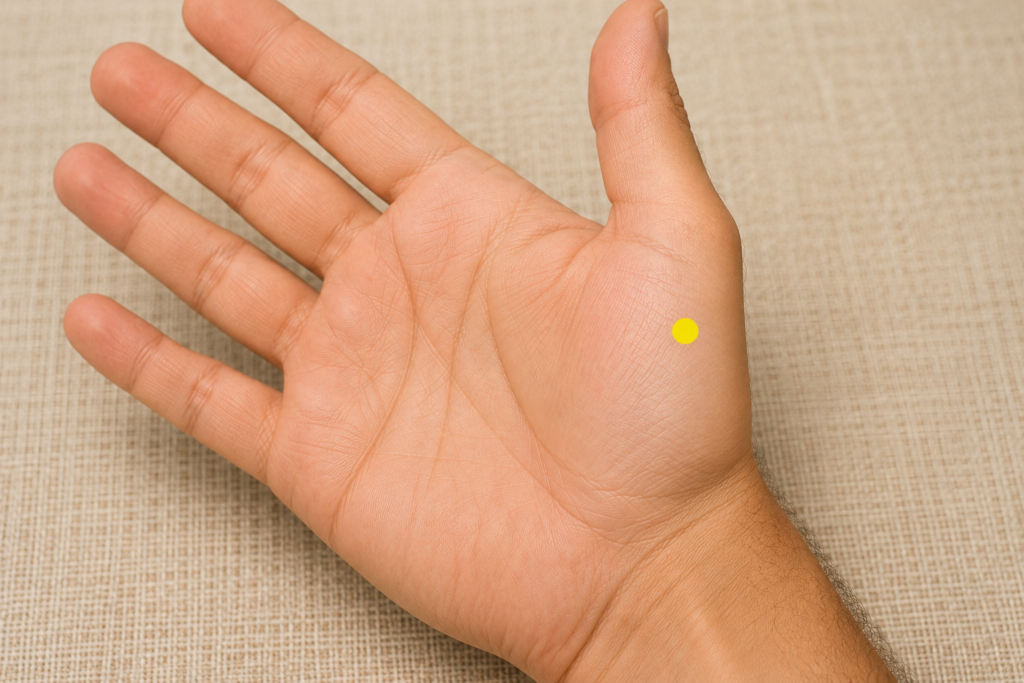
2. Press on LU10 at the base of the thumb on the opposite hand. LU10 sits on the palm side of the hand, on the edge of the bone at the base of the thumb, about halfway along it, where the smooth skin of the palm meets the skin of the back of the hand. Press firmly with the thumb of your other hand for one to two minutes on the hand opposite the painful foot, such as the left hand for a right big toe. LU10 is called “Yuji,” the “Fish Border.”
Traditional Chinese Medicine often treats joint pain by working on the corresponding joint on the opposite limb. The base of the thumb corresponds to the big toe, so during an attack, you can press LU10 without touching the toe. As the fire point of the Lung channel, LU10 also helps clear heat.
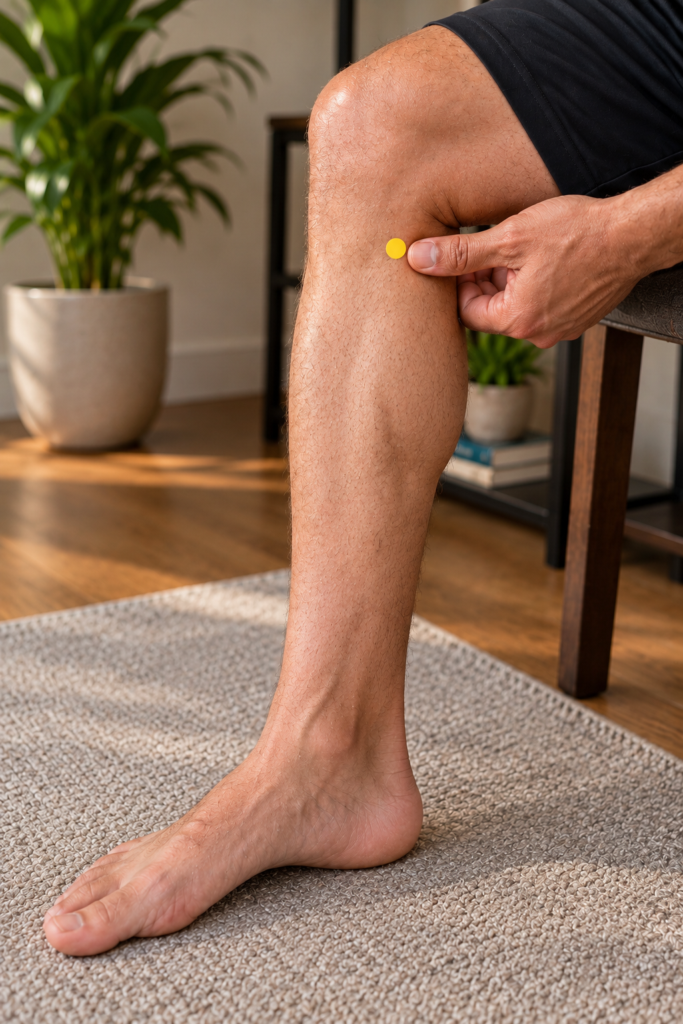
3. Press on SP9 below the inner knee to drain Damp Heat. SP9 sits on the inner side of the lower leg, in the hollow just below the knee where the bottom edge of the large bony knob of the shinbone curves upward. Slide your thumb up the inner edge of the shinbone until it stops, then press firmly for one to two minutes on each leg. SP9 is called “Yinlingquan,” the “Yin Mound Spring.”
In Traditional Chinese Medicine, SP9 is the primary point for draining Dampness, particularly Damp Heat in the lower body. It is commonly used for heat and swelling in the legs and feet, and is a key point for gout both during and between attacks.
4. Press on ST40 on the lower leg to clear the buildup behind repeated attacks. ST40 sits on the outer lower leg, midway between the knee and the outer ankle bone, about two finger-widths to the outside of the shinbone. Press firmly with your thumb for one to two minutes on each leg. ST40 is called “Fenglong,” the “Abundant Bulge.”
In Traditional Chinese Medicine, ST40 is the main point for resolving Phlegm and works with SP9 to clear Dampness. Because Damp Heat is considered the root of gout, ST40 helps clear the buildup that causes recurring attacks. It can be helpful during and between flares.
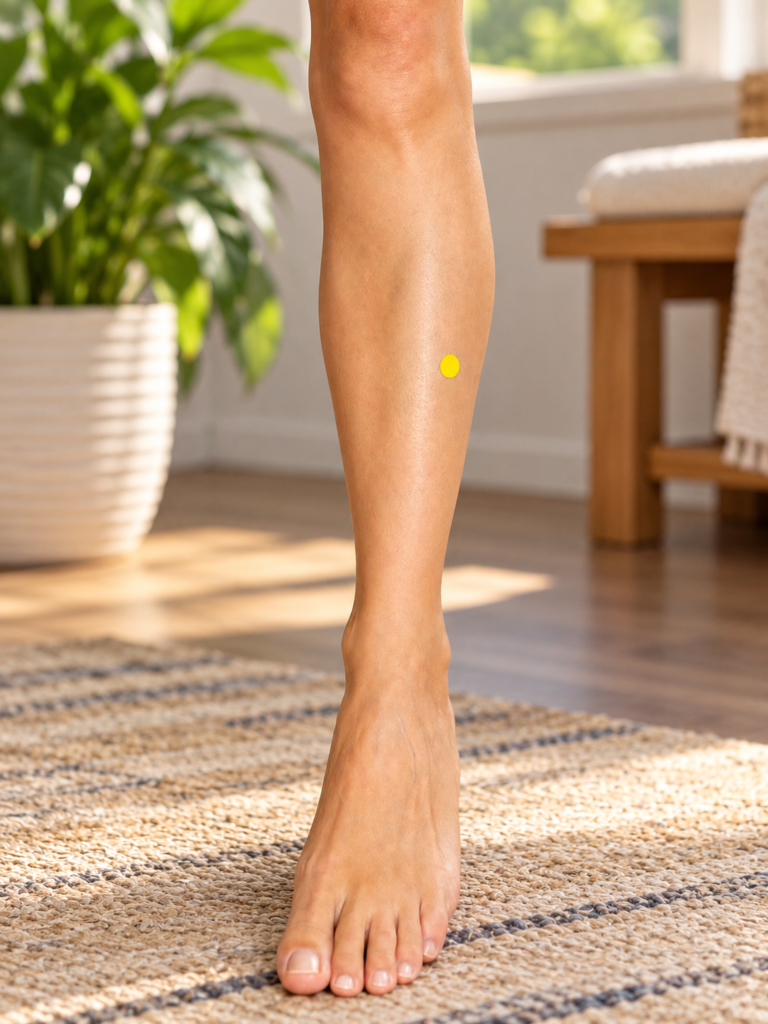
5. Press on SP6 above the inner ankle to strengthen the Spleen and move the Blood. SP6 sits four finger-widths up from the tip of the inner ankle bone, just behind the back edge of the shinbone. Press firmly with your thumb for one to two minutes on each leg. SP6 is called “Sanyinjiao,” the “Three Yin Intersection.” SP6 is avoided during pregnancy.
SP6 is where the Spleen, Liver, and Kidney channels converge. In Traditional Chinese Medicine, these three organs are most associated with gout. SP6 helps the Spleen transform Dampness, supports the Kidney, and promotes Blood flow through the lower leg and foot.
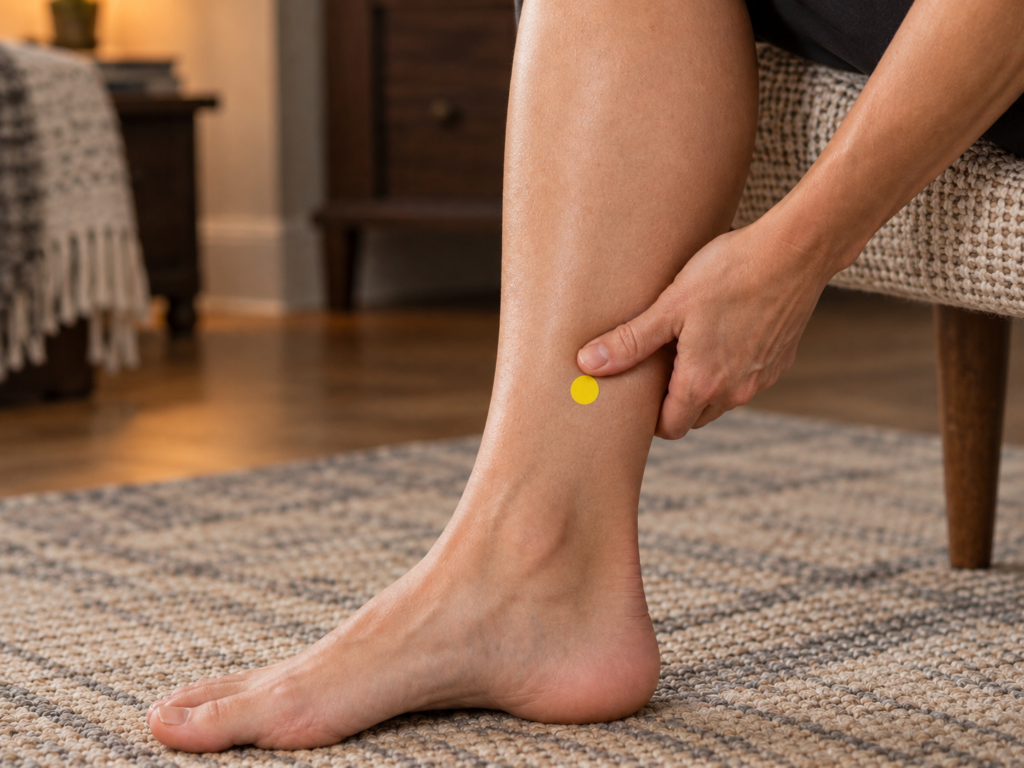
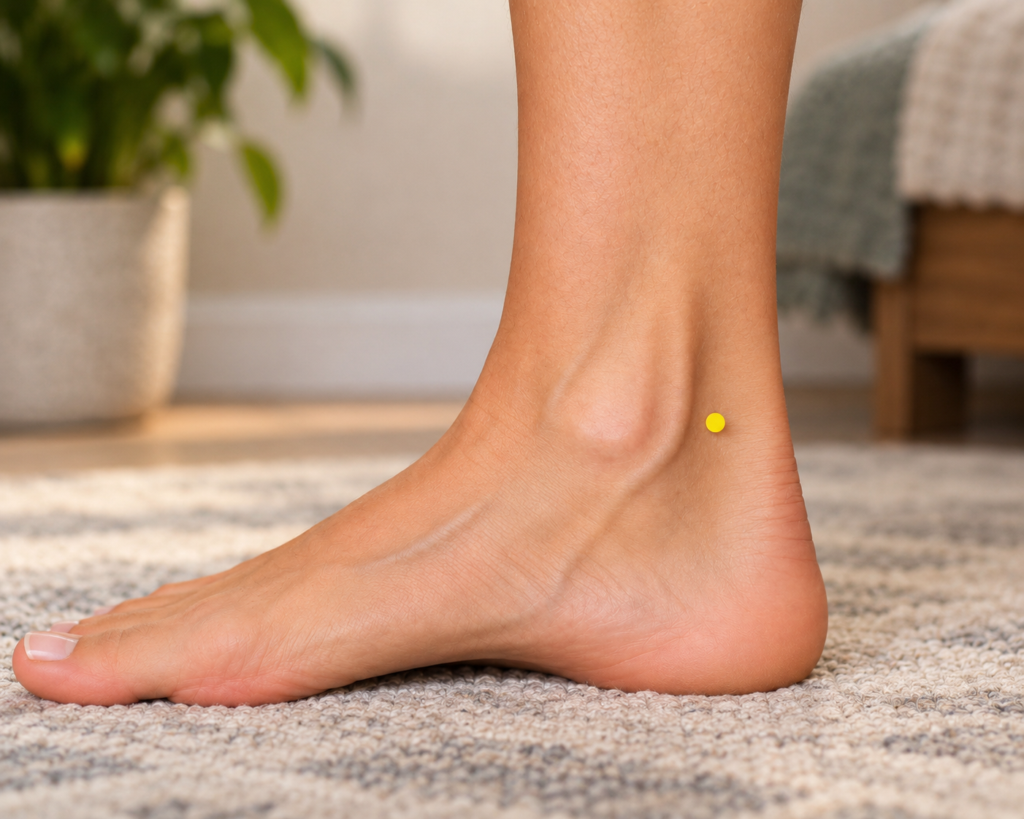
6. Press on KI3 behind the inner ankle to strengthen the Kidney. KI3 sits in the hollow between the inner ankle bone and the Achilles tendon, level with the tip of the ankle bone. Press firmly with your thumb for one to two minutes on each ankle. KI3 is called “Taixi,” the “Great Stream.”
KI3 is the Kidney’s source point and helps clear fluids from the body. It strengthens the Kidney between attacks and may ease lingering ankle and foot aches after a flare. If your ankle is swollen, press KI3 only on the other side until the swelling subsides.
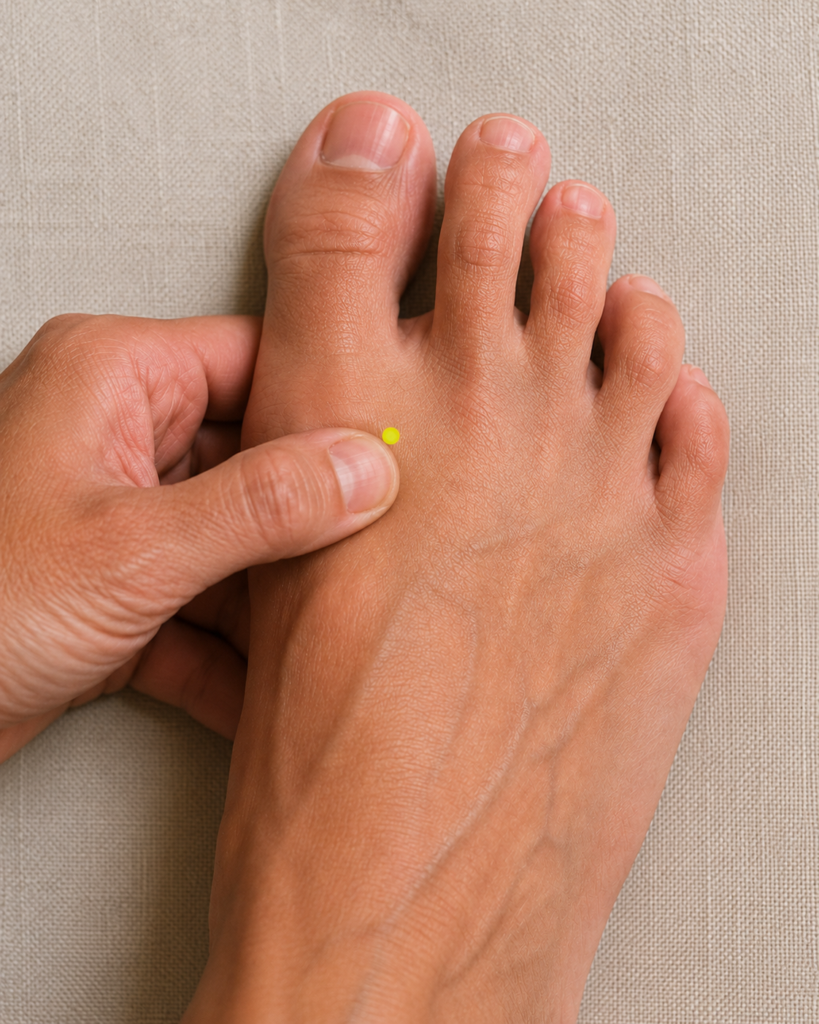
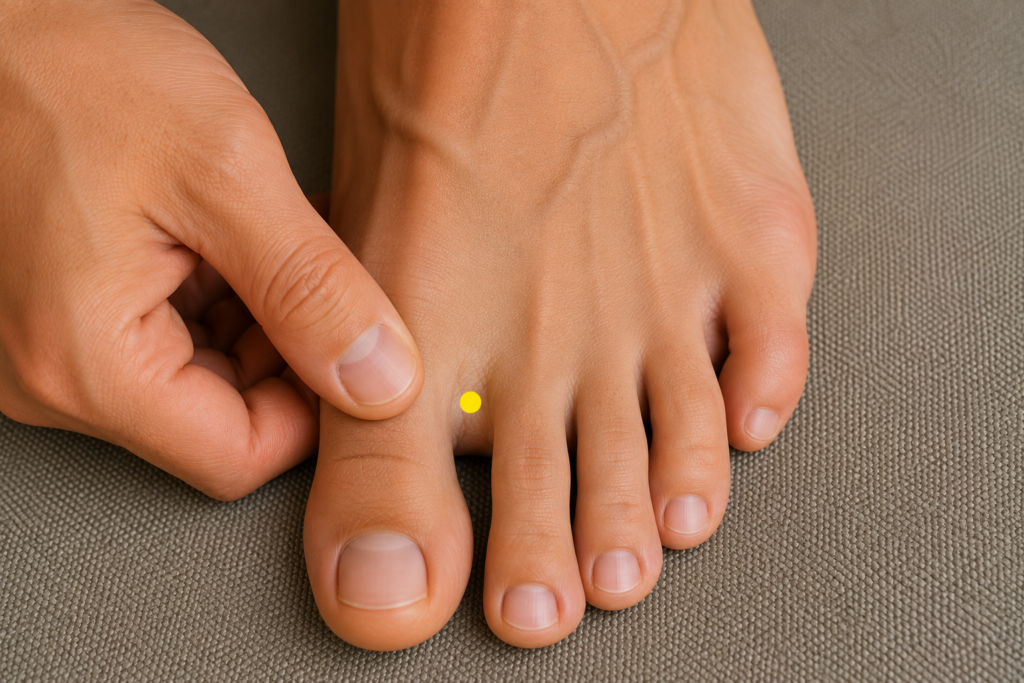
7. Press on LR3 on the top of the foot to ease pain and move the Qi. LR3 sits on the top of the foot, between the big toe and second toe, about two finger-widths back from the webbing, in the hollow just before the two bones meet. Press firmly with your thumb for one to two minutes on each foot. LR3 is called “Taichong,” the “Great Surge.”
LR3 is the Liver’s source point. Its channel begins at the big toe and runs across the top of the foot. LR3 helps move Qi and Blood through the foot to relieve pain and stiffness, and works well with LR2. Use LR3 between attacks, or only on the unaffected foot during a flare.
8. Press on ST44 between the second and third toes to cool a hot, swollen foot. ST44 sits on the top of the foot, at the end of the webbing between the second and third toes. Press gently with your fingertip for one to two minutes on each foot. ST44 is called “Neiting,” the “Inner Court.”
In Traditional Chinese Medicine, ST44 is a key point for clearing heat from the Stomach channel, which runs down the front of the leg and across the top of the foot. It is often used for red, swollen, and painful feet. Use ST44 between attacks, or on the unaffected foot during a flare if the surrounding area is swollen or tender.
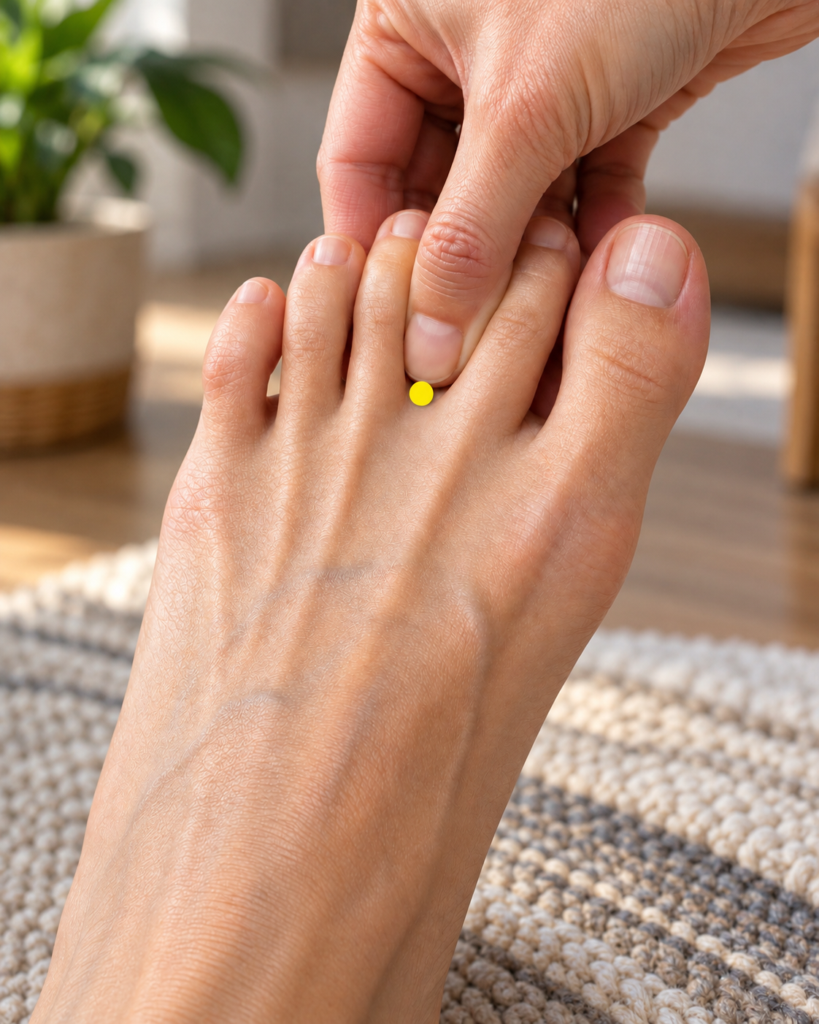
9. Press on LR2 between the big toe and second toe to clear heat from the lower body. LR2 sits on the top of the foot, at the end of the webbing between the big toe and second toe. Press gently with your fingertip for one to two minutes on each foot. LR2 is called “Xingjian,” the “Moving Between.”
LR2 is the fire point of the Liver channel and is a classic point for clearing heat from the lower body. Since the Liver channel starts at the big toe, LR2 is closely linked to the area most affected by gout. Use LR2 between attacks, or only on the unaffected foot during a flare.
Why These Acupressure Points Work
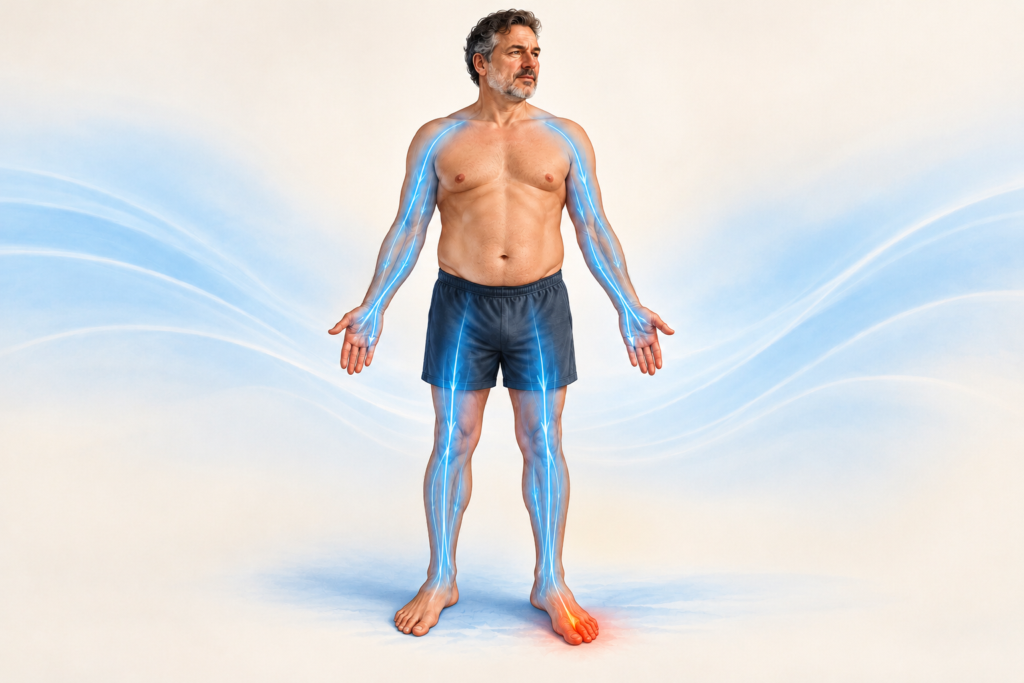
In Traditional Chinese Medicine, gout is understood as Damp Heat lodged in the joints, with the Spleen unable to manage Dampness and the Kidney unable to clear it effectively. The aim is to clear heat during attacks, drain Dampness, and strengthen the Spleen and Kidney to prevent it from building up again.
These nine points work together to cool flare-ups and reduce the buildup that causes them:
- The heat-clearing points (LI11, LU10, ST44, LR2) cool the inflammation of an attack, working from the elbow, the opposite hand, and the foot.
- The Dampness points (SP9, ST40) drain the Damp Heat behind repeated attacks.
- The Spleen and Kidney points (SP6, KI3) strengthen the organs that transform and clear fluids.
- The Liver point (LR3) moves the Qi and Blood through the foot and eases pain between attacks.
How to Properly Use These Acupressure Points

Acupressure for gout involves two stages: applying pressure to points away from the affected joint during an attack, followed by the full routine between attacks to help reduce the frequency of future flares.
- During an attack, never press on or near the inflamed joint. Use LI11, LU10 on the opposite hand, SP9, ST40, and SP6, holding each for one to two minutes, two or three times a day.
- Between attacks, work all nine points once daily, holding each for one to two minutes.
- Apply firm pressure to the arms and legs and light pressure to the feet, skipping any swollen or tender foot points. If you are pregnant, skip SP6.
- Practice consistently between attacks because the goal is to reduce how often and how severely flares recur.
Daily habits play a large part in preventing new attacks. Drink plenty of water to help your kidneys clear uric acid. Limit alcohol (especially beer and spirits), organ meats, shellfish, anchovies, sardines, and sugary drinks or foods with high-fructose corn syrup. Focus meals on vegetables, whole grains, legumes, and low-fat dairy. If needed, lose weight slowly, since crash diets can trigger attacks. Traditional Chinese Medicine recommends eating simple, warm meals and avoiding greasy, fried, and rich foods, which add Dampness and Heat. During an attack, rest and elevate your foot, keep bedsheets off your toe, and apply a cool compress to reduce heat.
Learn more about how much water you should drink.
When to Get Professional Help
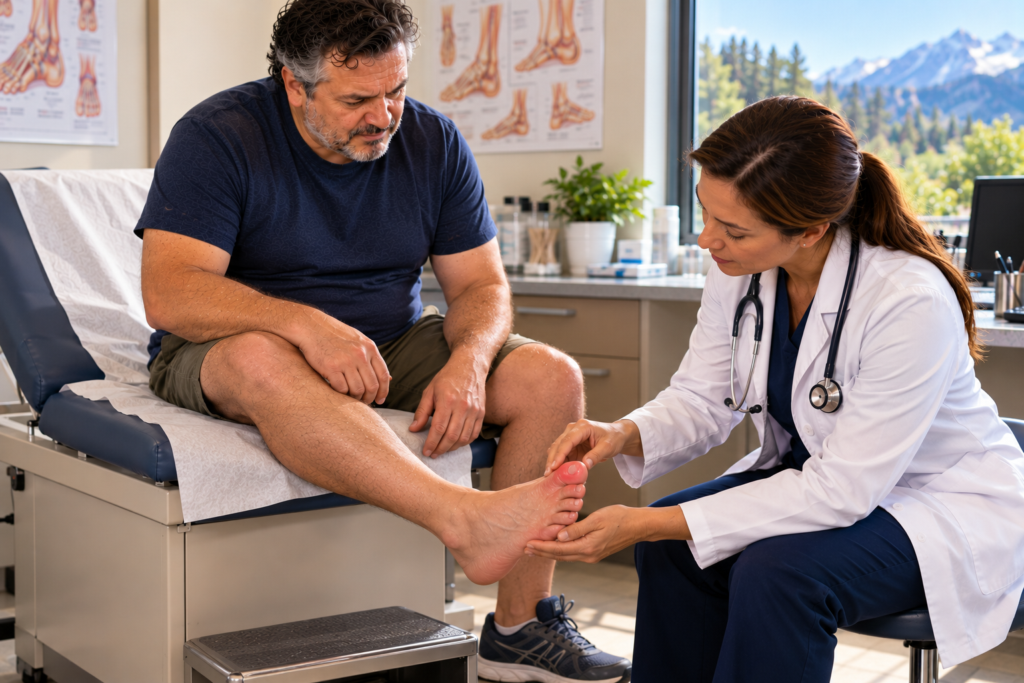
See a doctor right away during your first attack, since gout needs a proper diagnosis and other conditions, such as a joint infection, can look similar. Get emergency care if you have a hot, swollen joint with fever or chills, as this could indicate an infection. Work with your doctor if attacks keep coming back, if lumps form under your skin near the joints, or if you have kidney stones or kidney disease. Medicines that lower uric acid can prevent attacks and protect your joints and kidneys. Keep taking your prescribed medicines, and do not stop or change them during a flare without talking to your doctor. Ask about your other medicines too, since some, like certain diuretics, can raise uric acid levels.
Acupressure is a gentle, supportive practice for gout. It can help, but it does not replace diagnosis and medical care.
For related health concerns, acupressure for arthritis, acupressure for rheumatoid arthritis, and acupressure for ankle pain are companion articles. If gout comes with high blood pressure or blood sugar concerns, learn about acupressure for metabolic syndrome.
Above and Beyond Acupuncture offers acupuncture, cupping, and lifestyle coaching at the North Frank Lloyd Wright Boulevard location in Scottsdale.
Schedule an appointment online to start your healing journey.
The points above are only as effective as the technique used to apply them. Where to press, how firmly, and for how long all affect the result. For a full breakdown of how to perform acupressure properly at home, read Performing Acupressure in 3 Easy Steps.

About the Publisher
Paul Kerzner, L.Ac., is a licensed acupuncturist and board-certified herbalist, as well as the founder of Above and Beyond Acupuncture in Scottsdale. His own journey from chronic patient to practicing acupuncturist shapes his commitment to providing honest, clinically grounded information about acupuncture and Traditional Chinese Medicine. Learn more about Paul and his clinical approach on the About Us page.