Key Takeaways
- Rheumatoid arthritis is the most common autoimmune form of arthritis, in which the immune system attacks the body’s own tissues, inflaming the joints and causing pain, swelling, and stiffness.
- It usually affects the small joints of the hands and feet on both sides of the body, often with morning stiffness lasting longer than an hour, fatigue, and periodic flares.
- In Traditional Chinese Medicine, it is classified as Bi syndrome, an obstruction of Qi and Blood in the joints caused by Wind, Cold, Dampness, or Heat. Over time, this condition drains the Blood and weakens the Spleen, Liver, and Kidney.
- Nine acupressure points relieve pain and stiffness in the shoulders, wrists, hands, knees, ankles, and feet, while clearing heat during flares, resolving Dampness, and nourishing the Blood.
- Acupressure supports comfort and mobility alongside, not in place of, care from a rheumatologist, since early medical treatment helps prevent lasting joint damage.

Mornings are the worst. Fingers are thick and stiff, wrists are completely uncooperative, and the first few steps out of bed land on very sore, very tender feet. It can take an hour or more of just moving around before the joints loosen enough to button a shirt, turn a key, or grip a coffee mug.
This is not the wear-and-tear arthritis associated with age. According to the American College of Rheumatology, rheumatoid arthritis (RA) is the most common autoimmune form of arthritis, a condition in which the immune system attacks the body’s own tissues. About 75 percent of patients are women, and symptoms usually begin between ages 30 and 50. Swelling and pain in the small joints of the hands and feet are common. The same joints are usually affected on both sides of the body, and morning stiffness often lasts longer than an hour.
The inflammation can affect the whole body, so many people also experience profound fatigue, low-grade fevers, and a general feeling of being unwell during flares. Periods of relative calm can last for weeks or even months before the joints flare up again. Early diagnosis and appropriate treatment can go a long way toward alleviating symptoms and preventing joint damage, making ongoing care with a rheumatologist especially important.
In Traditional Chinese Medicine, rheumatoid arthritis is considered Bi syndrome, a painful obstruction of Qi and Blood in the joints. Wind, Cold, and Dampness can become lodged in the channels, causing stiff, aching joints that worsen in cold, damp weather. A hot, red, swollen flare-up is considered Damp Heat. Over time, chronic obstruction depletes the Liver and Kidney, which nourish the sinews and bones, and leads to Blood Stagnation, making the joints progressively stiffer and harder to move.
The nine points below target the joints most often affected, from the shoulders and wrists to the hands, knees, ankles, and feet. They also clear heat, resolve Dampness, and nourish the Blood.
What Acupressure Points to Press and Why
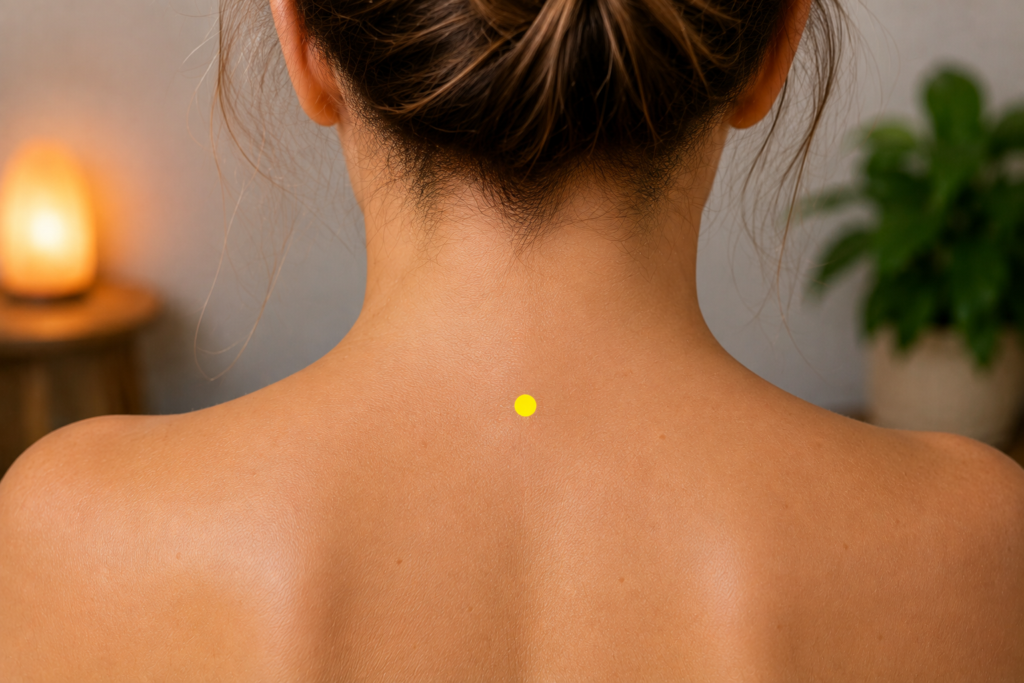
1. Press on GV14 at the base of the neck to clear heat during flares. GV14 sits on the midline at the base of the neck, in the hollow just below the most prominent bone that sticks out when you bend your head forward. Press gently with your fingertips for one to two minutes. GV14 is called “Dazhui,” the “Great Vertebra.”
GV14 is where all the Yang channels converge, making it one of the most important points in Traditional Chinese Medicine for clearing heat. During a flare, when the joints are hot and inflamed and the body feels feverish or run down, GV14 is used to clear heat and support the body’s defense.
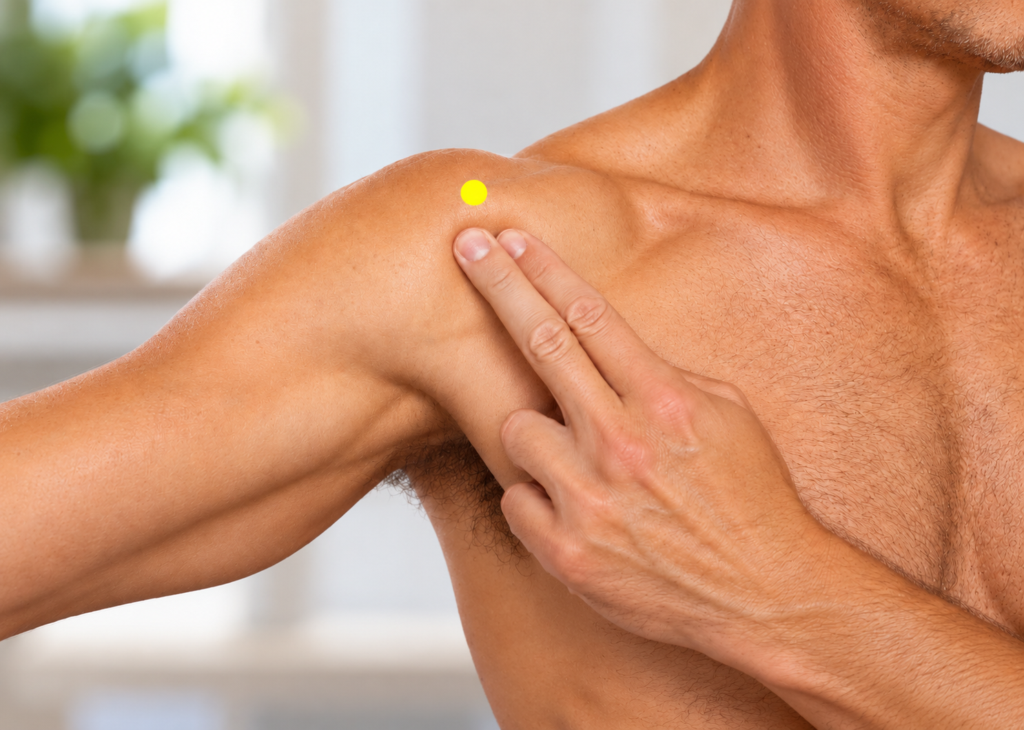
2. Press on LI15 at the front of the shoulder to ease stiff shoulders. LI15 sits at the front of the shoulder. Raise your arm out to the side, and a hollow forms just in front of and below the bony tip of the shoulder. LI15 sits in that hollow. Lower the arm and press firmly with the fingertips of your other hand for one to two minutes on each shoulder. LI15 is called “Jianyu,” the “Shoulder Bone.”
LI15 is a classic point for Bi syndrome affecting the shoulder and arm, traditionally used to address pain, stiffness, and difficulty raising the arm. RA often affects both shoulders, and LI15 is used to move Qi and Blood through the joint, helping it move more freely.
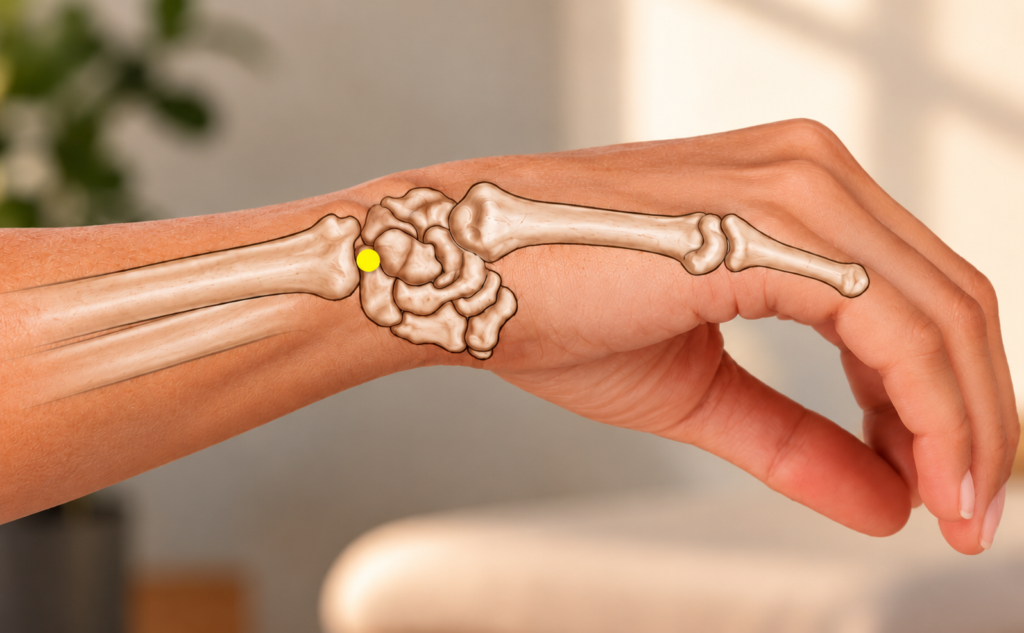
3. Press on SI5 on the pinky side of the wrist to relieve wrist pain. SI5 sits on the pinky side of the wrist, in the hollow between the round bony bump at the end of the forearm and the small wrist bone just beyond it. Press gently with the thumb of your other hand for one to two minutes on each wrist. SI5 is called “Yanggu,” the “Yang Valley.”
The wrists are among the joints most commonly affected by RA. SI5 is the fire point of the Small Intestine channel and is traditionally used for wrist pain and swelling, as well as heat in the body. It may therefore be useful for treating the wrist itself and during a flare. If the wrist is hot or swollen, press gently around the joint rather than directly into it.
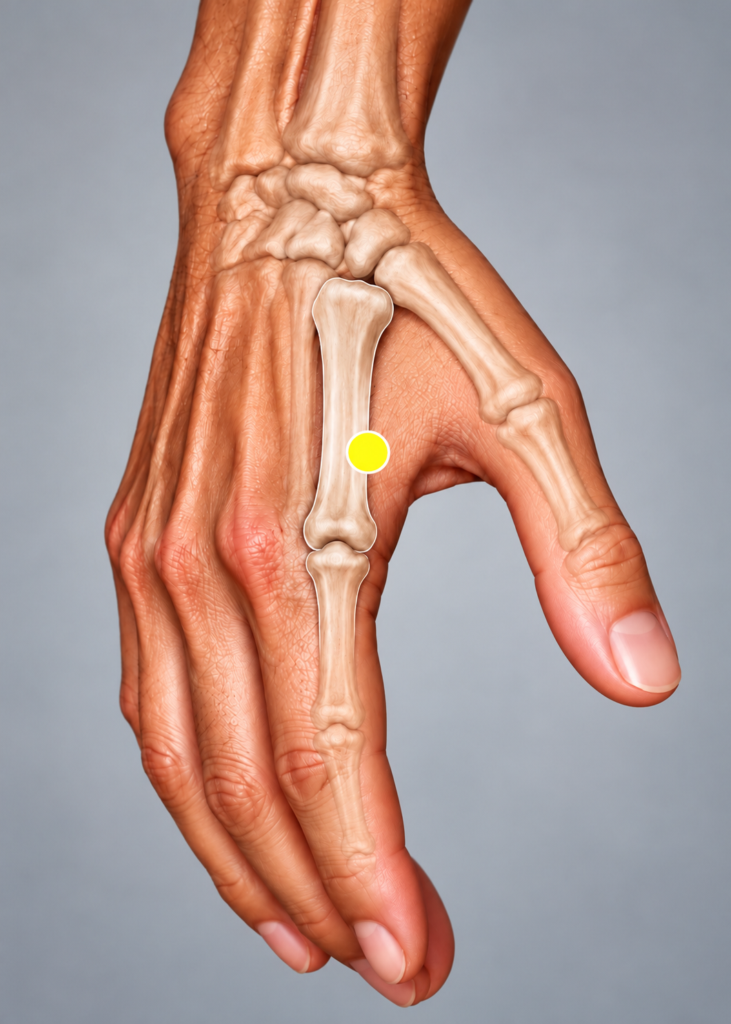
4. Press on LI3 behind the index knuckle to ease stiff hands. LI3 sits on the thumb side of the hand, just behind the knuckle of the index finger, in the hollow at the edge of the bone. Make a loose fist to find it, then press gently with the thumb of your other hand for one to two minutes on each hand. LI3 is called “Sanjian,” the “Third Space.”
The knuckles are often among the first joints affected by RA. Traditionally, LI3 is used to ease swelling and pain on the back of the hand, as well as finger stiffness. It helps move Qi and Blood through the knuckles, allowing the hand to open and close properly.
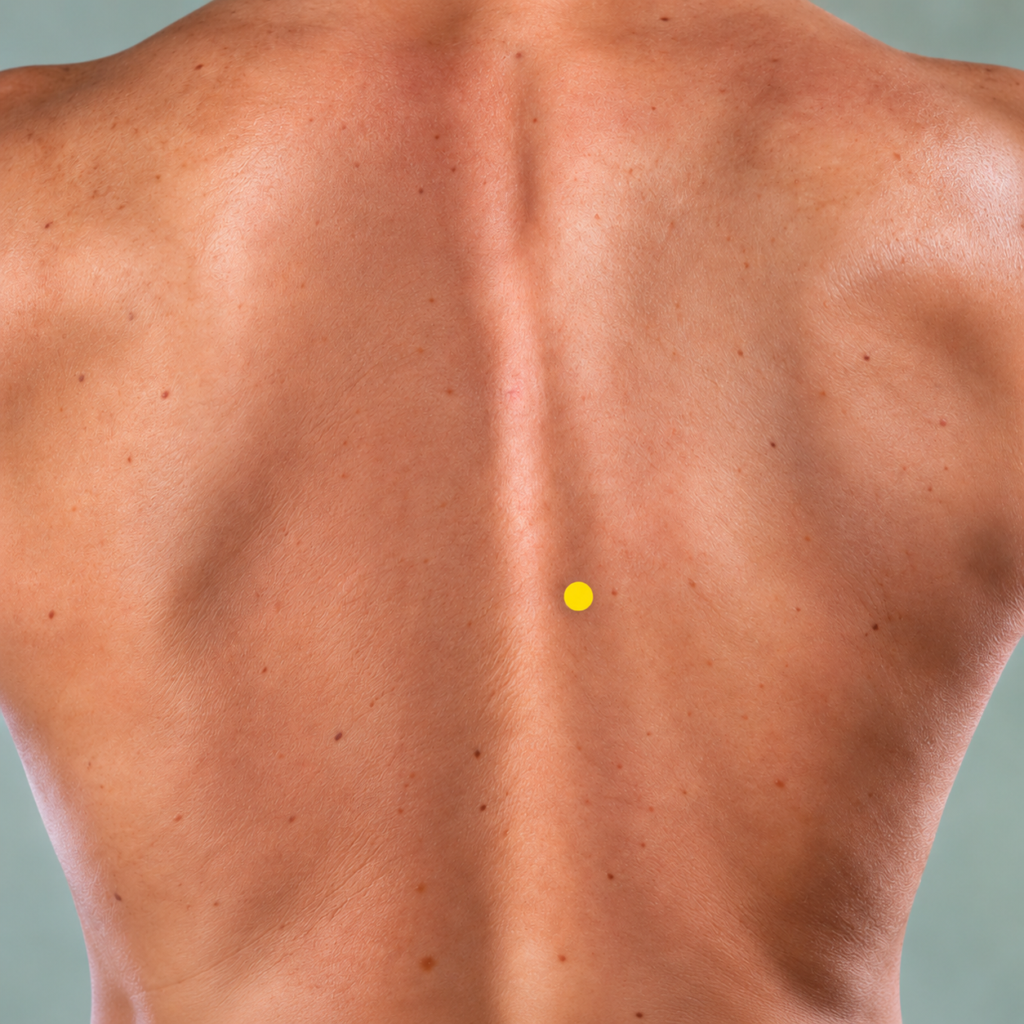
5. Press on BL17 on the middle back to nourish and move the Blood. BL17 sits on the middle back, about two finger-widths to each side of the spine, roughly level with the bottom tips of the shoulder blades. Place a tennis ball between your back and a wall, lean into it gently, and hold for one to two minutes on each side. BL17 is called “Geshu,” the “Diaphragm Transport Point.”
A classic Traditional Chinese Medicine principle is that to treat Wind, you first treat the Blood. BL17 is the influential point of the Blood; it both nourishes the Blood and keeps it in motion. It helps clear the stagnation that develops with long-standing joint pain and supports the sinews and joints as a whole.
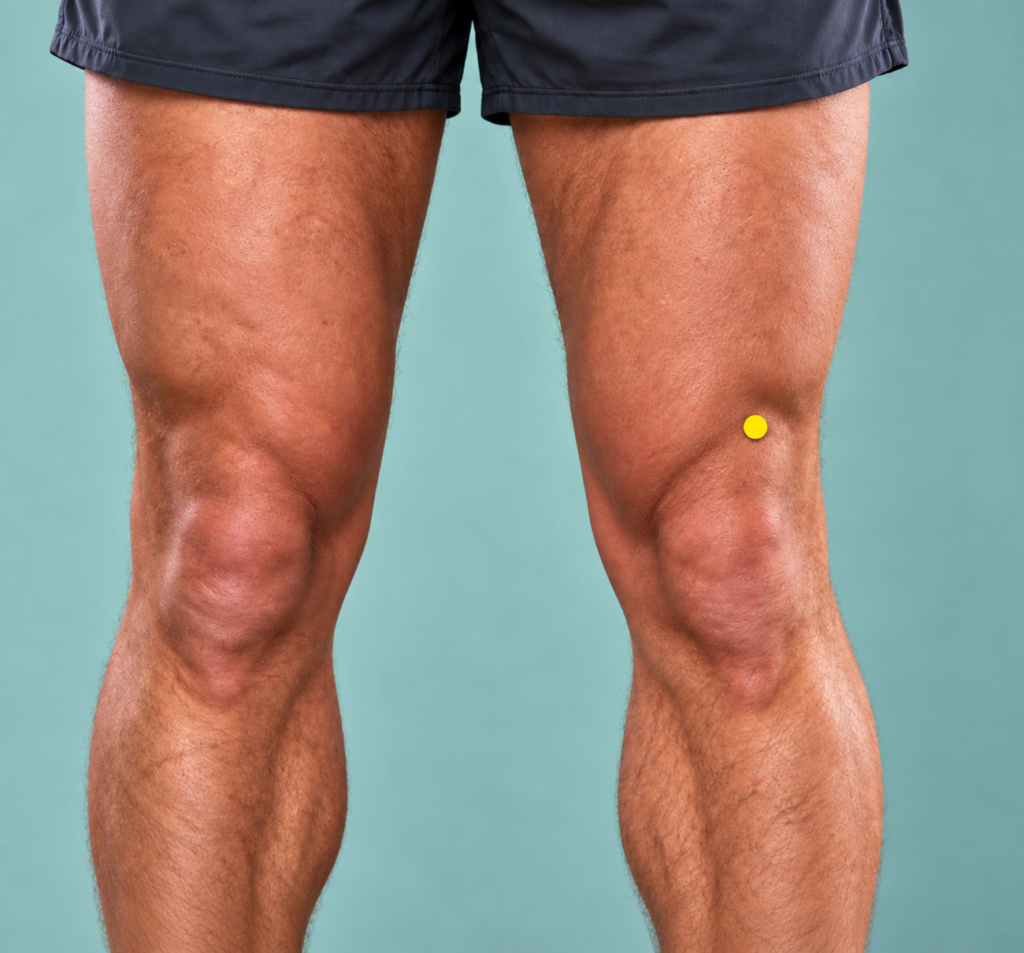
6. Press on ST34 above the knee to relieve knee flares. ST34 sits on the front of the thigh, about three finger-widths above the outer upper corner of the kneecap, in the groove of the thigh muscle. Press firmly with your thumb for one to two minutes on each leg. ST34 is called “Liangqiu,” the “Ridge Mound.”
ST34 is the Cleft point of the Stomach channel. Cleft points are traditionally used for acute pain, and ST34 is a classic point for knee pain and swelling. It helps support the knees during flares, when walking or climbing stairs can be very difficult.
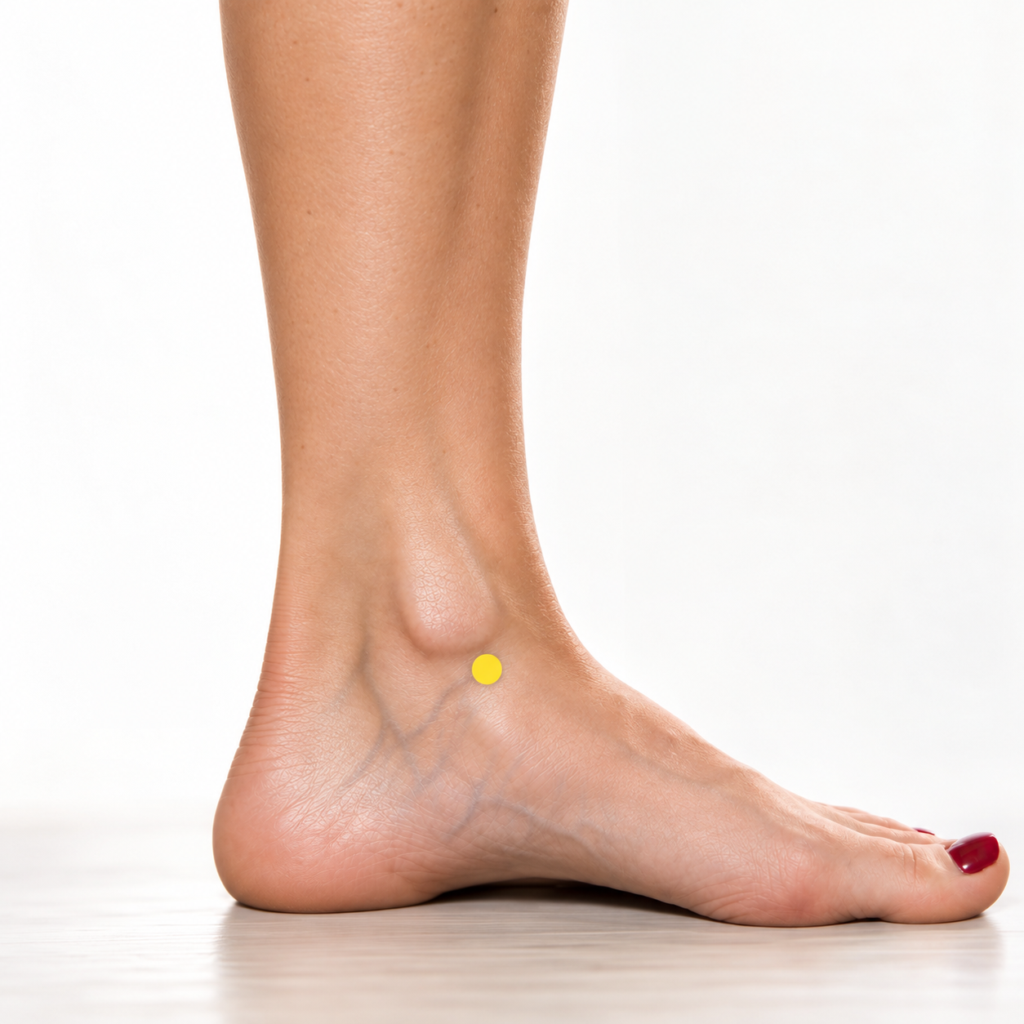
7. Press on SP5 in front of the inner ankle to clear Dampness from the joints. SP5 sits in the hollow just in front of and below the inner ankle bone. Press firmly with your thumb for one to two minutes on each ankle. SP5 is called “Shangqiu,” the “Shang Mound.”
SP5 is traditionally used for ankle pain and swelling, as well as Dampness settling in the joints, which can make them feel heavy and puffy. It helps the Spleen clear Dampness, particularly when stiffness worsens in damp weather.
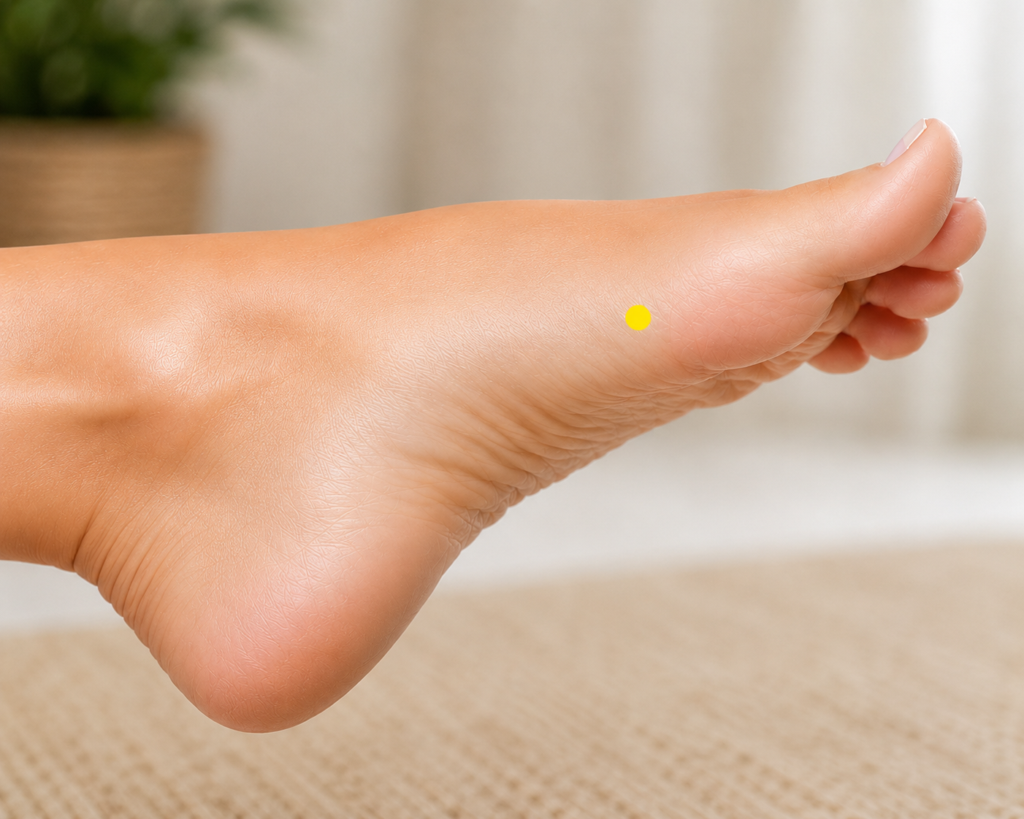
8. Press on SP3 beside the big toe joint to strengthen the Spleen. SP3 sits on the inner edge of the foot, just behind the big toe joint, in the hollow where the smooth skin of the sole meets the top of the foot. Press firmly with your thumb for one to two minutes on each foot. SP3 is called “Taibai,” the “Supreme White.”
SP3 is the Spleen’s source point and is used in Traditional Chinese Medicine to transform Dampness. It’s located beside the big toe joint, which RA commonly affects, and may help the joint itself while strengthening the Spleen to alleviate associated heaviness and fatigue.
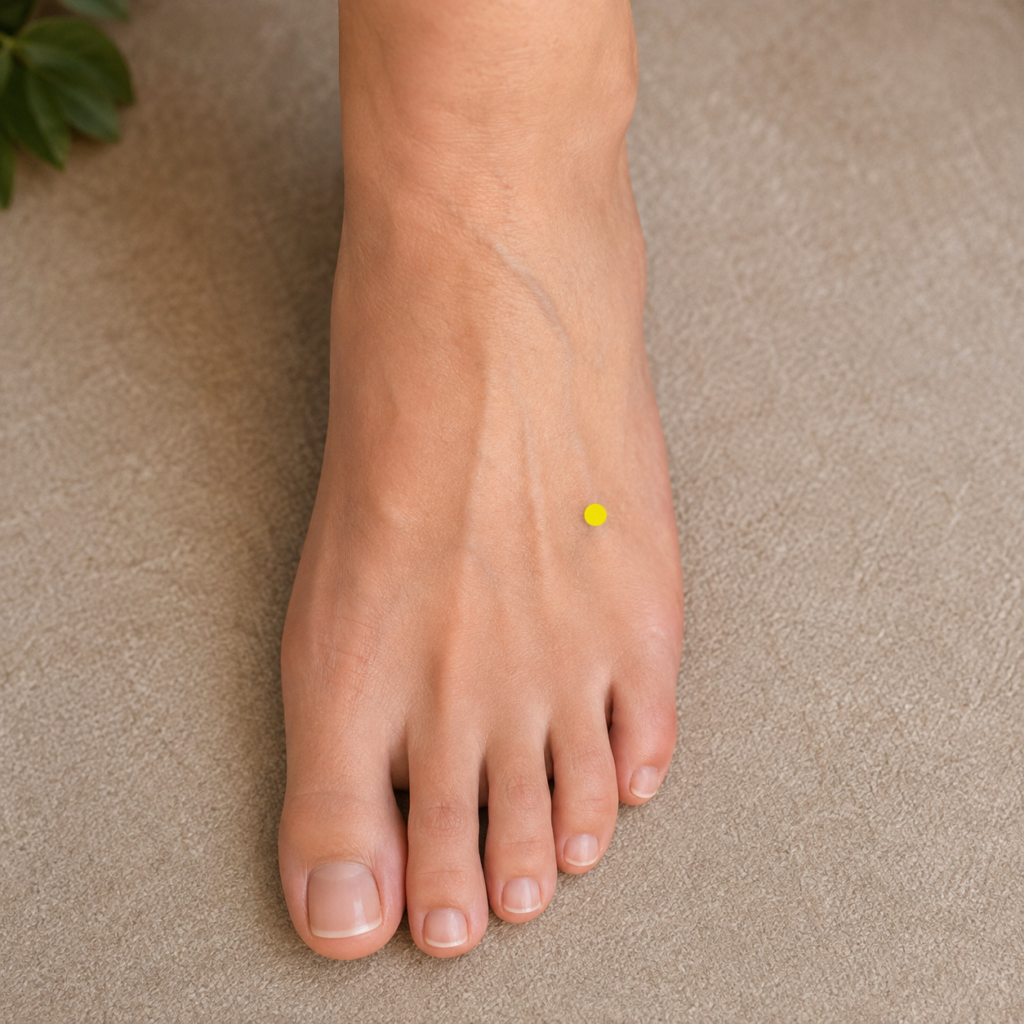
9. Press on GB41 on the top of the foot to ease sore feet. GB41 sits on the top of the foot, in the hollow just in front of where the bones leading to the fourth and fifth toes meet, on the outer side of the small tendon to the little toe. Press firmly with your thumb for one to two minutes on each foot. GB41 is called “Zulinqi,” the “Foot Governor of Tears.”
GB41 is traditionally used for foot pain and swelling, as well as joint pain that moves from one area to another. It helps move Qi down the Gallbladder channel and ease stiffness across the ball of the foot, which can make those first steps in the morning so painful.
Why These Acupressure Points Work
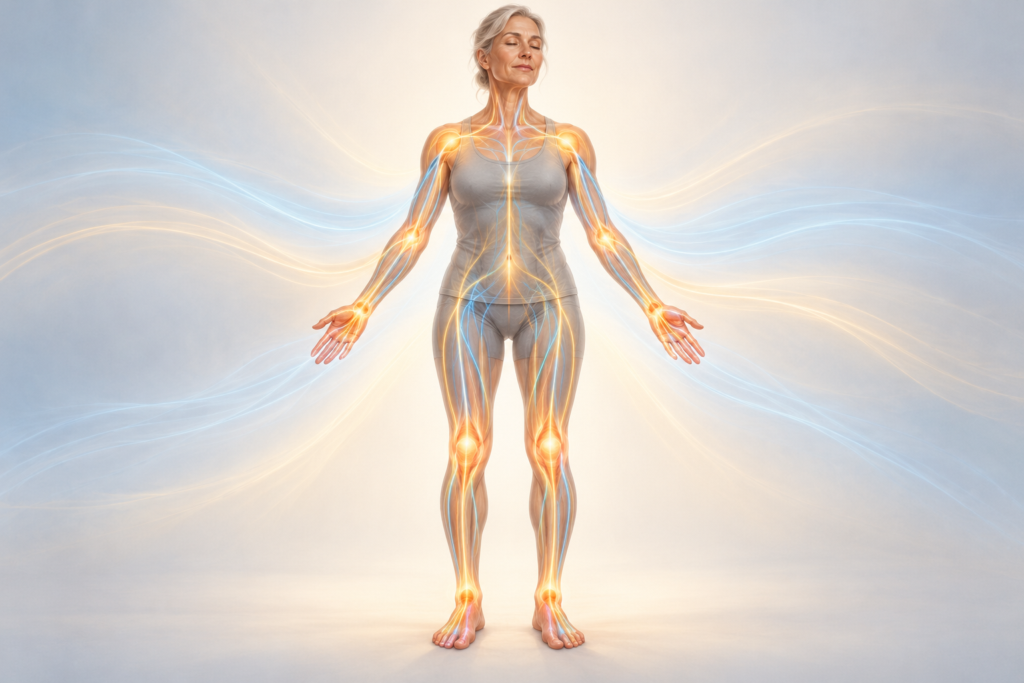
In Traditional Chinese Medicine, rheumatoid arthritis is considered Bi syndrome, in which Wind, Cold, Dampness, and/or Heat obstruct the flow of Qi and Blood through the joints. Over time, the disease depletes the Blood and weakens the Spleen, Liver, and Kidney. The most useful approach is to combine points around the affected joint with points that clear Heat, resolve Dampness, and nourish the Blood.
The nine points work together to relieve pressure on the joints and support the body as a whole.
- The upper body joint points (LI15, SI5, LI3) ease pain and stiffness in the shoulders, wrists, and hands.
- The lower body joint points (ST34, SP5, GB41) relieve the knees, ankles, and feet.
- The Dampness and Blood points (SP3, BL17) ease heaviness and swelling and nourish the sinews and joints.
- The heat-clearing point (GV14) helps cool the body during flares.
How to Properly Use These Acupressure Points
Acupressure for rheumatoid arthritis is most effective as a daily routine tailored to the condition of the joints each day, with a more thorough approach on better days and a lighter one during flares.
- Complete the full routine once daily, holding each point for one to two minutes. If possible, perform it in the morning after a warm shower to help relieve stiffness.
- During a flare, focus on GV14, BL17, and points away from the inflamed joints. Apply gentle pressure around hot or swollen joints rather than directly on them.
- Apply gentle pressure to the hands, wrists, and feet, and firmer pressure to the shoulders, back, and legs, provided those areas are not inflamed.
- Practice consistently for several weeks in conjunction with your prescribed treatment, and record the duration of morning stiffness to monitor any changes.
Daily habits can go a long way toward protecting your joints and easing stiffness. Start the day with a warm shower or soak your hands and feet in warm water, then do some gentle range-of-motion exercises. Stay active with low-impact exercise, such as walking, swimming, tai chi, or qigong, and rest when your joints are inflamed. Use jar openers, padded grips, and supportive shoes to reduce strain on small joints. Eat warm, cooked foods with plenty of vegetables, legumes, whole grains, and fish. Avoid sugar, alcohol, and fried or processed foods (Traditional Chinese Medicine would say these add Dampness and Heat). If you smoke, quitting is one of the most important things you can do, as smoking is associated with more severe RA. For more on how ultra-processed food fuels inflammation see the link.
When to Get Professional Help

Consult a rheumatologist if joint pain, swelling, and stiffness affect both sides of your body, persist for more than a few weeks, or are accompanied by morning stiffness lasting longer than an hour. Early diagnosis and treatment can help prevent permanent joint damage. Continue taking your prescribed medications, and consult your rheumatologist before making any changes. Seek prompt medical care if a flare does not subside or if a single joint suddenly becomes hot, red, and severely painful, particularly if accompanied by a fever, as this may indicate an infection. Inform your care team if you experience shortness of breath, a persistent cough, chest pain, dry or red eyes, or numbness in your hands or feet, as rheumatoid arthritis can affect other parts of the body. If you take medications that suppress your immune system, promptly report any fever or signs of infection.
Acupressure is a gentle, supportive practice for rheumatoid arthritis. It may complement, but should not replace, diagnosis and medical care.
For related health concerns, acupressure for arthritis, acupressure for osteoarthritis, and acupressure for psoriatic arthritis are companion articles. If persistent exhaustion is part of the picture, learn about acupressure for fatigue.
Above and Beyond Acupuncture offers acupuncture, cupping, and lifestyle coaching at the North Frank Lloyd Wright Boulevard location in Scottsdale.
Schedule an appointment online to start your healing journey.
The points above are only as effective as the technique used to apply them. Where to press, how firmly, and for how long all affect the result. For a full breakdown of how to perform acupressure properly at home, read Performing Acupressure in 3 Easy Steps.

About the Publisher
Paul Kerzner, L.Ac., is a licensed acupuncturist and board-certified herbalist, as well as the founder of Above and Beyond Acupuncture in Scottsdale. His own journey from chronic patient to practicing acupuncturist shapes his commitment to providing honest, clinically grounded information about acupuncture and Traditional Chinese Medicine. Learn more about Paul and his clinical approach on the About Us page.