Key Takeaways
- Gastritis is inflammation of the stomach lining, most often caused by an infection with Helicobacter pylori bacteria, with regular use of anti-inflammatory pain relievers and alcohol among the other common irritants.
- It can cause burning or gnawing pain in the upper abdomen, nausea, feeling full too soon, and loss of appetite, although many people have no symptoms at all.
- In Traditional Chinese Medicine, gastritis pain usually reflects Heat in the Stomach, the Liver Qi invading the Stomach under stress, or a weak and cold Spleen and Stomach.
- Nine acupressure points on the abdomen, back, arms, legs, and feet help calm stomach pain, settle nausea, clear Heat, ease stress, and strengthen digestion.
- Acupressure for gastritis works best alongside medical care, and black stools, vomiting blood, or severe abdominal pain need emergency care right away.

The stomach lining has one of the body’s toughest jobs: it holds acid strong enough to break down a meal, while a protective layer of mucus keeps the acid from harming the stomach itself. When that protection wears thin or the lining becomes inflamed, gastritis can develop, causing a gnawing or burning ache in the upper abdomen that may linger for weeks or keep coming back.
According to the National Institute of Diabetes and Digestive and Kidney Diseases, infection with Helicobacter pylori bacteria is the most common cause of gastritis. Long-term use of nonsteroidal anti-inflammatory drugs (NSAIDs) such as ibuprofen and aspirin, alcohol, and bile flowing backward into the stomach can also irritate and damage the lining. Many people have no symptoms; others notice pain or discomfort in the upper abdomen, nausea or vomiting, feeling full too soon during a meal, loss of appetite, or weight loss.
Because its symptoms overlap with ordinary indigestion, gastritis can be mistaken for a passing upset stomach. Getting a clear diagnosis matters: H. pylori requires medication, and ongoing stomach pain deserves a definite answer. Once the cause is known, there are many things you can do each day to soothe the stomach and help its lining heal.
Traditional Chinese Medicine describes the Stomach as an organ that prefers moisture and directs its Qi downward, moving food through to the intestines. Burning pain, sour belching, and thirst suggest Heat in the Stomach, often caused by spicy foods, alcohol, or irregular meals. Pain that worsens with stress and is accompanied by belching or tightness under the ribs suggests Liver Qi invading the Stomach. A dull, lingering ache that improves with warmth and food suggests a weak, cold Spleen and Stomach.
The following nine points calm stomach pain, clear Heat, reduce stress that exacerbates stomach symptoms, and support digestion as the lining recovers.
What Acupressure Points to Press and Why
1. Press on CV12 on the upper abdomen to calm stomach pain. CV12 sits on the midline of the upper abdomen, halfway between the navel and the bottom of the breastbone. Rest your fingertips on the point and press gently, or make slow circles, for one to two minutes. Avoid this point right after a large meal, and keep the pressure light if the area is tender. CV12 is called “Zhongwan,” the “Middle Cavity.”
CV12 is the front collecting point of the Stomach, where Stomach Qi gathers in the abdomen. It is also the influential point of the hollow digestive organs. In Traditional Chinese Medicine, CV12 is used to address stomach pain, fullness, nausea, and belching. It can help calm an inflamed stomach and strengthen it over time.

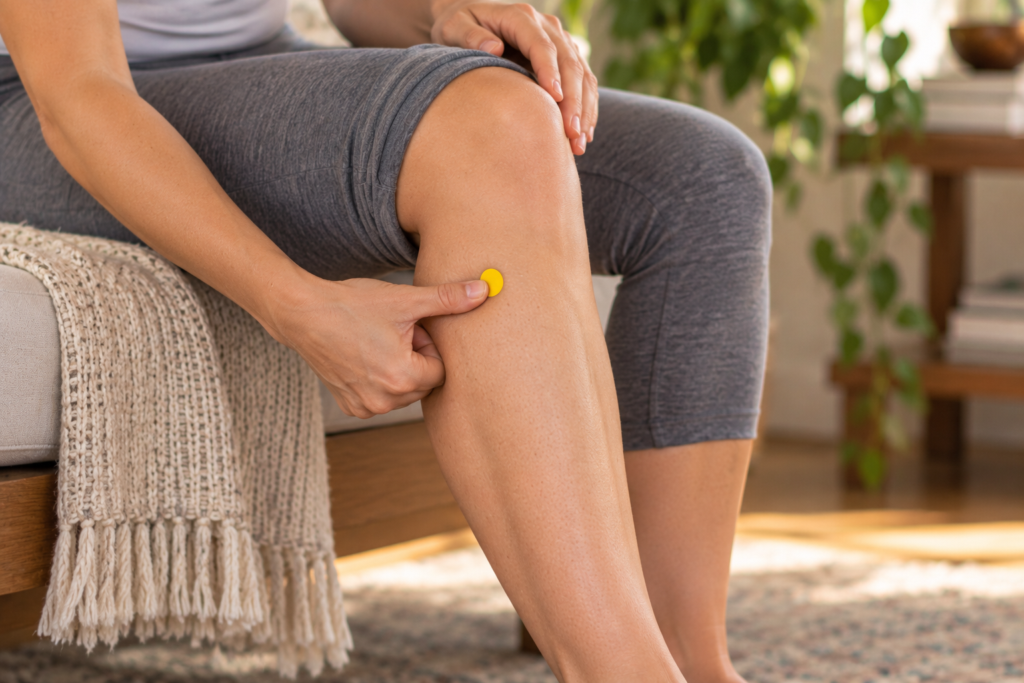
2. Press on ST36 below the knee to strengthen the stomach. ST36 sits four finger-widths below the bottom of the kneecap, about one finger-width to the outside of the shinbone. Press firmly with your thumb for one to two minutes on each leg. ST36 is called “Zusanli,” the “Leg Three Miles.”
ST36 is the most commonly used point in Traditional Chinese Medicine for digestive issues. It strengthens the Spleen and Stomach, supports the downward movement of Stomach Qi, and eases stomach pain, nausea, and bloating. It can be especially helpful when gastritis is accompanied by tiredness, poor appetite, or a dull, recurring ache.
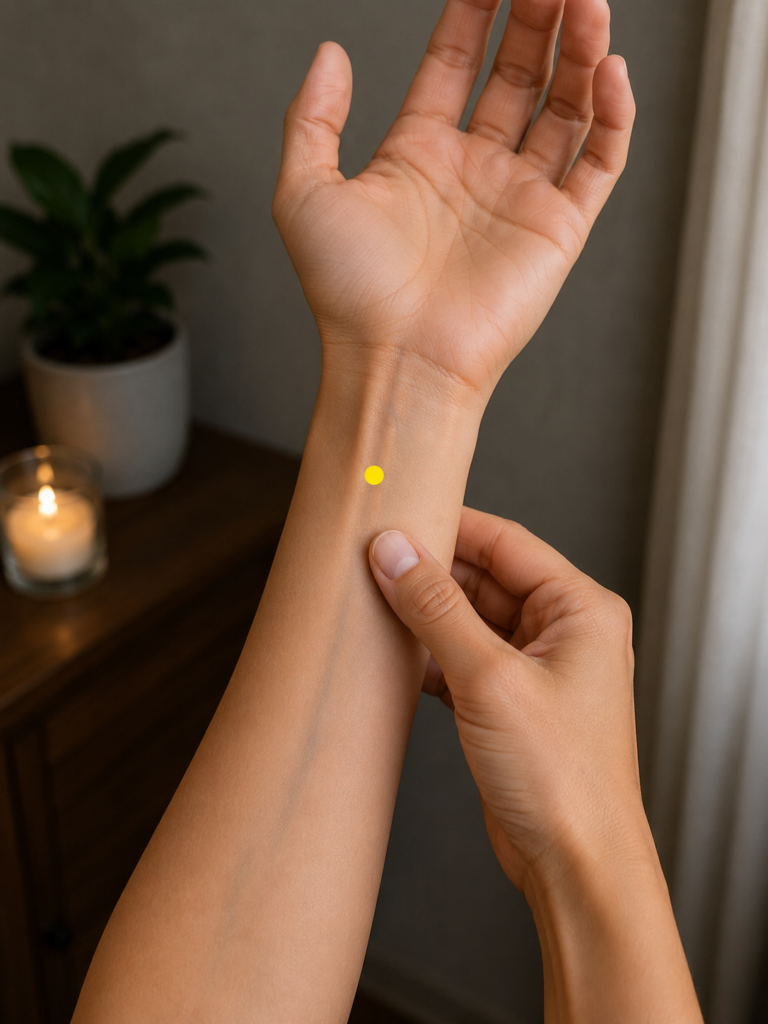
3. Press on PC6 on the inner forearm to settle nausea and stomach discomfort. PC6 sits on the inner forearm, three finger-widths above the wrist crease, between the two tendons. Press firmly with the thumb of your other hand for one to two minutes on each arm. PC6 is called “Neiguan,” the “Inner Pass.”
PC6 is best known for easing nausea and vomiting. It is also used to relieve pain and fullness in the stomach and chest. By helping calm the mind, PC6 may be useful when stress or worry affects the stomach. It is often used with SP4, the next point, to address both the stomach and chest.
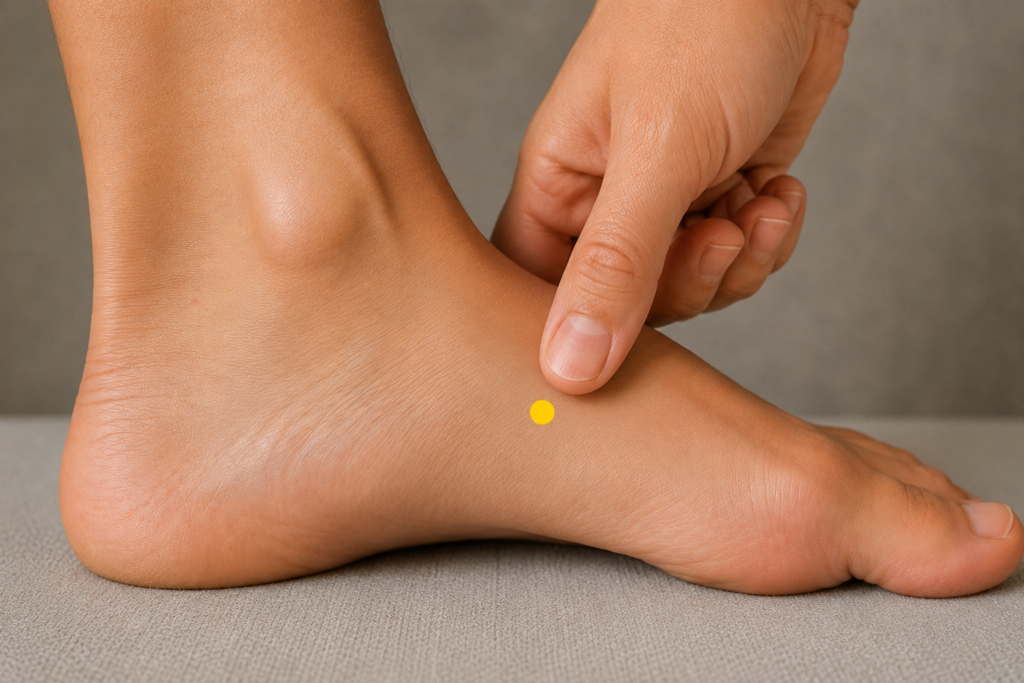
4. Press on SP4 on the inner foot to ease pain and fullness in the stomach. SP4 sits on the inner edge of the foot, about one thumb-width behind the large joint at the base of the big toe, in the hollow just below and in front of the bony bump at the base of the long bone of the big toe. Press firmly with your thumb for one to two minutes on each foot. SP4 is called “Gongsun,” the “Grandfather Grandson.”
SP4 is the connecting point of the Spleen channel, linking the Spleen and Stomach. In Traditional Chinese Medicine, it is used to address stomach pain, nausea, bloating, and feeling full after eating. SP4 works closely with PC6 to help Stomach Qi descend again.
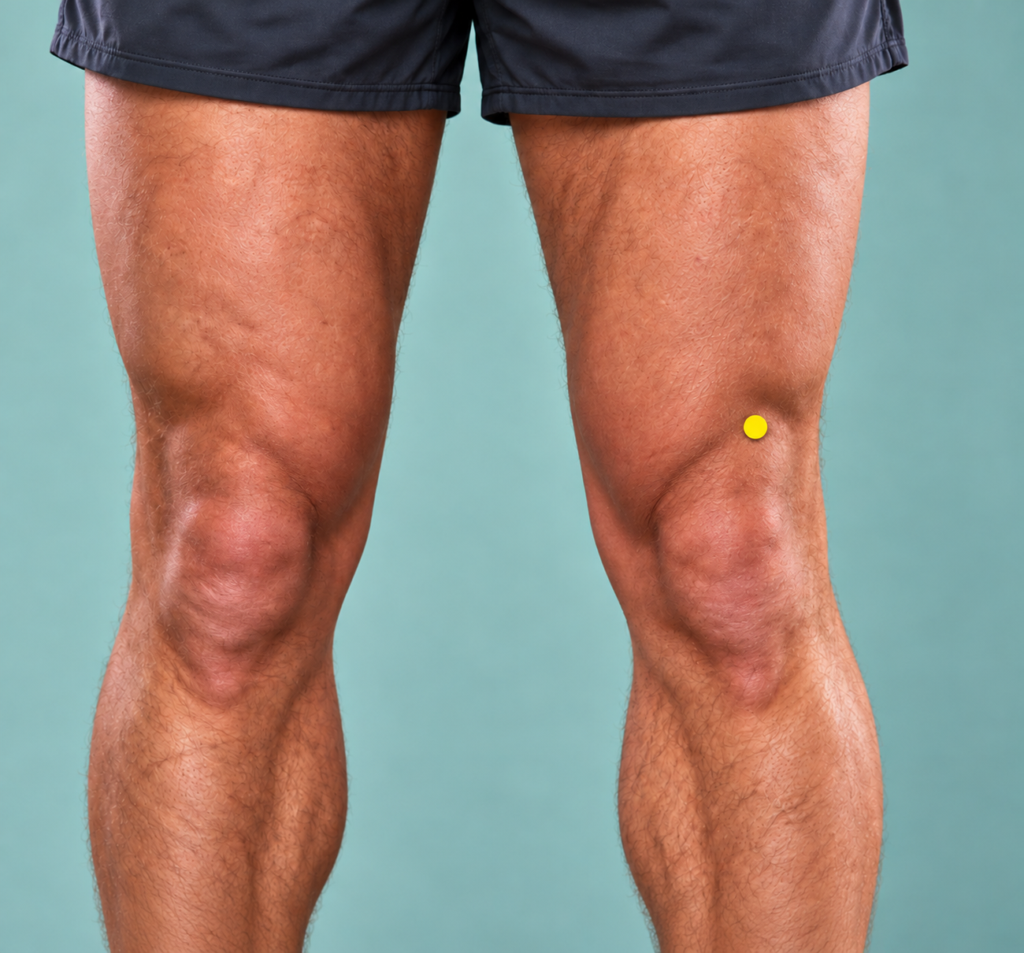
5. Press on ST34 above the knee to relieve sudden stomach pain. ST34 sits on the front of the thigh, about three finger-widths above the upper outer corner of the kneecap, in a small hollow on the outer side of the thigh muscle. Press firmly with your thumb for one to two minutes on each leg. ST34 is called “Liangqiu,” the “Beam Mound.”
ST34 is the cleft point on the Stomach channel, used in Traditional Chinese Medicine to address sudden, sharp pain. It is the primary point for gastritis flare-ups, when the stomach burns or cramps, and may help ease the pain quickly.
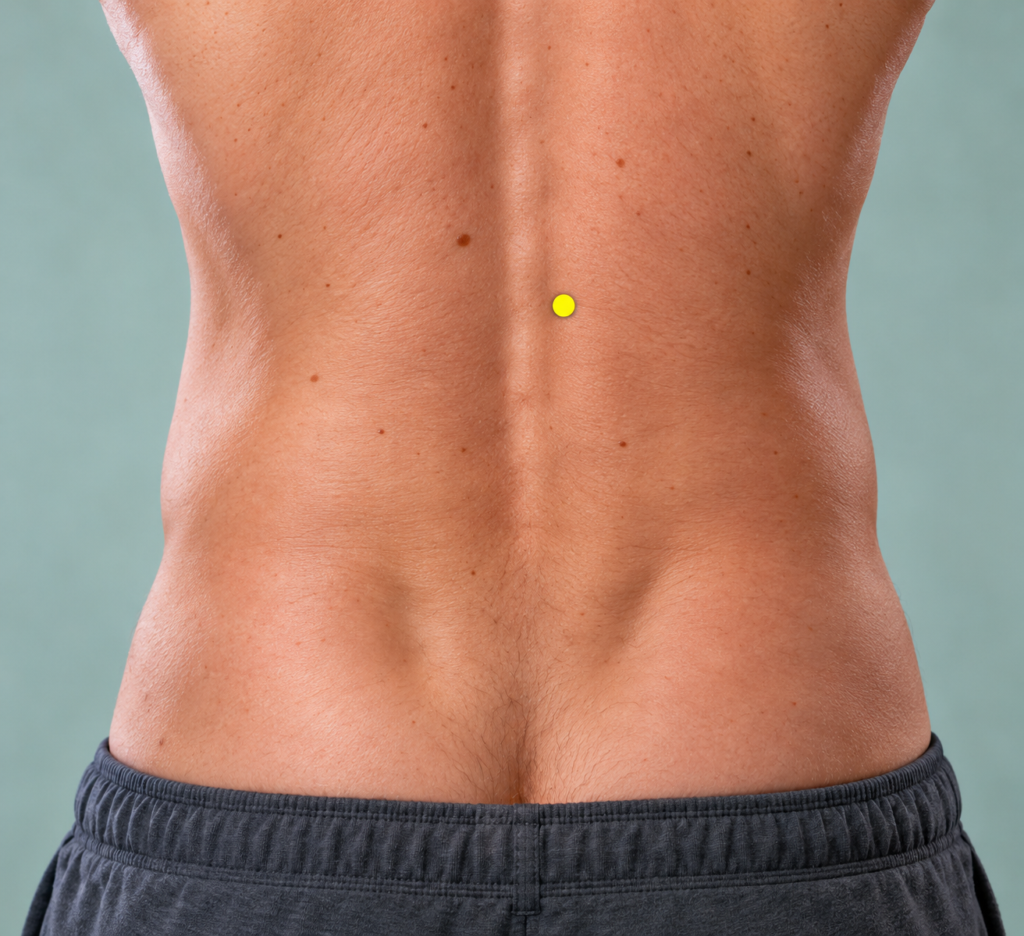
6. Press on BL21 on the middle back to support the Stomach. BL21 sits on the back, about two finger-widths to each side of the spine, roughly level with the bottom of the rib cage and about a hand-width above the top of the hip bones. Place a tennis ball between your back and a wall, lean into it gently, and hold for one to two minutes on each side. BL21 is called “Weishu,” the “Stomach Transport Point.”
BL21 is the Stomach’s back transport point and connects directly to the organ. It strengthens the Stomach, helps its Qi descend, and relieves pain, nausea, and fullness. Used together, BL21 and CV12 treat the Stomach from both the front and back.
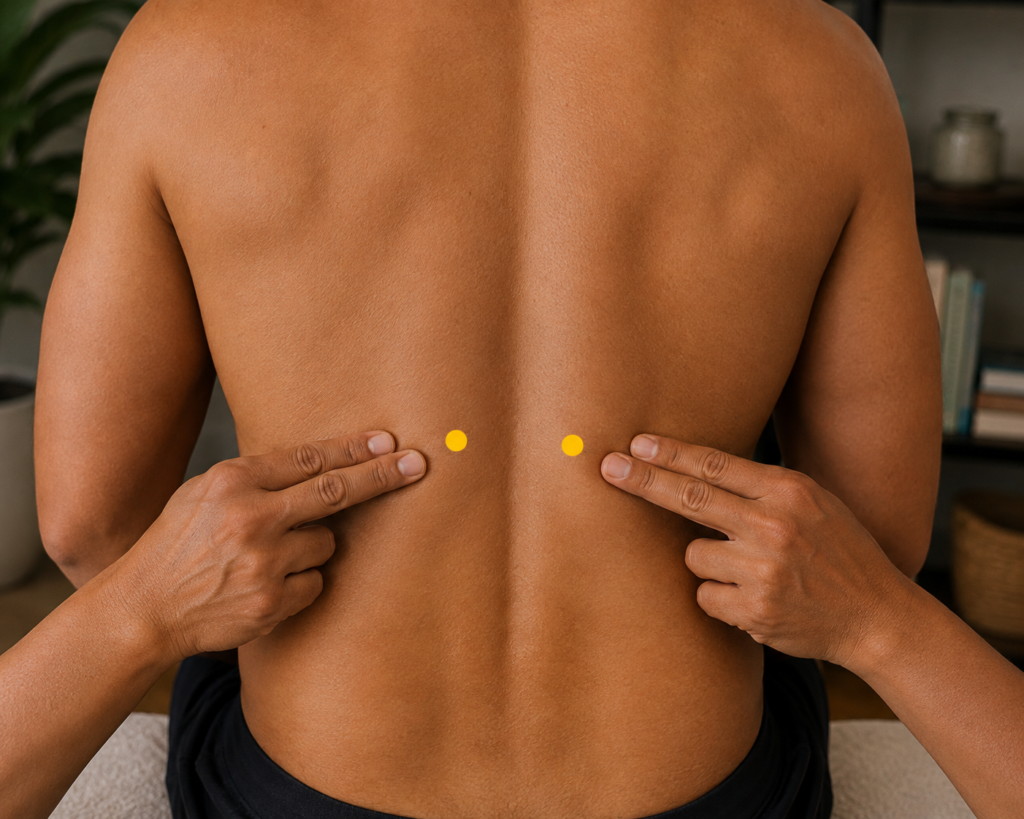
7. Press on BL20 on the middle back to strengthen digestion. BL20 sits about two finger-widths to each side of the spine, one vertebra above BL21. Use the same tennis ball method, leaning into it gently for one to two minutes on each side. BL20 is called “Pishu,” the “Spleen Transport Point.”
BL20 is the Spleen’s back transport point, and the Spleen transforms food into Qi and Blood. It may help with a dull, lingering ache caused by a weak, cold Spleen and Stomach, or with gastritis accompanied by tiredness, loose stools, or poor appetite. Used together, BL20 and BL21 support the digestive system as a whole.
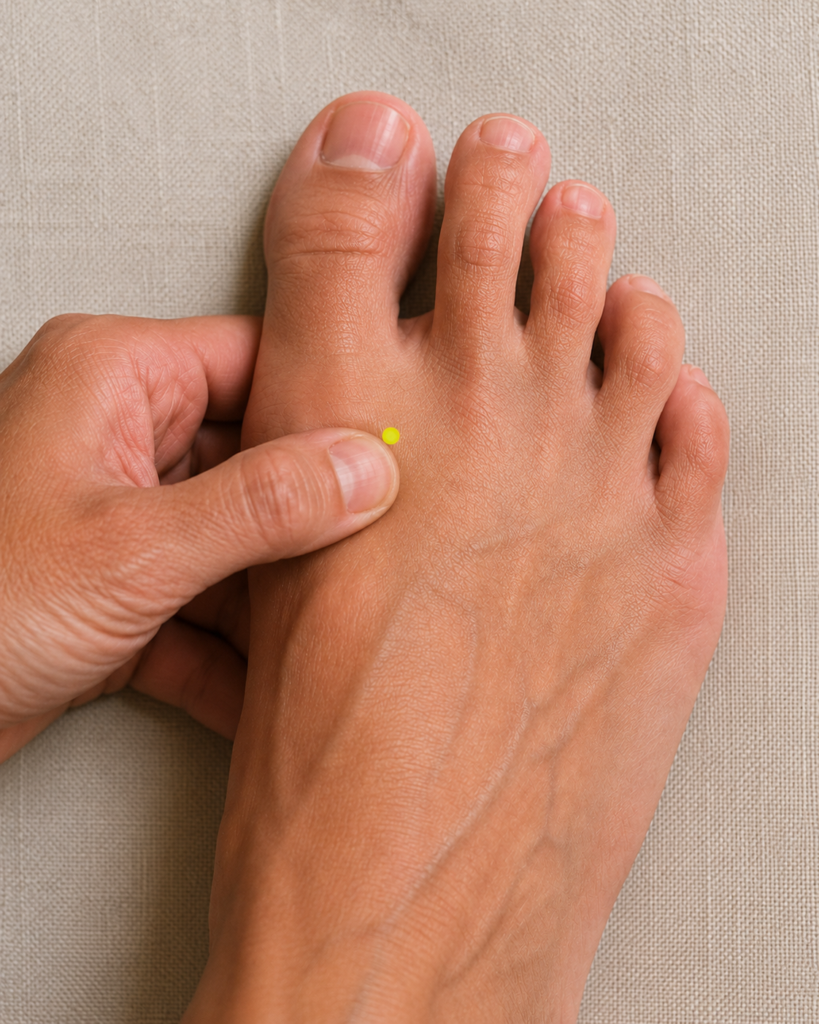
8. Press on LR3 on the top of the foot to ease stress that upsets the stomach. LR3 sits on the top of the foot, in the hollow where the bones of the big toe and second toe meet, about two finger-widths above the web between the toes. Press firmly with your thumb for one to two minutes on each foot. LR3 is called “Taichong,” the “Great Surge.”
LR3 is the Liver’s source point, helping Qi flow smoothly through the body. Stress or frustration can block Liver Qi, affecting the Stomach and causing pain, belching, and tightness beneath the ribs. LR3 helps ease this tension and relax the stomach.
9. Press on ST44 between the toes to clear Heat from the stomach. ST44 sits on the top of the foot, at the end of the web between the second and third toes. Press firmly with your thumb or fingertip for one to two minutes on each foot. ST44 is called “Neiting,” the “Inner Courtyard.”
ST44 is the Stomach channel’s spring point and the primary point in Traditional Chinese Medicine for clearing Stomach Heat. It may be especially helpful when gastritis causes burning pain, sour belching, bad breath, or thirst. During a flare-up, ST44 also works well with ST34.

Why These Acupressure Points Work
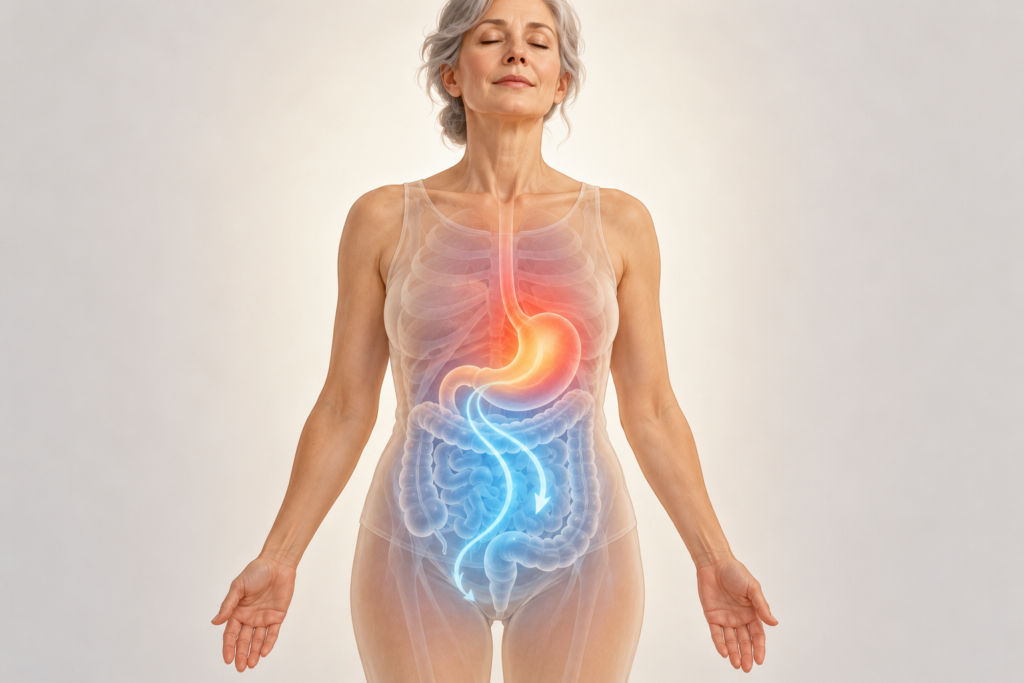
In Traditional Chinese Medicine, gastritis occurs when Stomach Qi cannot flow downward smoothly. This may result from Heat building up in the Stomach, stress causing Liver Qi to invade the Stomach, or weakness in the Spleen and Stomach that interferes with digestion. The goal is to ease pain, clear Heat, reduce stress, and strengthen digestion so the stomach lining can heal.
The nine points work together to calm and strengthen the stomach:
- The stomach pain points (CV12, ST34, ST44) calm stomach pain directly and clear Heat from the Stomach.
- The paired points (PC6, SP4) settle nausea and fullness and send the Stomach Qi back downward.
- The strengthening points (ST36, BL21, BL20) support the Spleen and Stomach, helping the Stomach heal.
- The Liver point (LR3) eases the stress that so often sets off the stomach.
How to Properly Use These Acupressure Points

Acupressure for gastritis is most effective when practiced consistently as part of a daily routine alongside the treatment recommended by a physician.
- Work through all nine points once or twice daily, approximately 30 minutes before a meal or two hours after a meal, holding each point for one to two minutes.
- During a flare-up, first press ST34 and ST44 on both legs, then PC6 and SP4, and finish with gentle circles at CV12.
- Apply gentle pressure to the abdomen and firmer pressure to the arms, back, legs, and feet.
- When stress appears to cause stomach discomfort, apply pressure to LR3 on both feet and PC6 on both arms while taking five slow breaths.
Daily habits may help your stomach lining heal. Try eating smaller meals at regular intervals, chewing slowly, and finishing meals two to three hours before bed. Limit alcohol, coffee, and spicy, fried, or greasy foods, which can irritate your stomach, and avoid smoking. If you regularly take pain relievers such as ibuprofen or aspirin, ask your doctor about safer options. Traditional Chinese Medicine recommends warm, cooked, easy-to-digest foods like congee, soups, and steamed vegetables, and fewer iced drinks and raw foods, especially if your stomach ache is dull and improves with warmth.
Learn more about 5 foods to improve digestion.
When to Get Professional Help

See a doctor if upper abdominal pain lasts more than a week, keeps returning, or wakes you at night. If you suspect gastritis, get tested for H. pylori, as the infection requires medical treatment. See a doctor sooner if the pain is accompanied by unexplained weight loss, loss of appetite, trouble swallowing, persistent vomiting, or regular NSAID use. Seek emergency care immediately for black or tarry stools, red or maroon blood in the stool, vomit containing blood or resembling coffee grounds, or feeling faint, lightheaded, or short of breath, as these can signal stomach bleeding. Sudden, severe abdominal or chest pain also requires emergency care, since heart problems can be mistaken for stomach pain. Do not stop a prescribed medication or an antibiotic course without speaking to your provider.
Acupressure is a gentle, supportive practice for gastritis. It complements, and does not replace, diagnosis and medical care.
For related health concerns, acupressure for indigestion, acupressure for a stomach ache, and acupressure for bloating and gas are companion articles. If the burning sensation rises into the chest or throat, learn about acupressure for acid reflux.
Above and Beyond Acupuncture offers acupuncture, cupping, and lifestyle coaching at the North Frank Lloyd Wright Boulevard location in Scottsdale.
Schedule an appointment online to start your healing journey.
The points above are only as effective as the technique used to apply them. Where to press, how firmly, and for how long all affect the result. For a full breakdown of how to perform acupressure properly at home, read Performing Acupressure in 3 Easy Steps.

About the Publisher
Paul Kerzner, L.Ac., is a licensed acupuncturist and board-certified herbalist, as well as the founder of Above and Beyond Acupuncture in Scottsdale. His own journey from chronic patient to practicing acupuncturist shapes his commitment to providing honest, clinically grounded information about acupuncture and Traditional Chinese Medicine. Learn more about Paul and his clinical approach on the About Us page.