Key Takeaways
- Stroke is a leading cause of serious long-term disability, and the first three months after a stroke are when the most improvement occurs.
- Weakness on one side, stiff muscles, difficulty speaking or swallowing, and severe fatigue are common effects that rehabilitation aims to improve.
- In Traditional Chinese Medicine, the recovery stage focuses on the channels of the affected side, where Qi and Blood no longer flow sufficiently to nourish the muscles and tendons.
- Nine acupressure points on the head, throat, arm, and leg provide a caregiver with a simple daily routine to use alongside physical, occupational, and speech therapy.
- Acupressure supports rehabilitation but does not reverse brain injury. Any new stroke symptom is an emergency, so call 911 right away.
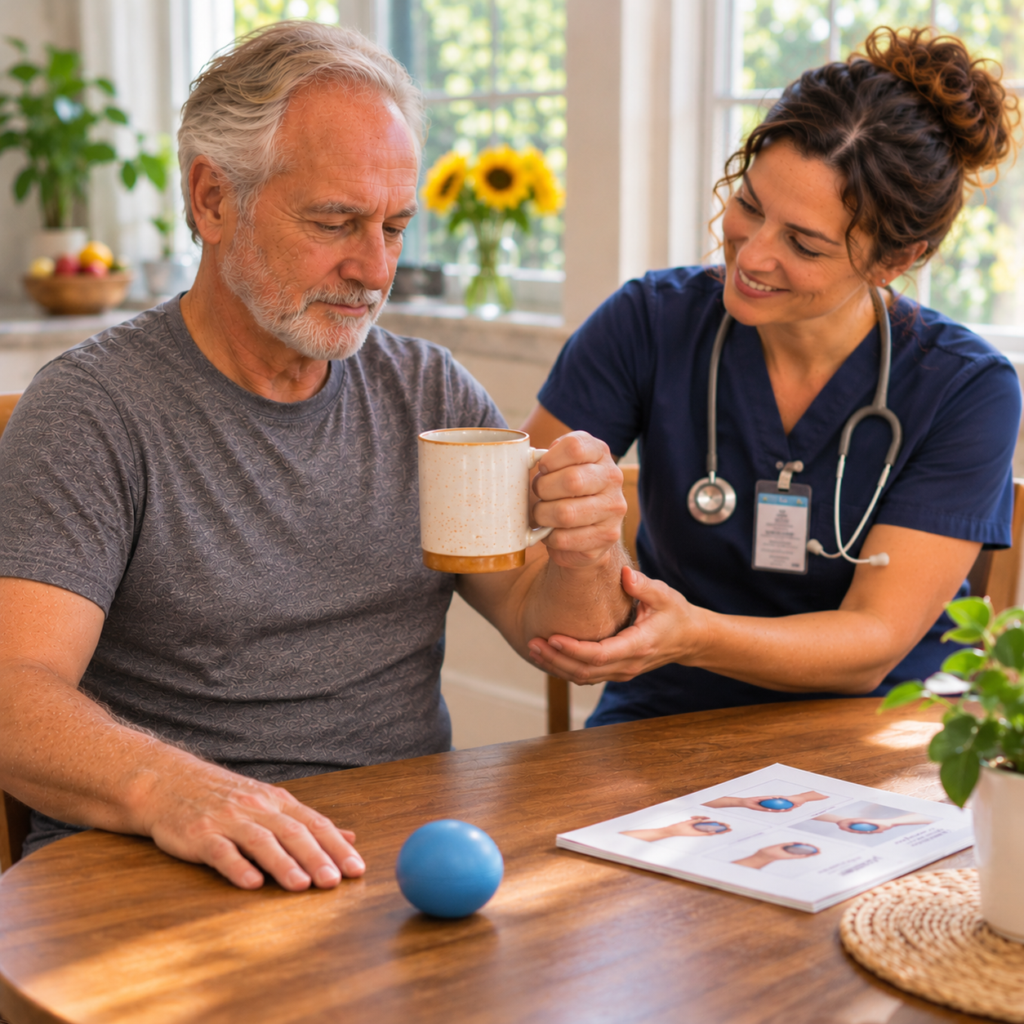
After a stroke, most people spend only five to seven days in the hospital, often less time than families expect. Recovery then continues in a rehabilitation unit or at home. Days fill with therapy appointments, home exercises, and simple tasks that now take extra effort, such as buttoning a shirt, lifting a cup with the weaker hand, or finding the right word while speaking. For spouses or adult children helping with recovery, much of the day can feel like waiting for the next therapy session.
According to the CDC, more than 795,000 people in the United States have a stroke each year, making stroke a leading cause of serious, long-term disability. Johns Hopkins Medicine notes that rehabilitation starts about 24 hours after a stroke, once its cause has been treated. Johns Hopkins stroke rehabilitation specialist Preeti Raghavan, MD, explains that the first three months are most important for recovery, when patients typically make the most progress. Improvement continues after six months, but at a slower pace, and many people work with their rehabilitation team for years. Common effects include weakness or paralysis, stiff muscles, difficulty speaking or swallowing, memory problems, depression, and severe fatigue.
Acupressure can be done between therapy sessions. While the person rests in a chair or bed, a caregiver can use the points below in about fifteen minutes. This helps direct attention to the weaker side, which is easy to overlook, and gives the caregiver a practical way to help.
In Traditional Chinese Medicine, a stroke is called Zhong Feng, or Wind Stroke, because it happens suddenly, like a gust of wind. After the emergency, attention shifts to the channels on the affected side. When Qi and Blood do not flow well enough to nourish the muscles and tendons, weakness, numbness, stiffness, and poor movement in a hand or foot may result. Phlegm blocking the channels in the head is thought to cause slurred speech and difficulty swallowing.
The nine points below start at the head and throat, then continue down the affected arm and leg.
What Acupressure Points to Press and Why
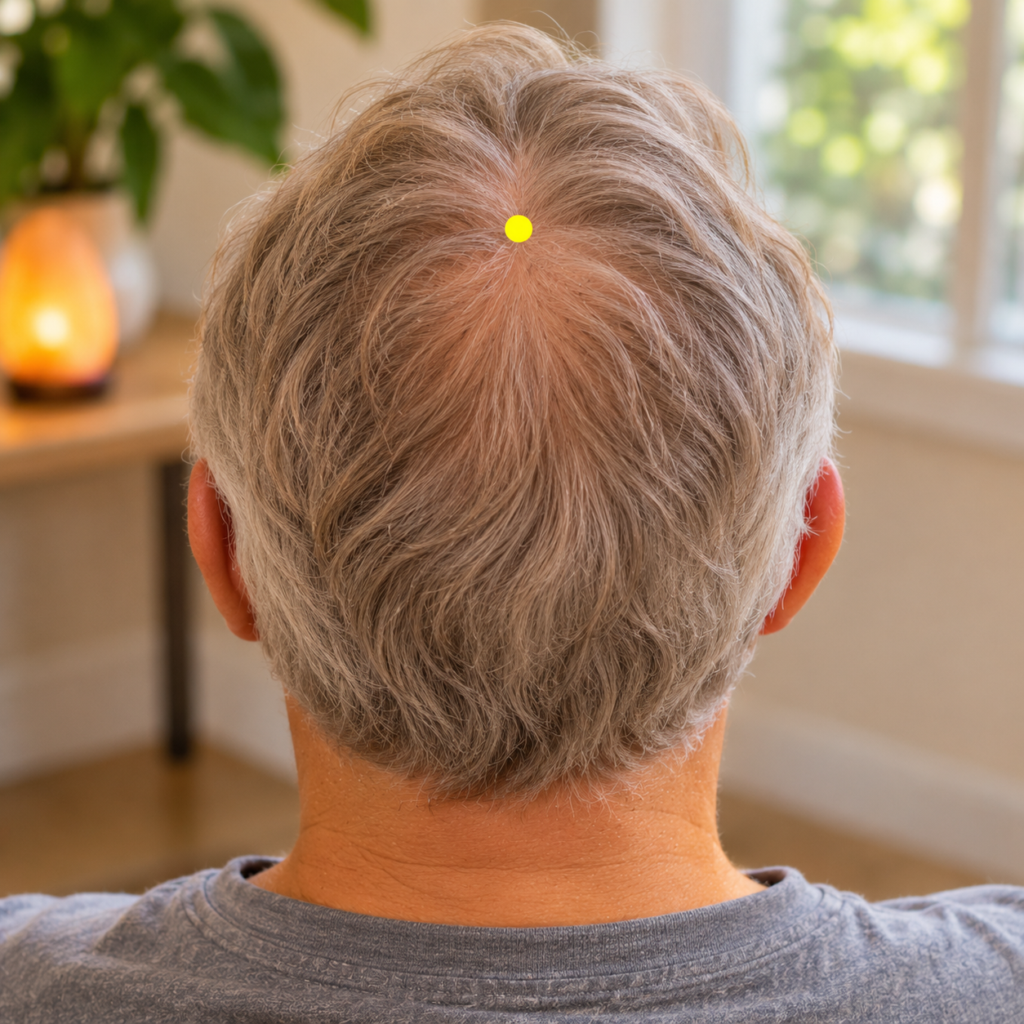
1. Press on GV20 at the top of the head to support the brain. GV20 sits on the top of the head, on the midline, where an imaginary line drawn straight up from the tops of both ears meets. Press gently with one fingertip for one to two minutes. GV20 is called “Baihui,” the “Hundred Meetings.”
In Traditional Chinese Medicine, GV20 lies on the Governing Vessel, which runs up the spine and into the brain. A classic point for clearing the mind, it is commonly used during stroke recovery to address dizziness, poor concentration, and low mood.
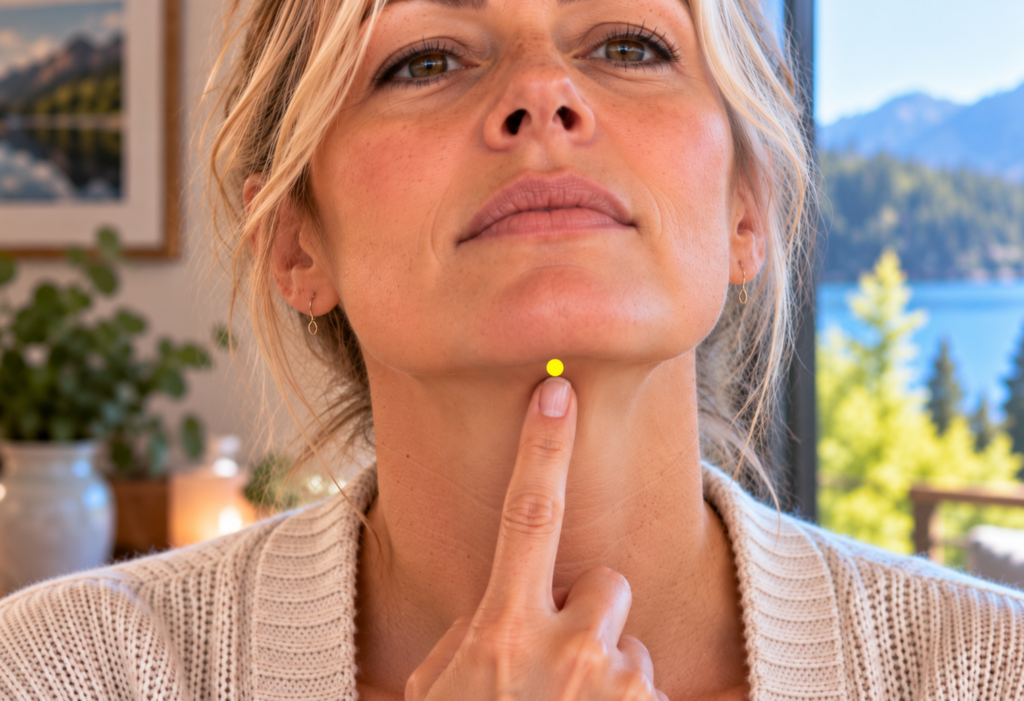
2. Press on CV23 under the chin to support speech and swallowing. CV23 sits on the midline of the front of the neck, in the soft hollow just above the Adam’s apple, below the chin. Press very lightly with one fingertip, angling the pressure up toward the root of the tongue, for 30 seconds to one minute. CV23 is called “Lianquan,” the “Angle Spring.”
CV23 is the main treatment for slurred speech, a stiff or clumsy tongue, and difficulty swallowing. It supplements, but does not replace, the exercises provided by a speech and language therapist.
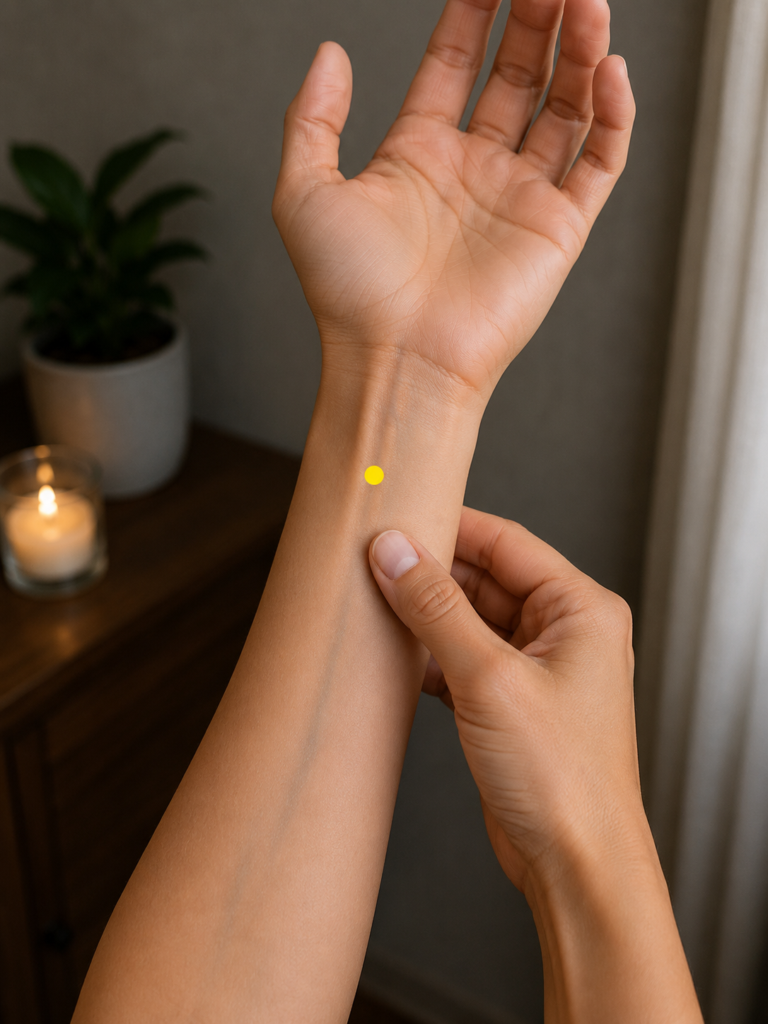
3. Press on PC6 on the inner forearm to revive the mind. PC6 sits on the inner forearm, three finger-widths above the wrist crease, between the two tendons. Press firmly with your thumb for one to two minutes on each arm. PC6 is called “Neiguan,” the “Inner Pass.”
PC6 is the Pericardium’s connecting point and a key point in Xing Nao Kai Qiao, a well-known stroke treatment method developed in Tianjin, China, whose name means “awakening the brain and opening the orifices.” PC6 also helps ease nausea and anxiety that can follow a stroke.
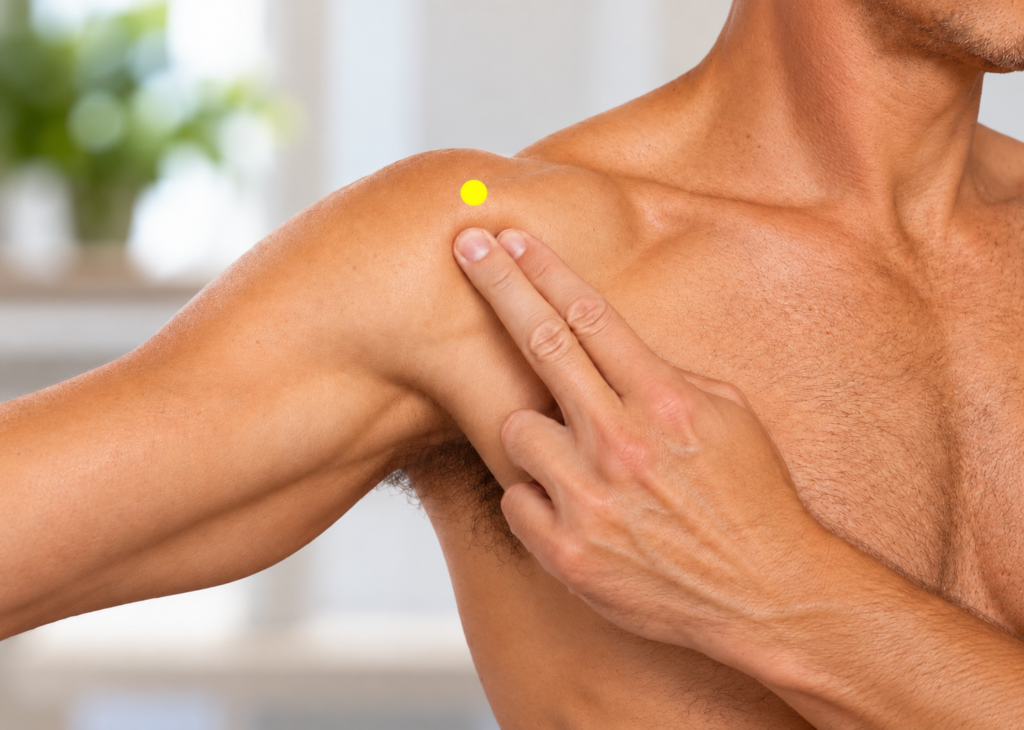
4. Press on LI15 at the front of the shoulder to ease shoulder pain. LI15 sits in the small dip at the front edge of the bony tip of the shoulder. If the arm can be lifted out to the side, two hollows appear at the tip of the shoulder, and LI15 is the front one. Support the weaker arm on a pillow and press gently with your fingertips for one to two minutes. LI15 is called “Jianyu,” the “Shoulder Bone.”
LI15 is the main local point for shoulder pain and difficulty lifting the arm. Shoulder pain on the affected side is common after a stroke because weakened muscles can allow the joint to drop. Use a very gentle touch and keep the arm well supported at this point.
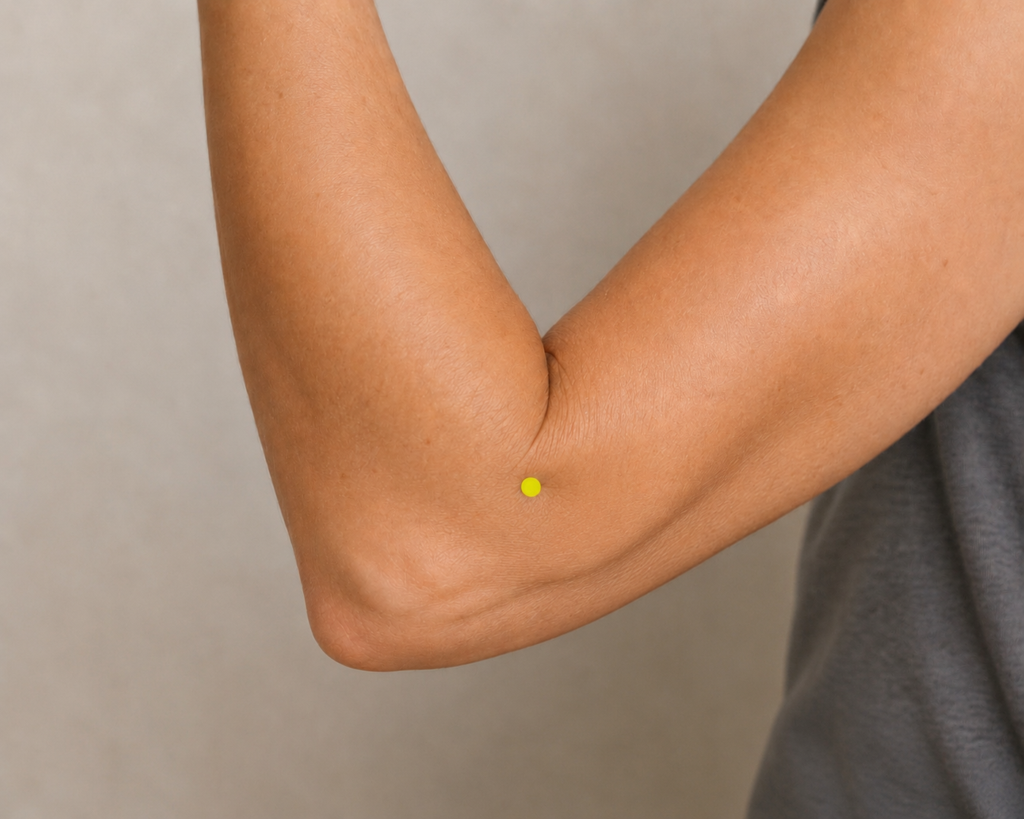
5. Press on LI11 at the elbow to strengthen the arm. LI11 sits on the outer end of the elbow crease. Bend the elbow only as far as it moves comfortably, and the point is in the hollow at the end of the crease, on the thumb side. Press firmly with your thumb for one to two minutes on each arm. LI11 is called “Quchi,” the “Pool at the Crook.”
Classical Traditional Chinese Medicine texts recommend selecting points along the Large Intestine and Stomach channels to address limb weakness, as these channels carry abundant Qi and Blood. LI11 is the primary point at the elbow along this pathway and is commonly chosen for an arm that feels weak, numb, or stiff.
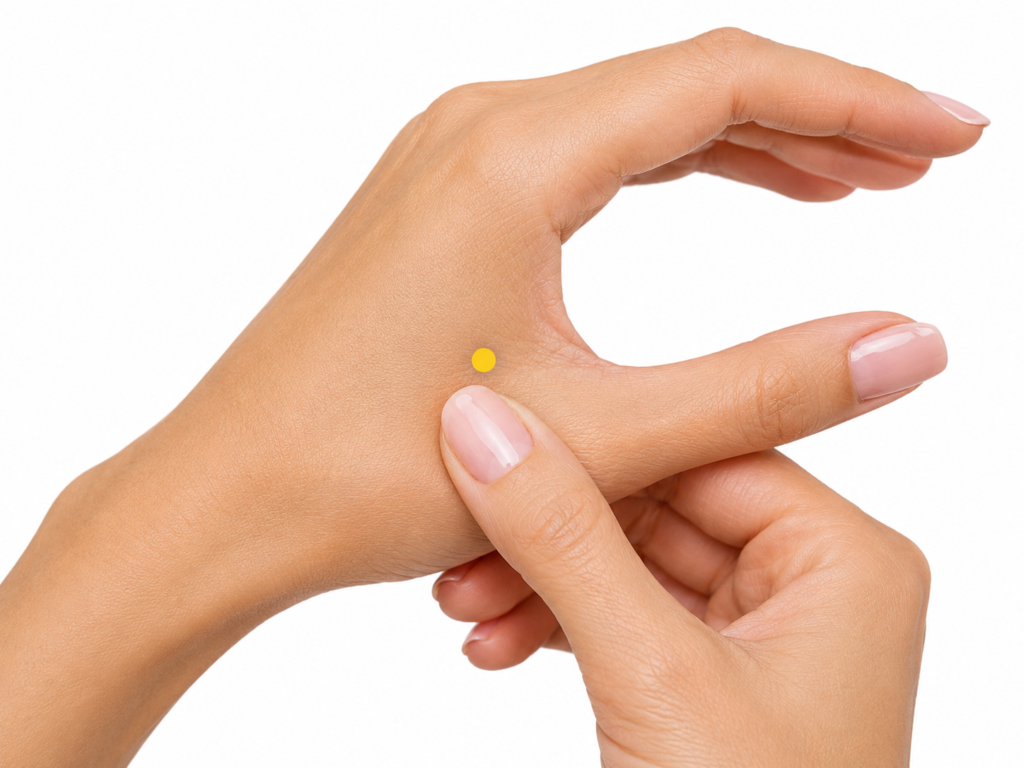
6. Press on LI4 on the back of the hand to open a tight hand. LI4 sits in the webbing between the thumb and index finger, at the highest point of the muscle when the two are pressed together. Press firmly with your thumb for one to two minutes on each hand. LI4 is called “Hegu,” the “Joining Valley.” LI4 is avoided during pregnancy.
LI4 helps relax a clenched hand and ease finger numbness. After pressing it, gently open the fingers one at a time to finish working on the arm.
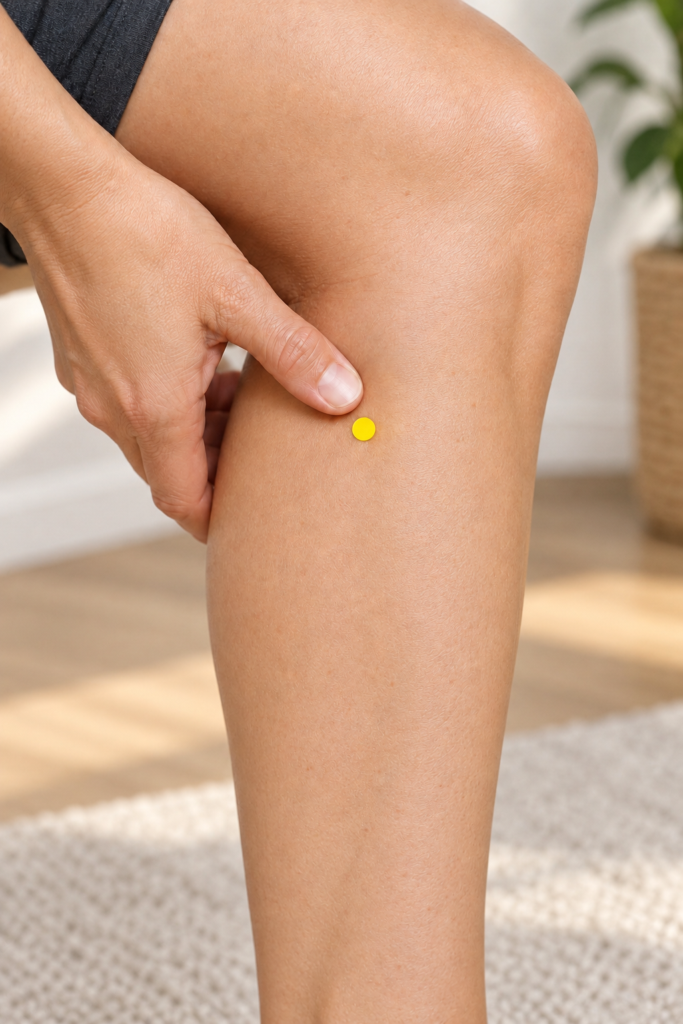
7. Press on GB34 below the outer knee to loosen the leg. GB34 sits on the outer lower leg, in the hollow just in front of and below the small bony knob below the outer knee. Press firmly with your thumb for one to two minutes on each leg. GB34 is called “Yanglingquan,” the “Yang Mound Spring.”
In Traditional Chinese Medicine, GB34 is the influential point for the tendons. It is used to address stiffness, spasms, and tightness in the leg, including a knee or ankle that pulls into a fixed position.
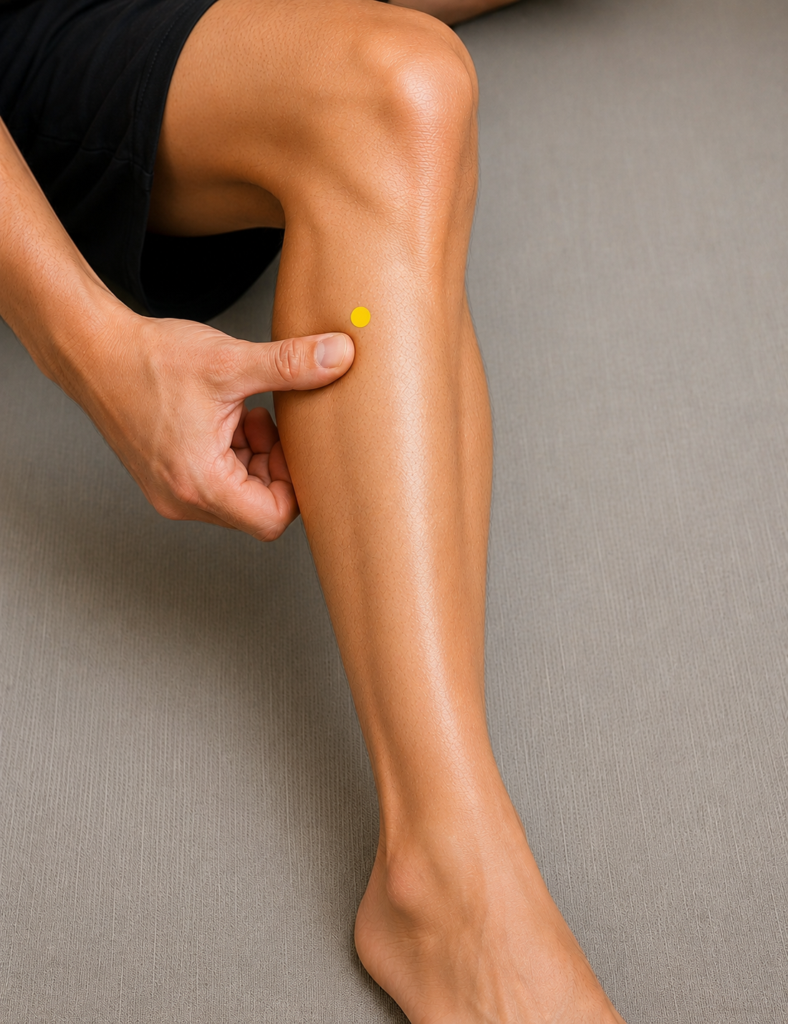
8. Press on ST36 below the knee to build strength. ST36 sits four finger-widths below the bottom of the kneecap, about one finger-width to the outside of the shinbone. Press firmly with your thumb for one to two minutes on each leg. ST36 is called “Zusanli,” the “Leg Three Miles.”
ST36 strengthens Qi and Blood. It is the main point on the Stomach channel for leg weakness and the heavy fatigue often associated with stroke recovery. Its name refers to giving someone the strength to walk three more miles.
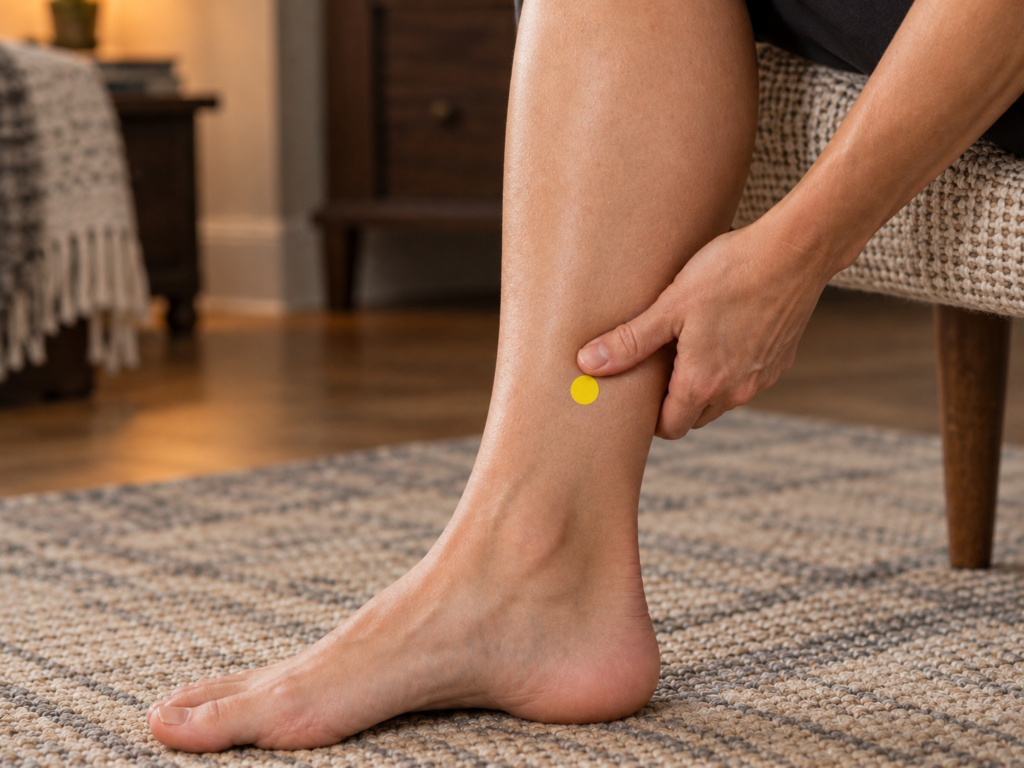
9. Press on SP6 above the inner ankle to nourish the leg. SP6 sits on the inside of the lower leg, four finger-widths above the tip of the inner ankle bone, just behind the edge of the shinbone. Press firmly with your thumb for one to two minutes on each leg. SP6 is called “Sanyinjiao,” the “Three Yin Intersection.” SP6 is avoided during pregnancy.
SP6 is where the Spleen, Liver, and Kidney channels meet, and is said to nourish the Blood throughout the body. Along with PC6, it is one of the three fundamental points of Xing Nao Kai Qiao and is used to address numbness and weakness in the lower leg and foot.
Why These Acupressure Points Work
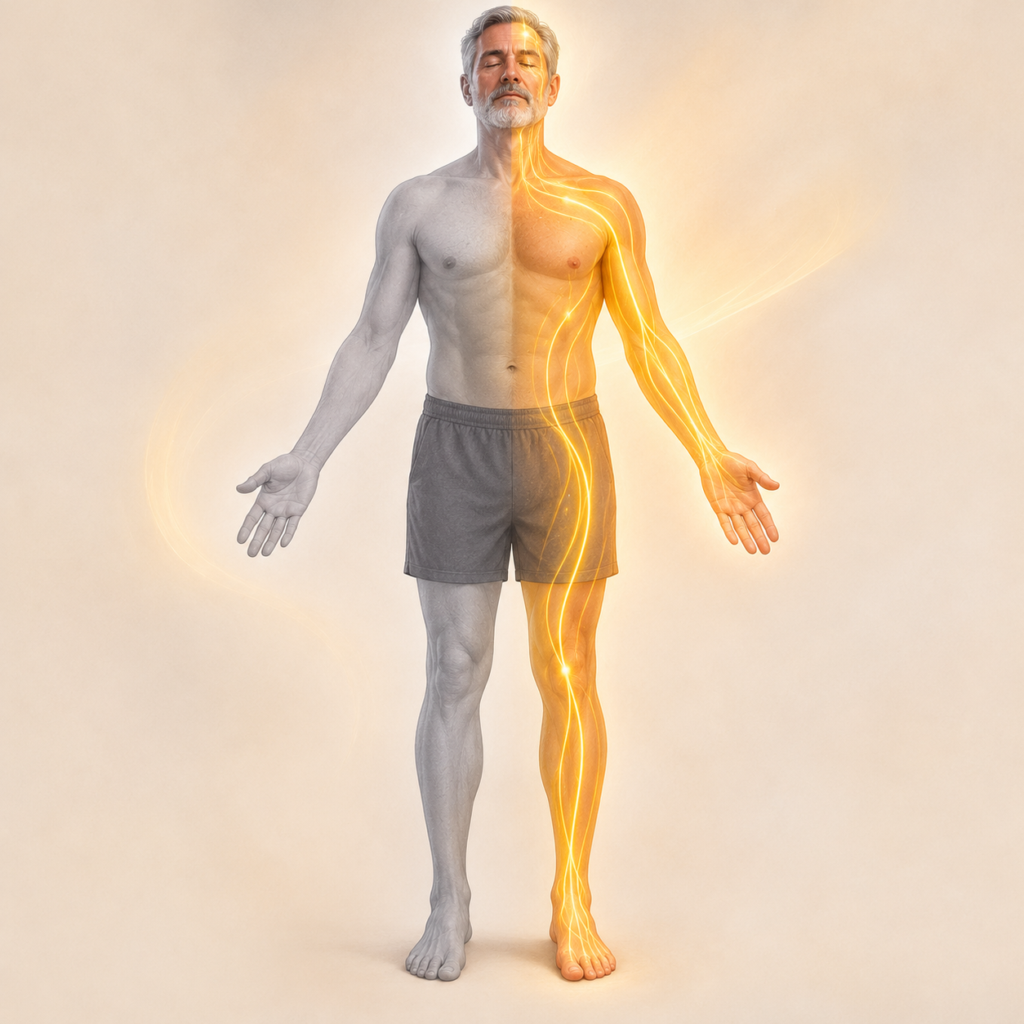
From a Traditional Chinese Medicine perspective, stroke recovery is a long process of restoring Qi and Blood to the channels on the affected side. With less nourishment, the arm and leg grow weaker and the tendons tighten, while phlegm in the channels of the head can slow speech and swallowing. Treatment clears the mind, opens the throat, and gradually restores circulation to the weaker limbs, one section at a time.
The nine points work together to support recovery on the affected side:
- GV20 and PC6 support the brain and settle the mind.
- CV23 helps with speech and swallowing.
- LI15, LI11, and LI4 work down the weak arm from the shoulder to the hand.
- GB34, ST36, and SP6 support strength, tendons, and sensation in the leg.
How to Properly Use These Acupressure Points

For stroke recovery, acupressure works best as a daily routine performed by a caregiver, with the person’s doctor or rehab team’s approval.
- Have the person sit comfortably with support or lie down, keeping the weaker arm resting on a pillow. Start with GV20, CV23, and PC6.
- Treat the affected arm from LI15 down to LI4, then the leg from GB34 down to SP6. If time allows, repeat the points on the arm and leg on the stronger side.
- Apply moderate pressure to the affected side, as reduced sensation may make it difficult for the person to tell you when the pressure is too firm. Watch their face and skin, and stop if the skin reddens or they appear uncomfortable. Never pull on a weak arm.
- If the person takes a blood thinner, apply only light pressure, as firm pressure can cause bruising. Repeat once daily, ideally after therapy, throughout recovery.
Between sessions, prioritize the home exercise program from the rehab team and try to plan the day around it. Encourage the person to use their weaker hand for simple tasks, such as holding a cup or brushing their hair, even when using the stronger hand would be quicker. Keep walkways clear, install grab bars, and leave a light on at night to help prevent falls. Take all prescribed medications, especially those for blood pressure, cholesterol, and blood clots, since preventing another stroke is part of recovery. Avoid smoking, limit alcohol, and get enough sleep. Depression is common after a stroke and can slow recovery, so tell the doctor about low mood rather than waiting for it to pass. Caregivers need rest, too. Traditional Chinese Medicine suggests warm, cooked, easy-to-digest meals to support Qi and Blood during recovery.
Learn more about acupressure for high blood pressure.
When to Get Professional Help
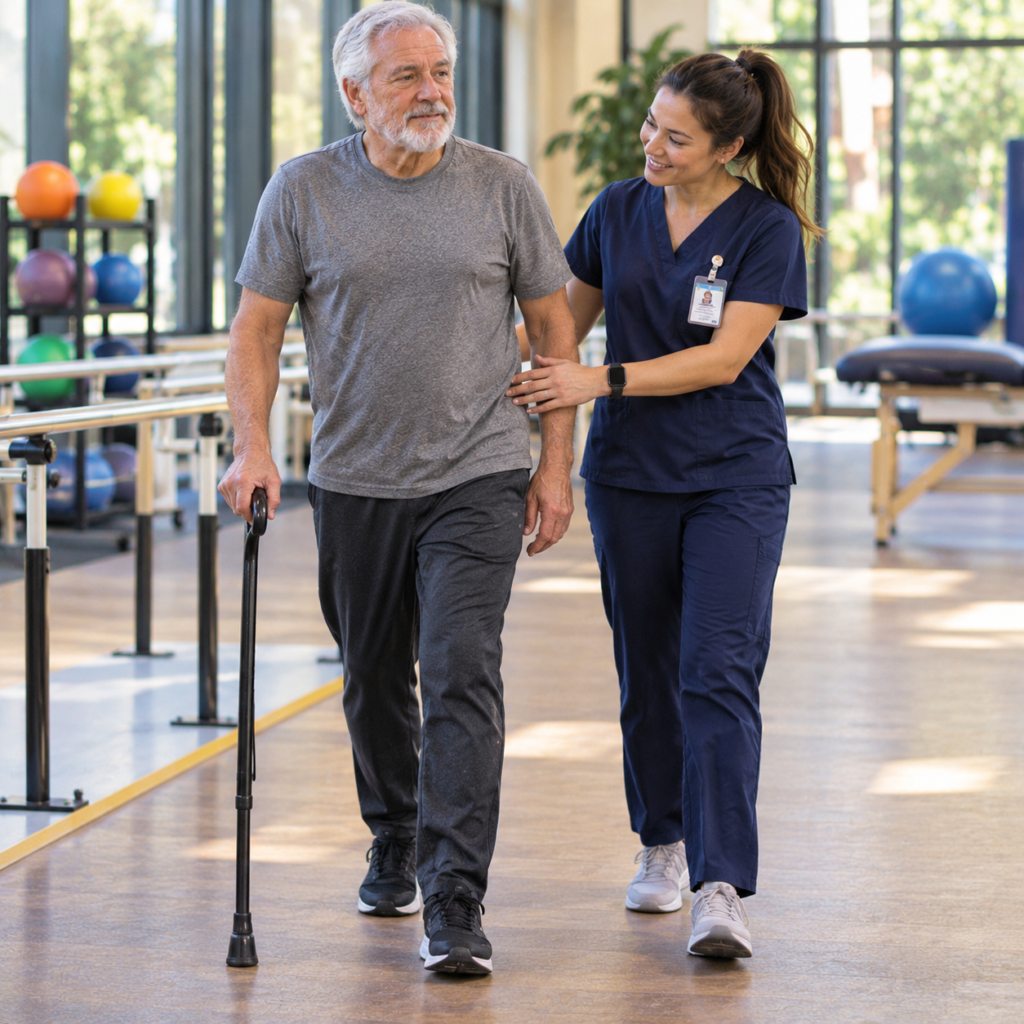
Call 911 immediately if you notice any sign of a new stroke, even if it goes away within minutes. Remember BE FAST: loss of Balance; changes in the Eyes or vision; Face drooping on one side; Arm or leg weakness; slurred or confused Speech; and Time to call 911. Also call 911 for a sudden, severe headache or a seizure. Contact the doctor promptly if there is coughing or choking while eating or drinking, a new fever, sudden swelling, redness, or pain in one calf, worsening shoulder pain, a fall, or low mood lasting more than two weeks. Check with the doctor or rehab team before starting acupressure, especially during the first weeks after a stroke or if the person takes blood thinners.
Acupressure is a gentle, supportive practice for stroke recovery. It complements, and does not replace, diagnosis and medical care.
For related health concerns, acupressure for muscle spasms, acupressure for shoulder pain, and acupressure for brain fog are companion posts.
Above and Beyond Acupuncture offers acupuncture, cupping, and lifestyle coaching at the North Frank Lloyd Wright Boulevard location in Scottsdale.
Schedule an appointment online to start your healing journey.
The points above are only as effective as the technique used to apply them. Where to press, how firmly, and for how long all affect the result. For a full breakdown of how to perform acupressure properly at home, read Performing Acupressure in 3 Easy Steps.

About the Publisher
Paul Kerzner, L.Ac., is a licensed acupuncturist and board-certified herbalist, as well as the founder of Above and Beyond Acupuncture in Scottsdale. His own journey from chronic patient to practicing acupuncturist shapes his commitment to providing honest, clinically grounded information about acupuncture and Traditional Chinese Medicine. Learn more about Paul and his clinical approach on the About Us page.