Key Takeaways
- Meniscus tears and MCL sprains on the inner side of the knee are the most common pickleball-related knee injuries, usually resulting from twisting, pivoting, and quick side-to-side movements.
- The low, ready crouch at the kitchen line loads the front of the knee and can lead to patellar tendinitis and sore quadriceps.
- In Traditional Chinese Medicine, a sudden twist leaves Qi and Blood stagnant around the joint, while repeated strain wears on the Liver, which governs the tendons and ligaments.
- Nine acupressure points around the knee, thigh, and lower leg help relieve pain, swelling, and stiffness as the knee recovers.
- Acupressure supports recovery but does not repair a torn meniscus or ligament. A knee that locks, catches, swells, or gives way needs a medical evaluation.
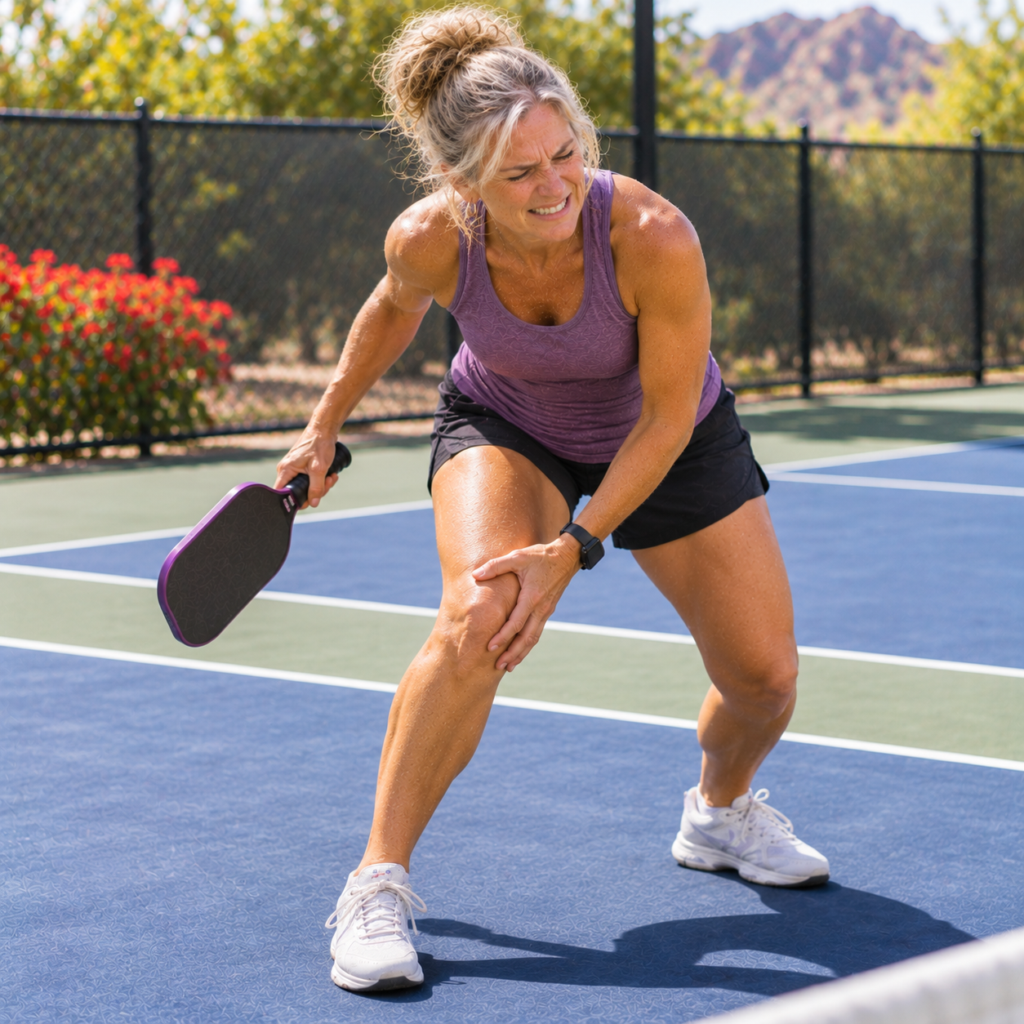
Pickleball looks easy from the sidelines. But when a dink lands short and wide, a player may lunge, plant a foot, and twist back toward the center of the court in one motion. Most of the time, the knee handles it fine. Sometimes, though, a sharp twinge hits the inside of the knee, and by the next morning, the joint feels stiff, swollen, and sore going down the stairs.
According to Ohio State Wexner Medical Center, the most common pickleball knee injuries are meniscus tears and MCL sprains. The meniscus is a cartilage cushion between the thighbone and shinbone that absorbs shock. Orthopedic surgeon David Flanigan, MD, notes that the game’s twisting and turning makes it easy to tear. The MCL runs along the inside of the knee and can be stretched by sudden side-to-side movements. ACL injuries also occur, but less often.
The front of the knee takes a beating, too. Sports medicine physician James Robinson, MD, explains for Hospital for Special Surgery that players spend much of the game bent over in a squat at the kitchen line, putting pressure on the kneecap and potentially causing tendinitis and quadriceps pain. Older players with arthritic knees may also experience flare-ups. Mild soreness that fades quickly is normal, but intense pain during play, swelling, or a knee that gives way is not.
In Traditional Chinese Medicine, the knee is viewed as a crossroads for six channels, including the Stomach, Spleen, and Liver. A sudden twist can block Qi and Blood in the joint, causing sharp, fixed pain and swelling. The Liver governs the tendons and ligaments, and the Kidneys govern the bones. Over time, particularly with age, repeated strain can make the knee more prone to dull, aching pain after play.
The nine points listed below begin with the primary pressure points around the knee joint, then focus on the inner and front portions of the knee, which are the areas most frequently injured during pickleball.
What Acupressure Points to Press and Why
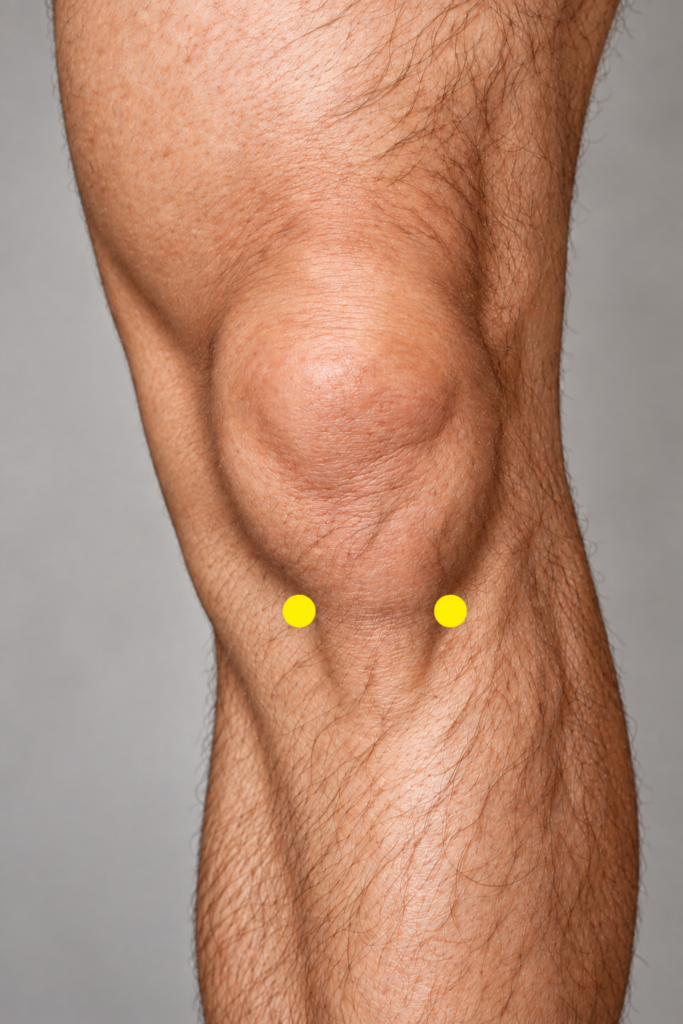
1. Press on Xiyan just below the kneecap to relieve pain in the joint. Xiyan is a pair of points that sit in the two hollows on either side of the tendon just below the kneecap, easiest to find with the knee bent. Press gently with your fingertips, one on each hollow, for one to two minutes on each knee. Xiyan is called the “Knee Eyes.”
Xiyan is the main local point for nearly every type of knee pain, from a meniscus strain to arthritis. The outer knee hollow is also known as ST35. Since these hollows lie directly over the joint, gentle pressure is enough.
2. Press on Heding at the top of the kneecap to ease front-of-knee pain. Heding sits in the small hollow at the midpoint of the top edge of the kneecap. Press gently with your fingertip for one to two minutes on each knee. Heding is called the “Crane’s Summit.”
Heding is an extra point used for knee pain and weakness, especially near the kneecap. It helps with the front-of-knee ache that can build up after prolonged periods of crouching at the kitchen line.
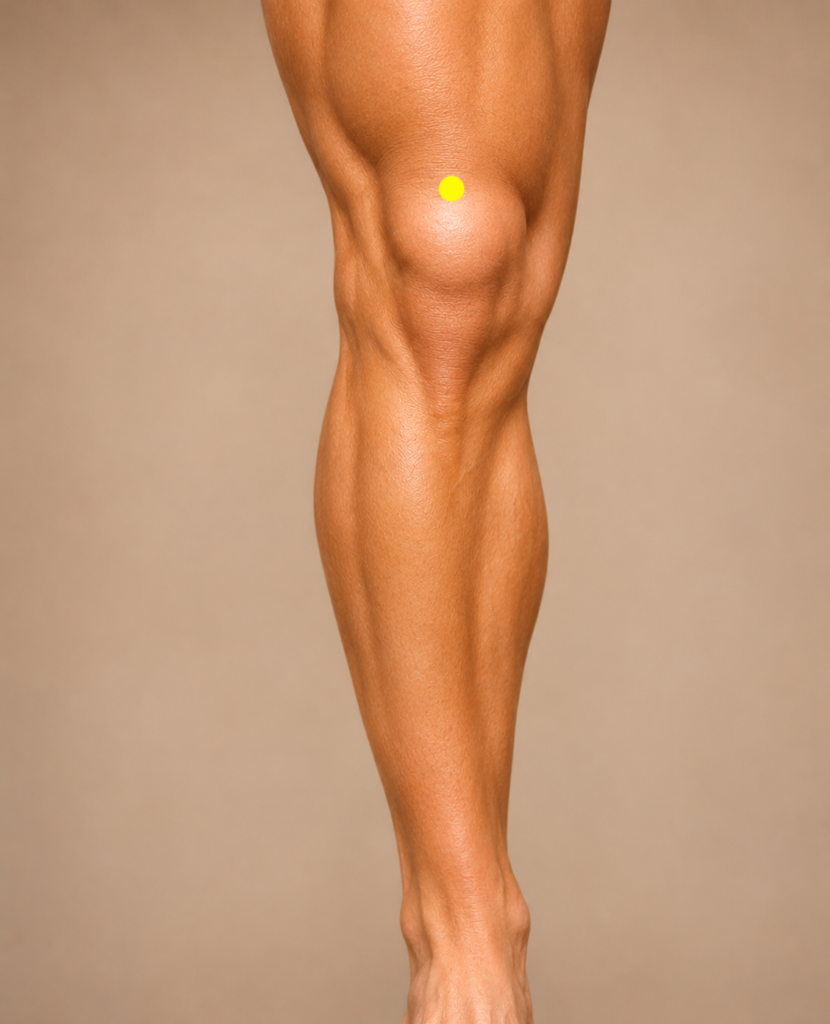
3. Press on ST34 above the outer kneecap to calm acute pain. ST34 sits on the front of the thigh, about three finger-widths above the outer top corner of the kneecap, in the groove of the muscle. Press firmly with your thumb for one to two minutes on each leg. ST34 is called “Liangqiu,” the “Beam Hill.”
ST34 is the cleft point on the Stomach channel, traditionally used for sudden, sharp pain. It can also help the quadriceps, which may tighten and ache when the front of the knee is overworked.
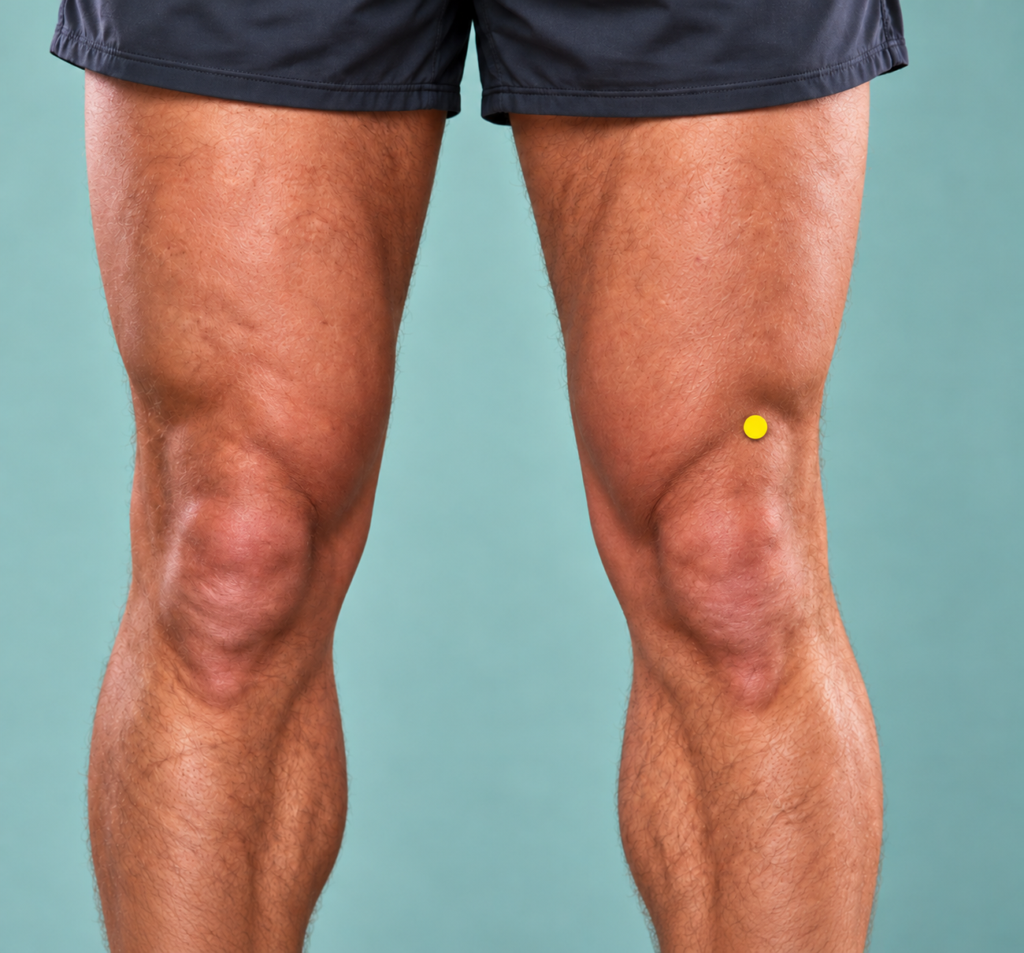
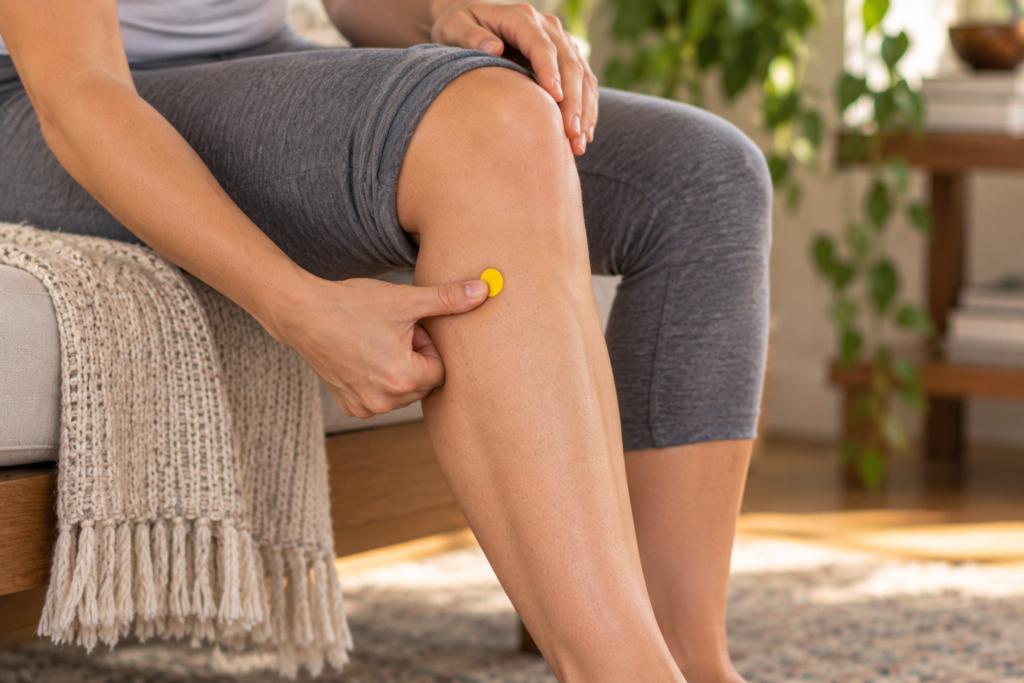
4. Press on SP10 above the inner kneecap to move stuck Blood. SP10 sits on the inner thigh, about three finger-widths above the inner top corner of the kneecap, on the bulge of the inner thigh muscle. Press firmly with your thumb for one to two minutes on each leg. SP10 is called “Xuehai,” the “Sea of Blood.”
SP10 helps move Blood that has pooled after an injury, which Traditional Chinese Medicine considers the cause of swelling and bruising after a twist. This point is located on the inner side of the knee, where meniscus and MCL strains often occur.
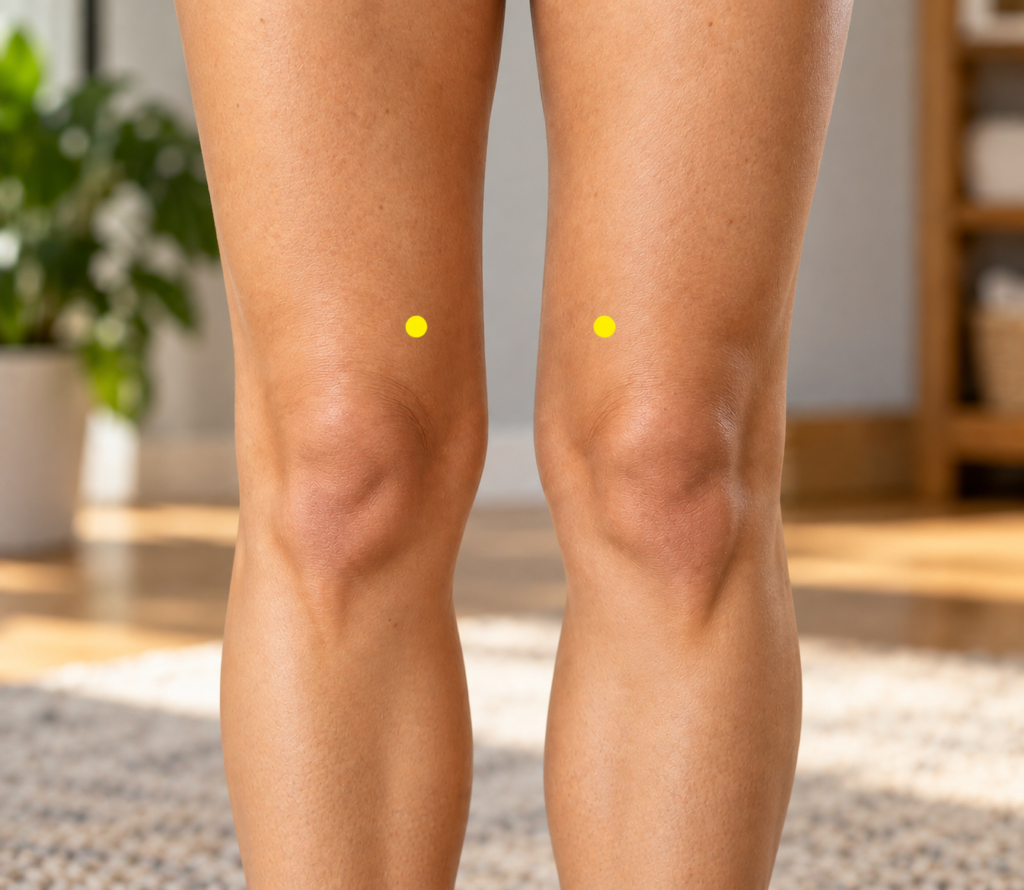
5. Press on LR8 at the inner end of the knee crease to support the ligaments. LR8 sits on the inner side of the knee. With the knee bent, find the inner end of the crease behind the knee, then slide forward into the hollow just in front of the tendons. Press firmly with your thumb for one to two minutes on each knee. LR8 is called “Ququan,” the “Spring at the Bend.”
LR8 is the sea point of the Liver channel, which Traditional Chinese Medicine associates with governing tendons and ligaments. It may be especially helpful for pain on the inner side of the knee, where the MCL and inner meniscus are located.
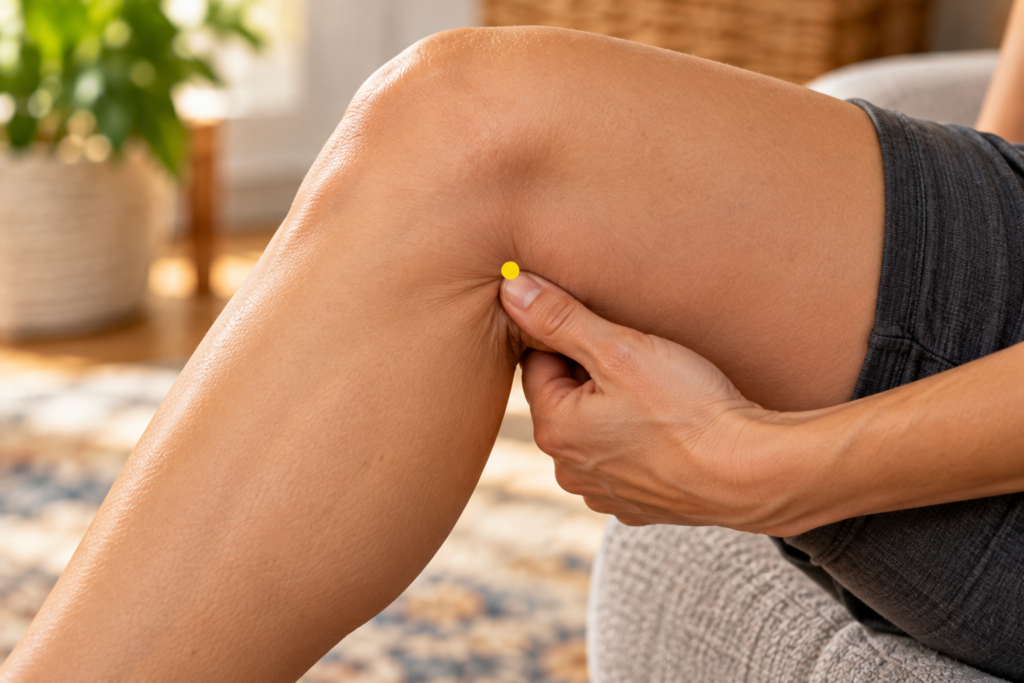
6. Press on SP9 below the inner knee to reduce swelling. SP9 sits on the inner lower leg, in the hollow just below the bulge at the top of the shinbone. Press firmly with your thumb for one to two minutes on each leg. SP9 is called “Yinlingquan,” the “Yin Mound Spring.”
SP9 is traditionally used to drain fluid and dampness, making it a top choice for a puffy, heavy knee. It also helps with tenderness along the joint’s inner side.
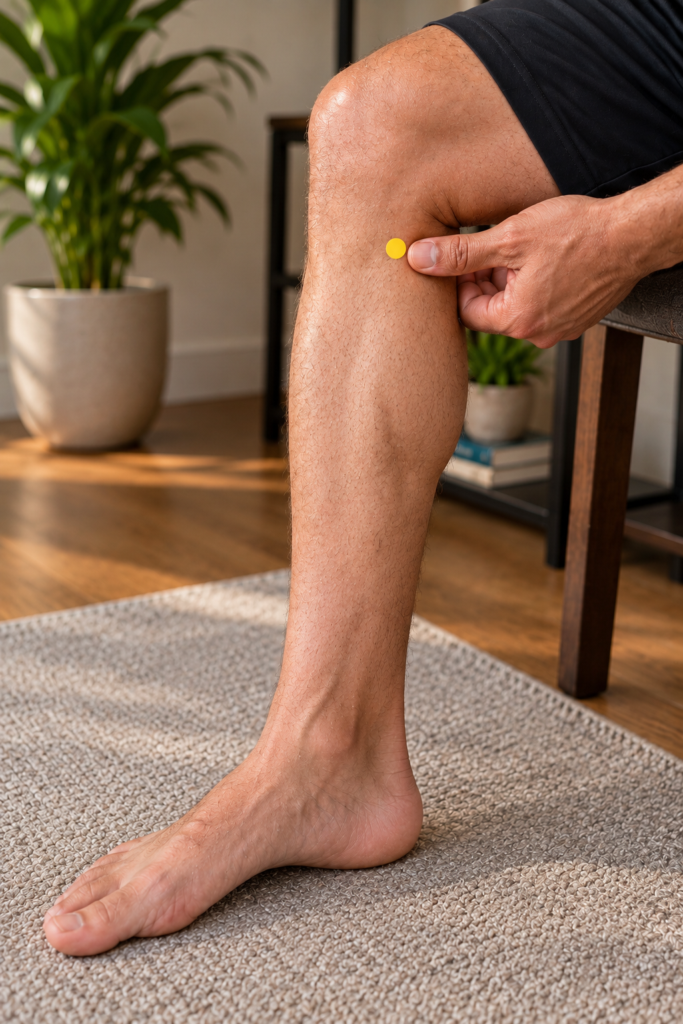
7. Press on GB34 below the outer knee to strengthen the tendons. GB34 sits on the outer lower leg, in the hollow just in front of and below the small bony knob below the outer knee. Press firmly with your thumb for one to two minutes on each leg. GB34 is called “Yanglingquan,” the “Yang Mound Spring.”
In Traditional Chinese Medicine, GB34 is the influential point of the tendons. It’s used to address tendon and ligament strains and stiffness throughout the body. In games with frequent, quick side-to-side movements, this point helps support the soft tissues that keep the knee stable.
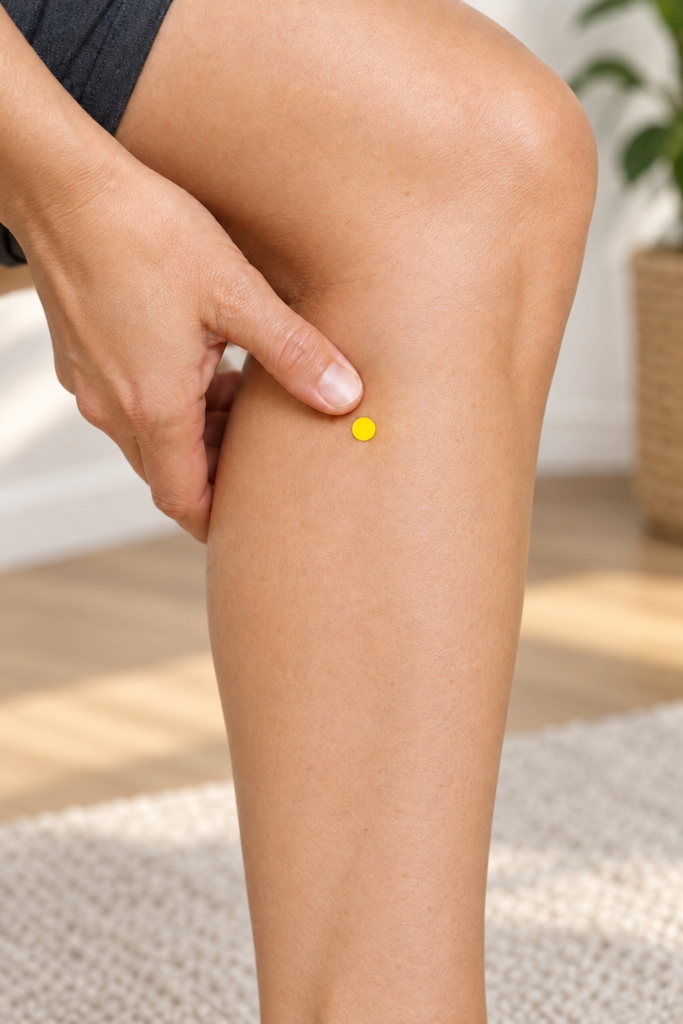
8. Press on BL40 behind the knee to release tightness. BL40 sits in the center of the crease at the back of the knee, between the two tendons. Press gently with your fingertips for one to two minutes on each knee, while seated with the knee slightly bent. BL40 is called “Weizhong,” the “Bend Middle.”
BL40 is a key point for pain and stiffness behind the knee, where meniscus strain may sometimes be felt. It can also help relieve tight hamstrings and calves. Apply light pressure, and avoid this point if the area is swollen or a vein is visible.
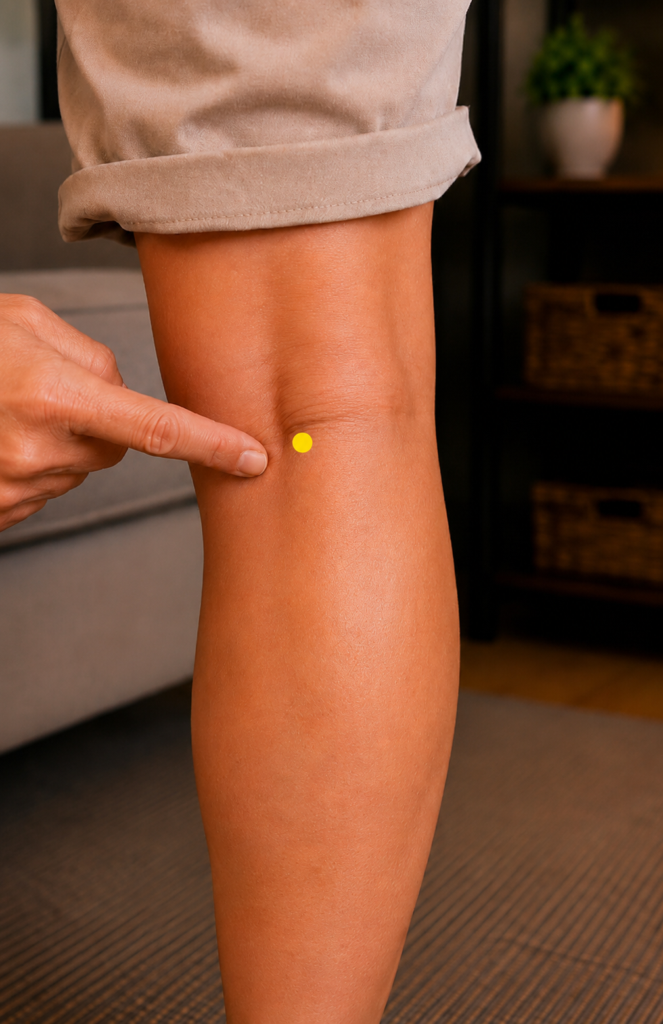
9. Press on ST36 below the knee to aid recovery. ST36 sits four finger-widths below the bottom of the kneecap, about one finger-width to the outside of the shinbone. Press firmly with your thumb for one to two minutes on each leg. ST36 is called “Zusanli,” the “Leg Three Miles.”
ST36 helps strengthen Qi and Blood and support the muscles around the knee. In Traditional Chinese Medicine, it’s also known to help restore leg stamina, making it useful between matches and when easing back into play.
Why These Acupressure Points Work
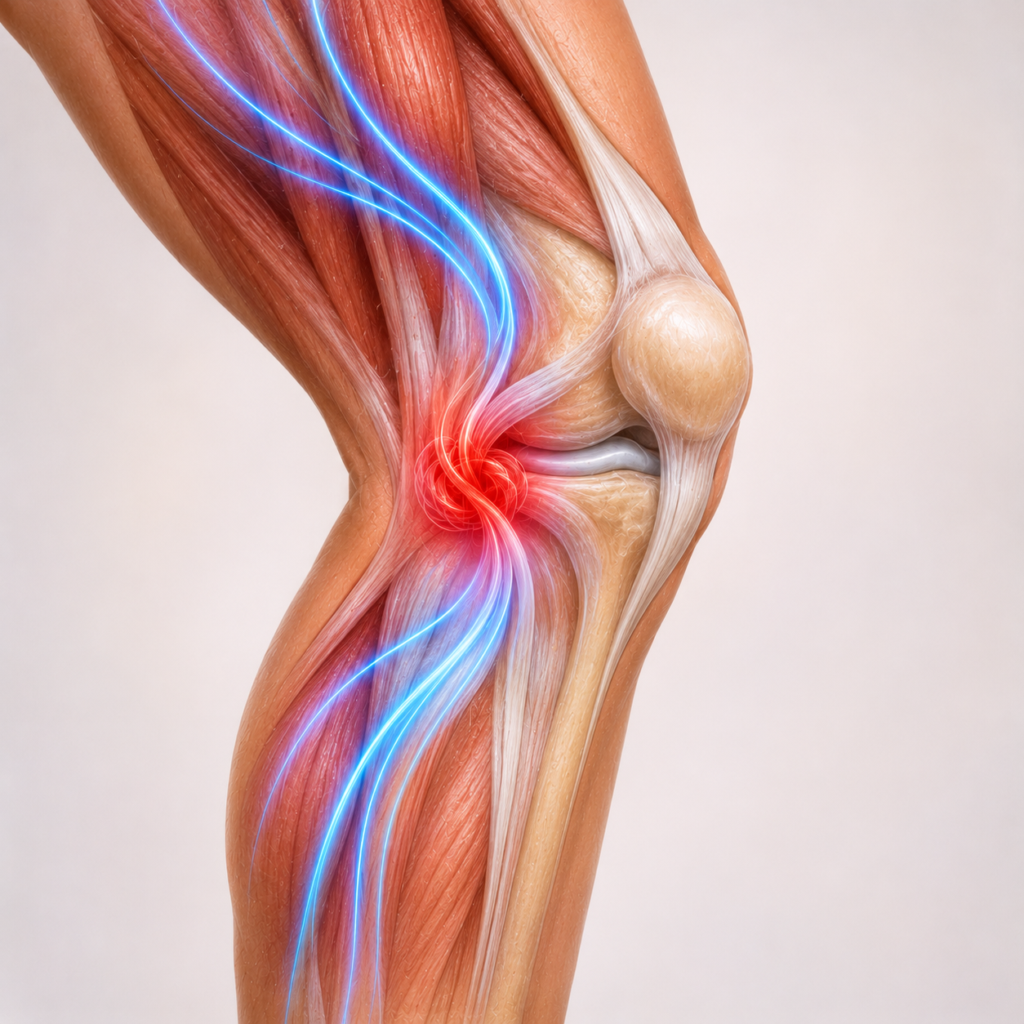
In Traditional Chinese Medicine, pickleball can strain the knee in two main ways. A sudden twist or lunge may disrupt the flow of Qi and Blood in the joint, causing sharp pain and swelling. Repeated crouching and pivoting can gradually wear down tendons and ligaments, especially in older players whose Liver and Kidney energy has declined with age. Treatment aims to clear blockages around the joint and support the soft tissues that hold it together.
The nine points work together to relieve pressure on the knee from all sides:
- Xiyan, Heding, and BL40 surround the joint and ease local pain and stiffness.
- ST34 and ST36 calm acute pain and support the quadriceps at the front of the knee.
- SP10, LR8, and SP9 target the inner knee, moving stuck Blood and reducing swelling.
- GB34 strengthens the tendons and ligaments that keep the knee stable.
How to Properly Use These Acupressure Points
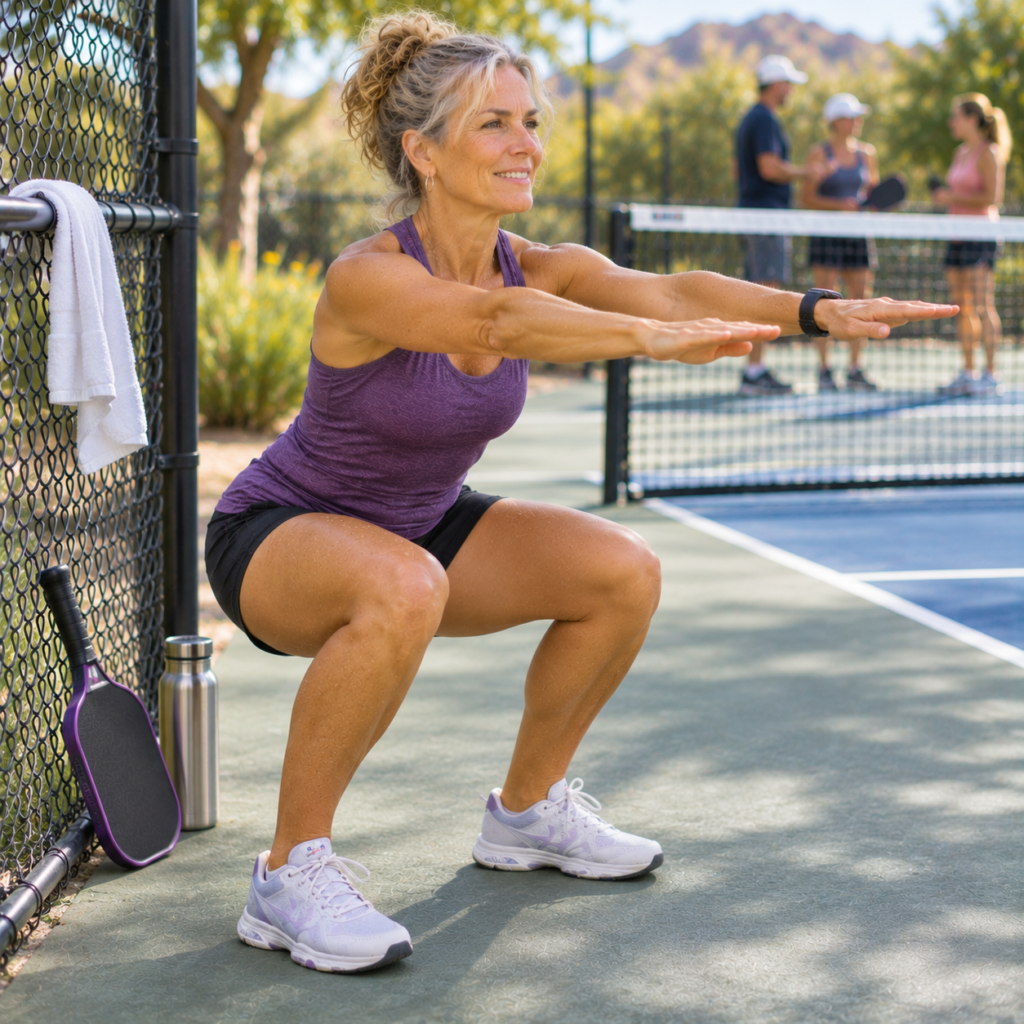
Acupressure for pickleball-related knee pain is most effective after play and on rest days when incorporated into a consistent recovery routine.
- After playing, sit with the leg supported and the knee slightly bent, then work through all nine points for one to two minutes per point.
- If the knee is swollen, do not press directly on the puffy area. Focus on SP10, SP9, ST34, and ST36, which are located above and below the joint.
- Apply gentle pressure to Xiyan, Heding, and BL40, which lie directly on the joint, and firmer pressure to the thigh and lower leg points.
- Repeat once or twice a day for at least four to six weeks, or until the knee feels strong enough for a full match.
Small adjustments both on and off the court can significantly benefit your knees. Spend five to ten minutes warming up before playing by doing exercises such as mini squats, calf raises, and gentle leg swings. Wear court shoes designed for lateral movement, as running shoes are not intended for this purpose. Strengthen your quadriceps, hamstrings, and glutes two or three times per week. Allow rest days between sessions, particularly when recovering from soreness. Position your feet to reach the ball rather than twisting your knee. Apply warmth before playing to loosen a stiff knee. If you sustain a new injury, apply ice for the first day or two to reduce swelling, then switch to heat to maintain the movement of Qi and Blood.
You can learn more about why Traditional Chinese Medicine prefers not to use ice.
When to Get Professional Help

Consult a physician or orthopedic specialist if your knee locks, catches, cannot fully straighten, gives way, feels unstable, or swells after a twisting injury. These symptoms may indicate a meniscal tear or ligament injury that requires imaging. Seek prompt medical attention if your knee popped at the time of injury and swelled within a few hours, if the pain makes it difficult to bear weight on your leg, or if the pain continues to worsen or persists for more than two weeks. Seek immediate medical attention if your knee is red, warm, and swollen and you have a fever, or if you develop new calf pain and swelling, which may indicate a blood clot.
Acupressure is a gentle, supportive practice for pickleball knee pain, but it should be used alongside, not instead of, diagnosis and medical care.
For related health concerns, acupressure for knee pain, acupressure for osteoarthritis, and acupressure to recover after a workout are companion pieces.
Other posts in the pickleball series include acupressure for pickleball shoulder pain, acupressure for pickleball elbow, acupressure for pickleball wrist pain, acupressure for pickleball ankle pain, acupressure for pickleball back pain, and top acupressure points for pickleball players.
Above and Beyond Acupuncture offers acupuncture, cupping, and lifestyle coaching at the North Frank Lloyd Wright Boulevard location in Scottsdale.
Schedule an appointment online to start your healing journey.
The points above are only as effective as the technique used to apply them. Where to press, how firmly, and for how long all affect the result. For a full breakdown of how to perform acupressure properly at home, read Performing Acupressure in 3 Easy Steps.
About the Publisher
Paul Kerzner, L.Ac., is a licensed acupuncturist and board-certified herbalist, as well as the founder of Above and Beyond Acupuncture in Scottsdale. His own journey from chronic patient to practicing acupuncturist shapes his commitment to providing honest, clinically grounded information about acupuncture and Traditional Chinese Medicine. Learn more about Paul and his clinical approach on the About Us page.