Key Takeaways
- Muscle spasms occur when muscles tighten involuntarily and can be triggered by various factors, including overuse and stress.
- Acupressure for muscle spasms involves applying pressure to specific points, such as GB34 and LR3, to relax tight muscles and relieve pain.
- Nine key acupressure points help address muscle tension, nourish the body, and promote relaxation in affected areas.
- Simple at-home steps, such as staying hydrated and stretching, can help prevent muscle spasms.
- If spasms persist or are accompanied by severe symptoms, seek medical advice promptly.
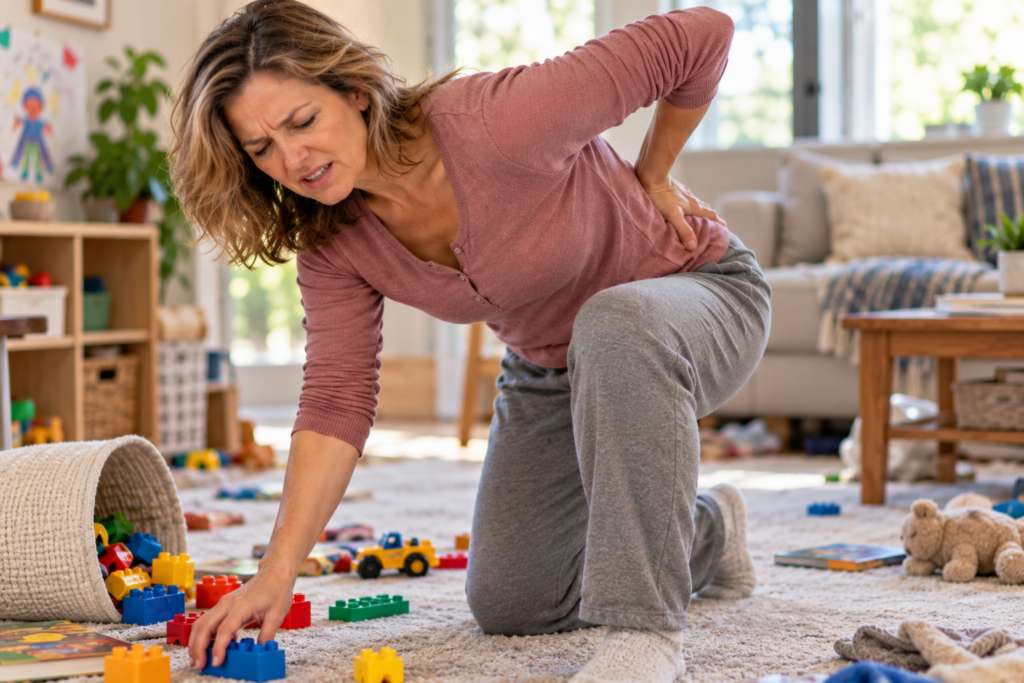
Have you ever bent down to pick something up, only to feel your lower back tighten so much that you could barely stand? Or woken up with a stiff neck or a shoulder that feels like a hard, aching knot? Muscle spasms can happen almost anywhere, and even a brief one can demand your attention.
A muscle spasm occurs when a muscle tightens involuntarily and cannot relax. Some spasms last only a few seconds, such as a twitching eyelid or a nighttime calf cramp. Others may last for hours or even days, particularly in the back, neck, and shoulders. The tight muscle can pull on nearby joints, creating a cycle of pain and further tightening.
Muscle spasms usually have more than one cause. Overuse, staying in one position too long, dehydration, low magnesium or potassium, poor sleep, stress, and cold drafts can all make muscles more prone to tightening. Sometimes, spasms are the body’s way of protecting itself: when a joint, disc, or nerve is irritated, nearby muscles often tighten to guard the area. That’s why even a small, awkward movement can trigger a back or neck spasm.
In Traditional Chinese Medicine, muscles, tendons, and ligaments are called the sinews and are connected to the Liver. The Liver stores Blood, which nourishes the sinews and keeps them soft and flexible. When Blood is low, stress makes the Liver tense, or cold and wind enter the muscles, the sinews can lose flexibility and tighten. Twitching and sudden spasms are often described as internal wind moving through sinews that lack nourishment.
Most muscle spasms improve with simple home care. The nine points below help relax muscles, ease tightness, and support the Blood that keeps muscles flexible.
What Acupressure Points to Press and Why
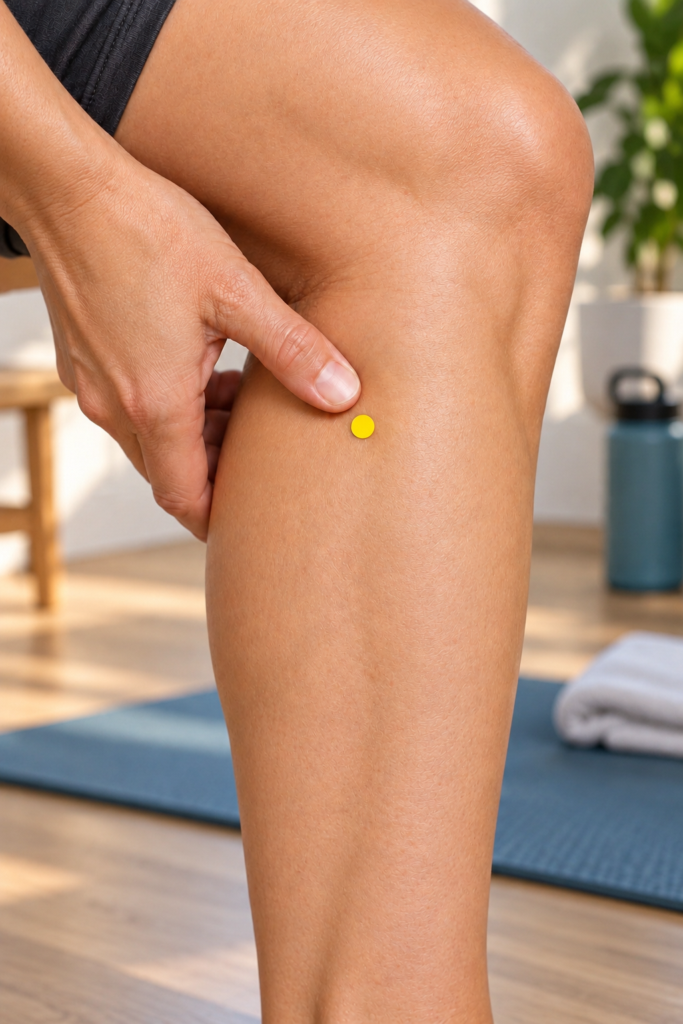
1. Press on GB34 below the outer knee to relax the sinews. GB34 sits on the outside of the lower leg, in the hollow just in front of and below the small bony knob below the outer knee. Press firmly with your thumb for one to two minutes on each leg. GB34 is called “Yanglingquan,” the “Yang Mound Spring.”
GB34 is the primary point for the sinews and is considered the most important point in Traditional Chinese Medicine for muscles, tendons, and ligaments. It helps ease cramps and spasms throughout the body, from the neck and shoulders to the back and legs. This point is the foundation of the routine.
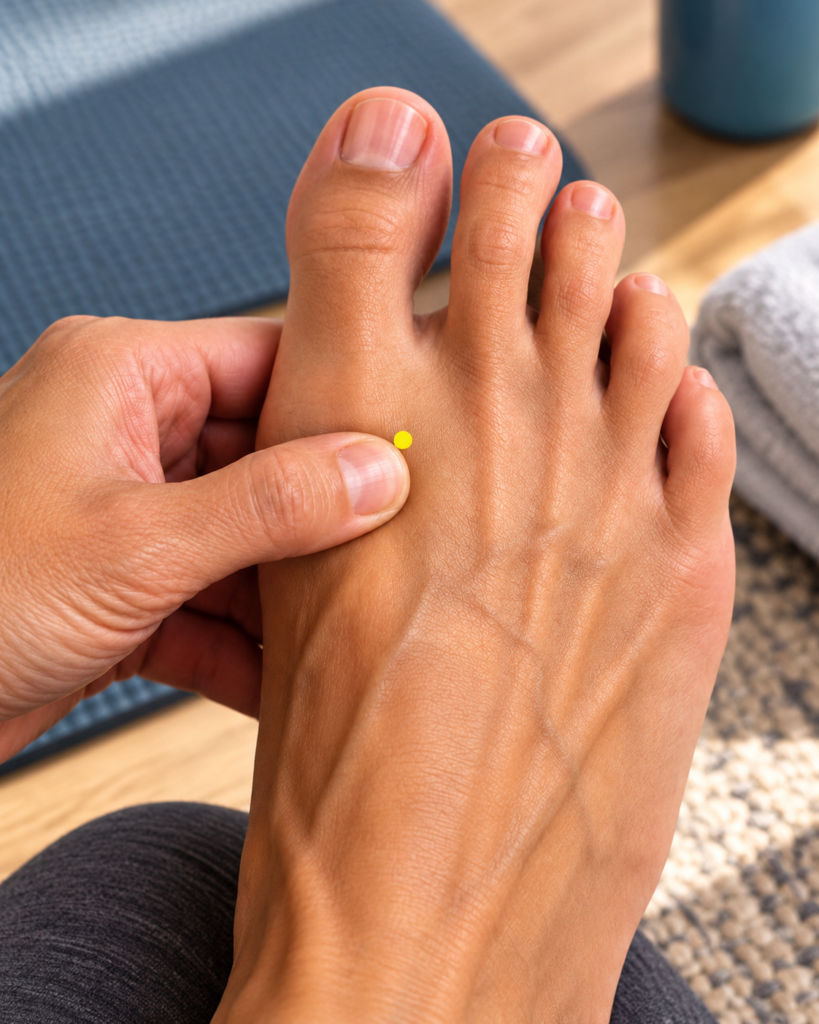
2. Press on LR3 on the top of the foot to calm the Liver and release tension. LR3 sits on the top of the foot, in the webbing between the big toe and second toe, about two finger-widths back from the webbing, in the hollow just before the two bones meet. Press firmly with your thumb for one to two minutes on each foot. LR3 is called “Taichong,” the “Great Surge.”
The Liver is linked to the sinews, and LR3 is the main point for calming the Liver and relaxing tight muscles. It is especially helpful for spasms caused by stress, irritability, or clenching. LR3 and GB34 are a classic pair for easing tight, cramping sinews.
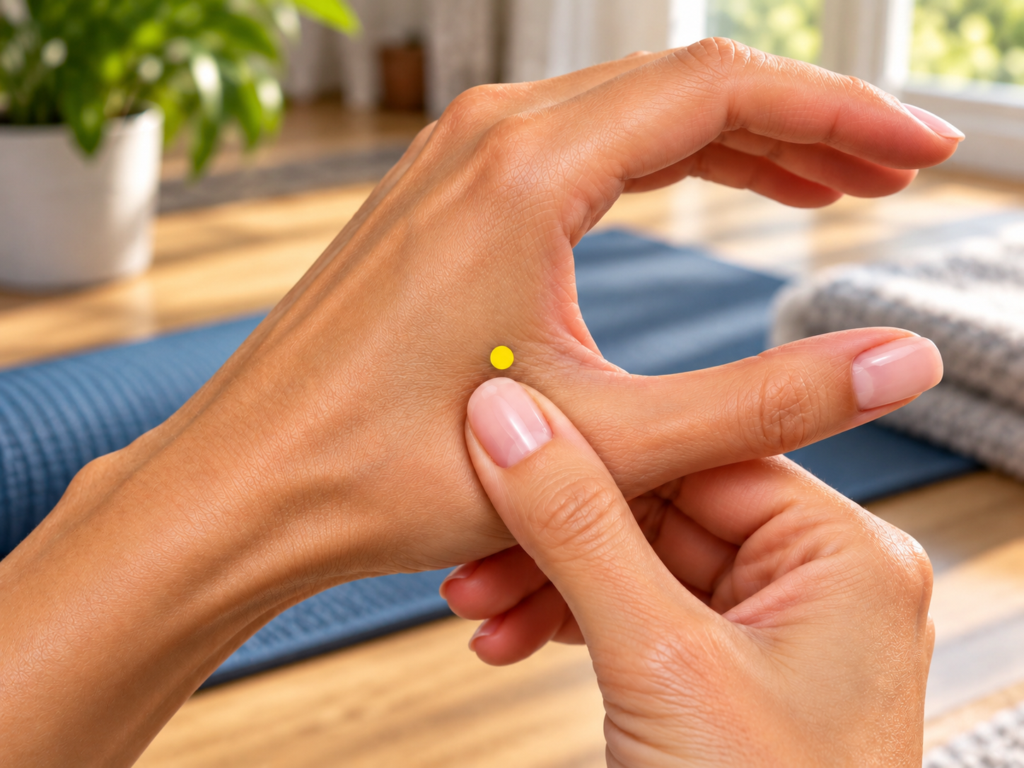
3. Press on LI4 in the hand to ease pain and release tension. LI4 sits in the webbing between the thumb and index finger, at the highest point of the muscle when you bring the thumb and index finger together. Press firmly with the thumb of your other hand for one to two minutes on each hand. LI4 is called “Hegu,” the “Joining Valley.” LI4 is contraindicated during pregnancy.
LI4 is a key point for pain relief. Together with LR3, it forms a pair known as the Four Gates, traditionally used to ease tension and spasms throughout the body. LI4 is easy to access whenever a muscle tightens.
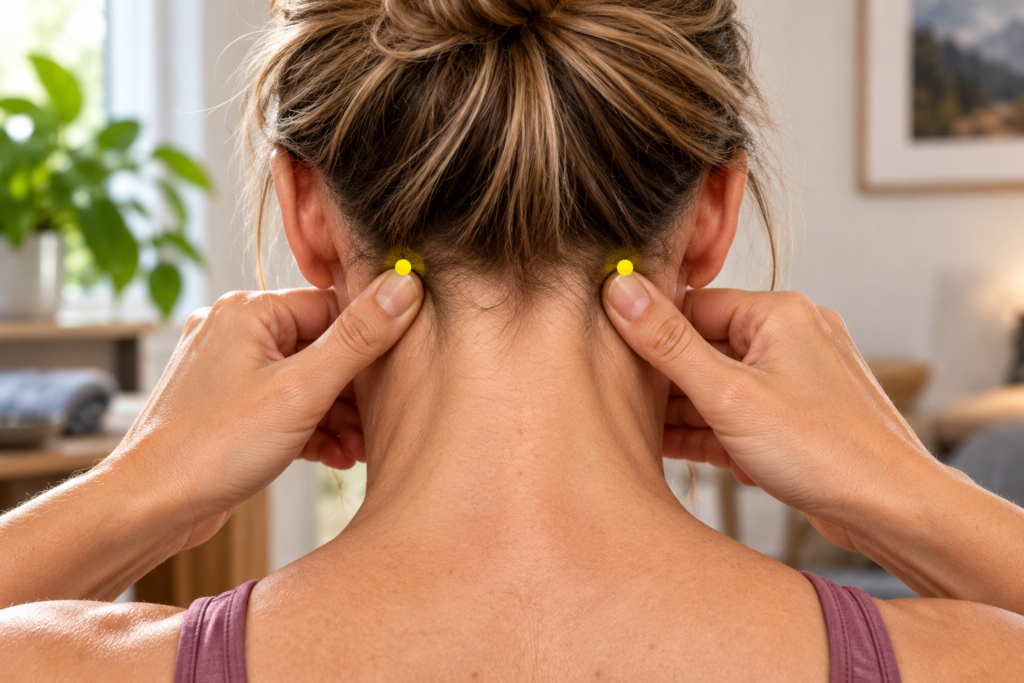
4. Press on GB20 at the base of the skull to release neck spasms. GB20 sits at the base of the skull, in the hollows on either side of the two thick muscles at the back of the neck, roughly level with the earlobes. Press upward into both points with your thumbs for one to two minutes while letting your head rest back into your hands. GB20 is called “Fengchi,” the “Wind Pool.”
GB20 is an important point for clearing wind, which Traditional Chinese Medicine associates with sudden stiffness and neck spasms. It helps relax the muscles at the top of the neck and may ease a stiff, locked neck caused by a cold draft, a long day at the computer, or an awkward night’s sleep.
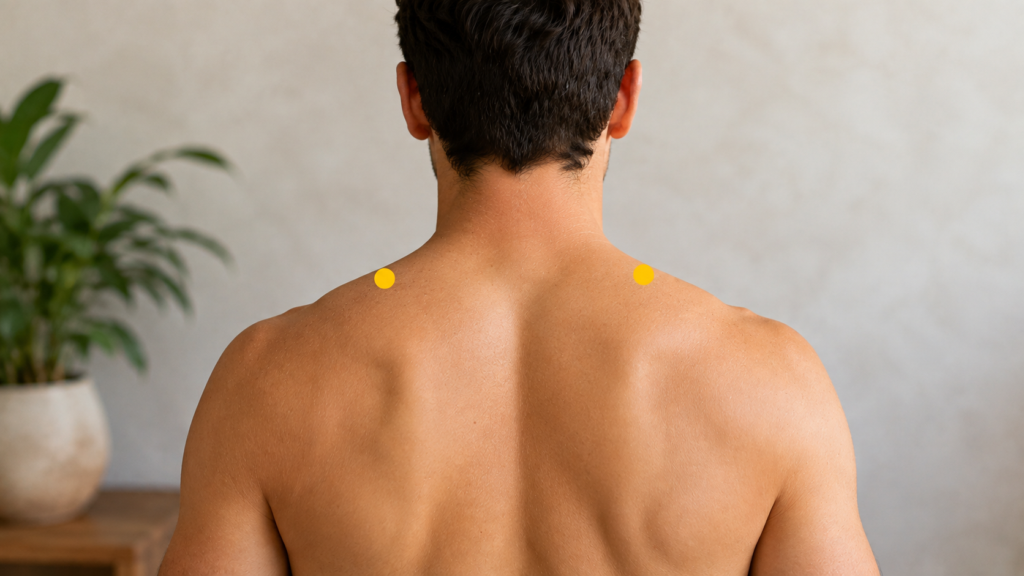
5. Press on GB21 on the top of the shoulder to release shoulder spasms. GB21 sits on the top of the shoulder, halfway between the base of the neck and the bony tip of the shoulder, at the highest point of the shoulder muscle. Press down firmly with your fingertips or squeeze the muscle gently between your thumb and fingers for one to two minutes on each side. GB21 is called “Jianjing,” the “Shoulder Well.” GB21 is avoided during pregnancy.
GB21 is located in the thick muscle at the top of the shoulder, a common place for knots and spasms. It helps release tension caused by stress, carrying bags, or hunching over a desk, and can ease tightness that travels up into the neck.
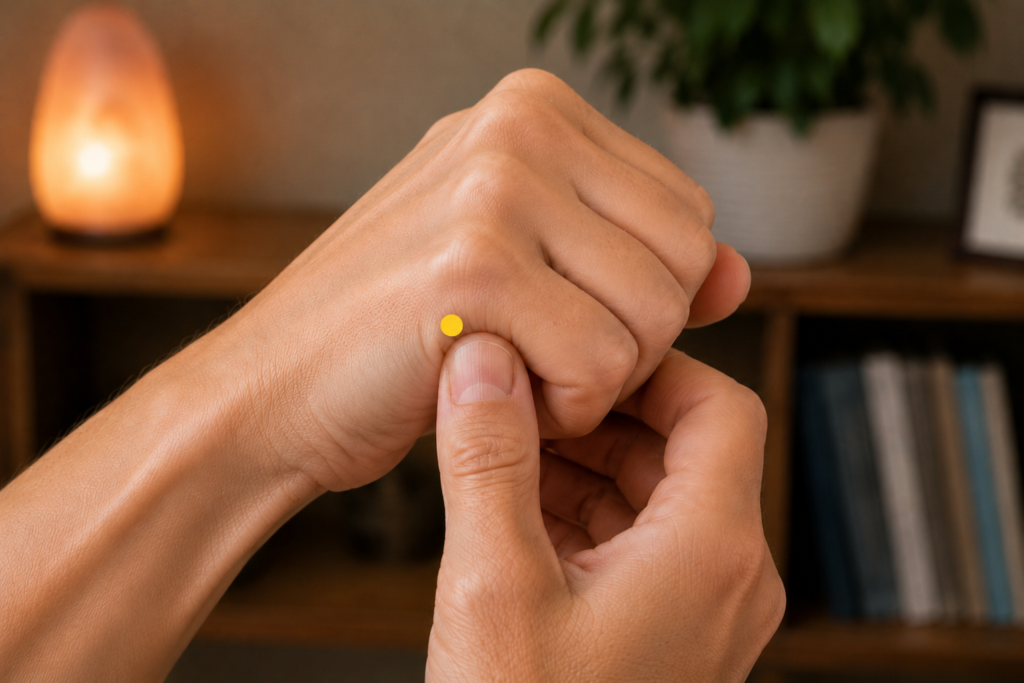
6. Press on SI3 on the side of the hand to release the neck and back. SI3 sits on the outer edge of the hand, just below the knuckle of the pinky finger, at the end of the crease that forms when you make a loose fist. Press firmly with the thumb of your other hand for one to two minutes on each hand. SI3 is called “Houxi,” the “Back Stream.”
SI3 helps open the channel that runs along the spine, making it a classic point for easing neck and back spasms from a distance. Pressing this point while slowly turning your head or gently moving your back can help a tight muscle start to relax.
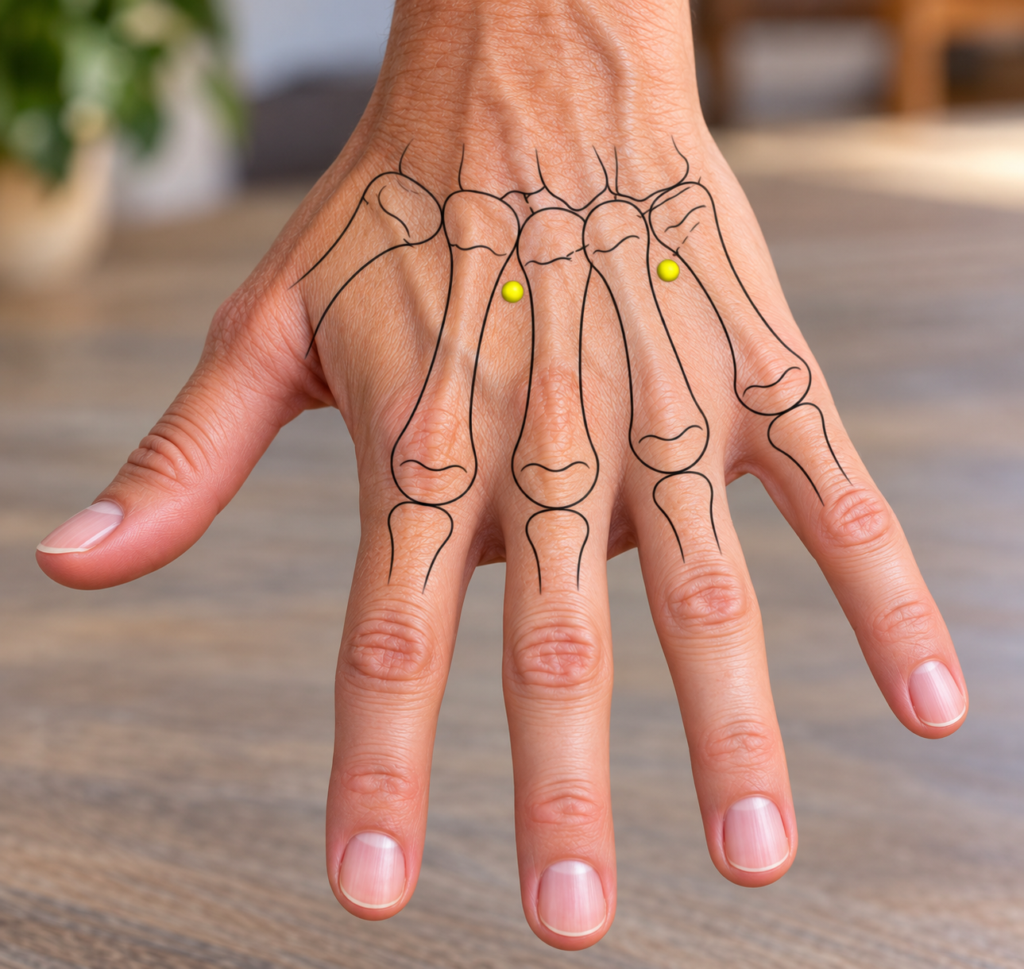
7. Press on Yaotongxue on the back of the hand to ease low back spasms. Yaotongxue is a pair of extra points on the back of each hand: one between the second and third hand bones and one between the fourth and fifth hand bones, each about halfway between the wrist crease and the knuckles. Press each point firmly with the thumb of the other hand for about a minute while gently moving the lower back. Yaotongxue means “Low Back Pain Points.”
Although these points are on the back of the hand, they are traditionally used for sudden lower back pain and spasms, such as when your back locks up after lifting or twisting. Because they are easy to reach, they can be a practical first step if your back seizes and you cannot lie down.
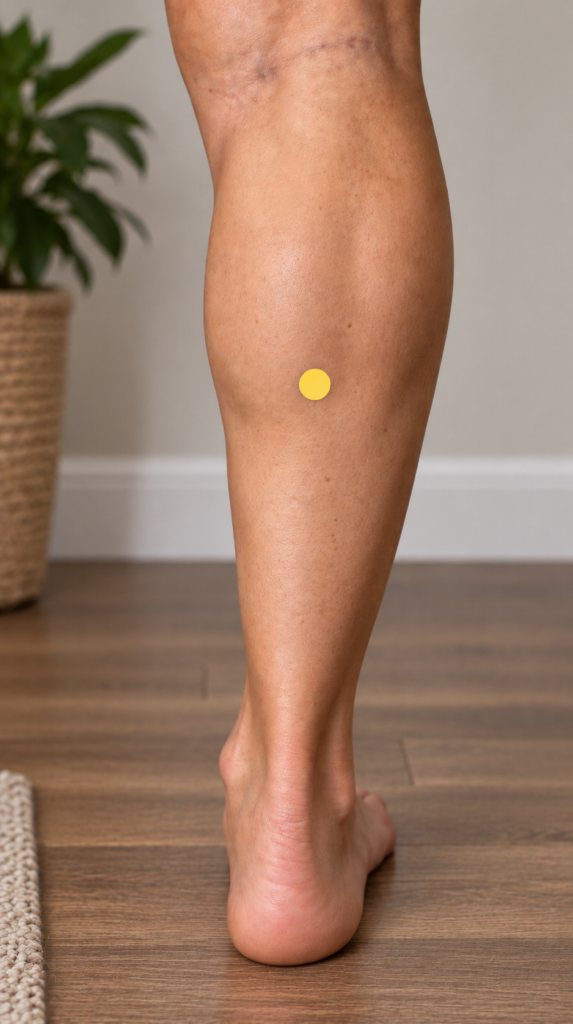
8. Press on BL57 on the back of the calf to release calf spasms. BL57 sits on the back of the lower leg, about midway between the crease behind the knee and the heel, in the hollow that forms just below the calf muscle when you rise up on your toes. Press firmly with your thumb for one to two minutes on each leg. BL57 is called “Chengshan,” the “Supporting Mountain.”
BL57 is the traditional point for calf cramps and spasms. It helps relax the calf muscle and improve blood flow in the lower leg. If you get a calf cramp, gently flex your foot toward you, then press BL57 as the cramp begins to ease.
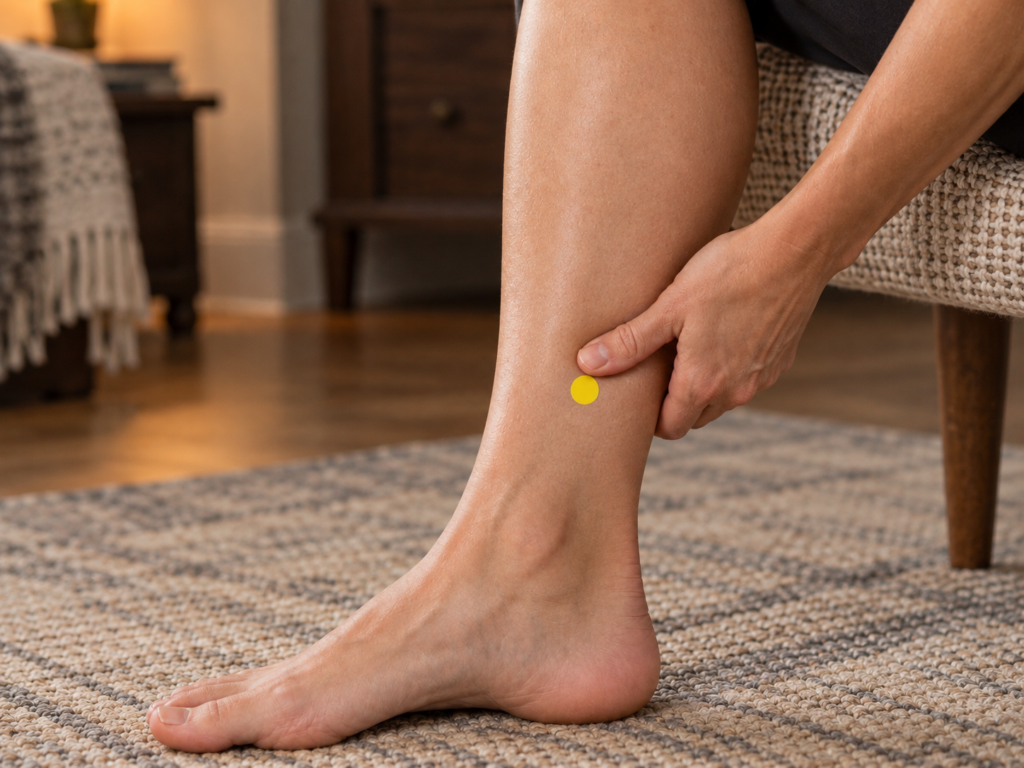
9. Press on SP6 above the inner ankle to nourish the Blood. SP6 sits four finger-widths up from the tip of the inner ankle bone, just behind the back edge of the shinbone. Press firmly with your thumb for one to two minutes on each leg. SP6 is called “Sanyinjiao,” the “Three Yin Intersection.” SP6 is contraindicated during pregnancy.
SP6 is where the Spleen, Liver, and Kidney channels converge. It helps nourish the Blood, which keeps the sinews soft and flexible. This point is especially helpful for recurring spasms, nighttime cramps, and twitching caused by tiredness or poor sleep.
Why These Acupressure Points Work
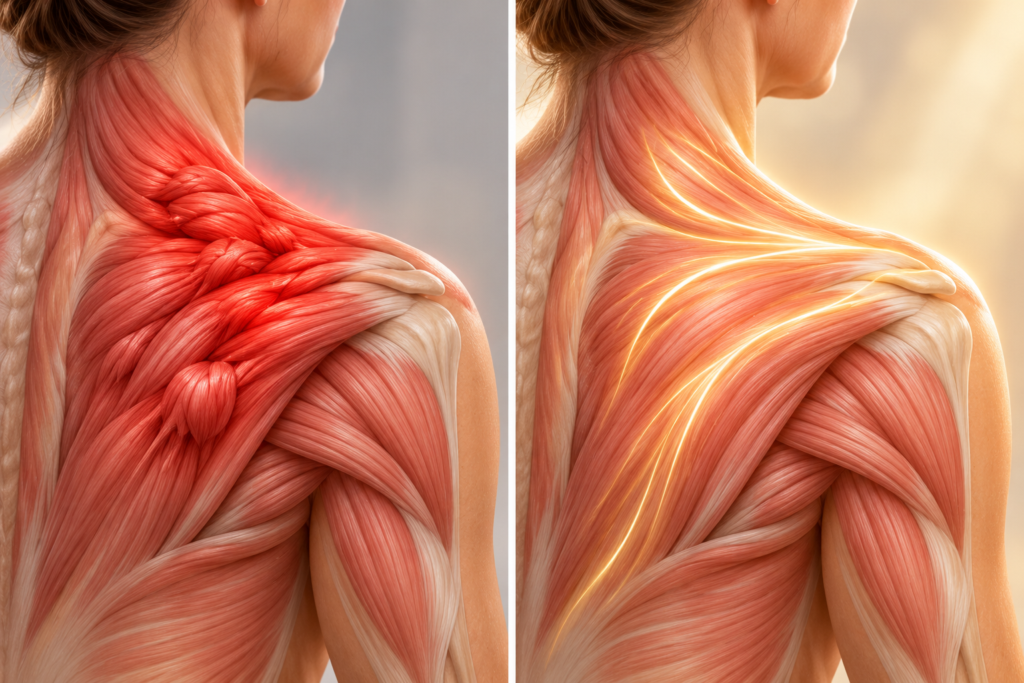
In Traditional Chinese Medicine, supple muscles rely on a calm Liver, smooth Qi flow, and enough Blood to nourish the sinews. Stress can tighten the Liver, while cold and wind may settle into the muscles or Blood may run low, causing the sinews to contract and spasm.
These nine acupressure points address both tension and nourishment:
- The sinew points (GB34, LR3, and LI4) help relax muscles and tendons throughout the body.
- The neck and shoulder points (GB20, GB21) relieve spasms in the upper body and dispel wind and cold.
- The back and leg points (SI3, Yaotongxue, BL57) help ease spasms in the spine, lower back, and calves, both nearby and at a distance.
- The nourishing point (SP6) builds Blood, keeping the sinews soft and flexible.
How to Properly Use These Acupressure Points
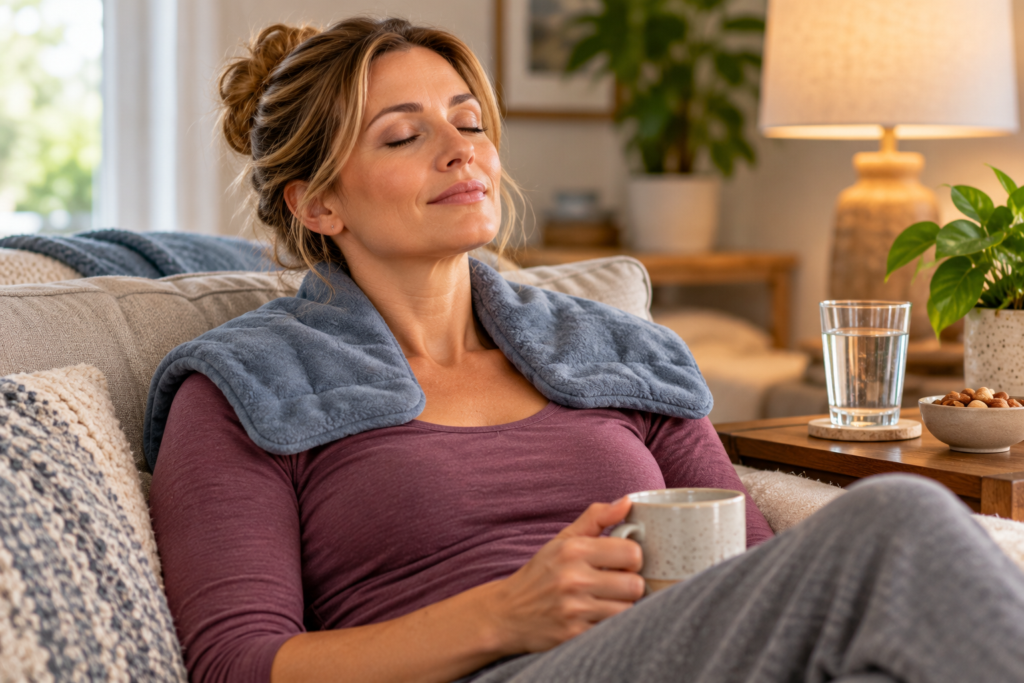
Acupressure can help relieve muscle spasms when they occur and may help prevent them when practiced daily.
- When a spasm occurs, begin by applying pressure to distal points, such as LI4, LR3, SI3, or Yaotongxue, while gently moving the affected area. Then gradually work toward the tense muscle.
- Hold each point for one to two minutes, breathing slowly and letting the muscle soften with each exhalation.
- Apply firm pressure to the hands, legs, and feet, and steady, comfortable pressure to the neck and shoulders.
- For muscles that spasm frequently, perform the entire routine once daily for several weeks.
Simple habits can help keep your muscles relaxed. Drink enough water, especially in hot weather or after exercise, and choose magnesium- and potassium-rich foods such as leafy greens, nuts, seeds, beans, and bananas. If a muscle remains tight, apply warmth and gently stretch it away from the spasm. Take breaks from sitting or screen time, and protect your neck and shoulders from cold drafts.
When to Get Professional Help
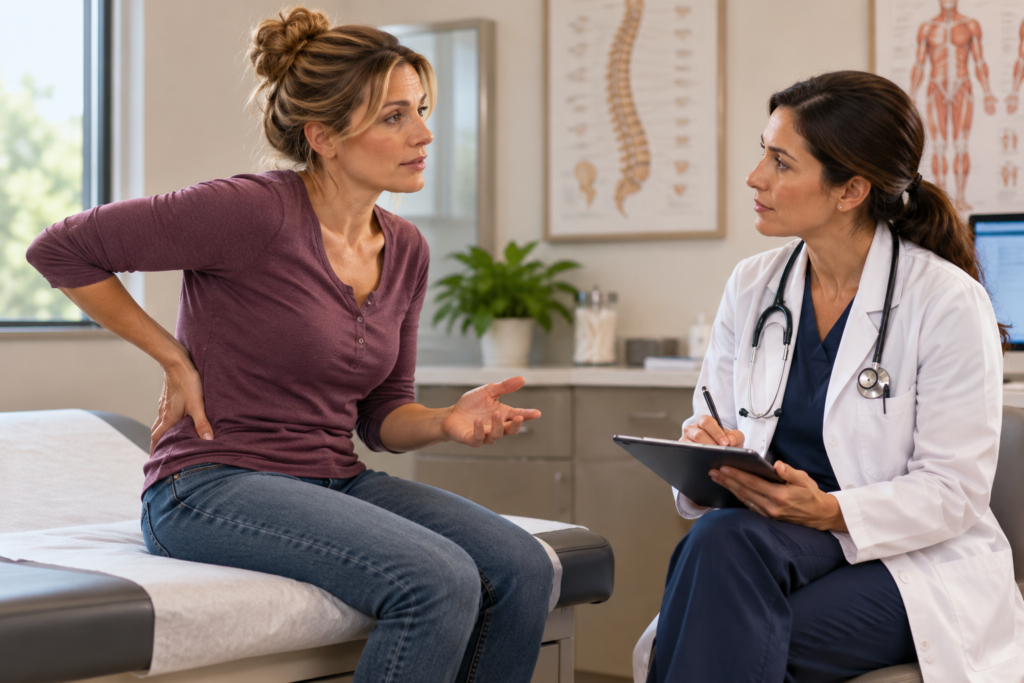
See your doctor if muscle spasms happen often, last more than a few days, keep returning in the same spot, or begin after you start a new medication. Seek medical advice right away if you have a back or neck spasm along with numbness, tingling, or weakness in your arms or legs; spasms after a fall or injury; calf spasms with swelling, redness, or warmth; or twitching that spreads or is accompanied by muscle weakness. Get emergency help for a back spasm with new loss of bladder or bowel control or numbness in the groin; a stiff neck with fever, severe headache, or confusion; or severe muscle pain and weakness with dark, tea-colored urine after intense exercise. These may be signs of serious conditions that need immediate care.
Acupressure is an effective, supportive practice for muscle spasms. It may help, but it does not replace diagnosis or medical care.
For related concerns, acupressure for neck pain, acupressure for upper back pain, and acupressure for low back and hip pain are companion pieces. If tight muscle knots are a constant problem, acupressure for myofascial pain syndrome can provide more insight.
Above and Beyond Acupuncture offers acupuncture, cupping, and lifestyle coaching at the North Frank Lloyd Wright Boulevard location in Scottsdale.
Schedule an appointment online to start your healing journey.
The points above are only as effective as the technique used to apply them. Where to press, how firmly, and for how long all affect the result. For a full breakdown of how to perform acupressure properly at home, read Performing Acupressure in 3 Easy Steps.

About the Publisher
Paul Kerzner, L.Ac., is a licensed acupuncturist and board-certified herbalist, as well as the founder of Above and Beyond Acupuncture in Scottsdale. His own journey from chronic patient to practicing acupuncturist shapes his commitment to providing honest, clinically grounded information about acupuncture and Traditional Chinese Medicine. Learn more about Paul and his clinical approach on the About Us page.