
Key Takeaways
- The first acupuncture treatment begins with a detailed initial consultation to assess symptoms and medical history.
- Patients typically feel little discomfort when the needle is inserted and often experience warmth or tingling.
- After insertion, the needles remain in place for 25 to 40 minutes, allowing relaxation and a transition to a parasympathetic state.
- Post-treatment experiences vary; some feel immediate improvement, while others notice gradual changes over the next few days.
- Personalized self-care guidance and 24-hour follow-ups enhance treatment and support recovery.

Most people have heard of acupuncture for years before they actually try it. The overall concept is well known, but the details are less clear. What does the sensation of the needles actually feel like? What does the practitioner evaluate during the consultation? How long does the entire appointment last, and what occurs afterward?
These are reasonable questions, and having clear answers beforehand greatly impacts how comfortable and productive your first visit feels. Here’s a straightforward, detailed overview of what to expect during your initial acupuncture appointment at Above and Beyond Acupuncture in Scottsdale.
1. The Consultation: Building a Complete Picture
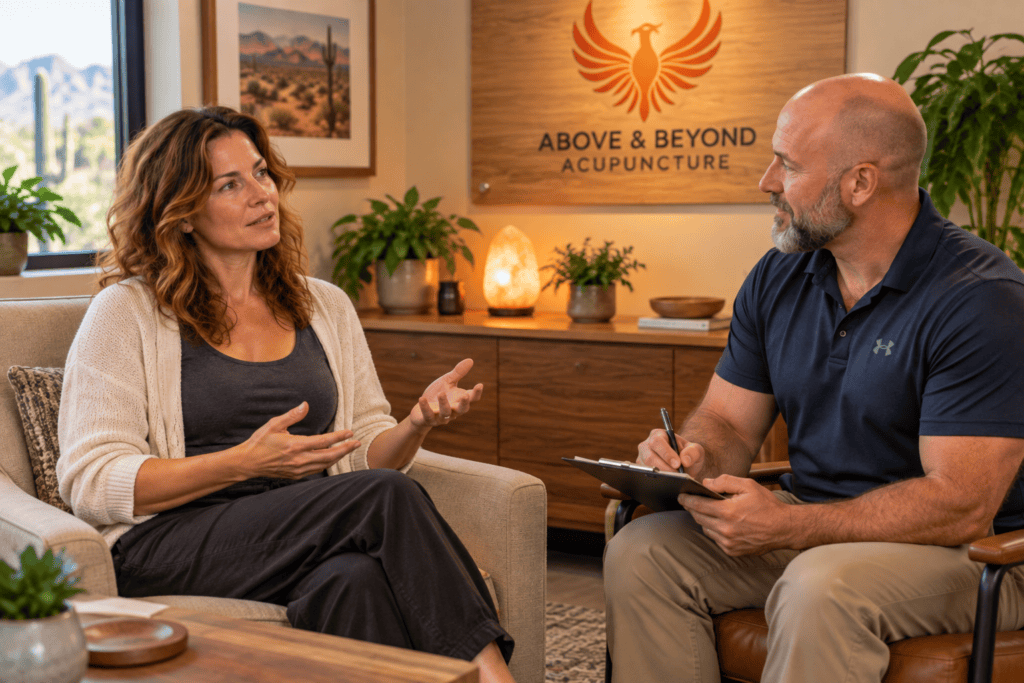
Each initial visit at our Scottsdale acupuncture clinic begins with a detailed intake discussion before any treatment. It’s more than a quick check-in; it’s a comprehensive assessment designed to understand the full pattern of what’s happening in the body, beyond the main issue that prompted the patient to seek care.
The intake process thoroughly documents current symptoms, noting their onset, factors that improve or worsen them, and their impact on daily life. It also includes health history, sleep quality, digestion, energy levels, emotional patterns, medications, and past diagnoses. In Traditional Chinese Medicine, all these aspects are diagnostically important, as the aim is to uncover the underlying pattern causing the symptoms, rather than focusing solely on the symptoms.
Two additional diagnostic tools are essential to TCM assessment and are included in every initial visit. Pulse diagnosis requires feeling the pulse at three different positions on each wrist, each linked to a specific organ system. The pulse’s quality, depth, speed, and strength at each point provide the practitioner with detailed information about the body’s internal functions. Tongue diagnosis involves examining the tongue’s color, coating, shape, and moisture, which reveal insights into the body’s internal state beyond what Western diagnostics can show. Together, these methods help connect symptoms to underlying patterns and guide the subsequent treatment plan.
2. The Treatment Setup: What to Expect Before the Needles

Following the consultation, the treatment takes place in a private, quiet room. Patients usually stay fully clothed, though occasionally sleeves or pant legs need to be rolled up depending on the selected acupuncture points. These points are spread across the entire body, and clinicians select them based on the clinical pattern observed during intake, rather than solely on the location of pain or symptoms.
Acupuncture needles differ significantly from those used for blood draws or injections. They are solid rather than hollow and extremely thin, about the diameter of a human hair. The insertion process requires precision and care. For most patients, insertion feels very slight.
3. The Needling Sensation: What Normal Feels Like
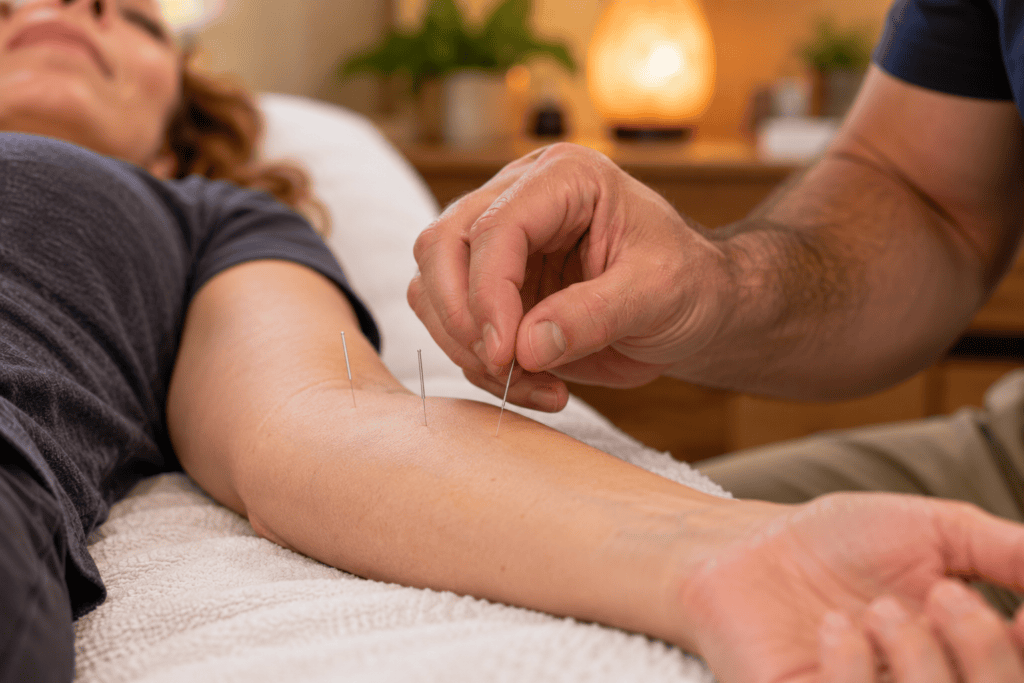
First-time patients often expect more discomfort than they actually feel. The typical sensations during needle placement include mild heaviness, warmth, tingling, or a dull pressure around the area. In Traditional Chinese Medicine (TCM), this is called the arrival of Qi, which indicates that the point has been effectively activated.
A sharp or stinging pain at the needle site is unusual and should be reported to the practitioner immediately. The practitioner adjusts the point location and needle angle based on the patient’s feedback during the session.
After the needles are inserted, they stay in place for about 25 to 40 minutes. Many patients find this resting period to be very relaxing. The nervous system quickly transitions to a parasympathetic state after placement, which is why many patients drift into a light sleep during treatment.
4. After the Needles Come Out: The Hours That Follow

The needles are carefully removed at the end of the rest period. No recovery time is needed, allowing patients to resume normal activities right after the session.
The post-treatment experience differs among patients. Some notice an immediate and clear improvement in symptoms, while others experience more gradual changes over the next 24 to 48 hours as their body processes the treatment. Mild fatigue after the first session is normal and indicates that the nervous system is adapting to the regulatory changes caused by the treatment. To support this adjustment, it is recommended to drink plenty of water and avoid strenuous activities for the rest of the day.
5. Support After the Visit: Self-Care Tools and the 24-Hour Follow-Up

What occurs after leaving the treatment room is an integral part of the clinical process. Each patient is given personalized guidance at the session’s end, including targeted stretches, dietary advice, or lifestyle changes customized to their unique pattern. These practical tools aim to sustain and reinforce the treatment work, reducing reliance on chance between appointments.
Above and Beyond Acupuncture conducts a 24-hour follow-up after each initial appointment. This check-in evaluates the body’s response to treatment, answers any questions that arise afterward, and creates a sense of continuity between visits that many clinics lack. For first-time patients in particular, knowing support continues beyond the session significantly improves their overall experience.
What to Expect from a Course of Acupuncture Treatments
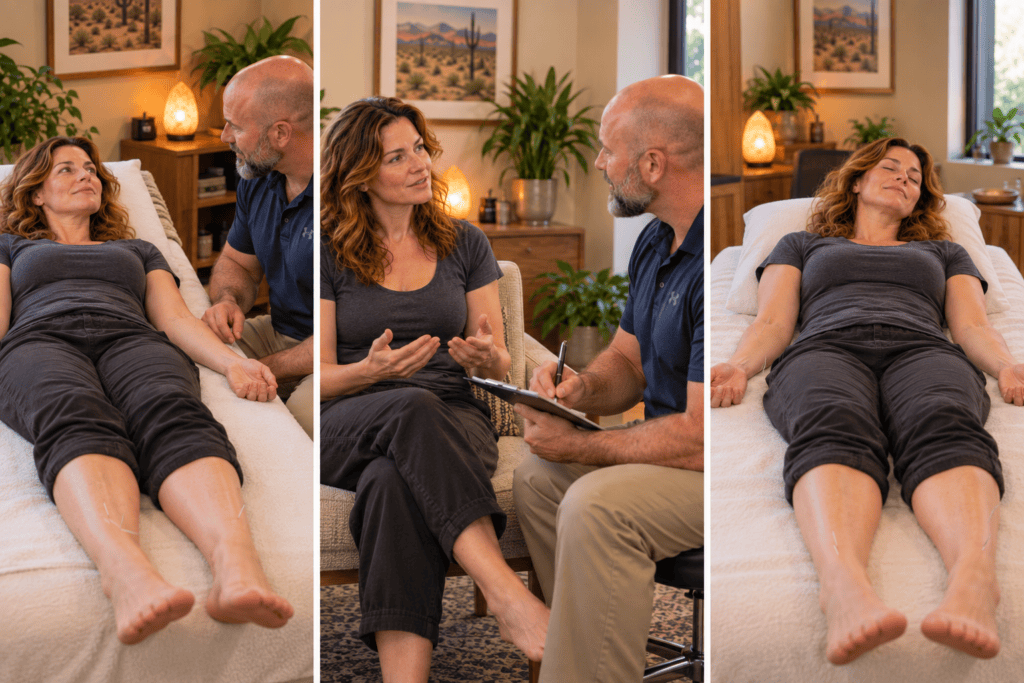
While a single acupuncture session can yield noticeable results, most conditions benefit from a structured treatment plan rather than isolated visits. Chronic issues persisting for months or years typically need more sessions than recent, acute problems. Additionally, the timing between sessions is as important as the overall number of treatments.
During the initial consultation, a realistic treatment plan is established based on the condition, its duration, and the clinical objectives. This plan is reviewed and modified as treatment advances and responses are observed. The aim is to provide a clear clinical pathway with specific benchmarks, rather than an indefinite commitment.
If you’re contemplating acupuncture and want to determine if it’s suitable for your needs, booking a session at Above and Beyond Acupuncture on North Frank Lloyd Wright Boulevard in Scottsdale is the ideal first step.
Schedule an appointment online or call us today to start your journey to relief.

About the Publisher
Paul Kerzner, L.Ac., is a licensed acupuncturist and board-certified herbalist, as well as the founder of Above and Beyond Acupuncture in Scottsdale. His own journey from chronic patient to practicing acupuncturist shapes his commitment to providing honest, clinically grounded information about acupuncture and Traditional Chinese Medicine. Learn more about Paul and his clinical approach on the About Us page.