Key Takeaways
- Many people are afraid of acupuncture needles due to misconceptions, but the experience is often less painful than expected.
- Since acupuncture needles are significantly thinner than syringes, they result in less discomfort for the patient during treatment.
- Patients often feel sensations like warmth or tingling, indicating effective Qi interaction, rather than sharp pain.
- Licensed acupuncturists undergo extensive training, ensuring acupuncture is a safe treatment option with minimal risks.
- Most patients reach a state of deep relaxation during sessions and often doze off, even if they initially fear needles.
Many people who come to Above and Beyond Acupuncture in Scottsdale share a common concern. They are curious about acupuncture and have heard it could help, but they still feel unsure about the needles. This hesitation makes sense. Most people who grew up with Western medicine only know needles from shots at the doctor’s or dentist’s office.
It is natural to assume that acupuncture feels the same as getting a shot.
In reality, acupuncture differs significantly from perceptions, often surprising first-timers with how little their initial experience aligns with expectations. It’s a very safe practice; the needles are far less uncomfortable than many imagine, and the sensation often feels more like a peaceful nap than a medical procedure. Once individuals learn what actually occurs, their anxiety usually diminishes.
Why the Comparison to Shots Is Misleading
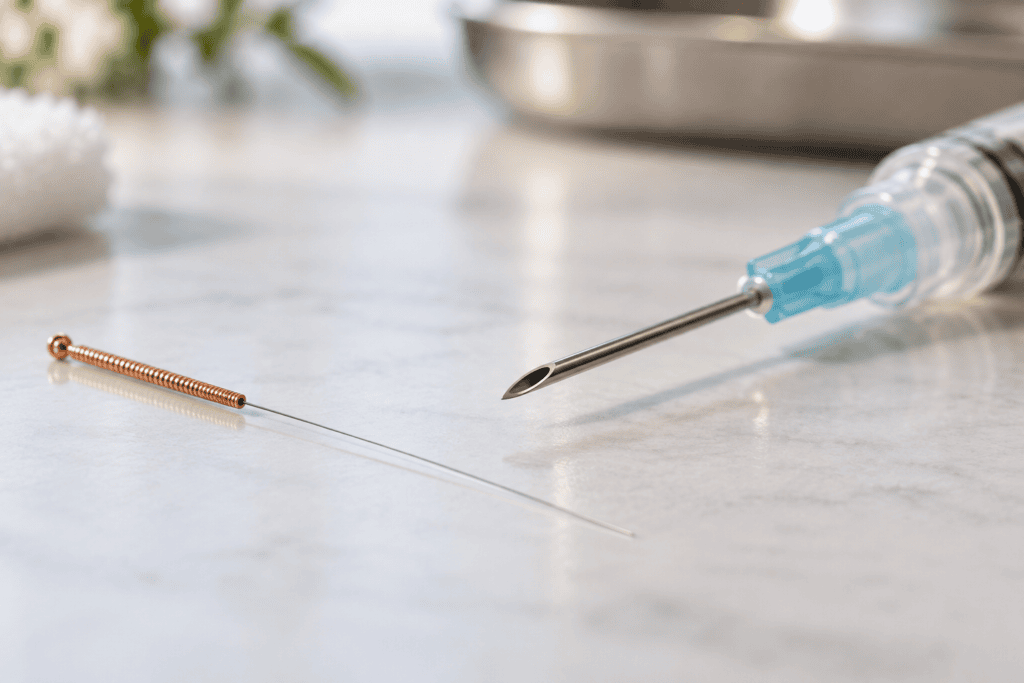
The first important distinction is that an acupuncture needle differs significantly from a hypodermic syringe. Syringes are robust, hollow devices with sharp edges used for injecting fluids or drawing blood. Their thicker construction often causes the sharp sensation that many people remember.
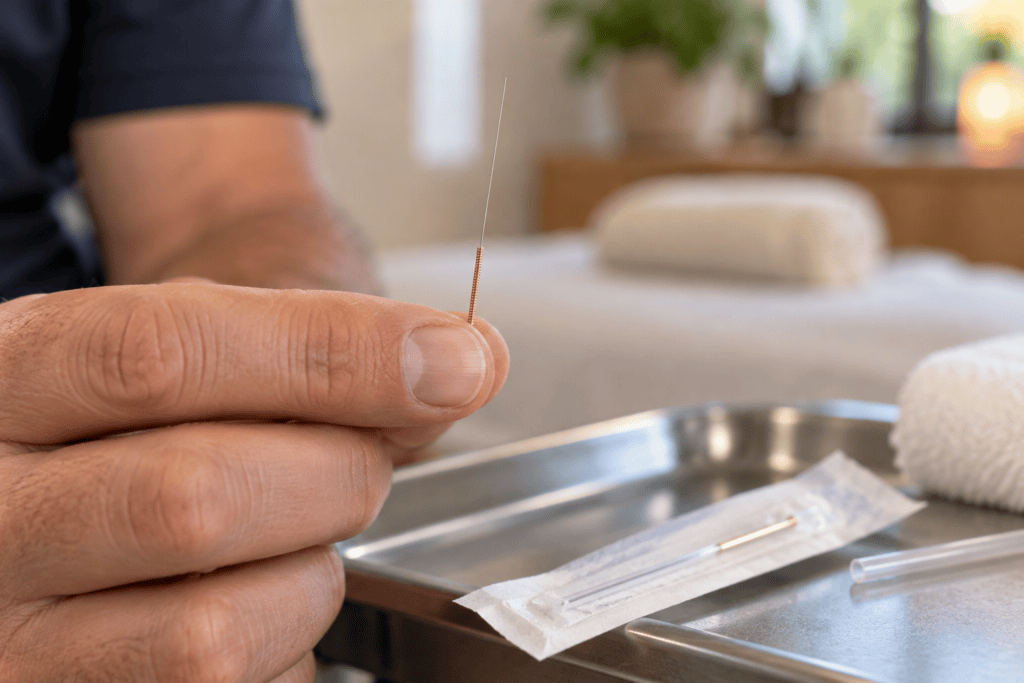
An acupuncture needle is a thin, solid piece of surgical stainless steel with a smooth, tapered tip. You can fit about ten acupuncture needles inside a single syringe needle. The difference is obvious: the acupuncture needle is so fine that most people are surprised they don’t feel it when it’s inserted, and many even ask if it’s already in.
The notion of receiving “hundreds of tiny injections” does not accurately represent acupuncture, but this image often triggers needle anxiety in first-time patients. However, once they see and experience the actual needle, the fear typically diminishes compared to syringes.
What You Will Actually Feel

Everyone’s experience with acupuncture varies. Some feel almost nothing, while others experience a brief, mild pinch that disappears quickly. Most fall somewhere in the middle, and sensations may vary depending on the specific points and how your body feels that day.
After the needle is inserted, you may feel a dull ache, heaviness, warmth, or tingling that travels through your body. In Traditional Chinese Medicine, these sensations are known as De Qi, indicating the arrival of Qi. They confirm that the needle is placed correctly and is interacting with your body’s energy.
Recent studies indicate that the De Qi sensation correlates with changes in nerve activity and blood flow, which may explain how acupuncture facilitates healing.
These sensations should not be sharp or painful; they are simply the body’s response to the treatment. For a more detailed description of what acupuncture feels like and whether the needles hurt, see ‘What Does Acupuncture Feel Like?‘ and ‘Do Acupuncture Needles Hurt?’, which provide additional information for patients considering a session.
The Safety Picture
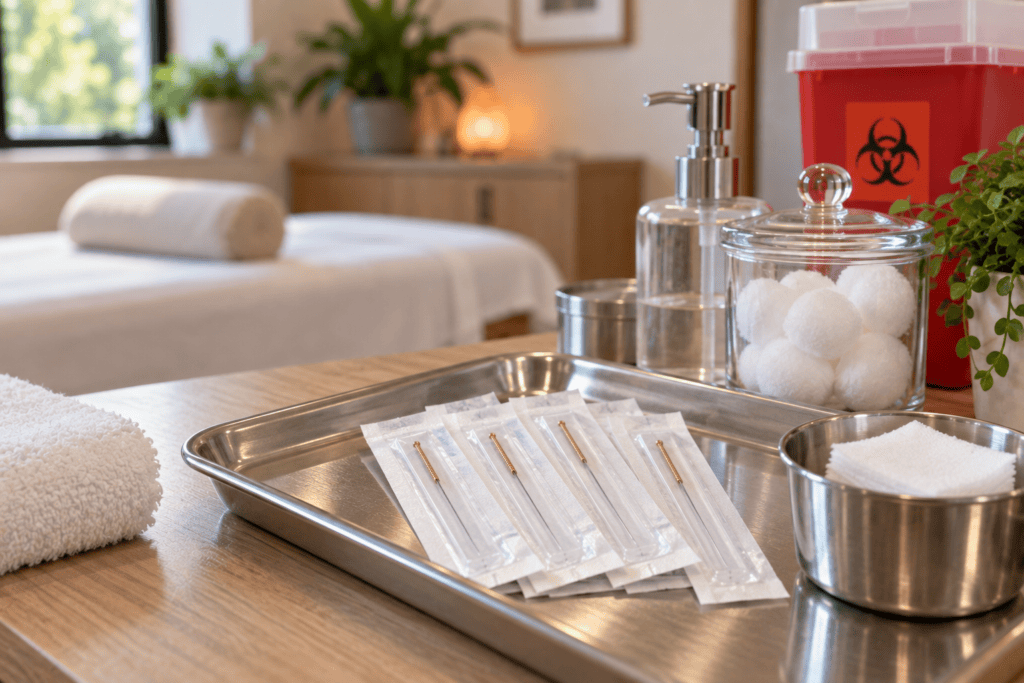
Acupuncture is safe when performed by a trained and licensed professional. Serious complications are uncommon. Needles are sterile, single-use, and individually packaged. They open them immediately before treatment and dispose of them in medical waste containers afterward. Reusing needles is strictly avoided.
Safety largely depends on the treatment provider. Licensed acupuncturists in the U.S. undergo extensive training, totaling 1,905 to 2,600 hours. This training covers anatomy, point location, needling depth, sterile techniques, and supervised practice on actual patients before they sit for national board exams. This comprehensive preparation helps explain acupuncture’s excellent safety record.
In comparison, non-acupuncturists like physical therapists who do dry needling may have only 24 to 80 hours of training before they are allowed to use needles. This training gap has led to safety issues, including more reports of problems like pneumothorax. The articles Dry Needling vs Acupuncture and The Importance of Receiving Acupuncture from a Licensed Acupuncturist explain this in more detail.
For new patients, remember that acupuncture performed by a licensed acupuncturist is a safe treatment option. Although many people fear needles, the actual risks associated with acupuncture are minimal and do not warrant significant concern.
The Side Effects Are Generally Positive

Acupuncture’s most common effects are the benefits you seek, not adverse side effects. These benefits include better sleep, reduced stress, improved digestion, more energy, clearer thinking, and a growing sense of balance with each session.
Occasionally, individuals might feel slightly lightheaded immediately after a session, experience brief soreness at the needle site, or notice increased emotional sensitivity for a day as their body adapts. These effects are typically mild and resolve quickly. Compared with the side effects common with many medications for the same conditions, acupuncture’s advantages significantly outweigh the risks.
Most Patients Fall Asleep on the Table

Many new patients are surprised by what occurs during treatment. After the needles are inserted, you rest calmly for 20 to 40 minutes, depending on your specific plan. This time lets your body enter a deep state of rest and healing.
For those experiencing ongoing stress, this may be their first genuine rest in a long while. Many patients drift off to sleep during treatment, while others feel profound calm, a gentle flow of energy, or a serene state they’ve been missing. Unlike a typical medical office, the treatment space is designed as a sanctuary for the body’s natural healing.
Describing this aspect of acupuncture is challenging. While many initially worry about the needles, they often leave surprised that they didn’t experience it earlier.
Where to Start

If fear of needles has prevented you from trying acupuncture, the best way to overcome it is to experience a session yourself. The actual experience is quite different from most people’s expectations and usually turns out better than they imagined.
Contact Above and Beyond Acupuncture on North Frank Lloyd Wright Boulevard in Scottsdale to set up a consultation. Your first session includes time to talk about any questions or concerns before starting treatment. The article What to Expect in Your First Acupuncture Treatment explains the process, and the Frequently Asked Questions About Acupuncture post answers other common questions before you book.
Above and Beyond Acupuncture offers acupuncture, cupping, and lifestyle coaching.
Schedule an appointment online to start your healing journey.

About the Publisher
Paul Kerzner, L.Ac., is a licensed acupuncturist and board-certified herbalist, as well as the founder of Above and Beyond Acupuncture in Scottsdale. His own journey from chronic patient to practicing acupuncturist shapes his commitment to providing honest, clinically grounded information about acupuncture and Traditional Chinese Medicine. Learn more about Paul and his clinical approach on the About Us page.