Key Takeaways
- Acupuncture involves inserting thin needles at specific points to stimulate nerves, increase blood flow, and reduce stress, promoting the body’s natural healing.
- Both modern medicine and Traditional Chinese Medicine (TCM) explain acupuncture’s benefits, focusing on restoring balance and flow in the body.
- Fascia, the connective tissue in the body, connects different areas and is influenced by acupuncture, causing distant relief from pain.
- Acupuncture treatment is tailored to the individual’s needs, targeting underlying issues rather than just symptoms.
- For chronic conditions and stress-related disorders, acupuncture offers a non-invasive alternative, encouraging the body to heal itself.
“How does acupuncture work?”
It is the most common question asked in the clinic, and it deserves a clear answer. For a lot of people, the idea of inserting acupuncture needles into specific acupuncture points on the body to relieve pain, improve sleep, or settle anxiety sounds mysterious. It is not.
Acupuncture works on real, measurable physical processes that modern medical research has been studying for decades. The way it produces results can be described in two ways: through the language of modern medicine and through the language of Traditional Chinese Medicine. Both describe the same thing happening in the body. They just use different vocabulary.
At Above and Beyond Acupuncture in Scottsdale, the explanation patients receive is straightforward. Here is the same explanation in plain language.
What the Needles Actually Do
Acupuncture needles are extremely thin, about the width of a strand of hair. They are nothing like the hollow needles used for blood draws or shots. Most people are surprised at how little they feel when the needles are placed.
When a needle is inserted into a specific point on the body, three things happen.
First, the needle gently stimulates the nerves underneath the skin, which sends a signal to the brain. The brain responds by releasing the body’s own natural pain-relieving chemicals. These are the same chemicals released during exercise, laughter, or a deep stretch. They reduce pain, calm the nervous system, and produce the relaxed, often sleepy feeling patients describe during a treatment.
Second, the area where the needle is placed gets a small increase in blood flow. More blood means more oxygen and nutrients reaching the tissue, which is exactly what the body needs to heal. This is why acupuncture is so useful for pain that has gotten stuck in one area for a long time. The body needed more circulation to repair the tissue, and the needles help deliver it.
Third, and probably most important, acupuncture helps the body shift out of stress mode. When a person is under chronic stress, the nervous system gets stuck in a constant state of alert. The body cannot fully rest, sleep gets disrupted, and the systems that handle repair and healing are pushed aside. Acupuncture has been shown to interrupt this pattern, allowing the body to drop into the calm, recovering state where real healing happens.
The Traditional Chinese Medicine Picture
Long before any of these mechanisms could be measured in a lab, Traditional Chinese Medicine had already mapped them out using different language.
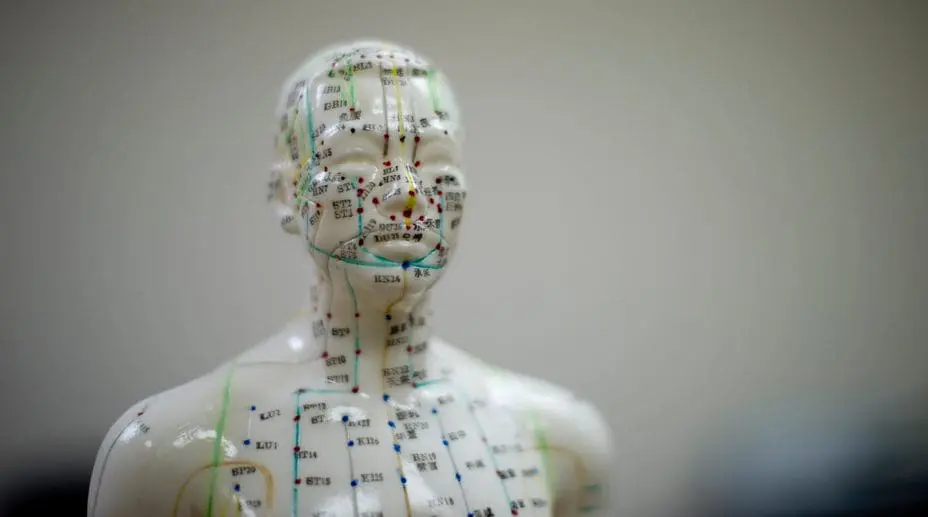
In TCM, the body is understood as a network of pathways called meridians. These pathways carry the body’s energy, called Qi, and its blood throughout the body. When everything is flowing smoothly, the body functions well. When something disrupts the flow, whether from injury, stress, illness, or poor habits, the system gets stuck.
A classical TCM maxim describes this directly: where there is stuck flow, there is pain or dysfunction. Where the flow is smooth, the body is well.
Acupuncture points are specific locations along these pathways where they come close to the surface of the skin. Inserting a needle at the right point clears the blockage, brings energy where it is depleted, and helps the whole system get back into balance.
What is interesting is how closely the ancient meridian maps line up with the modern map of the body’s nerves, blood vessels, and connective tissue. The two systems are describing the same anatomy. They are just using different words.
The Fascia Connection
One of the more interesting bridges between the old and new frameworks is something called fascia. Fascia is the connective tissue that wraps around every muscle, organ, and nerve in the body. It is like a continuous web that connects everything to everything else.
When an acupuncture needle is placed and gently moved, the fascia around the needle responds by gripping it slightly and stretching the connective tissue throughout the area. This sends a physical signal that travels well beyond the spot where the needle was placed.
This is why placing a needle in the lower leg can release tension in the lower back. The body’s anatomy is more interconnected than most people realize, and acupuncture uses those connections to reach places that other treatments cannot.
Treatment Is Not One-Size-Fits-All
Because acupuncture works by stimulating the body’s own healing systems, it is never a standard recipe. A licensed acupuncturist takes a thorough intake at the first appointment, asking about symptoms, sleep, digestion, stress, energy levels, and overall health.
The point selection is based on what is actually happening in the body, not just where the pain or symptom is showing up.
A person dealing with stress and tension is treated differently than a person dealing with exhaustion and depletion, even if both might be sleeping poorly. The medicine is precise. The treatment for one will not produce the same result for the other.
What This Means for You
Acupuncture does not introduce drugs, foreign substances, or anything synthetic into the body. It works as a gentle physical signal that reminds the body how to balance, regulate, and heal itself. The needles do not do the healing. The body does. The needles just help it remember how.
For patients dealing with chronic pain, stress, sleep problems, hormonal shifts, or other conditions where conventional approaches have not produced the results they were hoping for, acupuncture is worth a serious conversation.
Reach out to Above and Beyond Acupuncture on North Frank Lloyd Wright Boulevard in Scottsdale to schedule a consultation and find out what acupuncture can do for what you are dealing with.
Schedule an appointment online or call us today to start your journey to relief.