Key Takeaways
- Chronic insomnia may stem from conditioned arousal, sometimes called sleep PTSD, where the bed becomes a stress trigger.
- Patients often find that traditional sleep aids fail to address the underlying issues and create dependency instead.
- Effective strategies include the 15-20 minute rule: if you can’t sleep, get out of bed to break the conditioned response.
- Magnesium supports the nervous system and can help tackle insomnia without sedating the body like traditional sleep medications.
- Acupuncture helps regulate the autonomic nervous system, addressing the root of sleep PTSD and promoting restorative sleep.
There is a specific kind of frustration that only people with chronic insomnia know. You are exhausted. You have been waiting all day to finally lie down. You climb into bed, ready to collapse into sleep. And then something happens that should not be possible. You become wide awake.
You stare at the ceiling. You check the clock. You calculate how many hours you have left before the alarm. You feel cortisol rise in your chest as the panic of another sleepless night starts to set in. You toss. You turn. You try every position. You count your breaths. You count backwards from a thousand. None of it works. The harder you try to fall asleep, the more impossible sleep becomes.
This is one of the most painful patterns seen at Above and Beyond Acupuncture in Scottsdale, and it is one of the least understood by the patients living through it. The standard advice they have received, from doctors, from friends, from internet sleep gurus, has not helped. They have been told to relax. They have tried meditation apps. They have been prescribed sleep aids that worked for a while and then stopped. They have spent years getting worse instead of better.
The reason is that this pattern is not regular insomnia. It is a specific, conditioned response that has been quietly building for months or years, and it is one of the few sleep problems where trying harder actively makes things worse.
A Pattern That Has a Name
What patients describe is sometimes called sleep PTSD in clinical conversation, and for good reason. The bed has become a stress trigger. The act of lying down has become a trigger. The moment the patient begins the wind-down for sleep, the body activates rather than relaxes, because it has learned over months or years that the bed is where the fight with sleep happens.
The formal clinical name for this is psychophysiological insomnia, or conditioned arousal. The research literature has been documenting it for decades. The mechanism is classical conditioning. The bed, the bedroom, the routine of trying to sleep, all become cues that the nervous system associates with stress rather than rest. The body responds with the activation it has been trained to produce in that context: rising cortisol, faster heart rate, sharper attention, racing thoughts. None of which are compatible with falling asleep.
The most cruel feature of this pattern is its self-reinforcement. The harder a patient tries to sleep, the more they activate the conditioned response. The more they activate the conditioned response, the more wakeful they become. The more wakeful they become, the more anxious they get about not sleeping. The more anxious they get, the more cortisol they produce. And so on.
This is why patients with this pattern often report that they feel exhausted on the couch in the evening but become completely awake the moment they lie down in bed. The couch is not yet a conditioned trigger. The bed is.
The Cortisol and Inflammation Loop
Underneath the conditioning is a biochemical reality that compounds the problem. Cortisol, the body’s primary stress hormone, is an explicit wakefulness signal. It is supposed to rise in the morning to wake the body up. When it rises at night because of the stress of trying to sleep, the body interprets the signal exactly as it was designed to: as a wake-up command.
Sustained cortisol elevation also drives systemic inflammation. The inflammation disrupts the architecture of sleep itself, particularly the deep slow-wave sleep that the body needs for repair and recovery. So even when patients with this pattern do fall asleep, the sleep they get is shallower, more fragmented, and less restorative than it should be. They wake up tired regardless of how many hours they technically slept, which adds to the anxiety about sleep, which adds to the cortisol, which adds to the inflammation. The loop tightens.
Breaking the loop requires a different kind of approach than what most patients have been told to try.
The 15-20 Minute Rule
One of the most useful practical adjustments for patients in this pattern is also one of the simplest. If sleep does not arrive within fifteen to twenty minutes, get out of bed.
This is counterintuitive. The instinct is to stay in bed, keep trying, force the issue. The problem with staying is that it deepens the conditioned association between the bed and wakefulness. Every additional minute spent lying awake in bed reinforces the pattern that the rest of the work is trying to break.
Getting up does the opposite. Go somewhere else in the house. Read something boring. Listen to something calming. Keep the lights low. Stay off the phone. Wait until you feel actually sleepy again, not just exhausted, and then return to bed. If sleep still does not come within another fifteen to twenty minutes, get up again. The bed needs to be reassociated with sleep, not with the experience of trying to sleep.
This adjustment alone, applied consistently for several weeks, produces meaningful change for many patients in this pattern. It does not require willpower or relaxation skills. It just requires the willingness to stop fighting in the place where the fight has become the problem.
The Question of Sleep Aids
Most patients with chronic insomnia have tried sleep aids at some point. Some are still on them. The conversation around these medications and supplements deserves more honesty than patients usually receive.
Prescription sleep aids can help some people get sleep. For severe cases or for short-term use during an acute crisis, they have a place. The limitations, however, are real. The sleep that prescription aids produce is not the same as natural sleep. It is sleep with disrupted architecture, suppressed deep sleep, and limited restorative quality. Patients on these medications often report that they technically sleep but never feel rested. The body adapts to the medication, the original dose stops working, and the patient finds themselves needing more for less effect.
Melatonin deserves a particularly careful look. It is sold as a harmless natural supplement, and most patients assume it is essentially without consequence. The reality is more complicated. The doses commonly sold in over-the-counter melatonin products are dramatically higher than what the body produces naturally. Long-term use raises legitimate concerns about the body’s own signaling adapting downward in response to the supplemental flood.
Patients who become reliant on nightly melatonin often find their sleep gets noticeably worse if they try to stop, which is not the behavior of a harmless intervention.
A recent study presented at the American Heart Association added another layer of concern. In a review of more than 130,000 adults with insomnia who had used melatonin for at least a year, long-term use was associated with a higher risk of heart failure diagnosis, hospitalization for heart failure, and death from any cause.
The findings are preliminary and the research is ongoing, but the days of treating melatonin as a casual nightly supplement should probably be over.
The deeper issue with all sleep aids, whether prescription or melatonin, is the same one. They treat the symptom of not sleeping without addressing the reason the body’s natural sleep signaling has been disrupted. The conditioned arousal that drives this pattern of insomnia is not a melatonin deficiency or a sedation deficiency. It is a nervous system pattern, and it does not respond to chemical sedation in any lasting way.
Why Magnesium Is Different
Magnesium occupies a different category than the medications and melatonin discussed above. It is a mineral the body requires for hundreds of functions, including the regulation of the nervous system itself. Most Americans are deficient in magnesium due to soil depletion and modern dietary patterns, and the deficiency contributes directly to nervous system overactivation.
Research supports magnesium as a sleep aid, and the most evidence supports the citrate form specifically. Unlike sleep medications, magnesium does not sedate the body into sleep. It supports the calming neurotransmitter systems that allow the nervous system to settle on its own. It is not addressing a deficiency the body would otherwise have, the way melatonin supplementation does. It is replenishing a nutrient that the body actually needs and that the modern diet often does not provide.
The product most often recommended at the clinic is Natural Vitality CALM, a magnesium citrate powder that mixes into water and is taken in the evening. The recommendation is based on clinical experience, not financial relationship. No affiliate compensation is received from links to this product. It is simply the formulation that has produced the most reliable results for patients over years of practice.
The Traditional Chinese Medicine Perspective
Traditional Chinese Medicine has described the pattern underneath conditioned arousal insomnia for thousands of years through the framework of Shen disturbance.
The Shen is the mind and spirit, understood in TCM as anchored in the Heart. The Shen requires a settled, gathered internal state to rest. It anchors into the body’s Yin foundation, the cooling, grounding, fluids-based resources that provide the physical substrate for stillness.
When Yin is depleted by years of sustained stress, the Shen has nowhere to anchor. The mind cannot settle at night because the body’s underlying foundation lacks the substance to hold it.
This is the classic Yin deficiency with Yang rising pattern, and it produces exactly the experience these patients describe: feeling sleepy on the couch but wide awake the moment they try to sleep, racing thoughts at bedtime, the inability to drop into rest even when the body is exhausted.
The TCM framework understands this constitutionally. The goal is not to force sleep. It is to rebuild the Yin foundation and settle the Shen so that sleep becomes physically accessible again.
How Acupuncture Addresses the Pattern
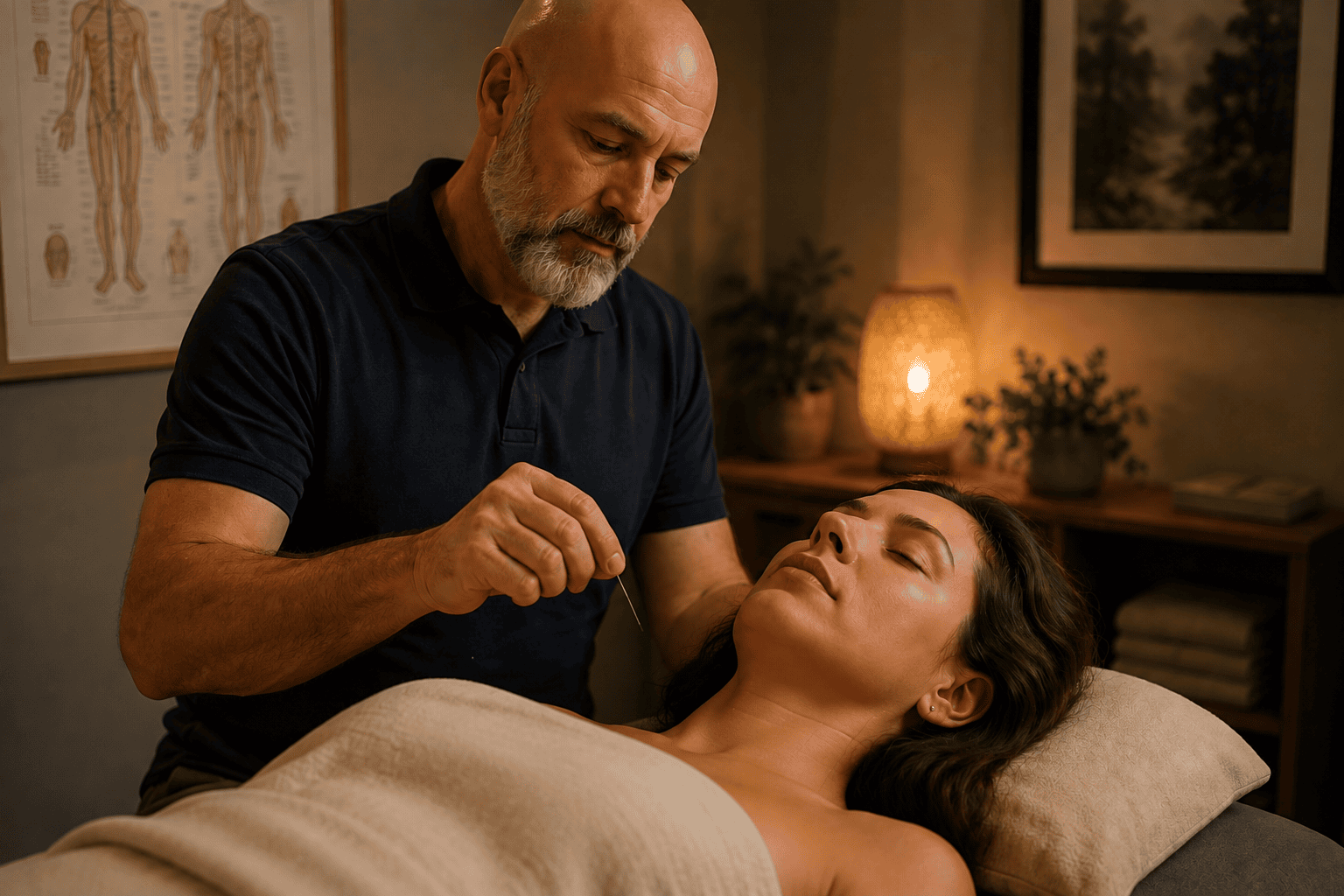
Acupuncture is particularly well-suited to this category of insomnia because it works at the level where the conditioning lives: the autonomic nervous system. Treatment shifts the body out of the chronic activation state that has been driving the pattern and into the parasympathetic state where sleep can occur.
When the nervous system experiences sustained parasympathetic activation during a treatment, often for the first time in months or years, the body remembers what real rest feels like. The cortisol curve begins to normalize. The Yin foundation rebuilds gradually with consistent treatment. The Shen, in TCM terms, finds its anchor again. The bed, over time, stops being a stress trigger.
This is paired with the practical adjustments described above. The fifteen-minute rule. The magnesium support. The dietary and lifestyle changes that address the upstream drivers of nervous system activation.
Acupuncture alone cannot fix a sleep environment that is reinforcing the conditioned arousal every night, but it can provide the nervous system regulation that makes the behavioral changes accessible and that accelerates the recovery once the upstream drivers are addressed.
Where to Start
If you have been fighting with sleep for months or years, if the bed has become an enemy rather than a sanctuary, and if everything you have been told to try has either not worked or stopped working, the answer is not another sleep aid. It is an honest look at the nervous system pattern that has been driving the insomnia and a treatment approach aimed at the level where the pattern actually lives.
Reach out to Above and Beyond Acupuncture on North Frank Lloyd Wright Boulevard in Scottsdale to schedule a consultation and begin the work of teaching your body how to sleep again.
Schedule an appointment online or call us today to start your journey to relief.