
Key Takeaways
- Addiction is a major public health issue affecting millions and requires comprehensive support.
- Traditional Chinese Medicine offers insights into addiction, viewing it as a symptom of deeper imbalance rather than a moral failing.
- Acupuncture supports recovery through nervous system regulation, craving reduction, and mood enhancement.
- A coordinated approach, combining Eastern and Western medicine, is essential for effective addiction treatment.
- Professional help is vital for addiction recovery, with resources available for immediate support.
Addiction is one of the most pressing public health issues in modern society. Roughly 48 million Americans struggle with substance use disorders in any given year, and countless more deal with behavioral addictions including gambling, food, technology, and other compulsive patterns. The costs to individuals, families, and communities are enormous, and standard care alone has not been enough to address the scope of the problem.
Traditional Chinese Medicine offers a different way of understanding addiction that fills gaps in the standard Western view. The framework does not replace medical detox, medication-assisted treatment, evidence-based therapy, or the recovery community. Those interventions remain essential. What Traditional Chinese Medicine adds is a way of understanding why the addiction developed in the first place and how to address the underlying patterns that continue to drive craving and relapse.
Here is what addiction actually is, how Traditional Chinese Medicine understands it, and how the framework supports recovery.
What Is Addiction?

The current clinical understanding of addiction identifies it as a chronic condition affecting brain reward, motivation, and memory systems. This is a significant shift from earlier views that treated addiction as a moral failing or lack of willpower. Modern neuroscience shows that repeated substance use or compulsive behavior produces measurable changes in brain circuits that make continued use feel necessary even when the person genuinely wants to stop.
The most common substance addictions involve alcohol, opioids (both prescription and illegal), stimulants (cocaine, methamphetamine, prescription stimulants), benzodiazepines, cannabis, and nicotine. Each substance affects brain chemistry differently but all produce the reward pathway changes that characterize addiction.
Behavioral addictions include gambling, food and eating patterns, sex and pornography, shopping, gaming, and technology use. The brain changes involved in behavioral addictions overlap substantially with substance addictions even though no external substance is involved.
Common features across all addictions include loss of control over the behavior, continued use despite negative consequences, tolerance requiring more of the substance or behavior to produce the same effect, withdrawal symptoms when the substance or behavior is stopped, and increasing prominence of the addiction in daily life at the expense of other activities and relationships.
The NIDA overview of substance use disorders and the Mayo Clinic summary provide the medical framework for understanding the condition.
How Traditional Chinese Medicine Views Addiction
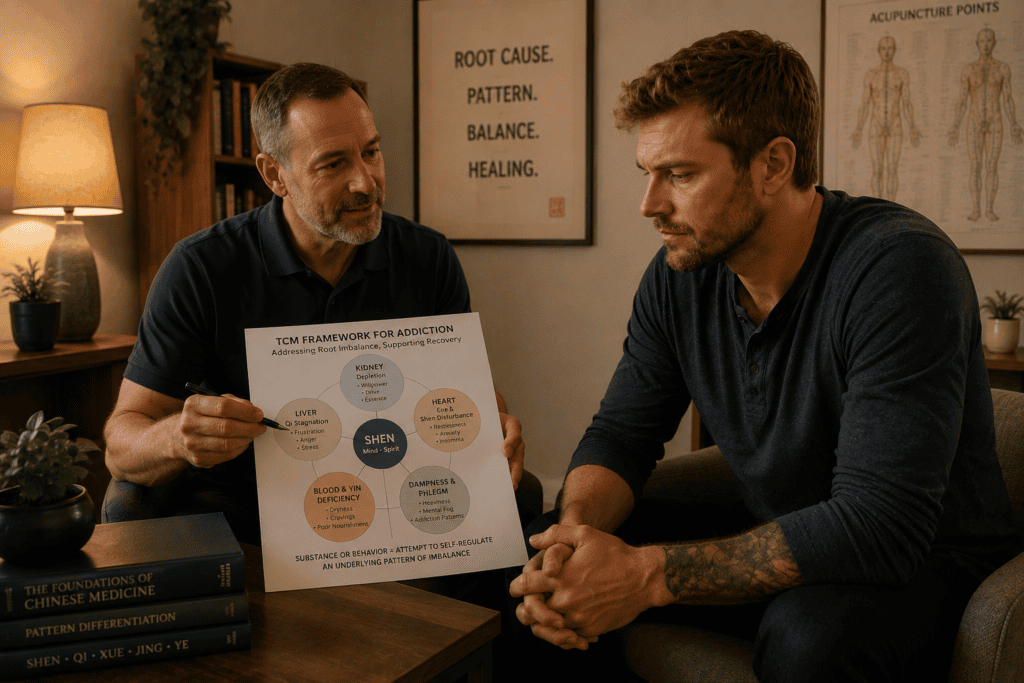
Traditional Chinese Medicine does not view addiction as a moral failing or as a disease that appears from nowhere. The framework understands addiction as a symptom of deeper imbalance. The substance or behavior is the person’s attempt to self-regulate a pattern that is out of balance. Understanding this shifts the treatment approach from managing the addiction itself to addressing what drove it.
Several patterns are commonly involved in addiction from the Traditional Chinese Medicine perspective.
- Kidney depletion. The Kidneys in Chinese medicine store the deepest reserves of the body including foundational energy, willpower, and long-term drive. Chronic stress, overwork, poor sleep, and difficult early life experiences deplete these reserves. When Kidney reserves are low, the person often reaches for substances that produce artificial energy or artificial calm to compensate for what the depleted Kidneys can no longer provide.
- Heart Fire and Shen disturbance. The Heart in Chinese medicine houses the Shen, which is the spirit or consciousness. When the Heart is agitated by Fire, or when the Shen is disturbed by trauma, chronic stress, or unresolved emotional patterns, the person experiences restlessness, anxiety, insomnia, and mental agitation. Substances that quiet the mind or numb the restlessness attempt to address this Shen disturbance from the outside.
- Liver Qi Stagnation. The Liver in Chinese medicine governs the smooth flow of Qi and emotions. When Liver Qi is stuck (often from chronic frustration, unexpressed emotions, or ongoing stress), the person feels tension, irritability, and a sense of pressure that needs release. Substances and behaviors that produce a temporary release of that pressure are attempting to move stagnant Liver Qi.
- Blood and Yin deficiency. Long-term substance use itself depletes Blood and Yin, which are the nourishing and calming substances in Chinese medicine. This deficiency produces the anxiety, insomnia, and emotional volatility common in early recovery. The depletion also drives continued cravings because the person’s body genuinely lacks the resources needed to feel settled.
- Dampness and Phlegm patterns. Certain addictions particularly involving food, alcohol, and some substances produce Dampness and Phlegm accumulation. These substances further cloud the mind, produce fatigue, and contribute to the mental fog that makes recovery difficult.
The pattern of addiction that develops in each person reflects their individual constitution and life history. Two people with the same substance addiction can have entirely different underlying patterns and therefore respond to different treatment approaches.
Why This Perspective Matters

The Traditional Chinese Medicine view of addiction offers several things that the standard Western view sometimes lacks.
- It removes the blame. Understanding addiction as an attempt to self-regulate deeper imbalance shifts the framing away from moral failure. This is important because shame drives relapse in many patients, and reducing shame supports recovery.
- It explains why willpower alone rarely works. The underlying patterns that drove the addiction remain even after the substance is removed. Without addressing those patterns, the person continues to experience the discomfort that the substance was medicating, which makes sustained recovery extremely difficult.
- It provides a way to identify and address what actually drove the addiction. Rather than treating everyone with alcohol use disorder or opioid dependence the same way, the framework identifies the specific pattern in each individual and directs treatment accordingly.
- It supports the recovery process across time. Different patterns emerge at different stages of recovery. Acute withdrawal involves one set of patterns. Post-acute withdrawal involves another. Long-term sobriety involves ongoing constitutional support.
- It addresses the co-occurring conditions that often accompany addiction. Anxiety, depression, chronic pain, and sleep disorders all commonly co-occur with addiction. The Traditional Chinese Medicine framework addresses these dimensions simultaneously rather than separately.
How Acupuncture Supports Recovery
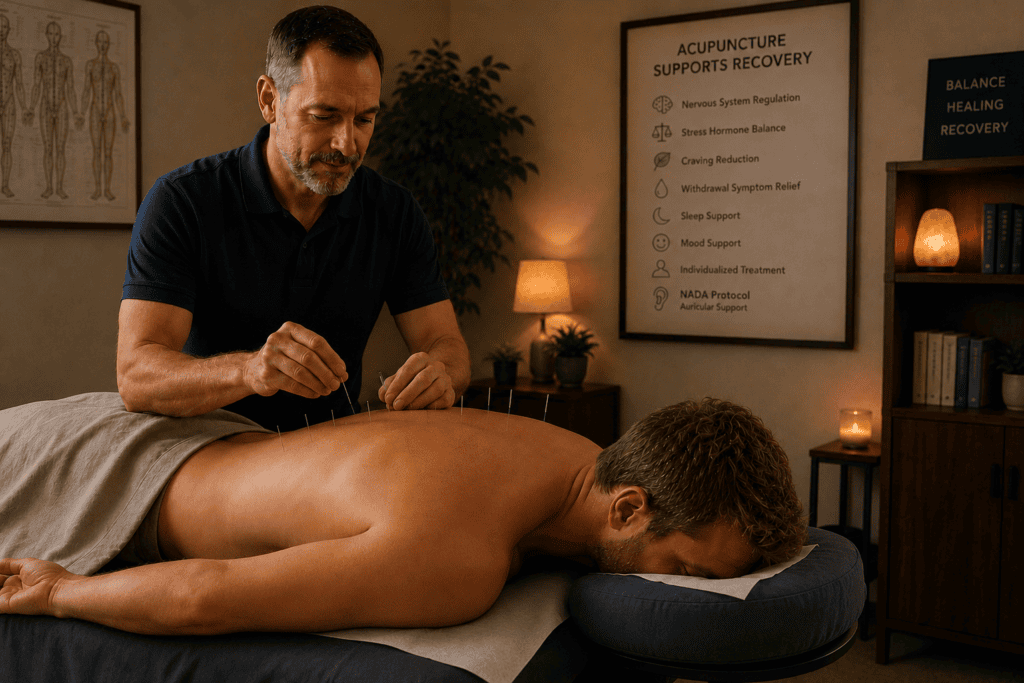
Acupuncture addresses addiction through several mechanisms that work alongside standard care.
- Nervous system regulation. Chronic addiction produces significant sympathetic nervous system activation. Acupuncture shifts the balance toward parasympathetic activation, which reduces the physical anxiety and restlessness that drive craving.
- Stress hormone regulation. Elevated cortisol drives relapse. Acupuncture reduces cortisol and supports the stress hormone regulation that recovery requires. What Is Cortisol and Why Do I Have So Much of It? covers the chronic stress dimension.
- Craving reduction. Multiple studies have documented that acupuncture reduces craving intensity in patients with various addictions. The effect appears to work through both stress reduction and direct effects on reward-related brain circuits.
- Withdrawal symptom management. Acupuncture reduces the severity of physical withdrawal symptoms including anxiety, insomnia, muscle tension, digestive upset, and restlessness. This makes early recovery more tolerable.
- Sleep support. Sleep disruption is one of the biggest drivers of relapse in early recovery. Acupuncture supports the sleep patterns that recovery requires.
- Mood support. Depression and anxiety commonly accompany addiction and early recovery. Acupuncture addresses these dimensions directly.
- Pattern-based treatment. A licensed acupuncturist identifies the specific patterns present in each patient and treats accordingly. Kidney tonification for depletion. Heart and Shen calming for agitation. Liver Qi regulation for stagnation. Blood and Yin nourishment for deficiency. This individualized approach is what makes Traditional Chinese Medicine different from protocol-only approaches.
The NADA protocol is worth mentioning briefly. This is a specific auricular (ear) acupuncture protocol developed for addiction treatment and used in many recovery programs across the country. The five-point ear protocol is delivered in group settings and does not require patients to talk about their addiction to receive treatment. NADA is used extensively in criminal justice programs, veteran recovery, and community recovery settings. A future article covers NADA in more depth.
What Does Acupuncture Actually Do to Your Body? covers the physiological effects in greater detail.
The Holistic Approach to Recovery

Addiction responds best to a coordinated holistic approach that addresses all dimensions.
- Standard care remains essential. Medical detox when appropriate. Medication-assisted treatment for opioid, alcohol, and other substance use disorders when indicated. Evidence-based behavioral therapies including cognitive behavioral therapy, motivational interviewing, and contingency management. Psychiatric care for co-occurring conditions. These are foundational.
- Community and peer support. Twelve-step programs, SMART Recovery, Refuge Recovery, and other community frameworks provide the ongoing peer support that sustained recovery requires. The specific framework matters less than sustained engagement with some form of recovery community.
- Acupuncture treatment. Regular acupuncture supports craving reduction, nervous system regulation, sleep, mood, and the underlying constitutional patterns.
- Nutritional support. Nutrition is often severely compromised in active addiction and requires substantial rebuilding in recovery. Working with someone who understands recovery nutrition supports the healing process.
- Sleep support. Consistent sleep is essential in recovery and often disrupted for months into sobriety. Direct sleep support is important.
- Movement. Physical activity supports mood, sleep, stress regulation, and the reward system healing that recovery requires.
- Stress management. Chronic stress drives relapse. Direct nervous system practices reduce the sympathetic activation that leads to cravings.
- Trauma work when appropriate. Many people with addiction have underlying trauma that drove the substance use in the first place. Appropriate trauma-focused therapy supports the long-term recovery process.
When to Get Professional Help

Addiction requires appropriate professional support. If you or someone you know is struggling with active addiction, reach out to appropriate medical and mental health providers. Withdrawal from alcohol, benzodiazepines, and some other substances can be medically dangerous and requires medical supervision. Suicidal thoughts or behaviors require immediate mental health support. Any concerns about active addiction warrant contact with a qualified provider.
Resources include the SAMHSA National Helpline (1-800-662-4357) which provides free confidential referral to treatment resources 24 hours a day.
For patients in recovery looking for complementary support alongside their treatment, acupuncture offers a meaningful adjunct that addresses craving, stress, sleep, mood, and the underlying patterns driving the addiction pattern.
Anxiety, Stress, and Depression explains the nervous system components that contribute to many patterns that can lead to addiction.
Acupuncture, Cupping & Lifestyle Coaching covers what holistic services this clinic offers.
Reach out to Above and Beyond Acupuncture on North Frank Lloyd Wright Boulevard in Scottsdale to schedule a consultation.
Schedule an appointment online or call us today to start your healing journey.
About the Publisher
Paul Kerzner, L.Ac., is a licensed acupuncturist and board-certified herbalist, as well as the founder of Above and Beyond Acupuncture in Scottsdale. His own journey from chronic patient to practicing acupuncturist shapes his commitment to providing honest, clinically grounded information about acupuncture and Traditional Chinese Medicine. Learn more about Paul and his clinical approach on the About Us page.