Key Takeaways
- Sciatica commonly causes pain down the leg, affecting mobility and disrupting sleep, with around 40% of individuals experiencing it in their lifetime.
- Standard treatments include anti-inflammatory medications and physical therapy, but acupuncture offers a primary treatment option for many patients.
- Acupuncture can provide relief through mechanisms like pain relief, anti-inflammatory effects, and improved circulation, making it effective for various sciatica cases.
- Patients should evaluate their symptoms and consider acupuncture as a legitimate alternative when traditional Western treatments do not appeal or work effectively.
- For best results, combine acupuncture with supportive practices like appropriate movement, targeted stretching, and stress management.
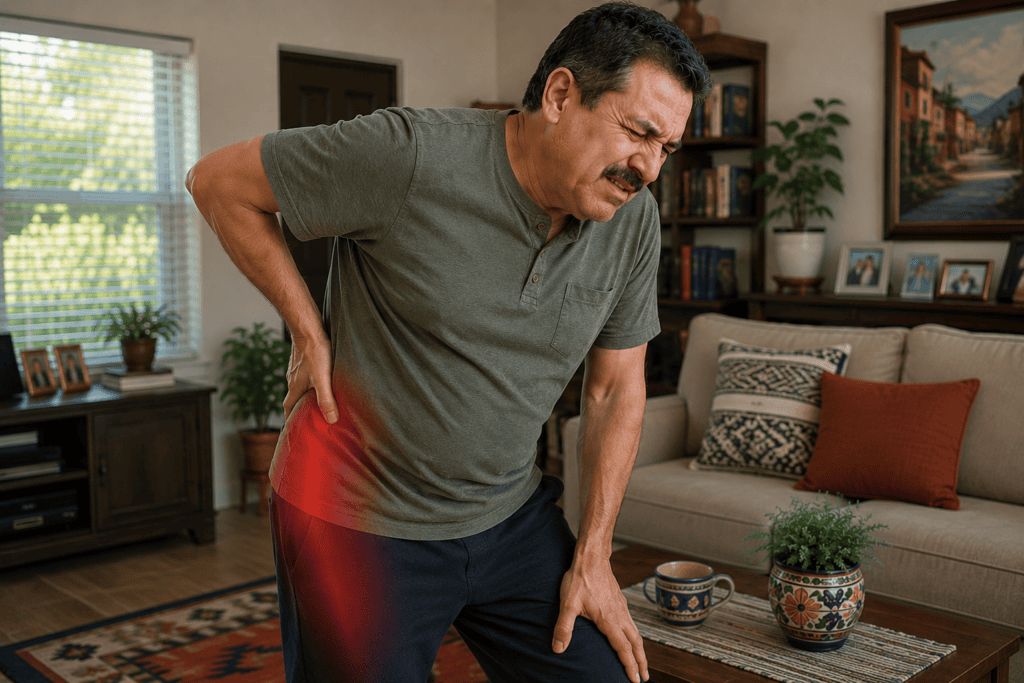
Sciatica is a common presentation of back-related pain and one of the most disruptive when it becomes chronic. Pain that radiates from the low back or buttock down the leg. Numbness, tingling, or weakness in the affected limb. Difficulty sitting, standing, or walking for extended periods. Sleep disruption from positions that aggravate the pain. Roughly 40 percent of people experience sciatica at some point in their lives.
Standard Western care involves anti-inflammatory medications, physical therapy, epidural steroid injections, and in specific cases surgical decompression. These approaches work for some patients but leave many others still struggling with pain and limitation months or years later.
What is often missing from the standard clinical conversation is that acupuncture and Traditional Chinese Medicine offer a genuine primary treatment path for sciatica. Many patients find substantial and lasting relief through acupuncture without needing physical therapy, injections, or surgery. Others use acupuncture alongside Western treatment. Both are valid approaches, and the appropriate path depends on the individual situation, cause, and preferences.
Here is what sciatica actually is, what causes it, and how acupuncture treats it.
What Is Sciatica?
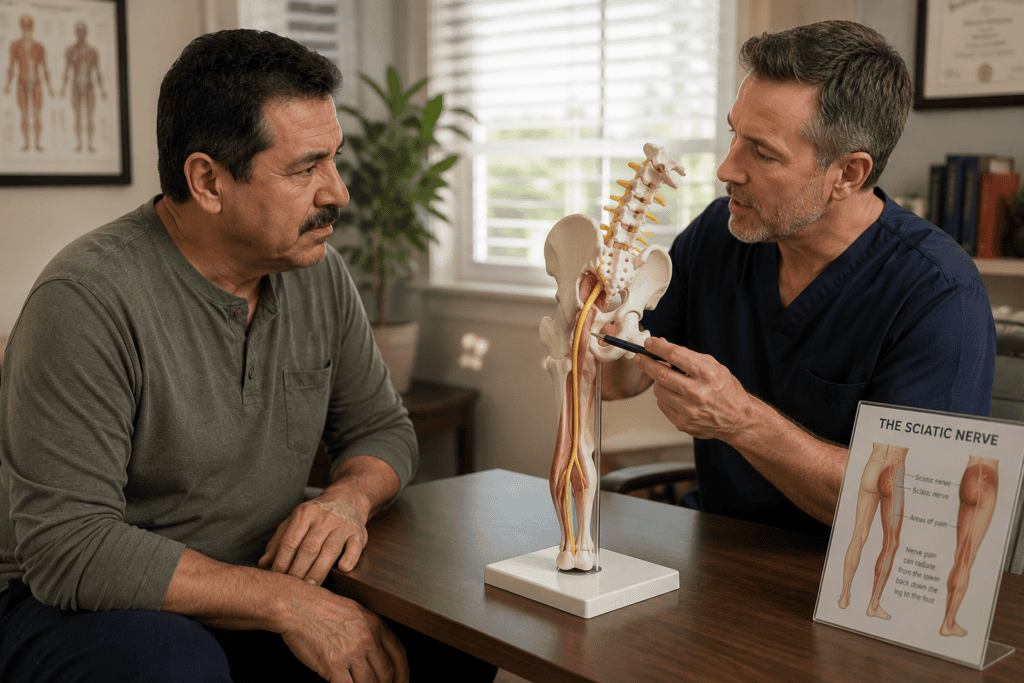
Sciatica is not a diagnosis itself. It is a symptom pattern involving pain that radiates along the path of the sciatic nerve, which is the largest nerve in the body. The sciatic nerve originates from nerve roots in the lower back, travels through the buttock, and runs down the back of the leg to the foot. Compression or irritation anywhere along this pathway can produce sciatic pain.
Symptoms include pain that radiates from the low back or buttock down the back of the leg, sometimes reaching the foot. The pain quality varies from sharp and shooting to burning to aching. Numbness or tingling in the affected leg. Weakness in the leg or foot. Pain that worsens with certain positions, particularly prolonged sitting or bending forward. Symptoms usually affect one side of the body.
The underlying cause determines the appropriate treatment. Some causes respond well to conservative and complementary care. Others require specific medical intervention.
The Mayo Clinic overview of sciatica and the Cleveland Clinic summary provide the medical framework for understanding the condition.
What Are Common Causes of Sciatica?
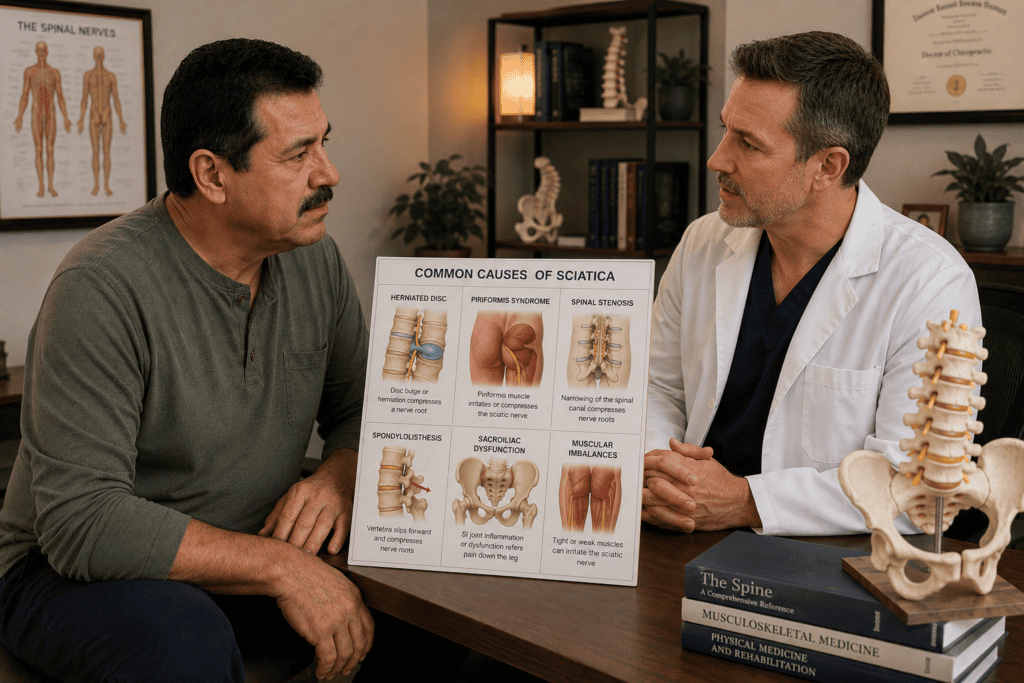
Sciatica has several possible underlying causes.
Herniated disc pressing on a nerve root is the most common cause. When the soft inner core of an intervertebral disc pushes through a weakened area of the outer ring, it can press on the nerve root that contributes to the sciatic nerve. The herniated disc treatment framework covers this specific cause in more depth.
- Piriformis syndrome involves the piriformis muscle in the buttock compressing the sciatic nerve where it passes near or through the muscle. This is often overlooked in standard evaluation but is a genuine cause of sciatica.
- Spinal stenosis involves narrowing of the spaces within the spine where the nerves pass. Stenosis is more common in older adults and often produces sciatica that worsens with standing and walking and improves with sitting.
- Spondylolisthesis involves one vertebra slipping over another, which can compress the nerve roots.
- Sacroiliac joint dysfunction involves the joints where the sacrum meets the pelvis. Dysfunction here can produce pain that mimics sciatica.
- Muscular imbalances and postural patterns including tight hip flexors, weak glutes, and prolonged sitting contribute to and worsen sciatica.
- Pregnancy can produce sciatica through the growing uterus pressing on nerves and postural changes.
- Rare causes include tumors, infections, and diabetic neuropathy affecting the sciatic nerve. These require specific medical evaluation.
The chronic inflammation patterns underlying nerve irritation contribute to sciatica across the different causes.
What Are Some Treatment Options?
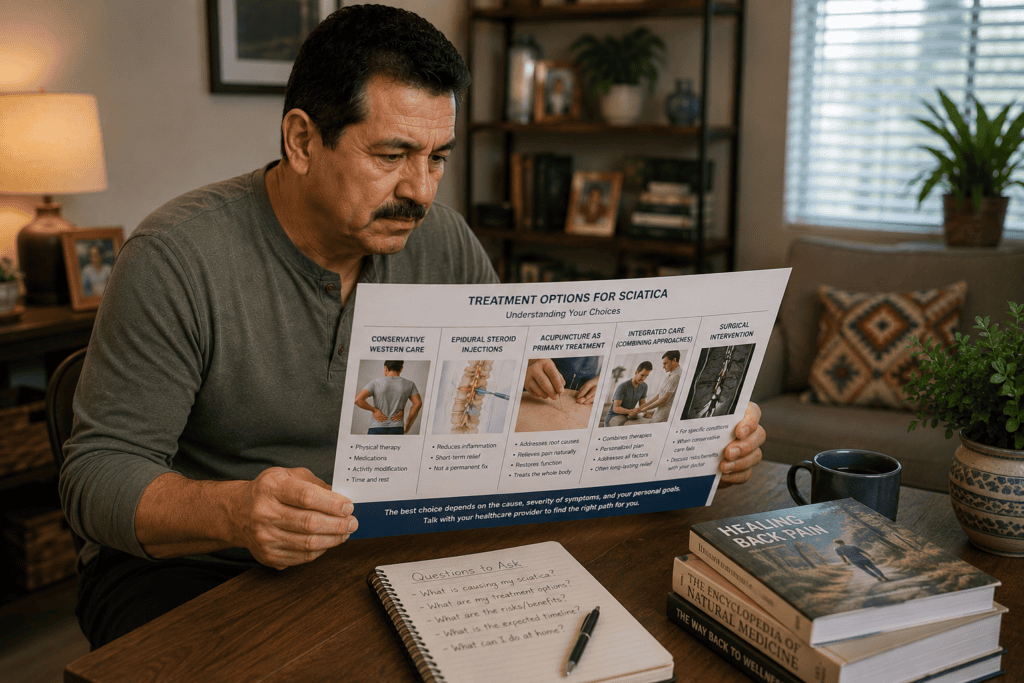
Patients with sciatica have several legitimate paths.
- Conservative Western care. Anti-inflammatory medications, physical therapy, and activity modification. Works for many patients over weeks to months.
- Epidural steroid injections. Provide temporary relief for many patients. Effect duration varies substantially.
- Acupuncture as primary treatment. Regular acupuncture treatment addressing the underlying muscular, structural, and nerve patterns. Works well for many patients including those with confirmed disc-related sciatica who prefer to avoid or delay Western interventions.
- Integrated care. Combining acupuncture with elements of Western care based on the individual situation.
- Surgical intervention. Genuinely necessary for specific indications including progressive neurological deficit, cauda equina syndrome (a medical emergency), and severe intractable pain that has not responded to any conservative approach over adequate time. Surgery for sciatica is not the automatic endpoint for most patients.
Choosing among these paths depends on the specific cause of your sciatica, symptom severity, and preferences.
How Does Traditional Chinese Medicine View Sciatica?
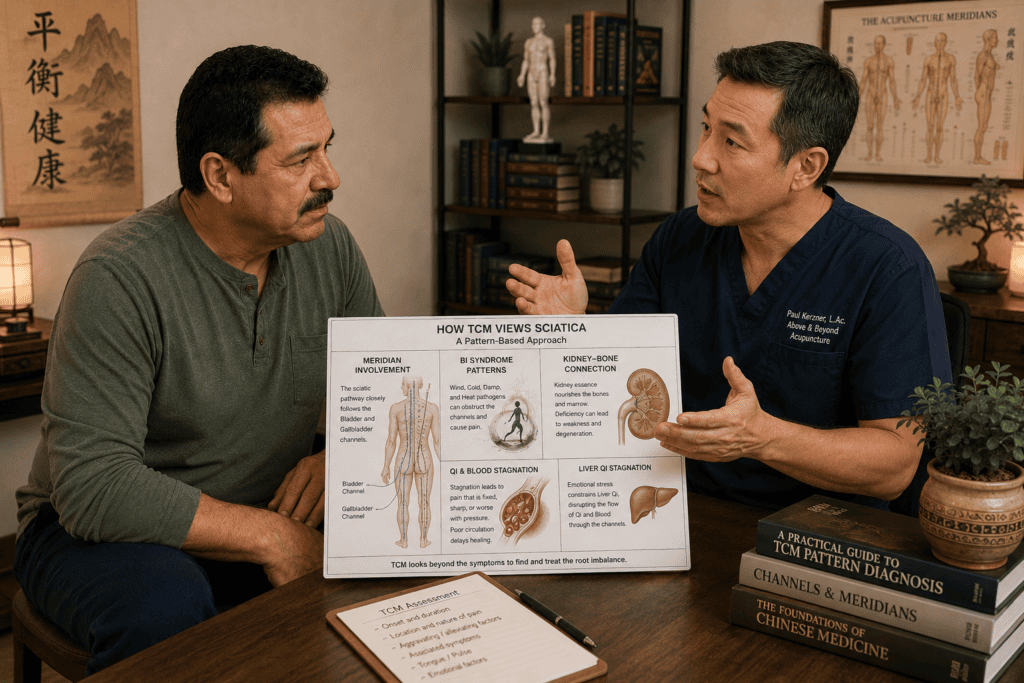
Traditional Chinese Medicine has a rich framework for understanding sciatica that maps onto but differs from Western clinical categories.
- Meridian pathway involvement. The sciatic nerve pathway closely follows two channels in Chinese medicine. The Bladder channel runs down the back of the leg. The Gallbladder channel runs down the outer leg. Sciatica presentations typically involve one or both of these channels depending on which nerve root is affected and where the pain radiates.
- Bi syndrome patterns. Bi syndrome refers to painful obstruction. Wind-Cold-Damp Bi produces pain that worsens with cold and damp conditions. Damp-Heat Bi produces pain with warmth and inflammation. Blood Stasis Bi produces sharp fixed pain worse at night, often following injuries.
- The Kidney-Bone connection. The Kidneys govern the bones and lower back. Chronic sciatica often reflects Kidney depletion from aging, chronic stress, overwork, or constitutional weakness.
- Qi and Blood stagnation. The muscular tension and nerve irritation of sciatica reflect Qi and Blood stagnation along the affected meridians. Moving Qi and Blood addresses the local pattern.
- Liver Qi Stagnation. Chronic stress produces Liver Qi Stagnation, which affects muscular tension patterns around the low back and hip and can worsen sciatica.
A licensed acupuncturist identifies which patterns are dominant and treats accordingly.
How Does Acupuncture Treat Sciatica?
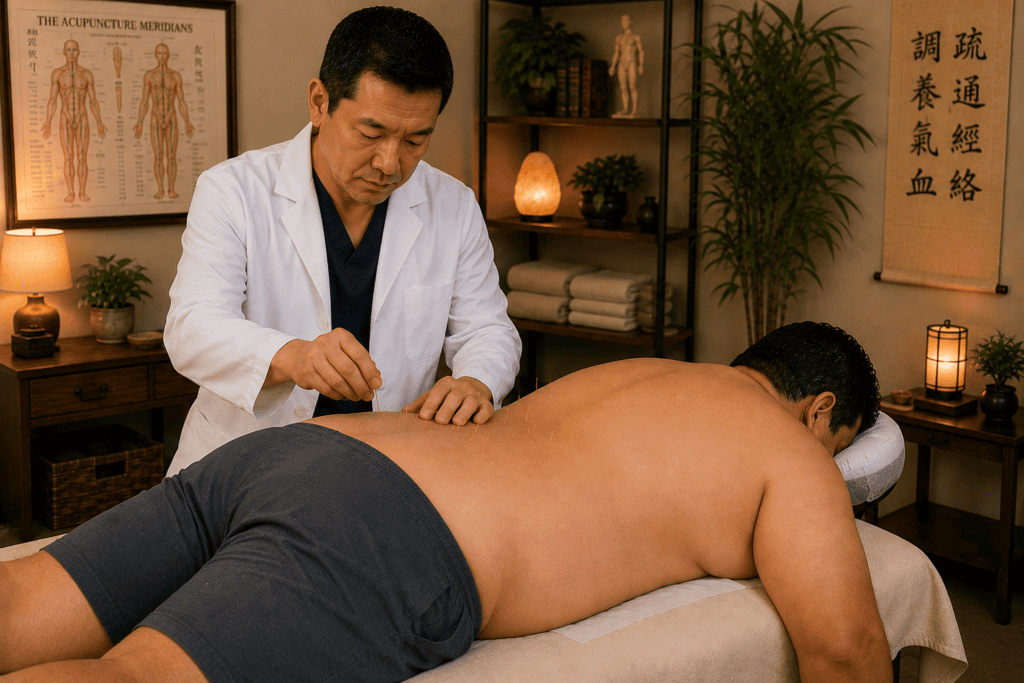
Acupuncture addresses sciatica through several mechanisms that produce substantial relief for many patients.
- Endogenous pain relief. Acupuncture stimulates the release of endorphins, enkephalins, and other natural pain-relieving chemicals. This produces both immediate pain relief and reduces the pain sensitivity that chronic sciatica patients develop.
- Anti-inflammatory effects. Sciatica involves inflammation around the affected nerve root or along the nerve pathway. Acupuncture has documented anti-inflammatory effects through several mechanisms.
- Muscular release. Chronic tension in the piriformis, glutes, low back, and hip muscles either causes or worsens most sciatica presentations. Acupuncture releases this tension directly, which reduces the compression and irritation of the sciatic nerve.
- Improved circulation. Local blood flow to the affected area supports healing. Acupuncture improves circulation both locally and systemically.
- Nerve function support. For sciatica involving nerve compression or irritation, acupuncture supports nerve function and can reduce the numbness, tingling, and weakness that accompany the pain.
- Nervous system regulation. Chronic pain involves changes in the central nervous system that make pain more difficult to resolve. Acupuncture affects the descending pain modulation system, which reduces central sensitization.
- Stress and cortisol regulation. Chronic stress worsens musculoskeletal pain. The chronic cortisol elevation from ongoing stress contributes to the pattern that maintains sciatica.
- Pattern differentiation. The individualized Chinese medicine approach treats the specific patterns present in each patient. Kidney tonification for constitutional depletion. Blood-moving techniques for stagnation. Wind-Cold-Damp expelling for weather-related patterns. Liver Qi regulation for stress-driven tension.
Many patients find that consistent acupuncture treatment over weeks to months produces substantial and lasting relief from sciatica regardless of the underlying cause. The mechanisms of acupuncture in the body explain how these effects are produced.
The Research Base
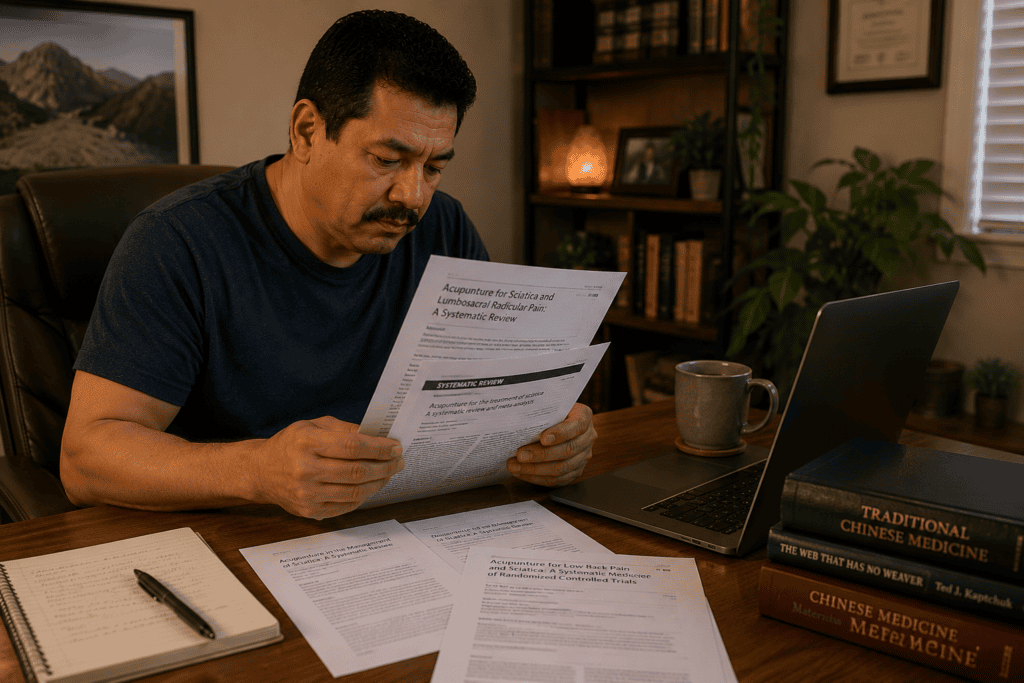
Research on acupuncture for sciatica has been generally positive. Multiple systematic reviews have found acupuncture effective for reducing pain and improving function in patients with sciatica compared to no treatment and compared to standard care alone. The evidence supports acupuncture as a legitimate treatment option for sciatica.
The broader research base for acupuncture in low back pain and radicular pain conditions has been documented extensively through NCCIH and other research summaries.
The Holistic Integrated Approach
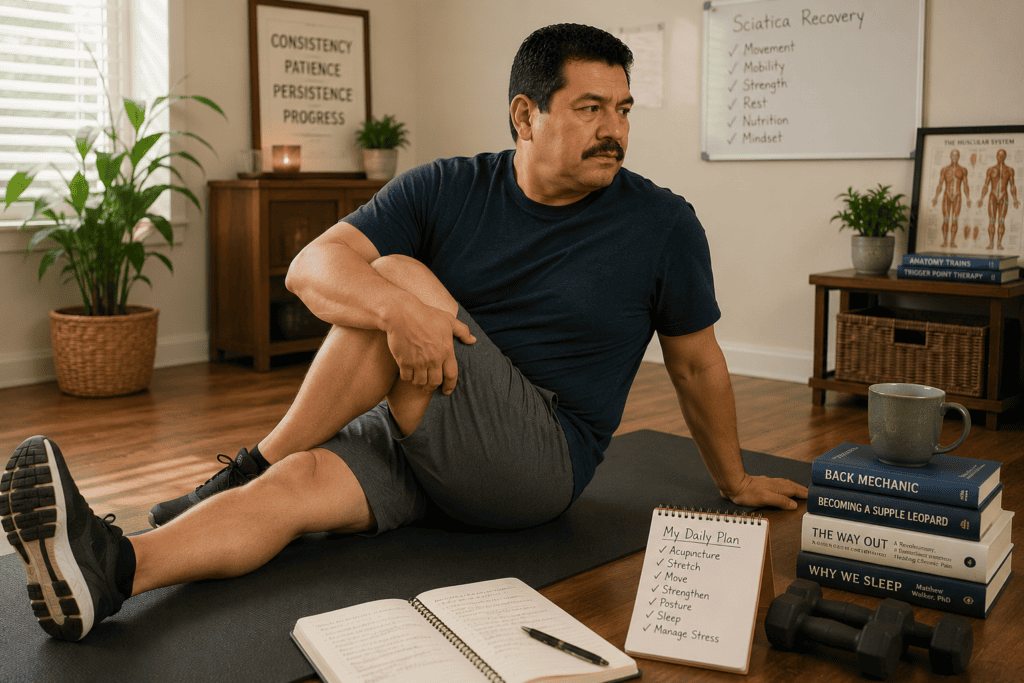
Whether acupuncture is your primary treatment or part of a broader plan, several supporting practices amplify results.
- Regular acupuncture treatment. Weekly acupuncture during the initial course produces the best results. Most patients need six to twelve sessions to see substantial sustained improvement.
- Appropriate movement. Movement is essential for sciatica recovery. Complete rest often worsens the condition. Walking, swimming, and gentle activity modified for individual tolerance support recovery.
- Targeted stretching. Specific stretches for the piriformis, hip flexors, and low back can support sciatica management. Working with a physical therapist familiar with sciatica specifically can identify the right stretches for your presentation.
- Postural work. For patients whose sciatica relates to prolonged sitting or poor ergonomics, addressing these patterns matters for preventing recurrence.
- Strength work. Core and glute strength support the low back and reduce sciatica recurrence.
- Sleep support. Poor sleep worsens pain sensitivity. Sleeping positions that reduce sciatic pain (side-sleeping with a pillow between the knees, or back-sleeping with a pillow under the knees) support recovery.
- Stress management. Chronic stress worsens muscular tension and pain. Direct nervous system practices support the healing process.
- Coordination with medical care. If you have chosen an integrated approach, coordination between providers supports the best outcomes.
When Is Medical Evaluation Essential?
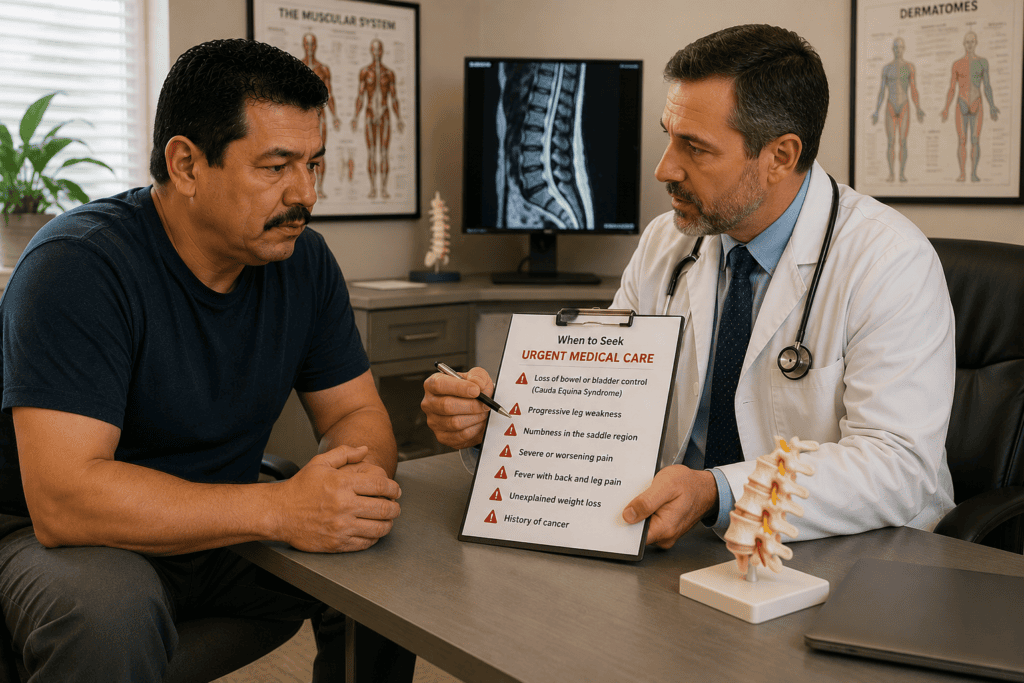
Certain symptoms require urgent medical evaluation regardless of which treatment path you have chosen.
Loss of bowel or bladder control (potential cauda equina syndrome, a medical emergency). Progressive weakness in the affected leg. Numbness in the saddle region (buttocks, groin, inner thighs). Severe worsening pain not responding to any approach. Fever accompanying back and leg pain. Unexplained weight loss with sciatica. Sciatica in patients with a history of cancer.
These symptoms warrant immediate medical evaluation, not because complementary approaches are wrong, but because they may indicate conditions requiring urgent intervention.
Where Should I Start?
If you have sciatica and are trying to decide how to approach it, appropriate medical evaluation to identify the underlying cause helps shape the treatment path. Once you know what you are dealing with, acupuncture is a legitimate primary treatment option for many sciatica presentations. Patients whose Western care has not worked or does not appeal have a real alternative path through acupuncture.
The nervous system patterns underlying chronic pain often connect to the broader anxiety, stress, and depression patterns that affect many chronic pain patients. Above and Beyond Acupuncture offers acupuncture, cupping, and lifestyle coaching at the North Frank Lloyd Wright Boulevard location in Scottsdale.
Reach out to schedule a consultation.
Schedule an appointment online or call us today to start your healing journey.
About the Publisher
Paul Kerzner, L.Ac., is a licensed acupuncturist and board-certified herbalist, as well as the founder of Above and Beyond Acupuncture in Scottsdale. His own journey from chronic patient to practicing acupuncturist shapes his commitment to providing honest, clinically grounded information about acupuncture and Traditional Chinese Medicine. Learn more about Paul and his clinical approach on the About Us page.