
Key Takeaways
- Grief is a complex human experience that takes both emotional and physical tolls, affecting daily life.
- Traditional approaches often overlook the physical symptoms of grief, which can include sleep disruption, appetite changes, and chronic fatigue.
- Acupuncture offers supportive care for grief without eliminating it, addressing nervous system regulation, sleep support, and emotional release.
- Combining professional mental health support with practices like acupuncture provides a holistic approach to managing grief.
- It’s crucial to seek professional help for complicated grief or severe symptoms that impair functioning.
The loss of someone we love. The end of a relationship. The death of a pet who was family. The loss of a home, a career, a way of life, or a version of ourselves that we thought we would always have. Grief takes many forms and affects nearly every part of modern daily life.
The physical toll of grief is often underestimated. Disrupted sleep (difficulty getting to sleep and staying asleep). Loss of appetite or emotional binge eating. Chest tightness that feels like a heart attack. Digestive issues. Chronic fatigue that no amount of sleep resolves. Brain fog that makes it difficult to work or manage daily tasks. Increased vulnerability to illness. Grief lives in the body, not just the mind.
Standard mental health support including therapy, support groups, and in some cases psychotropic medication helps many people navigate grief. What is often missing from the conversation is the physical support that grief specifically requires. Acupuncture and Traditional Chinese Medicine offer meaningful support for the person moving through grief. The treatment does not eliminate grief or make it go away. Grief needs to be moved through, not eliminated. What acupuncture does is support the body, nervous system, and emotional patterns while the person does the work of grieving.
Here is what grief actually does to the body, how acupuncture supports the process, and when professional mental health support is essential.
What Is Grief?
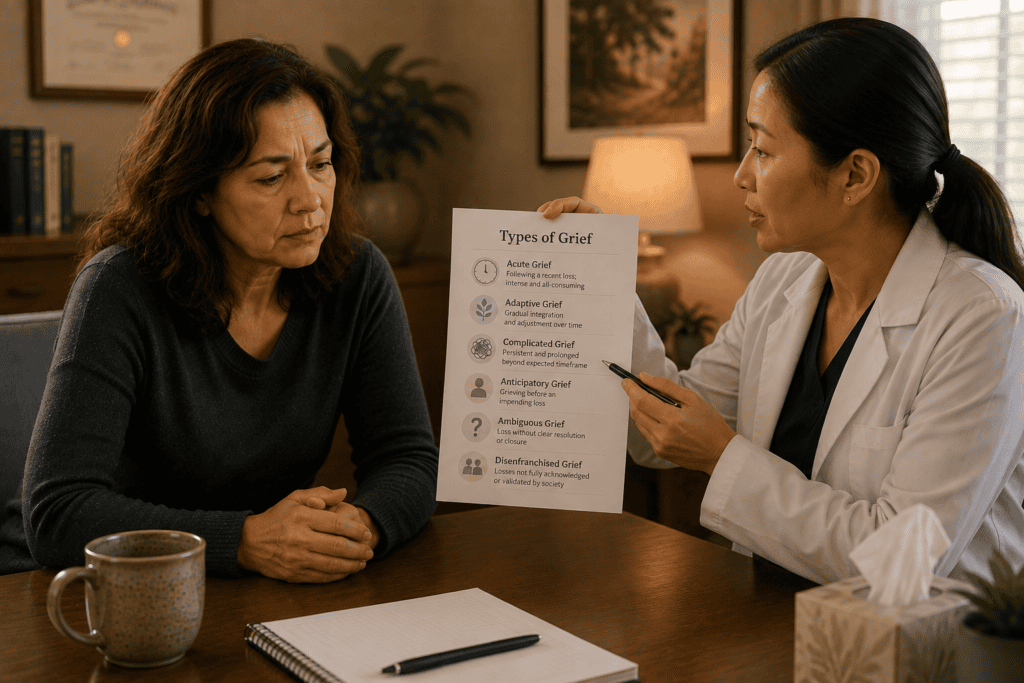
Grief is the natural response to significant loss. The experience is universal and yet completely subjective. No two people grieve the same way, and there is no correct timeline / timeframe for the process.
- Acute grief follows recent loss and involves intense emotional and physical symptoms in the early weeks and months. Waves of sadness, difficulty concentrating, sleep disruption, appetite changes, and physical exhaustion are common. This is the period when the loss feels most raw and unmanageable.
- Adaptive grief involves the gradual integration of the loss into ongoing life. The intensity of symptoms typically decreases over months to years while the sense of loss remains. This is not the disappearance of grief but the growing capacity to carry it.
- Complicated grief persists beyond expected timeframes with continued severe symptoms that interfere with daily functioning. Complicated grief affects roughly 7 to 10 percent of bereaved individuals and often requires professional mental health support.
- Anticipatory grief develops before an impending loss, particularly with terminal illness in a loved one. The person begins grieving while the loved one is still alive.
- Ambiguous grief involves loss without clear resolution such as when a loved one has dementia and is physically present but psychologically absent, or when a relationship ends without closure.
- Disenfranchised grief involves losses that are not fully acknowledged by society including pet loss, miscarriage, estrangement, or the loss of dreams and expectations.
The Mayo Clinic overview of grief and the Cleveland Clinic summary provide the medical picture of grief and its variations.
How Does Grief Affect the Body?

Grief lives in the body. The physical toll is real and often surprises people who expect grief to be primarily emotional.
- Sleep disruption. Waking in the middle of the night, difficulty falling asleep, early morning waking, and unrefreshing sleep are all common.
- Appetite changes. Loss of appetite is common in acute grief. Some people experience the opposite pattern with emotional eating as a way of coping.
- Cardiovascular symptoms. Chest tightness, palpitations, and feelings of pressure in the chest can be so severe they mimic a heart attack. The medical term “broken heart syndrome” (stress cardiomyopathy) describes actual cardiac changes that can occur during acute grief.
- Digestive issues. Nausea, appetite changes, and general digestive dysfunction are common.
- Chronic fatigue. The exhaustion of grief is not fixed by sleep. People often describe feeling depleted at a level they have not experienced before.
- Brain fog. Difficulty concentrating, memory issues, and difficulty making decisions are common. This is sometimes called “grief brain.”
- Immune suppression. Grief affects the immune system, which is why people often get sick during periods of significant loss.
- Chronic pain flares. Existing pain conditions often worsen during grief. New pain patterns can emerge.
- Increased anxiety and panic. Even people without prior anxiety issues can experience new anxiety and panic symptoms during acute grief.
- Depression. Depression is common during grief and can sometimes be difficult to distinguish from grief itself.
Chronic inflammation that develops during prolonged stress can affect the body during grief and contribute to the physical symptoms / manifestations.
How Does Traditional Chinese Medicine View Grief?
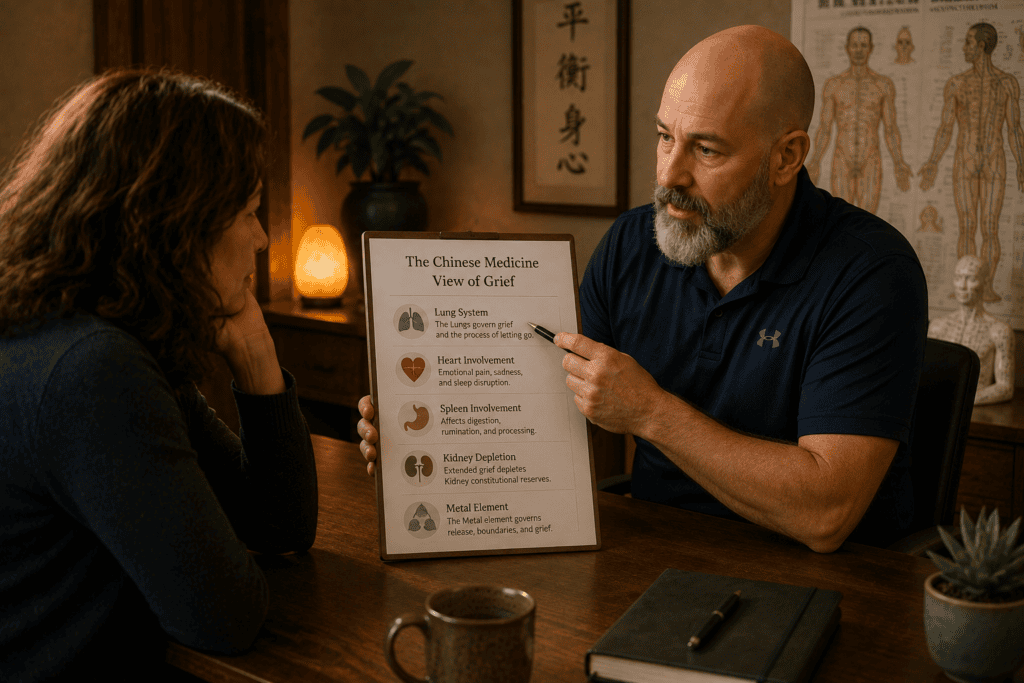
Traditional Chinese Medicine has an unusually direct view of grief compared to Western medicine. Grief is explicitly named as one of the seven emotions that affect the body, and grief has a specific meridian correspondence.
- The Lung system. In Chinese medicine, the Lungs govern grief. This is not metaphorical. The Lung meridian and the physical lungs are directly affected by grief, which is why chest tightness, breathing difficulty, and respiratory symptoms are so common during acute loss. Prolonged grief depletes the Lung Qi.
- The Metal element. In the Five Element view, the Lungs correspond to the Metal element, which governs letting go, boundaries, and the release of what is no longer serving. Grief work in Chinese medicine involves supporting the Metal element function.
- Heart involvement. The Heart in Chinese medicine houses the Shen (spirit or mind). Grief affects the Heart, producing the emotional pain, sleep disruption, and mental fog associated with loss.
- Spleen involvement. The Spleen governs digestion and the processing of experiences. Prolonged grief affects the Spleen, producing appetite changes, digestive issues, and difficulty processing thoughts.
- Kidney depletion. Extended or severe grief depletes the Kidney essence, which is the deep constitutional reserve. This is why people who have experienced significant loss often feel “older” or more fragile afterward.
A licensed acupuncturist identifies which patterns are most affected in the individual patient and treats accordingly.
How Does Acupuncture Support Grief?
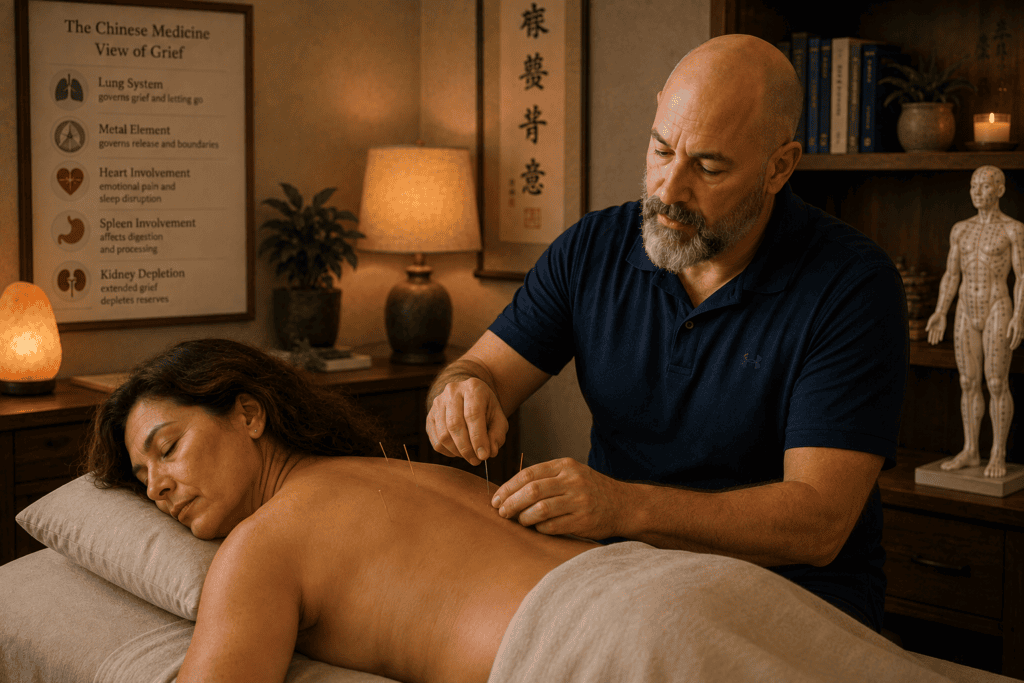
Acupuncture addresses grief through several effects that support the person moving through the process rather than eliminating the grief itself.
- Nervous system regulation. Grief keeps the nervous system in a sustained stress response. Acupuncture activates the parasympathetic nervous system and reduces the chronic activation that grief produces. This is not making grief go away. It is making the nervous system state more sustainable while the person grieves.
- Sleep support. Sleep disruption is one of the most consistent effects of grief and one of the most damaging to overall functioning. Acupuncture supports the sleep patterns that grief disrupts.
- Chest and heart support. For the chest tightness, palpitations, and emotional heaviness that often accompany grief, acupuncture addresses these directly through Heart and Lung system points.
- Digestive support. For the appetite changes and digestive issues that accompany grief, acupuncture supports the Spleen and Stomach function that grief affects.
- Stress and cortisol regulation. Grief produces sustained cortisol elevation that affects nearly every body system. The chronic cortisol elevation from prolonged grief contributes to the physical toll of loss.
- Constitutional support. Extended or severe grief depletes the deep constitutional reserves. Acupuncture supports the Kidney essence and overall constitutional function that grief depletes.
- Emotional release. Some patients experience emotional release during or after acupuncture sessions. Tears, memories, and feelings can surface as the nervous system relaxes. This is normal and often supportive of the grief process.
- Lung system support. Given the specific Chinese medicine correspondence between the Lungs and grief, direct Lung system support through acupuncture addresses the physical and emotional patterns of loss.
- Pattern differentiation. The individualized Chinese medicine approach treats the specific patterns present in each patient. Lung Qi tonification for grief depletion. Heart calming for anxiety and sleep issues. Spleen support for digestive and cognitive patterns. Kidney support for constitutional depletion. This is what makes Traditional Chinese Medicine distinct from protocol-only approaches.
Acupuncture does not replace therapy, support groups, or other grief support. What it does is address the physical and nervous system patterns that make grief so difficult on the body, which supports the person’s capacity to do the emotional and psychological work of grieving.
The Research Base

Research on acupuncture specifically for grief is limited but the broader research base for acupuncture and mental health conditions supports its use in grief work. Studies have found acupuncture effective for anxiety, depression, sleep issues, and stress-related physical symptoms. Grief involves all of these dimensions and the research on the underlying patterns applies.
The NCCIH summary details the research base for acupuncture, highlighting its effectiveness and the range of conditions it successfully treats.
The Holistic Integrative Approach

Grief responds best to a coordinated approach that addresses the emotional, physical, and spiritual dimensions of loss.
- Therapy or counseling. Grief counseling, bereavement support, or general psychotherapy with a mental health professional experienced in grief provides the space to process the emotional work of loss.
- Regular acupuncture treatment. Weekly or biweekly acupuncture during acute grief supports the nervous system, sleep, and physical patterns that grief affects. Frequency can adjust based on individual response.
- Community and support. Grief support groups, whether specific to your type of loss or general bereavement, provide the sense of shared experience that isolation prevents.
- Home acupressure practice. Daily acupressure between professional sessions supports the ongoing patterns. See How to Use Acupressure for Grief for the specific home practice.
- Movement. Gentle movement including walking, yoga, tai chi, or qigong supports the physical toll of grief.
- Nutrition. Grief affects appetite and eating patterns. Prioritizing regular meals with nourishing food supports the body even when appetite is affected.
- Sleep support. Poor sleep worsens every aspect of grief. Sleep hygiene practices support what acupuncture and other interventions provide.
- Time. Grief takes the time it takes. There is no correct timeline. Allowing the process to unfold at its own pace, without trying to rush it, is essential.
- Ritual and meaning. Rituals of remembrance, creating meaning from the loss, and finding ways to honor what was lost all support the grieving process.
When Should I Seek Professional Mental Health?

Certain patterns warrant professional mental health evaluation and support rather than complementary care alone.
- Complicated grief with severe symptoms persisting beyond six months.
- Severe depression with significant impairment of functioning.
- Suicidal thoughts or intent.
- Substance use that has begun or worsened as a coping approach.
- Complete inability to function in daily life. Symptoms of post-traumatic stress from a traumatic loss.
If you are experiencing suicidal thoughts, please contact the 988 Suicide and Crisis Lifeline (call or text 988) or reach out to a mental health professional immediately.
For bereavement support specifically, the Grief Recovery Method and local hospice organizations often offer bereavement services that are available to the community regardless of hospice involvement.
Many patients moving through the grieving process may also experience anxiety, stress, and depression.
Above and Beyond Acupuncture offers acupuncture, cupping, and lifestyle coaching at the North Frank Lloyd Wright Boulevard location in Scottsdale.
Schedule an appointment online or call us today to start your healing journey.
About the Publisher
Paul Kerzner, L.Ac., is a licensed acupuncturist and board-certified herbalist, as well as the founder of Above and Beyond Acupuncture in Scottsdale. His own journey from chronic patient to practicing acupuncturist shapes his commitment to providing honest, clinically grounded information about acupuncture and Traditional Chinese Medicine. Learn more about Paul and his clinical approach on the About Us page.