
Key Takeaways
- Chronic sinusitis affects millions and leads to persistent symptoms like facial pressure, congestion, and fatigue.
- Standard treatments include nasal irrigation, corticosteroids, and antibiotics, but they often fail to provide complete relief.
- Acupuncture effectively addresses chronic sinusitis by reducing inflammation and improving immune function.
- Traditional Chinese Medicine offers a unique perspective, treating underlying patterns related to lung, spleen, and kidney functions.
- An integrated approach combining acupuncture with standard care and lifestyle adjustments yields the best outcomes.
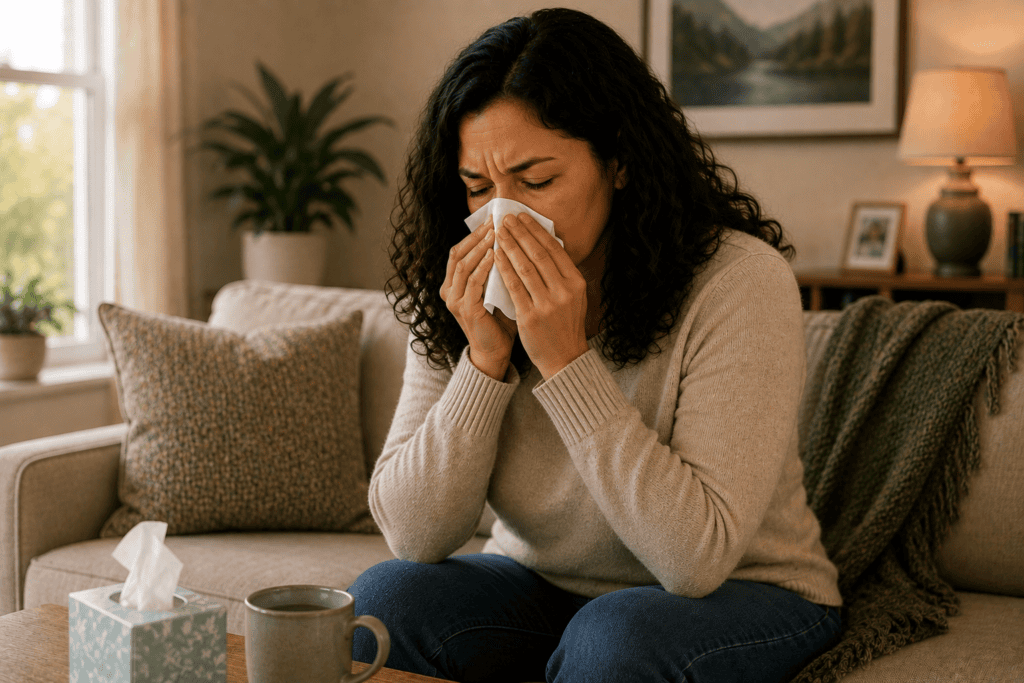
The persistent facial pressure that never fully resolves. The nasal congestion that affects sleep and breathing. The reduced sense of smell that changes how food tastes. The chronic fatigue from an immune system constantly working to manage inflammation. Cycling through antibiotics, nasal sprays, and antihistamines with only partial relief is the reality many patients face.
Standard Western care includes nasal saline irrigation, corticosteroid nasal sprays, antibiotics when bacterial infection is present, allergy management, and in some cases surgery for structural issues. These interventions help many patients but leave others still dealing with symptoms that affect nearly every part of daily life.
Acupuncture and Traditional Chinese Medicine offer meaningful support for chronic sinusitis. The treatment addresses the inflammatory patterns underlying the condition, the immune function that continues chronic sinus issues, the mucous membrane patterns, and the constitutional patterns that make some patients susceptible to sinus problems.
Here is what chronic sinusitis actually involves, why standard care sometimes falls short, and how acupuncture treats the condition.
What Is Chronic Sinusitis?
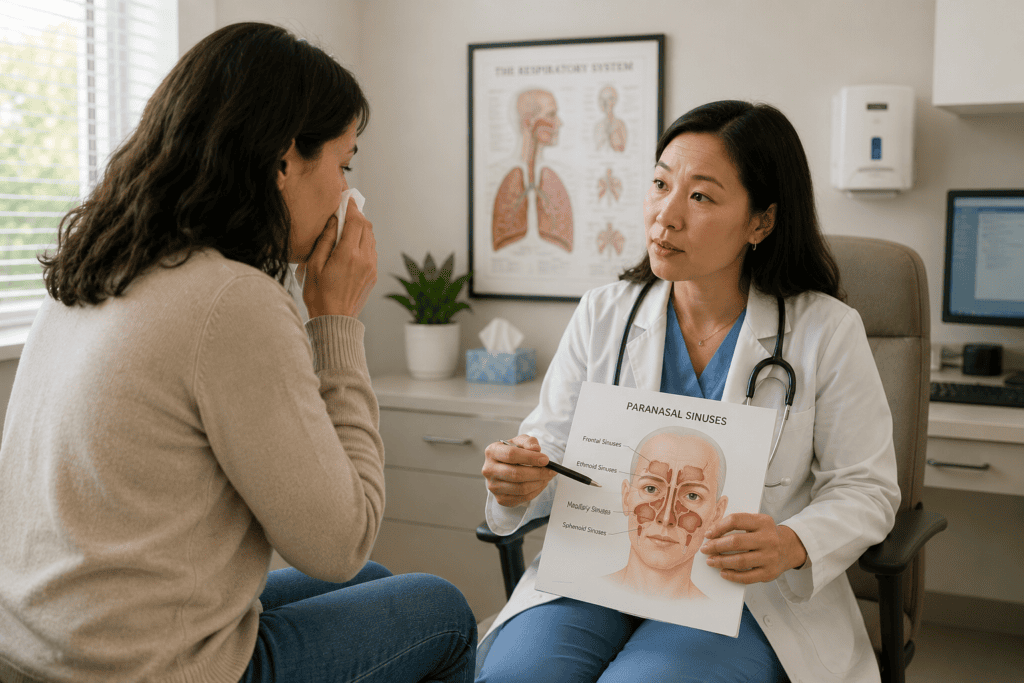
Chronic sinusitis is defined as inflammation of the sinuses lasting 12 weeks or more despite treatment attempts. The distinction from acute sinusitis matters because the treatment approaches differ substantially.
Acute sinusitis involves a specific infection or inflammation that typically resolves within a few weeks with appropriate treatment. Chronic sinusitis involves ongoing inflammation that persists regardless of specific infection status.
- Common symptoms include facial pain and pressure particularly around the cheeks, forehead, and behind the eyes. Nasal congestion and discharge that persists. Postnasal drip that produces coughing and throat irritation. Reduced sense of smell and taste. Bad breath. Headaches particularly upon waking. Facial fatigue and general exhaustion. Difficulty sleeping due to congestion.
- The sinus anatomy. The paranasal sinuses are air-filled cavities in the bones of the face and skull. Frontal sinuses above the eyes. Maxillary sinuses in the cheeks. Ethmoid sinuses between the eyes. Sphenoid sinuses deeper in the skull. Chronic sinusitis can affect any or all of these regions.
- Common causes include allergic rhinitis producing chronic inflammation. Recurring infections that never fully resolve. Structural issues including deviated septum, nasal polyps, or narrow sinus drainage passages. Environmental irritants including pollution, smoke, and workplace exposures. Immune system patterns that make individuals susceptible to sinus inflammation. Fungal sensitivity in some patients. Gastroesophageal reflux affecting the throat and sinuses.
The Mayo Clinic overview of chronic sinusitis and the Cleveland Clinic summary provide the medical picture of the condition.
Why Standard Care Sometimes Falls Short

Standard care for chronic sinusitis works for many patients but has limitations that leave others still struggling.
- Nasal saline irrigation including neti pots and squeeze bottles helps thin mucus and clear the sinuses. Many patients find this genuinely helpful but symptoms often persist despite consistent irrigation.
- Corticosteroid nasal sprays reduce inflammation and are the first-line medical treatment. They work for many patients but require consistent daily use and can produce side effects including nosebleeds and irritation. Effectiveness varies substantially.
- Antibiotics are appropriate when acute bacterial infection is superimposed on chronic sinusitis but overuse is a concern. Most chronic sinusitis is not primarily infectious, so antibiotics often provide limited benefit.
- Antihistamines help patients whose chronic sinusitis is driven by allergies but do not address other underlying patterns.
- Surgery including functional endoscopic sinus surgery is appropriate for structural issues that cannot be managed medically. Recovery is significant and outcomes vary. Many patients experience improvement but not complete resolution.
Patients who continue to have significant symptoms despite comprehensive standard care often benefit from complementary approaches that address the underlying inflammatory and immune patterns.
How Traditional Chinese Medicine Views Chronic Sinusitis
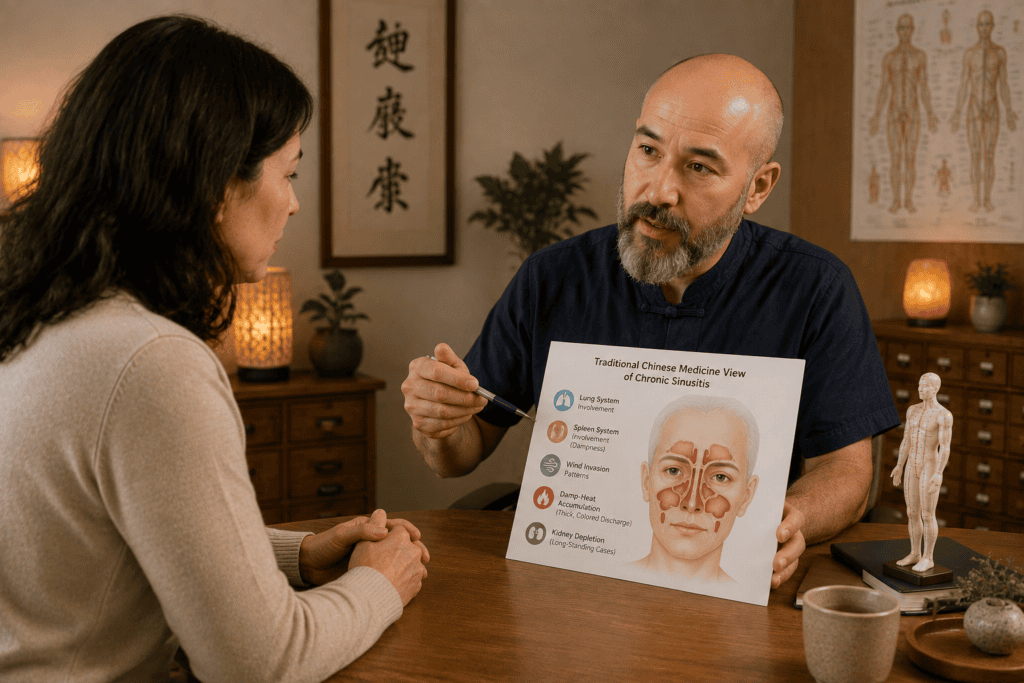
Traditional Chinese Medicine has a rich understanding of sinus conditions developed over centuries of clinical practice.
- Lung system involvement. The Lungs in Chinese medicine govern the nose and the respiratory system generally. Chronic sinusitis reflects Lung system patterns including Lung Qi deficiency (weak immune function producing recurring inflammation), Lung Heat (acute inflammatory patterns with yellow discharge and heat sensations), and Lung Cold (chronic patterns with clear discharge and cold sensitivity).
- Spleen system involvement. The Spleen in Chinese medicine governs the transformation and transportation of fluids in the body. When the Spleen is depleted, Dampness accumulates and affects multiple regions including the sinuses. Chronic sinusitis often reflects Spleen Qi deficiency producing Dampness that thickens mucus and blocks the sinuses.
- Wind invasion patterns. External Wind invading the body affects the upper regions including the sinuses. Wind-Cold produces clear discharge and cold sensitivity. Wind-Heat produces yellow discharge and heat sensations. Chronic Wind patterns underlie recurring sinus issues.
- Damp-Heat accumulation. For patients with thick colored discharge and significant facial pressure, Damp-Heat is often the pattern. This combines the Dampness from Spleen deficiency with Heat from various sources.
- Kidney depletion. In long-standing chronic sinusitis, Kidney depletion often develops from the constitutional demands of chronic inflammation.
A licensed acupuncturist identifies which patterns are dominant and treats accordingly. The individualized pattern-based approach is what distinguishes Traditional Chinese Medicine from protocol-only care.
How Acupuncture Treats Chronic Sinusitis
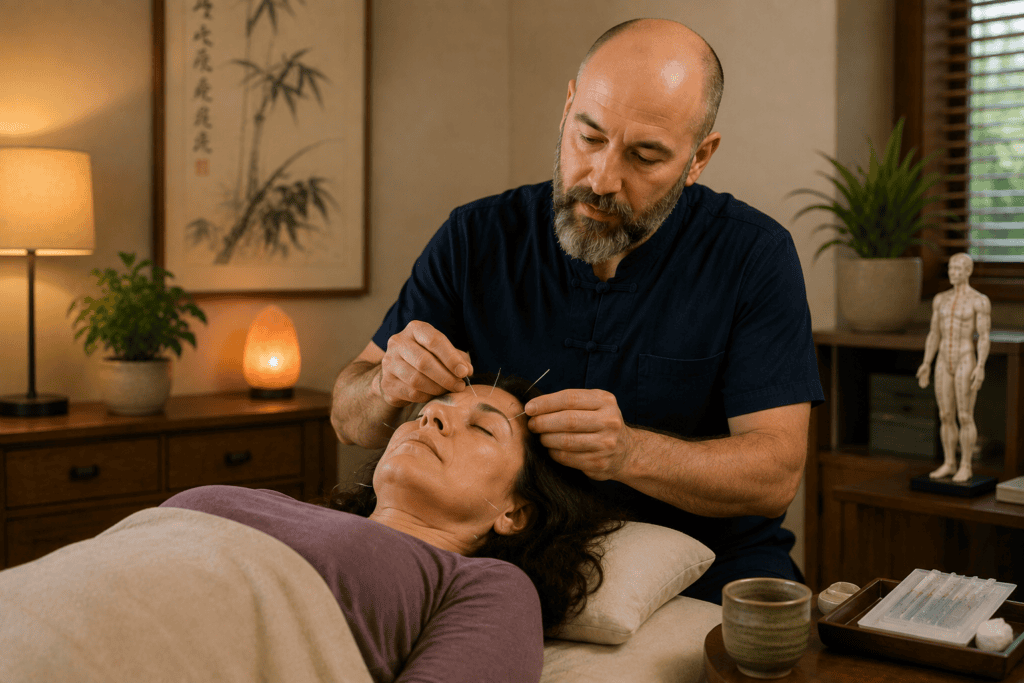
Acupuncture addresses chronic sinusitis through several effects that produce meaningful relief for many patients.
- Anti-inflammatory effects. Chronic sinusitis is fundamentally an inflammatory condition regardless of the specific cause. Acupuncture has documented anti-inflammatory effects that reduce the inflammation underlying the condition. The chronic inflammation that continues chronic sinus issues responds to these effects.
- Local circulation improvement. Local circulation in the sinus region supports drainage and healing. Acupuncture points around the face improve circulation to the sinuses directly.
- Immune system regulation. The immune patterns that make patients susceptible to chronic sinusitis respond to acupuncture through effects on immune cell function and cytokine regulation.
- Mucous membrane support. The chronic irritation of the mucous membranes in chronic sinusitis responds to the constitutional support acupuncture provides.
- Stress and cortisol regulation. Chronic stress worsens inflammation and immune function. The chronic cortisol elevation from ongoing stress contributes to the patterns that continue chronic sinusitis.
- Sleep support. Poor sleep worsens immune function and inflammation. Chronic sinusitis often disrupts sleep, which continues the pattern. Acupuncture supports the sleep patterns that healing requires.
- Facial tension release. The chronic facial tension and pressure of chronic sinusitis responds to direct acupuncture points around the face and forehead.
- Pattern differentiation. The individualized approach treats the specific patterns present in each patient. Lung tonification for immune weakness. Spleen support for Dampness accumulation. Wind expelling for chronic Wind patterns. Damp-Heat clearing for thick colored discharge. Kidney tonification for constitutional depletion.
The Research Base

Research on acupuncture for chronic sinusitis has been growing steadily. Multiple studies have found acupuncture effective for reducing symptoms and improving quality of life in patients with chronic sinusitis. The evidence supports acupuncture as a legitimate treatment option alongside standard care.
The NCCIH summary examines the clinical evidence for acupuncture across a range of health conditions.
The Integrated Approach

Chronic sinusitis responds best to a coordinated approach.
- Coordinated medical care. For patients with structural issues, allergies, or recurring infections, working with an ENT specialist and allergist provides the diagnostic clarity and treatment options that comprehensive care requires. Acupuncture works alongside this care rather than replacing it.
- Regular acupuncture treatment. Weekly or biweekly acupuncture during the initial course produces the best results. Most patients need six to twelve sessions to see meaningful sustained improvement.
- Nasal saline irrigation. Consistent daily irrigation with a neti pot, squeeze bottle, or similar device supports the treatment. Distilled or sterile water is essential.
- Environmental adjustments. Reducing exposure to irritants including smoke, strong cleaning products, and workplace exposures supports recovery. Using air purifiers and addressing indoor allergens matters.
- Anti-inflammatory nutrition. Dietary patterns affect systemic inflammation. Reducing processed foods and added sugars, adequate omega-3 fats, and identifying individual food sensitivities support outcomes.
- Sleep support. Elevating the head during sleep helps with congestion. Consistent sleep patterns support immune function.
- Stress management. Direct nervous system practices support the healing process.
- Home acupressure practice. Daily acupressure between professional sessions supports the ongoing patterns. See the companion piece How to Use Acupressure for Chronic Sinusitis for the specific home practice.
When to See a Doctor
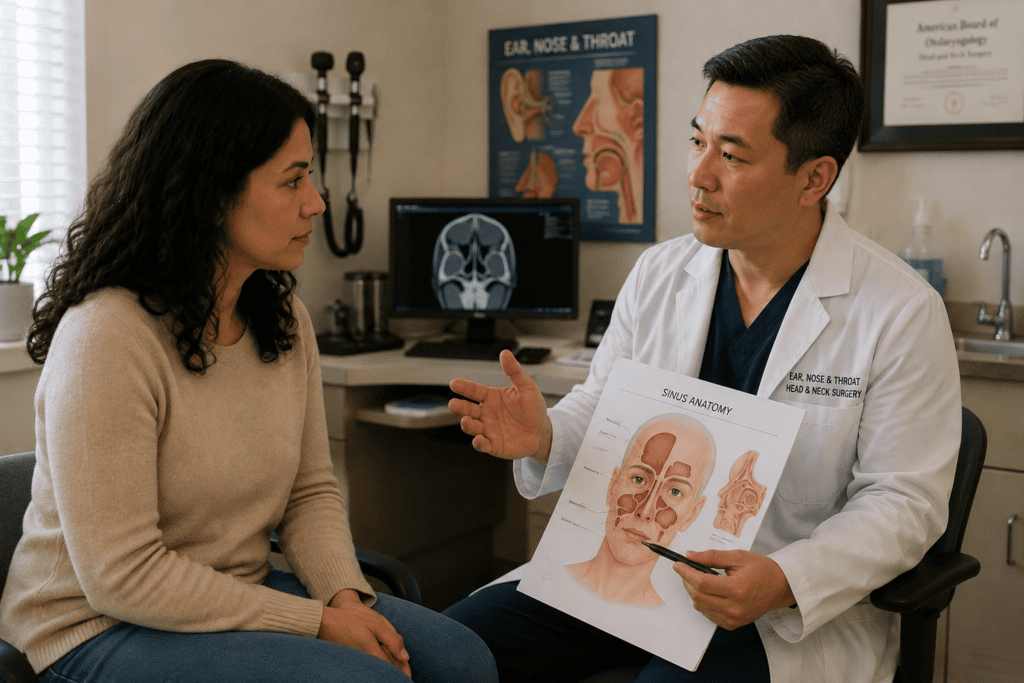
Certain symptoms warrant medical evaluation rather than complementary care alone:
- Fever with worsening facial pain suggesting acute bacterial infection.
- Vision changes or severe eye pain suggesting complication involving the eye socket.
- Confusion or altered mental status suggesting complication involving the brain.
- Severe headache different from typical patterns.
- Signs of allergic reaction or asthma exacerbation.
- New or rapidly worsening symptoms.
- Symptoms that have not improved after several weeks of appropriate treatment.
Structural issues including significant deviated septum or large nasal polyps benefit from ENT evaluation to determine whether surgical intervention would help.
For patients dealing with chronic sinusitis alongside other patterns, anxiety, stress, and depression often overlap with chronic health conditions.
Above and Beyond Acupuncture offers acupuncture, cupping, and lifestyle coaching at the North Frank Lloyd Wright Boulevard location in Scottsdale.
Schedule an appointment online or call us today to start your healing journey.
About the Publisher
Paul Kerzner, L.Ac., is a licensed acupuncturist and board-certified herbalist, as well as the founder of Above and Beyond Acupuncture in Scottsdale. His own journey from chronic patient to practicing acupuncturist shapes his commitment to providing honest, clinically grounded information about acupuncture and Traditional Chinese Medicine. Learn more about Paul and his clinical approach on the About Us page.